Kansas Gar Species Guide
For many anglers in Kansas, the sight of a long, toothy gar can evoke a mix of curiosity and apprehension. Often misunderstood and unfairly labeled, these ancient fish are actually a fascinating and challenging species to pursue. This guide aims to demystify the gar of Kansas, helping you identify the different types, understand their habitats, learn effective fishing techniques, and even discover their culinary potential, transforming any apprehension into excitement for your next fishing adventure.
Unraveling the Mystery: Identifying Kansas Gar Species
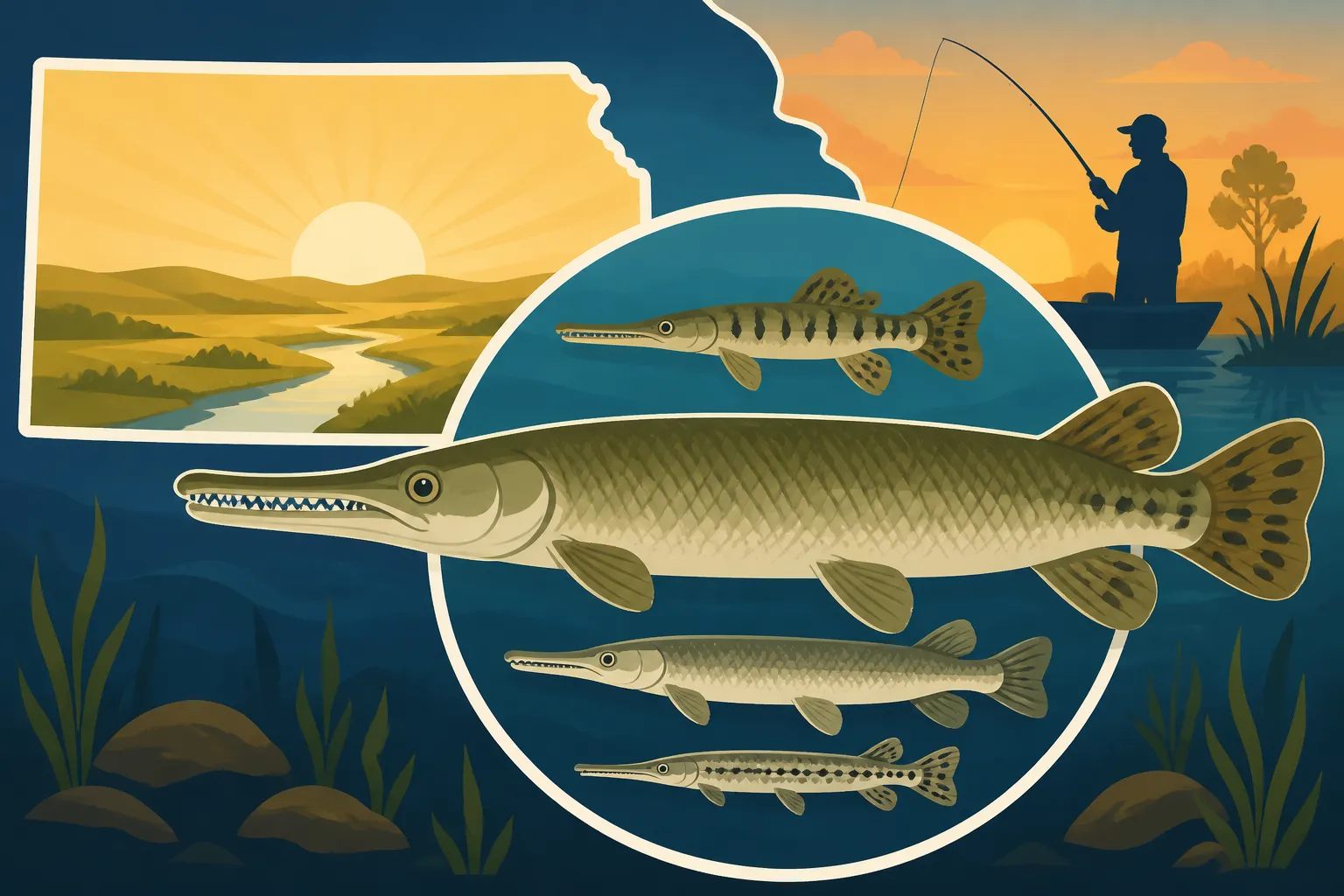
Gar have a unique, prehistoric look that makes them instantly recognizable. Their elongated bodies, hard scales, and distinctive snouts filled with sharp teeth set them apart from most other freshwater fish. However, within the gar family, there are several species, and knowing the differences can make your fishing experience more informed and enjoyable. In Kansas, you're most likely to encounter three primary species: the Longnose Gar, the Shortnose Gar, and the Spotted Gar. While the legendary Alligator Gar has occasionally been reported in very rare instances in the southeastern part of the state, it is federally protected and extremely rare here, so our focus will be on the more common species.
The Longnose Gar: The River Specialist
The Longnose Gar is perhaps the most iconic and frequently encountered gar in Kansas. As their name suggests, their most distinguishing feature is their incredibly long, slender snout, which is typically more than twice the length of the rest of their head. This narrow bill is packed with sharp, needle-like teeth, perfectly adapted for snatching smaller fish. Their bodies are generally dark olive to brown on the back, fading to a lighter, sometimes silvery, belly. You might notice some dark spots, especially on their fins and the rear part of their bodies, but these are typically less pronounced than on the Spotted Gar.
Longnose Gar can grow quite large, often reaching lengths of 3 to 4 feet, and occasionally even longer, making them a formidable and exciting catch. They prefer flowing water and are commonly found in the larger rivers and some reservoirs across Kansas, often lurking in slower currents near submerged logs or weed beds. If you're fishing the Kansas River, for instance, you're very likely to encounter these fascinating creatures. Their powerful runs and stubborn fight make them a rewarding target for anglers who appreciate a true challenge.
The Shortnose Gar: A More Compact Profile
The Shortnose Gar, as you might guess, has a much shorter, broader snout compared to its long-nosed cousin. While still elongated and toothy, its snout is generally less than twice the length of the rest of its head, giving it a somewhat more blunt appearance. Their coloration is similar to the Longnose Gar, usually olive to brown on top with a lighter underside, but they tend to have fewer distinct spots, if any, on their bodies or fins.
These gar typically don't grow quite as large as Longnose Gar, usually topping out around 2 to 3 feet in length. They are widely distributed throughout Kansas and can be found in a variety of habitats, including sluggish backwaters, oxbow lakes, and the calmer sections of rivers and reservoirs. They are incredibly adaptable and can tolerate poorer water quality and lower oxygen levels than some other fish species, thanks to their unique ability to breathe air using a vascularized swim bladder. This trait allows them to thrive in places where other fish struggle, making them a common sight for many anglers.
The Spotted Gar: The Camouflage Master
The Spotted Gar is easily identified by its distinctive dark spots that cover its entire body, including its head and fins. These spots are usually larger and more prominent than any markings you might see on a Longnose Gar. Its snout length falls somewhere between the Longnose and Shortnose varieties, being relatively broad and moderately long, but the spots are the real giveaway. Their base coloration is often a greenish-brown on the back, providing excellent camouflage in weedy, murky environments.
Spotted Gar are generally smaller than Longnose Gar, usually ranging from 1.5 to 2.5 feet in length. They are particularly fond of clear, heavily vegetated waters, slow-moving streams, and the quiet backwaters of reservoirs and oxbow lakes. If you're fishing in shallow, weedy areas, especially where there's good cover, you're more likely to stumble upon a Spotted Gar. They are ambush predators, often lying perfectly still among the weeds, waiting for an unsuspecting baitfish to swim by. They might not offer the same powerful fight as a larger Longnose, but their unique appearance and stealthy habits make them an exciting catch nonetheless.
Here's a quick comparison of the common Kansas Gar species:
| Species | Snout Length | Prominent Markings | Typical Length | Preferred Habitat |
|---|---|---|---|---|
| Longnose Gar | Very long, slender | Few, small spots (if any) | 3-4 feet (up to 6 ft) | Large rivers, main channels of reservoirs, flowing water |
| Shortnose Gar | Shorter, broader | Very few or no spots | 2-3 feet | Rivers, reservoirs, oxbows, sluggish backwaters |
| Spotted Gar | Moderately long, broad | Distinct, large spots all over body | 1.5-2.5 feet | Clear, heavily vegetated waters, slow streams, backwaters |
The Gar's Domain: Where These Ancient Fish Roam in Kansas
Understanding where gar live is key to finding them. These remarkable fish have adapted to a diverse range of aquatic environments throughout Kansas, from the sprawling reservoirs to the winding river systems and tranquil oxbows. Their preference for certain conditions means that knowing their habits can significantly increase your chances of a successful encounter.
Preferred Habitats and Environments
Gar are truly resilient fish, capable of thriving in conditions that might stress other species. In Kansas, you'll find them across almost every major water body. Longnose Gar, with their preference for flowing water, are often found in the larger river systems like the Kansas River, the Republican, and the Arkansas River, especially in areas with moderate current, submerged timber, or rocky stretches. They like to position themselves at the edges of current breaks, waiting for prey to drift by. You'll also find them in the open waters and main channels of our larger reservoirs, such as Milford Lake and Cheney Reservoir, particularly near river channels or deep points.
Shortnose Gar are perhaps the most adaptable. They can be found in the same river systems as Longnose Gar but also venture into more sluggish areas, backwater sloughs, and shallow, murky coves of reservoirs. These fish don't mind slightly lower oxygen levels, making them common residents of oxbow lakes and slower moving streams. Think of quiet, out-of-the-way places where the water doesn't move too fast, often with some overhead cover or submerged vegetation.
Spotted Gar, on the other hand, are the true masters of camouflage and prefer clearer, heavily vegetated waters. Look for them in shallow, weedy bays of reservoirs like El Dorado Lake or Clinton Lake, slow-moving creeks, and the protected backwaters of rivers. They blend seamlessly into the aquatic plants, making them harder to spot but providing an exciting challenge for those who enjoy sight-fishing. They are ambush predators and will often lie motionless, resembling a stick or log, before darting out to strike.
Seasonal Movements and Activity
Gar are active throughout the warmer months, generally from spring through fall, with peak activity often corresponding with higher water temperatures. In the spring, as water temperatures begin to rise, gar become more active and start to move into shallower areas to feed and eventually spawn. This is a great time to target them, as they are often more concentrated and aggressive. Look for them in bays and coves that warm up quickly.
Summer is prime time for gar fishing. They're highly active, especially during dawn and dusk, or even at night. During the heat of the day, you might find them basking near the surface, often in slightly deeper, shaded areas or close to heavy cover. Their air-breathing capability means they can often be seen gulping air at the surface, which can be a dead giveaway to their presence. As fall approaches and water temperatures begin to drop, gar activity will slow down, and they'll move towards deeper waters in preparation for winter. While they can be caught in colder water, they are generally less active and harder to tempt.
Understanding these seasonal patterns, along with their preferred habitats, can really boost your success. Keeping an eye on a Kansas Fishing Seasons Guide can help you predict when gar will be most active.
Tangling with the Toothies: Effective Techniques for Catching Kansas Gar
Catching gar can be one of the most exciting and challenging experiences in Kansas fishing. Their hard, bony mouths and razor-sharp teeth make traditional hook-setting a bit tricky, but with the right approach and a bit of patience, you can consistently land these prehistoric fighters. Don't be intimidated by their appearance; they offer a unique angling thrill!
Best Baits and Lures for Gar
Gar are primarily piscivores, meaning they love to eat other fish. Live bait is often the most effective way to entice a strike. Small to medium-sized live minnows, shiners, or even small bluegill or sunfish rigged under a bobber can be incredibly successful. Presenting the bait naturally, letting it swim freely near gar-holding cover or current breaks, is key.
However, using a traditional hook with live bait often results in swallowed hooks or missed hooksets due to their bony mouths. This is where specialized gar-specific rigs come into play. Many seasoned gar anglers swear by "rope lures" or "fray lures." These aren't hooks at all but rather a bundle of nylon fibers, often from a frayed piece of rope or string, tied to a fishing line. When a gar strikes, its needle-like teeth become entangled in the fibers, allowing you to reel it in without a hook. You can find pre-made rope lures or materials to craft your own on sites like Amazon.
Artificial lures can also work, especially when gar are actively feeding. Topwater lures like buzzbaits or prop baits can trigger explosive strikes, particularly during low light conditions or when gar are basking near the surface. Jerkbaits and swimbaits that imitate baitfish can also be effective when retrieved erratically near cover. The trick with lures is often to use a retrieve that allows the gar to engulf the lure fully, increasing your chances of a solid hookup. For a comprehensive look at what to throw, check out a Best Tackle for Kansas Game Fish guide.
Gear Recommendations: Rods, Reels, Lines
Due to the gar's size, strength, and sharp teeth, your gear needs to be robust.
- Rods: A medium-heavy to heavy action spinning or baitcasting rod, about 6 to 7.5 feet long, is a good choice. You need enough backbone to handle their powerful runs and to cast heavier baits or lures. A Best Rods and Reels for Kansas Fishing overview can help you pick the right power.
- Reels: Pair your rod with a sturdy reel that has a smooth drag system. A spinning reel in the 3000-4000 series or a baitcasting reel with a good line capacity is ideal. You'll want something that can handle the sudden surges of a hooked gar. For a robust setup, consider browsing heavy-duty spinning or baitcasting reels on Amazon.
- Line: This is perhaps the most critical component when fishing for gar. Their teeth can easily cut through monofilament or fluorocarbon. Braided line, with its superior abrasion resistance, is almost essential. Use at least 30-50 lb test braided line. To prevent bite-offs, a heavy-duty leader is crucial. Some anglers use heavy fluorocarbon (80-100 lb test), while others prefer a wire leader. A length of braided line or a strong wire leader of about 12-18 inches will give you the best protection.
Handling and Releasing Gar Safely
Handling gar requires caution due to their sharp teeth and sometimes aggressive thrashing. It's important to protect yourself and the fish.
- Landing Net: A large, sturdy landing net is invaluable. Avoid nets with fine mesh, as gar teeth can get easily tangled. Rubberized or coated nets are often better.
- Gloves: Wear heavy-duty gloves to protect your hands from their teeth and rough scales. Puncture-resistant gloves are highly recommended. For a reliable fish handling glove, Amazon has a wide selection that can make gar handling safer.
- Controlling the Fish: Once landed, it's best to control the gar's head. Some anglers use a fish gripper or hold them firmly behind the head and around the body. Avoid putting your fingers near their mouth!
- Hook Removal: If you're using traditional hooks, needle-nose pliers or jaw spreaders are essential for safe hook removal. If the gar has swallowed the hook deep, it's often best to cut the line as close to the hook as possible. Gar have incredible healing abilities, and this can increase their chances of survival.
- Rope Lures: With rope lures, simply untangle the fibers from their teeth. This is much easier and safer for both you and the fish.
- Release: Gently return the gar to the water. If it's tired from the fight, hold it upright by the tail and gently support its belly until it regains its strength and can swim away on its own.
Remember, gar are tough fish, and while they can be challenging to handle, responsible angling ensures they continue to thrive in Kansas waters.
Gar's Place in the Wild: Ecosystem Role and Management
Gar are often unfairly demonized as "trash fish" or "predators that eat all the game fish." However, these ancient fish play a vital and beneficial role in the aquatic ecosystems of Kansas. Understanding their ecological importance and the current regulations surrounding them can help shift perceptions and encourage responsible appreciation.
Dispelling Misconceptions About Gar
The most common misconception about gar is that they are detrimental to game fish populations. The truth is, gar are opportunistic predators that primarily prey on rough fish, sick or weak fish, and overpopulated baitfish. By doing so, they actually help to maintain a healthy balance in the ecosystem, preventing overpopulation of certain species and improving the overall health and genetic strength of game fish populations by removing the weak. Think of them as the natural cleanup crew, ensuring the survival of the fittest.
Another common myth is that they are not good to eat. While their unique preparation process might deter some, gar meat is surprisingly delicious when properly handled and cooked. We'll delve into that more shortly, but for now, know that dismissing them as merely a nuisance is overlooking a truly fascinating and valuable part of Kansas's aquatic heritage. They are hardy survivors, a testament to ancient evolutionary lines, and contribute significantly to the biodiversity of our waterways.
Conservation Status and Regulations
In Kansas, gar are generally managed as a sportfish, and there are specific regulations that anglers need to be aware of. While most species of gar (Longnose, Shortnose, and Spotted) are not considered endangered or threatened in Kansas, and typically have liberal daily limits, it's always critical to consult the latest Kansas Fishing Regulations Explained before heading out. Regulations can change, and being informed is part of being a responsible angler.
It's important to remember that the Alligator Gar, while rarely found, is a protected species within Kansas due to its endangered status in the state. If you were to encounter one, it would be illegal to harvest it, and it must be immediately released unharmed. This highlights the importance of accurate species identification.
State agencies often conduct surveys and research to monitor gar populations and ensure their health. Their management strategies aim to balance recreational fishing opportunities with the ecological roles these fish play. By adhering to regulations and practicing catch-and-release when appropriate, anglers contribute directly to the sustainability of gar populations for future generations to enjoy. You can find broader information on all species in the Kansas Fish Species Guide.
From Water to Table: Preparing and Cooking Gar
For many, the thought of eating gar is completely foreign. Their prehistoric appearance and tough, bony scales can be intimidating, leading to the unfair label of "trash fish." However, with the right preparation, gar can be transformed into incredibly delicious table fare. Don't let misconceptions prevent you from trying this unique delicacy!
Processing Your Catch: From Water to Table
Getting to the edible meat of a gar is a bit different than filleting a crappie or a catfish. Their scales are incredibly hard, almost like armor, and cannot be scaled or easily cut through with a standard filleting knife.
Here's a common method for processing a gar:
- Secure the Fish: Lay the gar on its side on a clean, sturdy surface. It helps to have it restrained, as they can be surprisingly active even after being dispatched.
- Cut the Armor: Using a heavy-duty pair of tin snips, game shears, or even a small hacksaw, make a cut down the back of the gar, along the top of its spine, from just behind the head all the way to the tail. This cut goes through the hard, interlocking scales.
- Peel Back the "Strap": Once the dorsal cut is made, you can start to peel back the armored skin. Many anglers use a pair of pliers to grab the edge of the cut skin and peel it away from the meat, exposing the "gar straps" – two long, boneless fillets that run along each side of the backbone.
- Remove the Meat: With the skin peeled back, use a sharp, sturdy knife to carefully separate the boneless white meat from the backbone and ribs. You're essentially removing two long, thick strips of meat. This meat is very white, firm, and flaky.
- Egg Removal: Be aware that gar eggs are toxic and should never be consumed. Carefully remove and discard the egg sac if the fish is gravid.
Many anglers also find excellent filleting knives and scales on Amazon, essential for processing gar, or other fish like when you How to Fillet a Channel Catfish. The effort is well worth it for the delicious meat inside!
Delicious Ways to Cook Gar
Once you have your gar straps, the culinary possibilities are surprisingly varied. The meat is firm, white, and has a mild, sweet flavor, often compared to crab, shrimp, or even alligator tail. It doesn't have a "fishy" taste, which makes it appealing to those who are sometimes hesitant about eating fish.
- Frying: This is arguably the most popular way to prepare gar. Cut the straps into bite-sized chunks, bread them in your favorite cornmeal or seasoned flour mixture, and deep fry until golden brown and crispy. Serve with tartar sauce or hot sauce for a fantastic appetizer or main course. The firm texture holds up beautifully to frying.
- Grilling: Marinate gar chunks in a citrus-based marinade or a simple mixture of olive oil and spices, then skewer and grill them. The high heat of the grill will give them a nice char and enhance their natural flavor.
- Gar Balls: Similar to crab cakes, gar balls are a Southern delicacy. Flake cooked gar meat, mix it with breadcrumbs, bell peppers, onions, and seasonings, form into patties or balls, and then fry or bake them. This is a great way to use up any smaller pieces of meat.
- Ceviche or Pickling: For a fresh take, diced gar meat can be "cooked" in citrus juices for a refreshing ceviche. Its firm texture holds up well to the acid. Similarly, it can be pickled, offering a unique and tangy treat.
Don't let the initial effort of cleaning deter you. Gar offers a unique and delicious culinary experience that many anglers swear by. You can even find specialty cookbooks or guides on preparing wild game, including gar, available on Amazon, which often feature innovative recipes for this underappreciated fish. It's a true taste of wild Kansas, and once you try it, you might just find yourself actively targeting these incredible fish for your next meal!
Disclaimer
This article is for general informational purposes only and does not constitute professional advice. Laws, prices and regulations vary by location and change over time. Consult a qualified professional for guidance on your specific situation.