Rivers With Paddlefish
The pursuit of paddlefish in Kansas rivers is a unique and often exhilarating challenge for anglers, but knowing where to even begin looking for these prehistoric giants can feel like searching for a needle in a haystack. Many experienced and novice anglers alike find themselves scratching their heads, wondering which waterways actually host these fascinating fish. This guide aims to clear up that confusion, detailing the primary rivers in Kansas where paddlefish can be found, the critical seasons, and what you need to know to successfully (and legally) target them.
Understanding Kansas Paddlefish
Paddlefish are truly one of the most distinctive fish species you'll encounter in Kansas waters, looking like something straight out of the Jurassic period. Their unique appearance and ancient lineage make them a prize for any angler, but their very nature dictates where they can thrive and, consequently, where you can find them.
What Makes Paddlefish Unique?
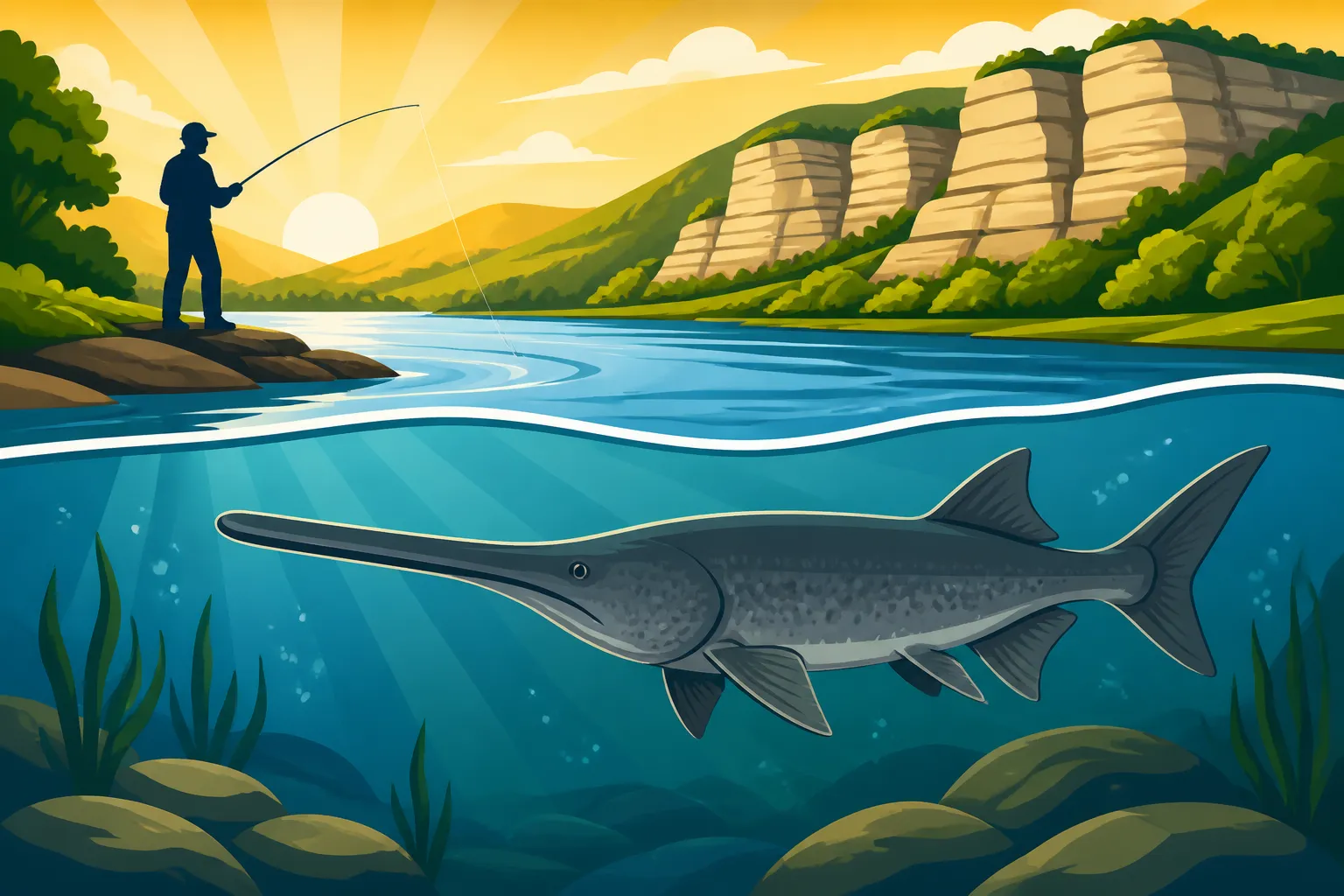
Unlike most fish that actively hunt their prey with keen eyesight, the paddlefish is a filter feeder. Imagine a living sieve swimming through the water! They have an elongated, paddle-shaped snout (rostrum) that is covered with thousands of sensory pores, helping them detect zooplankton and other microscopic organisms in the water. They swim with their mouths open, sifting these tiny food sources from the current. This unique feeding strategy means they need large, free-flowing river systems with ample plankton, which immediately narrows down their potential habitats in Kansas. Because they don't strike lures or bait in the traditional sense, catching them requires a very specific method: snagging. If you're curious about their biology, delve into Kansas Paddlefish Facts.
Their life cycle is also tied to large river systems. They undertake significant migrations to spawn, often moving upstream in spring to gravel bars in tributary streams or the main river channel when water flows are high. They're a long-lived species, and some individuals can grow to impressive sizes, making the potential for a truly trophy-sized fish an exciting prospect. When you hook into one, their sheer power is undeniable, making for a memorable fight.
Historical Presence in Kansas Rivers
Historically, paddlefish were found in many of the larger river systems throughout the central United States, including major rivers bordering or flowing through Kansas. Their populations have seen fluctuations over the decades due to habitat alteration, damming, and overharvesting in some areas. In Kansas, their natural presence is primarily associated with the Missouri River and its most significant tributaries, particularly the Kansas River for certain stretches, and to a lesser extent, parts of the Marais des Cygnes and Neosho River systems.
Conservation efforts and careful management by state wildlife agencies have been crucial in maintaining and, in some cases, restoring paddlefish populations. Understanding their historical range helps us appreciate why specific rivers remain their stronghold today. Dams, while creating reservoirs for other popular game fish, can impede the long-distance migrations paddlefish need for successful spawning, thus concentrating populations in undammed stretches or below major impoundments.
Key Kansas Rivers for Paddlefish
When it comes to reliably finding paddlefish in Kansas, one river system stands head and shoulders above the rest: the mighty Missouri. While other rivers may offer sporadic opportunities, the Missouri River acts as the main artery for these ancient fish.
The Missouri River System
The Missouri River forms the northeastern border of Kansas, and it is undoubtedly the premier location for paddlefish in the state. This vast river provides the large, turbulent, and nutrient-rich waters that paddlefish depend on for feeding and migration. The current below major dams, such as Gavin's Point Dam upstream in Nebraska, can concentrate plankton and, consequently, paddlefish. Anglers often find success in these turbulent tailwaters and deeper scour holes in the main channel.
While the Missouri River itself is the primary target, some of its larger, navigable tributaries, especially near their confluence with the Missouri, can also hold paddlefish during their migratory movements. The lower stretches of the Kansas River, particularly where it empties into the Missouri near Kansas City, can see paddlefish moving in from the Missouri. It’s crucial to remember that paddlefish are nomadic, always on the move in search of food, so their presence can vary. Success often comes from covering water and being where the plankton concentrations are highest. For specific rules, always check Kansas Fishing Regulations Explained.
Specific Access Points and Challenges
Finding specific "spots" for paddlefish on such a massive river system can be daunting. The best access points are often public boat ramps or shore access areas located near deep channels, current breaks, or below major structures where water flow creates eddies and concentrations of food. The sheer size and power of the Missouri River also present challenges, requiring stout gear and often a boat capable of handling strong currents.
Shore anglers might target areas where the river bottleneck or deep runs are accessible from the bank, though boating often provides the most flexibility for covering prime water. Safety is paramount when fishing such a powerful river; understanding river currents and potential hazards is essential. Always consult local regulations for specific areas, as some might have restrictions on snagging or even access during certain times. Kansas River Fishing Access Points Near Lawrence or Kansas River Fishing Access Points Near Manhattan might be useful for understanding general river access, although paddlefish are more commonly found further downstream near the confluence with the Missouri.
Paddlefish Seasons, Regulations, and Techniques
Catching a paddlefish isn't like casting for bass or setting a trotline for catfish. It requires specific knowledge of the season, proper technique, and adherence to unique regulations. Ignoring these can lead to frustration or, worse, legal trouble.
When and How to Pursue Paddlefish
Kansas has a very specific season for paddlefish snagging, typically concentrated in the spring. This timing coincides with the paddlefish's natural spawning migration, when they move upstream into shallower areas and become more concentrated, making them more accessible to anglers. It's not a year-round fishery, and the season is often quite short and tightly regulated to protect the species. Anglers must be aware of the exact dates, which can be found in the annual fishing regulations summary. A great resource for this is Kansas Paddlefish Snagging Season and Paddlefish Snagging Season Dates.
The method for catching paddlefish is called snagging. Since they are filter feeders, they won't bite a hook with bait. Instead, anglers use heavy-duty gear to cast large, weighted treble hooks and then retrieve them with a sweeping motion, hoping to "snag" the fish. It's a physically demanding technique, often requiring multiple casts and a strong retrieve. When a paddlefish is snagged, the fight is intense, given their size and power.
Essential Gear for Paddlefish Snagging
Successful paddlefish snagging demands robust equipment. You'll want a heavy-action fishing rod, typically 7-9 feet long, paired with a large, strong conventional reel or heavy spinning reel. Your fishing line should be incredibly strong, often 80-100 pound braided line, as you're not just fighting a fish, but also potentially heavy currents and the snagging motion itself. Think about checking out some options for heavy-duty setups on Amazon before you hit the water.
The terminal tackle consists of large treble hooks (often 8/0 to 12/0), heavily weighted to get them down to the fish. Some anglers use up to 10-16 ounces of lead to ensure the hooks sink quickly and can be swept through the water column where the paddlefish are present. Don't forget a sturdy landing net, ideally a large cradle net, or a gaff designed for landing very large fish. A good pair of heavy-duty gloves can also be beneficial for handling the line and fish. Make sure you understand How to Snag Paddlefish before you go!
| River System | Primary Target Species | Typical Access | Key Considerations |
|---|---|---|---|
| Missouri River | Paddlefish, Catfish | Boat, some shore | Strong current, heavy gear, check local regulations |
| Kansas River (lower) | Paddlefish (seasonal) | Boat, some shore | Proximity to Missouri River, seasonal migrations |
| Marais des Cygnes River | Catfish, occasional Paddlefish | Boat, shore | Smaller system, less consistent paddlefish presence |
| Neosho River | Catfish, occasional Paddlefish | Boat, shore | More common in Oklahoma sections, less in Kansas |
Conservation and Future of Kansas Paddlefish
The unique nature of paddlefish and the specific method required to harvest them means that conservation efforts are particularly important. These fish are a valuable natural resource, and ensuring their survival for future generations of anglers is a shared responsibility.
Protecting This Ancient Species
Paddlefish are long-lived and slow to mature, which makes them vulnerable to overfishing. This is why strict regulations are in place regarding season length, daily creel limits, and annual possession limits. Anglers are often required to immediately release any paddlefish caught outside the legal snagging season or those that do not meet size requirements, often with specific handling guidelines to minimize stress and injury. Understanding and following these rules is not just about avoiding penalties; it's about being a responsible steward of the resource. Knowing Kansas Fishing Law Enforcement and Penalties is key to understanding the consequences of non-compliance.
Additionally, habitat protection plays a vital role. Maintaining healthy river systems, managing water flow, and minimizing pollution all contribute to a robust paddlefish population. Anglers can be advocates for these efforts, ensuring that these incredible fish continue to thrive in Kansas.
The Role of Stocking and Management
In some areas where natural populations have declined or where new opportunities are being explored, state wildlife agencies may implement stocking programs. These programs can involve raising paddlefish in hatcheries and then releasing them into suitable river systems to bolster existing populations or establish new ones. This active management, combined with ongoing research into paddlefish biology, migration patterns, and population dynamics, helps ensure that fishing opportunities remain sustainable.
Monitoring catch rates and angler success also provides valuable data for managers to adjust regulations as needed. For instance, if populations show signs of decline, seasons might be shortened or limits reduced. Conversely, if populations are robust, carefully managed expansions might be considered. Ultimately, the health of the paddlefish fishery in Kansas rivers depends on a combination of effective management, habitat conservation, and ethical angling practices from everyone who loves to hit the water. Don't forget to check your Kansas Fishing License Guide to make sure you're properly equipped before venturing out.
Disclaimer
This article is for general informational purposes only and does not constitute professional advice. Laws, prices and regulations vary by location and change over time. Consult a qualified professional for guidance on your specific situation.