Largest Fish Species in Kansas Lakes
There's a special thrill that comes with the dream of reeling in a truly massive fish, something that puts your tackle to the test and leaves you with an unforgettable story. If you're an angler in Kansas, you might wonder just what kind of leviathans lurk beneath the surface of our lakes and rivers. This guide will dive deep into the largest fish species you can find in Kansas waters, helping you understand their habits, where to find them, and how to prepare for that potential fight of a lifetime.
What Defines a "Largest" Fish in Kansas?
When we talk about the "largest fish" in Kansas, it’s not always about the state record holder that might have been caught decades ago. For most of us, it’s about the species that consistently grow to impressive sizes, offering a real challenge and a rewarding catch. Kansas waters are diverse, supporting a variety of fish, but a few species stand out when it comes to sheer bulk and length. Understanding what contributes to their size, and distinguishing between a rare record and a regularly attainable trophy, is key to managing your angling expectations.
State Records vs. Common Angler Catches
Kansas has a fantastic program for recognizing state record fish, and these records are truly awe-inspiring. They showcase the absolute peak potential of a species within our state's waters. However, those record-breaking catches are often the result of years of dedicated fishing, a bit of luck, and sometimes, a once-in-a-lifetime opportunity. For the average angler, or even the dedicated one, consistently catching fish of state-record caliber is a rarity.
Instead, when most of us talk about targeting "large" fish, we're thinking about those specimens that are well above average for their species—a catfish that's pushing 40 pounds, a walleye that might stretch over 25 inches, or a crappie that gives a legitimate fight. These are the fish that offer a real sense of accomplishment without requiring the stars to align perfectly. It's important to appreciate the state records for what they are—benchmarks of excellence—while also understanding that regular trophy hunting focuses on what's more commonly achievable but still incredibly impressive. If you're curious about the absolute biggest, definitely check out the Kansas State Record Fish Guide.
Factors Influencing Fish Size
Several factors play into how large a fish can grow in Kansas. It's not just about genetics; the environment plays a huge role. Water quality, for instance, is paramount. Clean, well-oxygenated water with stable temperatures allows fish to thrive and avoid stress, leading to better growth rates. The availability of food is another critical element. A lake or river with an abundant forage base—think schools of shad, minnows, or even smaller panfish—will support larger predatory fish. If fish don't have enough to eat, they simply won't reach their full growth potential.
Predator-prey balance is also important. If there are too many predators for the available food, all fish in that population might be stunted. Conversely, a healthy balance allows for robust growth. Age is, of course, a major factor; older fish tend to be larger, assuming they've had good conditions throughout their lives. This is why certain fishing regulations, like length limits on species like walleye or crappie, are so crucial. They allow a portion of the population to grow to larger sizes, ensuring a healthier and more exciting fishery for everyone. Understanding these factors helps us appreciate the delicate balance of our aquatic ecosystems and why conservation efforts are so vital.
The Giants of Kansas Waters: Top Species for Trophy Anglers
When it comes to pure size and weight, a few species truly dominate the conversation in Kansas. These are the fish that require heavy-duty tackle, a strong back, and often, a lot of patience. They're not just big; they're powerful, offering fights that can test even the most seasoned anglers. If you're looking to target a true Kansas giant, these are the species you should be focusing on.
Blue Catfish: The River Monsters
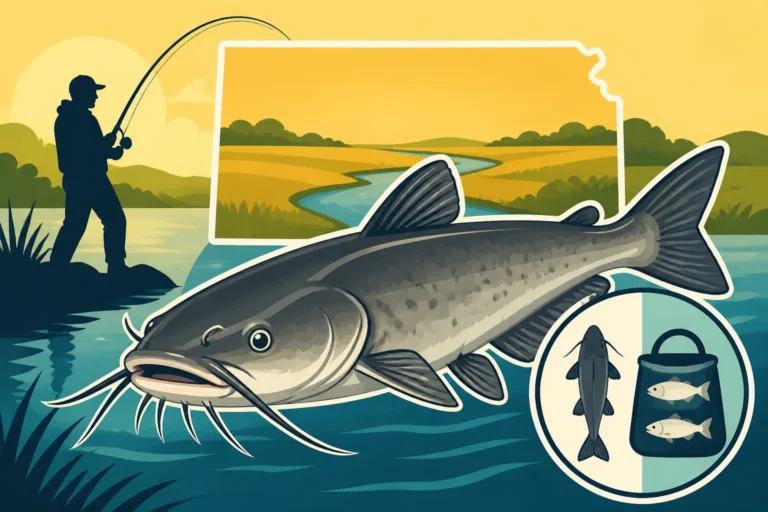
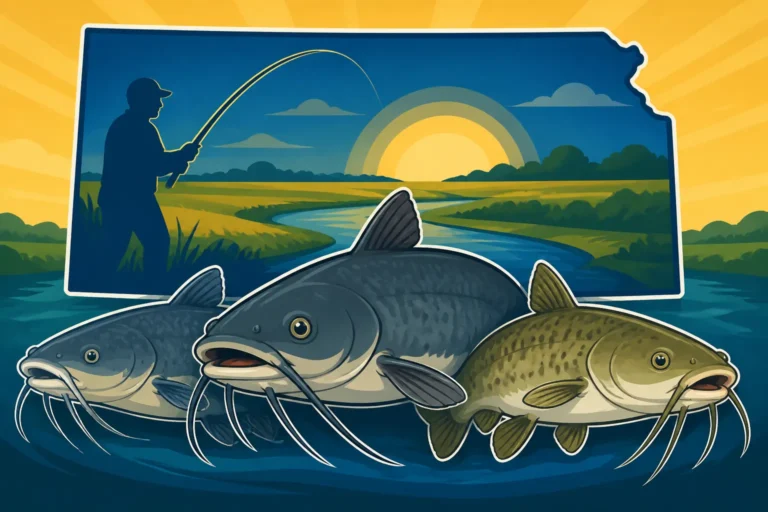
Hands down, the blue catfish is the king of size in Kansas waters. These incredible fish are true bottom-dwellers that can reach absolutely astonishing sizes. While they're often found in large rivers like the Kansas River or the Missouri River, they also thrive in many of our large reservoirs. Blue catfish are built for power and endurance; they have a distinct, slightly forked tail and a slate-blue to gray coloration. Their diet consists primarily of other fish, mussels, and crayfish, making them voracious eaters.
Anglers targeting blue cats often use heavy-duty conventional tackle, sturdy rods, and reels capable of holding hundreds of yards of strong braided line. Live or cut bait, such as shad, carp, or even prepared stink baits, are common choices. Imagine hooking into a blue cat in a strong river current; it's a battle of wills that can last for an extended period, testing every piece of your gear. Catching a blue catfish in the 50-pound range is a truly monumental achievement, and fish over 100 pounds have been recorded in Kansas! These are the fish that demand respect and preparation. You can learn more about these powerful fish in our Kansas Blue Catfish Facts and Limits guide.
Flathead Catfish: Ambush Predators of the Depths
While blue catfish are often found in open water or channel edges, the flathead catfish is a different beast entirely. These are solitary, territorial ambush predators that prefer to hide in heavy cover—sunken timber, rock piles, and deep holes. They're easily identified by their broad, flattened head, small eyes, and mottled brown-to-yellow coloration, which helps them blend into their surroundings. Unlike blues or channels, flatheads almost exclusively feed on live prey. They're not interested in stink baits; they want a lively bluegill, sunfish, or carp presented right in their strike zone.
Targeting flatheads requires a different strategy. Anglers often fish at night, dropping live bait directly into known cover. Heavy-duty gear is still a must, as these fish have incredible pulling power and will try to dive back into structure the moment they feel the hook. A 30 to 50-pound flathead is a fantastic trophy, and they can grow much larger, though they typically don't reach the same extreme sizes as the biggest blue cats. The fight from a flathead is raw power—they dig deep and try to break you off on submerged obstacles. Landing one is a testament to skill and strong tackle, making them one of the most sought-after trophy fish in the state. Our Kansas Flathead Catfish Facts and Limits article has more on these elusive giants.
Paddlefish: Ancient Giants of the Rivers
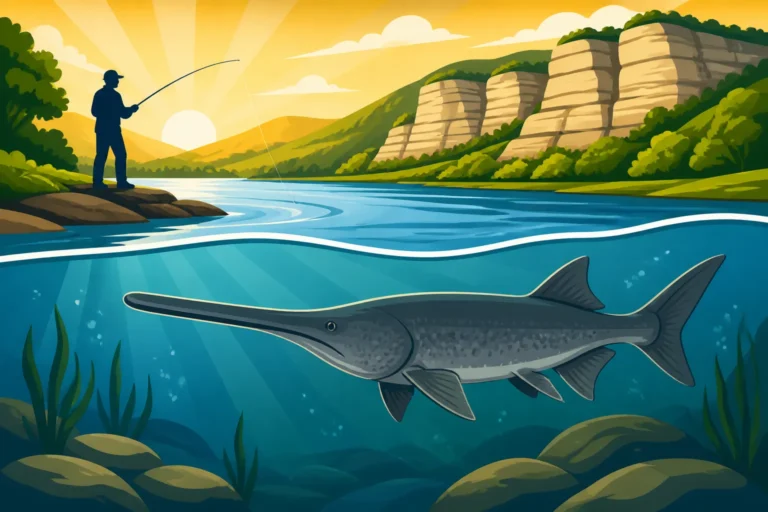
The paddlefish is truly unique among Kansas' largest fish species. Often called "spoonbill," these prehistoric-looking fish are filter feeders, using their distinctive, long, paddle-like snout to detect plankton in the water. They can grow to incredible lengths and weights, easily surpassing 100 pounds and reaching over 6 feet long. Found primarily in larger river systems like the Missouri, Kansas, and Neosho Rivers, paddlefish are not caught with traditional hook-and-line methods due to their feeding habits.
Instead, paddlefish are harvested through a specialized technique called snagging during specific seasons. This involves using large, heavy treble hooks and powerful rods to physically hook the fish from the outside. It's a highly regulated fishery, often requiring specific permits and strict seasons, usually in the spring when they migrate upstream to spawn. The sheer size and power of a snagged paddlefish make for an incredible fight, and landing one is an unforgettable experience. While it's a different kind of angling, the paddlefish definitely earns its place on the list of Kansas' largest and most impressive fish. Be sure to check the Kansas Paddlefish Snagging Season regulations before heading out.
| Fish Species | Average Trophy Size (lbs) | Max Recorded Size (lbs) | Primary Habitat | Preferred Bait/Technique |
|---|---|---|---|---|
| Blue Catfish | 30-60 | 100+ | Rivers, Large Reservoirs | Cut bait, Live bait, Prepared bait |
| Flathead Catfish | 20-50 | 80+ | Rivers, Reservoirs (heavy cover) | Live fish (bluegill, sunfish, carp) |
| Paddlefish | 50-100 | 150+ | Large Rivers | Snagging (specialized gear) |
| Striped Bass | 10-25 | 40+ | Large Reservoirs | Live shad, large swimbaits, trolling |
| Hybrid Striper (Wiper) | 5-15 | 20+ | Large Reservoirs | Shad, spoons, crankbaits, topwater |
Note: These are general figures. Max recorded sizes refer to exceptional catches, not typical expectations.
Strategies for Targeting Kansas' Largest Fish
Pursuing the biggest fish in Kansas isn't something you do on a whim with light tackle. It requires forethought, the right equipment, and an understanding of the fish you're after. These giants didn't get that big by being easy to catch. They are powerful, cunning, and often reside in challenging environments.
Gear Up for the Battle
When you're chasing the biggest fish in Kansas, your gear needs to be up to the task. This isn't the time for your ultralight panfish rod. For blue and flathead catfish, think heavy-action or extra-heavy action casting rods, typically 7 to 10 feet long, capable of handling heavy lines and big baits. Paired with these rods should be robust baitcasting reels with a strong drag system and ample line capacity. You'll want to spool up with at least 50-pound test braided line, or even heavier, especially if you're fishing in snaggy areas. This strong line will give you the power to turn a big fish away from cover and withstand their powerful runs. Many anglers find great deals on reliable, heavy-duty fishing lines and stout rods on platforms like Amazon.
Hooks need to be strong, too—think 7/0 to 10/0 circle hooks for catfish, designed to prevent gut hooking and ensure a solid hookset in their tough mouths. Leader material should also be heavy, often 80 to 100-pound monofilament or fluorocarbon, to withstand abrasion from rocky bottoms or the fish's rough mouth plates. For paddlefish snagging, you'll need specialized snagging rods that are incredibly stiff and strong, paired with large conventional reels and very heavy braided line, typically 80 to 120-pound test. Don't forget a large, sturdy landing net, like those designed for muskie or big catfish, to safely boat your catch. A good quality net is an investment that you can easily find on Amazon. Investing in reliable gear is the first step towards success. For more specific recommendations, our guide on the Best Rod and Reel Combo for Catfish might be helpful.
Locating the Leviathans
Finding these monster fish often comes down to understanding their preferred habitat and behavior. For blue catfish, focus on deep river channels, sharp bends, and areas with strong current in reservoirs and rivers. They often hold near submerged structures, current breaks, or deep holes where food is funneled to them. Major tributaries feeding into larger lakes are also prime spots, especially during certain times of the year when baitfish are abundant.
Flathead catfish are much more structure-oriented. Look for them in areas with heavy logjams, fallen trees, brush piles, or large rock formations in deep water. They prefer to ambush their prey from these hiding spots. Using a good fish finder can be invaluable here to locate these underwater sanctuaries. Scout for areas with deep water adjacent to shallower feeding flats. Best Catfish Lakes in Kansas provides excellent insights into specific locations known for these giants.
Paddlefish, as filter feeders, are typically found in the main channels of large rivers and reservoirs, especially during their spring spawning runs when they migrate upstream to specific areas. They often concentrate below dams or in deep pools. Knowing the Kansas Fishing Seasons Guide and specific regulations for snagging is absolutely crucial before targeting these ancient fish.
Patience and Persistence
Catching truly large fish in Kansas, or anywhere for that matter, is rarely an instant gratification pursuit. It demands significant patience and unwavering persistence. These fish are often solitary, or at least less numerous than smaller fish, and they can be finicky eaters. You might spend hours or even entire days fishing prime locations with perfect bait without a single bite, only to have a massive fish hit your line when you least expect it.
Successful trophy anglers often commit to a spot for extended periods, especially when targeting flatheads, or will systematically work through large areas when searching for blues. Night fishing is a common and often highly effective strategy for both blue and flathead catfish, as these species are more active after dark. Setting up multiple rods with different baits or at varying depths can also increase your odds. Don't get discouraged by slow periods; the reward of hooking into a true Kansas giant is well worth the wait. It's about enjoying the process, the tranquility of being on the water, and the sudden, explosive excitement when that heavy rod finally doubles over.
Disclaimer
This article is for general informational purposes only and does not constitute professional advice. Laws, prices and regulations vary by location and change over time. Consult a qualified professional for guidance on your specific situation.