Redear Sunfish Identification
It's incredibly frustrating when you're out on a beautiful Kansas lake, pulling in panfish left and right, but can't quite tell if you've landed a bluegill, a green sunfish, or something a little different. Many anglers struggle to accurately identify the various sunfish species, which can lead to confusion about regulations or missed opportunities to target a specific fish. This comprehensive guide is here to cut through that confusion, helping you confidently identify redear sunfish, often affectionately known as "shellcrackers," so you can fish smarter and know exactly what you've got on your line.
Why Identifying Redear Sunfish Matters for Anglers
Knowing exactly what kind of fish you've caught isn't just about showing off your knowledge; it's genuinely crucial for a successful and responsible fishing experience here in Kansas. When you can pinpoint a redear sunfish from its look-alikes, you unlock a whole new level of angling precision.
Understanding Bag Limits and Regulations
Every angler knows that different fish species often come with their own set of rules and restrictions. Imagine spending a fantastic afternoon reeling in what you think are bluegill, only to realize later that some of them were actually redear sunfish, and you've potentially exceeded a different bag limit or length restriction. It happens more often than you'd think! The Kansas Department of Wildlife and Parks (KDWP) sets specific guidelines to help manage fish populations, and these can vary from species to species, and even from lake to lake.
For example, while bluegill and redear sunfish are both panfish and often found in similar waters, there might be subtle differences in their daily creel limits or even length requirements in certain bodies of water. Misidentification could mean inadvertently breaking a regulation, leading to a fine or even the loss of fishing privileges. Taking the time to correctly identify your catch ensures you're always on the right side of the law and contributing to sustainable fishing practices in our beautiful state. It's all part of being a responsible angler, and knowing the rules, which you can always review in the Kansas Fishing Regulations Explained, starts with knowing your fish.
Targeting Specific Species for Better Success
Redear sunfish aren't just pretty faces; they have distinct habits, preferred foods, and hangouts that differ from other sunfish. If you can reliably identify them, you can start to specifically target them, which often leads to more consistent catches and a more rewarding fishing trip. These "shellcrackers" earned their nickname for a reason: they have specialized crushing plates in their throats that allow them to feast on snails, mussels, and other bottom-dwelling invertebrates. This unique diet means they often respond better to certain baits and presentations than, say, a bluegill that might prefer a small insect imitation.
Think about it: if you're casting small jigs and crickets, you might catch plenty of bluegill. But if you specifically rig up with a small piece of worm, a snail (if you can get one!), or a tiny bottom-bouncing lure, and present it near areas known for shellbeds, you're much more likely to entice a redear. Understanding their preferences, which stem directly from their physical adaptations and behavior, allows you to tailor your gear and tactics, moving beyond generic panfishing into specialized redear pursuit. This kind of knowledge truly elevates your game and allows you to truly understand the Kansas Panfish Guide.
Contributing to Conservation Efforts
Every piece of information gathered about fish populations helps wildlife agencies make informed decisions about management, stocking, and habitat protection. When you accurately identify your catches, especially if you participate in creel surveys or report unusual catches, you're directly contributing to the KDWP's ability to maintain healthy fisheries across Kansas. For instance, if you're consistently finding redear sunfish thriving in a particular Kansas Community Fishing Lake Rules where they weren't historically dominant, that data can be valuable.
Moreover, knowing your species helps you advocate for the right kind of conservation. If a particular lake's redear population is struggling, or perhaps over-performing, accurate identification on a broader scale helps biologists track these trends. It’s a collective effort, and your personal knowledge contributes to the bigger picture, ensuring that future generations of anglers can also enjoy the thrill of catching these delightful sunfish.
Key Physical Characteristics of Redear Sunfish
Identifying a redear sunfish really comes down to a few standout features that, once you know them, make spotting these guys relatively easy. Forget the vague "sunfish look"; redear have specific traits that set them apart.
The Distinctive "Red Ear" Spot
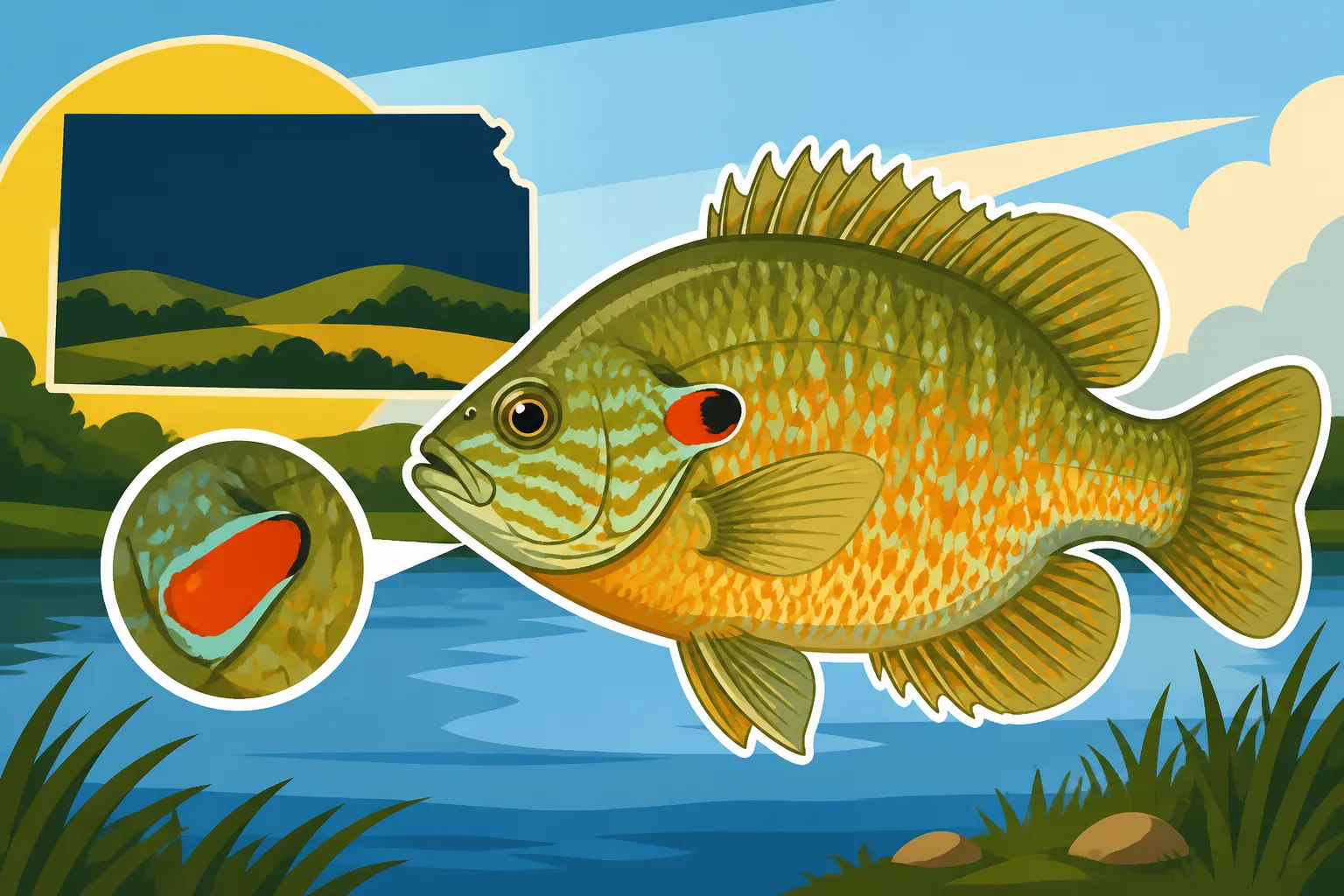
This is, by far, the most famous and obvious identifier, hence their common name! Look closely at the posterior margin of the gill cover, right behind the eye, where you'd typically see a "gill flap" or "ear flap" on most sunfish. On a redear, you'll find a distinct, bright red or orange-red spot or margin on that flap. It's often vibrant, almost like a splash of paint, and it stands out beautifully against the darker background of the flap itself. Unlike other sunfish that might have a solid black or dark ear flap (like the bluegill) or a black flap with a light, sometimes yellowish, margin (like the green sunfish), the redear's splash of crimson is unmistakable.
While this red spot is present on both sexes, it tends to be more pronounced and brilliant on males, especially during the spawning season when their colors intensify. It's not a hard, bony protrusion but rather a soft, fleshy margin. If you're comparing a redear to a bluegill, for example, the bluegill's ear flap will be entirely black and flexible, whereas the redear’s will have that telltale streak of red. This one feature alone is usually enough to confirm your identification, making it a handy trick to have up your sleeve.
Body Shape and Coloration
Beyond the "ear," the redear sunfish has a body shape that's typically deeper than it is wide, giving it a somewhat compressed, disc-like appearance, though perhaps not as extreme as a true bluegill. Their backs are usually an olive green to a golden brown, which provides excellent camouflage in vegetated waters, gradually fading to lighter, yellowish-green sides. The belly is often a creamy white or pale yellow.
You might notice some faint vertical bars on their sides, but these are generally much less distinct and less numerous than the prominent, dark barring often seen on bluegill, particularly juvenile bluegill. Another subtle but important detail is the small, somewhat blunt snout and a small terminal mouth. This small mouth is perfectly adapted for picking up tiny snails and other invertebrates from the lake bottom, rather than chasing down larger prey. They also typically have a dark spot at the rear of their dorsal fin, but critically, this spot does not extend onto the body of the fish, which helps differentiate it from some other sunfish that have a black spot on the soft rays of the dorsal fin that often creates a "thumbprint" on the body below.
Fin Characteristics
The fins of a redear sunfish also offer helpful clues for identification. Pay close attention to the pectoral fins, located just behind the gills on the side of the fish. On a redear, these fins are generally long and pointed, extending noticeably past the eye when pressed forward. This can be a good distinguishing characteristic compared to some other sunfish species that have shorter, more rounded pectoral fins.
The dorsal fin, which runs along the top of the back, is typically composed of two parts: a spiny anterior section and a soft-rayed posterior section. These two sections are usually broadly joined, appearing as one continuous fin. Crucially, as mentioned earlier, the dark spot sometimes present on the soft-rayed part of the dorsal fin does not typically extend down onto the body of the fish itself. This is a key difference from bluegill, where a distinct black "thumbprint" or spot at the base of the soft dorsal fin is a common and reliable identifier. Observing these fin details in conjunction with the "red ear" and body shape will solidify your identification.
Here's a quick comparison table to help visualize the differences between common Kansas sunfish:
| Feature | Redear Sunfish (Lepomis microlophus) | Bluegill (Lepomis macrochirus) | Green Sunfish (Lepomis cyanellus) |
|---|---|---|---|
| Ear Flap | Black with distinct red/orange margin | Entirely black, flexible, no red/orange | Black with a light (often yellow/orange) margin |
| Mouth Size | Small, terminal, blunt snout | Small, terminal | Large, extends past center of eye |
| Body Shape | Deep, compressed, moderately thin | Very deep, highly compressed, disc-like | Robust, elongated, less compressed |
| Coloration | Olive green/golden brown, faint vertical bars | Dark olive/blue-green, prominent dark vertical bars | Olive-brown/green, wavy blue lines on cheek/gill cover |
| Dorsal Fin Spot | Present, but usually on fin, not body | Prominent black spot at base of soft dorsal fin | Present, but not as distinct as bluegill |
| Pectoral Fins | Long and pointed | Shorter, more rounded | Shorter, rounded |
Behavioral Cues and Habitat for Identification
Beyond their physical appearance, understanding where redear sunfish live and what they do can also be a huge help in identifying them. Fish don't just randomly appear; they seek out specific conditions that suit their survival and feeding habits.
Preferred Habitat and Diet
Redear sunfish didn't get the nickname "shellcrackers" for nothing! Their diet consists primarily of snails, aquatic insect larvae, small crustaceans, and other invertebrates found on the bottom. This specialized diet directly influences where you'll typically find them. They are masters of foraging along the bottom, using their small, pointed snout to root around in the substrate. Therefore, they tend to inhabit areas with clear, calm water, often rich in submerged vegetation, brush piles, rocky areas, and gravel beds where these invertebrates thrive. These structures offer both food sources and protection.
You'll generally find redear sunfish in slightly deeper waters than bluegill might prefer, especially as they get larger. While they certainly can be found in shallow spawning beds, during much of the year, they'll be cruising depths that allow for comfortable bottom foraging. If you're fishing a spot known for shellbeds or heavy weed growth, and you feel that distinctive "thump" of a fish picking up your bait off the bottom, there's a good chance it might be a redear. Knowing their diet also guides your bait selection – small worms, crickets, or even specialized snail-imitating lures found on Amazon can be incredibly effective.
Spawning Habits
Like many sunfish, redear are nest builders. Their spawning season in Kansas typically kicks off in late spring to early summer when water temperatures consistently reach the upper 60s to low 70s Fahrenheit. During this time, males will fan out saucer-shaped depressions in shallow, hard-bottomed areas, often near protective cover like submerged logs or weed lines. What's particularly interesting is that redear are often colonial spawners, meaning you might find multiple nests relatively close to each other.
Observing fish on their spawning beds can be an excellent opportunity for identification. As mentioned, male redear sunfish, in particular, will display more vibrant colors during this period, making their distinctive red or orange ear flap even more pronounced. If you spot a group of sunfish guarding nests in a shallow, clear-water cove and notice those bright ear markings, you're likely observing spawning redear. Just remember to admire them respectfully and avoid disturbing their crucial reproductive efforts. You can often find them during the peak of the Kansas Spring Fishing Guide and well into the Kansas Summer Fishing Guide.
Where to Find Redear Sunfish in Kansas
Redear sunfish are quite widespread in Kansas, making them a common target for panfish enthusiasts. They thrive in a variety of water bodies, including many of the state's community lakes, federal reservoirs, and larger state fishing lakes. They particularly do well in waters with abundant aquatic vegetation and clear conditions.
Lakes like Cheney Reservoir, El Dorado Lake, and many of the smaller state fishing lakes are known to hold good populations of redear. While they often co-exist with bluegill, you might find them in slightly different niches within the same body of water. For example, bluegill might be right up against the riprap, while redear might be a little further out, working a submerged hump or the edge of a weed bed. Always check the KDWP fishing reports for specific lakes you plan to visit, as they often provide insights into species presence and hotspots. Consulting a guide like Best Fishing Lakes in Kansas might give you a good starting point for your redear quest.
Common Look-Alikes and How to Differentiate
The sunfish family is a diverse bunch, and many species in Kansas can look quite similar at a glance. It's easy to get them mixed up, especially when they're young or if you're not used to seeing them. Let's break down the key differences between redear sunfish and their most common doppelgängers.
Redear Sunfish vs. Bluegill
This is probably the most common identification challenge anglers face in Kansas. Bluegill are ubiquitous and often caught alongside redear. While they share a similar overall body shape, there are clear distinctions:
- Ear Flap: The most reliable difference. Bluegill have an entirely black, flexible ear flap with no hint of red or orange. The redear, of course, has that prominent red/orange margin on its ear flap.
- Dorsal Fin Spot: Bluegill almost always have a distinct black "thumbprint" or spot at the base of their soft dorsal fin, which often extends onto the body below the fin. Redear may have a dark spot on the fin, but it rarely extends onto the body.
- Vertical Bars: Bluegill, especially juveniles, typically display much more prominent dark vertical bars on their sides. While redear can have faint bars, they are far less defined than those on a bluegill.
- Mouth Size: Bluegill have a very small mouth, even smaller than a redear's, perfectly suited for picking small insects off the surface or from vegetation.
- Pectoral Fins: As noted, redear tend to have longer, more pointed pectoral fins compared to the bluegill's shorter, more rounded ones.
Knowing these subtle yet crucial differences will prevent you from mixing up these two fantastic panfish species. If you want a deeper dive, check out our guide on Bluegill Identification.
Redear Sunfish vs. Green Sunfish
Green sunfish are another common panfish in Kansas, known for their aggressive nature. They're often found in streams, ponds, and even the shallow, murkier areas of larger lakes. While they are a sunfish, they have a more robust, almost bass-like body compared to the disc-shaped redear.
- Mouth Size: This is the dead giveaway for a green sunfish. They have a surprisingly large mouth that extends well past the center of their eye, sometimes even to the back of the eye. A redear's mouth is much smaller and does not extend that far back.
- Ear Flap: Green sunfish have a black ear flap with a prominent, light-colored margin, often yellow or orange. However, this margin is generally around the black spot, not a distinct red splash on it like the redear.
- Body Coloration: Green sunfish often have iridescent blue-green spots or wavy lines on their cheeks and gill plates, which are absent on redear. Their overall body is typically a darker olive-green, fading to a yellowish belly.
- Body Shape: Green sunfish are stockier and more elongated than the deeper-bodied redear.
If you catch a fish that looks like a sunfish but has an unexpectedly large mouth for its size, you've likely got a green sunfish.
Hybrid Sunfish Considerations
To make things a little trickier, sunfish species can and do hybridize, especially when different species are stocked together or when populations overlap. This means you might occasionally encounter a fish that exhibits a mix of characteristics from two different species, making definitive identification a real head-scratcher. For example, a bluegill-redear hybrid might have a hint of red on its ear flap but also a more pronounced dorsal fin spot like a bluegill.
When you're faced with a hybrid, the best approach is often to apply the most restrictive regulation from either parent species, just to be safe. For example, if you think you have a redear-bluegill hybrid, and bluegill have a 10-inch minimum length limit while redear don't, it's wise to assume the 10-inch limit applies. This ensures you're always fishing legally. For tricky cases, a detailed fish identification guide, perhaps one you picked up from a local tackle shop or ordered through Amazon, can be a valuable tool to help you navigate those ambiguous catches. It's a great resource to have on hand for when you're asking yourself, "Are Redear Sunfish Good to Eat?" or trying to determine if you need to release it.
Ultimately, becoming proficient at redear sunfish identification is a skill that comes with practice and keen observation. Don't get discouraged if you're not an expert overnight. Take your time, examine your catches closely, and remember those key features we've discussed. The more you fish and observe, the more confident you'll become in knowing exactly what's on the end of your line, enhancing every one of your Kansas fishing adventures.
Disclaimer
This article is for general informational purposes only and does not constitute professional advice. Laws, prices and regulations vary by location and change over time. Consult a qualified professional for guidance on your specific situation.