Crappie Minimum Length Is 10 Inches
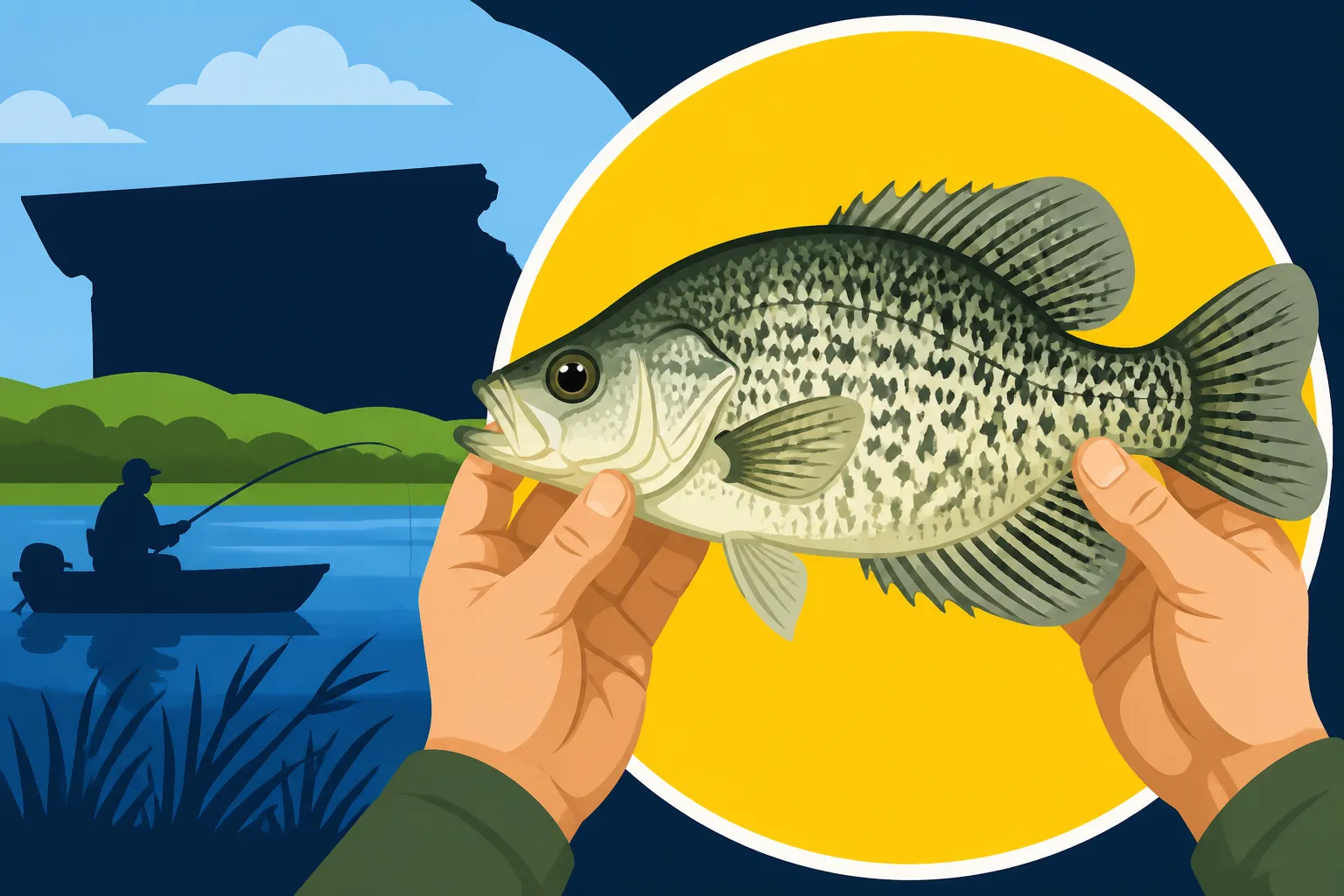
It's happened to every Kansas angler, myself included. You're out on the lake, the crappie are biting like crazy, and you pull in what feels like a decent fish. Your heart pounds, picturing it sizzling in the pan, only to measure it and find it's just shy of the legal minimum length. It's a universal frustration, but understanding why Kansas sets a minimum length of 10 inches for crappie, and how to navigate these rules, is crucial for a successful and legal fishing trip. This guide will walk you through everything you need to know about crappie length limits in the Sunflower State.
Understanding Kansas Crappie Regulations: Why Length Limits Matter
When you're out on a beautiful Kansas reservoir, enjoying the peace and quiet, the last thing you want is to be wondering if the fish in your livewell are legal. The regulations can sometimes feel like a puzzle, but there's a real method to the madness, especially when it comes to crappie. Knowing the "why" behind rules like the 10-inch minimum length helps us all appreciate their importance for the future of our favorite fishing spots.
The "Why" Behind the 10-Inch Minimum
Let's be honest, nobody likes being told they have to throw back a perfectly good fish. It can be a real bummer, especially if it's a chunky one that just doesn't quite hit that mark. But the Kansas Department of Wildlife, Parks and Tourism (KDWPT) doesn't just pull these numbers out of thin air. The 10-inch minimum length limit for crappie is a carefully considered regulation designed to protect and enhance crappie populations across our state. It's all about ensuring that enough crappie live long enough to reproduce at least once, and ideally, multiple times, before they're harvested.
Think of it like this: if anglers were allowed to keep every crappie they caught, regardless of size, the smaller, younger fish would be quickly depleted. This would severely impact the population's ability to sustain itself. By setting a 10-inch minimum, the KDWPT gives crappie a chance to mature, spawn, and contribute to the next generation of fish. This biological strategy helps maintain a healthy balance in our lakes and reservoirs, leading to more abundant and larger crappie for everyone in the long run. It means that while you might have to release a few smaller ones today, you're helping to guarantee fantastic fishing for years to come. It's a win-win, even if it doesn't always feel like it when you're looking at that perfect 9.5-inch slab. You can read more about general rules in Kansas Fishing Regulations Explained.
General Statewide Rules vs. Lake-Specific Exceptions
Now, here's where things can get a little tricky, and it's super important to pay close attention before you head out. While the 10-inch minimum length limit for crappie is a very common statewide guideline in Kansas, it is not universal for every single body of water. Some lakes and reservoirs have what are called "site-specific" regulations that can differ significantly. These exceptions are put in place by fisheries biologists who study individual lake ecosystems and determine that a different approach is needed to manage that particular fishery for optimal health and angling success.
For example, you might find a lake where the crappie minimum length is 9 inches, or perhaps 11 inches. Some lakes might even implement "slot limits," which means you can keep fish below a certain size (e.g., under 10 inches) and above another size (e.g., over 15 inches), but you must release any fish caught within the "slot" (e.g., between 10 and 15 inches). This kind of regulation is designed to protect a specific size class of fish, often the prime spawners, to ensure they can reproduce freely. It's not uncommon for popular fishing destinations or Kansas Community Fishing Lake Rules to have these unique stipulations. Always, always, always check the specific regulations for the lake you plan to fish before you cast your first line. A quick look at the KDWPT fishing regulations summary or the signage at the boat ramp can save you a lot of headache and potential penalties down the road. This diligence is part of being a responsible angler in Kansas. For a comprehensive overview, consult Kansas Crappie Length and Bag Limits and Kansas Daily Creel Limits by Species.
Practical Application: Measuring Your Crappie and Avoiding Fines
So, you've landed a beautiful crappie, and it looks like a keeper! But wait, don't just toss it in the livewell without a proper measurement. Knowing how to accurately measure your catch is just as important as knowing the legal limit. A few millimeters can make all the difference, and nobody wants to inadvertently break a rule or face the consequences.
The Right Way to Measure a Crappie
Measuring a fish might seem straightforward, but there's a specific technique that law enforcement officers use, and you'll want to mimic it to ensure accuracy. The key is to measure the fish's total length. Here's a step-by-step guide:
- Get Your Measuring Device Ready: You'll need a reliable measuring tape or, even better, a dedicated fish measuring board. A good, flat measuring board with clear markings is your best friend, and you can find various models online, including on sites like Amazon. These often have a solid stop at one end, which makes it easier to get an accurate reading.
- Lay the Fish Flat: Gently lay your crappie on its side on a flat, level surface. The fish should be as straight as possible, not curved.
- Close the Mouth: Push the fish's mouth closed so that its snout is touching the solid stop or the zero mark of your measuring device. This is crucial; measuring with an open mouth will give you an inflated reading.
- Squeeze the Tail: Gently squeeze the tail fin lobes together to maximize the length. The total length is measured from the tip of the snout to the end of the longest lobe of the tail fin. Read the measurement at the point where the longest part of the tail fin touches the ruler or measuring board.
Common mistakes include measuring to the fork of the tail, not closing the mouth, or letting the fish curve, all of which can lead to an inaccurate (and often shorter) measurement. Always aim for precision. If there's any doubt, it's always safer to err on the side of caution and release the fish. You're out there to enjoy the experience, not worry about a ruler!
What Happens If You Catch an Undersized Crappie
Catching an undersized crappie is a common occurrence, especially when the bite is hot. The key is knowing what to do immediately: release it quickly and carefully. It's a fundamental part of responsible angling and ensuring the sustainability of our fisheries. You might feel a pang of disappointment when that beautiful slab turns out to be 9.75 inches, but that fish will grow up and provide a fight for someone else (maybe even you!) another day.
However, the consequences for keeping an undersized fish are not something to take lightly. If a Kansas game warden finds you in possession of crappie that do not meet the legal length requirements, you could be facing a citation. Penalties can include significant fines, and in more serious or repeated cases, could even lead to the suspension of your fishing privileges. Nobody wants to deal with that, especially when a simple measurement and release could have prevented it. The rules are there to protect the resource, and enforcement is how those rules maintain their effectiveness. It’s always better to be safe than sorry, and always prioritize the health of the fish you release. For a broader understanding of legal repercussions, take a look at Fishing Without a License Penalties in Kansas, as these often cover a range of violations.
Strategies for Targeting Keeper Crappie and Sustainable Fishing
While the excitement of any bite is great, most of us are really hoping to fill the cooler with fish that meet those length requirements. The good news is that there are strategies you can employ to increase your chances of landing those "keeper" crappie, while also ensuring you're fishing responsibly and supporting the health of the population.
Locating Larger Crappie
Larger crappie often behave differently than their smaller counterparts. They tend to be a bit more solitary or gather in smaller, more spread-out groups compared to the dense schools of smaller crappie. Knowing where to look and what to use can significantly improve your odds.
- Structure is Key: Bigger crappie are almost always found near some form of structure. This could be submerged timber, brush piles, rock formations, bridge pilings, or even old roadbeds and foundations. They use these structures for ambush points, shelter, and as staging areas. In Kansas reservoirs, look for these features using your electronics or by consulting hydrographic maps.
- Depth Preferences: While smaller crappie can be found shallow at various times, larger crappie often prefer slightly deeper water, especially during warmer months or colder periods. They might move shallow during the spring spawn, but otherwise, they tend to hold in deeper creek channels, humps, or points. Don't be afraid to experiment with different depths until you find where they're holding.
- Time of Year and Day: The spring spawn is a prime time to catch large crappie when they move into shallower water to reproduce. However, fall can also be excellent as they feed aggressively before winter. Early mornings and late evenings, or even night fishing, can be productive, as larger crappie often feed more actively during low light conditions.
- Bigger Baits, Different Presentations: Don't be afraid to size up your bait or lure. While small jigs and minnows catch crappie of all sizes, a slightly larger jig or a bigger live minnow can often entice bigger crappie while deterring some of the smaller ones. Consider using a 1/8 oz or 1/4 oz jig instead of tiny 1/32 oz jigs. Slow trolling with multiple rods can also cover a lot of water and help you locate scattered, larger fish. If you want to dive deeper into techniques, check out Kansas Crappie Fishing Techniques.
By focusing your efforts on these areas and adapting your tactics, you'll be well on your way to catching more legal-sized crappie and experiencing the thrill of a productive day on the water.
Practicing Catch and Release for Undersized Fish
Even with the best strategies, you're bound to catch undersized crappie. How you handle these fish is paramount to their survival and the long-term health of the fishery. Practicing proper catch and release techniques isn't just a good idea; it's an ethical responsibility for every angler.
Here's how to ensure the best chance of survival for those precious little crappie:
- Handle with Care: Always wet your hands before touching a fish. Dry hands can remove the fish's protective slime coat, making it more susceptible to disease. Avoid gripping the fish by its eyes or gills, which are extremely delicate.
- Minimize Air Exposure: Crappie, like all fish, need oxygen from water. Keep the fish in the water as much as possible while you unhook it and measure it. A quick measurement is key; if it's clearly undersized, release it immediately without even lifting it out of the water if possible.
- Proper Unhooking: Use a pair of needle-nose pliers or a hook-remover tool to quickly and carefully remove the hook. If the hook is deeply swallowed, and you can't remove it without causing significant damage, it's often best to cut the line as close to the hook as possible. The hook will likely rust out over time, and this causes less trauma than trying to force it out. Using barbless hooks or crimping down the barb on your hooks can also make removal much easier and less damaging.
- Revive If Necessary: If the fish seems sluggish after being unhooked, gently hold it upright in the water and move it back and forth to force water over its gills. This helps it to "breathe" again. Only release it when it's strong enough to swim away on its own.
- Appropriate Gear: Using lighter tackle, like the setups discussed in Best Rod Setup for Kansas Crappie, can often allow for quicker fights, reducing stress on the fish. While you want tackle strong enough to land your target, going excessively heavy can also prolong the fight with smaller fish, tiring them out unnecessarily.
By embracing these catch and release principles, you become a steward of our Kansas waters, helping to ensure that the crappie populations remain healthy and vibrant for future generations of anglers.
Staying Informed and Supporting Crappie Populations
Being an angler is more than just casting a line; it's about being part of a community that cares for our natural resources. This includes staying on top of regulations and contributing to the conservation efforts that make Kansas fishing so fantastic.
How to Access Current Regulations and Updates
The world of fishing regulations isn't static. Rules can change from year to year, or even within a season, especially if a particular fishery experiences population fluctuations or environmental shifts. Relying on outdated information is a sure-fire way to find yourself in a bind. So, how do you stay informed?
- KDWPT Website: The official Kansas Department of Wildlife, Parks and Tourism website is your absolute best friend. They publish the most current and accurate fishing regulations annually. You can usually download a digital copy of the fishing regulations summary or browse specific rules by body of water. This is the gold standard for information.
- Official Regulation Digest: Before the fishing season really kicks off, the KDWPT prints and distributes a physical fishing regulation digest. These are typically available at most places that sell fishing licenses, like bait shops, sporting goods stores, and county clerk's offices. Grab one, read it cover to cover, and keep it handy in your tackle box or boat. For where to find these, consider Where to Find the Kansas Fishing Regulations Summary.
- Local Bait Shops and Marinas: These local hubs are often invaluable resources. The folks who work there are usually avid anglers themselves and stay very current on local conditions and regulations, especially those site-specific rules that might not be immediately obvious. Don't hesitate to ask questions when you pick up your bait.
- Signage at Ramps and Parks: Many state fishing lakes and public access points will have signage posted at boat ramps or park entrances detailing any site-specific length or creel limits. Always take a moment to read these signs as you arrive.
Make it a habit to check the regulations for your chosen body of water before every trip. It takes just a few minutes, and it can prevent a lot of stress and potential penalties. Remember, ignorance of the law is rarely an excuse in the eyes of a game warden. Staying informed is a sign of a truly dedicated and responsible angler. You can also pick up your Kansas Fishing License Guide from these sources.
The Role of Anglers in Crappie Conservation
As anglers, we have a unique and vital role to play in the conservation of crappie and all fish species in Kansas. We're not just consumers of the resource; we're its most passionate advocates and guardians. Every decision we make, from following length limits to how we handle our catch, has an impact.
By diligently adhering to regulations like the 10-inch minimum crappie length, we directly contribute to the KDWPT's efforts to maintain sustainable and robust crappie populations. When we release undersized fish carefully, we're giving them a second chance to grow and spawn, ensuring there are plenty of fish for future generations. This isn't just about avoiding a ticket; it's about investing in the future of our sport.
Beyond just following the rules, anglers can also:
- Report Violations: If you witness someone openly violating fishing regulations, reporting it to the KDWPT helps protect the resource for everyone.
- Participate in Surveys: Sometimes, the KDWPT will conduct angler surveys, asking about your catch, effort, and opinions. Participating in these provides valuable data for fisheries managers.
- Support Conservation Organizations: Many local and national organizations work to improve fish habitat, advocate for sound management practices, and educate the public. Consider supporting them through membership or volunteering.
- Clean Up After Yourself: Simple things like properly disposing of trash, fishing line, and bait containers go a long way in keeping our waters healthy and appealing for both fish and fellow anglers.
In essence, being a responsible angler means understanding that we are part of a larger ecosystem. Our actions collectively determine the health and future abundance of crappie and other beloved fish species in Kansas. By doing our part, we help ensure that the joy of crappie fishing remains a cherished tradition in the Sunflower State for many years to come.
Here's a quick comparison of general Kansas crappie regulations versus some hypothetical lake-specific examples to highlight the variability you might encounter:
| Regulation Aspect | General Kansas Statewide Rule | Hypothetical Lake A (e.g., a community lake) | Hypothetical Lake B (e.g., a large reservoir) |
|---|---|---|---|
| Minimum Length | 10 inches | 9 inches (to reduce crowding of small fish) | 11 inches (to promote trophy growth) |
| Daily Creel Limit | 50 fish | 25 fish | 30 fish with a 12-15 inch slot limit |
| Possession Limit | 3 times the daily creel limit | 3 times the daily creel limit | 3 times the daily creel limit |
| Special Restrictions | None (unless noted otherwise) | No trotlines or jug fishing permitted | Artificial lures only during certain months |
| Season | Open year-round | Open year-round | Open year-round |
Please remember, the "Hypothetical Lake A" and "Hypothetical Lake B" examples are for illustration only. Always check the official KDWPT regulations for the specific body of water you intend to fish.
Disclaimer
This article is for general informational purposes only and does not constitute professional advice. Laws, prices and regulations vary by location and change over time. Consult a qualified professional for guidance on your specific situation.