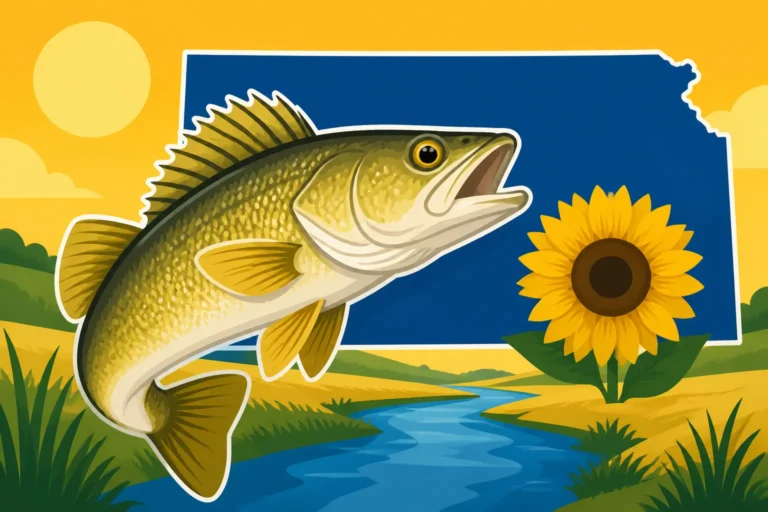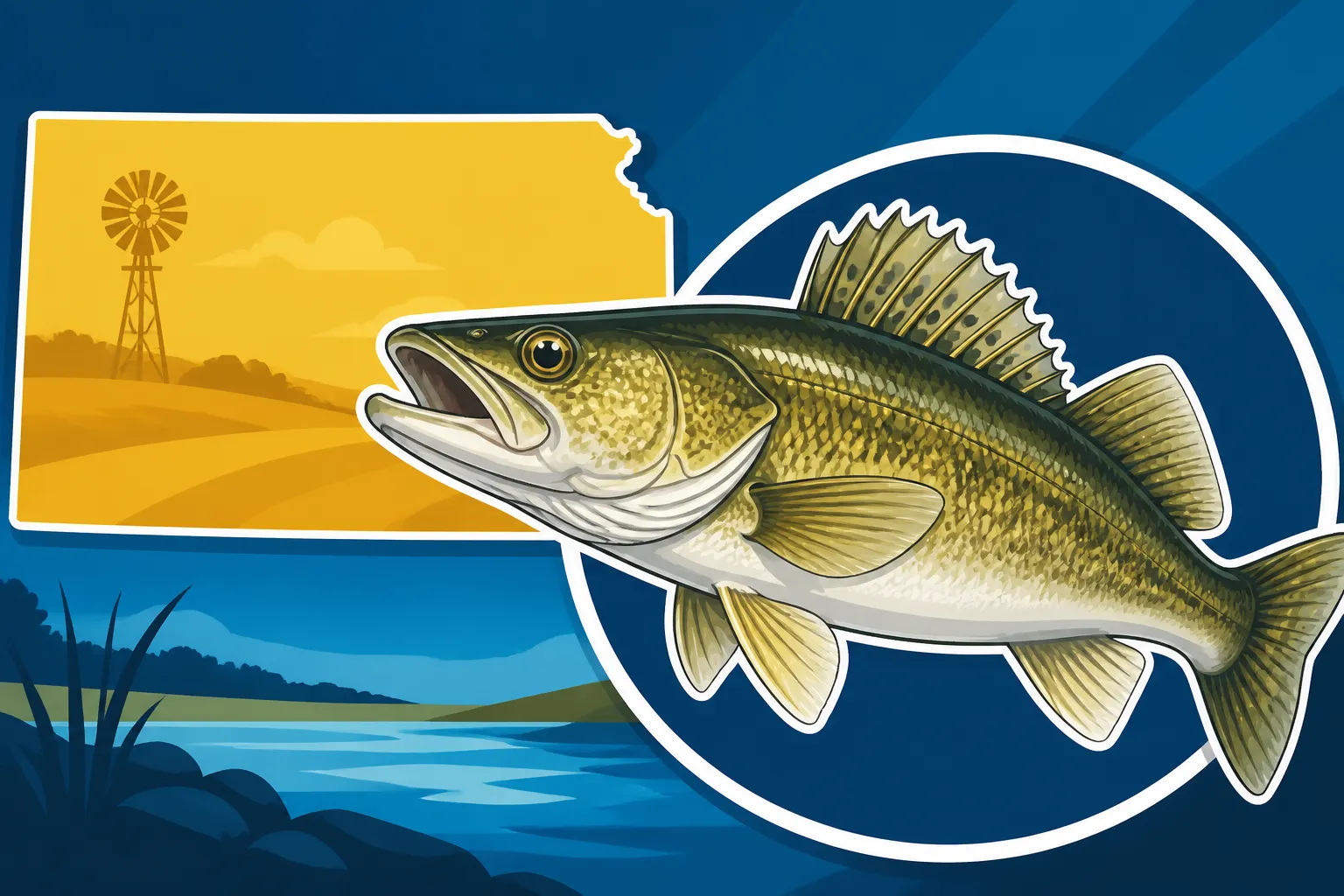
Saugeye Identification
Few things are as frustrating for a Kansas angler as reeling in a beautiful fish, only to stare at it and wonder, "What is this thing?" Among the walleye, sauger, and their hybrid cousin, the saugeye, telling them apart can feel like a genuine puzzle, especially when regulations depend on knowing the difference. This comprehensive guide is here to untangle that confusion, providing clear, actionable tips to confidently identify a saugeye when you land one in Kansas waters.
What Exactly is a Saugeye?
Before we dive into the nitty-gritty of identification, let's understand what a saugeye truly is. It's not a naturally occurring species; rather, it's a "designer fish," if you will, created by fisheries biologists. This hybrid combines the best traits of two popular North American game fish: the walleye and the sauger. Think of it as the ultimate compromise, bringing together desired characteristics from both parents into one robust package.
The Hybrid Advantage
The saugeye is a cross between a female walleye and a male sauger. This specific pairing isn't arbitrary; it's a deliberate choice by fisheries managers. Walleye are known for their strong fighting ability and larger size potential, while sauger are celebrated for their hardiness in varying water conditions and their willingness to bite. The resulting saugeye inherits many of these desirable traits. They tend to grow faster than sauger and often tolerate murkier, warmer water conditions better than pure walleye, making them a fantastic sport fish for many Kansas lakes and rivers. This adaptability is precisely why Kansas often stocks them, ensuring a thriving and exciting fishery for anglers across the state. They're often found in reservoirs and larger river systems, filling a niche where neither walleye nor sauger might fully excel on their own.
Key Characteristics Overview
At first glance, a saugeye might just look like a walleye or a sauger, especially to the untrained eye. However, they possess a unique combination of features that, once learned, make them distinctly identifiable. Generally, saugeye tend to have a more streamlined body than a walleye but can grow larger than most sauger. Their overall coloration often blends the greenish-brown of a sauger with the lighter, golden flanks of a walleye, resulting in a mottled appearance that can vary depending on the specific water body and their diet. The trick isn't just looking at one feature but observing a collection of them. It's like looking at family photos; you see hints of both parents, but the child has its own distinct look.
Spotting a Saugeye: The Critical Identification Marks
To really know if you've got a saugeye on the line, you need to focus on a few key anatomical features. These aren't just subtle nuances; they are often distinct markers that can definitively separate a saugeye from its parent species. Get familiar with these, and you'll be identifying saugeye with confidence in no time.
Dorsal Fin Distinctions
This is arguably the most reliable identifier. Look closely at the spiny dorsal fin—that's the one closest to the head, with the sharp rays.
- Walleye: A pure walleye will have a distinct, dark blotch at the rear base of its spiny dorsal fin. This is usually a solid, prominent spot.
- Sauger: Sauger, on the other hand, have clear, distinct dark spots or bars running across the entire spiny dorsal fin, creating a mottled or banded appearance. There's no single large blotch; instead, it's a pattern of smaller, well-defined markings.
- Saugeye: The saugeye exhibits a blend. It will typically have the distinct dark spots or bars across its spiny dorsal fin, much like a sauger, but it generally lacks the prominent dark blotch at the rear base that defines a walleye. Sometimes, you might see a faint hint of a blotch or an irregular dark area, but it won't be as sharp and defined as a pure walleye's. This spotted-but-no-blotch pattern is your first major clue.
When you're out on the water, having a good pair of polarized sunglasses can really help you get a clear look at these fin patterns, even before you bring the fish fully into the boat or onto the bank. You can find excellent options on online retailers like Amazon that cut through the glare and make observations much easier.
Tail Fin Features
Another crucial identifier lies in the tail fin, specifically the lower lobe.
- Walleye: The lower lobe of a walleye's tail fin will usually have a very distinct, opaque white tip. This white spot is often quite bright and is one of the classic walleye calling cards.
- Sauger: A sauger's tail fin typically lacks this prominent white tip. Its tail might be more uniformly colored or subtly mottled without that bright white flash.
- Saugeye: A saugeye will usually lack the prominent white tip on the lower lobe of its tail fin, resembling a sauger in this aspect. If you see a definite white tip, you're almost certainly looking at a walleye. If it's absent, or very faint and indistinct, it leans heavily towards saugeye or sauger. This subtle difference is often overlooked but provides a strong secondary confirmation.
Body Markings and Coloration
While more variable, the body itself offers clues.
- Walleye: Walleye generally have a more uniform, golden-olive to brassy-gold coloration with few distinct body markings other than faint vertical bars, if any.
- Sauger: Sauger are characterized by distinct, irregular dark blotches or saddle-like markings along their sides, which often extend onto their backs. These can look like dark "worm tracks" or mottled patterns.
- Saugeye: Saugeye will typically exhibit the irregular, dark blotches, spots, or "worm-like" markings on their sides and back, much like a sauger. However, these markings might be less pronounced or extensive than on a pure sauger, and their overall body color can sometimes be lighter or more golden, hinting at their walleye parentage. The key is the presence of these distinct, irregular blotches rather than a uniform color. These markings are particularly noticeable on the upper half of their body.
Mouth and Cheek Patches
These are more subtle and can be harder to observe quickly but can provide additional confirmation.
- Walleye: Walleye typically have scales on their cheeks, although the extent can vary.
- Sauger: Sauger usually have no scales or very few scales on their cheeks, giving them a smoother feel in that area.
- Saugeye: Saugeye are generally intermediate, often having some scales on their cheeks, but perhaps not as fully scaled as a walleye. This can be tricky to discern without careful examination, especially when the fish is thrashing, so focus on the fin and body markings first.
You might also look at the teeth. Both walleye and sauger (and thus saugeye) have prominent canine teeth, but their arrangement or overall jaw structure isn't typically a primary identification point for distinguishing between the three.
Why Correct Identification Matters in Kansas
Knowing your fish isn't just about bragging rights; it's a critical part of responsible and legal angling, especially in a state like Kansas where various species have specific regulations. Misidentification can lead to unintended legal trouble or, worse, negatively impact fish populations.
Understanding Kansas Regulations
Kansas fisheries are carefully managed, and that includes specific rules for walleye, sauger, and saugeye. While these three species often share similar habitats, their harvest regulations, including length limits and daily creel limits, can differ. For instance, you might find that Kansas Walleye Length Limits dictate a minimum size, and the Kansas Walleye Daily Limit of Two Fish might be quite stringent. Saugeye might have different limits, or they might fall under general walleye regulations, depending on the specific water body and current management goals. Not knowing the difference could mean you unknowingly keep an undersized fish or exceed a daily limit, which could result in a citation from game wardens. It’s always important to check the latest Kansas Fishing Regulations Explained before you head out, as these rules can change periodically based on scientific data and conservation efforts.
Imagine you're on a productive day on Milford Lake, and you're catching what you believe are small walleye. You might be quickly putting them back if they don't meet the length limit. But what if they were saugeye, and saugeye had a different, perhaps more generous, length limit? Or, conversely, what if you kept a "saugeye" thinking it was legal, only to find out it was an undersized walleye? Ignorance of the law is never an excuse, and game wardens are there to enforce these rules for the long-term health of our fisheries.
Fishing Strategies and Habitats
Beyond legalities, knowing what fish you're targeting or have caught can directly influence your fishing strategy. Saugeye, being a hybrid, often display behaviors that blend aspects of both walleye and sauger.
- Walleye are often associated with clearer, deeper water and prefer rocky structures or main lake points. Kansas Walleye Fishing Techniques often involve trolling deep-diving crankbaits or jigging vertically over structure.
- Sauger tend to be more comfortable in murkier, riverine environments and often hold closer to the bottom.
- Saugeye can be found in a wider range of conditions, sometimes thriving in the muddier sections of reservoirs where walleye might struggle, but also congregating on structure like walleye. They can be active in various light conditions, sometimes biting well during the day, much like sauger, but also being keen night feeders, similar to walleye.
Understanding that you're fishing for saugeye can help you adapt your bait, lure, and presentation. If you're consistently catching fish with sauger-like dorsal fins but a walleye-like overall build, you might adjust your Kansas Fishing Seasons Guide expectations and tactics, perhaps trying a jig-and-minnow presentation closer to the bottom in slightly stained water during midday, which might be more effective for saugeye than a typical walleye approach.
Comparing Saugeye, Walleye, and Sauger Side-by-Side
Let's put it all together in a clear, comparative way. The distinctions, though sometimes subtle, are key to proper identification. Understanding the nuances between these three popular Kansas game fish will make you a more informed and compliant angler. For a general overview of all fish you might encounter, check out our Kansas Fish Species Guide.
The Walleye Look-Alike
Many anglers confuse saugeye for walleye, especially when light conditions are poor or the fish is brought into the boat quickly. The overall body shape can be very similar, and both possess that characteristic "glassy" eye that helps them see in low light. The key divergence, as discussed, is primarily in the fins. A true walleye will have that distinct dark blotch on the spiny dorsal fin and a bright white tip on the lower caudal (tail) fin lobe. If you catch a fish that looks like a walleye but lacks these two specific features, and instead has spotted dorsal fins and a non-white-tipped tail, you've likely found a saugeye. Always confirm these two points, and if you're ever unsure, treat it as the species with the most restrictive regulation to be safe. You might even find some fascinating variations that have garnered attention, leading to discussions about the Kansas State Record Fish Guide.
The Sauger Similarity
The saugeye gets half its genetic makeup from the sauger, so it's only natural that they share many similarities. The most striking is the distinct spotting or barring on the spiny dorsal fin. Both sauger and saugeye will display this pattern, unlike the single blotch on a walleye. Where they diverge most clearly is often the overall body shape and the size potential. Sauger are typically smaller and more slender. More importantly, sauger will also lack the white tip on the lower caudal fin, just like a saugeye. To tell a saugeye from a sauger, you’re often looking for that subtle walleye influence in the saugeye: potentially larger size, a slightly broader body, and sometimes fainter body blotches than a pure sauger. This is where the overall impression, combined with the fin details, becomes crucial. Our Sauger vs Walleye Identification guide goes into even more depth on those two specific species.
Quick Reference Table for Identification
To make things even clearer, here’s a quick-reference table comparing the three species based on the most reliable visual cues. Keep this in mind when you're out fishing, and you'll be able to identify your catch quickly and accurately.
| Feature | Walleye | Sauger | Saugeye |
|---|---|---|---|
| Spiny Dorsal Fin | Dark blotch at rear base, otherwise clear | Distinct dark spots/bars across entire fin | Distinct dark spots/bars across entire fin, NO prominent blotch at rear base |
| Lower Tail Fin Lobe | Distinct white tip | No prominent white tip | No prominent white tip |
| Body Markings | Generally uniform, faint bars (if any) | Distinct, irregular dark blotches/saddles | Irregular dark blotches/saddles (like sauger), but potentially less pronounced |
| Cheek Scales | Generally scaled | Generally unscaled or few scales | Intermediate, often some scales |
| Overall Size | Largest of the three (can reach trophy sizes) | Smallest of the three, slender body | Intermediate, often larger than sauger but usually smaller than trophy walleye |
| Habitat Preference | Clearer, deeper water, structured lakes | Murkier, riverine, deeper channels | Adaptive, tolerates varied conditions, reservoirs, rivers |
Remember, no single feature tells the whole story, but combining these observations will give you the most accurate identification. A fish that looks like a Kansas Walleye Fishing Guide target, but has those sauger-like fin spots, is a strong candidate for a saugeye!
Enhancing Your Identification Skills
Becoming proficient at fish identification takes practice, but there are several things you can do to hone your skills, both on and off the water. The more prepared you are, the less guesswork you'll have when that fish hits the deck.
Practical Tips on the Water
The best place to learn is on the water itself. When you catch a fish you suspect might be a saugeye, take a moment to really examine it.
- Good Lighting: Hold the fish in good, natural light. This makes it easier to see subtle patterns on the fins and body. Sometimes, fish brought directly from deep, murky water into bright sunlight can make coloration appear different for a moment.
- Gentle Handling: Handle the fish carefully. Use a net to land it safely, and cradle it gently to observe its features. If you plan to release it, minimizing its time out of water is crucial.
- Use a Guide: Carry a waterproof fish identification guide or a good fishing app on your phone. Many resources provide detailed drawings and descriptions that you can reference right there. You can often find excellent, durable, and waterproof identification charts and books on platforms like Amazon that are perfect for keeping in your tackle box or boat.
- Take Photos: Snap a few quick photos from different angles, especially close-ups of the dorsal fin, tail fin, and body markings. If you're still unsure after release, you can review the photos later or even ask experienced anglers for their opinion.
Gear for Better Observation
Believe it or not, some of your fishing gear can double as identification aids.
- Polarized Sunglasses: We mentioned them before, but they are truly invaluable. By cutting glare on the water, they help you see the fish more clearly as you bring it in, and once in hand, they can make subtle fin and body patterns pop. A good pair is a must-have for any serious angler, and there are many affordable, high-quality options available on Amazon.
- Fish Grips/Gloves: While primarily for handling fish safely and protecting your hands from sharp fins or teeth, they also allow you to hold the fish steady for a better, longer look without causing harm to the fish or yourself.
- A Clear Livewell/Bait Bucket: If you're keeping fish, a clear-sided livewell or a transparent bait bucket can give you a chance to observe the fish in water, which can sometimes provide a more natural view of its markings and color.
The more you practice, the faster and more confident you'll become at identifying saugeye. Soon, you'll be able to tell the difference almost instinctively, making your time on the water more enjoyable and ensuring you always stay within Kansas fishing regulations. For a general overview of all the things you might need for your next trip, check out our Kansas Fishing Gear Guide.
Disclaimer
This article is for general informational purposes only and does not constitute professional advice. Laws, prices and regulations vary by location and change over time. Consult a qualified professional for guidance on your specific situation.