Sauger vs Walleye Identification
It's happened to the best of us: you've reeled in a beautiful fish in a Kansas waterway, and your heart is pounding, but then the confusion sets in. Is it a walleye, or is it a sauger? These two popular game fish look so incredibly similar that it can be genuinely frustrating to tell them apart, especially when you're out on the water, trying to make a quick decision. This guide is here to clear up that confusion once and for all, providing you with clear, practical tips to confidently identify sauger versus walleye in Kansas, so you can fish with peace of mind and stay within the regulations.
The Importance of Correct Identification: Why It Matters to Kansas Anglers
Knowing the difference between a walleye and a sauger isn't just about showing off your fish ID skills at the boat ramp. In Kansas, these distinctions carry real weight, impacting everything from your creel limits to how the state manages its precious fisheries. It's not just a trivial detail; it's a fundamental part of being a responsible and knowledgeable angler in our great state. Getting it wrong can sometimes lead to an accidental violation, and no one wants that.
Legal Implications, Creel Limits, and Size Restrictions
One of the most immediate and critical reasons to know your walleye from your sauger is the legal aspect. Kansas fishing regulations, which you can find in detail in our Kansas Fishing Regulations Explained guide, often have different rules for different species, even if they're close relatives. Walleye, sauger, and their hybrid offspring, saugeye, sometimes have distinct daily creel limits and minimum length requirements. Imagine you've had a fantastic day, caught a limit of what you thought were sauger, only to find out later they were walleye, and you're over the limit for that species. That's a headache no one needs.
For instance, walleye in many Kansas waters might have a specific length limit, like the Kansas Walleye Minimum Length Limit of 21 Inches and a daily limit, such as the Kansas Walleye Daily Limit of Two Fish. Sauger, on the other hand, might have different or more generous limits, reflecting their population dynamics. If you mistakenly keep a small walleye, thinking it's a sauger that might not have a minimum length, you're technically in violation. The Kansas Department of Wildlife and Parks (KDWP) sets these rules for a reason: to protect fish populations and ensure sustainable fishing for everyone. It's truly vital to understand these nuances to avoid issues like Fishing Without a License Penalties in Kansas or other violations.
Conservation and Management Efforts
Beyond the immediate legal ramifications for individual anglers, accurate identification plays a crucial role in the broader conservation and management of Kansas fisheries. The KDWP relies on accurate data about what anglers are catching to make informed decisions. Different fish species have different growth rates, reproductive cycles, and susceptibilities to environmental changes. Walleye are often stocked extensively in our large reservoirs, like Milford and Cheney, to maintain robust populations, as covered in our Kansas Walleye Fishing Guide.
Sauger, while also popular, typically thrive in different environments, often in river systems. If KDWP collects data suggesting sauger populations are declining in an area, but anglers are consistently misidentifying walleye as sauger (or vice-versa), that skewed data could lead to less effective management strategies. Perhaps they'd implement a restriction on sauger that isn't truly necessary, or worse, miss a declining trend in a walleye population because the numbers are being artificially inflated by sauger catches. As anglers, we're all partners in conservation, and precise species identification is one small but significant way we contribute to the health of our Kansas waterways.
Decoding Physical Characteristics: Spotting the Differences Like a Pro
Alright, let's get down to the nitty-gritty. When you pull a fish out of the water, and it's flashing those tell-tale golden scales, your brain immediately starts processing. Here are the definitive characteristics you need to look for to tell a sauger from a walleye in Kansas. Trust me, once you know what to look for, it becomes second nature.
Dorsal Fin Distinction: The Spot vs. the Stripes
This is hands down your most reliable and quickest identifier. Forget everything else for a second and just look at that first dorsal fin—the spiny one right behind the head.
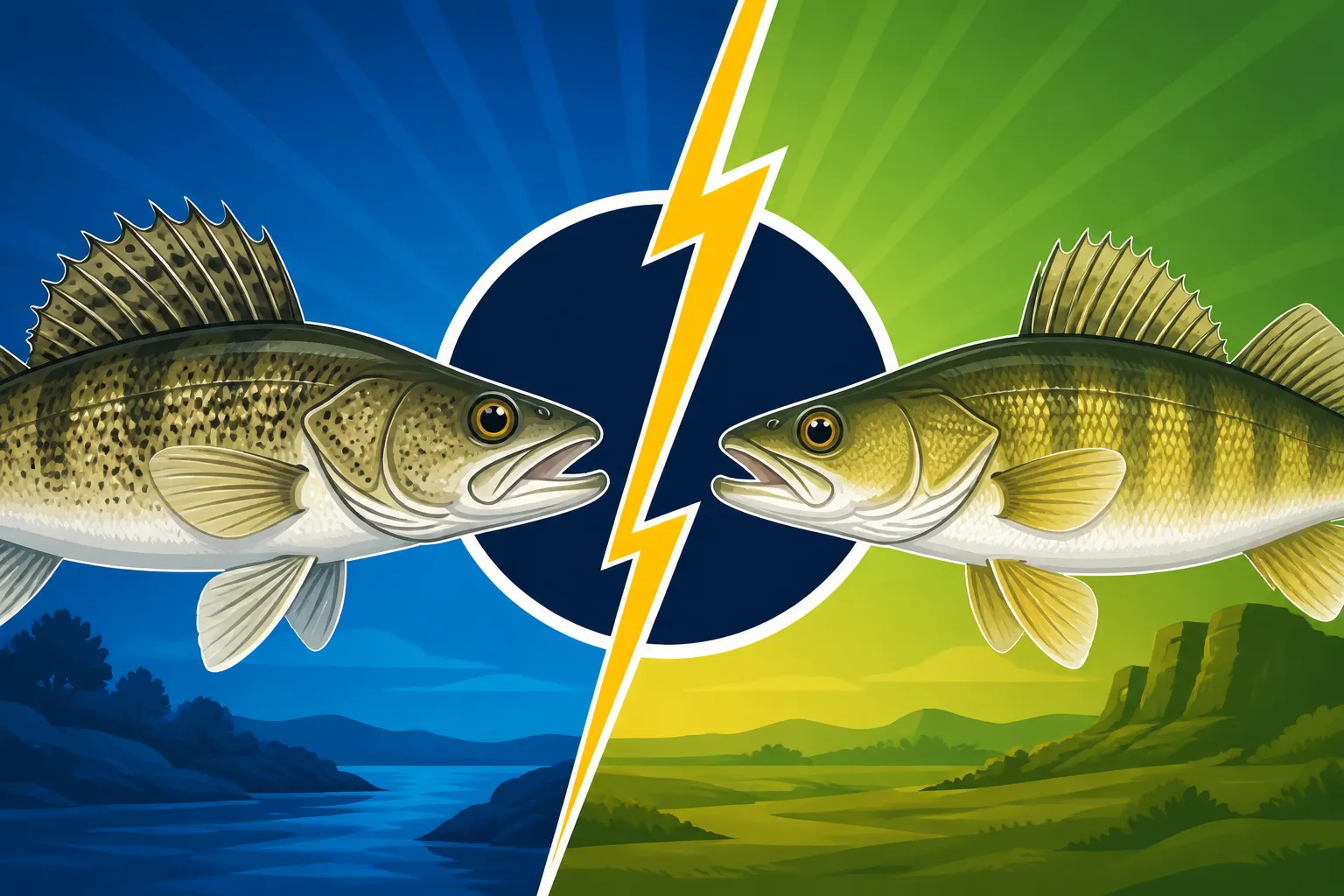
- Walleye: A true walleye will almost always have a distinct, opaque black spot or blotch at the very rear base of its first dorsal fin. It's usually quite prominent and concentrated. Think of it like a thumbprint at the back of the fin. The rest of the fin, while sometimes dusky, generally lacks any organized pattern of dark spots.
- Sauger: Sauger, on the other hand, do not have that single, distinct black spot. Instead, their entire first dorsal fin will be heavily spotted with dark, round or oblong spots, often forming rows or distinct horizontal bars across the entire fin membrane. It gives the fin a much more mottled or striped appearance compared to the walleye's cleaner fin with just the single spot.
This dorsal fin pattern is incredibly consistent and easy to spot once you've trained your eye. If you're ever in doubt, this should be your first point of inspection. You can find visual guides in a good waterproof field guide, easily found on platforms like Amazon, which can be invaluable when you're learning.
Body Markings and Coloration Clues
While the dorsal fin is the primary clue, the overall body pattern and coloration can offer strong supporting evidence.
- Walleye: Generally, walleye have a more uniform body coloration. They tend to be olive-green to golden-brown on their back and sides, fading to a creamy white belly. While they might have some faint blotching, it's rarely as pronounced or organized as a sauger's. Their sides are typically smooth in appearance.
- Sauger: Sauger usually exhibit more pronounced dark blotches or "saddle" markings along their sides and back. These blotches often extend down from the back, giving them a distinctly mottled or camouflaged appearance. Their overall color can be a bit more brassy or brownish-yellow, blending well with the murkier waters they often inhabit. This mottled look is a key visual cue that, when combined with the dorsal fin, solidifies the identification.
Another significant detail is the tail fin. Walleye almost always have a distinct, milky-white tip on the lower lobe of their tail fin. It's a clean, stark white. Sauger, however, lack this white tip; their tail fin will be uniformly colored or dusky without that noticeable white accent. This is another very strong and easy-to-spot difference, especially when you're holding the fish.
Cheek Scales, Mouth Features, and Spiny Rays
These characteristics are a bit more nuanced and might require a closer inspection, but they can still be useful, especially for a definitive identification if the primary clues aren't perfectly clear.
- Cheek Scales: This is a subtle but reliable anatomical difference. Walleye generally have mostly scaleless or only sparsely scaled cheeks, usually with scales only on the upper portion near the eye. If you run your finger gently across a walleye's cheek, it will feel mostly smooth. Sauger, conversely, have fully scaled cheeks. Their entire cheek area will feel rough and covered in scales. This isn't something you'd typically check for a quick release, but it's a scientific differentiator.
- Mouth and Teeth: Both species belong to the perch family and possess sharp, needle-like teeth. While there might be subtle differences in mouth size or jaw structure, these are generally not reliable for quick, on-the-water identification. Focus on the fins and body patterns first.
- Spiny Ray Count: This is a highly technical method often used by fisheries biologists. It involves counting the number of spines and soft rays in the dorsal and anal fins. While precise, it's completely impractical for the average angler on the water and would cause unnecessary stress to the fish. Stick to the visual cues we've discussed for practical purposes.
Habitat and Behavior: Knowing Where to Look in Kansas Waters
Understanding the typical preferences of walleye and sauger for certain environments in Kansas can also give you a strong hint about which species you're likely to encounter. While there's always overlap, these preferences are generally quite consistent. Knowing this can help you target your fishing efforts and even pre-identify what you might catch.
Walleye's Preferred Kansas Haunts
Walleye are perhaps the more famous of the two in Kansas, particularly in our expansive man-made reservoirs. They typically thrive in larger, clearer to moderately turbid lakes and reservoirs with plenty of deep water and well-defined underwater structure. Think of places like Milford Lake, Cheney Reservoir, Wilson Lake, or El Dorado Lake—some of the Best Walleye Lakes in Kansas. These large bodies of water offer the cooler, deeper habitat walleye prefer, especially during warmer months.
You'll often find walleye orienting themselves to submerged humps, rocky points, old creek channels, and areas with distinct depth changes. They are light-sensitive, so they often stick to deeper water during the day or move shallower to feed during low-light conditions like dawn, dusk, or at night. They're also known for their schooling behavior, so if you find one, there are often more nearby. Anglers frequently target them by trolling crankbaits or jigging spoons near the bottom in these structured areas.
Preferred Sauger Habitats
Sauger, while present in some reservoirs, tend to be much more associated with river systems and the riverine sections of large impoundments in Kansas. They generally prefer more turbid or murky water, often with moderate to strong current. They are quite adept at hugging the bottom in moving water, seeking out current breaks behind submerged rocks, logjams, or along deeper river channels.
You're more likely to encounter a sauger in the Kansas River, or in the upper, river-influenced arms of reservoirs like Tuttle Creek or Milford. They're often found in slightly warmer water than walleye, and their mottled camouflage helps them blend in perfectly with siltier, rockier river bottoms. If you're fishing a deep channel in a Kansas river with a good current, and you're catching walleye-like fish with distinct spots on their dorsal fin and no white tail tip, chances are you've got a sauger.
The Hybrid Enigma: Understanding Saugeye
To add a little twist to the identification challenge, Kansas also has saugeye, which are a hybrid cross between a female walleye and a male sauger. These fish are intentionally stocked in some waters because they often exhibit a faster growth rate and are more tolerant of a wider range of water conditions than pure walleye, making them a great sport fish. Our Kansas Saugeye Identification guide delves deeper into this fascinating hybrid.
Saugeye can be tricky because they often display a mix of characteristics from both parent species. They might have some of the dorsal fin spotting of a sauger, but also the prominent white tip on the lower tail fin lobe like a walleye. Their body markings can vary widely, sometimes more mottled like a sauger, sometimes more uniform like a walleye. In terms of habitat, they tend to be quite adaptable, thriving in both reservoir and river environments. When in doubt with a saugeye, the regulations in Kansas often group them under the same limits as walleye or have combined "walleye/sauger/saugeye" limits, which is a good safety net. Always check the specific regulations for the body of water you're fishing.
Practical Tips for Confident Identification on the Water
Even with all this knowledge, identifying a fish quickly in a bobbing boat or while standing on a riverbank can still be a challenge. But with a systematic approach and the right tools, you can make confident identifications every time.
Your Go-To Checklist for Quick ID
When that fish comes over the gunwale or onto the bank, here's a quick, step-by-step checklist to run through:
- First Dorsal Fin: This is your primary stop. Look for that single, distinct black spot at the back of the fin (walleye) or multiple, distinct rows of dark spots/bars across the entire fin (sauger).
- Tail Fin: Next, glance at the lower lobe of the tail fin. Is there a clear, stark white tip (walleye)? Or is it uniformly colored or dusky without that white accent (sauger)?
- Body Pattern: Take in the overall body. Is it relatively uniform in color, perhaps olive-gold (walleye)? Or does it have prominent, irregular dark blotches or saddle patterns along its sides, giving it a mottled look (sauger)?
- Cheek Scales (if still unsure): Gently feel the cheek. Is it mostly smooth with few scales (walleye)? Or is it rough and fully scaled (sauger)? This is a good tie-breaker if the fin characteristics are ambiguous (which often indicates a saugeye!).
By consistently following these steps, you'll develop an eye for these differences in no time. The more fish you examine, the quicker and more confident you'll become.
Tools to Assist Your Identification Efforts
In this day and age, you don't have to rely solely on memory. There are excellent resources that can help you on the water:
- Waterproof Field Guides: Carrying a compact, waterproof field guide specifically for Kansas fish species can be a lifesaver. These guides often have clear illustrations or photos highlighting the key differences. You can find excellent options on platforms like Amazon that are designed to withstand the elements.
- Fishing Apps: Many modern fishing apps include robust fish identification features, often with large databases of species and detailed descriptions. A quick search on your smartphone can pull up comparison photos right there on the water.
- Good Lighting: Sometimes, subtle markings are hard to see in dim light. A small, hands-free LED headlamp, also readily available on Amazon, can be invaluable during early morning, late evening, or overcast conditions to get a clear look at fin patterns or coloration.
- Polarized Sunglasses: While not directly an ID tool, good polarized sunglasses, found on Amazon, significantly cut glare, allowing you to see fish more clearly in the water and potentially even observe their general shape and behavior before landing, which can sometimes hint at their species.
What to Do When in Doubt: Playing It Safe
Here's the golden rule for any angler: if you're genuinely unsure whether your catch is a walleye or a sauger, it is always best to err on the side of caution. This usually means abiding by the stricter of the two regulations, which in Kansas, is often the walleye limit for length and creel.
It's also a good idea to take a clear photograph of the fish before releasing it (if you're releasing) or before putting it on your stringer. This photo can serve as proof if ever questioned, and you can later consult it with experienced anglers or KDWP resources for a definitive identification. Responsible angling isn't just about following the rules; it's about making conscious efforts to preserve our fisheries for future generations. Don't be afraid to release a fish if you're unsure and think you might be violating a limit; the joy of fishing is often in the catch, not always in the keeping.
| Feature | Walleye | Sauger | Saugeye (Hybrid) |
|---|---|---|---|
| First Dorsal Fin | Distinct black spot on rear base, otherwise clear | Rows of distinct dark spots/bars across entire fin | Variable: often some spots, but may lack distinct rows |
| Tail Fin | Prominent white tip on lower lobe | Lacks prominent white tip | Often has a white tip on the lower lobe |
| Body Color/Pattern | More uniform olive/gold, less mottled | Pronounced dark blotches/saddle patterns, mottled | Variable: Can be mottled or more uniform |
| Cheek Scales | Largely scaleless or sparsely scaled on upper part | Fully scaled | Variable: often partially scaled |
| Preferred Habitat | Clearer, deeper lakes & reservoirs, structure | Turbid rivers, riverine sections of reservoirs, current | Adaptable to both lakes and rivers |
Disclaimer
This article is for general informational purposes only and does not constitute professional advice. Laws, prices and regulations vary by location and change over time. Consult a qualified professional for guidance on your specific situation.