Paddlefish Size Range
For anglers new to the incredible world of snagging or those simply curious about one of Kansas' most unique aquatic residents, understanding the size range of paddlefish can be a real head-scratcher. These ancient giants aren't like your typical bass or catfish; their growth patterns and sheer dimensions are in a league of their own. This guide is here to unravel the mystery of paddlefish sizes you might encounter in our Kansas waters, giving you a realistic picture of what to expect and what makes these magnificent creatures tick.
Understanding Paddlefish Growth in Kansas
Paddlefish, often called "spoonbill" due to their distinctive, elongated snouts, are truly fascinating creatures. They are among the oldest and largest freshwater fish in North America, and their presence in Kansas rivers is a testament to our state's rich aquatic ecosystems. Unlike predatory fish, paddlefish are filter feeders, swimming with their mouths open to strain plankton from the water. This unique feeding strategy, combined with their long lifespan, allows them to reach impressive sizes. Their growth isn't just about how long they live, though; it's intricately linked to the abundance of food and the health of the river systems they call home.
The Role of Age and Habitat in Paddlefish Size
Just like humans, paddlefish grow throughout their lives, though their growth rate can slow down considerably once they reach maturity. A young paddlefish, perhaps in its first few years, will put on length and weight much faster than a much older, larger specimen. In Kansas, the rivers and reservoirs provide varied habitats, which in turn influences how well paddlefish thrive. Rivers like the Neosho and Marais des Cygnes, known for their spring paddlefish runs, offer rich environments with plenty of plankton, especially after seasonal floods. These nutrient-rich waters contribute directly to robust growth. A paddlefish that has access to consistent food sources and stable, unpolluted water will naturally grow larger and healthier than one struggling in a less ideal environment. It's a delicate balance, and the health of our rivers plays a critical role in the size of the fish we see. For more insight into these unique fish, check out our Kansas Paddlefish Facts.
How Paddlefish Accumulate Mass Over Time
Imagine a fish that lives for decades, constantly sifting microscopic organisms from the water. It's a slow and steady process, but over many years, it adds up to substantial mass. Paddlefish don't chase down prey; their existence is a continuous, almost meditative, feeding process. They are built for efficiency in filtering, with gill rakers designed to capture tiny zooplankton. As they mature, their body structure becomes incredibly dense and muscular, especially around their broad, powerful tails, which they use to navigate strong currents. This continuous feeding, combined with a relatively low metabolic rate compared to active predators, allows them to convert those tiny plankton into impressive size. It's a marathon, not a sprint, when it comes to paddlefish growth.
Average Paddlefish Size You Can Expect to Catch
When you're out on the water during Kansas Paddlefish Snagging Season, dreaming of a giant, it's good to have a realistic idea of what an "average" paddlefish looks like. These aren't tiny fish by any stretch of the imagination. Even an average paddlefish will make your arms burn and your heart race! They are one of the true heavyweights of Kansas freshwater fishing, and hooking into one is an unforgettable experience.
Typical Length and Weight for Kansas Paddlefish
In Kansas, a common paddlefish caught during the snagging season might range anywhere from 40 to 60 inches in length, snout to tail fork. Weight-wise, these fish typically fall between 20 and 50 pounds. Of course, there are always outliers on both ends of that spectrum. A paddlefish in the 30-pound range is a solid, respectable catch, offering a fantastic fight and a good amount of meat. Landing one in the 50-pound class or more is when you really start talking about a true trophy for many anglers. It's important to remember that these are wild animals, and their sizes can fluctuate based on factors we'll discuss shortly. You can find gear for handling larger fish on sites like Amazon, from heavy-duty nets to accurate digital scales, which can be super helpful for getting a good weight estimate on your catch.
The Thrill of Landing a Large Paddlefish
Picture this: you've made a cast, worked your snagging hook through the current, and suddenly, your rod bends over like a U. That's the moment you know you've connected with a paddlefish. The fight isn't subtle; it's a raw power struggle against a large, muscular fish that pulls with incredible force. Landing a 40 or 50-pound paddlefish is an exhausting but exhilarating experience. It’s not just the weight, but the sheer power they exert as they try to escape the hook. Their broad tails act like paddles, giving them immense leverage in the current. Many anglers consider paddlefish snagging to be one of the most physically demanding, yet rewarding, fishing experiences in Kansas. The satisfaction of finally bringing one of these behemoths to the boat or shore is truly unmatched.
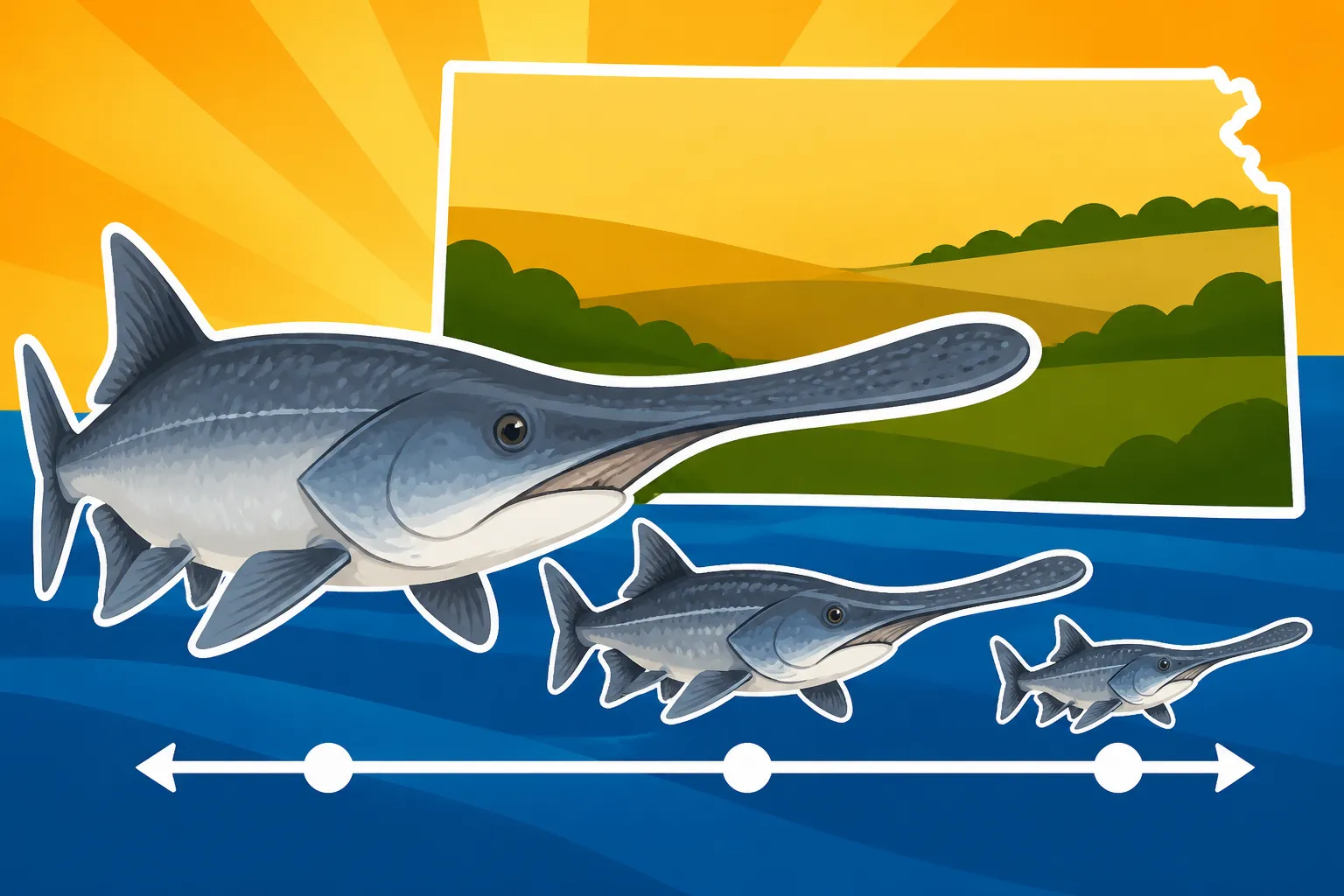
Here's a quick look at how typical paddlefish sizes compare:
| Category | Length (Snout to Fork) | Weight Range (Lbs) | Notes |
|---|---|---|---|
| Young Adult | 30-40 inches | 10-20 lbs | Still growing rapidly, less common in snagging |
| Average Catch | 40-60 inches | 20-50 lbs | Most common size range for Kansas anglers |
| Large Specimen | 60-70 inches | 50-75 lbs | Considered a trophy by many |
| Potential Record | 70+ inches | 75+ lbs | Rare, often very old fish, state record potential |
Factors Influencing Paddlefish Size and Health
It's not just about how much they eat; a whole host of environmental and biological factors contribute to how big a paddlefish can get. Think of it like a puzzle where every piece, from water quality to genetics, has to fit just right for optimal growth. Understanding these elements can give you a better appreciation for the paddlefish population in Kansas and the efforts to conserve them. For broader information on regulations, see Kansas Fishing Regulations Explained.
Food Availability and Water Quality
Paddlefish are filter feeders, meaning their primary food source is zooplankton—tiny aquatic organisms. The abundance of zooplankton is directly tied to the overall health and nutrient levels of the water body. Rivers and reservoirs that are rich in nutrients, but not overly polluted, tend to support larger zooplankton populations. When there's a buffet of these microscopic critters, paddlefish can feed more efficiently and grow faster. Conversely, poor water quality, whether from agricultural runoff, industrial discharge, or even prolonged drought, can drastically reduce zooplankton populations and stress the fish, hindering their growth. A healthy aquatic ecosystem is paramount for truly massive paddlefish. You can often find reports on water quality and fish populations through state wildlife agencies, sometimes even linking to scientific studies on sites like Amazon for further reading.
Genetics and Population Dynamics
Just like people, some paddlefish are genetically predisposed to grow larger than others. It's part of natural variation within any species. However, beyond individual genetics, the overall health and dynamics of the paddlefish population also play a role. If a particular river system is overfished or experiences a significant decline in breeding success, the average size of the fish might decrease over time. Conversely, well-managed populations with strong year classes (successful spawning years) tend to produce a healthier range of sizes, including those impressive trophy fish. Conservation efforts and sustainable fishing practices, as outlined in Kansas Fishing Seasons and Limits, are crucial for maintaining these populations and ensuring future generations of large paddlefish.
Kansas State Record Paddlefish and Trophy Potential
While an average paddlefish is already a formidable catch, the real giants are the stuff of legend. Kansas has produced some truly monumental paddlefish over the years, showcasing the incredible potential for these fish to grow to colossal sizes in our waters. Chasing a state record is a goal for many dedicated anglers, but even just seeing or catching a fish that approaches those legendary dimensions is an experience of a lifetime.
The Realm of Giants: State Record Holders
Kansas has a proud history of massive state record fish, and paddlefish are no exception. The largest paddlefish ever officially recorded in Kansas was a true behemoth, weighing in at over 100 pounds. Imagine reeling in a fish that's heavier than many people! These record-breaking fish are often exceptionally old, having navigated the rivers for decades, meticulously filter-feeding and growing year after year. They represent the pinnacle of paddlefish growth in our state and are a testament to the health and productivity of the Kansas river systems. For a more detailed look at the biggest fish ever caught in Kansas, including the specific details of the paddlefish record, you might want to explore our Kansas State Record Fish Guide.
What Makes a Trophy Paddlefish
A trophy paddlefish isn't just about weight; it's about the entire experience and the sheer majesty of the fish. While a 100+ pounder is certainly a trophy, many anglers consider any paddlefish over 60 or 70 pounds to be a fish of a lifetime. These are fish that test your strength, your gear, and your resolve. They have often survived numerous snagging seasons, floods, droughts, and countless miles of migration, making them truly wise old warriors of the river. Catching such a fish is a moment of deep connection with nature and a reminder of the wild beauty that exists in Kansas. The sheer size and power of these fish require specialized, heavy-duty tackle, from robust rods and reels to industrial-strength lines. Many anglers source their high-performance gear, including braid and heavy swivels, from reliable online retailers like Amazon to ensure they're prepared for these giants.
Disclaimer
This article is for general informational purposes only and does not constitute professional advice. Laws, prices and regulations vary by location and change over time. Consult a qualified professional for guidance on your specific situation.