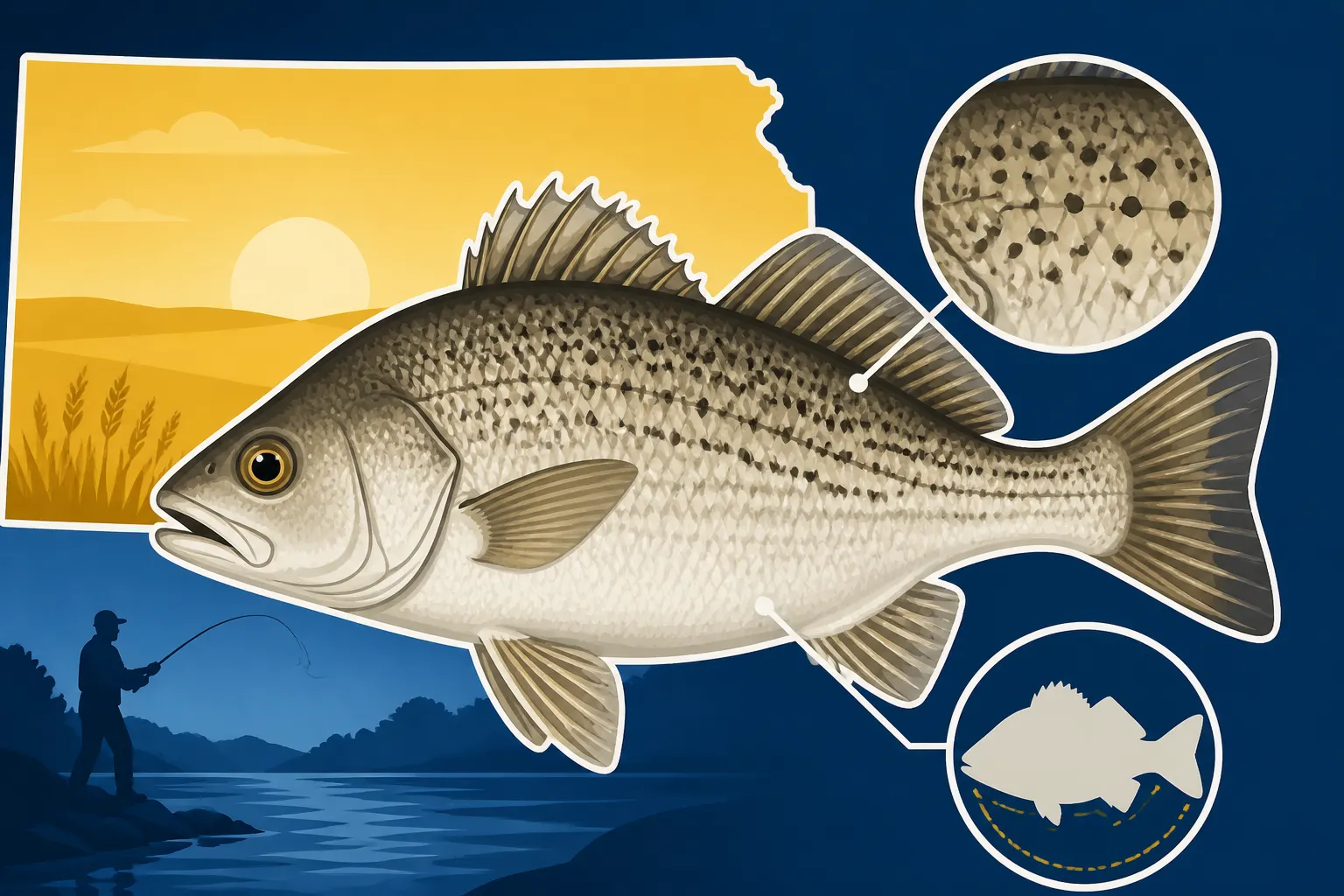
Freshwater Drum Body Shape and Markings
It's easy to overlook or misidentify some of the most fascinating fish swimming in Kansas waters. Many anglers find themselves wondering exactly what they've hooked when a deep-bodied, silvery fish with a unique thumping fight comes to the boat. This guide is here to clear up any confusion, providing a comprehensive look at the freshwater drum's body shape and markings so you can confidently identify this often-underestimated game fish.
What Exactly is a Freshwater Drum in Kansas?
Often mistaken for a carp or even a large panfish, the freshwater drum is a truly unique species that thrives across Kansas's diverse aquatic environments. These fish are more than just a bycatch; they're resilient, widely distributed, and provide an exciting challenge on the end of a line. Understanding what sets them apart is the first step toward appreciating these incredible creatures.
The Drum's Place in Kansas Ecosystems
Freshwater drum, sometimes affectionately called "sheepshead" or "gaspergou" in different regions, are an indigenous species to Kansas. You'll find them cruising the depths of most major reservoirs and rivers across the state, from Milford Lake to the Kansas River. They are incredibly adaptable, comfortable in everything from clear impoundments to murky river systems. Their presence is a testament to the health and biodiversity of these waterways. As bottom feeders, they play a crucial role in the ecosystem, consuming invertebrates like snails, mussels, and insect larvae, effectively cleaning the riverbeds and lake bottoms. While they might not get the same glamour as a trophy walleye or a hard-fighting catfish, they are an integral part of the food web and a common catch for many Kansas anglers. For a broader look at what swims our waters, check out our Kansas Fish Species Guide.
Despite their prevalence, drum often fly under the radar. Many anglers might catch one and simply release it without giving it a second thought, perhaps labeling it as a "rough fish." This misconception often comes from a lack of specific knowledge about the species. They're not particularly flashy in appearance, and their diet of bottom-dwelling organisms can sometimes lead to a slightly "muddy" reputation, which is often unfair. However, with a little insight into their unique characteristics, you'll start to see them differently.
Why Proper Identification Enhances Your Angling Experience
Knowing your freshwater drum isn't just about showing off your fish ID skills; it genuinely improves your fishing experience. First, while drum generally don't have specific daily limits or length restrictions in Kansas, distinguishing them from other species ensures you're always compliant with regulations, especially when fishing in waters where other species might have tighter rules. More importantly, understanding what you've caught allows you to appreciate its unique attributes.
Freshwater drum are known for their incredibly strong fighting ability. They pull hard, often making powerful runs and deep dives, giving many anglers a genuine thrill. If you mistake a drum for a less spirited fish, you might not fully appreciate the battle it puts up. Furthermore, properly identifying a drum opens up culinary possibilities; they are, in fact, quite delicious, especially when harvested from cooler, cleaner waters. Many who've tried them find their flaky, white meat to be excellent table fare, often comparing it favorably to other popular species. For more on what makes these fish tick, dive into Freshwater Drum Facts and Limits. By knowing exactly what you've got on the line, you can tailor your approach, savor the fight, and even plan a fantastic meal, elevating your overall angling adventure in Kansas.
Dissecting the Body Shape and Structure of a Freshwater Drum
When you pull a freshwater drum from the water, certain features immediately stand out once you know what to look for. They have a very distinct build that sets them apart from most other Kansas fish. It's not just about size; it's about their overall form and the specific design elements that make them unique.
General Appearance and Overall Profile
The freshwater drum typically sports a deep, somewhat compressed body, meaning it's tall from back to belly but relatively narrow side-to-side. Imagine a somewhat flattened football, but with a more pronounced arch along its back, giving it a distinctive humped appearance, especially in larger specimens. This deep-bodied profile is one of its most immediate visual cues, distinguishing it from the more elongated bodies of species like walleye or the flatter, broader shape of a flathead catfish.
While many drum caught by anglers might be in the 1 to 5-pound range, don't let that fool you. They can grow significantly larger, with some trophy specimens pushing well into the double digits. These larger fish, with their robust, powerful frames, put up an incredible fight. Their sturdy build isn't just for show; it's an adaptation to their bottom-dwelling, mollusk-crushing lifestyle, giving them the leverage and strength needed to forage effectively in rivers and lakes. Their general appearance might not be "sleek," but it certainly conveys power and resilience.
Key Features: Fins, Mouth, and Head
Beyond the general body shape, the drum's fins, mouth, and head offer critical identification points. Take a close look at the dorsal fin – the one along its back. It's notably long, running for a significant portion of the back, but it has a very distinct deep notch that almost divides it into two sections: a spiny anterior (front) part and a soft-rayed posterior (back) part. This deeply notched dorsal fin is a hallmark feature and helps differentiate it from fish with a single, continuous dorsal fin or two entirely separate dorsal fins.
Moving to the tail, the caudal fin is typically rounded, not forked like a catfish or walleye, nor strongly square like some bass. This rounded tail contributes to their powerful, albeit not necessarily speedy, bursts of propulsion. Now, examine the head and mouth. The drum has a relatively small, subterminal mouth, meaning it's positioned on the underside of the head, almost like a vacuum cleaner nozzle. This "down-turned" mouth is perfectly designed for sucking up food from the bottom. The snout itself is rather blunt, and the eyes are relatively large and rounded, positioned high on the head. What's truly fascinating is what's inside: freshwater drum possess powerful pharyngeal teeth (throat teeth) designed to crush the shells of mussels, snails, and crustaceans, which form a significant part of their diet. This unique adaptation highlights their specialized feeding habits and sets them apart from many other fish you'll encounter.
Markings and Coloration: What to Look For
While their body shape gives you a great head start, the markings and overall coloration of a freshwater drum offer additional, unmistakable clues to their identity. These aren't flashy fish, but their subtle patterns and specific features are consistent and reliable for identification.
The Signature Silver-Grey Hue
When you first see a freshwater drum, its general coloration will likely catch your eye. They typically exhibit a silvery-grey to light bronze hue, with a darker, sometimes almost brownish, back that gradually fades to a lighter, often pearly white, belly. This transition from dark to light, known as countershading, is a common camouflage technique in many fish species, helping them blend in whether viewed from above or below.
The exact shade can vary quite a bit depending on where the fish was caught. Drum from clear, rocky reservoirs might appear a brighter silver, sometimes with a faint coppery sheen. Those from murkier, mud-bottomed rivers might lean more towards a duller grey or even a brownish-bronze, helping them disappear against the silty substrate. What you won't generally see are distinct spots, stripes, or intricate patterns like those found on a largemouth bass or a crappie. Their beauty lies in their uniformity and understated elegance, a testament to their adaptability in various environments.
Lateral Line and Scale Characteristics
Perhaps one of the most definitive visual identifiers for a freshwater drum is its lateral line. This sensory organ, running horizontally along the side of the fish, is incredibly prominent on a drum. It often appears as a distinct, slightly darker line that stands out against their silvery body, and crucially, it extends all the way onto the caudal (tail) fin. This uninterrupted extension onto the tail is a key characteristic to look for. Many other fish have lateral lines that stop at the base of the tail or are less pronounced.
Their scales are also quite distinctive. Freshwater drum are covered in large, ctenoid scales. "Ctenoid" means they have small, comb-like teeth along their posterior (rear) edge, which gives the fish a slightly rough texture when you run your hand from tail to head. This is a stark contrast to the smooth, cycloid scales found on some other species, or, of course, the complete lack of scales on catfish. This combination of a prominent, extended lateral line and large, ctenoid scales forms a crucial part of their visual identification, especially when you're trying to differentiate them from other species in a quick glance.
Unique Sensory Pits and "Drumming" Sound
Beyond what you can see and feel, freshwater drum possess a couple of truly unique characteristics. If you examine the head closely, especially around the snout and lower jaw, you might notice small, pore-like sensory pits. While not always easy to spot without a very close look, these pits are part of their sensory system, helping them detect prey on the bottom, even in low light or turbid water. They are essentially tactile and chemosensory receptors, allowing the drum to "feel" and "taste" its surroundings.
But perhaps the most famous and distinctive feature of the freshwater drum is its ability to produce a unique "drumming" or "grunting" sound. This sound is generated by specialized muscles vibrating against their large swim bladder. It's often heard during spawning season or when the fish is stressed, and it's where the species gets its common name. While you obviously can't see this "marking," hearing the subtle thrumming sound while you're reeling one in, or even just after you've landed it, is an absolute giveaway. It’s a remarkable physiological trait that makes the freshwater drum stand out from virtually every other fish in Kansas.
Avoiding Common Misidentifications
It's natural for anglers, especially beginners, to sometimes confuse fish species that share similar habitats or general appearances. Freshwater drum are no exception, often being mistaken for certain types of carp or buffalo. However, knowing the subtle yet critical differences can help you correctly identify your catch every time.
Distinguishing Drum from Carp and Buffalo
One of the most frequent mix-ups involves freshwater drum and common carp. While both are deep-bodied, bottom-dwelling fish, there are several clear distinctions:
-
Carp (Common Carp, Grass Carp, Bighead Carp):
- Barbels: Carp, especially common carp, have distinctive whisker-like barbels around their mouths. Drum never have barbels. This is arguably the easiest way to tell them apart.
- Mouth: Carp generally have a protrusible, forward-pointing mouth adapted for sucking, whereas the drum's mouth is strictly subterminal (down-turned).
- Dorsal Fin: Common carp have a single, long dorsal fin without the deep notch seen in drum.
- Scales: Carp scales tend to be larger and more uniform, often with a darker, more golden or olive coloration.
- Body Shape: While deep-bodied, carp often appear stockier or more "chunky" than the drum's more compressed, almost slab-sided profile. For more on carp, check out Kansas Carp Fishing Facts.
-
Buffalo (Bigmouth Buffalo, Smallmouth Buffalo):
- Mouth: Buffalo species have small, often subterminal mouths, similar to drum, but their mouth structure is generally smaller and more distinctively sucker-like.
- Dorsal Fin: Buffalo have a long, continuous dorsal fin that lacks the deep notch present in drum. It often starts well forward on the back.
- Body Shape: Buffalo tend to be even deeper-bodied and more uniformly thick throughout their body than a drum, with a less pronounced arch in the back.
- Coloration: They are typically a darker, brassier, or olive-bronze color, less silvery than a drum.
Here's a quick comparison table:
| Feature | Freshwater Drum | Common Carp | Buffalo Species |
|---|---|---|---|
| Barbels | None | Present (around mouth) | None |
| Mouth Position | Subterminal (down-turned) | Terminal to slightly subterminal | Subterminal (sucker-like) |
| Dorsal Fin | Long, deeply notched (spiny & soft-rayed) | Long, single, continuous | Long, single, continuous |
| Caudal (Tail) Fin | Rounded | Moderately forked | Moderately forked to slightly rounded |
| Lateral Line | Prominent, extends onto caudal fin | Less prominent, stops at tail base | Less prominent, stops at tail base |
| Scales | Large, ctenoid (rough) | Large, cycloid (smooth) | Smaller, cycloid (smooth) |
| Color | Silvery-grey to light bronze | Golden to olive-brown | Darker olive to brassy |
| Unique Trait | "Drumming" sound, large otoliths | Spiny ray at front of dorsal/anal fins | No spiny rays, often very deep-bodied |
The "Otolith" and Why It's Special
Beyond the external markings and sounds, freshwater drum hold a truly unique internal feature that further solidifies their identity: their otoliths. Otoliths are bony structures in the inner ear of fish that help with balance and hearing. In freshwater drum, these otoliths are remarkably large and distinctively shaped, often resembling an "L" or a "T," and are surprisingly durable. They're often referred to by anglers as "lucky stones" or "fish pearls."
These otoliths have annual growth rings, much like tree rings, which scientists can use to determine the age of the fish. For anglers, finding these pearly white structures after cleaning a drum is a cool conversation starter and a tangible piece of what makes this fish so special. If you've ever cleaned a fish and found these hard, ear-shaped stones in its head, you can be almost certain you've handled a freshwater drum. It's a fantastic, almost secret, identifying feature that few other fish can boast, further distinguishing them from carp, buffalo, and indeed, most other fish in Kansas.
Fishing for Freshwater Drum in Kansas
Now that you're an expert in identifying freshwater drum, let's talk about how to target these hard-fighting and often underestimated fish in Kansas. They're abundant, accessible, and offer a fantastic angling experience, especially for those looking for a strong tug on the line.
Tackle and Techniques That Work
Freshwater drum are powerful fish, so you'll want to come prepared with gear that can handle their fight. For most situations, a medium-heavy action rod, around 7 to 8 feet long, paired with a sturdy spinning or baitcasting reel, is an excellent choice. This setup provides enough backbone to manage their strong runs and deep dives, yet offers enough sensitivity to detect their often subtle bites.
When it comes to line, 10 to 20-pound monofilament or braided line will serve you well. Monofilament offers a bit of stretch, which can be forgiving during a hard fight, while braid provides superior sensitivity and strength for its diameter, helping you feel even the faintest nibble. Since drum are bottom feeders, a classic bottom-fishing rig is usually the most effective approach. This typically involves a sinker (pyramid, egg, or no-roll style) heavy enough to hold your bait on the bottom, a swivel, and a leader ending in a hook. Using an appropriate rig will help keep your bait where the drum are actively feeding. You can find a fantastic selection of suitable rods, reels, and fishing lines for drum fishing, and for general bottom fishing, on platforms like Amazon, making it easy to get equipped for your next trip. For a deeper dive into choosing the right gear, check out our Best Rods and Reels for Kansas Fishing and Best Tackle for Kansas Game Fish guides.
Prime Baits and Where to Find Them
Freshwater drum are not picky eaters, which makes them a fantastic target for many anglers. Being bottom feeders, their diet primarily consists of aquatic insects, crayfish, and mollusks like mussels and snails. This means natural baits tend to be incredibly effective.
Your best bets for bait include:
- Worms: Nightcrawlers, redworms, or even a simple garden worm are absolute drum magnets.
- Cut Bait: Small pieces of shad, sunfish, or other oily baitfish can be incredibly enticing, especially for larger drum.
- Crayfish: Whole or pieces of crayfish are a natural food source for drum and often yield excellent results.
- Mussels/Clams: If you can find them (and they are legal to harvest in your area), the meat from these mollusks is a drum delicacy.
- Shrimp: Raw, peeled shrimp (often found in the grocery store freezer section) can be a surprisingly effective bait.
Present these baits on or near the bottom in known drum habitats. Look for them in river channels, deep holes in reservoirs, along submerged humps, and especially in areas where you find mussel beds. Drum are often caught incidentally while targeting catfish or even walleye, but once you know their preferred areas and baits, you can specifically target them for some great action. Many of these bait options, or even specialized scent attractants, can be conveniently sourced from online retailers like Amazon, ensuring you're always stocked up. For tips on finding good spots, refer to our Kansas River Fishing Guide and Kansas Community Fishing Lake Rules.
Landing and Handling Your Catch
Once you've hooked into a freshwater drum, be ready for a fight! They are tenacious and will often make strong, head-shaking runs and deep dives. Keep your rod tip up, maintain steady pressure, and enjoy the battle. For larger drum, a sturdy landing net can be incredibly helpful to safely bring the fish aboard, preventing lost fish at the boat or bank. You can find durable and reliable landing nets on Amazon, which are an essential tool for any serious angler.
When handling a drum, they generally have a coarse, almost sandpaper-like feel due to their ctenoid scales. They don't have sharp spines that pose a significant threat, but caution is always wise. A good pair of pliers or a hook remover can make unhooking easier and safer for both you and the fish. While some anglers prefer to release drum, many who try them find their white, flaky meat to be excellent eating, especially when taken from colder, cleaner waters. If you plan to keep them, ensure you have a cooler with ice to preserve the quality of the meat. Regardless of whether you release or keep them, the freshwater drum offers a unique and rewarding fishing experience in Kansas. For more general tips on getting started, check out Kansas Fishing Techniques for Beginners.
Disclaimer
This article is for general informational purposes only and does not constitute professional advice. Laws, prices and regulations vary by location and change over time. Consult a qualified professional for guidance on your specific situation.