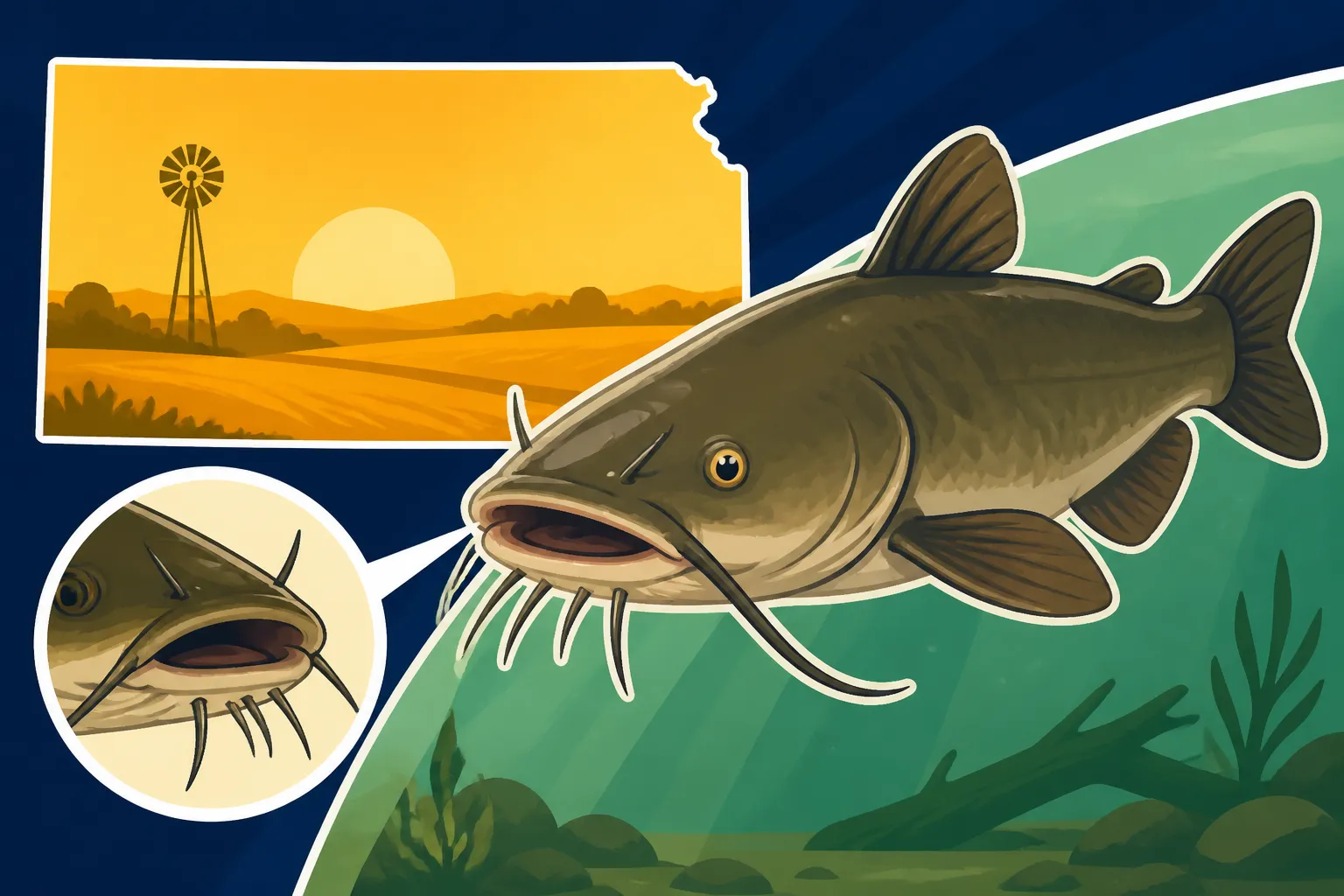
Bullhead Catfish Identification
It's happened to all of us: you're out on a beautiful Kansas lake or river, your line gets hit hard, and you reel in a feisty catfish. But then you look at it and think, "Wait, is this a channel cat? A flathead? Or one of those bullheads?" It can be a genuine head-scratcher, especially for new anglers or those venturing into different waters. Knowing precisely what you've caught isn't just about bragging rights; it's crucial for understanding regulations, handling your catch safely, and frankly, just appreciating the incredible diversity of fish in our state. This guide is here to clear up the confusion, helping you confidently identify bullhead catfish in Kansas waters.
The Importance of Knowing Your Bullheads in Kansas
You might wonder why it's such a big deal to tell one catfish from another. After all, they're all whiskery, right? But the truth is, proper identification impacts everything from adhering to daily creel limits to understanding the best techniques for future catches. Getting it wrong can lead to frustrating moments or even unintentional violations.
Why Misidentification Can Spoil Your Day (and Your Dinner!)
Imagine you've had a fantastic day fishing, and you've got a stringer full of what you believe are channel catfish, ready for the frying pan. You get home, proudly show off your catch, and a more experienced friend or family member points out that half of them are actually bullheads. While bullheads are perfectly good eating, they often don't grow to the impressive sizes of their larger cousins, meaning you might have been targeting a different culinary experience entirely.
Beyond the dinner table, misidentification can lead to missed opportunities. Perhaps you're trying to target a specific species, like a trophy Kansas State Record Catfish, and you're using tactics best suited for channel cats, but you keep reeling in bullheads. Knowing the difference means you can adjust your bait, location, or presentation to find the fish you're truly after. It’s all part of the learning curve, and it starts with knowing your quarry.
Practical Implications for Anglers and Conservation
Regulations are a huge part of fishing responsibly. Kansas has specific daily creel limits and sometimes length limits that can vary by species. For example, the limits for Kansas Channel Catfish Facts and Limits might be different from the general rules that apply to bullheads. Fishing without proper knowledge could inadvertently lead to keeping too many fish of a certain species or keeping one that's under the legal size, resulting in penalties for fishing without a license or other violations if you're not careful. It’s not about being a rule-breaker, but simply about understanding the rules for the fish you encounter. You can always check the Kansas Fishing Regulations Explained booklet for the latest details.
From a conservation standpoint, knowing what you're catching contributes to better data collection for wildlife agencies. When anglers accurately report their catches, it helps biologists monitor fish populations, understand ecological trends, and make informed decisions about stocking and management. So, by taking the time to learn, you're not just helping yourself; you're contributing to the health of Kansas's aquatic ecosystems for everyone who enjoys Kansas Fishing.
Unpacking the Distinctive Features of Bullhead Catfish
So, what exactly makes a bullhead a bullhead? While they share a general "catfish" look with their larger relatives, there are several key characteristics that, once you know them, make identification much simpler. Think of it as a checklist you run through when you pull one out of the water.
General Characteristics: What All Bullheads Share
All bullheads, regardless of their specific species, tend to be more compact and stout-bodied than the sleek, torpedo-like channel catfish or the massive, flattened flathead. They have a fairly large head (hence the "bull" in bullhead) and typically a rounded body profile, especially when compared to the deeply forked tail of a channel cat.
Their skin is smooth and scale-less, a common trait among all catfish, but bullheads often have a somewhat slimy feel to them. They're typically found in shallower, often murkier waters, which influences their color and camouflage. And yes, they all have those distinctive barbels – the whisker-like sensory organs around their mouths that are so characteristic of catfish.
Key Visual Cues: Coloration, Fins, and Mouth
Coloration is one of the first things you'll notice, though it can vary quite a bit depending on the water clarity and substrate where the fish lives. Generally, bullheads range from dark olive or black to muddy brown or yellowish-green on their backs, fading to lighter shades on their bellies. Unlike channel catfish, they rarely have spots as adults. Their fins are a critical identifier. Bullheads have a relatively blunt, square-cut tail fin, or at most, a very slightly notched one. This is a stark contrast to the deeply forked tail of a channel catfish. Their pectoral fins, located just behind the gills, have a sharp, serrated spine that can deliver a painful poke if you're not careful when handling them. Many experienced anglers wear gloves, easily found on sites like Amazon, to avoid these spines.
The mouth of a bullhead is usually terminal, meaning it's at the very end of their snout, and it’s typically broad. This is different from the slightly subterminal (under-slung) mouth often seen in flatheads, which are built for ambushing prey from below.
The Whisker Test: Barbels as a Primary Indicator
Those "whiskers," or barbels, are more than just decorative. They're packed with taste buds and help the fish locate food in low-light or murky conditions. For bullhead identification, the color of these barbels can be a very telling sign.
Bullheads typically have eight barbels: four on the chin, two nasal barbels (near the nostrils), and two maxillary barbels (at the corners of the mouth). The key here for bullheads is that these barbels are often dark, matching the dorsal coloration, or sometimes mottled. This differs from channel catfish, which almost always have dark barbels, and especially from yellow bullheads, which have uniquely pale or white chin barbels. This seemingly small detail is often the most reliable way to tell the bullhead species apart once you have them in hand.
| Feature | Black Bullhead | Yellow Bullhead | Brown Bullhead |
|---|---|---|---|
| Coloration | Dark olive, black, or dark brown on top; pale yellow to white belly. | Mottled yellowish-brown to olive-green on top; creamy white to yellow belly. | Dark brown to olive-green on top; pale yellow to white belly. |
| Chin Barbels | Entirely black or dark brown. | White or pale yellow. | Dark brown to black. |
| Tail Fin | Square to slightly notched. | Square to slightly rounded. | Slightly notched. |
| Pectoral Spine | Strong, serrated, with backward-pointing teeth. | Serrated. | Strong, serrated, with backward-pointing teeth. |
| Body Shape | Robust, often stocky. | More slender than black, but still robust. | Robust, can be larger than other bullheads. |
| Habitat Incl. | Muddy bottoms, turbid water. | Clearer water, vegetation. | Clearer water, rocky areas, cooler. |
A Closer Look: Identifying Specific Bullhead Species in Kansas
While all bullheads share common traits, Kansas is home to a few distinct species, and knowing how to differentiate them can really enhance your fishing prowess. Each one has subtle differences that become obvious once you know what to look for.
Black Bullhead: The Most Common Kansas Resident
The black bullhead ( Ameiurus melas ) is probably the most commonly encountered bullhead in Kansas. They are incredibly adaptable and can thrive in a wide range of environments, from muddy farm ponds to slow-moving rivers and even some larger reservoirs. If you've ever caught a small, dark catfish with no spots and a squarish tail, it was likely a black bullhead.
Their coloration is typically a dark olive to black on the back, fading to a lighter, often yellowish-white belly. The dead giveaway for the black bullhead, however, is their barbels. All eight barbels—chin, nasal, and maxillary—will be uniformly dark, usually black or dark brown, matching their body color. Their pectoral fins have strong, sharply serrated spines, so handle with care! These fish are often found near the bottom in shallower, often turbid waters, feeding on insects, worms, and small fish. They're a favorite target for Kansas Fishing Techniques for Beginners because they're generally eager biters.
Yellow Bullhead: Often Overlooked, But Present
The yellow bullhead ( Ameiurus natalis ) is a beautiful fish, often overlooked, but quite present in Kansas, especially in clearer waters with plenty of vegetation. They are generally a bit more slender than their black bullhead cousins, though still robust. Their backs tend to be a mottled yellowish-brown to olive-green, with a creamy white or yellow belly.
The key distinguishing feature of the yellow bullhead is its chin barbels. Unlike the black bullhead's dark barbels, the yellow bullhead's chin barbels are distinctly white or pale yellow, a stark contrast to its body color. All other barbels (nasal and maxillary) will still be dark. Their tail fin is typically square to slightly rounded, not deeply forked. You might find them in oxbow lakes, vegetated backwaters, or smaller creeks. They’re excellent panfish for a relaxed day out, often taking worms or small cut bait.
Brown Bullhead: A Less Common but Possible Catch
The brown bullhead ( Ameiurus nebulosus ) is less common in many parts of Kansas compared to the black bullhead, but they are certainly found in some areas, particularly in clearer, cooler waters with rocky or gravel bottoms. They tend to grow a bit larger than black bullheads on average. Their coloration is usually dark brown to olive-green on the back, with mottled sides, fading to a pale yellow or white belly.
Identifying a brown bullhead requires a closer look at the barbels, similar to the black bullhead. All of their barbels are dark, but often a dark brown rather than jet black. The main difference from a black bullhead, which can be subtle, is that the brown bullhead has a slightly more notched tail fin, a bit more pronounced than the black bullhead's square tail. Additionally, the pectoral spines of the brown bullhead typically have sharper, more distinct serrations than those of the black bullhead. If you're fishing in a river or a state fishing lake with diverse habitat, you might just encounter one of these beauties.
Don't Confuse Them! Bullheads Versus Other Kansas Catfish
It's easy to lump all catfish together, but knowing how bullheads differ from the larger, more sought-after species like channel cats and flatheads is incredibly important. These distinctions will guide your fishing strategy and ensure you're compliant with all regulations.
Bullheads vs. Channel Catfish: Spotting the Clear Differences
This is probably the most common identification mix-up. Channel catfish are incredibly popular targets for anglers across Kansas, and they share some superficial similarities with bullheads. However, there are a few unmistakable features that set them apart.
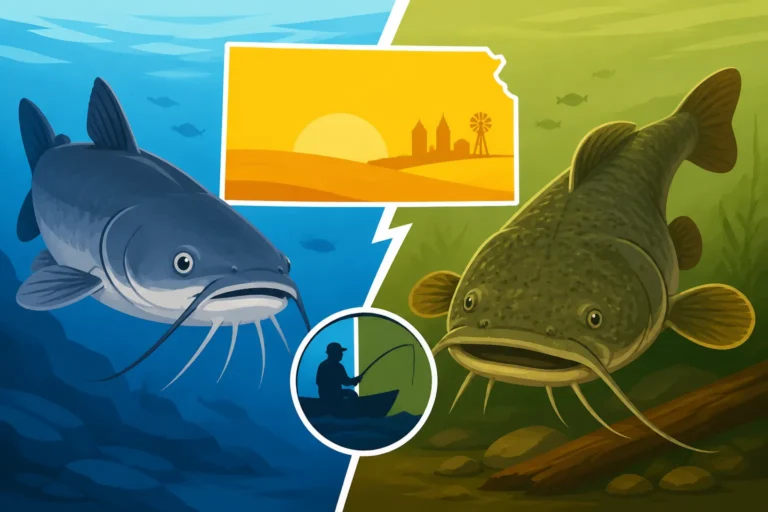
The most obvious difference is the tail fin. Channel catfish (Ictalurus punctatus) have a deeply forked tail, almost like a swallow's tail. Bullheads, as we discussed, have a square or at most, slightly notched tail. This is your primary visual cue. Secondly, adult channel catfish often have distinct dark spots on their sides, particularly when younger, though these can fade as they age. Bullheads generally lack these spots. Their body shape also differs significantly; channel cats are more streamlined and built for speed, while bullheads are chunkier. And finally, remember the barbels: channel catfish always have dark barbels, but their body is generally lighter and more silvery or olive-gray compared to the often darker, muddier tones of bullheads. If you're targeting big channels, you'll want to use different bait like cut shad or large stink baits, whereas bullheads are happy with simpler fare like worms or small pieces of hot dog. Best Bait for Kansas Catfish is a great resource to learn more about this.
Bullheads vs. Flathead Catfish: Beyond Just Size
Flathead catfish (Pylodictis olivaris) are the giants of the Kansas catfish world, known for their immense size and predatory nature. While a small flathead might be confused with a large bullhead by a novice, there are distinct features that quickly tell them apart, even at a young age.
First, as their name suggests, flatheads have a very broad, flattened head, especially when viewed from above. Bullheads have a relatively large head, but it's not nearly as flattened. The lower jaw of a flathead typically protrudes beyond the upper jaw, giving it an under-slung mouth perfect for ambushing prey. Bullheads have a terminal mouth where the jaws are roughly equal. Flatheads also have a distinctly rounded tail fin, which differentiates them from the bullhead's square tail and the channel cat's forked tail. Their coloration is usually a mottled yellow-brown to olive, with a lighter belly, and they often have a marbled appearance. Unlike channel cats, they don't have spots, but their markings are very distinct. Young flatheads are often found in rocky river sections or near woody debris, whereas bullheads prefer softer, muddier bottoms. Understanding these differences can really guide you when you're thinking about Kansas Flathead Catfish Facts and Limits and targeting a truly monstrous catch.
Using Identification Guides and Resources
When in doubt, always consult reliable resources. The Kansas Department of Wildlife, Parks and Tourism (KDWPT) provides excellent fishing guides and species information, often available online or at license vendors. Many comprehensive fishing guides, which include detailed illustrations and descriptions of Kansas Fish Species Guide, can be purchased through retailers like Amazon. Having a laminated copy in your tackle box or a digital version on your phone can be a lifesaver when you're out on the water.
Another great resource is local bait shops. The folks working there often have decades of experience and can help you identify a picture of your catch or even point out local nuances in fish identification. Don't be shy about asking questions! The more you learn, the more confident and successful you'll be on your next Kansas Fishing adventure.
Disclaimer
This article is for general informational purposes only and does not constitute professional advice. Laws, prices and regulations vary by location and change over time. Consult a qualified professional for guidance on your specific situation.