Best Rod Holders for Kansas Boats
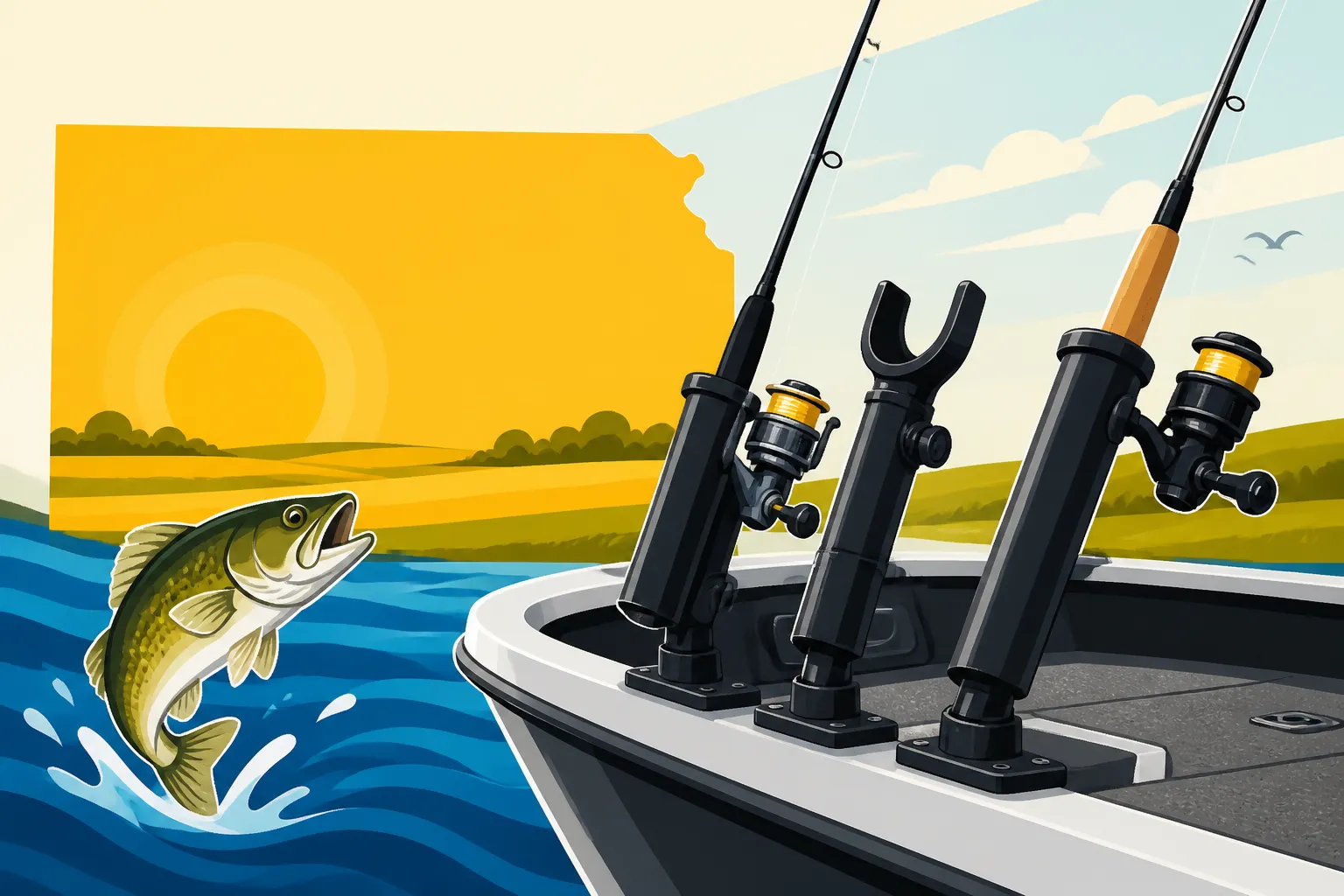
One of the most common frustrations for any Kansas angler, whether you're chasing walleye on Milford Lake or catfish on the Kansas River, is dealing with unsecured fishing rods. They're constantly getting tangled, stepped on, or worse, falling overboard with a splash that makes your heart sink. This comprehensive guide will walk you through everything you need to know about choosing and utilizing the best rod holders for your Kansas boat, ensuring your gear stays safe and your fishing experience is much more enjoyable.
Why Rod Holders Are Essential for Kansas Boating
Picture this: you're cruising across a choppy Cheney Reservoir, heading to your favorite wiper spot, and your rods are rattling around in the bottom of the boat. Or perhaps you're setting lines for trophy flatheads on Tuttle Creek Lake, trying to juggle multiple rods while baiting hooks. This isn't just an inconvenience; it's a real problem that can lead to damaged gear, lost fish, and even safety hazards. Rod holders aren't just an accessory; they're a fundamental part of a well-equipped fishing vessel, offering practical benefits that transform your time on the water.
Safety and Organization on the Water
The last thing anyone wants is a treble hook flying around or a rod butt tripping someone up in a small boat. Rod holders keep your gear neatly stowed and out of the way, especially when you're moving between spots or when the bite is slow. They provide a dedicated, secure place for each rod, preventing them from sliding around, getting tangled with other lines, or creating dangerous obstacles. Think about it: a sudden wave or an unexpected turn can send loose gear flying. With rods securely nested in their holders, you can focus on navigating, operating your trolling motor, or simply enjoying the scenic Kansas waterways without constantly worrying about what's going to go overboard next. This organized approach also makes it much quicker to grab the right rod when a fish suddenly starts biting, reducing precious seconds wasted fumbling around.
For those busy days with family or friends onboard, proper rod storage is even more critical. Kids, especially, need clear pathways and designated safe zones. Rod holders create that structure, making the boat a safer environment for everyone. Plus, it just looks tidier and more professional, which might not catch fish, but it certainly makes for a more pleasant overall experience.
Maximizing Fishing Efficiency for Various Techniques
Beyond safety, rod holders are invaluable tools for increasing your fishing efficiency, especially when employing specific techniques. Trolling, for instance, would be nearly impossible without them. Imagine trying to hold two, three, or even four rods simultaneously while trying to steer the boat, monitor your fish finder, and keep an eye on your speed. It's a recipe for disaster. Rod holders allow you to deploy multiple lines at once, covering more water and different depths, which is crucial when targeting widespread species like walleye or striped bass. You can set your rods at varying angles, experimenting with lure depths and presentations until you find what the fish are hitting.
Even when you’re not trolling, rod holders offer hands-free convenience. Perhaps you're still-fishing for channel catfish with cut bait, waiting patiently for a bite. You can place your rod in a holder, giving you the freedom to tie on a new lure, grab a drink, or assist a fellow angler, all while your line remains in the water, ready for action. They are also fantastic for soaking baits in current, like when you're targeting blue catfish on the Kansas River, keeping your rod stable against the pull of the water. This frees up your hands for other tasks, like netting a fish, re-baiting, or managing your tackle, making every moment on the water more productive. For more on maximizing your time, check out our guide on Kansas Fishing Techniques for Beginners.
Protecting Your Valuable Gear
Let's face it, fishing rods and reels aren't cheap. A quality setup can represent a significant investment, and the last thing you want is for it to get scratched, bent, or broken due to improper storage. Rod holders provide a secure cradle, protecting your rods from accidental damage caused by impact, vibrations, or general clutter in the boat. They prevent rods from bouncing against boat gunwales, getting snagged on other gear, or suffering the dreaded tip-break when someone accidentally steps on it.
Consider the harsh realities of the marine environment. Constant exposure to sun, water, and salt (if you ever venture outside Kansas to brackish water) can take a toll. While rod holders won't protect against direct sun exposure, they do lift your rods off wet decks, preventing reels from sitting in standing water and reducing corrosion over time. Properly secured rods are less likely to fall out of the boat entirely, saving you the heartache and expense of replacing a lost combo. It's an investment in peace of mind and the longevity of your prized fishing equipment.
Types of Rod Holders for Different Kansas Fishing Styles
Just like there are different fishing techniques and boat types in Kansas, there's a diverse array of rod holders designed to meet specific needs. Understanding the various types available is the first step in selecting the best option for your boat and your preferred fishing methods. Each type has its own advantages and ideal applications, making some better suited for certain situations than others.
Clamp-On Rod Holders
Clamp-on rod holders are arguably the most versatile and easiest to install. They feature a clamping mechanism that allows them to be securely attached to boat rails, gunwales, or even cooler handles without the need for drilling. This makes them an excellent choice for anglers who rent boats, have smaller Jon boats, or simply don't want to make permanent modifications to their vessel. They are highly portable and can be moved around the boat as needed, offering flexibility in rod placement depending on your fishing situation.
However, their portability can also be a slight drawback. While generally secure, a strong clamp might not be as rock-solid as a bolted-down option, especially when dealing with heavy trolling pressure from a large fish or in rough waters. The clamping force needs to be regularly checked to ensure it hasn't loosened over time. They are fantastic for lighter to medium applications, such as still-fishing for crappie at Hillsdale Lake or setting out a few lines for channel catfish from the bank of a river. They come in various designs, from simple fixed-angle holders to fully adjustable models that pivot and rotate. Brands like Scotty and Cabela's often offer robust clamp-on options.
Flush-Mount Rod Holders
Flush-mount rod holders offer a clean, integrated look, sitting nearly flush with the boat's gunwale or deck. These are the most common type found as factory installations on many fishing boats, particularly larger fiberglass bass boats and offshore rigs. They require drilling a hole into the boat for installation, which means they are a permanent fixture. Once installed, they provide an extremely strong and stable hold for your rods, capable of handling significant loads from big game fish.
The primary advantage of flush-mount holders is their strength and minimalist profile. They don't protrude much from the boat, reducing snag hazards when moving around or docking. They are ideal for storing rods when running at high speeds or for powerful trolling applications, like chasing striped bass at Wilson Lake. The fixed angle of most flush-mounts can be a limitation, as you can't adjust the rod's position without physically moving it to a different holder. However, many anglers install several at different angles to cover various trolling spreads. If you're looking for ultimate strength and a sleek aesthetic, and you're comfortable with permanent installation, flush-mounts are a top-tier choice.
Rail-Mount Rod Holders
Similar in concept to clamp-on holders but often more robust, rail-mount rod holders are designed to attach directly to the existing rails on your boat. These are common on pontoon boats, older aluminum boats, or any vessel with sturdy railings along the gunwales. They can be attached with bolts or heavy-duty clamps, providing a very secure attachment point that is generally stronger than a simple clamp-on but still offers more flexibility than a flush-mount.
Rail-mount holders are excellent for anglers who want a strong, semi-permanent solution without drilling into the main boat structure. They often feature various adjustment mechanisms, allowing you to change the angle and direction of your rod to suit different fishing techniques. For instance, if you're targeting white bass during their run below the Milford Lake dam, you might want your rods angled out wide, while bottom fishing for catfish might require a more vertical presentation. They provide a solid platform for both trolling and still-fishing, making them a versatile choice for a wide range of Kansas fishing scenarios. Just ensure your boat's rails are strong enough to support the intended load and that the mounting hardware is appropriate for the rail diameter.
Track Systems and Adjustable Rod Holders
For the ultimate in versatility and customization, track systems paired with adjustable rod holders are hard to beat. A track system involves installing a metal track, typically aluminum or stainless steel, along the gunwale of your boat. Once the track is installed, you can easily slide various accessories, including adjustable rod holders, into the track and lock them into place at any point along its length. This allows for quick, tool-free repositioning of your rod holders as your fishing needs change throughout the day.
Adjustable rod holders designed for these systems often boast a wide range of motion, allowing you to fine-tune the angle, height, and rotation of your rod. This is particularly beneficial for specialized techniques like spider rigging for crappie, where multiple rods need to be fanned out at precise angles, or for advanced trolling patterns. Brands like Cannon, Scotty, and Folbe are well-known for their robust track systems and accompanying rod holders. While the initial investment and installation of a track system might be more significant, the long-term flexibility and ease of adjustment it provides can greatly enhance your fishing experience. This system truly shines for multi-species anglers who employ various techniques, allowing them to adapt their setup quickly and efficiently on the water, whether they're on El Dorado Lake chasing bass or Lovewell Reservoir after walleye. You can find many options for these systems at places like Bass Pro Shops or through online retailers like Amazon.
Key Features to Consider When Choosing Rod Holders
Selecting the perfect rod holders for your Kansas boat involves more than just picking the first one you see. A few critical features can make all the difference in durability, functionality, and overall satisfaction. Thinking through these aspects before you buy will help ensure you make a choice that will serve you well for many seasons of fishing on Kansas's diverse waters.
Material and Durability
The material of your rod holder is paramount to its longevity, especially in the demanding marine environment. The best rod holders are typically made from marine-grade materials that can withstand constant exposure to sun, water, and the occasional fish slime.
- Stainless Steel: This is a top choice for strength and corrosion resistance. Stainless steel rod holders are incredibly durable and can handle heavy-duty applications, making them excellent for targeting large fish like blue catfish or trophy flatheads. However, they can be more expensive.
- Anodized Aluminum: Another excellent option, anodized aluminum is lightweight, strong, and highly resistant to corrosion. It's often found in track systems and high-end adjustable rod holders.
- High-Impact Nylon or Reinforced Plastic: These materials are common for more budget-friendly options. While not as strong as metal, modern plastics can be surprisingly durable and offer good UV resistance, preventing them from becoming brittle in the Kansas sun. They are also gentle on rod blanks, reducing the risk of scratches. Look for models explicitly stating "marine-grade" or "UV-stabilized" to ensure they won't degrade quickly. Inferior plastics can become weak and crack after just a season or two of sun exposure, leading to lost rods or broken holders.
Consider the stresses your rod holders will endure. Will they be holding a light spinning rod for panfish, or a heavy-action baitcasting rod battling a monster striper? The material needs to match the intensity of your fishing.
Adjustability and Angle Options
The ability to adjust your rod holder's angle and rotation is a game-changer for many fishing techniques. Fixed-angle holders, common in flush-mount designs, are great for specific, consistent applications like offshore trolling, but they lack flexibility. For most Kansas anglers, especially those who target multiple species or employ various methods, adjustability is key.
Look for rod holders that offer multiple degrees of vertical adjustment, allowing you to point your rod tip high for trolling or low to the water for subtle bites. Rotational adjustment is equally important, enabling you to fan out your rods to cover a wider spread or bring them closer in when navigating tight spots. Some advanced models offer a full 360-degree rotation. The locking mechanism for these adjustments should be robust and easy to operate, even with wet or cold hands. Ratcheting systems, cam locks, or heavy-duty thumb screws are all common. Test them out (if possible) to ensure they hold their position firmly under pressure. This adjustability allows you to optimize your presentation, keep lines clear of the prop, and adapt to changing conditions or species, making your setup much more versatile. For more general advice on fishing setup, refer to Best Rods and Reels for Kansas Fishing.
Ease of Installation and Removal
How easily a rod holder can be installed and, if needed, removed, is a significant factor.
- Permanent Installation (Drilling Required): Flush-mount and some heavy-duty rail-mount or track systems require drilling holes into your boat. This offers the most secure attachment but requires careful planning and a commitment to the placement. If you're not comfortable drilling, this might not be for you.
- Non-Permanent (No Drilling): Clamp-on and some lighter rail-mount options don't require drilling. They are ideal for rental boats, kayaks, or if you prefer not to modify your boat permanently. They offer flexibility in placement and can be removed for storage or transfer to another vessel.
Consider your comfort level with tools and boat modifications. Do you want something you can quickly attach and detach, or are you looking for a long-term, fixed solution? Also, think about storage. If you remove your rod holders for winterization or security, how easy is that process? For instance, during the winter months when ice fishing is an option, you might want to remove boat-mounted rod holders completely. Check out our Kansas Ice Fishing Guide for more on cold weather fishing. The easier it is to manage, the more likely you are to actually use them as intended.
Compatibility with Your Rods and Reels
This might seem obvious, but not all rod holders are created equal when it comes to accommodating different rod and reel setups.
- Rod Butt Diameter: Some rod holders have narrower openings or cradles that might not fit larger rod butts, especially those on heavy-duty saltwater or catfish rods. Conversely, if the opening is too wide, a slender spinning rod might wobble excessively.
- Reel Clearance: Ensure there's enough clearance for your reel, especially if you're using large conventional reels or baitcasters that sit higher on the rod. Some rod holders have a shallow cradle that might interfere with the reel seat, preventing the rod from seating properly.
- Rod Handle Length: Consider how much of your rod handle will protrude from the holder. If the holder is too deep or shallow, it can affect how securely the rod sits or how easily you can grab it when a fish bites.
- Rod Lock/Security: Some rod holders feature a locking ring or strap to prevent the rod from jumping out when a fish strikes aggressively or in rough waters. This is an excellent feature, especially for trolling where a hard strike can pull an unsecured rod right out of the holder.
Before purchasing, measure your largest rod butt and reel to ensure it will fit comfortably and securely in the chosen rod holder. If buying in person, try placing one of your actual rods in the holder. Online, check product specifications carefully, and perhaps read user reviews to see if others have noted compatibility issues. This simple check can save you a lot of frustration and potential loss of gear down the line.
Installation Tips for Various Boat Types in Kansas
Installing rod holders correctly is just as important as choosing the right ones. A poorly installed holder can be a weak link, leading to frustration or even lost gear. The process can vary significantly depending on your boat's construction and the type of rod holder you've selected. Let's break down some specific tips for common boat types found on Kansas lakes and rivers.
Jon Boats and Aluminum Boats
Jon boats and other aluminum utility boats are incredibly popular in Kansas, particularly for fishing smaller rivers, farm ponds, and shallow areas of larger reservoirs. They are generally rugged, lightweight, and easy to maneuver. When installing rod holders on these boats, you have a few excellent options:
For clamp-on rod holders, installation is straightforward. Simply find a sturdy part of your gunwale or bench seat edge where the clamp can get a good, tight grip. Make sure there's no interference with seating or movement. Periodically check the tightness of the clamps, especially after a few bumpy rides, as vibrations can sometimes cause them to loosen over time. Many clamp-on models are designed with a protective rubber or plastic pad on the clamping surfaces to prevent scratching the aluminum. If yours doesn't have this, you might want to add a piece of rubber padding yourself. These are great for adding rod capacity temporarily or for moving holders around based on your immediate needs.
For rail-mount rod holders, if your Jon boat has square or round rails, these can be a more secure option than basic clamp-ons. Ensure you measure the diameter or width of your rails accurately before purchasing. Most rail-mount holders come with specific brackets for different rail sizes. Bolt-on rail mounts will provide the most security but require drilling through the rail itself, which is a permanent modification. If you opt for drilling, use stainless steel hardware and seal any holes with marine sealant to prevent water intrusion and corrosion, which can be a concern with aluminum.
If you're considering drilling directly into the gunwale for flush-mounts or track systems, be mindful of the aluminum's thickness. Jon boat aluminum is often thinner than that of larger fiberglass boats. Use backing plates (large washers or custom-cut aluminum plates) on the underside of the gunwale to distribute the stress of the bolts over a wider area, preventing the bolts from pulling through the aluminum under heavy load. Always use marine-grade stainless steel fasteners to avoid galvanic corrosion between dissimilar metals. Before drilling, double-check what's underneath – you don't want to drill into wiring, flotation foam, or fuel lines. A simple visual inspection or tapping on the area can often give you an idea of what's behind the panel. For more boat-related information, check out our Kansas Boat Registration Guide.
Fiberglass Bass Boats and Multi-Species Rigs
Fiberglass bass boats and multi-species rigs are often designed for higher performance and serious angling, meaning they typically offer more robust mounting surfaces for rod holders. These boats can handle faster speeds and heavier loads, so your rod holders need to be equally sturdy.
Flush-mount rod holders are a natural fit for these vessels, offering a clean, aerodynamic profile that doesn't interfere with casting or high-speed runs. Installation involves carefully marking the desired location, using a hole saw to cut the opening, and then drilling pilot holes for the mounting screws or bolts. Always apply marine sealant (like silicone or 3M 4200/5200) around the edges of the hole and under the flange of the rod holder before fastening it down. This prevents water from seeping into the boat's core or bilge, which can lead to structural damage over time. Pay close attention to the angle of the gunwale; choose flush-mounts that match the degree of the slope to ensure a snug fit.
Track systems are an increasingly popular choice for these types of boats, especially for multi-species anglers who frequently change their setup for different fishing techniques. The track itself is bolted to the gunwale, and like flush-mounts, requires careful drilling and sealing. Once the track is installed, the versatility of sliding adjustable rod holders into place is unmatched. Many dedicated fishing boats will have existing reinforced areas in the gunwales specifically for mounting accessories. If you're unsure, consult your boat's owner's manual or a qualified marine technician. When securing track systems, use plenty of stainless steel bolts with large fender washers or a backing plate on the underside to evenly distribute the load across the fiberglass. This is critical for preventing stress cracks in the fiberglass, especially when trolling for powerful species like striped bass or wipers on large reservoirs like Milford Lake.
Kayaks and Smaller Watercraft
Kayaks, canoes, and other small watercraft have become incredibly popular for accessing secluded fishing spots on Kansas streams and smaller lakes. Installing rod holders on these vessels requires a focus on lightweight solutions, minimal modifications, and keeping your center of gravity low.
For kayaks, the most common and versatile option is a track system, often a smaller, more compact version of what you'd find on a powerboat. These tracks (often from brands like Scotty or YakAttack) are bolted or riveted to flat areas of the kayak deck. Because kayak hulls are relatively thin, use well-sealed stainless steel hardware and backing plates on the inside of the hull to reinforce the mounting points. Many kayaks also come with "gear tracks" or pre-molded mounting pads that simplify the installation process. Adjustable rod holders that slot into these tracks are ideal, allowing you to position your rods for trolling, jigging, or simply hands-free paddling. Look for models with a positive locking mechanism to prevent losing a rod during a capsize or an aggressive strike. For detailed kayak-specific gear, check out Kansas Kayak Fishing Gear Guide.
Clamp-on rod holders can also work well on kayaks and canoes if you have a sturdy gunwale or crossbar. They offer flexibility without permanent modification. However, always test the stability of the clamp before trusting it with a valuable rod. Suction cup mounted rod holders exist, but they are generally less reliable and should be used with extreme caution, if at all, for securing primary fishing rods.
When installing any rod holder on a kayak, consider ergonomics. Can you easily reach and retrieve your rod? Will it interfere with your paddle stroke? Is it positioned to prevent lines from fouling during casting? Also, think about the angle. For trolling from a kayak, you typically want your rod tips low to the water to keep your lure running true. For still fishing, a more upright position might be preferred. Safety is always paramount, so make sure your setup doesn't impede your ability to paddle, steer, or re-enter your kayak if you take an unexpected swim.
Maintenance and Longevity of Your Rod Holders
You’ve invested time and money into choosing and installing the perfect rod holders for your Kansas boat. Now, to ensure they last for many fishing seasons to come, a little routine maintenance goes a long way. Neglecting them can lead to premature wear, corrosion, and ultimately, failure when you least expect it. Proper care extends their lifespan and keeps your fishing experience smooth and hassle-free.
Regular Cleaning and Inspection
Just like the rest of your fishing gear and your boat itself, rod holders benefit greatly from regular cleaning. After each outing, especially if you’ve been on a dusty river or had a particularly slimy catch, take a moment to wipe them down.
- Rinse: Use fresh water to rinse off any mud, fish slime, or lake water residue. If you've fished in particularly murky water, a thorough rinse is even more important.
- Wash (if needed): For stubborn grime, a mild soap and water solution can be used, followed by a thorough rinse. Avoid harsh chemicals or abrasive cleaners, as these can damage finishes or plastic components.
- Dry: Allow them to air dry completely, or wipe them down with a clean cloth. This prevents water spots and reduces the chance of corrosion, especially on metal parts.
Beyond cleaning, a quick visual inspection is crucial.
- Check Fasteners: Look at all screws, bolts, and clamping mechanisms. Are they tight? Have any come loose from vibration? Tighten anything that feels even slightly wobbly. For bolted installations, check for any signs of rust around the bolt heads, which could indicate a sealing issue or the use of non-marine-grade hardware.
- Inspect Materials: Look for cracks in plastic components, bends or stress fractures in metal, or signs of rust on stainless steel (which can happen if the protective oxide layer is compromised, often called "tea staining"). Examine the rod holder's interior for any burrs or sharp edges that could abrade your rod blank. If you find any, they can often be smoothed down with a fine file or sandpaper.
- Test Adjustments: If your rod holders are adjustable, test the pivot points and locking mechanisms. Do they still hold firmly? Do they move smoothly without excessive play? Lubricate pivot points with a marine-grade lubricant if they feel stiff, but avoid over-lubricating where dust and grime might collect.
This routine check takes mere minutes but can prevent minor issues from becoming major problems, ensuring your rods remain securely in place no matter what the Kansas waters throw at you.
Addressing Wear and Tear
Even with the best materials and regular cleaning, rod holders will experience some wear and tear over time. Being proactive in addressing these issues can significantly extend their life.
- Corrosion: If you notice small rust spots on stainless steel, they can often be treated with a metal polish specifically designed for stainless steel. For aluminum, look for oxidation (a dull, whitish film) and clean it with an aluminum cleaner. If left unchecked, corrosion can weaken the material and compromise the integrity of the holder.
- Plastic Degradation: Over time, even UV-stabilized plastics can start to show signs of sun damage, such as fading, chalkiness, or becoming brittle. If you see hairline cracks forming, especially around mounting points or stress areas, it might be time to consider replacing the holder before it fails completely. Applying a marine-grade UV protectant spray periodically can help slow this degradation.
- Loose Components: If a part of your rod holder, like a rubber insert or a locking pin, becomes loose or falls out, try to replace it promptly. Many manufacturers sell replacement parts, and a quick search on Amazon or directly through the manufacturer's website can often yield what you need. Don't simply "make do" with a broken component, as it jeopardizes the security of your rod.
- Mounting Surface Issues: Sometimes the issue isn't the rod holder itself, but the surface it's mounted to. Check the boat rail for bends or cracks, or the fiberglass/aluminum deck for signs of stress around the mounting screws. If you find damage to the boat, it's a more serious repair that should be addressed by a professional or someone experienced in boat maintenance. Reinforcing with larger backing plates can sometimes solve minor stress issues.
By taking these proactive steps, you’re not just maintaining your rod holders; you're maintaining the safety of your valuable fishing gear and enhancing your overall enjoyment of Kansas fishing. For general boat maintenance, a topic like How to Winterize a Boat in Kansas could provide valuable insights.
| Rod Holder Type | Installation Method | Key Advantages | Key Disadvantages | Ideal Kansas Use Case |
|---|---|---|---|---|
| Clamp-On | Non-permanent | Portable, no drilling, easy to move | Less secure for heavy loads, can scratch rails, periodic tightening needed | Jon boats, rental boats, casual still-fishing for crappie |
| Flush-Mount | Permanent (Drilling) | Clean aesthetic, extremely strong, low profile | Fixed angle, requires drilling, less flexible placement | Fiberglass bass boats, serious trolling for walleye or stripers |
| Rail-Mount | Semi-permanent | Secure, often adjustable, no deck drilling (if rail-mounted) | Requires existing boat rails, specific rail size match, some drilling of rail itself | Pontoon boats, aluminum boats with sturdy rails, versatile use |
| Track Systems | Permanent (Drilling) | Ultimate adjustability and versatility, expandability | Higher initial cost, requires drilling, track takes up space | Multi-species boats, spider rigging for crappie, advanced trolling patterns |
Disclaimer
This article is for general informational purposes only and does not constitute professional advice. Laws, prices and regulations vary by location and change over time. Consult a qualified professional for guidance on your specific situation.