Best Ice Auger for Thick Ice
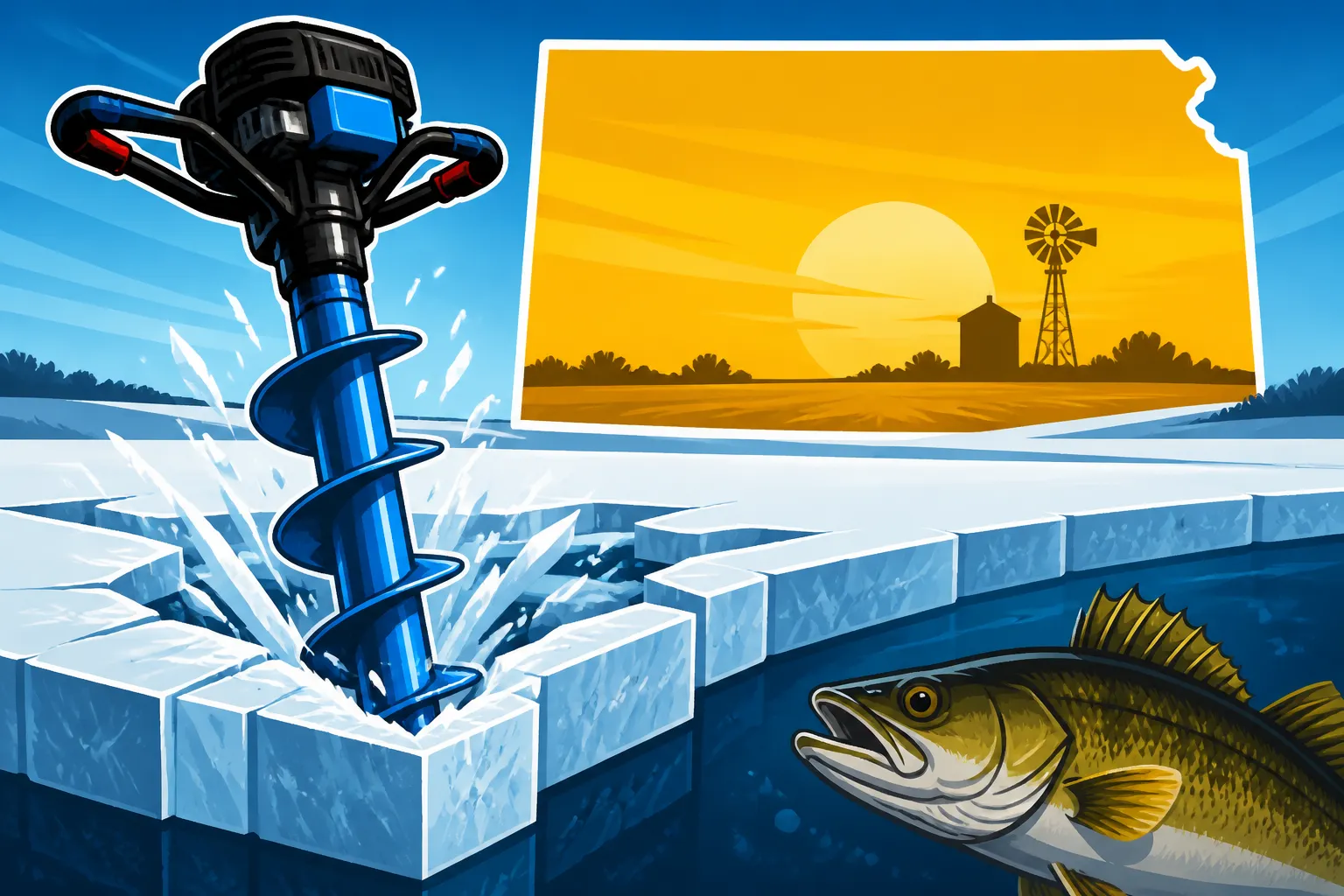
There's nothing quite like the sheer frustration of setting up for a day of ice fishing on a vast, frozen Kansas reservoir, only to find your auger struggling, sputtering, or outright refusing to cut through the incredibly thick ice. Many of us have been there, watching with envy as fellow anglers effortlessly drill hole after hole, while we wrestle with a dull or underpowered tool. When Kansas winters deliver substantial ice, often well over a foot thick, having the right equipment isn't just a convenience – it's a necessity for a successful and enjoyable day on the hard water. This comprehensive guide is designed to help you navigate the world of ice augers, ensuring you pick the best one for cutting through even the most formidable layers of Kansas ice, making your next outing smoother and more productive.
Why Thick Ice Demands the Right Auger
Ice fishing is a fantastic winter pastime, offering a unique opportunity to target species like walleye, crappie, and catfish when they're less pressured. However, the joy of the sport is directly proportional to your ability to access the water below. When ice truly sets in across Kansas lakes and ponds, it can become incredibly thick, sometimes reaching two feet or more. Without an auger designed for these conditions, you're not just inefficiently fishing; you're risking your enjoyment and potentially your safety.
The Dangers of Inadequate Equipment on Thick Ice
Imagine this scenario: you've spent an hour trekking across a massive expanse like Milford Lake Is the Largest Lake in Kansas to reach a promising fishing spot, perhaps an underwater hump or a deep channel known for holding big fish. You pull out your auger, eager to drop a line, but as you start drilling, the blades bog down. The ice is 18 inches thick, and your small, hand-me-down auger, perhaps designed for lighter ice, simply can't handle the resistance. Not only does this waste precious fishing time, but the sheer physical exertion can be exhausting and, in extreme cold, even dangerous. Overexertion can lead to sweating, followed by rapid chilling, which is a recipe for hypothermia if you're not careful.
Furthermore, an auger that struggles to cut cleanly can create jagged, unstable edges around your hole, which isn't ideal for landing fish and can even be a tripping hazard. Forcing an auger through ice that's too thick for its design also puts undue strain on the tool itself, leading to premature wear and tear, dull blades, or even mechanical failure. You don't want to be stranded on the ice with a broken auger and no way to cut new holes, especially if the bite moves. Investing in the right auger means investing in a safer, more comfortable, and ultimately more successful ice fishing experience.
How Kansas Winter Conditions Affect Ice Thickness
Kansas winters can be famously unpredictable, but when a sustained cold snap hits, ice builds up rapidly. Reservoirs like Cheney and Wilson, known for their trophy fish, can develop exceptionally thick ice, especially in their shallower bays or during periods of prolonged sub-zero temperatures. Even smaller community lakes and private ponds, while often freezing faster, can hold significant ice depths. How Thick Does Ice Need to Be to Fish? is a critical question for safety, but once that safe thickness is established, it keeps growing.
Factors like consistent cold temperatures, minimal snowfall (which insulates the ice), and lack of strong winds can all contribute to creating very thick, solid ice layers that challenge even robust augers. Early season ice might be 6-8 inches, but by mid-January or February, especially in northern Kansas, it's not uncommon to encounter ice exceeding 18-24 inches. This kind of ice demands serious cutting power. A light-duty auger that works fine for a brief cold snap in December might be utterly useless by the time January rolls around, making it crucial to be prepared for the full range of winter conditions Kansas can throw at you.
Types of Ice Augers for Thick Kansas Ice
Choosing the right type of ice auger is the first step toward conquering thick ice. Each type has its pros and cons, and understanding them will help you match the tool to your typical fishing style and the conditions you expect to face in Kansas.
Manual Augers: Are They Enough for Really Thick Ice?
Manual augers are the most basic and affordable option. They rely purely on your muscle power to drill holes. They are lightweight, quiet, and require no fuel or batteries. For early-season ice or thinner conditions (say, under 10-12 inches), a sharp manual auger can be surprisingly effective. However, for genuinely thick Kansas ice, anything consistently over a foot, they quickly become an exhausting endeavor.
Imagine trying to drill 15-20 holes through 18 inches of ice with a manual auger. You'd likely be drenched in sweat, completely worn out, and possibly frustrated enough to call it a day long before you've caught your limit. While some manual augers feature extensions to accommodate deeper ice, the physical toll remains significant. If you're a casual angler who only ventures out a couple of times a year when the ice is moderately thick, a manual auger might suffice. But for serious anglers targeting deep-water species or those who want to drill many holes to find active fish, especially on a day when Best Time to Ice Fish is critical, a powered option is almost a necessity.
Propane and Gas Augers: Powerhouses for Extreme Conditions
Propane and gas-powered augers have long been the go-to choice for anglers facing truly thick ice. These machines are robust, offering ample power to chew through multiple feet of ice with relative ease.
- Gas Augers: These run on a gasoline-oil mixture. They are typically the most powerful options available, making quick work of even the thickest ice. Many models, such as those you'd find at Bass Pro Shops, are designed with powerful engines and large-diameter blades, perfect for targeting bigger fish species that might require a wider hole. The downside is that they are heavier, noisier, require mixing fuel, and produce exhaust fumes, which can be an issue in ice shanties or enclosed spaces. They also demand more maintenance, like oil changes and spark plug checks.
- Propane Augers: Offering a cleaner-burning alternative to gas, propane augers run on small, disposable propane cylinders, similar to those used for camping stoves. They start easily, even in bitter cold, produce fewer fumes, and eliminate the need for mixing gasoline. While generally a bit less powerful than their gas counterparts, modern propane augers are more than capable of handling thick Kansas ice. They are often a bit quieter and require less maintenance. The main considerations are the cost and environmental impact of disposable propane canisters, though some larger models can be adapted to bulk tanks.
Both gas and propane augers are excellent choices for anglers who prioritize brute force and don't mind a bit of noise and weight. They are reliable workhorses when you need to punch through deep ice quickly and repeatedly.
Electric and Cordless Augers: The Modern Solution
Electric augers, particularly the cordless, battery-powered models, have revolutionized ice fishing. They offer a fantastic blend of power, convenience, and environmental friendliness, making them increasingly popular among Kansas anglers.
These augers are significantly quieter than gas or propane models, produce no exhaust fumes, and often start with the push of a button, even in frigid temperatures. They're lighter than most gas augers, making them easier to transport across the ice. Modern lithium-ion battery technology has advanced to the point where many electric augers can drill dozens of holes through thick ice on a single charge. If you're targeting species like the Fish You Can Catch Ice Fishing in Kansas that require mobility and drilling many holes, an electric auger offers unmatched stealth and ease of use.
The primary considerations for electric augers are battery life and cold-weather performance. While batteries are robust, extreme cold can reduce their efficiency, so carrying a spare battery, especially for a full day of fishing or when drilling through exceptionally thick ice, is a wise move. Charging infrastructure on the ice is also non-existent, so you need to be prepared with charged batteries before you head out. Despite these minor considerations, for many, the quiet operation and ease of use of an electric auger, readily available from online retailers like Amazon, make it the best choice for dealing with thick ice.
Here's a quick comparison of the auger types for thick ice:
| Auger Type | Best for Thick Ice (18"+) | Ease of Use | Noise Level | Maintenance | Portability | Cost Shape |
|---|---|---|---|---|---|---|
| Manual | Poor (High Effort) | High | Silent | Low | Excellent | Low |
| Propane | Excellent | Medium | Medium-High | Medium | Good | Medium |
| Gas | Excellent | Medium | High | High | Medium | Medium-High |
| Electric | Excellent | High | Low | Low | Excellent | High |
Key Features to Look for in a Thick Ice Auger
Once you've decided on the general type of auger, it's time to dive into the specifics. Certain features are absolutely critical when you're consistently facing thick ice conditions in Kansas.
Power and Torque: Essential for Cutting Through Depth
This is paramount. For a manual auger, "power" translates to blade sharpness and your physical strength. For powered augers, look for robust engines (for gas/propane) or high-voltage, high-amp-hour battery systems (for electric). A 40V or 80V electric auger, or a gas auger with a 2-stroke or 4-stroke engine designed for torque, will make short work of thick ice. The power rating directly correlates to how quickly and effortlessly the auger will cut through deep layers.
When comparing models, pay attention to the manufacturer's specifications. Some will proudly advertise their ability to cut through specific ice thicknesses or drill a certain number of holes on one tank/charge. Don't skimp here; an underpowered auger will be a constant source of frustration when you're trying to fish those deep winter crappie or walleye. Think about the amount of resistance an 18-inch block of ice creates – you need a machine that can overcome that resistance efficiently.
Blade Design and Material: The Sharp Edge You Need
The cutting head of your auger is where the magic happens. Sharp, durable blades are crucial for efficient cutting, especially through thick, hard ice. Look for blades made from high-quality steel that can hold an edge. Replaceable blades are a huge plus, as even the best blades will dull over time or get nicked if they hit something hard under the ice. Some augers, including those offered by reputable brands, come with different blade designs optimized for various ice conditions, like aggressive chipper blades for dirty ice or finely tuned shaver blades for clean, clear ice.
For thick ice, an aggressive blade pitch is often beneficial, as it pulls the auger into the ice more effectively. Always have a spare set of sharp blades or covers to protect them during transport. There's nothing worse than getting to your spot only to realize your blades are dull and you can't cut a decent hole. Keeping your blades sharp is arguably as important as the power source itself when it comes to cutting through tough ice.
Weight and Portability: Balancing Power with Practicality
While power is critical, you also need to consider how you'll transport your auger across the ice. If you're regularly fishing large Kansas reservoirs like Milford Lake Fishing Guide or Cheney Reservoir Fishing Guide and might walk a mile or more from your vehicle, a lighter electric auger could be a game-changer. Gas augers, while powerful, can be quite heavy and cumbersome, especially when dealing with slush or uneven ice.
Think about your primary mode of transport: an ATV, a sled, or just walking? If you're walking, every pound matters. If you're driving a UTV, weight is less of an issue. The design of the auger handle, whether it folds for storage, and if it comes with a protective cover for the blades, all contribute to overall portability. Many anglers also consider how easily the powerhead detaches from the auger flighting for easier packing. Finding the right balance between robust power and manageable weight will greatly enhance your ice fishing experience.
Battery Life and Runtime For Electric Augers: Avoiding Mid-Hole Failures
For electric augers, battery life and runtime are arguably the most important considerations after raw power. You need a battery system that can consistently punch through thick ice for a full day of fishing without dying mid-hole. Look for higher voltage (e.g., 40V, 80V) and higher amp-hour (Ah) ratings, as these indicate more power and longer runtimes. A good rule of thumb for thick ice is to aim for at least a 40V, 4Ah battery, but more is always better if you plan to drill many holes or spend extended periods on the ice.
Cold weather impacts battery performance, so what might be a 50-hole battery in mild conditions could be a 30-hole battery in bitter cold. Always carry at least one fully charged spare battery if you have an electric auger. Many anglers purchase these directly from the auger manufacturer or through retailers like Amazon, ensuring compatibility and quality. Keeping spare batteries warm in an insulated bag or even inside your jacket until needed can significantly extend their effective life on the ice. This preparation ensures you're never left struggling when the fish start biting.
Maintenance and Care for Your Ice Auger
Proper maintenance is crucial for ensuring your auger performs reliably season after season, especially when dealing with the demanding task of cutting through thick ice. Neglecting your auger can lead to frustration, costly repairs, and missed fishing opportunities.
Blade Sharpening and Replacement
Your auger blades are the unsung heroes of ice fishing. They take the brunt of the work and are the first point of failure if neglected. After each trip, especially if you've been cutting through particularly tough or sandy ice, inspect your blades for nicks, dents, or excessive dullness. Even a tiny burr can significantly reduce cutting efficiency. Many ice auger manufacturers, and third-party sharpening services, can properly sharpen blades. Alternatively, if the blades are severely damaged or worn, it's often best to replace them entirely.
Always keep your blades covered with a guard when not in use to protect them from damage and to protect yourself from their sharp edges. Store them in a dry place to prevent rust, which can quickly degrade their performance. Having a spare set of sharpened blades on hand is a smart move, allowing for quick swaps on the ice if a blade issue arises, ensuring you don't miss any action. This is especially true for those serious about their Kansas Fishing Seasons and Limits.
Engine Care and Fuel Management (for Gas/Propane)
For gas-powered augers, regular engine maintenance is key. This includes checking the spark plug, air filter, and fuel lines. Always use fresh, high-quality fuel mixed to the manufacturer's specifications, and consider adding a fuel stabilizer, especially if the auger will sit unused for extended periods. Old, stale fuel can gum up carburetors and cause hard starting or poor performance. Before storing your auger for the off-season, either run it until it's out of fuel or drain the fuel system completely to prevent issues.
Propane augers are generally lower maintenance on the engine side, but still benefit from occasional checks. Ensure the fuel lines are secure and inspect them for any signs of wear. Store propane canisters properly, away from direct sunlight and extreme heat. Proper care of your engine, whether gas or propane, means your auger will fire up reliably when those prime ice fishing days arrive, whether you're chasing the Kansas State Record Walleye or just a mess of panfish.
Battery Storage and Charging (for Electric)
Electric augers, while requiring less traditional engine maintenance, demand careful attention to their batteries. Always follow the manufacturer's guidelines for charging and storage. For most lithium-ion batteries, it's best to store them at a partial charge (around 50-75%) in a cool, dry place when not in use for extended periods. Avoid storing them fully charged or completely depleted, as both can reduce battery longevity.
Charge your batteries fully before each outing, and consider carrying them in an insulated bag on the way to the lake to help maintain their temperature and maximize their performance in cold conditions. If you notice a significant drop in runtime, it might be time to consider replacing the battery pack. Properly managed batteries will ensure your electric auger delivers consistent power and reliability, allowing you to focus on the fishing rather than worrying about your equipment. A little care goes a long way in preserving the life and performance of your investment.
Disclaimer
This article is for general informational purposes only and does not constitute professional advice. Laws, prices and regulations vary by location and change over time. Consult a qualified professional for guidance on your specific situation.