Hillsdale Lake Crappie Fishing Spots
Trying to pin down those elusive crappie at a big lake like Hillsdale can feel like a real treasure hunt sometimes. You know they're there, but finding their secret hideouts, especially as the seasons change, can be frustrating for even seasoned anglers. This comprehensive guide is going to walk you through the best crappie fishing spots at Hillsdale Lake, detailing exactly where to look and how to catch them throughout the year, so you can spend less time guessing and more time reeling in slabs.
Understanding Hillsdale Lake's Crappie Dynamics
Hillsdale Lake, nestled in Miami County, is one of those Kansas gems that offers fantastic fishing, especially for crappie. But it's a large body of water, covering over 4,500 acres at normal pool, with miles of shoreline and a complex underwater landscape. To consistently catch crappie here, you really need to understand the lake's unique characteristics and how they influence the fish's behavior. It’s not just about dropping a line anywhere; it's about knowing where they want to be and why.
Lake Characteristics and Crappie Behavior
Hillsdale Lake isn't just a big puddle; it's a dynamic ecosystem with diverse habitats that crappie absolutely love. The lake boasts an average depth of around 15 feet but plunges to over 50 feet in some areas, particularly near the dam and along old creek channels. This variety in depth provides crappie with options no matter the water temperature or time of year. What makes Hillsdale particularly prime for crappie are the extensive areas of standing timber, submerged brush piles, and the winding Osage and Big Bull Creek channels that feed into the lake.
Crappie, whether you're targeting white crappie or black crappie, are structure-oriented fish. This means they are almost always found in or near some form of cover. At Hillsdale, this translates to submerged trees, brush, old roadbeds, rock piles, and even docks or bridge pilings. They use these structures for protection from predators, as ambush points for baitfish, and for spawning. Understanding this fundamental preference is your first step to success. The turbidity of the water, which can vary, also plays a role; crappie often prefer slightly stained water, which provides cover and can make them less spooky. However, after heavy rains, the lake can get quite muddy, requiring adjustments to your approach, like using brighter colored baits or focusing on areas where the water clears faster.
Seasonal Crappie Patterns at Hillsdale
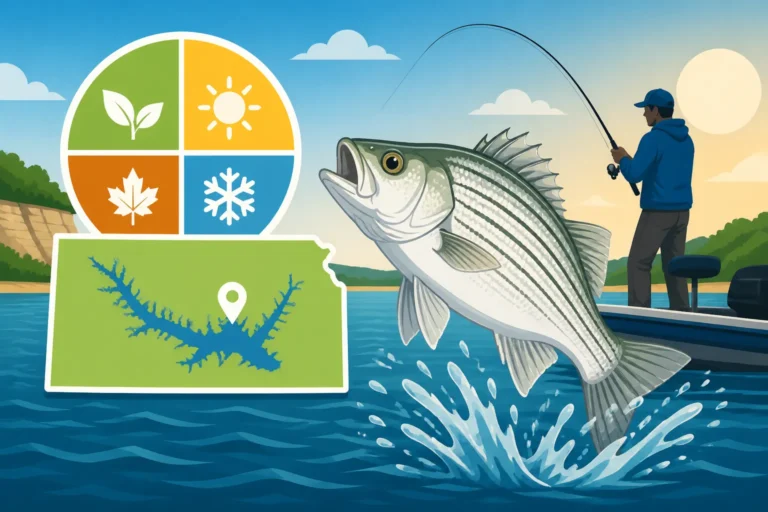
The crappie in Hillsdale Lake are creatures of habit, largely dictated by the changing seasons and water temperatures. Knowing these patterns is crucial for targeting the right spots at the right time.
Spring: The Shallow Water Migration
Ah, spring! This is when crappie fishing really kicks off at Hillsdale. As the water temperature climbs into the 50s and 60s Fahrenheit, crappie start their migration from deeper wintering holes towards shallower, warmer waters to spawn. This pre-spawn and spawn period is arguably the easiest time to locate and catch good numbers of fish. They'll be looking for protected coves, shallow flats, and areas with submerged brush or standing timber, usually in 2 to 6 feet of water. These spots warm up faster and provide excellent cover for depositing eggs. If you're wondering about specific legal requirements, don't forget to check out the official Kansas Fishing Seasons Guide to ensure you're compliant with all regulations.
Summer: Deeper, Cooler Havens
Once the spawn is over and the scorching Kansas summer heat sets in, Hillsdale crappie retreat to deeper, cooler waters. They'll often suspend over creek channels, congregate around deep brush piles, or relate to structure on main lake points. You'll typically find them in 10 to 20 feet of water, sometimes even deeper, especially during the hottest parts of the day. They're still structure-oriented, but now that structure needs to offer refuge from the sun and access to cooler water. Early mornings and late evenings can still find them shallower, chasing baitfish, but mid-day means going deep.
Fall: The Feeding Frenzy
Fall is another fantastic time for crappie fishing at Hillsdale. As water temperatures begin to cool, crappie become incredibly active, feeding aggressively to build up fat reserves for the coming winter. They'll often move back shallower, but not as shallow as the spring spawn. You'll find them relating to main lake points, channel swings, and the edges of deeper brush piles, often following schools of baitfish. They can be found at various depths, from 8 to 15 feet, sometimes shallower on overcast days. This is a time when they are often concentrated, offering some fast and furious action.
Winter: Deep Water and Ice Opportunities
When the bitter Kansas winter grips the area, Hillsdale crappie settle into their deep-water wintering patterns. They'll gather in large schools in deep creek channels, submerged timber, and the deepest parts of the lake. Often, they'll be suspended over these deep structures. If the ice gets thick enough, Hillsdale can also become a popular spot for ice fishing. During this time, patience and accurate depth presentations are key.
Top Crappie Fishing Spots at Hillsdale Lake
Now that we understand the seasonal movements, let’s pinpoint some of the best crappie fishing spots at Hillsdale Lake, making that treasure hunt a whole lot easier for you.
Spring Spawn Hotspots
During the spring, when the crappie are focused on reproduction, you want to target areas that offer warmth, cover, and protection.
- Mary’s Bay and Jayhawk Marina Area: These areas, particularly the shallower coves and arms around Jayhawk Marina, are phenomenal early in the spring. The protected waters warm up quickly, attracting crappie that are looking for soft bottoms and submerged vegetation to spawn. Look for areas with standing timber or brush in 3-8 feet of water. Casting small jigs or slow-trolling minnows around these visible and submerged structures can be incredibly effective. The marina itself often holds fish around its docks once the water is warm enough.
- The Big Bull Creek Arm: This extensive creek arm, located on the northern side of the lake, offers numerous coves and shallow flats that are perfect for the spring spawn. Concentrate your efforts on the points and brushy banks within these coves. Areas where the creek channel swings close to the bank and there's submerged timber are particularly productive. You'll find many anglers practicing their Kansas Spring Crappie Fishing Tips here, often using spider rigging techniques to cover more ground.
- Osage Creek Arm and Fedral Lands: The Osage Creek arm, especially the western portions within the federal lands, provides vast expanses of timber and sheltered coves. The further up the creek you go, the shallower and more turbid the water often becomes, which can be a crappie magnet in early spring. Focus on areas with a good mix of woody cover and slightly deeper pockets nearby, typically in the 4-7 foot range. These federal lands offer ample opportunities for Best Bank Fishing Spots in Kansas for crappie, if you're without a boat.
Summer and Fall Deep-Water Structure
As the seasons transition, so do the crappie. You'll need to adjust your focus from shallow coves to deeper structural elements that offer refuge and feeding opportunities.
- Main Lake Points and Submerged Roadbeds: During summer and fall, Hillsdale's main lake points and underwater roadbeds become crappie magnets. These structures offer highways for crappie moving between deep water and shallower feeding areas. Look for points that drop off into the main creek channels. One well-known submerged roadbed runs through the Osage Creek arm, providing excellent depth changes and cover. These areas are often adorned with brush piles, either natural or placed by anglers, creating perfect ambush spots for crappie. Using your fish finder to locate these subtle changes in depth and cover is absolutely crucial.
- The Main Osage Creek Channel: This channel snakes its way through the lake, providing a consistent deep-water highway for crappie. During summer, crappie will suspend over the channel or relate to the steep drop-offs and channel bends. In the fall, they'll use it as a migration route. Focus on the channel edges, especially where it intersects with standing timber or major points. Vertical jigging or slow-trolling crankbaits or minnows along these contours can be highly effective. Local guides, some of whom you can find on platforms like FishingBooker, often focus on these channel areas, especially when the crappie are holding deep.
- Standing Timber and Deep Brush Piles: Both the Big Bull and Osage Creek arms have extensive areas of standing timber that extend into deeper water. These underwater forests are prime crappie habitat year-round, but especially in summer and fall. Anglers often also mark their own brush piles or find ones placed by others. These "crappie condos" hold massive schools of fish. Use your electronics to scan for these structures and any fish holding within or around them. Jigging a minnow or a small jig directly into the cover is a proven tactic.
Winter and Ice Fishing Locations
When the cold really sets in, Hillsdale Lake transforms again, and your crappie strategy must follow suit.
- Deep Channel Bends: In winter, crappie will often congregate in the deepest bends of the Osage and Big Bull Creek channels. These deeper areas offer stable water temperatures and are where schools of crappie often huddle together. Look for depths ranging from 20 to 40 feet. They might be suspended anywhere from 5 feet off the bottom to halfway up the water column. Finding these schools requires good electronics and patience.
- The Dam Area: The deep waters near the dam can also hold significant numbers of wintering crappie. The structure here, often rocky and plunging straight down, provides consistent depth. Focus on the ledges and drop-offs along the dam face, and don't be afraid to fish vertically in depths greater than 30 feet.
- Ice Fishing Spots: If the ice is safe, Hillsdale offers decent ice fishing opportunities for crappie. The coves that are productive in spring, like those around Mary’s Bay or even within the Big Bull Creek arm, can be good ice fishing spots. However, instead of the shallowest parts, focus on slightly deeper water near the drop-offs into the creek channels, usually 10-20 feet. These areas often have submerged brush or timber that attracts winter crappie. Always prioritize safety when ice fishing; never venture onto unsafe ice.
Here’s a handy table summarizing these crappie hotspots by season:
| Season | Primary Location Types | Specific Hillsdale Areas (Examples) | Preferred Depths | Best Techniques/Baits |
|---|---|---|---|---|
| Spring | Shallow coves, protected bays, submerged brush | Mary's Bay, Jayhawk Marina coves, Big Bull/Osage Creek arms | 2-8 feet | Casting jigs, minnows under bobber, slow trolling |
| Summer | Deep brush piles, creek channels, main lake points | Osage Creek channel, submerged roadbeds, main lake points | 10-20+ feet | Vertical jigging, spider rigging, deep cranking |
| Fall | Main lake points, channel swings, brush piles | Main lake points, Osage/Big Bull Creek channel edges | 8-15 feet | Casting jigs, minnows, slow trolling, crankbaits |
| Winter | Deep channel bends, dam area, deep coves | Deep channel bends, dam face, deeper coves in Big Bull arm | 20-40+ feet | Vertical jigging, small spoons, minnows |
Essential Techniques and Tackle for Hillsdale Crappie
Knowing where the crappie are is half the battle; knowing how to catch them is the other. Hillsdale Lake crappie can be finicky, so having the right techniques and tackle in your arsenal is crucial.
Go-To Baits and Lures
Crappie are generally not overly picky, but certain baits and lures are consistently more effective.
- Live Minnows: Hands down, live minnows are king for crappie, especially when they're less active in colder water or suspended deep. A small hook (size 2-6) fished under a bobber in shallow water or on a drop shot rig in deeper water is incredibly effective.
- Jigs: Small jigs (1/32 oz to 1/8 oz) with soft plastic bodies are incredibly versatile. Colors vary with water clarity and angler preference, but chartreuse, white, black/chartreuse, and various shades of blue and green are popular at Hillsdale. Pearl or clear glitter jigs work well in clear water, while brighter colors like orange or pink shine in stained conditions. You can cast them, retrieve them slowly, or vertical jig them. For more details on specific approaches, check out our guide on Kansas Crappie Fishing Techniques.
- Crankbaits and Trolling: Small, shallow-diving crankbaits can be surprisingly effective for active crappie, especially when trolling during summer or fall transitions. Look for baits that mimic baitfish found in Hillsdale, like shad. Spider rigging, which involves multiple rods with various baits and weights, is also a highly effective trolling technique for covering large areas and finding active schools.
- Tiny Spoons and Blade Baits: For deep-water vertical jigging, especially in winter or when crappie are suspended, small spoons or blade baits can trigger aggressive strikes. These baits create flash and vibration that can call fish in from a distance.
Crappie Fishing Strategies by Season
Adapting your strategy to the season is key for consistent success at Hillsdale Lake.
- Spring Finesse: In spring, when crappie are shallow, focus on stealth. Use light line (4-6 lb test monofilament or fluorocarbon), and present your baits gently. Casting small jigs or minnows to submerged brush piles or casting along riprap (if you're fishing near the dam or bridge structures) are excellent tactics. A silent approach is best, especially in clear water. Consider a technique like tight-lining a jig slowly through cover or using a slip bobber to present a minnow precisely at the desired depth.
- Summer Deep Dive: Summer crappie at Hillsdale require a vertical approach. Use your fish finder to locate schools suspended over creek channels or tightly packed into deep brush piles. Vertical jigging directly over these fish with a minnow or a small jig is the way to go. Spider rigging, where you deploy multiple rods out from the boat with different baits at different depths, is also incredibly effective for finding the sweet spot when fish are scattered or suspended. Don't forget, a state park vehicle permit might be needed if you're accessing certain ramps or areas, so review the Kansas State Park Fishing Permit Rules before you head out.
- Fall Aggression: Crappie are usually more aggressive in the fall. This is a great time to cover water by slow-trolling jigs or small crankbaits along channel edges and main lake points. If you find a school, stop and pitch jigs to them. They'll often be actively chasing bait, so a retrieve that mimics a fleeing shad can be deadly.
- Winter Precision: Winter fishing, whether through ice or open water, demands precision. Crappie are lethargic, so slow presentations are critical. Use small jigs (1/32 oz or smaller) or tiny spoons. Often, a single minnow on a small hook is all it takes. Keep your bait in their strike zone for as long as possible. A good fish finder is your best friend for locating these deep, tight schools.
Gear Recommendations for Success
Having the right equipment makes all the difference when targeting Hillsdale crappie.
- Rods and Reels: For crappie, light tackle is generally preferred. A 6 to 7-foot light or ultralight spinning rod paired with a small spinning reel (size 1000 or 2000) spooled with 4-6 lb test line is ideal. This setup provides the sensitivity needed to detect subtle bites and the finesse to cast small jigs. If you're planning on spider rigging, dedicated spider rigging rods (often 10-16 feet long) can be a game-changer for covering more water efficiently. You can find more specific recommendations in our guide on the Best Rod and Reel Combo for Crappie.
- Line: Monofilament is a popular choice for its stretch, which can prevent hooks from tearing out of a crappie's soft mouth. Fluorocarbon offers less stretch and better sensitivity, making it a good choice for vertical jigging. Braided line can be used as a main line with a fluorocarbon leader for maximum sensitivity and strength, especially around heavy cover.
- Electronics (Fish Finders): A quality fish finder is almost a necessity for crappie fishing at Hillsdale, especially during summer and winter when fish are holding deep or suspended. Look for units with good down imaging and side imaging capabilities to help you locate submerged brush piles, creek channels, and schools of crappie. Many modern units from brands like Humminbird or Lowrance offer excellent clarity and detail.
- Livewells and Coolers: Crappie are delicious, so if you plan to keep your catch, a good livewell to keep them fresh until you're done, or a well-insulated cooler with ice, is essential. This ensures your fish stay in prime condition until you can get them home and learn How to Fillet a Crappie.
Navigating Hillsdale and Local Insights
Beyond the fish themselves, understanding the practicalities of navigating Hillsdale Lake and tapping into local knowledge can elevate your crappie fishing experience.
Boat Ramps and Access Points
Hillsdale Lake offers several public boat ramps and ample shoreline access, making it a friendly lake for both boat anglers and bank fishermen.
- Jayhawk Marina & Boat Ramp: This is a popular and well-maintained access point, especially convenient for accessing Mary's Bay and the lower sections of the Osage Creek arm. It's a full-service marina with amenities, making it a great starting point.
- Russell C. and Helen B. Smith Public Access (East Boat Ramp): Located on the eastern side of the lake, this ramp provides access to the main lake body and the eastern portions, which can be great for targeting deeper structure and points.
- Lakeview Boat Ramp (West Side): On the western side, this ramp gives you good access to the upper Osage Creek arm, particularly useful when targeting spring crappie in the shallower, timber-rich areas.
- Hillsdale State Park (various access points): As a state park, Hillsdale offers numerous smaller access points and plenty of shoreline for bank fishing, especially in the coves and along the creek arms. Just be mindful of any specific regulations or permits required for parking or accessing certain areas within the park.
For those without a boat, many of these park areas offer fantastic Kansas Community Lake Fishing Spots opportunities from the bank, especially during the spring spawn when crappie move into accessible shallow waters. Just remember to pack light and be ready to move if the fish aren't biting in one spot.
Local Resources and Guides
Sometimes, the best way to crack the code on a new lake, or even a familiar one, is to tap into local knowledge.
- Local Bait and Tackle Shops: These are goldmines of information. Stop by shops like The Bait Shop at Hillsdale Lake or nearby tackle stores in Paola or Louisburg. The folks working there often fish the lake regularly and can give you real-time reports on what's biting, where, and on what. They'll know about recent crappie stockings, water conditions, and even the best bait for Best Bait for Kansas Crappie that particular week. Plus, you can pick up your Kansas Fishing License Guide there if you haven't already.
- Online Forums and Social Media Groups: Local Kansas fishing groups on Facebook or dedicated fishing forums can provide a wealth of information. Anglers often share their successes (and sometimes failures), offering insights into current patterns and effective techniques. Just remember to take everything with a grain of salt and verify information yourself.
- Hillsdale Lake Fishing Guides: If you're serious about learning the lake quickly or targeting a trophy crappie, consider hiring a local fishing guide. They spend countless hours on the water and know the subtle nuances of Hillsdale Lake better than anyone. Platforms like FishingBooker are excellent resources for finding and booking experienced local guides who specialize in crappie. A guide can teach you specific techniques, show you their favorite brush piles, and dramatically increase your chances of a successful outing. Even if you only go with a guide once, the knowledge you gain can pay dividends for years to come. Many of these guides use advanced electronics and have intimate knowledge of the crappie's seasonal movements across the entire lake.
By combining your understanding of Hillsdale Lake's crappie dynamics, targeting the right spots, using effective techniques, and leveraging local resources, you'll be well on your way to consistent success on this fantastic Kansas fishery. Good luck out there, and tight lines!
Disclaimer
The information provided in this guide is for general informational purposes only and is not intended as legal or professional advice. Fishing regulations, conditions, and fish behavior can change. Always consult the latest Kansas Department of Wildlife, Parks and Tourism (KDWPT) regulations before fishing and prioritize safety on the water.