Best Farm Pond Fishing Tips in Kansas
One of the biggest frustrations for Kansas anglers, especially those just starting out or looking for a quiet escape from crowded public waters, is often finding that perfect, unassuming fishing spot. While our massive reservoirs and winding rivers get a lot of attention, many overlook the incredible potential hiding in the countless private farm ponds scattered across the state. This guide is here to shed light on how to unlock the magic of these hidden gems, offering practical tips, essential gear advice, and crucial etiquette for making your farm pond fishing dreams a reality.
Understanding the Farm Pond Advantage in Kansas
Farm ponds are often perceived as simple, small bodies of water, but in Kansas, they are frequently vibrant ecosystems that offer some of the most consistent and exciting fishing experiences. They provide a unique blend of accessibility (once you have permission!), diverse species, and often less pressure than their larger public counterparts.
Why Farm Ponds are Often Overlooked Goldmines
It's easy to drive past a small pond nestled in a farmer's field and not give it a second thought, especially with majestic bodies of water like Milford Lake or Cheney Reservoir dominating the conversation. However, these smaller, privately-owned ponds are true goldmines for several compelling reasons. They tend to be much more intimate, allowing you to quickly understand the layout and fish behavior. The smaller scale means fish populations, while sometimes managed, can often be dense and less wary than those in heavily fished public areas. You're also more likely to encounter cooperative fish that haven't seen every lure in the tackle shop.
Furthermore, farm ponds offer a sense of peace and solitude that's hard to find elsewhere. Imagine casting your line with only the sounds of nature surrounding you, rather than the drone of boat motors or chatter from other anglers. This quiet environment is not just good for the soul; it often translates to better fishing, as fish are less spooked. For a deeper dive into the broader fishing landscape, check out our comprehensive guide on the many great spots available in our Kansas Fishing Regulations Explained article.
The Ecosystem of a Healthy Kansas Farm Pond
A healthy Kansas farm pond isn't just a hole in the ground filled with water; it's a carefully balanced ecosystem, often managed by the landowner to promote good fishing. These ponds are typically fed by rainfall runoff or small springs, maintaining consistent water levels and quality. They often have a mix of shallow and deep areas, providing diverse habitats for fish. Submerged vegetation, brush piles, and even old tires can serve as excellent cover for fish, attracting baitfish and providing ambush points for predators.
Common species you'll find thriving in these ponds include largemouth bass, channel catfish, various sunfish like bluegill and redear, and sometimes even crappie. The key to a productive pond is often the forage base – plenty of baitfish, insects, and crustaceans to keep the game fish well-fed and growing. Landowners sometimes stock their ponds specifically for fishing, ensuring a healthy population. Understanding this delicate balance helps you appreciate why a small pond can produce such impressive catches and why respecting the pond's health is crucial for its continued productivity. For more specifics on managing these unique aquatic environments, our Fishing Rules for Private Ponds in Kansas article offers valuable insights.
Essential Gear and Bait for Farm Pond Success
You don't need a boatload of fancy equipment to conquer Kansas farm ponds. In fact, one of the beauties of pond fishing is its simplicity. A minimalist approach often yields the best results, keeping you mobile and less encumbered. Focus on versatile gear that can handle a variety of species you might encounter.
Simple, Effective Rod and Reel Setups
For farm pond fishing, versatility is key. You're typically not casting across vast expanses of water or battling massive deep-water trophies. A medium-light to medium power spinning rod, anywhere from 6 to 7 feet long, paired with a matching spinning reel (like a 2500 or 3000 size) spooled with 6-10 pound monofilament or fluorocarbon line, will cover most situations. This setup is light enough to feel subtle bites from panfish but has enough backbone to handle a decent largemouth bass or channel catfish.
If you prefer baitcasting, a medium-heavy baitcasting combo with 12-15 pound fluorocarbon or braided line is excellent for targeting larger bass around heavy cover. The beauty of these setups is their ease of use, making them perfect for beginners or experienced anglers who appreciate efficiency. When it comes to specific species, for instance, a slightly more sensitive rod might be preferred. If you're really aiming for those slab crappie, you might consider something mentioned in our guide on the Best Rod and Reel Combo for Crappie for optimal results.
Best Baits and Lures for Pond Panfish and Bass
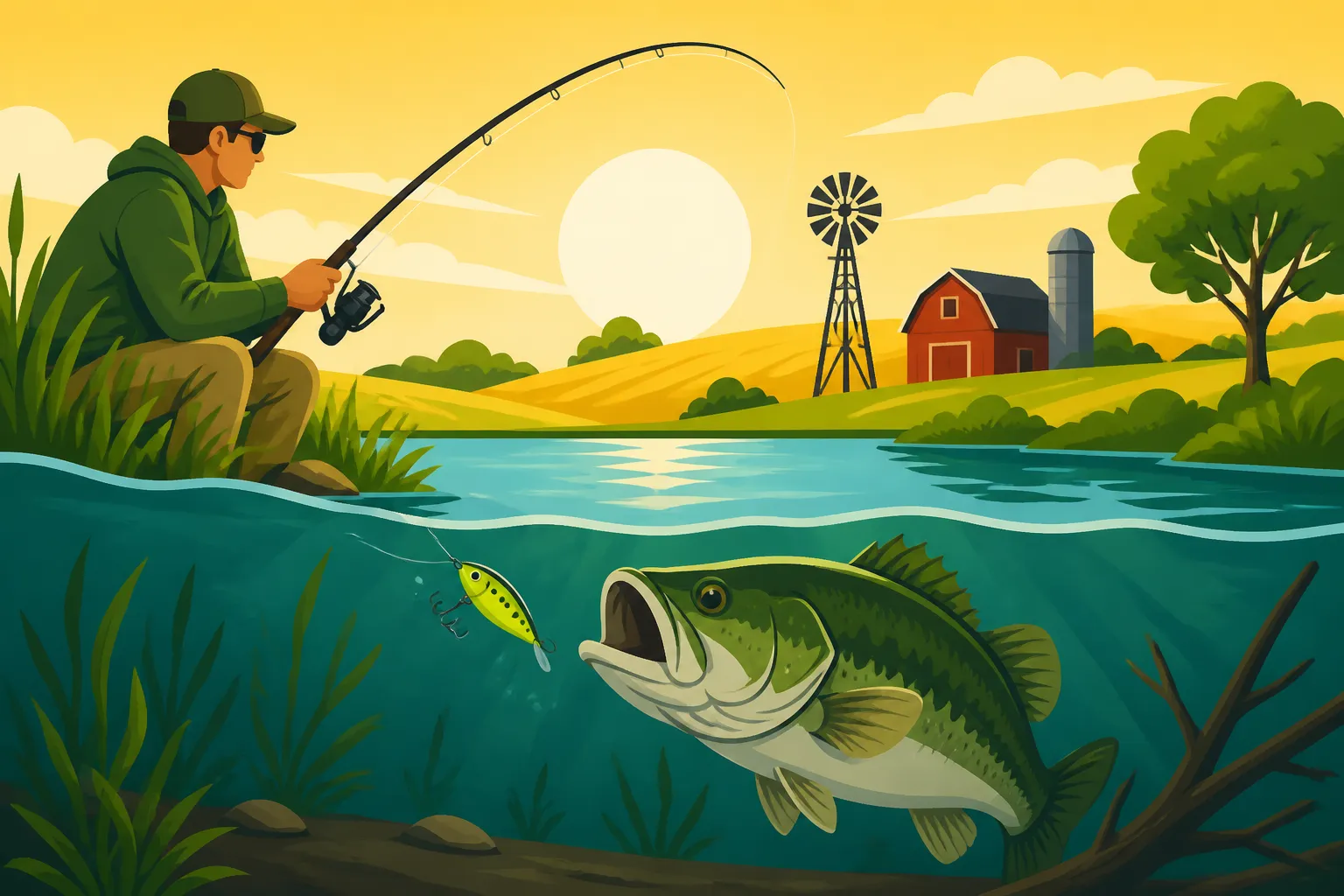
Farm pond fish, especially the often-abundant bluegill and redear, are rarely picky. For panfish, classic live baits like a small red worm, nightcrawler piece, or crickets under a bobber are virtually irresistible. Small jigs (1/32 to 1/16 ounce) tipped with a piece of Gulp! or a tiny soft plastic grub also work wonders. For bass, plastic worms (Texas-rigged or wacky-rigged), spinnerbaits, crankbaits, and topwater lures like poppers or frogs can all be incredibly effective, depending on the conditions. Pay attention to the colors – natural greens and browns work well in clear water, while brighter colors like chartreuse or white can shine in stained water.
For catfish, cut bait (shad or sunfish), chicken liver, or prepared "stink baits" fished on the bottom with a simple slip-sinker rig are almost guaranteed to draw a bite. Remember to experiment! What works one day might not work the next, and fish preferences can change based on weather, water temperature, and time of day. For focused panfish action, our specific article on the Best Bait for Bluegill Ponds offers even more tailored advice.
Minimalist Tackle Box for Pond Anglers
One of the great joys of farm pond fishing is that you don't need to haul a massive tackle box overflowing with every lure imaginable. A small, organized tackle box or a compact bag will suffice. Focus on versatility and essentials. You'll want a selection of hooks (various sizes of Aberdeen, circle, and worm hooks), sinkers (split shot, bullet weights, egg sinkers), bobbers (slip bobbers and clip-on), and swivels. Add a few small jigs, a couple of plastic worms in different colors, a small spinnerbait, and maybe a topwater lure.
Don't forget pliers for hook removal, a small pair of line clippers, and a tape measure to check fish length (if specific regulations or personal goals apply). A small stringer or a cooler with ice is also essential if you plan to keep any fish. Keeping your gear simple and streamlined allows you to move easily around the pond, adapting to different fishing spots without feeling bogged down. This approach also makes it much easier to introduce younger anglers to the sport. For families looking to get kids hooked on fishing, our guide on selecting the Best Youth Fishing Rod for Kansas Ponds provides excellent starting points.
Mastering Techniques for Kansas Farm Ponds
While the gear can be simple, the techniques you employ in farm ponds can significantly impact your success. These smaller, often clearer waters require a different approach than the vast, murky depths of a reservoir. Patience, observation, and a bit of stealth go a long way.
Reading the Water and Locating Fish
Farm ponds, despite their size, can have complex structures. Before making your first cast, take a few moments to "read the water." Look for obvious signs of fish activity like surface boils, jumping baitfish, or even subtle ripples. Identify key features: points, coves, submerged timber, weed lines, and areas where the bank drops off sharply. These are all prime locations where fish will congregate. Pay attention to wind direction; it often pushes baitfish and plankton, attracting predators, so focus on the windblown bank.
Also, consider the time of year and day. In spring, fish will often be shallower, preparing to spawn. Our Best Spring Fishing Spots in Kansas article highlights how important shallow, sun-warmed areas are during this time, and ponds are no exception. During summer, especially midday, fish might retreat to deeper, cooler water or dense cover. Early mornings and evenings often see fish moving into shallower feeding zones. By observing and understanding these patterns, you can drastically improve your chances. Understanding how to interpret these natural cues is detailed further in our guide on How to Fish a Kansas Farm Pond.
Stealth and Approach for Skittish Pond Fish
Because farm ponds are often smaller and can have clearer water than larger lakes, fish in these environments tend to be more easily spooked. Your approach needs to be stealthy. Avoid loud noises, sudden movements, or wearing bright, contrasting clothing. Walk softly along the bank, and if possible, stay low or use existing cover like trees or tall grass to break up your silhouette. Long casts are often beneficial to keep you further from the fish's immediate vicinity.
When you do cast, try to land your bait or lure gently, avoiding a loud splash that can send fish scattering. If you're fishing near vegetation or structure, try to place your bait right on the edge or just past it, allowing it to fall naturally into the strike zone. Remember, these fish have limited space and are highly attuned to their surroundings. A cautious, respectful approach will almost always lead to more bites. Even at night, when visibility is low, excessive noise can still alert fish. Our tips on Best Summer Night Fishing Spots in Kansas touch on the importance of quiet approaches even in darkness.
Catch and Release vs. Harvest in Private Ponds
One of the unique aspects of fishing private farm ponds is the opportunity for direct interaction with the landowner regarding management practices. Many landowners manage their ponds with specific goals in mind, whether it's growing trophy bass, providing plentiful panfish for family dinners, or simply maintaining a healthy, balanced ecosystem. It's crucial to discuss these goals with the landowner when you receive permission to fish.
Some ponds might benefit from selective harvest, particularly of smaller bass or overpopulated panfish, to allow larger fish to thrive. Other ponds might be strictly catch-and-release, especially for certain species like trophy bass. Always clarify these expectations upfront. If you are permitted to harvest, take only what you need, and ensure you know any specific size or number limits the landowner has set, as these can differ from statewide regulations. Being a responsible angler who respects the landowner's wishes ensures you'll be welcomed back. For those interested in the diverse populations in Kansas, our Kansas Fish Species Guide provides excellent information on what you might encounter.
Navigating Access and Etiquette for Private Ponds
Getting permission is the absolute golden rule of farm pond fishing. Without it, you're not only trespassing but also disrespecting the landowner and potentially jeopardizing future access for all anglers. Proper etiquette is paramount to maintaining good relationships and securing those coveted fishing opportunities.
The Critical Importance of Permission
Let's be crystal clear: you must obtain explicit permission from the landowner before setting foot on their property to fish their pond. This isn't just a courtesy; it's a legal requirement. Fishing private property without permission is trespassing and can lead to fines, legal trouble, and a complete breakdown of trust. Don't assume that just because a pond looks abandoned or is near a public road that it's okay to fish. Always ask. The worst they can say is no, and often, a polite request is met with a friendly yes.
When asking, introduce yourself clearly, state your intentions respectfully, and offer to share any catches or help with pond maintenance if appropriate. Emphasize that you will leave no trace and adhere to any rules they might have. Sometimes, the landowner might even be looking for someone to help manage their fish population! Remember, even if you don't need a state license to fish private water, as detailed in our article Do You Need a License to Fish Private Water in Kansas?, you absolutely need the landowner's consent.
Showing Respect to Landowners
Once you've secured that valuable permission, your behavior on the property directly impacts not only your chances of future access but also the reputation of all anglers. Treat the landowner's property with the utmost respect. This means closing gates behind you, driving only on designated paths, avoiding disturbing livestock or crops, and, most importantly, leaving no trash behind. Pack out everything you pack in, and if you see any litter that isn't yours, consider picking it up as a gesture of goodwill.
Always thank the landowner for their generosity, both when you arrive and when you leave. A small gesture, like offering to share a few of your cleaned panfish or a thoughtful thank-you note, can go a long way in solidifying a positive relationship. If you notice any issues with the pond or the fish, communicate them respectfully to the landowner; they often appreciate knowing what's going on with their property. Building this kind of rapport can lead to long-term access and even invitations to fish other ponds. For specific scenarios regarding exemptions, our Kansas Landowner Fishing License Exemption Rules provides further context on who might be permitted without a state license.
Finding Accessible Farm Ponds (Even Without Direct Connections)
Alright, so you're convinced farm ponds are awesome, but how do you actually find them and get permission if you don't know any farmers personally? It can feel a bit like a secret club, but there are ways to break in. Start by looking at satellite maps (like Google Maps) to identify ponds in rural areas. Then, a good old-fashioned drive-by is often your best bet. Look for farmhouses or residences near these ponds and politely knock on doors during reasonable hours. Be prepared to be friendly, articulate your request, and accept a "no" gracefully.
Networking is also incredibly powerful. Talk to local bait shop owners, agricultural suppliers, or even folks at community events. They often know local landowners and might be able to put in a good word or point you in the right direction. Another option is looking for guided fishing services that specialize in private water access. While less common for small farm ponds, some guides may have arrangements with landowners for larger private lakes or reservoirs. If farm pond access proves challenging, remember that Kansas offers a wealth of other fantastic fishing experiences. You can always explore guided trips on larger public waters or specialized private lake access through platforms like FishingBooker, which can connect you with charter captains and guides who often have access to prime locations and know the best spots for species like bass. FishingBooker makes it easy to explore a wide range of options, ensuring you still get that memorable fishing adventure even if a specific farm pond remains elusive. For dedicated bass anglers, exploring our Kansas Bass Fishing Guide might open up new opportunities on public waters as well.
Here's a quick summary of pond etiquette:
| Action | Description | Impact on Access |
|---|---|---|
| Always Ask First | Never fish without explicit, verbal permission from the landowner. | Essential for gaining and maintaining access. |
| Leave No Trace | Pack out all trash, fishing line, and personal items. Leave the property cleaner than you found it. | Builds trust and shows respect; crucial for repeat visits. |
| Respect Property | Stay on designated paths, close gates, avoid disturbing crops, livestock, or structures. | Prevents damage and maintains a good relationship. |
| Communicate Clearly | Discuss fishing intentions, species limits, and any concerns with the landowner beforehand and afterward. | Ensures alignment with landowner's goals for their pond. |
| Be Courteous | Thank the landowner sincerely. Consider a small gesture of appreciation (e.g., sharing fish). | Strengthens personal connections and future opportunities. |
Disclaimer
The information provided in this guide is for general informational purposes only and does not constitute legal advice. Fishing regulations and private property laws in Kansas can change. Always consult the latest Kansas Department of Wildlife, Parks and Tourism (KDWP) regulations and obtain explicit landowner permission before fishing on private property.