Rocky Point Fishing Techniques for Walleye
There’s nothing quite like the thrill of chasing walleye, especially when you know they’re holding tight to a promising rocky point in a big Kansas reservoir. But let's be real, sometimes those cunning fish feel like they've read the fishing reports better than we have, making it incredibly frustrating when your usual spots turn up empty. Don't worry, friend; this guide is here to unravel the secrets of effectively targeting walleye on those rugged, fish-holding rocky points across our beautiful Kansas waters.
Understanding Rocky Points and Walleye Behavior
Rocky points aren't just random piles of stone; they're dynamic underwater landscapes that act as magnets for walleye throughout the year. Knowing why these structures are so appealing to walleye is the first step in consistently putting fish in the boat.
Why Walleye Love Rocky Points
Think about it from a walleye's perspective: a rocky point offers everything a predator could want. First off, they provide incredible structure and ambush points. As baitfish, like shad or minnows, move along the contours of a lake, they'll often be funneled over or around these points. Walleye, with their light-sensitive eyes, can tuck themselves into the shadowed crevices or behind larger boulders, waiting for an unsuspecting meal to swim by. This is especially true on lakes like Milford Lake or Wilson Lake, where prominent rocky formations are abundant.
Beyond just being great hunting grounds, rocky points are also fantastic for thermal cover and protection. In colder months, the rocks can absorb and radiate heat, offering a slightly warmer sanctuary. During the scorching Kansas summer, walleye can use the deeper edges of a point to escape the intense sun and find cooler, oxygen-rich water. They also offer a measure of protection from current and wave action, providing a comfortable resting spot when the lake gets choppy. These varied conditions make them prime real estate for walleye looking for a home, or at least a temporary feeding station.
Seasonal Movement Patterns on Rocky Points
Walleye aren't just chilling in one spot on a rocky point all year round; their location and activity levels shift dramatically with the seasons. Understanding these patterns is crucial for timing your approach.
During spring, especially as the water temperatures begin to climb into the 40s and 50s, walleye will start staging on rocky points near their spawning grounds. These are often shallower points that gradually slope into deeper water. Pre-spawn walleye are often aggressive and hungry. After the spawn, they'll retreat to slightly deeper water on or near these same points, recovering and starting to feed more actively. You might find them congregating on the lee side of a point, out of the prevailing wind, as they conserve energy.
As summer fully sets in and water temperatures soar, walleye will often move deeper. On rocky points, this means targeting the deeper breaks, submerged humps, or the very tips of long points that extend into the main lake basin. They'll relate closely to the thermocline if one exists, using it as a comfort zone where water temperature and oxygen levels are ideal. Early mornings, late evenings, and nighttime become prime fishing times, as walleye push shallower onto the point's top or edges to ambush baitfish.
Fall is arguably one of the best times to target walleye on rocky points in Kansas. As water temperatures cool down, baitfish become incredibly active, schooling up and migrating towards creek channels or main lake areas. Walleye know this is their last chance to gorge before winter, and they'll aggressively chase bait. You'll often find them higher up on the points during the day, following the bait. Long, tapering points with access to deep water are particularly productive during this "feeding frenzy."
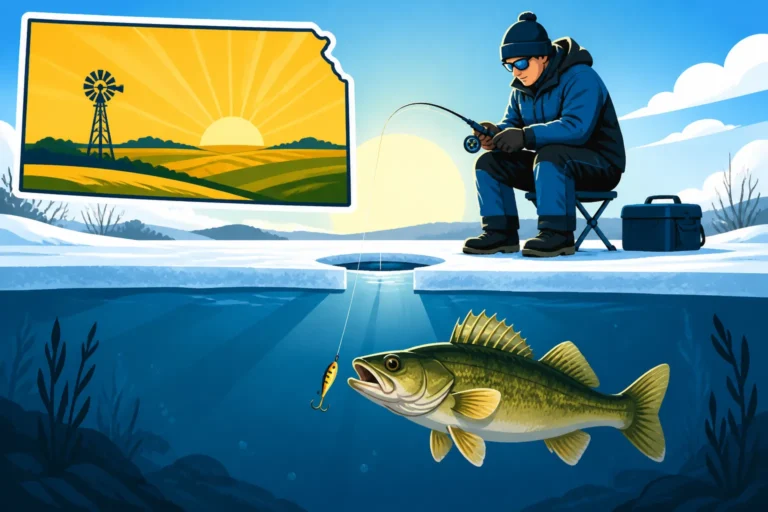
Finally, in winter, especially during the ice fishing season, walleye on rocky points will be much slower. They'll typically hold in deeper water near the base of the points or on adjacent flats. Their metabolism slows, so presentations need to be subtle and slow. If you're ice fishing, you might target these areas with small jigs tipped with minnow heads or waxworms, paying close attention to slight bites. Even open-water fishing during a mild winter day will require a very patient approach, often targeting the deepest sections of the point where they might be holding in concentrated schools.
Essential Gear and Tackle for Rocky Point Walleye
Having the right tools for the job can make a world of difference when you're trying to coax a finicky walleye off a rocky ledge. Precision and sensitivity are key.
Rod and Reel Setup
For rocky point walleye, you're going to want a setup that balances sensitivity with enough backbone to handle a strong fish and the occasional snag. A medium-heavy to heavy power spinning or casting rod, typically ranging from 6'6" to 7'6" in length, is ideal. The length helps with casting distance and managing line around submerged structure. Look for a rod with a fast or extra-fast action tip. This sensitive tip allows you to feel those subtle walleye bites – which often feel like nothing more than extra weight on your line – while the stiffer backbone gives you the leverage to set the hook hard and pull a fish away from snags.
Pair this with a reliable spinning reel in the 2500-4000 series or a low-profile baitcasting reel. For line, a braided line is a fantastic choice for its incredible sensitivity and strength-to-diameter ratio. A 10-20 lb test braid will let you feel every tap and rock scrape. Because braid has no stretch, you'll want to add a fluorocarbon leader (8-12 lb test) of about 3-6 feet. Fluorocarbon is nearly invisible underwater and, more importantly for rocky areas, offers excellent abrasion resistance against sharp rocks and mussels. If you're looking for a good all-around setup, checking out options like the Best Rod and Reel Combo for Walleye can help you find a perfect match. You can often find great deals on these setups, including reputable brands like Shimano and Daiwa, on Amazon, making it easy to get quality gear delivered right to your door.
Lures and Bait Selection
The arsenal for rocky point walleye is diverse, and the best choice often depends on the season, depth, and how active the fish are.
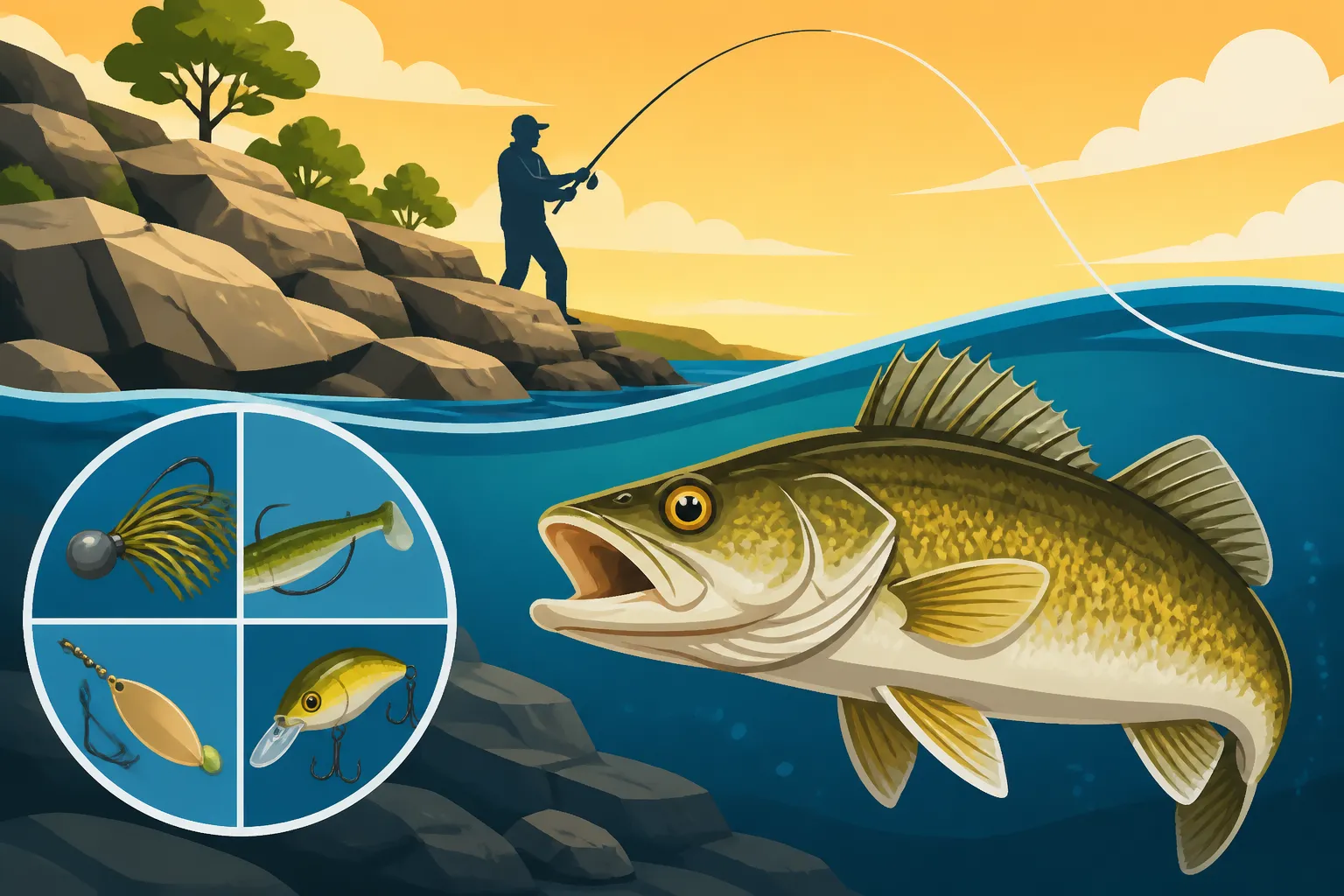
Jigs are perhaps the most versatile lure for these areas. Football jigs or stand-up jigs (1/4 to 3/4 oz, depending on depth and wind) excel because their head design helps them crawl over rocks without snagging as easily. Tip these with soft plastics like grubs, paddle tails, or creature baits in natural colors like green pumpkin, brown, or black. Alternatively, for a more enticing presentation, thread a live minnow, shiner, or half a nightcrawler onto the jig hook. The combination of jig action and natural scent can be irresistible.
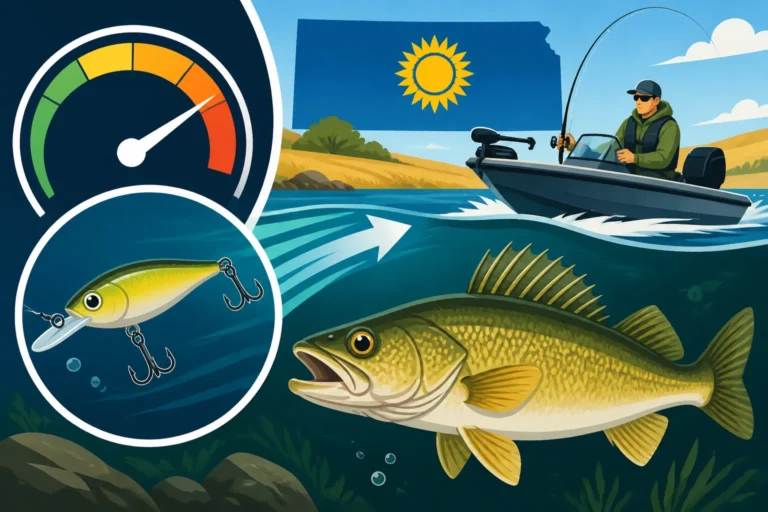
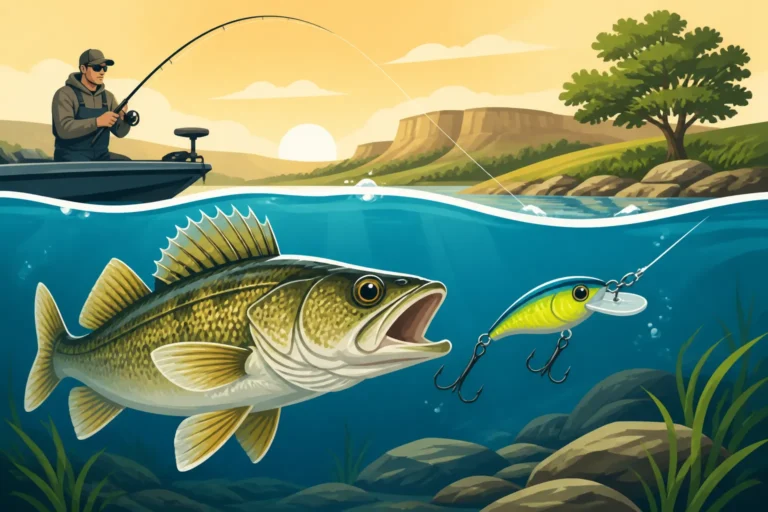
Crankbaits are another must-have, particularly for covering water quickly or when walleye are actively chasing bait. Diving crankbaits that mimic shad or perch are excellent for bumping off rocks. Look for models that dive to the depth you're targeting. Lipless crankbaits can also be effective for a quicker retrieve or when yo-yoed off the bottom. Colors like chrome, firetiger, or those with a natural baitfish pattern are consistent producers. Experiment with retrieve speeds; sometimes a steady crank is best, other times a stop-and-go retrieve with pauses will trigger a strike.
Don't forget blade baits and spoons for vertical jigging directly over identified schools of fish or tight to structure. These lures flash and vibrate, often provoking reaction strikes from inactive walleye. For those times when the fish are particularly finicky, live bait rigged on a simple slip sinker rig or a Lindy rig can be the ticket. A live minnow, nightcrawler, or leeches (where legal) presented naturally near the bottom on a rocky point is often too tempting for a walleye to pass up. Many anglers stock up on these versatile lures through online retailers like Amazon, ensuring they have a full selection for any condition.
Top Techniques for Fishing Rocky Points
Now that you've got the gear, let's talk about the specific techniques that consistently catch walleye on Kansas's rocky structures.
Vertical Jigging and Bottom Bouncing
Vertical jigging is an incredibly effective technique when you've located walleye holding tight to a specific piece of structure, or when they are in a less active mood. The key here is precise boat control. Using your trolling motor, position your boat directly over the rocky point or a specific rock pile you've identified on your fish finder. Drop a jig (tipped with plastic or live bait) straight down until it hits the bottom. Then, with short, sharp snaps of your wrist, lift the jig a foot or two off the bottom and let it fall back, always maintaining contact with the bottom. The idea is to mimic a fleeing baitfish or a crayfish scuttling among the rocks. On a cold day, the "lift and drop" can be much slower, even just a few inches. This is often the preferred method when fish are deeper, say 20-30 feet, which often happens on lakes like Clinton Lake or Kanopolis Lake.
Bottom bouncing is another highly effective method, especially when walleye are spread out along a point or when you want to cover more ground. This technique usually involves a "bottom bouncer" weight, a wire arm that helps keep your lure off the snag-prone bottom. To the back of the bottom bouncer, you'll attach a leader with a lure or bait presentation, such as a Trolling for Walleye on Kansas Reservoirs style spinner rig with a nightcrawler harness, or a plain hook with a minnow. Troll or drift slowly along the rocky point, just fast enough to keep the bouncer occasionally tapping the bottom. The goal is for the bait or lure to be just above the rocks, enticing any walleye lurking there. This method is particularly effective for active fish in the spring and fall.
Casting and Cranking Techniques
Sometimes, walleye will move up onto the shallower portions of rocky points, especially during low light conditions or when actively feeding. This is where casting and cranking really shine.
When casting, you'll want to fan cast across the point, working from shallower water towards deeper breaks. Focus on casting parallel to the rocky edges as well, allowing your crankbait or jig to run along the contour where walleye are likely to be staging. The idea is to make contact with the bottom or the rocks without constantly snagging. A slower, deliberate retrieve with crankbaits that "dig" into the bottom can be incredibly effective, stirring up sediment and mimicking a wounded baitfish. As the crankbait deflects off a rock, that sudden change in action often triggers a strike.
For jigs, cast out, let it sink to the bottom, and then use a series of short hops or drags along the bottom. Pay close attention to your line, as many walleye bites occur on the fall. Don't be afraid to experiment with different retrieve speeds and pauses. Sometimes, a long pause after bouncing off a rock is all it takes to get that subtle "thump" from a walleye. This method is excellent for scouting new points or when you suspect fish are scattered.
Slip Bobber and Live Bait Tactics
When walleye are holding in a specific depth range over a rocky point, or when they're particularly finicky, a slip bobber and live bait presentation can be the ultimate finesse tactic. This method allows you to present live bait (typically a minnow, nightcrawler, or leech) at a precise depth, suspending it tantalizingly just above the snaggy bottom.
Set your slip bobber stop to position your bait so it's a foot or two off the bottom, or right in the middle of a school of fish you've seen on your electronics. The beauty of a slip bobber is that it lets you cast a considerable distance while still controlling your depth. Once cast, the live bait does all the work, swimming naturally and enticing walleye that might ignore faster-moving artificials. This is especially good for targeting those solitary, larger walleye that might be wary of boats or aggressive presentations.
On calmer days, or when targeting a very specific small rock pile or piece of submerged timber on a point, a slip bobber lets you hover your bait in the strike zone for extended periods. It's a fantastic tactic for patiently working an area, letting the natural movements and scent of your live bait draw in those cautious walleye. This method is often very productive during cooler water periods, like early spring or late fall, when fish are less willing to chase.
Reading the Water and Interpreting Structure
Knowing where to cast or drop your line on a rocky point is just as important as the technique you use. Modern electronics and a keen eye for subtle changes can unlock the secrets of these productive areas.
Using Electronics Effectively
In today's fishing world, your sonar or fish finder is your best friend when tackling rocky points. These incredible tools allow you to "see" underwater, revealing the hidden contours and inhabitants of a rocky point. When approaching a point, start by idling over it slowly, observing your depth finder. Look for sudden drops, shelves, humps, or scattered boulders that stand out from the main structure. These are often prime holding areas. The display will show you not only the bottom composition but also fish arches that indicate walleye or schools of baitfish. Knowing the Best Fish Finder for Kansas Reservoirs can give you a significant advantage.
Side imaging or side-scan sonar is a game-changer for rocky points. This technology allows you to see out to the sides of your boat, mapping a wide swath of the bottom. You can identify isolated rock piles, old timber, or subtle transitions (like where a hard rock bottom meets a softer mud flat) that are away from your main boat path. These hidden gems are often overlooked by other anglers and can hold significant numbers of walleye. With good electronics, you're not just guessing; you're pinpointing exactly where to drop your lure. Many anglers seek out high-quality units from brands like Humminbird or Garmin, often finding competitive prices and a wide selection of models on Amazon.
Identifying Key Transition Areas
Walleye are often ambush predators, and they love to position themselves where they can easily intercept baitfish moving between different types of habitat. On a rocky point, these transition areas are gold mines.
Look for places where the hard, rocky bottom suddenly meets a softer, muddier, or sandy bottom. This change in substrate often creates a "seam" where baitfish will travel, and walleye will lie in wait. Similarly, pay attention to areas where the rock size changes – from large boulders to smaller gravel, or vice versa. These subtle changes in texture create different micro-habitats that can attract baitfish and, in turn, walleye.
The proximity to deep water channels or flats is also a critical factor. A rocky point that quickly drops off into a main river channel or a large flat offers walleye easy access to deep water for safety or comfort, while also allowing them to quickly move up onto the point to feed. Think of it as a highway for fish. Understanding How to Read Kansas Reservoir Structure is key to unlocking these productive zones. Use your electronics to highlight these transitions, and then focus your fishing efforts on those specific spots. Even a slight dip or rise on a relatively flat point can be enough to concentrate fish.
Advanced Strategies for Challenging Conditions
Even with the best gear and knowledge, Kansas walleye can sometimes throw us curveballs. Learning to adapt to tough conditions is what separates good anglers from truly great ones.
Dealing with Wind and Current
Wind and current are two of the biggest factors that can make or break a day on the water, especially when fishing rocky points. Instead of fighting them, learn to use them to your advantage.
When the wind is howling, it can be difficult to maintain boat position for vertical jigging or even casting accurately. This is where a drift sock becomes your best friend. Deploying a drift sock from the bow or stern (depending on whether you want to slow your drift or change its angle) allows you to control your speed and direction, making it much easier to present your lure effectively over a rocky point. On incredibly windy days, sometimes anchoring precisely or using a spot-lock trolling motor is the only way to effectively fish a specific small rock pile. Adjust your lure weight accordingly; heavier jigs or bottom bouncers will maintain bottom contact better in strong currents or heavy winds.
Walleye often position themselves on the downwind side of a point, where baitfish are swept by the current and waves. They also utilize current breaks, tucking into calmer water behind larger rocks or humps, waiting to ambush anything that washes by. Experiment with different angles of approach to a point. Sometimes, drifting perpendicular to the point is best, other times, a drift parallel to its edge will cover more fish. Learning to read how wind and current interact with the submerged structure is an acquired skill that pays huge dividends.
Low Light and Night Fishing Tactics
Walleye are notoriously light-sensitive, which means they often become more active and willing to move into shallower water during low light conditions, such as dawn and dusk, or completely after dark. This is when a rocky point can truly come alive.
During these times, walleye will often push up from deeper water onto the shallower parts of the point, actively chasing baitfish. This is a prime opportunity for casting crankbaits or larger jigs with soft plastics. Consider lures with glow-in-the-dark features or those with noisy rattles to attract attention in the dark water. Black or dark-colored lures can also be very effective as they create a strong silhouette against the dim sky.
Night fishing on rocky points requires extra caution but can yield some of the biggest walleye. It's often best to mark your productive spots during the day with GPS waypoints. When fishing at night, focus on slow, deliberate retrieves. Walleye won't see your lure from as far away, so getting it in their strike zone and keeping it there is crucial. A light source in your boat is essential, and a good headlamp is invaluable. Remember that walleye often feed by scent at night too, so tipping jigs with a minnow or a piece of nightcrawler can significantly increase your success rate. For more detailed advice, check out our Kansas Night Fishing Guide.
Safety and Conservation Practices
Fishing rocky points for walleye can be incredibly rewarding, but it's important to approach it with safety in mind and a commitment to protecting our valuable fisheries.
Boating Safety Near Structure
Rocky points, by their very nature, are often navigational hazards. Submerged rocks, ledges, and shallow areas can wreak havoc on your boat's lower unit or propeller if you're not careful. Always approach unknown rocky points slowly, using your depth finder to map out the contours and identify any sudden rises. It's a good practice to trim your motor up a bit when idling over potential hazards.
Furthermore, always be aware of your surroundings and other boaters. Rocky points can attract multiple anglers, especially during peak seasons. Maintain a safe distance from other boats and avoid cutting across their lines. And of course, the most fundamental rule of boating safety: always wear a life jacket. Even experienced boaters can find themselves in unexpected trouble, especially on larger Kansas reservoirs like Cheney Reservoir or El Dorado Lake, where conditions can change rapidly. Our Kansas Life Jacket and Boating Safety Guide has more comprehensive information on staying safe on the water.
Practicing Catch and Release for Walleye
Walleye are a prized game fish in Kansas, and practicing responsible catch and release, especially for larger fish, helps ensure healthy populations for future generations.
When you land a walleye, handle it with care. Use a rubber-coated net to avoid stripping off its protective slime coat. If you intend to release the fish, keep it in the water as much as possible. If you must bring it aboard for a quick photo, use wet hands to support its body horizontally, avoiding holding it vertically by the jaw, which can damage internal organs.
Be mindful of length and creel limits for walleye in Kansas. These regulations are in place to manage fish populations effectively. For example, some lakes might have Kansas Walleye Length Limits that require you to release fish within a certain "slot" to protect spawning-sized adults. Know the rules for the specific body of water you're fishing. If a fish is deeply hooked and bleeding excessively, it's often best to cut the line as close to the hook as possible rather than trying to remove the hook, which can cause further damage. A healthy walleye fishery depends on all of us doing our part!
Walleye Lure Comparison for Rocky Points
Here's a quick comparison of popular walleye lures and baits that shine on rocky points, helping you pick the right tool for the job.
| Lure/Bait Type | Best Use Case | Key Advantages | Typical Depths | Amazon Recommendation |
|---|---|---|---|---|
| Jigs (Football/Stand-up) | Vertical jigging, slow retrieves, subtle bites | Excellent bottom contact, versatile, easy to tip with bait | 5-30+ feet | VMC Neon Moon Eye Jigs (for sensitivity and shape) |
| Soft Plastics (Grubs, Paddletails) | Tipped on jigs, casting & retrieving | Realistic action, scent absorption, variety of colors | 5-25 feet | Berkley Gulp! Minnows or Z-Man GrubZ (for durability) |
| Diving Crankbaits | Casting & trolling, covering water, aggressive fish | Imitates baitfish, deflects off rocks, good for active fish | 5-20 feet (model dependent) | Rapala Shad Rap or Berkley Flicker Shad (proven producers) |
| Blade Baits | Vertical jigging, reaction bites, cold water | Strong vibration, flash, good for lethargic walleye | 10-40+ feet | Sebile Vibrato or Johnson ThinFisher (for unique action) |
| Bottom Bouncers w/ Harness | Drifting or slow trolling, covering ground | Keeps bait off snags, covers broad areas | 10-30+ feet | Lindy Rig Snell Floats or Northland Tackle Crawler Harness |
| Live Minnows | Slip bobber, jig tips, bottom rigs | Natural appeal, scent, effective for wary fish | All depths | N/A (purchase locally) |
Disclaimer
Fishing regulations, conditions, and fish behavior can change. Always consult the latest Kansas Department of Wildlife, Parks and Tourism (KDWPT) regulations before heading out. Safety should always be your top priority on the water.