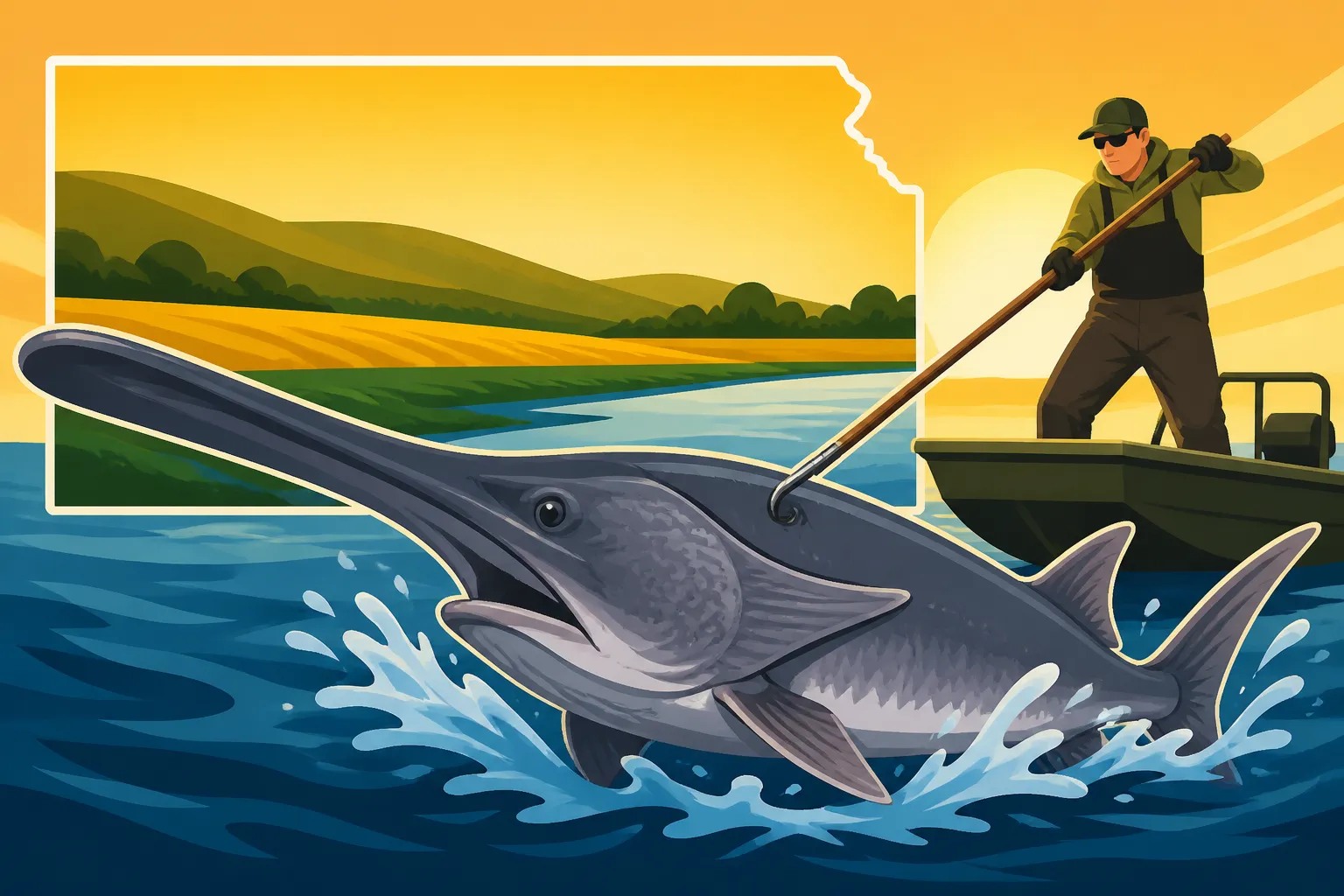
Kansas Paddlefish Snagging Season
There’s a unique thrill in pursuing one of Kansas’s most prehistoric and elusive fish: the paddlefish. But let's be honest, the world of paddlefish snagging can feel shrouded in mystery and complex rules, leaving many anglers scratching their heads about where, when, and how to even begin. If you've ever felt overwhelmed by the thought of trying to tackle this amazing sport, or just wanted a clearer picture of the regulations and techniques, you're in the right place. This comprehensive guide will unravel the intricacies of Kansas's paddlefish snagging season, from understanding these incredible fish to mastering the art of the snag.
Understanding the Unique Allure of Paddlefish Snagging in Kansas
Paddlefishing isn't your everyday cast-and-reel experience. It's a specialized pursuit targeting one of North America's oldest and most fascinating freshwater fish. Before we dive into the nitty-gritty of regulations and gear, let's get a feel for what makes these giants so special and why anglers are drawn to snagging them.
The American Paddlefish: A Living Fossil
Imagine a fish that’s been swimming in our waters since the time of the dinosaurs – that's the American Paddlefish. These magnificent creatures, often referred to as "spoonbills" because of their long, distinctive snout or rostrum, are filter feeders. Unlike most game fish that actively hunt prey, paddlefish swim with their mouths open, sifting plankton from the water. They can grow to impressive sizes, with individuals easily reaching 5-7 feet in length and weighing well over 100 pounds. It’s no wonder they’re such a coveted catch for those seeking a true freshwater behemoth!
Their unique biology means they don't bite traditional hooks baited with worms or lures. Instead, their feeding strategy makes them prime candidates for snagging, a technique that involves using heavy tackle and large, unbaited treble hooks to "snag" the fish as it swims by. Understanding these giants is the first step in appreciating the sport. If you're curious about other species, our Kansas Fish Species Guide offers a broader look at what swims in our state's waters.
Kansas Department of Wildlife, Parks and Tourism (KDWP) plays a vital role in monitoring and managing the paddlefish population. They conduct surveys and enforce strict regulations to ensure these living fossils thrive for future generations. Their commitment to conservation is why snagging seasons are carefully controlled, and anglers must adhere to specific rules to help maintain healthy populations.
Why Anglers Turn to Snagging for Paddlefish
The primary reason anglers engage in snagging for paddlefish is simple: it's the most effective, and often only, method for consistently catching them. Since paddlefish are filter feeders, they aren't attracted to bait in the same way a bass or catfish would be. They're constantly on the move, sifting through vast quantities of water, and presenting a traditional baited hook to them is like trying to catch a whale with a fishing net – mostly futile.
Snagging provides a direct approach. It's about intercepting the fish, typically in areas where they congregate, often during their spawning migrations or when they are otherwise concentrated in specific river channels. This method requires a completely different skill set than traditional fishing, emphasizing brute strength, heavy gear, and precise timing. It's an active, physically demanding form of fishing that, when successful, rewards anglers with an incredibly powerful fight from a truly unique catch.
The sheer size and power of a paddlefish on the line are what truly draw snagging enthusiasts. Landing a 50-pound or even 100-pound paddlefish is an unforgettable experience. It's a primal battle against a prehistoric beast, testing both angler and equipment. For many, it's not just about the catch itself, but the challenge and the connection to such a magnificent, ancient creature.
Deciphering Kansas's Paddlefish Snagging Regulations and Seasons
Alright, let's talk brass tacks: the rules. Kansas takes its paddlefish management seriously, and for good reason. These fish are a precious resource. Knowing the regulations inside and out isn't just about avoiding a hefty fine; it's about respecting the fish and helping maintain a sustainable population.
Official Snagging Seasons and Key Dates
The Kansas paddlefish snagging season is quite specific and often limited to certain times of the year and particular bodies of water. This isn't a year-round free-for-all; it's a carefully managed window designed to coincide with paddlefish aggregations, typically during their spawning runs, when they are most accessible. For instance, the most prominent snagging opportunities often occur in the spring, usually spanning late March through mid-May, but these dates can vary slightly year to year based on environmental conditions and KDWP assessments. Always check the current year's Kansas Fishing Seasons and Limits or the official KDWP regulations summary before heading out.
One of the most popular areas for snagging is the lower Missouri River, particularly below Gavins Point Dam in Nebraska, where Kansas residents can also participate if they possess the correct licenses. Within Kansas, specific stretches of the Missouri River are usually open, with precise dates and times for when snagging is permitted. For example, some years might see snagging allowed only on certain days of the week, or only during daylight hours in designated areas. These restrictions are in place to control harvest pressure and ensure the long-term health of the paddlefish population.
It’s crucial to understand that these season dates are not arbitrary. They are determined by biologists studying the paddlefish life cycle, aiming to allow harvest opportunities while minimizing impact on critical spawning periods. Ignoring these dates means not only breaking the law but potentially harming the very resource you aim to enjoy. Always treat the published dates as gospel and plan your trips accordingly. You can typically find detailed information about Kansas Paddlefish Snagging Season Dates on the KDWP website.
Mandatory Licenses, Permits, and Endorsements
Just like with any other game fish in Kansas, you can't just show up and start snagging paddlefish. You'll need the appropriate documentation. First and foremost, a valid Kansas fishing license is absolutely essential for residents aged 16 through 74. If you're a Kansas resident, a standard Kansas Resident Annual Fishing License Costs $25. Non-residents will also need a valid non-resident fishing license.
Beyond the basic fishing license, paddlefish snagging often requires a specific permit or endorsement. This isn't always the case for all species, but for paddlefish, which are considered a unique and vulnerable resource, these extra steps are common. This special permit helps the KDWP track the number of anglers participating in the season and provides valuable data for conservation efforts. This permit might come with a small additional fee, but it's a small price to pay for the opportunity to pursue such an incredible fish.
It's paramount to carry all necessary licenses and permits with you while fishing. A common mistake is leaving them in the car or assuming an old one is still valid. Law enforcement officers, such as game wardens, regularly patrol snagging areas, and fishing without proper documentation can lead to significant penalties, as outlined in the Kansas Fishing Law Enforcement and Penalties guide. Always double-check your wallet and your KDWP online account to ensure everything is up to date before your lines hit the water.
Understanding Daily Limits, Possession, and Length Restrictions
Kansas has very clear limits on how many paddlefish you can harvest and possess. These limits are designed to prevent overfishing and distribute the harvest fairly among anglers. Typically, the daily creel limit for paddlefish is one or two fish, but this can fluctuate based on specific water bodies and the health of the population in a given year. It's a strict "one and done" or "two and through" situation – once you've kept your limit, you must cease snagging for paddlefish for the day.
Possession limits are also important. This refers to the total number of fish you can have in your possession, whether in your cooler, at your campsite, or at home. Often, the possession limit is twice the daily creel limit, meaning if you can keep one fish a day, you might be allowed to have two in total possession from previous trips. However, always verify the exact wording of the current regulations because these can differ.
Length restrictions are another critical component. These measures are put in place to protect juvenile fish, allowing them to grow to maturity and reproduce, and sometimes to protect very large, trophy-sized breeding stock. For paddlefish, this usually involves a minimum length. For instance, you might encounter a rule stating paddlefish must be at least 34 inches long (measured from the eye to the fork of the tail, or total length – pay close attention to the measurement method) to be legally kept. Any fish shorter than the minimum must be immediately released back into the water unharmed. Proper measurement is crucial; use a flexible tape measure against the fish's body to get an accurate reading.
Here's a simplified table summarizing typical paddlefish regulations, but always verify with current KDWP regulations:
| Regulation Type | Typical Kansas Guideline | Important Notes |
|---|---|---|
| Season | March 15 – May 15 (approx.) | Specific dates vary by year and location (e.g., Missouri River, Kaw River). Check KDWP Annual Fishing Regulations Summary. |
| License | Valid Kansas Fishing License | Required for residents 16-74, and all non-residents. |
| Permit | Paddlefish Permit/Tag (Annual) | Required in addition to a fishing license for paddlefish snagging. This often helps KDWP track harvest. |
| Daily Creel Limit | 1 or 2 fish | Varies by specific waterbody; check regulations carefully. Once limit is met, no more snagging for the day. |
| Possession Limit | 2-4 fish (often 2x daily limit) | Total number of paddlefish an angler can possess, including those at home. |
| Minimum Length | 34-37 inches (eye to fork) | Fish must meet minimum length to be harvested. Release undersized fish immediately. Measure from the front of the eye to the fork of the tail. |
| Legal Gear | Snagging Rods/Reels, Treble Hooks | Hooks must be unbaited. Specific hook size limits may apply. |
| Harvest Reporting | Mandatory | All harvested paddlefish must be immediately tagged and reported to KDWP within specified timeframes. |
Pinpointing Productive Paddlefish Snagging Locations
Knowing the rules is one thing, but knowing where to go is another! Paddlefish aren't found just anywhere; they have specific habitats and travel patterns that dictate where you'll find them. For Kansas anglers, a couple of key areas stand out.
The Mighty Missouri River: Kansas's Primary Snagging Hotspot
When it comes to paddlefish snagging in Kansas, the Missouri River is undoubtedly the undisputed king. This massive river, forming the northeastern border of our state, provides the ideal habitat and migration routes for these large, filter-feeding fish. During the spring, as water temperatures rise and instinct calls, paddlefish undertake significant upstream migrations to spawn. This is when they become concentrated in certain areas, making them prime targets for snagging.
Access points along the Missouri River can be found near towns like Atchison, Leavenworth, and Kansas City. These areas often have public boat ramps and sometimes even designated bank fishing access points, though boat access often yields better results due to the sheer size and current of the river. Look for areas with deeper channels, current breaks, and confluence points where smaller rivers or creeks meet the Missouri. Paddlefish will often stage in these spots before continuing their journey or will feed in the richer waters.
It's not just about finding any spot on the Missouri; it's about finding the right spots, often those with consistent current that brings food and serves as a natural funnel for migrating fish. Anglers often target areas below dams or locks, where fish movements might be temporarily halted or concentrated. However, always be mindful of "no fishing" zones around dam structures, as these are strictly enforced for safety and conservation reasons. Many local anglers find success around the I-635 bridge area in Kansas City or further upstream. Our comprehensive Kansas River Fishing Guide delves into more details about fishing access on the Missouri and other rivers.
Other Potential Snagging Waters and Considerations
While the Missouri River is the main event, other waterways in Kansas might offer limited or intermittent paddlefish snagging opportunities. Historically, paddlefish have been found in the lower reaches of the Kansas River (also known as the Kaw River) where it connects with the Missouri, and sometimes in other larger river systems within the state. However, snagging seasons in these specific areas are often much more restricted, if they exist at all, and typically depend on special regulations issued by the KDWP.
These "secondary" locations are often subject to specific research or management goals, and snagging might only be permitted during very short windows or under special experimental permits. For example, some years might see a very limited season on a particular stretch of the Kaw River if biologists determine the population can sustain a controlled harvest. These opportunities are generally highly publicized by KDWP when they occur.
It’s crucial not to assume that if the Missouri River is open, every other large river is too. Always refer directly to the most current KDWP fishing regulations for the specific waterbody you intend to fish. Fishing in closed waters or during unauthorized times, even accidentally, can result in significant fines and loss of fishing privileges. Stick to the known and regulated hotspots, and if you’re exploring new territory, verify every detail with KDWP first. You can also explore our article on Rivers With Paddlefish to learn more about where these amazing fish live.
Essential Gear and Effective Techniques for Paddlefish Snagging
Paddlefish snagging is not for the faint of heart, or for light tackle. These fish are built like tanks, and pulling one in requires some serious muscle and equally serious gear. Skimping on your setup is a surefire way to end up with broken lines and lost fish.
Building Your Heavy-Duty Snagging Setup: Rods, Reels, and Line
When it comes to rods, think heavy-duty surf rods or specialized catfish rods – something with a robust backbone and enough length (typically 8 to 10 feet) to cast heavy weights and manage powerful fish in strong currents. The rod needs to handle the shock of the snag and the subsequent fight. A medium-heavy to heavy power rod with a fast action tip is usually preferred, allowing you to feel the snag and then have the power to haul the fish in. Brands like Ugly Stik or Penn offer durable options that many snagging enthusiasts trust.
For reels, you'll want a large, saltwater-grade spinning reel or a stout baitcasting reel. Capacity is key here; you need to spool up with a lot of heavy line. Look for reels with strong drag systems that can withstand the intense pulls of a large paddlefish. A reel size in the 6000-8000 range for spinning or a large conventional reel is a good starting point. Some popular choices can be found on sites like Amazon, offering a wide range of heavy-duty equipment suitable for this demanding fishing style.
Line choice is perhaps the most critical component. Braided line is almost universally recommended for paddlefish snagging. Its lack of stretch provides excellent sensitivity for feeling the snag, and its incredible strength-to-diameter ratio allows you to use lighter, yet stronger, line compared to monofilament. You'll want to use braided line in the 80 to 120-pound test range. While it might seem like overkill for other types of fishing, it’s necessary for paddlefish, especially when you consider the heavy weights and large hooks you'll be casting and the sheer power of the fish. This robust setup is a core part of your Kansas Fishing Gear Guide if you're serious about paddlefish.
Selecting the Right Hooks and Weights for Maximum Reach
The business end of your snagging setup consists of specialized hooks and heavy weights. Since paddlefish don't bite, the goal is to physically hook them as they swim. This means you'll be using large, unbaited treble hooks. These hooks typically range in size from 8/0 to 12/0, sometimes even larger. They need to be incredibly strong to withstand the force of snagging a large fish and prevent them from bending or breaking during the fight. Brands like Mustad or Gamakatsu offer robust treble hooks suitable for this purpose.
Accompanying these hooks are equally heavy sinkers, often weighing anywhere from 6 to 16 ounces, sometimes even more depending on the current conditions. The purpose of these heavy weights is twofold: first, to allow for long casts that reach the deeper channels where paddlefish often hold; and second, to quickly sink the hooks to the bottom and keep them there in strong currents. Pyramid sinkers or bank sinkers are common choices due to their ability to hold bottom.
The rig itself is fairly simple: the heavy sinker is attached to the end of your main line, and one or more treble hooks are tied on leaders (often 6-12 inches long of heavy mono or fluorocarbon) above the weight. The distance between the hooks and the weight, and between multiple hooks, can be adjusted based on water depth and how the fish are holding in the water column. Always ensure your knots are incredibly strong, as they will be under immense pressure.
Mastering the Art of Snagging: Casting and Retrieval Strategies
Snagging paddlefish isn't just about heaving a heavy weight and hooks into the water. There's a definite technique to it that improves your chances significantly. The core strategy involves casting your heavy rig out into the current, letting it sink to the bottom, and then using a sweeping motion with your rod to "drag" or "sweep" the hooks through the water column where paddlefish are present.
After casting, allow your weight to settle on the bottom. Then, using a broad, upward, and sweeping motion of your rod, pull the rig forward a few feet. As you sweep, the hooks will momentarily lift and move through the water. After the sweep, drop your rod tip, quickly reel in the slack line, and let the weight settle back down. Repeat this process: sweep, reel slack, settle. This rhythmic action covers the water column and increases the likelihood of a hook making contact with a passing paddlefish. Many anglers call this "drag and drop" or "sweep and reel." For more detailed steps, check out How to Snag Paddlefish.
The feel for a snag is distinct. It’s not a gentle tap like a panfish bite; it's often a solid thud or a sudden, heavy resistance. When you feel that, set the hook hard and immediately begin reeling. Paddlefish are incredibly powerful, and the initial fight will be a test of endurance. Remember, patience and persistence are key. You'll make many casts and sweeps for every fish you snag, but the reward of landing one of these magnificent fish is truly worth the effort.
Responsible Snagging: Conservation, Safety, and Ethical Practices
Given the unique nature of paddlefish and the snagging method, responsible practices are paramount. We want these incredible fish to thrive for generations to come, and that means every angler doing their part.
Prioritizing Paddlefish Conservation Through Careful Handling
Paddlefish are robust fish, but they still require careful handling to ensure their survival, especially if you're releasing them. If you snag a fish that is undersized or if you have already reached your daily limit, it's absolutely critical to release it as quickly and gently as possible. Avoid dragging the fish onto dry land or concrete if you can help it; try to keep it in the water. Use a large, knotless landing net or a gloved hand to secure the fish.
When removing the hook, if it's deeply embedded, it's often better to cut the line as close to the hook as possible rather than trying to forcefully rip it out, which can cause severe internal damage. Paddlefish have a cartilaginous skeleton, which means their internal organs can be particularly vulnerable to rough handling. Minimize the time the fish is out of water, support its body horizontally, and if taking a quick photo, do so swiftly before returning it to the river.
Remember, the KDWP’s regulations on size and creel limits are there for a reason – to protect the future of the species. Adhering to these rules and practicing responsible catch-and-release is the cornerstone of sustainable snagging. Your actions directly contribute to the ongoing health of the paddlefish population in Kansas.
Navigating Water Conditions and Ensuring Personal Safety
Snagging often takes place in powerful river currents, sometimes from rocky banks or even from boats in heavy flow. This inherently comes with safety risks. Water conditions can change rapidly; what started as a calm morning can turn into a treacherous afternoon with rising water levels or increased current due to dam releases. Always check river forecasts and dam schedules before you head out.
Wear a personal flotation device (PFD) if you're fishing from a boat, and even if you're on the bank, consider it, especially if you're alone or fishing in swift currents. The river can be unpredictable, and a slip or fall into cold, fast-moving water can quickly become life-threatening. Sturdy, non-slip footwear is also a must for bank anglers navigating potentially slick or uneven terrain.
When casting heavy weights, always be aware of your surroundings. A missed cast or a sudden snap of a line can send a heavy sinker and treble hook flying, posing a serious danger to anyone nearby. Give yourself ample space, ensure no one is behind you or in your casting arc, and always wear appropriate eye protection. These safety measures, like those detailed in our Kansas Boat Registration Guide concerning boating safety, are not just suggestions – they are vital for a safe day on the water.
Adhering to Reporting and Tagging Requirements
For harvested paddlefish, Kansas often has strict reporting and tagging requirements. This is a critical component of conservation. When you harvest a paddlefish, it’s not enough to simply take it home. You may be required to immediately attach a provided tag to the fish, indicating the date and location of the catch. Some areas may even require immediate telephonic or online reporting of the harvest to KDWP.
This data is invaluable to KDWP biologists. It helps them understand the total harvest, monitor population trends, and adjust future regulations to ensure the fishery remains healthy. Failure to tag or report your harvest can be a serious infraction, akin to fishing without a license. Always read the specific instructions that come with your paddlefish permit or refer to the KDWP website for the exact procedure.
In some cases, KDWP might ask for scales, a fin clip, or other biological samples from harvested fish. Participating in these voluntary programs, if offered, further aids research and helps inform management decisions for this unique species. By diligently following these reporting and tagging rules, you become an active partner in the conservation of Kansas's paddlefish.
Disclaimer
Please note: Fishing regulations, license requirements, and season dates are subject to change. Always consult the latest official Kansas Department of Wildlife, Parks and Tourism (KDWP) fishing regulations before planning any fishing trip to ensure compliance.