Topwater Fishing for Kansas Bass
There’s nothing quite like the heart-stopping explosion of a Kansas largemouth or smallmouth bass absolutely demolishing a topwater lure. It’s a moment that gets your adrenaline pumping, a visual strike that turns a quiet morning on the lake into an instant thrill. But let's be honest, getting those explosive bites isn't always easy. Many anglers feel frustrated when their topwater efforts only result in missed strikes or no bites at all, often leaving them wondering if they're using the wrong bait or technique. This comprehensive guide is designed to cut through that confusion, equipping you with the knowledge and confidence to consistently coax those aggressive strikes and master the art of topwater bass fishing across the diverse waters of Kansas.
The Irresistible Allure of Topwater Bass Fishing in Kansas
For many of us who chase bass in Kansas, topwater fishing isn't just a technique; it's a passion. There's a primal satisfaction in seeing a fish commit to a lure on the surface, a direct interaction that's often missing when fishing subsurface baits. It’s a challenge, for sure, but the rewards are some of the most memorable fishing experiences you can have.
The Explosive Strike: A Kansas Angler's Addiction
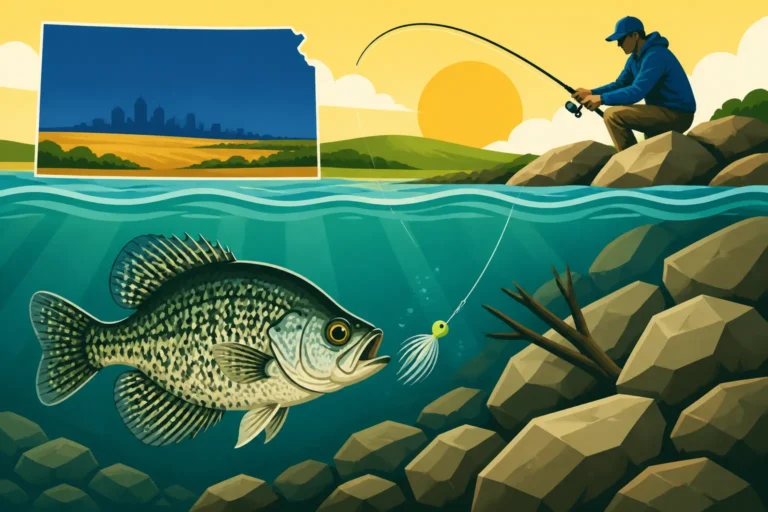
That feeling of watching your lure dance across the water, the anticipation building with every twitch and pause, and then—*BAM!*—the water erupts. It’s not just a bite; it’s an ambush, a violent assertion of a bass's predatory nature. This isn't a subtle tap or a gentle pull; it's pure, unadulterated aggression. For Kansas anglers, especially those targeting the robust largemouth bass in our numerous reservoirs and farm ponds, or the feisty smallmouth in clearer, rockier waters, this explosive strike is what keeps us coming back. It’s an addiction, a rush of pure fishing joy that few other methods can replicate. The thrill isn't just in landing the fish, but in witnessing the entire dramatic spectacle unfold right before your eyes, often just a few feet from your boat or the bank.
Understanding Bass Behavior Near the Surface
To truly excel at topwater fishing, you need to think like a bass. Why would a bass choose to strike a lure on the surface when there's an entire water column below? Often, it's about opportunity, territoriality, and sometimes, sheer hunger. Bass are opportunistic predators. If an easy meal like a frog, a injured baitfish, or even a struggling bird happens to be on the surface, they won't hesitate. They also use shallow cover, like lily pads, emergent weeds, and fallen trees, as ambush points. When conditions are right—low light, warm water, and active baitfish—bass will push up into these shallower zones, making them prime candidates for topwater presentations. They're often looking upwards, keying in on silhouettes and vibrations above, making your topwater lure a direct appeal to their hunting instincts. Understanding these fundamental behaviors is the first step to knowing when and where to present your surface offerings.
Essential Topwater Lures for Kansas Bass
The world of topwater lures is vast and exciting, each designed to mimic different prey or create unique disturbances on the water. Choosing the right one for the conditions can make all the difference between a frustrating day and a phenomenal one.
Poppers and Chuggers: Creating Commotion
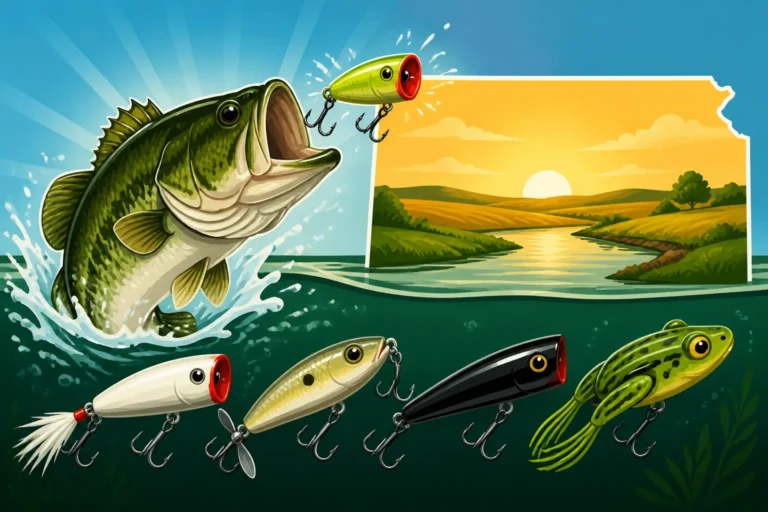
Poppers and chuggers are classic topwater lures, known for their cupped or dished faces that "pop" and "chug" water when retrieved. These lures mimic a struggling baitfish, a frog, or even a small animal that has fallen into the water, creating a disturbance that bass find irresistible.
Poppers: Lures like the Heddon Pop-R or Rebel Pop-R are quintessential poppers. They're designed to create a distinct "blooper" or "pop" sound when you twitch your rod tip, followed by a pause. This action is incredibly effective, especially in calm water or around docks and laydowns. The key is the pause – bass will often strike on the pause, after the commotion, so don't rush it. You can vary your retrieve from short, sharp pops to longer chugs, mimicking a distressed animal. Poppers are fantastic when bass are somewhat active but not in a full-blown feeding frenzy. Their versatility allows you to fine-tune the noise and splash they create.
Chuggers: Chuggers, like the Arbogast Jitterbug, typically have a wider, more deeply cupped mouth. Instead of a sharp "pop," they create more of a "gurgle" or "chug" sound and push more water. They're excellent for drawing strikes from aggressive bass, particularly in slightly choppier conditions where a popper's subtle sound might get lost. Chuggers are often retrieved with a steady, stop-and-go motion, allowing them to wobble and gurgle across the surface, leaving a distinct wake. Both poppers and chuggers are deadly around flooded timber, weed lines, and rocky banks, places where bass love to ambush unsuspecting prey. Many anglers find a fantastic selection of these classic topwater lures on Amazon, ensuring they have a variety of sizes and colors to match the local forage and conditions.
Walking Baits and Spooks: The Glide and Dash
Walking baits, often referred to as "spooks" after the iconic Heddon Super Spook, are perhaps the most mesmerizing topwater lures to work. Their magic lies in their ability to "walk the dog," a side-to-side gliding motion that perfectly imitates an injured baitfish frantically trying to escape.
Walking Baits: These lures are typically cigar-shaped and float horizontally on the surface. The walk-the-dog retrieve is accomplished by imparting short, downward jerks with your rod tip while simultaneously reeling in slack. The trick is to establish a rhythm where the lure glides from side to side, often leaving a V-wake behind it. The cadence can vary: some days bass want a fast, frantic walk; other days, a slower, more deliberate glide with longer pauses is the ticket. When bass are actively chasing baitfish or feeding on top, these lures can be incredibly effective. Their larger profile also tends to draw bigger, more aggressive fish. They're particularly effective in open water, along points, or over submerged grass beds where bass have room to chase. The visual aspect of watching the lure dance and then seeing a bass suddenly engulf it is one of the most exciting experiences in fishing. For those just learning, practice in open water until you get the rhythm down; once you do, it becomes second nature and highly rewarding.
Prop Baits and Buzzbaits: Max Noise, Max Action
When you want to create a ruckus and call bass from a distance, prop baits and buzzbaits are your go-to options. They are designed for maximum surface disturbance and are excellent for targeting aggressive, reaction-strike oriented bass.
Prop Baits: Lures like the Cotton Cordell Boy Howdy or the Zoom Horny Toad (which can be rigged to create prop-like action) feature one or more propellers that spin and churn water, creating a buzzing sound and a distinct trail of bubbles. They can be worked with a twitch-and-pause retrieve, similar to a popper, but with added propeller action. The size and number of props influence the amount of splash and noise; some have a single prop at the tail, while others have props at both ends. These lures are fantastic around shallow cover, submerged brush, or whenever bass are chasing baitfish near the surface. The constant churning and visual disturbance often provoke immediate, violent strikes. Their subtle gurgle and splash can be irresistible to bass looking for an easy meal, especially during those low-light hours.
Buzzbaits: Buzzbaits are arguably the most aggressive of the topwater family. Featuring a metal blade that spins violently as the lure is retrieved, they create a loud, squealing, gurgling sound and a massive surface commotion. These lures are designed to be retrieved quickly and steadily, just fast enough to keep the blade on the surface. They are incredible for covering large areas of water, searching for active bass, and triggering reaction strikes. When bass are positioned deep in heavy cover like flooded timber or thick lily pads, the buzzbait's noise can pull them out. They excel in stained or murky water where their sound and vibration cut through the poor visibility. The sudden, unprovoked attack on a buzzbait is a truly exhilarating moment. You can easily compare brands like Booyah or War Eagle on platforms like Amazon to find a buzzbait that suits your needs. Just be ready for the strike; it often comes without warning!
Frogs and Rats: Mastering the Slop
When the cover gets thick – think dense lily pads, matted vegetation, or heavy duckweed – conventional topwater lures often get snagged. That's where soft plastic frogs and rat imitations truly shine.
Hollow-Bodied Frogs: Lures like the Spro Bronzeye Frog are designed with a hollow body and upward-facing double hooks, making them virtually weedless. This allows you to cast them directly into the thickest "slop" without getting hung up. The retrieve is usually a series of twitches and pauses, mimicking a frog hoping between lily pads. When a bass strikes, often creating a huge explosion in the vegetation, it typically collapses the hollow body, exposing the hooks for a solid hookset. Fishing these lures requires patience and timing. You might let them sit for several seconds on a mat before twitching them again. When a bass blows up, resist the urge to set the hook immediately. Wait until you feel the weight of the fish, counting "one Mississippi, two Mississippi" if you need to, to ensure the bass has fully engulfed the bait. These lures are absolute killers in heavy vegetation found in many Kansas ponds and lakes, especially during the warmer months.
Soft Plastic Toads and Rats: Beyond hollow-bodied frogs, soft plastic toads (like the Zoom Horny Toad, mentioned earlier) and soft plastic rats offer other weedless topwater options. These are typically rigged on a wide gap EWG hook, Texas-rig style, to keep them snag-free. They are retrieved by reeling steadily, causing their legs or tails to kick and churn water, creating a realistic swimming action. They don't offer the loud "pop" or "buzz" of other lures but provide a more subtle, yet highly effective, disturbance. These are fantastic for fishing over submerged grass or sparse vegetation where you want a natural, non-intrusive presentation. The key is to match the size and color to local prey, and to present them naturally through the cover. Mastering these weedless presentations opens up a whole new world of bass fishing in otherwise inaccessible areas.
Mastering Topwater Techniques for Different Kansas Scenarios
Having the right lure is only half the battle; knowing how to present it effectively is crucial. Each topwater lure demands a specific retrieve, and adapting your technique to the conditions and the mood of the bass is what separates good anglers from great ones.
Working Poppers and Chuggers Effectively
Poppers and chuggers are all about varying your cadence and giving the bass time to react. The classic retrieve for a popper involves a short, sharp downward twitch of the rod tip, followed by reeling in the slack, then a pause. The length of that pause is critical and often the secret sauce.
Cadence and Pauses: On some days, especially when bass are highly aggressive, a rapid-fire series of two or three pops followed by a short pause might be the ticket. Other times, particularly after a cold front or when bass are finicky, a single pop followed by a long, agonizing pause of 5-10 seconds can be what triggers a strike. It mimics a dying or stunned baitfish, making it an easy target. Experiment with your retrieve: try a "pop-pop-pause" or a "pop-pause-pop-pause" pattern. The key is to watch the water closely during the pauses; many strikes come when the lure is sitting still. For chuggers, a steady reel with intermittent twitches creates that distinctive gurgle and wobble. These lures are great for targeting specific cover such as boat docks, flooded brush, or the edges of weed lines where bass might be lurking. Remember, these lures are designed to draw attention, so don't be afraid to make some noise!
Perfecting the Walk-the-Dog Retrieve
The "walk-the-dog" technique for walking baits is a rhythmic art form that takes a bit of practice but pays off big time. It's about getting the lure to glide from side to side, creating a serpentine action that drives bass wild.
The Rhythm is Key: To execute the walk, hold your rod tip down towards the water, pointing at the lure. Make a short, sharp twitch of the rod tip while simultaneously reeling in slack. As the lure darts to one side, immediately let your rod tip relax back to its starting position, allowing the lure to swing back. Repeat this motion, twitching again as the lure is about to complete its swing, sending it darting to the other side. The rhythm should feel like a coordinated dance between your rod tip and your reel hand. Speed and intensity can be adjusted. A fast, continuous walk is excellent for covering water and exciting active fish, while a slower, more deliberate walk with longer pauses can entice lethargic bass. This technique is deadly over submerged grass beds, along rocky points, or around main lake humps. Practice this technique in open water until it becomes fluid, and you'll unlock a highly effective presentation for triggering explosive strikes. You can read more about various presentations in our Kansas Fishing Techniques for Beginners guide.
Buzzbait and Prop Bait Strategies
Buzzbaits and prop baits are about making a statement on the surface. Their unique action and noise call bass from a distance, demanding an aggressive response.
Buzzbait Pacing: The most common way to fish a buzzbait is a steady retrieve, just fast enough to keep the blade spinning on the surface, creating that enticing gurgle and squeal. However, don't be afraid to vary the speed. Sometimes a slower retrieve, barely keeping the blade churning, can be more effective, especially in cooler water or when bass are less aggressive. Other times, a burning retrieve will trigger a purely reaction strike. Buzzbaits are fantastic for working parallel to shorelines, over submerged timber, or along the edges of weed beds. They're excellent search baits, allowing you to cover vast areas quickly to locate active fish.
Prop Bait Versatility: Prop baits offer more versatility than buzzbaits. While you can retrieve them steadily to create a continuous churning, they truly shine with a stop-and-go retrieve. A series of short twitches followed by a pause allows the props to churn water, then the lure sits still, often triggering strikes. These are particularly effective in slightly calmer conditions where their gurgle can be heard, but a steady buzzbait might be too much. They're great around docks, lily pads, and areas where bass might be holding tight to cover, waiting to ambush. Both lures are fantastic choices for triggering strikes during the Kansas Summer Fishing Guide months, when bass are often eager to feed aggressively.
Fishing Frogs and Soft Plastics in Heavy Cover
When the cover is so thick you can practically walk on it, hollow-bodied frogs and soft plastic toads are your best friends. These weedless wonders allow you to fish where no other topwater can go.
Navigating the Jungle: The beauty of a hollow-bodied frog is its weedless design. Cast it directly onto lily pads, over thick mats of vegetation, or into dense submerged hydrilla. The retrieve is usually a series of short twitches, making the frog hop or slide across the cover, interspersed with long pauses. These pauses are crucial; they allow the bass time to pinpoint the lure and decide to strike. When you see a bass blow up on your frog, resist the immediate hookset. Let the bass eat it! Count to two or three "Mississippis" to ensure the fish has the lure completely in its mouth, then set the hook with a powerful, sweeping motion. Because of the heavy cover, you'll need stout gear, which we'll discuss later.
Soft Plastic Toad and Rat Action: For soft plastic toads or rats rigged Texas-style, the retrieve is typically a steady, moderate reel, allowing the legs or tails to kick and churn on the surface. These are excellent for fishing over slightly less dense vegetation or along the edges of thicker mats. The key is to keep them moving, creating a subtle, continuous disturbance. If you feel a "thump" or see a swirl, pause for a second, then continue your retrieve or give a light twitch. The weedless nature of these lures allows you to penetrate areas that would otherwise be unfishable, opening up new opportunities for catching bass that rarely see a lure.
Optimal Conditions and Seasons for Topwater Bass in Kansas
Timing is everything in topwater fishing. Certain conditions and times of year are far more conducive to getting those exhilarating surface strikes than others. Understanding these patterns for Kansas waters will greatly increase your success.
Early Morning and Evening Gold: Prime Topwater Windows
If you ask any seasoned Kansas angler when to throw topwater, the answer will almost always be the same: low light. The hours around dawn and dusk are consistently the most productive times for surface presentations.
The Golden Hours: As the sun rises and sets, the light penetration into the water decreases. This provides a natural camouflage for bass, allowing them to cruise shallower waters and hunt more aggressively without fear of being seen by overhead predators like eagles or ospreys. The cooler air temperatures also mean slightly cooler surface water, which makes bass more comfortable near the top. During these times, bass are often actively looking for an easy meal, and a topwater lure mimicking a struggling baitfish or a frog can be irresistible. This is when you'll see some of the most spectacular blow-ups. Many of our lakes, from Milford to El Dorado, offer incredible topwater action during these "golden hours." In fact, understanding the Best Time of Day to Fish in Kansas is key for all fishing, but especially for topwater.
Night Fishing: Don't overlook night fishing for topwater bass in Kansas, especially during the peak summer months. Under the cover of darkness, bass become even bolder and will often feed heavily on the surface. Slow-moving, noisy lures like buzzbaits or even large walking baits can be incredibly effective. The bass rely more on sound and vibration than sight, so choose lures that displace a lot of water. Night fishing for bass adds another layer of excitement and is a fantastic way to beat the summer heat.
Cloud Cover and Post-Front Conditions
While bright, sunny days can make topwater fishing challenging, certain weather patterns can extend your topwater window significantly.
Overcast Days: A day with consistent cloud cover often mimics low-light conditions, keeping bass more comfortable and active near the surface for longer periods. On these days, you might find success with topwater lures well into the midday hours. The diffused light helps mask your presence and the lure's artificiality, making bass less wary. This is a great time to experiment with walking baits or poppers over slightly deeper structure, as bass might be willing to rise for a meal.
Post-Front Challenges and Opportunities: Cold fronts can be notoriously difficult for bass fishing, often pushing fish deep and making them lethargic. However, in the immediate aftermath of a cold front, particularly on the first cloudy or drizzly day, a topwater presentation can sometimes trigger a surprising reaction strike. The key is usually a slower, more deliberate retrieve with longer pauses, mimicking a struggling or injured prey. Bass might not be actively chasing, but an easy, vulnerable meal sitting on the surface can still be too tempting to pass up. Always be willing to experiment with your retrieve speed and pause duration during these challenging times.
Seasonal Sweet Spots: Spring, Summer, and Fall
Topwater bass fishing can be productive throughout much of the Kansas fishing season, but certain periods stand out as prime time. Understanding the Kansas Fishing Seasons Guide helps you identify these windows.
Spring Warm-up: As water temperatures rise in late spring (think late April through May and early June), bass become increasingly active and move into shallower spawning areas. This is a fantastic time for topwater. Male bass guarding beds can be territorial and aggressive, often striking anything that invades their space. After the spawn, bass are hungry and recouping energy, making them highly susceptible to topwater lures. Focus on shallow coves, spawning flats, and transitions between shallow and deeper water. Our Kansas Spring Fishing Guide details how bass begin moving up, making them perfect targets for lures like poppers and buzzbaits around newly emergent vegetation.
Summer Heat: Summer is synonymous with topwater action, especially during those early morning and late evening windows. As water temperatures peak, bass often retreat to deeper, cooler water during the day, but they'll push shallow to feed during low light. This is prime time for fishing frogs over thick mats of vegetation and for throwing buzzbaits or walking baits along main lake points and humps. Don't forget about night fishing with topwater; it can be incredibly productive during the dog days of summer.
Fall Feast: As autumn approaches and water temperatures begin to cool, bass enter a "feeding frenzy" phase, actively bulking up for winter. This fall turnover can create some incredible topwater opportunities, especially as baitfish schools become more concentrated. Bass will chase bait relentlessly, and a walking bait or prop bait worked around schooling bait can draw explosive strikes. Look for bass schooling on the surface, pushing bait, and cast your topwater right into the melee. This period can extend well into October, offering some of the most exciting topwater fishing of the year. Our Kansas Fall Walleye Fishing Tips might focus on walleye, but the general principles of fall feeding frenzies apply to bass as well.
| Season | Best Time of Day | Recommended Lures | Key Areas | Retrieve Style |
|---|---|---|---|---|
| Spring | Morning, Evening | Poppers, Buzzbaits, Walking Baits | Shallow coves, spawning flats, emergent weeds | Varied speed, short pauses |
| Summer | Early Morning, Late Evening, Night | Frogs, Buzzbaits, Walking Baits, Poppers | Heavy mats, main lake points, docks, flooded timber | Slow to fast, longer pauses for frogs |
| Fall | Morning, Midday (overcast), Evening | Walking Baits, Prop Baits, Buzzbaits | Schooling baitfish, rocky points, shallow pockets | Fast search, aggressive pursuit |
Gear and Setup for Successful Kansas Topwater Action
The right gear won't guarantee a strike, but it will ensure that when that explosive bite happens, you're ready to capitalize on it. Topwater fishing demands specific rod, reel, and line choices to maximize presentation and hook-setting power.
Rods, Reels, and Line: Matching Your Presentation
Choosing the right combination of rod, reel, and line is critical for effective topwater fishing. Each component plays a vital role in casting accuracy, lure action, and successful hooksets. Our Best Rods and Reels for Kansas Fishing guide goes into more depth on general setups.
Rods: For most topwater applications, a medium-heavy to heavy power casting rod, typically between 6'6" and 7'6", is ideal. The specific length depends on your casting preferences and the type of lure. A longer rod (7'+) provides better casting distance for covering open water with walking baits and buzzbaits, while a shorter rod (6'6"-7') offers more accuracy for pitching poppers around tight cover. The action should generally be moderate-fast or fast. A moderate-fast action rod has enough flex to help with casting lighter topwaters and keeps bass from throwing the hooks during their violent head shakes, but still has plenty of backbone to drive hooks home and pull fish out of cover. For frogs in heavy slop, a heavy power, fast action rod is non-negotiable – you need maximum power to set those hooks and horse fish out of thick vegetation.
Reels: A baitcasting reel with a gear ratio between 6.4:1 and 7.5:1 is generally preferred for topwater. A higher gear ratio (7.0:1 or faster) is excellent for buzzbaits, allowing you to quickly retrieve slack and keep the lure on the surface, as well as for quickly reeling in a fish after a strike. A slightly slower gear ratio (6.4:1) can be beneficial for walking baits or poppers, as it helps you slow down your retrieve and maintain better control during the pauses. The key is a smooth drag system and a comfortable feel, as you'll be making many casts.
Line: This is where things get interesting for topwater.
- Monofilament: For lures like poppers, walking baits, and prop baits, many anglers prefer 12-17 lb monofilament. Mono floats, which helps keep your lure on the surface and enhances its action. Its stretch also acts as a shock absorber during violent strikes, preventing hooks from tearing out.
- Braided Line: For buzzbaits and especially for frogs in heavy cover, 30-65 lb braided line is the way to go. Braid has virtually no stretch, providing excellent sensitivity and incredible power for driving hooks through thick mouths and hauling bass out of heavy vegetation. Its floating nature is also an advantage. However, because braid is highly visible, some anglers will use a short fluorocarbon or monofilament leader (around 12-20 lb test) with a popper or walking bait, though for buzzbaits and frogs, the direct tie is often preferred. The lack of stretch in braid also means you need to be very mindful of your drag settings to prevent hooks from pulling out. The Best Line Weight for Kansas Catfish might be heavy, but bass often don't require quite as much, unless you're fishing the heaviest cover imaginable.
Essential Accessories for Topwater Success
Beyond your core rod, reel, and line setup, a few key accessories can make your topwater adventures in Kansas much more enjoyable and successful.
Polarized Sunglasses: These are absolutely invaluable for topwater fishing. They cut glare on the water's surface, allowing you to see your lure's action clearly, observe bass following your bait, and even spot incoming strikes before they happen. This visual feedback is crucial for perfecting your retrieve and timing your hooksets.
Long-Handled Net: An explosive topwater strike often means a wild fight at the boat. A good quality, long-handled net can be a lifesaver, especially when handling larger bass that are thrashing violently. It minimizes the risk of losing a fish boat-side and ensures a safer landing for both you and the fish.
Pliers or Hook Removers: Topwater lures often have multiple treble hooks, and bass can swallow them deep during aggressive strikes. A good pair of long-nosed pliers or specialized hook removers are essential for safely unhooking fish, protecting both your fingers and the fish.
Tackle Box Organization: Topwater lures can be bulky. Having a well-organized tackle box or bag with specific compartments for your poppers, walking baits, buzzbaits, and frogs will keep them from tangling and make it easier to switch lures quickly. You can find some excellent storage solutions for your Best Tackle for Kansas Game Fish on Amazon.
Troubleshooting Common Topwater Challenges
Even with the perfect gear and ideal conditions, topwater fishing can present its share of frustrations. Missed strikes and uncooperative fish are part of the game, but understanding how to troubleshoot these issues can turn a challenging day into a productive one.
Dealing with Missed Strikes and Short Biters
Perhaps the most common frustration in topwater fishing is the "blow-up but no hook-up" scenario. It’s infuriating when a bass explodes on your lure but doesn't get hooked.
Timing Your Hookset: The biggest reason for missed strikes is setting the hook too early. When a bass blows up on a topwater, the natural instinct is to react immediately. However, the bass often just slashes at the lure, stunning it, or creating a splash to disorient it before turning to engulf it. The common advice is to "wait until you feel the fish" or "count to two Mississippi" after the strike before setting the hook. This allows the bass to fully take the lure into its mouth, greatly increasing your chances of a solid hookset. For hollow-bodied frogs in thick cover, this delay is even more crucial.
Lure Modification: Sometimes, bass are "short biters," meaning they're not fully committing to the lure, just nipping at the tail or side.
- Trailer Hooks: For buzzbaits, adding a small trailer hook (a single hook tied to the main hook with a piece of braided line or a special keeper) can dramatically increase hook-up ratios for short strikes.
- Feathered Trebles: For walking baits or poppers, replacing the rear treble hook with a feathered one can make the lure appear longer and give the bass a more defined target at the rear, sometimes leading to better hookups.
- Downsizing: If bass are consistently slashing at large lures, try downsizing to a smaller popper or walking bait. Sometimes, a more subtle presentation is what they're looking for.
Varying Retrieve: If you're getting blow-ups but no commitments, try slowing down your retrieve or extending your pauses. A slower, more vulnerable presentation might give the bass more confidence to fully engulf the lure. Conversely, sometimes speeding it up can trigger a reaction strike that results in a better hookup. It's all about experimentation on the water.
When Topwater Isn't Working: Adapting Your Approach
There will be days when, despite your best efforts, topwater just isn't happening. Maybe the bass are too deep, too lethargic, or the conditions are just not right. Knowing when to switch gears is a sign of a skilled angler.
Consider Subsurface Options: If after a good hour of trying different topwater lures and techniques, you're not getting any attention, it's time to go subsurface. Bass might be holding a few feet down, but still active.
- Weightless Worms/Flukes: These can be fished slowly just below the surface, mimicking an injured baitfish or dying worm. Their subtle action can entice wary bass that wouldn't commit to a noisy topwater.
- Shallow Crankbaits/Jerkbaits: These lures dive only a few feet and can be excellent for covering shallow areas where bass might be holding slightly deeper than the topwater strike zone. A shallow diving crankbait like a Strike King KVD 1.5 or a jerkbait can be deadly on these days.
- Spinnerbaits/Chatterbaits: These provide flash and vibration, drawing strikes from bass that might be hiding in cover or are slightly deeper. Their versatility makes them excellent search baits when topwater isn't cutting it.
- Soft Plastics: Texas-rigged or Carolina-rigged soft plastics can get down to bass holding tight to structure or deeper cover. When bass are lethargic, a slow presentation with a plastic worm or creature bait can be irresistible.
Re-evaluate Conditions: Are you truly in a low-light window? Has a front just passed through, making bass difficult? Is the water unusually clear or muddy? Sometimes, the conditions simply don't favor topwater. Understanding the Kansas Fishing Seasons and Limits and general bass behavior in those seasons will help you decide if it's time to change tactics completely or if you just need to wait for the conditions to improve. Don't be stubborn; a willingness to adapt is the hallmark of a successful angler.
Disclaimer
Fishing conditions and regulations in Kansas can change. Always consult the latest Kansas Department of Wildlife, Parks and Tourism (KDWPT) regulations before heading out. This guide is for informational purposes only and does not constitute legal advice.