Kansas Wiper Fishing Techniques
There's nothing quite like the electrifying jolt of a hard-hitting wiper on the end of your line. These hybrid striped bass are relentless fighters, notorious for their powerful runs and never-say-die attitude, often leaving anglers wondering what they could have done differently. If you've ever felt frustrated by their elusive nature or simply want to elevate your game, this guide will arm you with the knowledge and tactics to consistently hook into these incredible sportfish across Kansas.
Understanding Kansas Wipers: The Ultimate Freshwater Fighter
Wipers are a fascinating species, and truly understanding them is the first step to consistently catching them. They're not like your average crappie or even a typical largemouth bass; these fish operate on a different level, driven by instinct and an insatiable appetite. Getting inside their heads, so to speak, means recognizing their unique biology and how it dictates their behavior in our Kansas reservoirs.
What Makes Wipers Unique
Wipers are a hybrid, a cross between a white bass and a striped bass, and they inherit the best fighting qualities from both parents. This genetic cocktail results in a fish that grows larger and fights harder than a white bass, but often tolerates warmer freshwater environments better than a pure striped bass. What this means for anglers is a fish that can reach impressive sizes, often weighing over 10 pounds in Kansas, and delivers an incredible battle, combining the stamina of a striper with the aggressive schooling nature of a white bass. Their streamlined bodies, powerful tails, and often broken or irregular lateral lines distinguish them from their parent species. For a deeper dive into their appearance, you might want to check out our guide on Kansas Hybrid Striped Bass Identification.
One of the most defining characteristics of wipers is their relentless pursuit of baitfish. They are apex predators in the open water, constantly on the move, chasing down schools of shad, sunfish, or whatever forage is available. This high metabolism and aggressive feeding habit mean that if you can locate their food source, you're usually not far from the wipers themselves. They are opportunistic and will strike a wide variety of lures and baits, making them a thrilling target once you dial in their patterns.
Preferred Habitats and Behavior
Unlike many other game fish that relate closely to submerged structure like brush piles or rock formations, wipers are often pelagic, meaning they prefer the open water of large reservoirs. They'll follow vast schools of baitfish, often suspending in the water column over deep flats, submerged creek channels, or near main lake points. While they might occasionally venture into shallower areas, especially during cooler water temperatures or certain feeding frenzies, their primary domain is the vast expanse of the reservoir. Think of them as the wolves of the open water, constantly herding and ambushing their prey.
Their behavior is heavily influenced by the presence of bait. If you find a massive school of shad on your fish finder, there's a very high probability that wipers, along with other schooling predators like white bass and even walleye, are lurking nearby. They often feed in packs, creating explosive surface boils as they drive baitfish to the top. Witnessing a wiper boil, where the water literally erupts with thrashing fish, is one of the most exciting experiences in freshwater fishing and signals an incredible opportunity to cast right into the action.
Seasonal Movements of Wipers
Wiper movements are largely dictated by water temperature and the availability of bait, making our Kansas Fishing Seasons Guide an invaluable resource. In the spring, as water temperatures begin to rise, wipers become increasingly active. They often move into shallower areas, sometimes even making runs up rivers and tributaries in search of spawning grounds, though their spawning efforts are largely unsuccessful in Kansas reservoirs, necessitating stocking by the Kansas Department of Wildlife, Parks and Tourism (KDWP). This can be a prime time for anglers to target them with shallow-running crankbaits or even topwater lures.
Summer sees wipers moving to deeper, cooler water during the heat of the day, often suspending over significant depths. Early mornings, late evenings, and even night fishing can be incredibly productive as they push baitfish to the surface. As fall approaches and water temperatures cool again, wipers often go on a major feeding binge, packing on weight for the winter. This is a fantastic time for both casting and trolling, as they can be found actively chasing bait throughout the water column. During the winter, their metabolism slows, and they'll typically hold in deeper water, but they can still be caught by patient anglers using vertical jigging techniques or slow trolling. Understanding these seasonal shifts is critical to knowing when and where to present your offerings.
Essential Gear for Successful Wiper Fishing in Kansas
Trying to catch hard-fighting wipers with inadequate gear is a recipe for frustration, not fun. You need a setup that can handle their aggressive strikes and powerful runs, or you'll quickly find yourself with snapped lines and bent hooks. Investing in the right tools is paramount, transforming a potential struggle into a satisfying victory. Think about what you need to stand up to a fish that hits like a freight train and fights like it's got an appointment on the other side of the lake.
Rods, Reels, and Line Choices
For wipers, you'll want a rod with some backbone and a fast to moderate-fast action. A medium-heavy spinning rod or casting rod, typically in the 6'6" to 7'6" range, is a great all-around choice. This length provides good casting distance for covering open water and enough leverage to control a surging fish. For instance, a St. Croix Legend Tournament Bass rod or a Fenwick HMG in a medium-heavy power would be excellent choices, readily available on platforms like Amazon. Match this with a quality spinning reel in the 3000-4000 size range or a sturdy baitcasting reel. Look for reels with a smooth, reliable drag system, as this is your ultimate shock absorber when a big wiper decides to peel line. Shimano Stradic or Daiwa BG series are popular for spinning, while a good Abu Garcia Revo or Shimano Curado baitcaster will serve you well. Our comprehensive Kansas Fishing Gear Guide offers more general advice on selecting quality equipment.
Line choice is also critical. Many wiper anglers opt for braided line due to its strength, sensitivity, and lack of stretch. A 20-30 pound test braided line is a solid choice for most wiper applications. This allows you to feel even the slightest tap and provides incredible hook-setting power. However, because braided line is highly visible, it's often best to tie on a 2-4 foot leader of 12-20 pound fluorocarbon. Fluorocarbon is nearly invisible underwater and offers excellent abrasion resistance against toothy fish or submerged structures. For those who prefer monofilament, a high-quality 14-20 pound test monofilament can also be effective, offering a bit more stretch for softer presentations but less sensitivity.
Lures and Baits That Get Results
Wipers are opportunistic predators, and a wide array of lures can entice them. The key is to match the hatch, meaning, use lures that imitate the baitfish they are feeding on. For Kansas wipers, this often means shad imitations. Common lure types include:
- Spoons: Casting spoons like the Kastmaster or Little Cleo, in silver or gold, are incredibly effective. They mimic dying baitfish with their erratic flutter on the fall and can be cast a mile. Retrieve them with a lift-and-drop or steady retrieve.
- Crankbaits: Deep-diving crankbaits are excellent for trolling or casting to suspended fish. Look for chrome, white, or shad-patterned baits from brands like Strike King or Rapala. Lipless crankbaits, such as a Rat-L-Trap, are also deadly when wipers are chasing bait near the surface or in shallower water.
- Jigs: Heavy jigging spoons (like a Sassy Shad or Hopkins Shorty) or bucktail jigs can be deadly when wipers are holding deeper. Tip them with a soft plastic swimbait for added appeal. A 1/2 to 1-ounce jig head with a 4-5 inch grub or swimbait body in white, chartreuse, or pearl is a fantastic choice for vertical jigging or casting and retrieving.
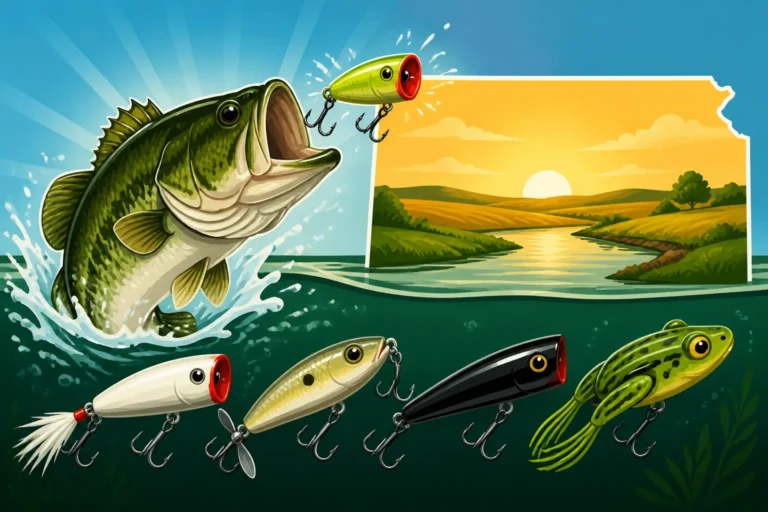
- Topwater Lures: When wipers are actively boiling on the surface, there's nothing more exciting than a topwater explosion. Poppers, walk-the-dog style baits (e.g., Heddon Super Spook), or prop baits can draw incredible strikes. This is often an early morning or late evening bite. Our guide on Best Lures for Kansas White Bass has some excellent crossover recommendations that apply to wipers too.
Don't forget live bait! While artificials are popular, live shad, shiners, or large minnows can be absolutely irresistible to wipers, especially when they're a bit finicky. Often, anglers will cast out a weighted bait near a boil or slow-troll a live shad behind the boat. Always check current regulations regarding baitfish collection and use.
Electronics and Boat Setup Considerations
Modern electronics have revolutionized wiper fishing, making it far easier to locate these nomadic fish. A good fish finder with down imaging and side imaging capabilities is almost essential for finding suspended schools of bait and the wipers feeding on them. Brands like Humminbird and Lowrance offer excellent units that can reveal vast schools of shad and the tell-tale arches of wipers lurking below. You'll be able to quickly scan large areas of the reservoir, identify productive zones, and save valuable fishing time. For instance, being able to see a school of baitfish at 20 feet over 60 feet of water on your side imaging can point you directly to the fish.
When it comes to boat setup, a reliable trolling motor is incredibly useful, especially for subtle movements when approaching a surfacing school or holding your position over a deep-water structure. A strong bow-mount electric trolling motor with GPS capabilities, like those from Minn Kota or Motorguide, allows you to maintain precise boat control, freeing you up to focus on fishing. Our Kansas Trolling Motor Guide provides detailed insights into choosing the right unit for your needs. Rod holders are also a must for trolling multiple lines or simply keeping rods organized and ready for action. And, of course, always prioritize safety by ensuring your boat is properly registered and equipped with all necessary safety gear, including life jackets. Our guides on Kansas Boat Registration for Anglers and Kansas Life Jacket and Boating Safety Guide are excellent resources for ensuring you're compliant and safe on the water.
Top Techniques for Targeting Wipers from Shore and Boat
Wipers can be caught from both the bank and a boat, though a boat certainly opens up more opportunities in their preferred open-water habitat. Regardless of your platform, understanding the right techniques for presentation and retrieve is what will make the difference between a frustrating day and a successful outing. Adaptability is key when chasing these fast-moving predators.
Casting and Retrieving Strategies
Casting is a fundamental technique for wipers, especially when you see them actively feeding or marking them on your electronics. The goal is often to cover a lot of water quickly. For shore anglers, long casts are essential to reach deeper water or active fish. Use heavy spoons or lipless crankbaits that can be thrown a great distance. A common retrieve involves a medium-fast, steady crank, perhaps with an occasional twitch or pause to mimic a struggling baitfish. If you're casting to a visible boil, cast beyond the activity and retrieve your lure through the school. This prevents spooking the fish and gives your lure a more natural approach.
From a boat, casting to surfacing schools is perhaps the most exhilarating way to catch wipers. When you spot a boil, approach it cautiously, keeping your distance to avoid running over the fish. Position your boat upwind or upcurrent if possible, allowing for a natural drift into casting range. Once you're in position, make quick, accurate casts with topwater lures, spoons, or soft plastic swimbaits. A rapid retrieve is often necessary to trigger a strike when they're in a feeding frenzy. If the boil subsides, continue casting in the general area, as they may resurface nearby or be holding just below the surface. This hit-and-run tactic is effective for covering active, scattered fish.
Trolling for Open Water Wipers
Trolling is arguably the most consistent method for catching wipers, particularly when they are suspended in open water and not actively showing on the surface. This technique allows you to cover vast expanses of water, presenting your lures at specific depths where wipers and their baitfish are holding. This is often the go-to strategy on large Kansas reservoirs like Cheney, Wilson, and Milford. Using multiple rods with different lure types and depths can help you identify what the fish are keying in on.
Deep-diving crankbaits are workhorses for trolling wipers. Experiment with different colors and sizes until you find what triggers bites. Trolling speeds typically range from 2.0 to 4.0 mph, but sometimes subtle changes can make a big difference. Pay close attention to your electronics, looking for baitfish schools and arcs of wipers, and adjust your lures or depth accordingly. Often, wipers will be found near subtle changes in depth, such as old creek channels or underwater humps, even if they're suspended far above the structure itself. For those targeting similar species, many of the tactics found in our Kansas Walleye Fishing Techniques article, especially those related to open-water trolling, will translate well to wipers.
| Lure Type | Best Conditions | Typical Speed/Action | Best Colors |
|---|---|---|---|
| Spoons | Active surface boils, vertical jigging deep fish | Erratic flutter on fall, fast retrieve | Silver, Chrome, Gold, White |
| Lipless Crankbaits | Shallow water, aggressive schools, windy conditions | Fast, steady retrieve; rip-and-stop | Chrome/Blue, Shad, Chartreuse |
| Deep-Diving Crankbaits | Trolling open water, suspended fish | Medium-fast troll, steady dive | Chrome/Black, Shad, Perch, Firetiger |
| Topwater Poppers/Walkers | Early morning/late evening, active surface boils | Pop-and-pause, walk-the-dog | White, Chrome, Bone, Shad |
| Soft Plastic Swimbaits | Casting, vertical jigging, retrieve through schools | Medium retrieve, lift-and-drop | White, Pearl, Chartreuse, Shad patterns |
Live Bait Rigs and Presentations
While artificial lures are incredibly effective, live bait can be a secret weapon when wipers are finicky or when you're targeting truly large fish. Live shad are by far the most preferred bait. There are several ways to present live bait for wipers, both from shore and boat. From the bank, you can use a simple slip-sinker rig with a large kahle or circle hook. Hook the shad lightly through the lips or dorsal fin and cast it out, allowing it to swim freely. The key is to use enough weight to keep the bait in the strike zone without hindering its natural movement.
From a boat, slow trolling live bait can be incredibly effective. Use a three-way swivel rig with a weight on a dropper line and your live bait on a longer leader, or a simple Carolina rig. Maintain a very slow speed, just enough to keep your bait swimming naturally. Alternatively, if you mark a school of wipers on your electronics, you can simply drop a live bait down to their depth and hold it there, letting the bait's natural movements entice a strike. This method requires patience but can be incredibly rewarding, especially during periods of less aggressive feeding.
Where and When to Find Wipers in Kansas's Best Reservoirs
One of the biggest challenges with wiper fishing is their tendency to roam. They aren't tied to specific structures in the same way a bass might be. Instead, they are constantly on the hunt, following their food source. This means successful wiper anglers need to understand the larger patterns of the reservoir and how different conditions influence fish location. Kansas boasts some incredible wiper fisheries, and knowing where and when to focus your efforts can drastically improve your success rate.
Key Structures and Forage Concentrations
Wipers are generally found in the larger impoundments across Kansas. Reservoirs like Cheney Reservoir Wiper Fishing and El Dorado Lake Striped Bass Fishing are particularly renowned for their healthy wiper populations. While wipers are open-water dwellers, they do relate to certain "structures" even if they don't hug them tightly. These often include:
- Main Lake Points and Humps: These areas often serve as ambush points or funnels for baitfish, drawing wipers in.
- Submerged Creek Channels: These underwater highways provide pathways for both baitfish and predators, and wipers will often suspend just outside or directly over them.
- Dam Areas: The deep water and current around the main lake dam can concentrate bait and, consequently, wipers.
- Wind-Blown Banks: A consistent wind pushing across a reservoir can stack up baitfish on the leeward side, creating a buffet for wipers. Look for these areas, especially after a few days of sustained wind.
Ultimately, the most important "structure" is baitfish. If you see birds diving, particularly gulls, or notice ripples on the surface that aren't wind-related, it often indicates baitfish being pushed to the surface by actively feeding wipers. Using your fish finder to locate dense schools of shad is paramount; if you find the bait, you'll find the wipers. This often means scanning vast areas of the lake, focusing on depths where water temperatures are comfortable for both predator and prey.
Best Times of Day and Seasonal Hotspots
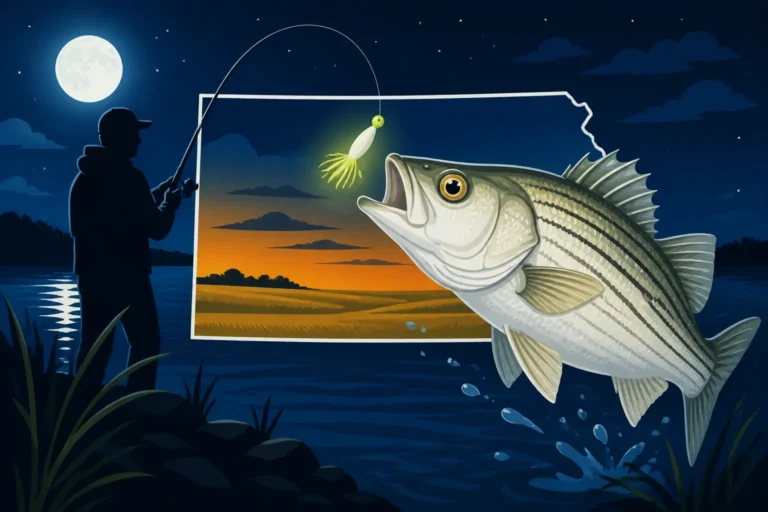
While wipers can be caught at any time of day, some periods are undeniably more productive. Early mornings and late evenings, especially during summer, often see wipers pushing bait to the surface, resulting in those exciting topwater feeding frenzies. Overcast days can extend this bite into midday. During bright, sunny afternoons, wipers tend to hold deeper, often suspending in the water column, making trolling a more effective strategy. Night fishing can also be incredibly productive, particularly for larger wipers, as they become bolder under the cover of darkness. Many anglers employ lights to attract baitfish, which in turn draws in the wipers.
Seasonally, spring and fall are often considered the prime times for wiper fishing in Kansas. In spring, as water temperatures rise into the 50s and 60s Fahrenheit, wipers become highly active after their winter sluggishness. They might be found shallower, chasing bait in coves or near points. Fall is another peak period, as wipers aggressively feed to build up fat reserves for winter. This is when some of the largest wipers are caught, often in open water. Even in summer, despite the heat, wipers are highly catchable by focusing on their early morning/late evening surface activity or trolling deeper during the day. For more specific timing advice, refer to our Best Time of Year to Catch Wipers.
Weather and Water Conditions
Wipers, like many fish, are influenced by weather and water conditions, but they can be a bit more predictable than some other species. A steady, consistent wind can be your friend. As mentioned earlier, wind concentrates baitfish, and wipers will follow. A moderate chop on the water can also help break up the surface, making topwater strikes more aggressive. However, extreme winds can make boat control and casting difficult, so always prioritize safety.
Water clarity also plays a role. Wipers are sight feeders, so they prefer reasonably clear to slightly stained water. In extremely muddy conditions after heavy rains, they might be harder to locate and tempt. Look for areas where the water has had time to settle. Barometric pressure changes can also affect their feeding patterns; a stable or slowly dropping barometer often indicates good fishing, while a rapidly rising or falling barometer can make them less active. Always check the forecast and adapt your approach to the conditions you face on the water.
Advanced Tips for Bigger Wipers and Challenging Conditions
Catching a few wipers is one thing; consistently targeting and landing the biggest ones, especially when conditions are tough, requires a deeper understanding and a few advanced tactics. This is where patience, observation, and a willingness to experiment truly pay off. Don't be afraid to try something different if your go-to methods aren't producing.
Locating Schools and Mimicking Baitfish
For bigger wipers, it's often about finding the right class of baitfish. Larger wipers often prefer larger baitfish. So, while a school of tiny shad might attract numbers of smaller wipers and white bass, finding schools of larger shad or even gizzard shad can indicate the presence of trophy-sized fish. Your fish finder is crucial here; learn to differentiate the size and density of baitfish schools. Sometimes, a more sparse but larger baitfish signal might be exactly what you're looking for.
Once you've located a school of bait, your presentation should mimic their behavior or a struggling straggler. If the bait is tight-lipped and moving fast, a rapid retrieve of a lipless crankbait or spoon might work. If the bait is scattered and slow, a slower presentation of a soft plastic swimbait or even a live bait might be more effective. Consider the depth, speed, and direction of the baitfish. For example, if you see baitfish scattering on your forward-facing sonar, immediately cast a reaction bait like a jerkbait or a fast-retrieved spoon into the chaos. Brands like Berkley and Zoom offer excellent soft plastics that can be incredibly versatile for mimicking distressed baitfish.
Handling and Releasing Trophy Wipers
Landing a trophy wiper is an incredible accomplishment, but the fight doesn't end when the fish is boatside. Proper handling is crucial for both the safety of the angler and the health of the fish, especially if you plan to release it. Wipers are powerful, and a large one can easily thrash around, causing injury if not handled correctly. Use a large, rubberized landing net to safely bring the fish into the boat. Avoid using nets with coarse nylon mesh, as these can strip off a fish's protective slime coat, making it more susceptible to disease.
Once in the net, handle the fish as little as possible. If you plan to weigh or photograph it, do so quickly. Support the fish's body horizontally, especially larger individuals, to avoid damaging internal organs. Use needle-nose pliers or a hook remover to quickly extract hooks. If the fish is deeply hooked, it's often best to cut the line and leave the hook in, as attempts to remove it can cause more damage. Release the fish gently, allowing it to recover in the water before letting it go. A healthy release ensures these magnificent fighters can be caught again and contribute to the fishery.
Safety Considerations and Best Practices
Fishing for wipers often involves covering large areas of water, sometimes far from shore, and can involve high-speed trolling. This makes boating safety absolutely paramount. Always ensure your boat is in good working order, with all necessary safety equipment on board, as detailed in our Kansas Boating Safety Equipment Requirements guide. Inform someone of your float plan, especially if you're fishing alone. Wear a life jacket, especially if conditions are rough or if you're operating at speed. Modern inflatable life jackets available on Amazon are comfortable and non-intrusive, making them easy to wear all day.
Beyond boating safety, be mindful of your surroundings. If you're fishing near other boats, maintain a respectful distance, especially when trolling or working a boil. Be aware of weather changes; Kansas weather can be unpredictable, and a calm morning can quickly turn into a stormy afternoon. Have a plan for seeking shelter if severe weather approaches. Finally, always be a responsible angler. Respect length and creel limits set by the KDWP, dispose of trash properly, and leave no trace behind. Our regulations guides, such as Kansas Fishing Regulations Explained, are updated regularly and are your best source for understanding current rules.
Disclaimer
Please remember that fishing conditions, regulations, and fish behavior can change. Always consult the latest Kansas Department of Wildlife, Parks and Tourism (KDWP) regulations before heading out on the water. This guide is for informational purposes only and should not replace official KDWP publications or expert advice.