How to Fish Structure for Smallmouth Bass
Fishing for smallmouth bass in Kansas can feel like chasing a ghost if you're not dialed into their specific preferences. Unlike their largemouth cousins who often lurk in lily pads and submerged timber, smallmouth are creatures of rock, current, and deeper, clear water. This guide will take you step-by-step through the art of fishing structure for smallmouth, helping you understand where they hide, what they bite, and how to present your lures effectively to entice these feisty fighters.
Understanding Kansas Smallmouth Habitat and Behavior
Smallmouth bass are an absolute blast to catch, known for their powerful runs and acrobatic jumps. But finding them in Kansas requires a bit of a different mindset than what many of us are used to. They're not as widespread as largemouth, but once you pinpoint their preferred haunts, you can have some incredible days on the water.
Where to Find Smallmouth in Kansas
When you think "smallmouth bass," immediately picture clear water, rocky bottoms, and often, some form of current. These aren't your typical brush pile dwellers. They crave that hard structure, whether it's natural rock or man-made riprap, because it provides ambush points for forage like crayfish and baitfish, and offers protection from predators. If you're searching for smallmouth in Kansas, you really need to key in on specific types of waterways.
Many of Kansas's larger reservoirs offer excellent smallmouth opportunities, particularly those with extensive rocky shorelines, deep points, and clear water. Lakes like Wilson Lake, often dubbed the " clearest lake in Kansas," are prime smallmouth territory. You'll also find them in places like Kanopolis Lake, Glen Elder Reservoir, and even parts of Perry Lake. Beyond the reservoirs, don't overlook some of the larger rivers and their tributaries, especially sections of the Kansas River where rock and current combine to create ideal conditions. It's really about seeking out those specific environments that mimic their native Great Lakes or clear stream habitats.
These areas aren't just aesthetically pleasing; they're biologically perfect for smallmouth. The clear water allows them to hunt by sight, the rocks harbor their favorite foods, and the deeper structures offer thermal refuge during the summer heat. Understanding these fundamental preferences is the first step in unlocking consistent smallmouth action, allowing you to narrow down your search from vast expanses of water to more manageable, high-percentage spots. If you're looking for more general information on where to find these fish, check out our guide on the Best Fishing Lakes in Kansas.
Seasonal Movements and Preferred Depths
Just like any other fish, smallmouth bass change their patterns throughout the year, driven by water temperature, forage availability, and their spawning cycle. Knowing these general movements can save you a lot of time and help you present your lures at the right depth.
In spring, as water temperatures begin to climb into the 50s and 60s, smallmouth will start to move shallower, congregating on rocky points, humps, and secondary breaks leading into spawning areas. They're actively feeding to fuel up for the spawn, making this an excellent time for aggressive presentations. They'll often be found in 5 to 15 feet of water, close to deeper water access. This is when you'll often find them guarding nests in shallower, rocky areas, usually in water under 10 feet. It’s an exciting time, but remember to handle spawning fish with care to ensure future populations. Our Kansas Fishing Seasons Guide offers a broader look at seasonal patterns across species.
Come summer, once the spawn is over and water temperatures rise into the 70s and 80s, smallmouth will typically move deeper. They'll seek out the cooler, more oxygenated water, often relating to the thermocline if one forms. This means offshore humps, deep ledges, submerged roadbeds, and the main lake points that drop into significant depth. You might find them suspended over deep water, or tight to structure in 20-40 feet, especially during the brightest parts of the day. Early morning and late evening can still see them venturing shallower to feed, but midday often requires a deep water approach.
As fall approaches and water temperatures cool down again, smallmouth will transition back, often following baitfish into shallower coves and flats. They're feeding aggressively to fatten up for winter, and this can be a fantastic time for power fishing techniques, as they become incredibly active. They might be anywhere from 10 to 30 feet deep, constantly moving and chasing schools of shad or other forage. The key here is often covering water to find those active schools.
Identifying Key Structures for Smallmouth Bass
"Structure" is a broad term in fishing, but for smallmouth bass in Kansas, it almost always points to hard, distinct features that offer cover, current breaks, and ambush opportunities. Mastering the art of identifying and dissecting these structures is paramount to success.
Natural Rock and Riprap
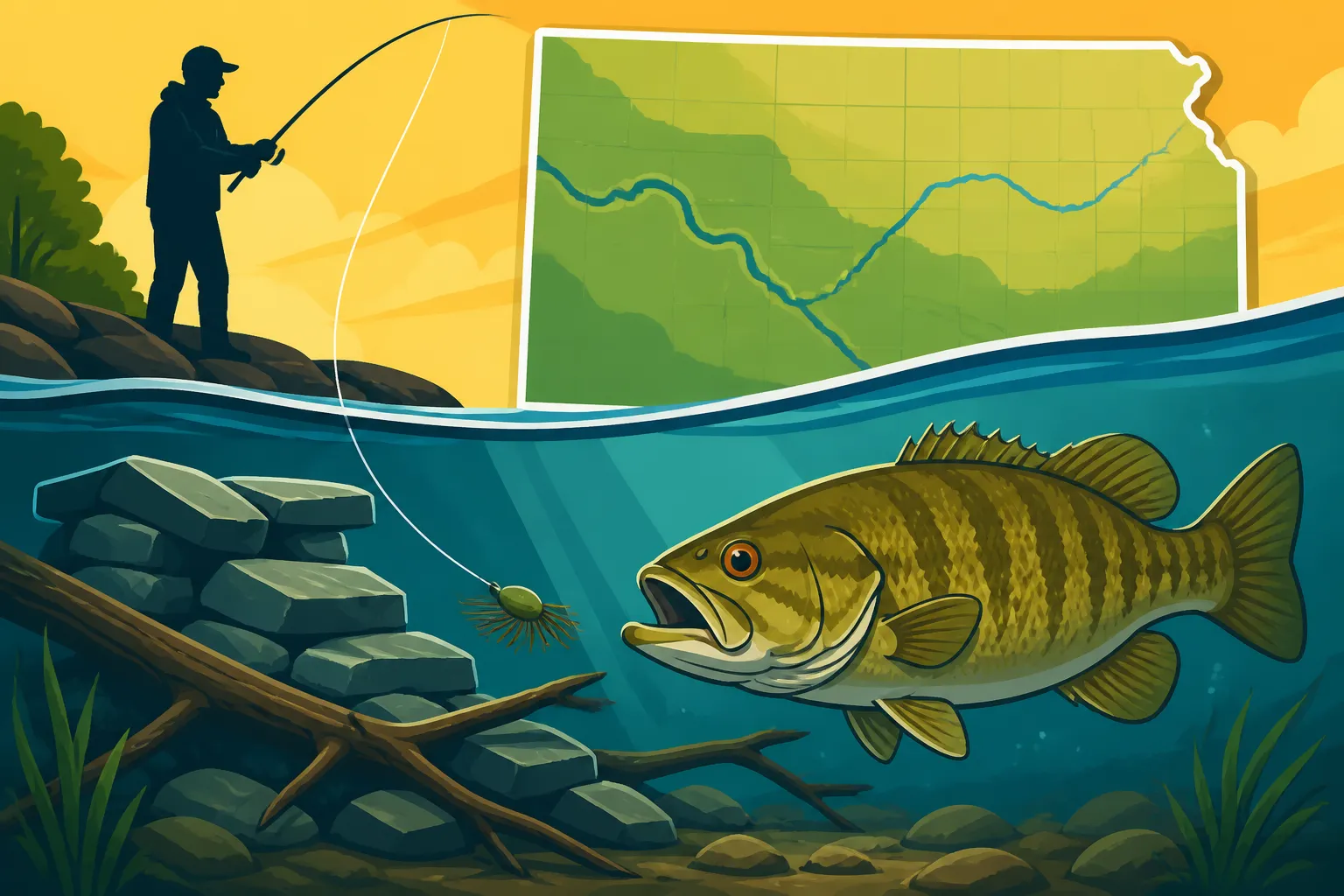
If you could only pick one type of structure to fish for smallmouth in Kansas, it would undoubtedly be rock. These fish are absolute rock hounds. Think natural rock outcroppings, giant boulders, sheer bluffs, and man-made riprap like dam faces, bridge abutments, and causeways. These areas are smallmouth magnets, providing everything a bronzeback needs.
Smallmouth utilize these rocky havens for several crucial reasons. First, they're fantastic ambush points. A smallmouth can tuck itself behind a large boulder or a jagged edge of riprap, waiting for an unsuspecting crayfish or baitfish to swim by. Second, these rocks offer protection from strong currents in rivers or wave action on reservoirs, allowing them to expend less energy. And third, rocks absorb and retain heat, providing a warmer environment in cooler water or offering shade in warmer water, helping them regulate their body temperature.
When you're looking at a rocky bank or point, don't just see a wall of rock. Look for variations. Are there different sizes of rock meeting? Is there a transition from rock to gravel, or rock to mud? These subtle changes are often key holding spots. Pay close attention to current seams around points or bridge pilings; smallmouth will sit just out of the main current, waiting for food to be swept by. Even a small change in rock size or a slight indentation can hold a trophy.
Ledges, Humps, and Drop-offs
While shore-based rocks are fantastic, many of the most productive smallmouth spots in Kansas's larger reservoirs are offshore – in the form of ledges, humps, and sharp drop-offs. These are often harder to find without good electronics, but they can hold massive schools of fish, especially during the summer and fall.
Ledges are essentially underwater shelves or abrupt changes in depth. Smallmouth love to patrol the edges of these ledges, either on top, along the face, or at the base, depending on the time of day and water conditions. They'll use these vertical breaks to ambush prey moving along the shelf or deeper water. Think of them as underwater highways for baitfish, and smallmouth are the highway patrol.
Humps are submerged hills or mounds that rise from the bottom, often surrounded by deeper water. These are gold mines for smallmouth, as they act as natural congregating points for baitfish, drawing in the predatory bass. The tops of humps, especially those with rock or gravel, are key feeding areas. Drop-offs, similar to ledges but often more severe, provide quick access to deep water and are crucial escape routes and ambush points, particularly when the sun is high and fish are seeking deeper cover. Learning How to Read Kansas Reservoir Structure is an invaluable skill for finding these hidden gems.
Submerged Timber and Brush Piles
Although smallmouth famously prefer rock, completely ignoring submerged timber and brush piles would be a mistake, especially in clear-water Kansas reservoirs. While not as dominant as rock, these woody structures can still hold quality smallmouth under the right conditions.
Fallen trees, old fence lines, and even intentional brush piles placed by fisheries management can provide valuable cover. Smallmouth might not be as "buried" in them as largemouth often are, but they will relate to the edges or the overhead canopy for shade and protection. These spots are often found in deeper coves, along creek channels, or on points where timber has washed in and settled. The key is to find wood that is in relatively clear water, as heavily stained or muddy water tends to deter smallmouth from woody cover.
The trick here is to fish these structures thoroughly but precisely. You're not usually pitching into the densest part of the brush; rather, you're targeting the open pockets, the limbs extending out, or the transition zone where the timber meets the bottom. A well-placed jig or Texas-rigged soft plastic can often tempt a smallmouth that's using the wood as an ambush point, offering a nice change of pace from constant rock crawling.
Essential Techniques and Lures for Structure Fishing
Now that you know where to look, let's talk about how to fish these structures. Smallmouth can be incredibly aggressive, but they can also be finicky, especially in clear water or after a cold front. Having a versatile tackle box and knowing when to switch up your approach is crucial. For a general overview of useful gear, you might want to consult our Kansas Fishing Gear Guide.
Finesse Presentations for Finicky Biters
When the bite gets tough, the water is super clear, or the smallmouth are just being stubborn, finesse tactics are your best friend. These techniques involve lighter lines, smaller baits, and slower presentations, designed to tempt even the most reluctant fish.
The dropshot rig is a standout finesse presentation for smallmouth, particularly when fishing deep ledges or humps. It allows your bait to hover tantalizingly off the bottom, right in the strike zone, while your weight maintains bottom contact. You can shake it, dead-stick it, or slowly drag it, keeping the bait in one spot for an extended period. This is deadly when smallmouth are holding tight to vertical structure or are suspended just above it. You'll want to use light fluorocarbon line, typically 6-10 lb test, and a small, sharp hook. Many anglers find a good selection of dropshot weights and hooks on Amazon.
Another incredibly effective finesse rig is the Ned Rig. This minimalist setup – a small mushroom-head jig paired with a short, buoyant soft plastic – is perfect for crawling over rocky bottoms. It mimics a crayfish or a small baitfish foraging on the bottom, and its buoyancy allows it to stand up enticingly when paused. The Ned Rig excels on rocky points, shallow humps, and even along riprap. It's subtle, incredibly effective, and often overlooked by anglers focused on bigger, flashier baits. These slow, methodical presentations require patience, but the reward of a hard-fighting smallmouth is well worth it.
Power Fishing for Aggressive Smallmouth
When smallmouth are actively feeding and feeling feisty, it's time to put away the finesse gear and grab something that makes a statement. Power fishing techniques allow you to cover water quickly and elicit aggressive reaction strikes from active fish.
Crankbaits are kings for covering water on rocky points, ledges, and humps. Deep-diving crankbaits are perfect for exploring those offshore structures, especially when you can "crash" them into the rocks. The deflection off the hard bottom often triggers an immediate strike. For shallower rock and riprap, squarebill crankbaits are ideal. They deflect off cover without getting hung up as easily, mimicking a fleeing baitfish or crawfish. Match your crankbait's size and color to the prevalent forage – shad patterns for open water, crawfish colors for rocky bottoms. You can often find a wide array of these specialized lures available for purchase on Amazon.
Jerkbaits are another fantastic power fishing option, particularly in cooler water or when smallmouth are suspended or slightly off the structure. The erratic, darting action of a jerkbait perfectly imitates a wounded baitfish, and the pauses can be absolutely irresistible. Cast parallel to a rocky point or over a submerged hump, then retrieve with a series of jerks and pauses, varying the cadence until you find what triggers a bite. Spinnerbaits, especially those with willow leaf blades for clear water or Colorado blades for stained conditions, are excellent for covering water quickly around points and shorelines, especially in the spring and fall. For more general lure ideas, check out our guide on the Best Lures for a Kansas Tackle Box.
Soft Plastics and Jigs for Close Combat
Sometimes, you need to get right in there and pick apart a specific piece of structure. This is where soft plastics and jigs shine, offering precise presentations that can mimic a wide variety of smallmouth forage.
Tube baits are classic smallmouth lures for good reason. They're incredibly versatile and effectively imitate crayfish, which are a major food source for smallmouth. You can fish them on a jig head, Texas-rigged, or even dropshotted. For fishing rocky bottoms, a jig head inserted into the tube, allowed to spiral and tumble, is incredibly effective. Cast it to a rocky point, let it sink, and then work it back with short hops and drags, pausing frequently. The subtle action of the tube is often too much for a smallmouth to resist.
Football jigs, dressed with a craw-style trailer, are another deadly option for dragging across rocky terrain. Their wide head design helps them crawl over rocks and pebbles without getting snagged, and the skirt and trailer provide an irresistible action that screams "crawfish!" These are best fished slowly, maintaining constant bottom contact, feeling for any subtle tick or pressure. Texas-rigged creature baits or worms can also be effective when smallmouth are relating to sparse wood or larger isolated boulders, allowing you to get through cover with minimal hang-ups. For more on the gear needed for these techniques, our Best Rods and Reels for Kansas Fishing guide has great recommendations.
Advanced Tips for Maximizing Your Success
Catching smallmouth consistently is about more than just knowing where to cast. It involves leveraging technology, understanding boat control, and constantly adapting to changing conditions.
Electronics and Mapping for Structure Fishing
In today's fishing world, good electronics are almost a prerequisite for consistently finding and catching smallmouth, especially on vast Kansas reservoirs. Learning to use your fish finder effectively can be a game-changer.
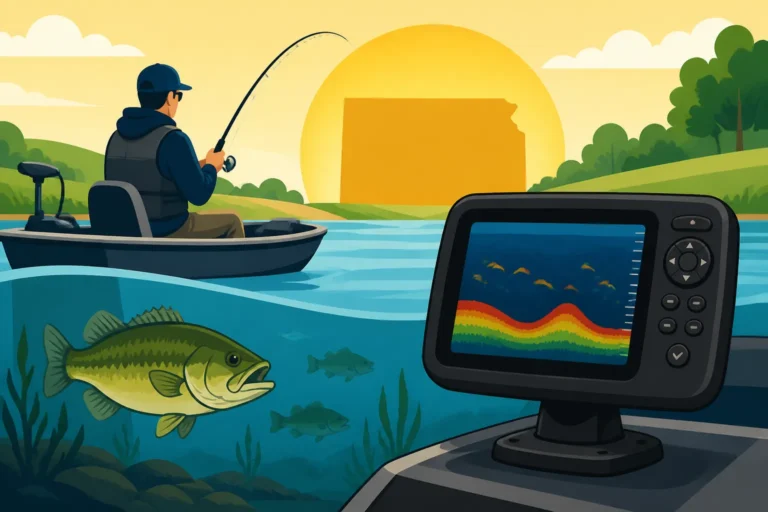
Side imaging and down imaging technologies on modern fish finders allow you to "see" underwater structure like never before. You can identify rocky ledges, submerged humps, brush piles, and even individual boulders that are invisible to the naked eye. Instead of blindly casting, you can use these tools to scan an area, pinpoint key features, and then precisely target them. Take the time to understand what you're seeing on your screen; those blobs and lines are telling you a story about what's below.
Coupled with your sonar, detailed lake maps (like those from Navionics or Garmin) are invaluable. These maps often show contours, old creek channels, roadbeds, and even marked brush piles. Before you even launch your boat, you can study these maps to identify potential smallmouth structures – deep points, humps that top out at a certain depth, or sharp breaks. Mark these potential hotspots as waypoints on your GPS, then use your sonar to confirm their presence and look for fish once you're on the water. This combination of mapping and live sonar is key to unlocking the secrets of offshore smallmouth.
Boat Positioning and Angle of Approach
How you position your boat and the angle at which you present your lure to the structure can make all the difference between a productive day and a frustrating one. Smallmouth are often wary, especially in clear water.
One common mistake is to cast directly at the structure from too close. This can spook fish. Instead, try to position your boat so you can cast past the structure and retrieve your lure through or along it. For instance, if you're fishing a rocky point, cast up onto the point and drag your lure down the face. If you're fishing a deep ledge, position your boat parallel to the ledge and cast along its length, keeping your bait in the strike zone for longer.
Your trolling motor is your best friend when fishing structure. Use it to maintain your position, especially in wind or current. Spot-Lock features on Minn Kota or Garmin Force trolling motors are incredibly helpful, allowing you to stay precisely on a spot while you pick apart a piece of structure. Learning to "troll motor" your boat slowly along a contour or a break line, constantly casting to the most promising areas, will significantly increase your catch rates. It's about stealth and precision, ensuring your lure looks as natural as possible to these sharp-eyed predators. For beginners, understanding these fundamentals is crucial; our Kansas Fishing Techniques for Beginners guide offers a good starting point.
Reading the Conditions and Adapting
Smallmouth bass are incredibly sensitive to environmental factors. Understanding how things like wind, current, and water clarity affect their behavior will help you adapt your approach and improve your success.
Wind is often a smallmouth angler's friend. A strong breeze can push baitfish against certain points or banks, creating a feeding frenzy. It also breaks up the water's surface, making it harder for fish to see your boat or your line. Pay attention to which side of a point the wind is blowing into; that's often where the active fish will be. However, too much wind can make boat control difficult, so it's a balancing act.
Current, whether it's from a river, a dam release, or even just wind-driven, is another major factor. Smallmouth will position themselves just out of the main current, in "current seams" or eddies, waiting for food to be swept to them. Learning to identify these subtle current breaks is critical, especially in river sections or near dam outflows. Present your lure so it drifts naturally into these ambush zones.
Finally, water clarity dictates lure color and presentation. In crystal-clear water, natural colors (greens, browns, clear with glitter) and more subtle presentations (finesse tactics) are usually best. If the water is slightly stained, you can often get away with bolder colors (chartreuse, orange) and more aggressive, noisy lures. Always start by observing the conditions, then adjust your lure choices and retrieve speeds accordingly. And don't forget to review the Kansas Fishing Regulations Explained before heading out, as rules can vary by water body.
Lure & Structure Pairing Guide
To help you get started, here's a quick guide on pairing popular smallmouth lures with the structures they fish best:
| Structure Type | Recommended Lures & Techniques | Ideal Conditions | Why It Works |
|---|---|---|---|
| Rocky Points/Riprap | Squarebill Crankbaits, Ned Rig, Tube Jigs | Spring, Fall, Windy Days | Mimics crawfish/baitfish. Deflects off rocks, triggering reaction strikes. Subtlety for pressured fish. |
| Deep Ledges/Drop-offs | Dropshot Rig, Deep-Diving Crankbaits, Football Jigs | Summer (midday), Fall Transition | Keeps bait in strike zone. Cranks dive to depth, bouncing off bottom. Jigs mimic crawfish on deep bottom. |
| Submerged Humps | Dropshot Rig, Deep Crankbaits, Jerkbaits | Summer, Fall, when baitfish are present | Targets suspended fish or those on top/sides of hump. Jerkbaits mimic injured baitfish over open water. |
| Isolated Boulders | Tube Jigs, Football Jigs, Texas-Rigged Creature Baits | Any time fish are relating tight to cover | Precise placement, mimics crawfish hiding near rock. Heavy enough to get through light snags. |
| Current Seams (Rivers) | Spinnerbaits, Jerkbaits, Swim Jigs | Moderate to Strong Current | Covers water quickly, attracts attention in moving water. Jerkbaits work well for suspended fish in current breaks. |
| Sparse Timber/Brush | Texas-Rigged Worms/Creatures, Swim Jigs | Clear Water, Warmer Temps | Weedless presentation to avoid snags, targets fish holding on edges or in pockets of wood. |
Disclaimer
Fishing conditions and regulations in Kansas can change. Always consult the latest Kansas Department of Wildlife, Parks and Tourism (KDWPT) fishing regulations before heading out on the water. This guide is for informational purposes only and should not replace official KDWPT resources. Enjoy your time on the water, and fish responsibly!