How Deep to Fish for Walleye in Summer
There's nothing quite like the frustration of heading out to your favorite Kansas lake in the heat of summer, expecting to fill your livewell with those delicious walleye, only to find the shallows empty. It's a common struggle for many anglers as the sun beats down and water temperatures rise, seemingly making the walleye vanish into thin air. But here's the secret: they haven't disappeared; they've simply gone deeper to find comfort and food. This guide will walk you through exactly how deep to fish for walleye in Kansas during the summer months, helping you crack the code and put more fish in the boat.
Understanding Walleye Behavior in Summer
Summer fishing for walleye in Kansas isn't like spring or fall fishing, where they might be cruising the banks. When the scorching Kansas sun turns our reservoirs into warm bathwater, walleye make a strategic retreat. It's all about comfort and survival for these finicky fish.
Why Walleye Go Deep
Think about it from a walleye's perspective. They are cold-blooded creatures, and while they can tolerate warmer water for short periods, prolonged exposure to high temperatures isn't ideal for them. The surface water in places like Milford Lake or Cheney Reservoir can easily hit the high 70s or even 80s during a typical Kansas summer. Down deeper, the water remains cooler and more stable, offering a much-needed reprieve from the heat.
Beyond just temperature, oxygen levels play a critical role. While surface waters can hold plenty of oxygen, the very bottom of deep lakes can become depleted, especially if there's a lot of decaying organic matter. Walleye will seek out that sweet spot where temperatures are cool enough, and oxygen is abundant. This often means suspending in the water column or relating to structure at specific depths, rather than hugging the bottom indiscriminately. Plus, their primary food sources—baitfish like shad or smaller panfish—also follow these same temperature and oxygen cues, making deeper water the ultimate buffet for a hungry walleye.
The Thermocline Explained
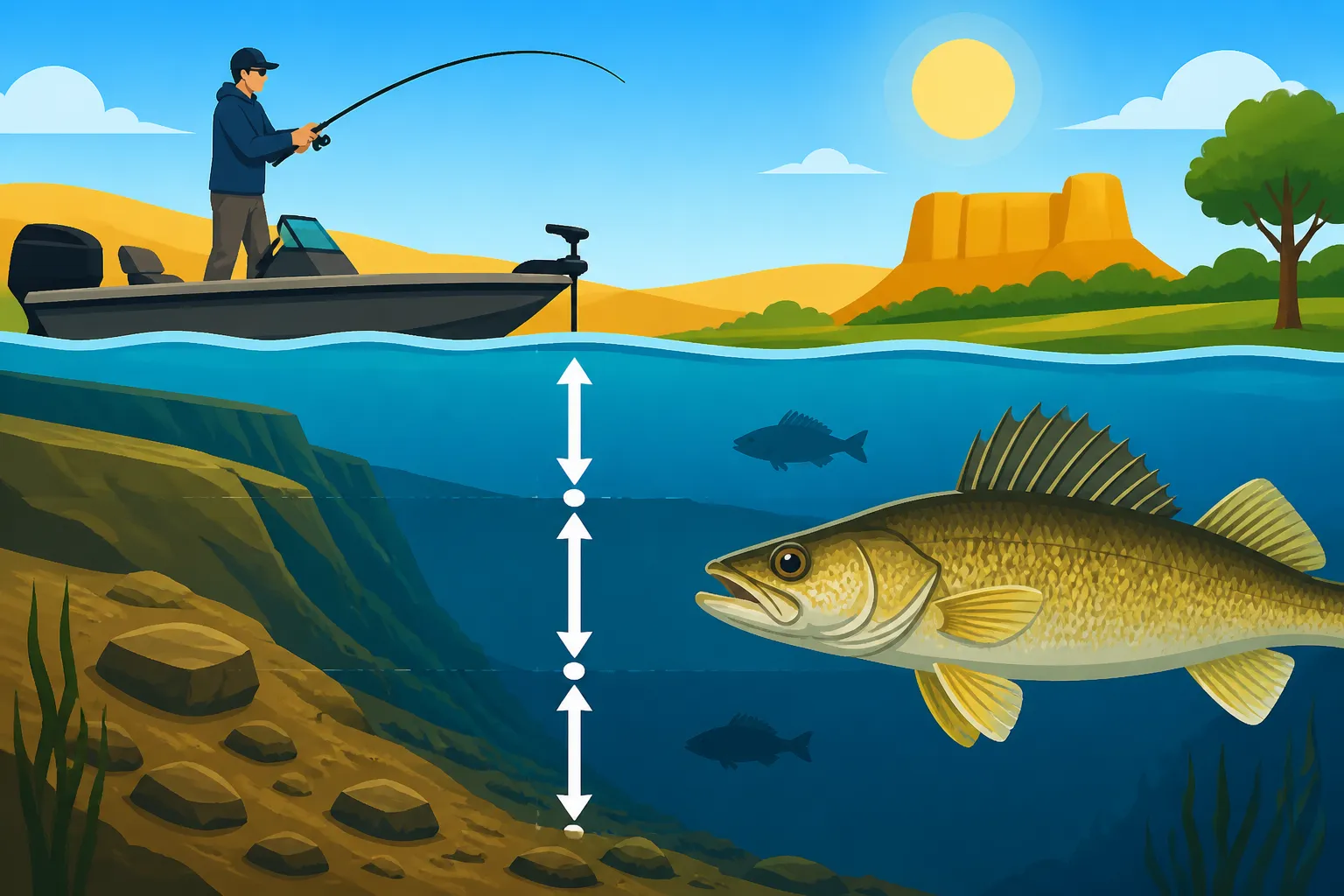
If you're going to consistently find walleye in summer, you absolutely need to understand the thermocline. Imagine the lake water as layers in a cake. The top layer, called the epilimnion, is warm and mixed by wind and currents. The bottom layer, the hypolimnion, is cold and dense. In between these two is the thermocline – a distinct horizontal layer where the water temperature changes rapidly. It's often where the magic happens for summer walleye.
Why is the thermocline so important? Because it often forms the upper boundary of cool, oxygenated water that walleye seek. Baitfish also congregate around this layer, as it provides a comfortable temperature zone and often concentrates plankton or other food sources. Walleye will frequently be found just above, within, or just below the thermocline, depending on the specific lake, time of day, and how strong the thermocline is. A good fish finder can help you identify this critical depth, often showing up as a distinct, dense line on your screen. Knowing where the thermocline sits can instantly narrow down your search area, transforming a vast reservoir into a much more manageable fishing ground.
Identifying Prime Structures
Walleye are rarely just suspended in open water without a reason; they love structure. Even when deep, they'll relate to underwater features that offer ambush points, cover, or pathways for baitfish. In summer, these prime structures become even more crucial because they concentrate fish in otherwise expansive areas.
Look for submerged points that extend far out into the lake, underwater humps or islands, deep creek channels, and significant changes in depth like ledges or drop-offs. These features act like highways and neighborhoods for baitfish, and consequently, for walleye. For instance, a long, tapering point might have walleye holding at different depths along its sides, following schools of shad. A steep break line near a deep channel could be an ideal ambush spot. In lakes such as El Dorado Lake, understanding how walleye utilize these deeper structures can be the difference between a tough day and a successful outing. Don't forget about flooded timber or brush piles in deeper water; these can be walleye magnets if they are in the right temperature and oxygen zone.
Tools and Techniques for Locating Deep Walleye
Finding deep walleye isn't just about guessing; it requires the right tools and a strategic approach. Modern angling technology, combined with a keen eye for environmental clues, will significantly increase your success rate.
The Indispensable Fish Finder
If you're serious about catching summer walleye in Kansas, a quality fish finder isn't a luxury; it's a necessity. This piece of equipment is your window into the underwater world, showing you depth, bottom contours, structure, baitfish schools, and, most importantly, the walleye themselves. Modern units with down imaging and side imaging capabilities are incredibly powerful for identifying subtle changes in structure and pinpointing fish.
When searching for walleye, pay close attention to several key things on your screen. First, identify the thermocline; it often appears as a distinct band. Then, look for baitfish – they'll show up as clouds of dots or small arches. Walleye will typically be nearby, often appearing as larger, more defined arches or blobs, sometimes suspending right below the bait. Scan submerged points and humps carefully, looking for fish holding tight to the bottom or slightly above it. Many anglers find their next fish finder on sites like Amazon, where they can read reviews and compare models before making a purchase. Remember, learning to interpret what your fish finder is showing you takes practice, but it's an investment that pays off handsomely. You can also learn more about specific models in a Kansas Fish Finder Buying Guide.
Reading Your Environment
While technology is great, never underestimate the power of observation. The surface of the water, and even the surrounding land, can offer clues to what's happening beneath. Pay attention to contour lines on a topographical map, which indicate sharp drop-offs or subtle changes in depth. These maps are invaluable for pre-fishing planning.
Above water, look for diving birds or surface disturbances that might indicate schooling baitfish. While walleye are deeper, sometimes actively feeding baitfish can still give away their presence. Observe the wind direction and strength; wind can create current, which can push baitfish and oxygenated water, influencing where walleye position themselves. Even subtle changes in water color can offer hints; clearer water generally means fish will be deeper, especially on sunny days, while slightly stained water might allow them to move a bit shallower. Understanding the Weather Patterns and Kansas Fishing Success can greatly enhance your approach.
Effective Deep Water Presentations
Once you've located walleye in deeper water, you need to present your bait in a way that entices them to bite. Trolling is often king for summer walleye in Kansas. By slowly pulling crankbaits or spinner rigs at specific depths, you can cover a lot of water and keep your lure in the strike zone for longer periods. Use lead core line, diving planers, or downriggers to get your lures to the exact depth where fish are holding. Crankbaits that dive to specific depths, often detailed on the packaging, are excellent choices.
Jigging is another effective method, particularly when you've pinpointed a tight school of fish on a hump or break line. Vertical jigging with heavy jigs tipped with plastics or live bait (like a large shiner or nightcrawler) can be deadly. Drop your jig directly onto the fish you see on your sonar and work it with subtle lifts and drops. For suspended fish, slip bobbers can be rigged to present live bait at a precise depth, allowing you to patiently wait for a bite without the lure rising or falling out of the strike zone. Don't forget to check out Kansas Walleye Fishing Techniques for more detailed strategies.
Summer Walleye Depth by Conditions and Lake Type
The "how deep" question isn't a single answer; it fluctuates based on a variety of factors, including water clarity, the specific body of water, and even the time of day.
Clear vs. Murky Water
Water clarity has a massive impact on how deep walleye will hold. In Kansas lakes with exceptionally clear water, like Wilson Lake, walleye are much more light-sensitive. They will often retreat to deeper, darker water during the day, seeking refuge from the bright sun. Here, you might find them in 25-40 feet of water, even suspending over deeper basins. Early mornings, late evenings, or heavily overcast days might see them move slightly shallower, but typically still deeper than in stained water.
Conversely, in murkier or more stained lakes, walleye tend to be less affected by direct sunlight. The reduced light penetration allows them to hold shallower during the day without discomfort. In these conditions, you might find them in 15-25 feet, or even shallower if there's significant cloud cover or during low-light periods. The turbidity essentially acts like a natural dimmer switch, giving them more options. Knowing how the fish react to light in different water conditions is crucial for choosing your starting depth.
Reservoir Specifics
Kansas is home to numerous fantastic walleye reservoirs, and while they share similarities, each has its own quirks that can affect walleye depth.
- Milford Lake: As the largest lake in Kansas, Milford Lake offers vast areas of deep water and significant structure. During summer, walleye here often relate to the river channel, main lake points, and humps, particularly where they intersect with the thermocline. Depths of 20-35 feet are common for walleye holding on or near structure, or suspending over even deeper water. Check out our Milford Lake Fishing Guide for more specifics.
- Cheney Reservoir: Known for its excellent walleye fishery, Cheney Reservoir is shallower on average than Milford, but still has plenty of deeper areas. Walleye in Cheney might not go quite as deep as in Milford, but they'll still gravitate to the cooler, oxygenated zones. Depths of 18-28 feet are often productive, especially around the dam area, submerged islands, and main lake points. They often follow schools of shad. Our Cheney Reservoir Fishing Guide offers more in-depth information.
- Wilson Lake: Famous for its clear water, walleye in Wilson Lake will typically be among the deepest in Kansas during summer. Expect to target them in 25-40 feet, often relating to steep drop-offs, deep rocky points, and submerged timber. The clear water here makes precise depth control and stealth even more critical.
Always remember that these are general guidelines. The best approach is to start with these depths, and then use your fish finder and adjust based on what you see.
Time of Day and Weather
Just like us, walleye's behavior is influenced by the clock and the sky. During bright, sunny days, walleye will almost invariably be deeper, seeking refuge from the intense light. They might be tightly hugging the bottom of a deep ledge or suspending in the middle of the water column over very deep water. In these conditions, focusing on depths between 25-40 feet is a good starting point, especially from late morning through afternoon.
As dusk approaches or on heavily overcast days, that's when walleye can sometimes become more adventurous. The reduced light penetration allows them to move shallower, potentially moving onto humps or flats that were too bright during the day. In these low-light conditions, they might be found in 15-25 feet of water, actively feeding. Similarly, during a heavy chop or a storm front (before the actual storm hits), the agitated water can break up light and create a feeding frenzy, potentially pulling fish shallower for a brief period. However, always prioritize safety during stormy weather. Knowing the Best Time of Day to Fish in Kansas can help you plan your summer walleye attacks.
Essential Gear for Deep Water Walleye Fishing
Successfully targeting deep walleye in the summer requires more than just knowing where they are; you need the right tools to get your baits down to them and effectively present them.
Rods, Reels, and Line
When you're fishing 20, 30, or even 40 feet down, your standard panfish rod isn't going to cut it. You need gear that can handle the weight of heavy jigs or diving crankbaits, detect subtle bites at depth, and have the backbone to pull up a strong walleye.
For trolling, a medium-heavy action rod, around 7 to 8 feet long, with a moderate or moderate-fast taper, is ideal. This allows the rod to absorb the shock of a strike without pulling the lure out of the fish's mouth, especially when using lead core or large diving crankbaits. Pair this with a sturdy baitcasting reel capable of holding a good amount of line. Line choice is crucial; braided line (like 20-30 lb test) with a fluorocarbon leader (10-15 lb test) offers excellent sensitivity and strength. The braid has no stretch, allowing you to feel every bump and subtle bite, even at extreme depths. Alternatively, for deep-diving crankbaits without added weights, a good quality fluorocarbon main line can also be effective due to its low stretch and invisibility underwater. You can often find a great selection of these specialized rods and reels on Amazon.
For vertical jigging, a sensitive medium-light to medium action spinning rod, 6 to 7 feet long, is preferred. Again, braided line with a fluorocarbon leader is a top choice for maximum sensitivity to detect those often-light walleye bites. The right Best Rod and Reel Combo for Walleye can make all the difference.
Baits and Lures
The lure selection for deep walleye in summer revolves around getting to the right depth and imitating the walleye's natural forage.
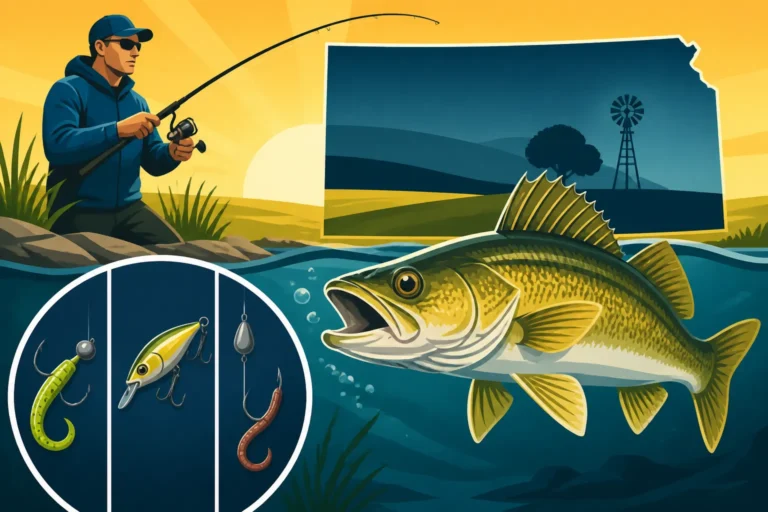
- Deep-Diving Crankbaits: These are absolute workhorses for trolling. Look for models designed to reach depths of 20, 30, or even 40 feet. Colors that imitate shad, perch, or crayfish are often highly effective. Think chrome and blue, chartreuse, or firetiger. Experiment with different sizes and dive curves until you find what the walleye are keying into. The vibration and flash of a crankbait are excellent for attracting attention in deeper, darker water.
- Jigs: Heavy jigs (3/8 oz to 1 oz or more) are essential for vertical presentations. Tip them with soft plastics like grubs, paddle tails, or creature baits. Live bait, such as a large shiner minnow, nightcrawler, or even leeches, are classic walleye attractors when threaded onto a jig head. The key is to get your jig to the bottom quickly and present it precisely where the fish are holding.
- Spinner Rigs: Often paired with live bait (especially a full nightcrawler), spinner rigs can be trolled or drifted slowly near the bottom. The blade provides flash and vibration, while the live bait offers scent and a natural presentation. Use bottom bouncers or inline weights to get these rigs down to the desired depth.
- Blade Baits and Spoons: These lures offer a lot of flash and vibration and can be jigged vertically or cast and retrieved over deep structure. Their erratic action can often trigger a reaction strike from otherwise sluggish walleye.
Having a good selection of these in your tackle box, purchased from retailers like Amazon or your local bait shop, will prepare you for varying conditions and walleye preferences.
Summary of Summer Walleye Depths
To help you get started, here's a quick reference table for general summer walleye depths in Kansas:
| Condition | Typical Depth Range (Feet) | Notes |
|---|---|---|
| Clear Water, Sunny Day | 25-40+ | Walleye are light-sensitive, seek deepest cover. |
| Clear Water, Overcast | 20-35 | Slight movement shallower, but still light-sensitive. |
| Stained Water, Sunny Day | 18-30 | Turbidity offers cover, allows slightly shallower holding. |
| Stained Water, Overcast | 15-25 | Can be active shallower due to reduced light. |
| Early Morning/Late Evening | 15-30 | Walleye may rise to feed, but often still near deep breaks. |
| Deep Structure (Humps/Ledges) | Directly on or near the thermocline, often 20-35 feet | Find the break where baitfish are concentrated. |
| Suspended Walleye over Deep Water | Within or just above the thermocline, often 20-35 feet | Look for baitfish schools on your fish finder. |
Remember, these are starting points. Always let your electronics and the fish tell you where they're truly holding.
It can be a challenge to adjust your game plan for summer walleye in Kansas, but once you understand their deep-water habits and arm yourself with the right tools and techniques, you'll find them again. Don't be afraid to experiment with different depths and presentations. Good luck out there, and tight lines!
Disclaimer
This article is for general informational purposes only and does not constitute professional advice. Laws, prices and regulations vary by location and change over time. Consult a qualified professional for guidance on your specific situation.