How to Fish a Drop-Off for Walleye
Let's be honest, walleye can be some of the most frustrating fish to catch, especially when they decide to hang out in those tricky spots. You're out on a big Kansas reservoir, scanning your sonar, and you see them – those tell-tale arches clustered along a sudden depth change. It's exhilarating, then immediately daunting: how do you get your lure down there, present it just right, and actually get a bite? This guide is going to peel back the layers on fishing those often-elusive walleye holding on drop-offs, giving you the practical strategies and tips you need to turn those sonar marks into fish in your livewell.
Understanding Walleye Behavior Around Drop-Offs
Walleye are masters of ambush, and a drop-off is like their personal, underwater highway and hunting ground rolled into one. It’s not just a random change in depth; it's a critical piece of structure that dictates their movement, feeding patterns, and even how they react to pressure. If you can understand why they use drop-offs, you're halfway to figuring out how to catch them.
Why Drop-Offs are Walleye Magnets
Think of a drop-off as a prime piece of real estate in the underwater world. It offers everything a walleye could want: cover from direct sunlight, a place to ambush unsuspecting baitfish migrating from shallow flats to deeper water, and a quick escape route to deeper, cooler, more oxygenated water when conditions change. For many Kansas lakes, where vast flats can feel a bit featureless, a sharp breakline or a subtle contour change is a magnet for all kinds of fish, especially walleye. They'll use the shallow side as a feeding platform and then quickly slip over the edge into the deeper water to rest or digest. It’s the ultimate hide-and-seek arena, giving them the upper hand against both predators and prey. The thermocline, that layer where water temperature changes rapidly, often sits along or near these drop-offs in summer, making them even more appealing for cool-water species like walleye.
Seasonal Movements and Preferred Depths
Walleye don't just sit on a drop-off; their exact position and activity level will vary wildly with the seasons, water temperature, and time of day. This is where understanding their yearly cycle becomes crucial.
- Spring: As water temperatures rise, walleye start moving shallower to spawn. Post-spawn, they often linger on the first significant drop-offs adjacent to their spawning grounds. They're recovering, a bit lethargic, but will feed. Look for them holding on the shallower side of the drop, especially in the mornings and evenings, and deeper during bright midday sun. Early spring often sees them in the 10-20 foot range, but they might push shallower after a warm rain or on an overcast day.
- Summer: This is when drop-offs truly shine. As surface temperatures climb, walleye retreat to deeper, cooler water. They'll use the deep side of main lake points, channel bends, and submerged humps with sharp breaks. During the day, you might find them suspended over the deep side of a 20-35 foot drop-off, or glued to the very bottom on the deep edge. As evening approaches, they often slide up the drop to the shallower lip (say, 15-20 feet) to feed on baitfish migrating into the shallows. Understanding How Deep to Fish for Walleye in Summer is key here.
- Fall: As water temperatures cool again, walleye become incredibly active, feeding aggressively to build up fat reserves for winter. They'll be found all along drop-offs, often relating to schools of baitfish. You might find them shallower early in the fall, mirroring spring patterns, but as water temps drop further, they'll hold to those deeper breaks, especially those near primary forage areas. They might suspend aggressively over the deep water or hug the bottom.
- Winter (Ice Fishing): Even under the ice, drop-offs are crucial. Walleye will relate to sharp breaks leading into basins, often positioning themselves on the deep edge where they can pick off anything moving by. They might be less active, but they'll still feed. Look for them at various depths along the drop, sometimes suspended a few feet off the bottom.
No matter the season, the key is to remember that walleye will often be near the baitfish, and baitfish often relate to these depth changes.
Essential Gear and Rigging for Kansas Drop-Off Walleye
Having the right tools for the job can make a world of difference when you're trying to coax a finicky walleye off a drop-off. You need gear that allows you to feel subtle bites, control your presentation in varying depths, and handle a decent-sized fish once it hits.
Rods, Reels, and Line Choices
The ideal setup provides sensitivity, power, and the ability to manage line effectively in changing depths.
- Rods: For drop-off fishing, especially with jigs or live bait rigs, a medium-light to medium power rod, typically 6'6" to 7'6" in length, is a solid choice. Look for a fast or extra-fast action tip. This tip sensitivity allows you to feel those delicate walleye "taps" or the subtle weight change when they pick up your bait, while the backbone gives you the leverage to set the hook and fight the fish. If you're primarily trolling, a slightly longer, more moderate action rod might be preferred to absorb the shock of a strike and keep fish buttoned up. For those times you need specialized equipment, a quick search on Amazon can often yield great results for specific rod types.
- Reels: A quality spinning reel in the 2500-3000 size range is excellent for jigging and casting lighter presentations. It offers smooth drag, good line capacity, and easy handling. If you're trolling with heavier baits or using baitcasting setups, a low-profile baitcaster or a level-wind reel designed for trolling will be more appropriate. Ensure your drag system is smooth and reliable, as walleye have soft mouths and can tear off if the drag is sticky.
- Line: This is where things get interesting, and often where anglers make or break their success.
- Braided Line: Many serious walleye anglers swear by braided line for its incredible sensitivity and zero stretch. A 8-15 lb test braid is common. The lack of stretch means you feel every tick, every rock, and every subtle bite, even in deep water. Because it's so visible, it's almost always paired with a fluorocarbon leader (6-12 lb test, 3-6 feet long) tied with an FG or Albright knot. The leader provides invisibility, abrasion resistance against rocks, and a bit of shock absorption.
- Fluorocarbon Line: For some presentations, especially clear water or when fish are extremely spooky, a straight fluorocarbon line (8-12 lb test) can be very effective. It's nearly invisible underwater and has less stretch than monofilament, giving you a good balance of sensitivity and stealth. It does have more memory than braid and can be a bit stiffer.
- Monofilament Line: While not as popular for deep jigging due to its stretch, monofilament (8-12 lb test) still has its place, particularly for trolling or when using slip bobbers. Its stretch can act as a shock absorber, preventing hooks from pulling out. However, feeling subtle bites in 20+ feet of water can be tough with mono.
Lures and Baits for Drop-Off Success
The type of lure or bait you choose depends on the season, the depth, and the activity level of the walleye. Always have a variety on hand.
- Jigs: Jigs are arguably the most versatile lure for drop-off walleye. Heavy jigs (1/4 to 3/4 ounce or even heavier in current/wind) tipped with soft plastics (grubs, paddle tails, minnow imitations), live minnows, or nightcrawlers are deadly. The weight helps you get down quickly and maintain bottom contact. Colors like chartreuse, white, orange, and natural baitfish patterns are popular.
- Live Bait Rigs: A classic setup, especially for lethargic fish. A simple slip sinker rig (egg sinker, bead, swivel, fluorocarbon leader, hook) fished with a lively minnow, shiner, or nightcrawler is hard to beat. The key is to keep it slow, just ticking the bottom as you drift or slowly troll along the drop. This is especially effective in Kansas lakes known for big walleye.
- Crankbaits and Stickbaits: Trolling crankbaits that dive to the depth of the drop-off is a fantastic way to cover water and find active fish. Deep-diving lipped crankbaits or suspending stickbaits can be retrieved or trolled along the contours of the drop-off. Experiment with different wobble actions and colors. Best Lures for Kansas Walleye will often include a variety of these.
- Blade Baits: These vibrating metal lures are excellent for vertical jigging on drop-offs, especially when fish are aggressive. The intense vibration calls in fish, and the fluttering action on the fall can trigger reaction strikes.
- Spoons: Similar to blade baits, vertical jigging spoons are very effective. Their erratic flutter on the fall mimics a dying baitfish, and they can be tipped with a minnow head or wax worm for added appeal.
- Soft Plastics: Grubs, tubes, swimbaits, and worm imitations rigged on jig heads are highly effective. They offer a wide range of sizes, colors, and actions. The key is to match the hatch and present them naturally. Don't be afraid to experiment with different soft plastic body styles you can easily find on Amazon.
Mastering Techniques for Fishing Kansas Drop-Offs
Fishing drop-offs isn't just about dropping a line; it's about precision, feel, and adapting your presentation to what the walleye are telling you. Each technique has its optimal conditions and nuances.
Vertical Jigging and Finesse Tactics
Vertical jigging is often the go-to method when you've pinpointed walleye on your electronics, or when they're tightly grouped on a specific part of the drop.
- The Basic Drop: Position your boat directly over the drop-off, or slightly shallower or deeper, depending on where the fish are holding. Drop your jig straight down until it hits the bottom. The goal is to keep your line as vertical as possible.
- The Lift-Drop: Once on the bottom, lift your rod tip 6-12 inches, then let the jig fall back to the bottom on a semi-slack line. The bite often occurs as the jig falls or just as it touches down. Pay close attention to your line – any twitch, pause, or sudden slack could be a bite. This is where that sensitive braided line really shines.
- Controlled Drift/Troll: Instead of anchoring, a popular method is to use your trolling motor or a drift sock to slowly move along the contour of the drop-off while jigging. This allows you to cover more ground while maintaining that vertical presentation.
- Finesse for Finicky Fish: When walleye are lethargic, you need to slow way down. Use lighter jigs, smaller plastics, or tip your jig with a minnow head or a piece of nightcrawler. Barely lift the jig off the bottom, or just drag it slowly. Sometimes, simply holding it still a few inches off the bottom is all it takes. These "finesse" situations often happen after a cold front or during bright, sunny days.
Trolling the Edges
Trolling is an excellent strategy for covering extensive stretches of drop-offs, especially on large Kansas reservoirs like Milford Lake or Cheney Reservoir, and for finding scattered schools of active walleye.
- Contour Trolling: The most common approach is to troll parallel to the drop-off, keeping your lures running consistently at the depth where you expect walleye to be. This requires constant adjustment with your boat's steering to follow the contour. Use your electronics to stay on track.
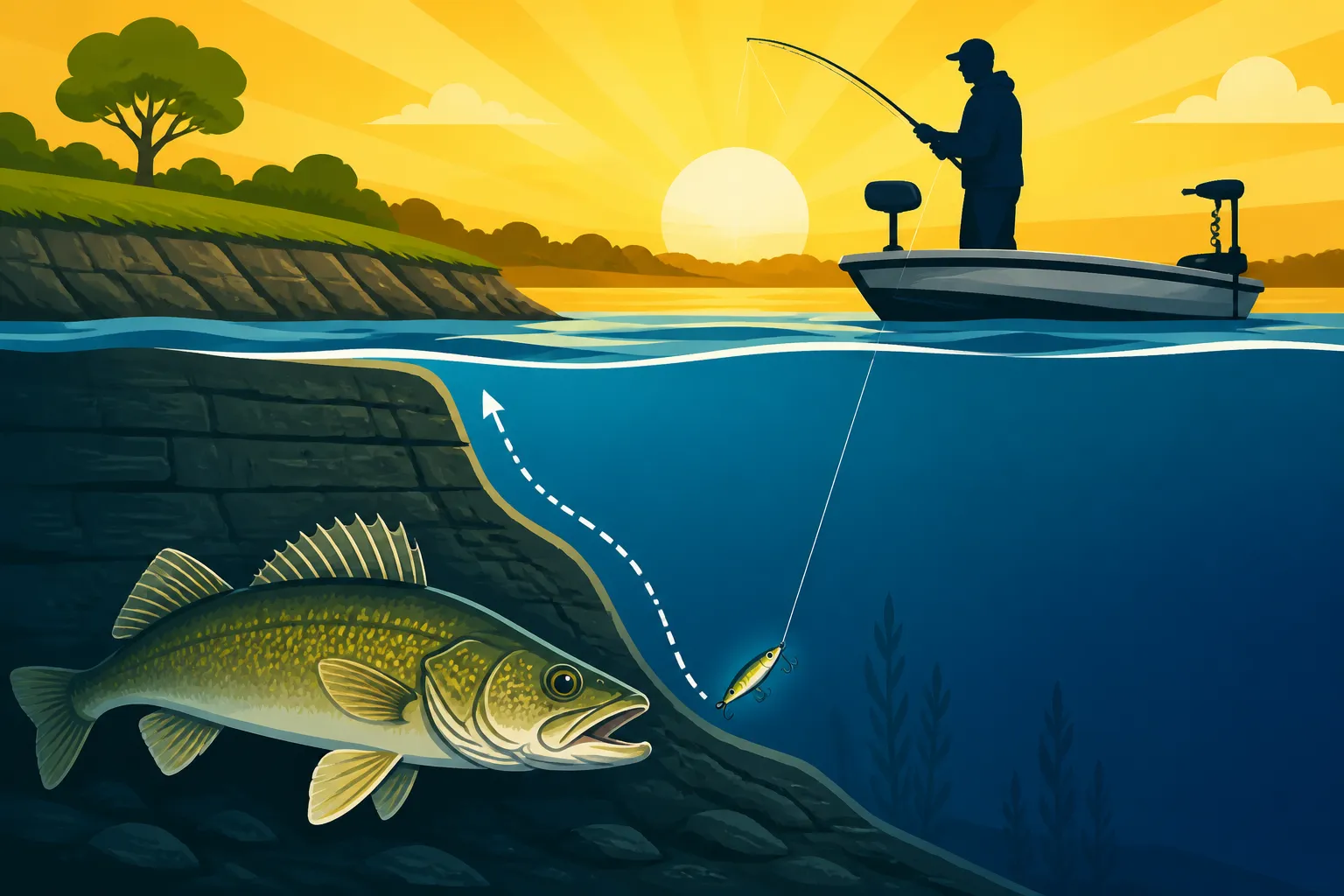
- Crossing the Break: Another effective tactic is to troll crankbaits that dive from the shallower lip down into the deeper water, or vice-versa. This allows your lure to "climb" and "fall" through the water column, imitating a baitfish struggling or fleeing, which can trigger aggressive strikes.
- Lead Core and Downriggers: For deeper walleye on drop-offs, especially in the summer, lead core line or downriggers are invaluable for getting crankbaits or spoons down to precise depths, even 30-40 feet or more. This allows you to present lures to fish holding deep on the face or at the base of a drop.
- Speed and Lure Selection: Experiment with trolling speeds, typically 1.5-3 mph, and a variety of crankbait colors and sizes. Match your lure's diving depth to the depth of the fish you're targeting. Pay attention to water clarity; brighter colors like firetiger or chartreuse often work well in stained water, while more natural patterns are better in clear conditions. Kansas Walleye Fishing Techniques often details specific trolling strategies.
Casting and Retrieve Strategies
While vertical jigging and trolling are primary, casting can also be effective, especially when walleye are pushing bait up onto the shallower portions of a drop-off or near distinct features like submerged timber or rock piles.
- Shoreline to Deep: Cast jigs or crankbaits from shallow water out over the deep side of the drop, and work them back. This allows your lure to swim down the face of the break, covering various depths.
- Parallel Casts: If you can position your boat parallel to the drop-off but slightly off of it (either shallower or deeper), casting along the break line can be productive. This keeps your lure in the strike zone for a longer period.
- "Snap Jigging" with Blade Baits: Cast a blade bait out, let it sink to the bottom, then give your rod a sharp snap upwards (6-10 inches), letting it fall back on a controlled slack line. This creates an erratic, aggressive action that can draw strikes from a distance.
- Weighted Soft Plastics: Rig paddle tail swimbaits or larger grubs on heavy jig heads and cast them, allowing them to sink to the desired depth before retrieving. Vary your retrieve speed and add pauses. This can be great for targeting walleye on the deeper, flatter areas adjacent to a drop.
| Technique | Ideal Conditions | Lure/Bait Examples | Key Advantage |
|---|---|---|---|
| Vertical Jigging | Pinpointed fish, calm water, light current | Jigs (minnow, soft plastic), blade baits, spoons | Precision, feel subtle bites in deep water |
| Trolling | Scattered fish, covering large areas, wind | Deep-diving crankbaits, stickbaits, spoons | Efficiently covers water, triggers reaction |
| Live Bait Rigging | Finicky fish, slow bite, clear water | Minnows, nightcrawlers, leeches | Natural presentation, appeals to cautious fish |
| Casting | Shallow-side feeding, specific structure | Jigs, swimbaits, blade baits, suspending jerkbaits | Targeted approach, can cover varied depths |
Locating and Interpreting Drop-Offs on Kansas Lakes
You can have the best gear and techniques in the world, but if you're not fishing where the walleye are, it's all for naught. Finding the right drop-off is paramount, and your electronics are your best friends here.
Using Your Electronics Effectively
Modern fish finders are incredibly powerful tools for identifying and interpreting underwater structure. Learning to use them effectively is a game-changer.
- Side Imaging/Side Scan: This technology literally paints a picture of the bottom to the sides of your boat. Use it to scan for extended drop-offs, rock piles on the break, submerged timber, or even schools of baitfish holding along the edge. Once you spot something interesting, you can then move over it to get a detailed 2D sonar or Down Imaging view. Look for irregularities along otherwise smooth breaks; these often hold fish.
- Down Imaging/Down Scan: This provides a photo-like view directly beneath your boat, showing you the exact profile of the drop-off, individual rocks, and even fish relating tightly to the bottom. It helps confirm what you see on Side Imaging and gives you a better idea of how steep the drop actually is.
- 2D Sonar: This traditional sonar is excellent for marking fish arches, bait balls, and quickly identifying depth changes. Learn to differentiate between a walleye on the bottom and one suspended a few feet off. Pay attention to how fish relate to the contours as you cross them.
- Mapping/GPS: High-definition mapping chips are invaluable for drop-off fishing. They show contour lines, highlighting subtle breaks and major depth changes. Use your GPS to mark waypoints on productive sections of drop-offs, or to save your troll lines. This allows you to return to productive spots with precision. Many anglers look for depth contours that are tightly packed, indicating a steep drop, or areas where contours "pinch" together, suggesting a funnel for baitfish. For detailed Kansas lake maps, online resources or even some fishing apps can be incredibly helpful.
Reading the Shoreline and Bottom Transitions
You don't always need advanced electronics to find promising drop-offs. Sometimes, the land gives you clues to what's happening underwater.
- Points: A point on the shoreline often extends underwater, forming a submerged point or ridge with associated drop-offs on its sides. These are classic walleye spots. The longer and more gradually sloping the point, the more subtle the break, but often the more expansive the walleye habitat.
- Bluffs and Steep Banks: If you see a steep cliff or bluff on the shoreline, it's a good bet that the bottom drops off sharply beneath it. These areas can hold deep walleye, especially during the summer.
- River Channels: In reservoirs that are flooded river valleys (like most major Kansas reservoirs), the old river channel provides a natural, deep drop-off that walleye will follow. Look for bends in these channels, where current might concentrate baitfish.
- Bottom Composition Changes: While harder to detect without electronics, walleye are often attracted to changes in bottom composition. A transition from a soft, silty bottom to a hard, rocky bottom along a drop-off can be a hotspot. These harder spots often hold crayfish and other invertebrates, attracting baitfish and then walleye. Keep an eye on your sonar for different return signals indicating these changes. Remember, many of the best fishing spots in Kansas, such as Milford Lake Fishing Guide or Wilson Lake Fishing Guide, are riddled with these kinds of features.
Always remember that fishing for walleye on drop-offs is a dynamic process. Conditions change, fish move, and what worked yesterday might not work today. Be patient, pay attention to the details, and don't be afraid to experiment with different depths, lures, and presentations. The reward of a feisty walleye from the depths of a Kansas reservoir is well worth the effort.
Disclaimer
This article is for general informational purposes only and does not constitute professional advice. Laws, prices and regulations vary by location and change over time. Consult a qualified professional for guidance on your specific situation.