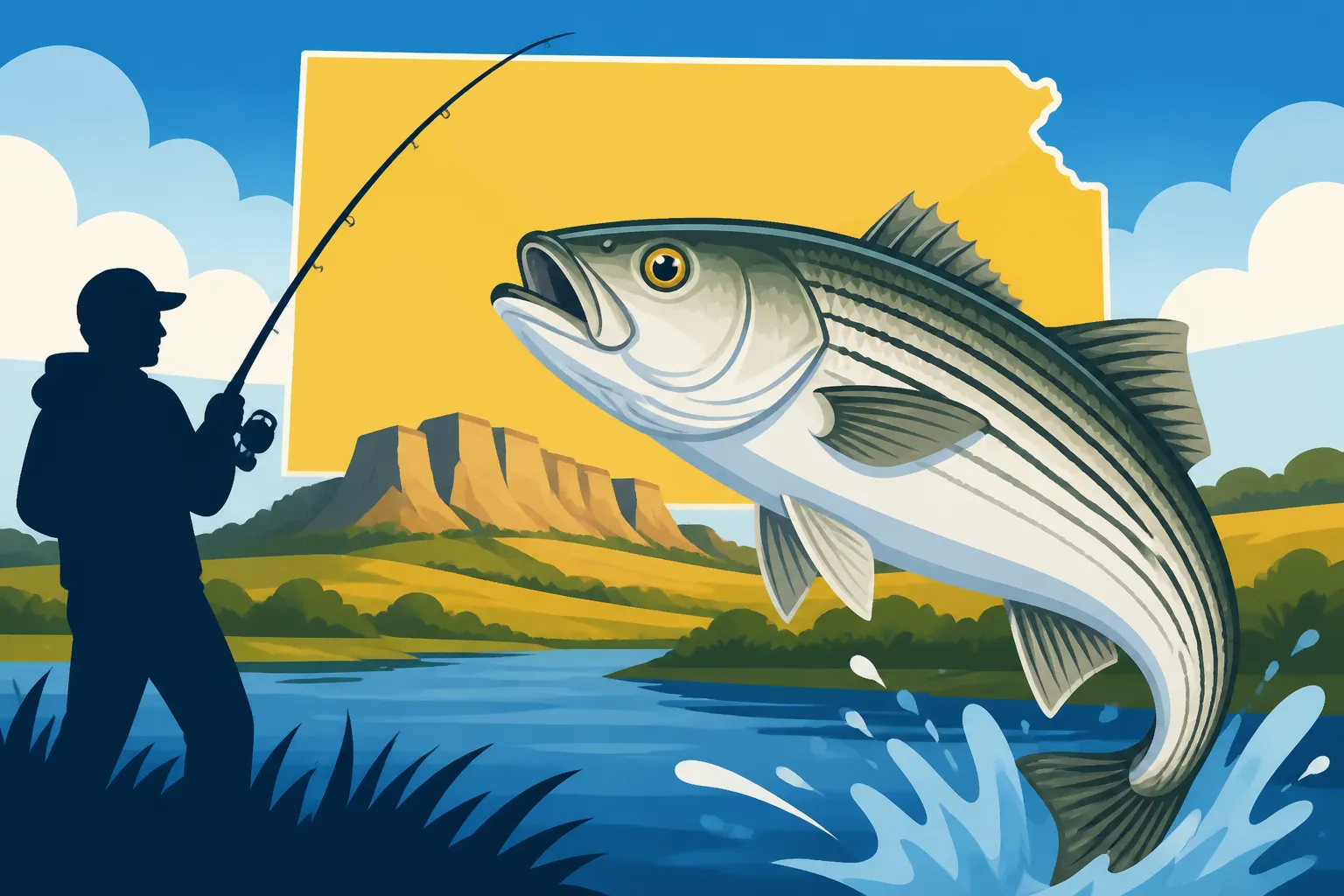
Kansas Striped Bass Facts
There’s nothing quite like the raw power of a striped bass on the end of your line, especially here in Kansas. Many anglers might associate these hard-fighting fish with coastal waters, but we've got a fantastic population right in our landlocked state! This guide will dive deep into everything you need to know about Kansas striped bass, from how to identify them to where they hang out and the best ways to hook into one of these freshwater giants. Get ready to understand what makes these fish a truly thrilling target for any angler.
Understanding Striped Bass in Kansas Waters
When you think of striped bass, your mind probably jumps to the ocean, right? The crashing waves, salty air, and mighty "stripers" chasing baitfish along the coast. It's a classic picture. But for us here in Kansas, we get to enjoy a truly unique inland fishery where these powerful predators thrive in our big reservoirs. It’s a remarkable feat of fisheries management that allows us to pursue a fish that isn't native to our freshwater systems, creating an exciting challenge for dedicated anglers.
The Introduction of Striped Bass to Kansas
So, how did a saltwater fish end up in Kansas? It’s a fascinating story of adaptability and intentional stocking. Striped bass are anadromous in their native range, meaning they spend most of their lives in saltwater but migrate to freshwater to spawn. However, certain strains of stripers can survive and even flourish entirely in freshwater, provided the conditions are right. Kansas fisheries biologists recognized the potential these fish held for controlling abundant gizzard shad populations in our large reservoirs and for providing a fantastic sport fishery. The initial stockings were experiments, but they quickly proved successful, establishing self-sustaining populations in some of our larger water bodies. This means we have a chance to catch truly wild, freshwater-adapted striped bass.
These fish don't naturally reproduce in our reservoirs to a significant degree, which is why the Kansas Department of Wildlife, Parks and Tourism (KDWPT) plays a crucial role in maintaining their numbers through regular stocking programs. This ongoing effort ensures that our waters remain vibrant with these exciting game fish year after year. It's a testament to good stewardship that we have this incredible fishing opportunity.
Why Stripers Thrive in Kansas Reservoirs
Our expansive reservoirs, particularly giants like Wilson Lake and El Dorado Lake, provide ideal habitat for striped bass. These lakes offer the vast open water and deep, cool thermoclines that stripers prefer, especially during the hot Kansas summers. They need plenty of room to roam and chase down their primary food source: gizzard shad. The sheer abundance of shad in these reservoirs provides a rich, consistent food supply, allowing stripers to grow to impressive sizes.
Furthermore, the structure found in these reservoirs – submerged old creek channels, humps, points, and deep rock formations – creates perfect ambush points and congregating areas for these schooling predators. When you're out on the water, you're looking for those subtle changes in depth and contour, because that's often where the baitfish are, and where the stripers will be lurking nearby. Understanding this relationship between predator and prey, and how it relates to the underwater geography of our lakes, is key to consistent success.
Identifying True Striped Bass
This is where things can get a little tricky for anglers in Kansas, and it’s a point of frequent confusion! We have two major types of "striper-like" fish in our waters: the true striped bass and the hybrid striped bass, often called a "wiper." While both are phenomenal fighting fish, they are distinct species with different growth patterns, behaviors, and sometimes even different regulations. Knowing the difference isn't just a point of trivia; it can be important for adhering to creel limits and understanding what you've caught. If you're unsure about the general rules, take a look at our Kansas Fishing Regulations Explained guide.
Distinguishing Striped Bass from Hybrid Striped Bass (Wipers)
The biggest challenge for most anglers is telling a true striped bass from a hybrid striped bass (wiper). Wipers are a cross between a striped bass and a white bass, created specifically for freshwater environments, and they also provide an incredible fight. While both have those tell-tale dark horizontal stripes, there are key differences to look for:
- Striped Bass: The stripes on a true striped bass are typically unbroken and run in straight, parallel lines from gill plate to tail. They often have a more elongated, torpedo-shaped body. Their dorsal fins (the two fins on their back) will be distinctly separated.
- Hybrid Striped Bass (Wiper): Wipers often have broken or mottled stripes, especially below the lateral line. Their stripes might appear wavy, irregular, or even stop and restart. They tend to have a deeper, more "chunkier" body than a true striper. Their two dorsal fins, while separate, are often closer together than on a true striper.
It might seem subtle at first, but with practice, you'll start to notice these characteristics. When you land one, take a moment to examine it closely before putting it on the stringer or releasing it.
Here's a quick comparison table to help:
| Feature | True Striped Bass | Hybrid Striped Bass (Wiper) |
|---|---|---|
| Body Shape | More elongated, torpedo-shaped | Deeper, chunkier body, often more stout |
| Stripes | Usually unbroken, straight, parallel from head to tail | Often broken, wavy, or mottled, especially below lateral line |
| Dorsal Fins | Clearly separate, typically a wider gap between them | Separate but often closer together |
| Head Shape | Typically longer and more pointed | Can appear shorter and more blunt |
| Size Potential | Can grow considerably larger, often over 40-50 pounds | Max out at a smaller size, typically under 20 pounds, but still big! |
The Importance of Correct Identification for Regulations
Knowing the difference isn't just about showing off your fish ID skills; it's critical for following fishing regulations. While the general Kansas Fishing Seasons and Limits apply to most species, sometimes specific creel and length limits can vary between true striped bass and wipers. For instance, sometimes there are slot limits or daily bag limits that differentiate between the two species to help manage populations effectively. If you're filling out your cooler, you'll want to be absolutely sure what you've got.
Always check the current KDWPT fishing regulations summary for the specific lake you're fishing. Misidentification could lead to inadvertently violating regulations, which nobody wants to do. Take your time, learn the characteristics, and when in doubt, consult the official guide.
Habitat and Behavior of Kansas Stripers
Striped bass are open-water predators, and their behavior is largely dictated by water temperature, available forage, and the structure of the lake. They are constantly on the move, chasing schools of shad, which makes them a dynamic and exciting fish to target. Understanding their movements and preferred hangouts is paramount to consistent success.
Seasonal Movements and Preferred Depths
Just like many other game fish, striped bass patterns shift throughout the year in response to environmental changes.
- Spring: As water temperatures begin to warm in spring (often late March through May), stripers become more active and move shallower, often following schools of gizzard shad into coves, along main lake points, and near dam areas. This is an excellent time for anglers, as the fish are hungry and more accessible. They might be found in the upper water column or near structures at moderate depths.
- Summer: When the Kansas summer heat hits, stripers seek refuge in deeper, cooler water. They'll often suspend over old river channels, deep humps, and points where they can find thermal refuge and still ambush baitfish. This is prime time for deep-water trolling or fishing vertically with heavy jigs or live bait. Night fishing can also be incredibly effective during these warmer months as stripers push bait to the surface under the cover of darkness. For specific summer tactics, you might want to read our Kansas Summer Fishing Guide.
- Fall: As water temperatures cool again in the autumn (September through November), stripers become incredibly aggressive, fattening up for winter. They'll often be found in large, active schools, pushing shad to the surface in spectacular "boils" or "blow-ups." This can be some of the most exciting fishing of the year, as stripers are actively chasing and can be caught on a variety of lures.
- Winter: During winter, stripers will typically hold in deeper water, often suspending over the main lake basin or congregating around significant underwater structure. They remain active, though their metabolism slows. This can be a great time for slower presentations, jigging, or even ice fishing on lakes that develop safe ice cover.
Preferred Structures and Cover
While stripers are open-water roamers, they definitely have their preferred haunts within the vastness of a reservoir.
- Main Lake Points and Humps: These areas are classic ambush points. Stripers will use the contours of points and underwater humps to corral baitfish. Pay close attention to points that drop off quickly into deeper water.
- Old River Channels: Many Kansas reservoirs were formed by damming rivers, and the old river channels winding through the lake basin are highways for baitfish and predators alike. Stripers will often suspend over or near these channels, especially in summer.
- Dam Faces and Rip-Rap: The rocky faces of dams and large rip-rap areas can attract baitfish, and consequently, stripers. These areas provide structure, current (if near spillways), and plenty of food.
- Deep Bays and Coves with Shad: If you can find the shad, you'll often find the stripers. Look for large, deep bays or coves where shad tend to congregate. These areas become particularly active during fall feeding frenzies.
A good depth finder is an invaluable tool for locating these features and the schools of baitfish that accompany them. Modern electronics can really help you pinpoint where the fish are holding, whether they are suspended or hugging structure.
Diet and Feeding Habits
Striped bass are apex predators in our Kansas reservoirs, and their diet is overwhelmingly focused on one particular species: the gizzard shad. This abundance of protein allows them to grow large and strong, providing those incredible fights we love. Understanding what they eat and how they hunt helps us choose the right baits and techniques.
The Importance of Gizzard Shad
For Kansas striped bass, gizzard shad are the equivalent of prime rib. These silvery, schooling baitfish are incredibly abundant in our larger reservoirs, providing a seemingly endless food source. Stripers are built for chasing and engulfing schools of these fish. You'll often see them crashing through schools of shad near the surface, especially during the morning and evening hours, or in the fall.
When you're fishing for stripers, "matching the hatch" – or in this case, matching the baitfish – is a key strategy. This means selecting lures that mimic the size, color, and action of the shad in the lake. If the shad are small, use smaller lures. If they're large, go bigger. Having a variety of lure sizes and colors on hand, easily accessible in a good tackle box, can make a huge difference in your success. You can often find a wide array of effective shad-imitating lures on Amazon, from swimbaits to crankbaits.
Hunting Strategies: Schooling and Ambush
Striped bass are highly social fish, often schooling in large numbers, especially when feeding. This schooling behavior is a highly effective hunting strategy, allowing them to herd and disorient schools of shad, making it easier for individual stripers to pick off their prey.
- Open Water Chases: You'll frequently see stripers chasing shad in open water, often pushing them to the surface. This is what's known as a "boil" or "blow-up," and it's one of the most exciting sights in striper fishing. When this happens, cast quickly into the disturbance with a topwater lure, a spoon, or a swimbait, and you're almost guaranteed a strike.
- Structure-Oriented Ambush: While they are open-water fish, stripers also use underwater structure to their advantage. They'll often cruise along drop-offs, humps, and points, using these features to ambush passing schools of shad. They might suspend just off the structure, waiting for the perfect moment to dart in for a meal. This is where your electronics really shine, helping you locate both the predators and their prey.
Their aggressive nature and schooling habits mean that when you find one striper, you've likely found a whole group, leading to some truly memorable fishing action.
Fishing for Kansas Striped Bass
Now for the fun part: how to actually catch these magnificent fish! Fishing for Kansas striped bass can be incredibly rewarding, but it often requires a blend of specific techniques, the right gear, and a good understanding of their behavior. Whether you're a seasoned angler or just starting out, there's a method that can put a striper on your line.
Top Techniques for Kansas Stripers
There are several proven methods for targeting striped bass in Kansas, each effective in different situations.
- Trolling: This is arguably one of the most effective ways to cover large amounts of water and locate active schools of stripers, especially in big reservoirs like Wilson Lake or El Dorado Lake. Anglers use a variety of lures while trolling, including deep-diving crankbaits, swimbaits, and umbrella rigs. The key is to match your trolling speed and lure depth to where the fish are holding and what the shad are doing. A good Deep Water Trolling for Kansas Stripers guide can provide more specific details.
- Real-life Scenario: Imagine you're on Wilson Lake in July. The sun is high, and your fish finder shows schools of baitfish and some larger arches suspended 25-35 feet deep over an old creek channel. You rig up a couple of large, deep-diving crankbaits on planer boards to spread your lines, and a couple more directly behind the boat with different depths. You maintain a steady speed, around 2-3 mph, constantly watching your rod tips for that tell-tale pull. Suddenly, one rod doubles over, the drag screams, and you know you've hooked into a powerful striper. This is where the patient game of trolling pays off.
- Live Bait Fishing: When stripers are a bit more finicky or holding tight to structure, live bait can be irresistible. Gizzard shad, the stripers' natural forage, are the best choice. You can use large minnows or even small sunfish if legal. Live bait can be fished on a Carolina rig, under a float, or slow-trolled.
- Real-life Scenario: It’s early spring, and you've found a large school of stripers piled up on a submerged hump near a main lake point. The fish are showing on your electronics, but they're not actively chasing. You drop down a lively 6-inch gizzard shad on a weighted line with a simple circle hook. The baitfish struggles, sending out vibrations, and after a few minutes, your rod tip gives a subtle twitch, then slams down as a striper inhales the offering. The natural presentation of live bait often seals the deal when artificials are ignored.
- Casting and Retrieving Artificials: When stripers are actively schooling and feeding near the surface – a "boil" – casting is exhilarating. Topwater lures like poppers, walking baits, or pencil poppers can elicit explosive strikes. When they're deeper, heavy spoons, jigging spoons, large swimbaits, or even large lipless crankbaits can be highly effective.
- Real-life Scenario: You're cruising along El Dorado Lake in October, and suddenly, a quarter-mile ahead, the water erupts! Birds are diving, and fish are splashing as a massive school of stripers pushes shad to the surface. You quickly cut the motor, grab your casting rod rigged with a heavy Kastmaster spoon, and hurl it into the chaos. As soon as it hits the water, you let it sink for a few seconds, then reel quickly, and BAM! The rod nearly gets ripped from your hands as a striper absolutely demolishes the lure. This fast-paced action is what striper anglers live for.
Essential Gear for Striper Anglers
To tangle with these powerful fish, you'll need gear that can handle the abuse.
- Rods and Reels: A medium-heavy to heavy action spinning or casting rod, 7 to 8 feet long, paired with a robust reel with a strong drag system, is ideal. You'll want something capable of handling 20-40 pound test line. If you're serious about battling big stripers, don't skimp on the reel's drag.
- Line: Braided line (30-50 lb test) is a popular choice for its strength, sensitivity, and lack of stretch, which is crucial for deep-water trolling and feeling subtle bites. A fluorocarbon leader (20-30 lb test) can be tied to the braid for invisibility.
- Lures: A diverse tackle box is your best friend. Include deep-diving crankbaits (especially in shad patterns), heavy spoons (like Kastmasters or slab spoons), large swimbaits (both soft plastic and hard body), and a selection of topwater lures for those exciting surface feeds. You can find a huge variety of these on Amazon to suit any condition.
- Electronics: A reliable fish finder with good down-imaging and side-imaging capabilities is nearly indispensable for locating baitfish schools, underwater structure, and suspended stripers.
- Net: A large, sturdy landing net is a must for safely bringing these big, powerful fish into the boat. Trying to hand-land a thrashing striper can be a recipe for disaster for both you and the fish.
- Livewell (if keeping fish): If you plan on harvesting some fish, a good livewell will keep them fresh until you're ready to head home. Just be sure to check the Kansas Daily Creel Limits by Species before you plan your harvest.
Conservation and Management of Kansas Striped Bass
While fishing for striped bass is incredibly exciting, it's vital to remember that these are a managed fishery. The sustained health of the striper population in Kansas depends on responsible angling practices and the ongoing efforts of the Kansas Department of Wildlife, Parks and Tourism (KDWPT). We all play a part in ensuring these amazing fishing opportunities continue for future generations.
Regulations and Sustainable Practices
Like all game species in Kansas, striped bass are subject to specific regulations designed to ensure sustainable populations. These can include:
- Length Limits: Minimum or maximum length limits (or even slot limits) dictate what size fish you can legally keep. These limits protect juvenile fish, allowing them to grow and reproduce, and sometimes protect larger, trophy-sized fish to ensure genetic diversity.
- Daily Creel Limits: These limits restrict the number of fish an angler can keep in a single day. This prevents overharvesting and helps distribute the catch among more anglers.
- Gear Restrictions: Certain types of gear or methods might be prohibited or restricted to prevent excessive harvesting or harm to fish.
Always consult the official KDWPT fishing regulations annually. They are updated regularly, and what was legal last year might be different this year. You can usually find a printed copy wherever you purchase your Kansas Fishing License Guide, or download a digital version from the KDWPT website. Knowing and following these rules is not just about avoiding penalties; it's about being a responsible angler.
The Role of Catch and Release
While harvesting some stripers for the table is perfectly fine and encouraged (they are excellent eating!), practicing catch and release, especially for larger fish, is a valuable conservation practice. Big, mature stripers are important for the health of the fishery.
Here are some tips for effective catch and release:
- Minimize Fight Time: Use appropriate tackle to land the fish as quickly as possible without over-stressing it.
- Handle with Care: Support the fish horizontally, especially larger ones, to avoid damaging internal organs or the jaw. Avoid prolonged handling out of the water.
- Use Barbless Hooks: If possible, use barbless hooks or pinch down the barbs on your hooks. This makes removal much easier and less damaging to the fish.
- Quick Hook Removal: Have pliers or a de-hooking tool readily available to quickly remove hooks.
- Revive If Necessary: If a fish seems sluggish before release, hold it gently in the water, facing into the current (or move it back and forth slightly if there's no current), until it regains strength and can swim away on its own.
By being mindful of these practices, we can all contribute to healthy, thriving striped bass populations in our Kansas reservoirs, ensuring many more exciting battles for years to come.
Disclaimer
This article is for general informational purposes only and does not constitute professional advice. Laws, prices and regulations vary by location and change over time. Consult a qualified professional for guidance on your specific situation.