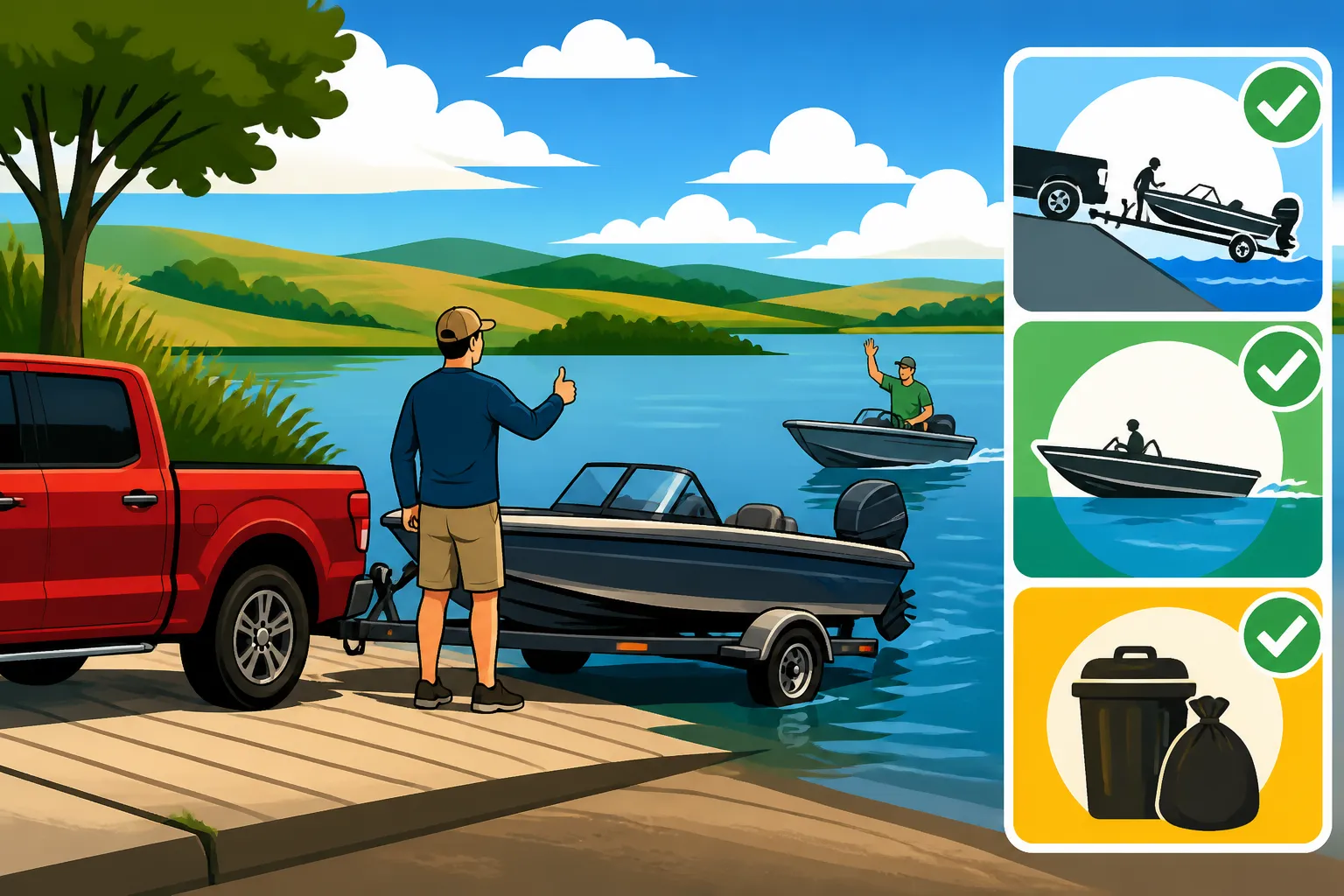
Best Boat Ramp Etiquette Tips in Kansas
We’ve all been there: you’re eager to hit the water, the fish are biting, and you pull up to the boat ramp only to be met with a chaotic scene. Someone’s blocking the ramp while they load every last tackle box, another is struggling to back their trailer, and the line of frustrated anglers stretches down the road. It’s enough to make you want to just turn around and go home! But it doesn't have to be this way. A little boat ramp etiquette goes a long way in Kansas, and this guide is here to help you navigate those busy launch points with grace, efficiency, and a good dose of common sense, making your fishing trips smoother for everyone involved.
The Importance of Boat Ramp Etiquette
Boat ramps are fascinating places, aren't they? They're the gateway to our favorite Kansas reservoirs and rivers, the launchpad for countless fishing adventures and family fun. But they can also be hotbeds of stress and frustration if people aren't on the same page. Good etiquette isn't just about being polite; it's about making the entire process safer, faster, and more enjoyable for every single person who wants to get their boat in or out of the water. Think of it as a shared understanding that keeps the flow moving and the smiles flowing.
Why Rules Matter on the Water
Imagine a busy two-lane highway where everyone just drove wherever they wanted, whenever they wanted, without any lanes or traffic lights. Pure chaos, right? Boat ramps, especially on popular lakes like Milford or Cheney, can quickly become similar if folks aren't following an unspoken set of rules. These "rules" are really just common courtesies that ensure safety and efficiency. Without them, you risk collisions, arguments, and significant delays, which nobody wants when they're trying to unwind on the water. Following these guidelines helps prevent accidents, keeps parking areas from becoming gridlocked, and ultimately preserves the peace and enjoyment for everyone accessing the lake. It's about respecting not just other boaters, but also the limited resources of public access points.
Common Frustrations at the Ramp
We've all seen, or maybe even been, the source of, some of these classic boat ramp blunders. One of the biggest offenders is the "ramp hog"—the person who uses the actual launch ramp as their personal staging area. They'll pull their boat down, then spend twenty minutes loading coolers, organizing tackle, and tying down gear, all while a line of impatient boaters fumes behind them. Then there's the backing-up nightmare: someone struggling endlessly to get their trailer straight, often with a passenger yelling conflicting directions. Or the angler who parks their vehicle and trailer across multiple spots because they don't want to walk an extra fifty feet, leaving others to hunt for parking miles away. These frustrations can quickly sour the mood before you even cast a line, and they're precisely what good etiquette aims to eliminate. It's truly amazing how a few simple considerations can transform a potentially maddening experience into a relatively seamless one.
Pre-Ramp Preparation: Your Key to Smooth Sailing
The secret to being a boat ramp hero rather than a zero largely comes down to what you do before you ever get close to the water's edge. This might sound obvious, but you'd be surprised how many folks forget the basics until they're staring at a long line and feeling the pressure. A little preparation in the staging area can save everyone a lot of time and grief.
Getting Your Gear Ready
This is perhaps the most crucial step. Before you even think about backing down the ramp, pull into a designated staging area or an empty parking spot away from the launch lanes. This is your command center for getting everything in order.
Here’s a quick checklist of things to do:
- Load all your gear: Tackle boxes, fishing rods, coolers, life jackets, snacks, and drinks should all be in the boat. Don't leave anything in your truck bed that needs to be transferred once you're on the ramp. If you're using a specific type of Kansas Fishing Gear Guide, get it loaded.
- Remove tie-downs: All transom straps, motor supports, and bow safety chains (except for the winch strap, of course!) should be disconnected. You don't want to realize you forgot a strap when your boat is half in the water.
- Insert drain plug: This one is a classic mistake. I can't tell you how many times I've seen a boat launch, only for the owner to realize their drain plug is still out, leading to a frantic retrieval. Double-check, triple-check!
- Check safety equipment: Ensure your Kansas Life Jacket and Boating Safety Guide compliant life jackets are easily accessible for everyone on board. If you're running late or just forgot something, a quick trip to a local sporting goods store like Bass Pro Shops or ordering from Amazon can often get you what you need for next time.
- Adjust motor: Trim your motor up for launch, preventing it from scraping the ramp or hitting submerged obstacles.
- Confirm tow vehicle readiness: Make sure your tow vehicle is ready to go. Is the hitch secure? Are your Best Trailer Hitch Size for Kansas Boat Ramps requirements met? All those little details add up to a smooth operation.
By taking these few minutes beforehand, you ensure that when it’s your turn at the ramp, you’re ready to execute a swift and efficient launch. It's not just about saving your own time; it's about respecting everyone else's.
The Staging Area Advantage
Think of the staging area as the pit lane at a racetrack. It’s where all the final tweaks and preparations happen before the main event. Utilize these areas! Most well-maintained boat ramps, especially at popular state parks and larger reservoirs, will have dedicated space adjacent to the ramps for exactly this purpose. If there isn't a formal staging area, find an empty parking spot or a wide pull-off where you won't block traffic or obstruct access to the ramps.
This concept extends to retrieving your boat too. When you come back to the ramp after a day on the water, pull your boat and trailer completely out of the launch lane before you start the process of securing everything. Get to a parking spot, pull the drain plug, tie down your boat, and organize your gear there. This keeps the ramp clear for the next person and drastically reduces congestion. It’s a simple shift in mindset that has a huge positive impact on everyone’s experience. I often see families use this time to change out of wet swimsuits or pack away fishing rods, which is perfectly fine – just do it away from the ramp itself.
Launching and Retrieving Like a Pro
The actual act of putting your boat in the water or pulling it out can be the most intimidating part for new boaters, and the most frustrating for experienced ones stuck behind someone who's not quite getting it. But with a few simple techniques and a commitment to courtesy, you can become a ramp maestro.
The Art of the Quick Launch
Once you’ve prepped your boat in the staging area, it’s showtime. When the ramp is clear and it’s your turn, don't dawdle.
- Back down swiftly and safely: Take your time learning how to back a trailer in an empty parking lot beforehand. This practice pays off big time. Back down slowly, but confidently, making small adjustments. If you're having trouble, don't keep trying for five minutes. Pull forward, reset, and try again. It’s better to take a moment to straighten up than to block the ramp indefinitely.
- Launch without delay: Once your boat is floating, have a designated person (if you have one) take the boat off the trailer and move it immediately away from the ramp to a nearby dock or safe holding area. The driver should then pull the tow vehicle and trailer out of the lane as quickly as possible. Every second you spend on the ramp, whether launching or waiting for your boat to drift, is time lost for someone else.
- Use designated docks: Many ramps have courtesy docks. These are for temporary tie-ups while you park your trailer or pick up passengers. They are not for extended loading, unloading, or picnicking. Once your boat is off the ramp, move it to a courtesy dock (if available and not already in use) to load your crew and final items. If no dock is available, find a safe spot away from the ramp to wait for your passengers. Remember that Kansas Boat Registration Guide requirements mean you’ll need to be quick on your feet as a registered boat owner!
Remember, the goal is to get your rig off the ramp so the next person can use it. Efficiency is the name of the game here.
Retrieving Without Delay
Bringing your boat back to shore should follow the same principles of efficiency as launching. This is where patience often wears thin, especially at the end of a long day when everyone is tired.
- Have your driver ready: As your boat approaches the ramp, the driver of the tow vehicle should be ready and waiting. Communication is key here. A quick text or radio call from the boat to the driver can signal that it's time to back down.
- Back the trailer into the water: Back the trailer down just far enough for the boat to be loaded without struggle. Over-submerging the trailer can make it harder to load and put unnecessary stress on your vehicle’s brakes and bearings.
- Load the boat efficiently: Guide the boat onto the trailer. Many modern boats have self-centering bunks or rollers that make this easier. Once the boat is centered, winch it fully onto the trailer, secure the bow safety chain, and raise your motor.
- Pull away from the ramp: As soon as the boat is securely on the trailer, pull forward and completely off the ramp. Drive to the staging area or a nearby parking spot to secure all tie-downs, remove the drain plug, and do any final organizing. Do not, under any circumstances, start draining your livewell or hosing down your boat while still in the ramp lane.
By mastering these steps, you not only make your own life easier but also contribute to a positive experience for every other angler and boater at the ramp. Consider investing in a good set of Best Rod Holders for Kansas Boats or other storage solutions to make loading and unloading even faster.
| Task | Before Ramp (Staging Area) | On Ramp (Launch/Retrieve) | After Ramp (Parking/Staging) |
|---|---|---|---|
| Load Gear | ✅ | ❌ | ❌ |
| Remove Tie-downs | ✅ (Except winch strap) | ❌ | ✅ |
| Insert Drain Plug | ✅ | ❌ | ❌ |
| Load Boat onto Trailer | ❌ (Launch) | ✅ | ❌ |
| Winch/Secure Boat | ❌ (Launch) | ✅ | ❌ |
| Unload Passengers | ❌ | ❌ (Courtesy Dock) | ✅ |
| Park Vehicle | ❌ | ❌ | ✅ |
| Secure Tie-downs | ❌ | ❌ | ✅ |
| Remove Drain Plug | ❌ | ❌ | ✅ |
General Courtesy and Safety on Kansas Ramps
Beyond the mechanical aspects of launching and retrieving, there are some overarching principles of courtesy and safety that make Kansas boat ramps better places for everyone. It’s about being mindful of your surroundings and treating others how you’d want to be treated.
Parking with Purpose
A major source of frustration at busy ramps is parking. After you’ve successfully launched your boat, don’t just leave your truck and trailer wherever seems convenient.
- Use designated parking: Always park your truck and trailer in designated trailer parking spots. These spots are usually longer and wider to accommodate your rig. If there are no marked spots, try to park in a way that takes up the least amount of space and doesn't block other vehicles or access roads.
- Avoid blocking access: Never park in a way that blocks another vehicle, access to other ramps, or traffic flow. This includes not hogging multiple spots with one vehicle. If parking is tight, be prepared to walk a bit further to ensure you’re not causing an obstruction.
- Consider others: Remember that some spots might be reserved for specific uses, or that some areas might be easier for certain types of vehicles. Being considerate means not taking the prime spot if you can easily manage a slightly less convenient one. It also helps to be aware of the Kansas Boating Safety Equipment Requirements for your vessel and ensure your setup complies, so you're not held up later.
Good parking etiquette is a sign of respect for your fellow anglers and helps prevent unnecessary congestion and even potential damage to vehicles in tight spaces.
Being a Good Neighbor
Ultimately, boat ramp etiquette boils down to being a good neighbor on the water and on land. We’re all out there to enjoy the beautiful Kansas outdoors, and a little kindness goes a long way.
- Offer help when needed: If you see someone clearly struggling with backing their trailer or launching their boat, and it's safe to do so, a polite offer of assistance can be a huge relief. Just be sure not to backseat drive or interfere unless asked. Sometimes, just a quiet moment of patience is the best help you can give.
- Mind your wake: If you're operating your boat near the ramp, be extremely mindful of your wake. Wakes can crash onto the ramp, potentially damaging vehicles, swamping small boats, or knocking people off their feet. Maintain a slow, no-wake speed until you are well clear of the ramp area.
- Keep it clean: Pack out everything you pack in. Don't leave trash, fishing line, or bait containers at the ramp or in the parking lot. Many ramps have trash receptacles; use them. This is our shared resource, and keeping it clean benefits everyone.
- Be patient: Ramps can get busy, especially on prime fishing weekends or during popular events like the Kansas Free Fishing Days Guide. Expect some delays and approach the situation with patience. Getting agitated won't make the line move faster, but it will certainly ruin your mood. Take a deep breath, listen to some tunes, and remind yourself why you’re there. You might even discover some great new gear on your phone from sites like Amazon while you wait, or browse the latest rods and reels at a Bass Pro Shops online catalog.
By embracing these etiquette tips, you’re not just following rules; you’re fostering a more harmonious and enjoyable environment for everyone who cherishes fishing and boating in Kansas. From understanding Kansas Resident Fishing License Cost to knowing the best spots for Kansas Spring Walleye Fishing Tips, being prepared and considerate helps ensure every trip starts and ends on a high note.
Disclaimer
This article is for general informational purposes only and does not constitute professional advice. Laws, prices and regulations vary by location and change over time. Consult a qualified professional for guidance on your specific situation.