Best Kayak Cart for Boat Ramp Access
Oh, the sheer joy of a perfect day out on a Kansas lake, the sun on your face, the gentle rocking of your kayak as you cast your line for a trophy walleye or a feisty crappie! But let's be real, getting that kayak from your car to the water can sometimes feel like a full-body workout before you've even made your first cast. Dragging a heavy kayak, loaded with gear, across hot asphalt, rocky shorelines, or slippery boat ramps is not just exhausting, it's a recipe for back pain and potential damage to your precious vessel. This guide is all about making that struggle a thing of the past by helping you choose the best kayak cart for effortless boat ramp access across our beautiful Kansas waterways.
Why a Kayak Cart is a Game-Changer for Kansas Anglers
For many of us, the kayak isn't just a vessel; it's a key part of our fishing setup. But the reality of hauling a fishing kayak, especially one loaded with tackle boxes, rods, and maybe even a cooler, often brings a dose of pre-fishing fatigue. A good kayak cart transforms this laborious process into a smooth, easy transition from land to water, letting you conserve your energy for the actual fishing.
The Struggle of Hauling Gear
Think about it: you've got your kayak on top of your car, maybe a truck, and then you pull up to the boat ramp. Now comes the moment of truth. You lift it down, often awkwardly, balancing its weight. Then you start loading it up with all the essentials – your fishing rods, a Best Tackle Box Setup for Kansas Anglers, a cooler full of snacks and drinks, perhaps a fish finder, and your Best PFD for Kayak Fishing in Kansas. Each item adds weight, making that long trek across a concrete ramp or a sandy path feel like an endurance test. It's easy to get frustrated, even before your line hits the water. This is especially true if you're fishing solo and don't have an extra pair of hands to help with the heavy lifting. The thought of finding new, less-accessible spots can be daunting if you know the portage will be a nightmare.
Protecting Your Kayak and Body
Beyond the sheer physical effort, dragging your kayak can cause real wear and tear. Running the hull over gravel, rocks, or even rough asphalt can lead to scratches, gouges, and abrasions that compromise its integrity over time. These small damages can weaken the material and, in extreme cases, lead to leaks. Furthermore, the constant lifting and awkward carrying postures put immense strain on your back, shoulders, and knees. Many a fishing trip has been cut short, or even prevented, by a tweaked back from improper lifting. A kayak cart acts as a buffer, taking the brunt of the abuse for your kayak and, more importantly, saving your body from unnecessary strain and potential injury. It allows for a more ergonomic way to transport your vessel, letting the wheels do the heavy lifting, not your spine.
Expanding Your Fishing Horizons
One of the biggest advantages of a reliable kayak cart is the freedom it offers. No longer are you limited to launch points with paved roads leading right to the water's edge. Suddenly, those hidden coves, remote river bends, or secluded sections of state parks become accessible. Imagine being able to effortlessly navigate a dirt path to a quiet section of the Kansas River Fishing Guide or find a less-crowded spot on Public Boat Ramps at Milford Lake. A kayak cart means you can explore more of Kansas's incredible fishing opportunities without the dread of the portage. It transforms seemingly inaccessible areas into your next favorite fishing hole, opening up new strategies and giving you an edge by getting to waters less pressured by other anglers. It truly expands where you can put in and take out, meaning more diverse fishing experiences.
Key Features to Look for in a Kansas Kayak Cart
Not all kayak carts are created equal, especially when you consider the diverse terrains you might encounter across Kansas. From the smooth concrete of urban boat ramps to the muddy banks of a farm pond or the rocky shores of a large reservoir, your cart needs to be up to the task. Knowing what to look for can make all the difference in your purchase.
Wheel Types and Terrain
The wheels are arguably the most critical component of any kayak cart. They dictate how easily you can traverse different surfaces.
- Pneumatic (Air-Filled) Wheels: These are fantastic for softer terrains like sand, mud, and gravel. They offer a cushioned ride, absorbing bumps and making it easier to roll over uneven ground. Think about those slightly overgrown paths down to the water or the sandy spots near the shore – pneumatic wheels excel here. However, they do require occasional air checks and can be susceptible to punctures, so carrying a small repair kit or pump isn't a bad idea. Many anglers swear by "balloon wheels" or "beach wheels" in this category, often seen on models from companies like Wilderness Systems or Malone, which are particularly adept at floating over soft sand.
- Solid (No-Flat) Wheels: Made from dense plastic or rubber, these wheels are puncture-proof and maintenance-free. They are excellent for hard surfaces like concrete, asphalt, and even rocky trails where sharp objects might lurk. They might not glide over soft sand as easily as pneumatic wheels, sometimes digging in, but their durability and reliability are unmatched. If most of your launches are on paved ramps or hard-packed dirt, solid wheels are a robust choice. Sometimes, you'll find them on more budget-friendly carts, but quality solid wheels can be incredibly effective.
- Ideal for Kansas: Given the mix of environments, a cart with good quality pneumatic wheels is often a strong choice for overall versatility. However, if you primarily fish urban lakes with paved access, solid wheels are perfectly adequate and less hassle. Consider where you fish most often, or if you plan to explore more off-the-beaten-path locations, prioritize larger, softer wheels.
Frame Material and Durability
The frame is what bears the weight of your kayak, so its construction is paramount for longevity.
- Aluminum: Lightweight, strong, and naturally corrosion-resistant, aluminum frames are a popular choice. They won't rust, making them ideal if you're frequently around water, especially if you ever venture out to brackish waters (though less common in landlocked Kansas, it's good to know for general use). A lighter frame also means less weight for you to lift and store.
- Stainless Steel: Extremely strong and durable, stainless steel offers superior rigidity. While generally heavier than aluminum, it's also highly resistant to rust and corrosion. Many premium carts will feature stainless steel components for critical stress points.
- Powder-Coated Steel: Regular steel frames are usually powder-coated to prevent rust. This coating is durable but can chip over time, exposing the steel underneath to moisture, which can lead to rust. If you opt for a steel cart, ensure the powder coating is robust and inspect it regularly for chips or scratches.
- Plastic/Composite: Some lighter, more compact carts might use reinforced plastic or composite materials. These are generally more affordable and very lightweight, but may not handle the same heavy loads or rough treatment as metal frames.
- Durability for Kansas: For most Kansas fishing, an aluminum or stainless steel frame will provide excellent durability and corrosion resistance, ensuring your investment lasts through many seasons of fishing. Check the weight capacity to ensure it can comfortably handle your kayak, especially a fully loaded fishing kayak with all your gear.
Cradle and Strapping Systems
How your kayak sits on the cart and how it's secured makes a huge difference in stability during transport.
- Cradle Design: The cradle is the part that supports your kayak's hull. Some carts have V-shaped cradles that cup the keel, while others have flatter, wider bunks. A good cradle design will distribute the weight evenly, preventing pressure points and potential hull deformation, especially during hot summer days. Adjustable cradles can be a huge plus for fitting different kayak hull shapes.
- Padding: Look for carts with ample padding on the cradle or bunks. This protects your kayak from scratches and provides a non-slip surface. High-density foam or rubber padding is common and effective.
- Strapping Systems: Most carts come with a strap to secure the kayak. Look for a sturdy cam buckle strap or a heavy-duty bungee system. The goal is to cinch the kayak down tightly so it doesn't shift or wobble as you move, especially over uneven terrain. Some carts integrate the strap into the frame for added convenience. Make sure the strap is long enough to go around your kayak and the cart securely. When you're heading to a fishing hole near Best Community Fishing Lake Near Wichita or any bustling public access point, you want that kayak to feel rock solid on its cart.
Portability and Storage
After you've launched your kayak, you need to store the cart. Its portability is key for easy transport and storage.
- Folding Design: Many kayak carts are designed to fold down flat or disassemble quickly. This is crucial for stowing it inside your kayak, in your car trunk, or even just in your garage. A cart that collapses easily saves valuable space and makes it less cumbersome to deal with once you're on the water.
- Weight: A lighter cart is easier to lift and store, both in your vehicle and on your kayak. While durability is important, an overly heavy cart can negate some of the benefits of having one.
- Compactness: Consider how small the cart gets when folded. Can it fit through the hatch of your kayak? Will it take up too much space in your truck bed or back seat? Companies like C-Tug and Malone offer very compact, sometimes tool-free, assembly/disassembly options which are fantastic for minimalists. When you're trying to pack up all your gear for Camping Near Milford Lake for Anglers, every inch of space counts.
Different Kayak Cart Styles for Kansas Conditions
Just as there are different types of kayaks, there are various styles of kayak carts, each with its own advantages and ideal uses. Understanding these differences will help you pick the perfect one for your specific kayak and the kinds of Kansas waters you like to fish.
Scupper Carts
Scupper carts are a popular choice for kayaks that feature scupper holes – those self-draining holes typically found in sit-on-top kayaks.
- How They Work: This style of cart has two posts that insert directly into the scupper holes on your kayak's hull. The weight of the kayak then rests on these posts, distributing the load.
- Pros: They are often very compact and require minimal strapping because the kayak is held securely by the posts. They typically position the wheels directly under the heaviest part of the kayak, making them easy to pivot and maneuver.
- Cons: The biggest drawback is compatibility. Scupper carts are specific to the size and spacing of your kayak's scupper holes. If the posts don't align, or if your kayak doesn't have scupper holes (like most sit-in kayaks), this style won't work for you. There's also a debate among some anglers about the long-term stress these carts might put on the scupper holes, especially with heavy kayaks or rough terrain.
- Ideal For: Sit-on-top kayak anglers in Kansas who want a quick, easy, and secure way to transport their specific vessel. If you have a popular fishing kayak, chances are there's a scupper cart designed to fit it perfectly. Just be sure to double-check the diameter and spacing of your scupper holes before purchasing.
Strap/Bunker Carts
These are the most versatile and widely used type of kayak cart, suitable for almost any kayak, whether it's a sit-on-top or a sit-in model.
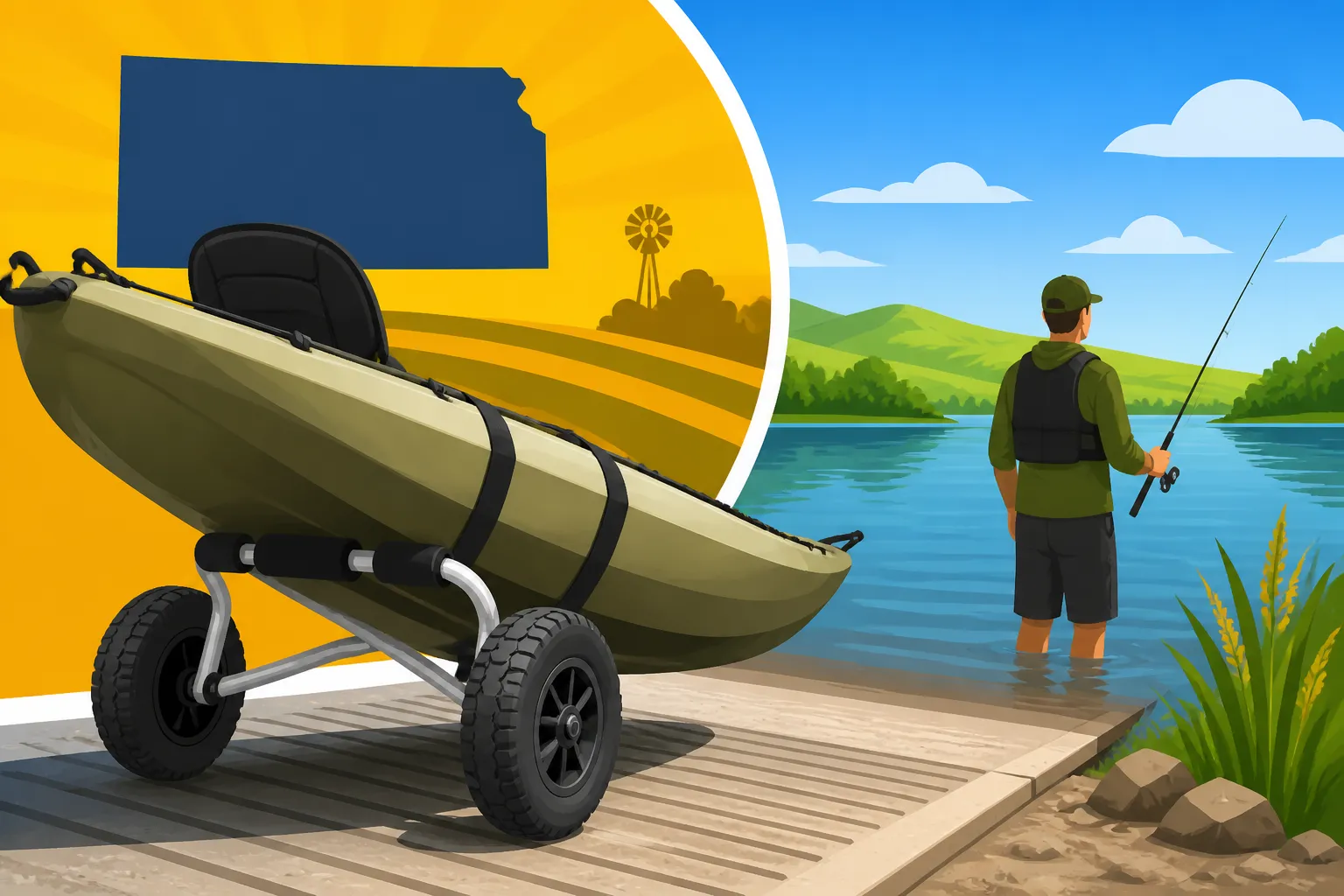
- How They Work: Strap or bunker carts feature two horizontal bars (bunkers) or a V-shaped cradle that supports the underside of your kayak's hull. A strap (or multiple straps) then cinches the kayak down onto the cart, holding it securely. The wheels are typically positioned to the side of the hull, allowing the kayak to sit "on top" of the cart.
- Pros: Their universal design is a huge advantage – you don't have to worry about matching scupper holes. They are usually very stable and distribute the kayak's weight over a broader surface area, reducing stress on the hull. Many models fold down for easy storage.
- Cons: They might require a bit more effort to strap down securely compared to a scupper cart, and the kayak can sometimes feel higher off the ground, raising its center of gravity slightly.
- Ideal For: Virtually any kayak angler in Kansas. If you own multiple kayaks, frequently switch boats, or have a sit-in kayak, a strap/bunker style cart is probably your best bet. Brands like Malone, C-Tug, and some offerings you'd find at Bass Pro Shops or on Amazon often excel in this category, providing robust and adaptable designs. This is a great choice if you fish diverse areas, from gentle pond banks to more challenging river access points.
Heavy-Duty All-Terrain Carts
For those rugged Kansas fishing expeditions, a standard cart might not cut it. That's where heavy-duty, all-terrain carts come into play.
- How They Work: These carts are essentially reinforced strap/bunker carts, often featuring larger diameter, wider pneumatic wheels (sometimes called "balloon" or "beach" wheels) that excel at floating over extremely soft or rough terrain. Their frames are typically made from sturdy aluminum or stainless steel with higher weight capacities.
- Pros: Unmatched performance on challenging surfaces like deep sand, thick mud, large gravel, or rocky, uneven trails. They are built to withstand heavier loads, making them ideal for oversized fishing kayaks or those packed with an abundance of gear.
- Cons: They tend to be heavier, larger, and more expensive than standard carts. Their bulk can also make them more challenging to store within a kayak or a small car trunk.
- Ideal For: Adventurous Kansas anglers who frequently launch from unimproved access points, remote river banks along the Republican River Fishing Access or Kansas River Catfish Spots, or those who own extra-large, heavy fishing kayaks. If you're consistently pushing the limits of where you can launch, investing in an all-terrain cart will pay dividends in ease and longevity. These carts are designed to tackle almost anything nature throws your way, making that untouched fishing spot a reality.
Here's a quick comparison of popular kayak cart styles:
| Feature | Scupper Cart | Strap/Bunker Cart | Heavy-Duty All-Terrain Cart |
|---|---|---|---|
| Kayak Type | Sit-on-top with scupper holes | Most kayak types (sit-on-top, sit-in) | Most kayak types, especially large/heavy ones |
| Wheel Type | Pneumatic or solid | Pneumatic or solid | Large pneumatic (balloon/beach) |
| Terrain Suitability | Paved, light gravel, some sand | Paved, gravel, dirt, moderate sand | Deep sand, mud, rocks, very uneven ground |
| Setup Ease | Very fast, insert posts | Easy, requires strapping | Easy, requires strapping |
| Portability | Often very compact, lightweight | Varies, many fold/disassemble | Less compact, heavier |
| Hull Protection | Direct pressure on scupper holes | Good, even weight distribution | Excellent, broad support |
| Price Range | Moderate | Moderate to high | Higher |
Getting the Most Out of Your Kayak Cart on Kansas Boat Ramps
Having the right kayak cart is only half the battle. Knowing how to properly use it, maintain it, and adapt your approach to various launch conditions will ensure you get the maximum benefit from your investment and enjoy stress-free fishing trips every time.
Loading and Securing Your Kayak
Proper loading and securing are essential to prevent your kayak from slipping off, damaging the hull, or creating an unstable situation during transport.
- Position the Cart: Place the cart on relatively flat ground. If it's a strap/bunker style, ensure the bunks or cradle are oriented to best support your kayak's hull. For scupper carts, have the posts ready.
- Lift and Place: Carefully lift your kayak and position it onto the cart. For strap carts, aim to center the kayak's weight over the axle – this is key for balance. If the cart is too far forward, the bow will be heavy; too far back, and the stern will drag. Find that sweet spot where the kayak feels balanced when you lift the front handle.
- Secure with Straps: For strap/bunker carts, run the provided strap (or your own heavy-duty cam buckle strap) over the kayak and through the cart's frame, cinching it down tightly. Make sure it's snug but not so tight that it could damage the hull, especially on warmer days when plastic can be softer. Give the kayak a good wiggle test to ensure it's firmly secured and won't shift. If using a scupper cart, typically just the weight of the kayak is sufficient, but some anglers like to add a bungee for extra security.
- Load Your Gear: Once the kayak is secured to the cart, then load your fishing gear. This prevents you from having to lift a fully loaded kayak onto the cart, which can be even more cumbersome. Place heavier items towards the center for balance. A well-organized Kansas Kayak Fishing Gear Guide can help you streamline this process.
Navigating Different Ramps
Kansas offers a variety of launch points, and each might require a slightly different approach with your kayak cart.
- Paved Boat Ramps: These are generally the easiest. Simply roll your kayak down the ramp. Be mindful of others using the ramp and try to stay to one side. Once at the water's edge, carefully float your kayak off the cart.
- Gravel Paths and Dirt Roads: This is where good wheels shine. If you have pneumatic wheels, they'll absorb much of the unevenness. For solid wheels, you might need to apply a bit more muscle. Take it slow, especially on inclines or declines, to maintain control. Watch for sharp rocks or debris that could damage your wheels or hull.
- Muddy Banks: If you encounter soft, muddy banks, especially after a good rain when fishing spots near the Arkansas River Fishing in Kansas might be damp, pneumatic wheels will perform best. You might still have to pull hard, but they'll prevent the cart from sinking as much as solid wheels might. If it's truly deep mud, you might need to unload some gear first, or even carry the kayak the last few feet.
- Rocky Shorelines: Proceed with caution. Large, sharp rocks can be problematic for any wheel. If possible, pick a path with smaller, smoother stones. If the rocks are too large, you might need to manually lift the kayak over the most difficult sections.
Maintenance for Longevity
Like any piece of valuable gear, your kayak cart will last longer and perform better with a little care.
- Rinse After Use: Always rinse your cart thoroughly with fresh water after each use, especially if it's been in muddy or sandy conditions. This removes dirt, grit, and any corrosive elements. This is vital even for inland lakes, as mineral deposits can accumulate.
- Check Hardware: Periodically inspect all bolts, nuts, and pins to ensure they are tight. Loose hardware can lead to instability or even failure.
- Lubricate Moving Parts: If your cart has any folding mechanisms or pivot points, a light application of a marine-grade lubricant can keep them operating smoothly.
- Tire Care (Pneumatic Wheels): Check tire pressure regularly. Refer to the manufacturer's recommendations for optimal PSI. If you notice slow leaks, address them promptly with a tire repair kit.
- Storage: Store your cart in a dry, protected area, away from direct sunlight and extreme temperatures. Folding it up and storing it out of the elements will prevent premature wear and rust. Some carts even break down small enough to fit into a Best Dry Bag for Kayak Fishing Trips for compact storage.
By choosing the right kayak cart and giving it a little TLC, you'll ensure that getting your kayak to the water is always the easy part, leaving you with more energy and enthusiasm for catching those Kansas giants.
Disclaimer
This article is for general informational purposes only and does not constitute professional advice. Laws, prices and regulations vary by location and change over time. Consult a qualified professional for guidance on your specific situation.