Best Budget Fish Finder for Small Boats
It's incredibly frustrating when you're out on the water in your small boat, knowing there are fish down there somewhere, but you just can't seem to locate them. You might be working hard, casting blind, and feeling like you're missing out on productive spots simply because you lack that crucial subsurface insight. This guide is all about helping you cut through the confusion and find the best budget-friendly fish finder that will equip your small boat to pinpoint structure, track depth, and ultimately, put more fish in your net without breaking the bank.
Why Even a Small Boat Needs a Capable Fish Finder
When you’re out on the lake, pond, or river in a smaller craft—be it a jon boat, kayak, canoe, or even a small aluminum runabout—the urge to "go simple" can be strong. You might think a fish finder is overkill or just for the big bass boats. But let me tell you, that couldn't be further from the truth. A good fish finder, even a basic, affordable one, is a game-changer for anglers in Kansas, giving you an edge that goes far beyond just spotting fish.
Beyond Just Seeing Fish: Understanding the Underwater World
Many folks new to fish finders imagine them like an X-ray vision device, showing exact fish shapes swimming by. While they can show fish, their true power, especially for budget models, lies in revealing the underwater topography and structure. Think about it: fish don't just float around randomly. They relate to cover, depth changes, and food sources.
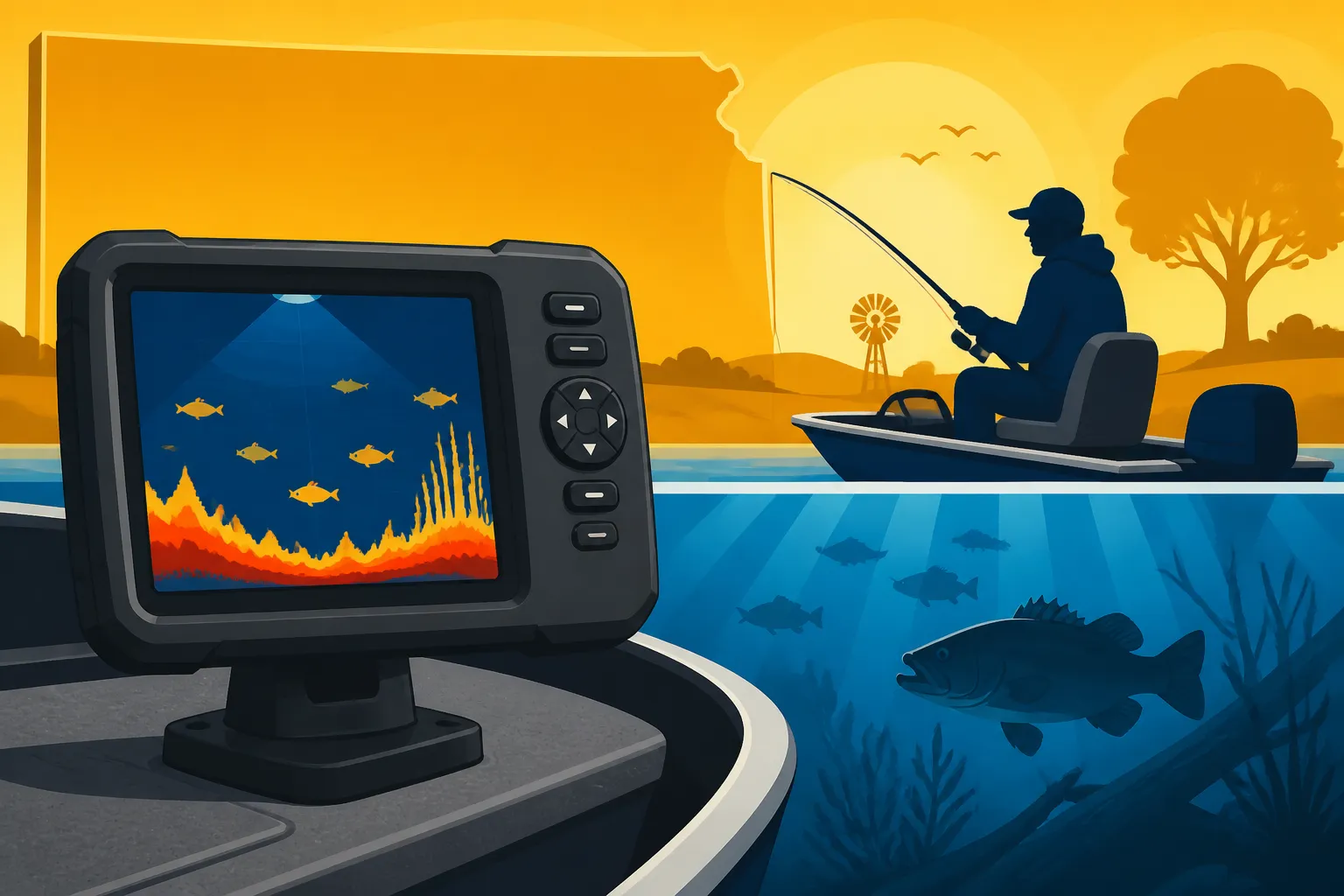
A simple 2D sonar unit, even a basic one, can show you drop-offs, submerged brush piles, rock formations, and even subtle changes in the bottom composition. Imagine you're drifting along Kansas River Fishing Guide, and your fish finder suddenly shows a sharp break in depth from 10 feet to 20 feet, with some jagged marks at the bottom indicating rocks. That's not just a random spot; that's a prime ambush point for catfish or walleye! You can mark that spot with GPS and return to it later. Without a fish finder, you might drift right over it, none the wiser. It's about fishing smarter, not harder.
The Small Boat Advantage: Versatility and Precision
Small boats, by their very nature, are often more versatile. You can launch them in places larger boats can't reach, navigate tighter channels, or access shallow coves. This versatility means you're often fishing a wider variety of water and need to adapt quickly. A budget fish finder helps you do just that.
For instance, if you're kayak fishing on a smaller state lake, a portable fish finder can help you quickly identify pockets of cooler water during summer, or locate shallow ledges where Kansas Crappie Fishing Techniques might be effective in spring. In a jon boat on one of Kansas's larger reservoirs, like Milford Lake Fishing Guide, knowing the exact depth and seeing baitfish schools congregating near a submerged creek channel can make all the difference in a successful Kansas Walleye Fishing Techniques outing. It allows you to precisely position your boat, drop your bait or lure right into the strike zone, and fish with confidence, knowing you're targeting productive water. It turns your small, agile craft into a precision fishing machine.
Essential Features for a Budget-Friendly Fish Finder
When you're shopping on a budget, it's easy to get overwhelmed by the sheer number of features available on modern fish finders. The key is to distinguish between what's absolutely essential for effective fishing from a small boat and what are "nice-to-have" luxuries that will quickly blow your budget. Let's break down the core components you should prioritize.
Sonar Type: The Heartbeat of Your Finder
For budget fish finders, your primary focus will be on 2D CHIRP sonar. Forget about the super fancy Down Imaging, Side Imaging, or futuristic Panoptix/LiveScope technologies for now; while incredible, they come with a hefty price tag.
- 2D CHIRP Sonar: This is your bread and butter. CHIRP (Compressed High-Intensity Radiated Pulse) sonar transmits a wide range of frequencies, rather than a single frequency, which results in much clearer target separation and less clutter on your screen. Even entry-level CHIRP units offer a significantly better picture than older, traditional 2D sonar. It excels at showing you the bottom contour, structure like timber or rock piles, and distinct fish arches. For identifying schools of baitfish or pinpointing individual fish near structure, 2D CHIRP is remarkably effective. Don't underestimate its power to help you find those honey holes.
Screen Size and Resolution: Your Window to the Depths
You might think a bigger screen is always better, but on a budget and a small boat, there's a sweet spot.
- Screen Size: For small boats, a screen size in the 4-inch to 5-inch range is often perfect. It's compact enough not to clutter your limited console or kayak deck space, but still large enough to give you a clear view of the sonar returns. Anything smaller than 4 inches can become difficult to interpret, especially when your boat is rocking or the sun is glaring.
- Resolution: This is critical. Resolution is measured in pixels (e.g., 240×160, 480×272). The higher the resolution, the crisper and more detailed the image will be. Even on a small screen, a higher pixel count makes a huge difference in distinguishing fish from structure or seeing subtle bottom changes. Aim for the highest resolution you can afford within your chosen screen size. A 5-inch screen with good resolution will often be more effective than a 7-inch screen with poor resolution.
Transducer Power and Cone Angle: Reaching and Revealing
The transducer is the unsung hero, sending and receiving the sonar signals. Its power and the cone angle determine how effectively it "sees" underwater.
- Transducer Power (RMS): Measured in RMS (Root Mean Square) wattage, this indicates the continuous power output. Higher RMS means deeper penetration and better performance in challenging conditions, like murky water or strong currents. For most Kansas lakes and rivers fished from a small boat, an RMS power of 200-500W is perfectly adequate. This will give you good depth penetration for everything from shallow community ponds to the main channels of large reservoirs like Wilson Lake Fishing Guide.
- Cone Angle: This refers to the width of the sonar beam. A wider cone angle (e.g., 60 degrees) covers a larger area but offers less detail at deeper depths. A narrower cone angle (e.g., 20 degrees) provides more detail but covers a smaller area. Many budget fish finders offer dual-frequency transducers, allowing you to switch between a wider beam for searching and a narrower beam for detailed scrutiny of a specific spot. This versatility is incredibly useful for covering different fishing scenarios.
GPS and Basic Mapping: Finding Your Way Back
While full-blown chartplotters with detailed lake maps are expensive, many budget fish finders include basic GPS functionality.
- Basic GPS with Waypoint Marking: This is invaluable. Even without detailed mapping, a simple GPS allows you to mark waypoints—your favorite brush piles, submerged points, productive humps, or even your boat ramp. Imagine you find a fantastic school of Kansas Blue Catfish Facts and Limits at 30 feet. With GPS, you can drop a waypoint and return to that exact spot on your next trip. This feature alone saves immense time and makes your fishing trips more productive.
- Track Recording: Many budget units also record your tracks, showing you where you've been on the water. This is great for retracing a successful drift or exploring new areas efficiently. You might not get fancy contour lines, but knowing where you caught fish and where you didn't is powerful information.
Here’s a quick comparison of essential vs. nice-to-have features for budget fish finders:
| Feature | Budget-Friendly Essential | Nice-to-Have (May Increase Cost) |
|---|---|---|
| Sonar Type | 2D CHIRP Sonar | Down Imaging, Side Imaging, Panoptix |
| Screen Size | 4-5 inches | 7+ inches |
| Screen Resolution | 240×160 pixels or higher | HD, super high-resolution displays |
| Transducer Power (RMS) | 200-500W | 1000W+ |
| GPS | Basic GPS with waypoint marking | Detailed mapping with preloaded charts |
| Waypoints/Tracks | 1,000 waypoints / 5-10 tracks | Unlimited, advanced routing |
| Water Temp/Speed | Basic readings included | Advanced sensors, current tracking |
| Networking | Standalone unit | Ethernet/NMEA 2000 for multiple units |
Top Budget-Friendly Fish Finder Options for Small Boats
Now that we know what features to look for, let's talk about some of the brands and types of units that consistently deliver great value for anglers on a budget. You don't need to spend a fortune to get a reliable and effective fish finder for your small craft.
Entry-Level Options from Reputable Brands
Many well-known marine electronics companies offer excellent entry-level fish finders that are perfect for small boats. They strip away the most expensive, advanced features but retain the core sonar capabilities that serious anglers need.
- Garmin Striker Series: Garmin is a powerhouse in marine electronics, and their Striker series is renowned for its user-friendly interface and robust performance at an affordable price. Models like the Striker 4 or Striker Vivid 4cv are fantastic choices. They typically feature crisp 2D CHIRP sonar, often with ClearVü (Garmin's version of Down Imaging) on the "cv" models, and built-in GPS for marking waypoints. The buttons are intuitive, making them easy to operate even with wet hands. You can often find great deals on these entry-level units at retailers like Bass Pro Shops or even online through Amazon. These are excellent all-around choices for someone looking to upgrade their small boat.
- Humminbird PiranhaMAX Series: Humminbird's PiranhaMAX line has been a staple for budget-conscious anglers for years. These units are compact, simple, and incredibly reliable. They deliver excellent 2D sonar performance, making it easy to see structure and fish. While they might not have the extensive feature sets of their larger siblings, they do exactly what you need them to: show you what's beneath the boat. They're particularly popular for smaller jon boats or as a dedicated depth/fish finder unit where GPS isn't the top priority.
- Lowrance Hook Reveal Entry Models: Lowrance also offers some compelling options in the budget category, particularly in their Hook Reveal series. While the higher-end Hook Reveal models can get pricey, the smaller screen versions often come with very capable 2D CHIRP sonar and FishReveal technology, which blends CHIRP sonar and DownScan Imaging to make fish targets "pop" on the screen. This can be a significant advantage, and some models even include basic C-MAP contour maps for a few key areas, though detailed mapping might require an upgrade. These units strike a good balance between features and affordability.
When considering any of these, always check what transducer comes with the unit. A good quality transducer is just as important as the head unit itself. Many anglers share their experiences and reviews, often found on product pages on sites like Amazon or in forums linked to Bass Pro Shops, which can provide valuable real-world insights into their performance on small craft.
Portable vs. Fixed Mount: What's Best for Your Small Boat?
The decision between a portable or fixed-mount unit largely depends on your specific small boat and how you use it. Both have distinct advantages.
-
Portable Fish Finders: These are incredibly popular for kayaks, canoes, and small jon boats that might not have permanent mounting surfaces or dedicated battery compartments.
- Pros: Easy to move between different boats, quick to set up and take down, often include a small, self-contained battery pack and suction-cup transducer mount. Great for rental boats or travel.
- Cons: Battery life can be a concern for longer trips, cables can sometimes get in the way, and screen visibility might be limited in bright sunlight if not properly positioned.
- Example Setup: Imagine you have a fishing kayak you paddle out to Kansas Community Fishing Lake Rules. A portable Garmin Striker 4 Plus with its own battery box and a flexible arm or suction cup transducer mount allows you to easily attach it to your kayak's rail, paddle to your spot, and pack it all up at the end of the day.
-
Fixed-Mount Fish Finders: If you have a small aluminum boat or a more permanent setup, a fixed-mount unit might be more robust.
- Pros: More permanent and secure installation, often connected to a larger 12V marine battery for extended use, tidier cable management, and less prone to accidental knocks or dislodgement.
- Cons: Requires drilling holes for mounting and transducer installation, less flexible if you use multiple boats.
- Example Setup: For a 14-foot jon boat that you use regularly on places like Tuttle Creek Lake Fishing Guide for Kansas Catfish Daily Limits, installing a Lowrance Hook Reveal on the console with a transom-mounted transducer provides a reliable, always-ready system. You can even pair it with a Best Trolling Motor for Kansas Lakes for precise boat control.
Ultimately, the best choice depends on your personal fishing style and boat configuration. Both types of budget fish finders offer excellent value and can significantly improve your fishing success.
Setting Up Your Budget Fish Finder on a Small Boat
You've picked out your budget fish finder, and now comes the exciting part: getting it installed and ready for action on your small boat. Don't worry, it's often simpler than it seems, especially with today's user-friendly designs. Proper setup ensures you get the most accurate readings and a reliable performance every time you hit the water.
Transducer Mounting: The Eyes of Your System
The transducer is critical. It needs a clear shot at the water beneath your boat without interference from air bubbles or turbulence. For small boats, you have a few common and effective options.
-
Transom Mount: This is the most common and generally recommended method for boats with a transom (like jon boats or small aluminum boats). The transducer is mounted to the very back of the boat, ensuring it sits just below the hull line and is free from obstructions.
- Placement: Choose a spot on the transom that's as flat as possible, away from engine props or other water pickups that create turbulence. It should be positioned slightly to one side of the engine, if you have one, ensuring it's in clean water.
- Angle: The transducer needs to be level with the bottom of the boat, or slightly angled down, to ensure the sonar cone projects straight down. Many transom mounts allow for easy adjustment.
- Drilling: You'll typically drill a couple of small pilot holes for mounting screws. Always seal these holes with marine-grade sealant to prevent water intrusion.
- Cable Management: Run the transducer cable neatly along the transom and into the boat, securing it with cable clips or ties to prevent snags or damage.
-
Suction Cup Mount: Ideal for kayaks, canoes, or rental boats where permanent installation isn't feasible or desired.
- Attachment: The suction cup attaches directly to the hull or transom, and the transducer hangs below. Ensure the surface is clean and smooth for a good seal.
- Positioning: Again, aim for a spot in clean, undisturbed water. For kayaks, this might be off the side or through a scupper hole if a compatible mount is available.
- Temporary: Remember these are temporary and should be checked periodically to ensure they haven't lost suction.
-
Inside-Hull Mount (Shoot-Through): A good option for fiberglass kayaks or boats where you want to avoid drilling, but it does come with some limitations.
- Method: The transducer is glued directly to the inside bottom of the hull, with a layer of silicone sealant or epoxy providing a water-tight bond. The sonar signal shoots through the fiberglass.
- Considerations: This method works best on solid fiberglass hulls (not composite or multi-layered with foam cores). There's usually some loss of signal strength, which can slightly reduce depth capability and sensitivity. Test it thoroughly before committing to a permanent bond.
Power Source: Keeping the Lights On
Small boats often mean limited power options, so managing your fish finder's power is key.
- 12V Marine Battery: For jon boats or small aluminum boats, a dedicated 12V deep-cycle marine battery is the most reliable option.
- Size: A small 7Ah to 12Ah sealed lead-acid (SLA) battery can power most budget fish finders for a full day or more, depending on the unit's power draw. Larger batteries offer more run time.
- Connection: Wire your fish finder directly to the battery terminals, using an inline fuse for protection. Ensure all connections are secure and waterproof. You can pick up small battery boxes and wiring kits at stores like Bass Pro Shops to keep everything tidy and protected.
- AA Battery Packs: Some ultra-portable fish finders, particularly those designed for ice fishing or small kayak use, run on AA batteries.
- Convenience: Very convenient for minimalist setups.
- Runtime: Expect shorter runtimes, and always carry spare batteries. These are generally for the smallest and most basic units.
Screen Placement: See It Clearly, Use It Easily
Where you mount the display unit matters for usability and visibility.
- Visibility: Position the screen so it's easy to see from your usual fishing position. Avoid direct sunlight if possible, or choose a spot where you can shade it.
- Accessibility: Ensure you can reach the buttons easily to adjust settings without stretching or leaning awkwardly. This is especially important for Kansas Kayak Fishing Gear Guide, where space is limited.
- Protection: Protect your unit from excessive splash and impact. While most marine electronics are designed to be water-resistant, keeping them out of the direct line of a wave or rain shower will prolong their life. For kayaks, a sturdy RAM mount or similar adjustable arm can allow you to position the screen perfectly, then swing it out of the way when paddling or transporting.
With a little planning and careful execution, setting up your budget fish finder on your small boat will be a straightforward process, unlocking a whole new dimension to your Kansas fishing adventures. Remember, the goal is to enhance your experience, not complicate it!
Disclaimer
This article is for general informational purposes only and does not constitute professional advice. Laws, prices and regulations vary by location and change over time. Consult a qualified professional for guidance on your specific situation.