Best PFD for Kayak Fishing in Kansas
It's a common misconception that if you're a strong swimmer or only planning to paddle a calm Kansas lake, you don't really need a life jacket for kayak fishing. But let me tell you, that thinking can be incredibly dangerous. Accidents on the water can happen in a split second – a sudden wake, a snagged lure pulling you off balance, or even just an unexpected medical event. This guide is all about helping you understand why a personal flotation device (PFD) is absolutely crucial for kayak fishing in Kansas and how to pick the best one to keep you safe and comfortable on the water.
The Undeniable Importance of a PFD for Kayak Fishing in Kansas
When you're out on the water in your kayak, whether it's a calm morning on a local pond or a breezy afternoon on a large reservoir like Milford Lake, things can change quickly. Many anglers mistakenly believe that if they're fishing in shallow water or can swim, a PFD isn't strictly necessary. This couldn't be further from the truth. A PFD isn't just about preventing drowning; it's about providing crucial buoyancy and support in unexpected situations, giving you time to recover, re-enter your kayak, or signal for help.
Think about it: you're often loaded down with gear – rods, tackle boxes, coolers – which can make self-rescue incredibly difficult if you capsize. The water in Kansas, even during summer, can be deceptively cold after an extended period, leading to hypothermia, which zaps your strength and coordination faster than you might imagine. Beyond just self-preservation, wearing a PFD also sets a good example for others, especially younger anglers, demonstrating responsible boating practices. Plus, the legal requirements in Kansas make it clear: having a PFD readily accessible, and often worn, is not just a recommendation but a rule. Kansas Boating Safety Equipment Requirements are in place for a very good reason.
Essential Features of a PFD for Kayak Anglers
Kayak fishing isn't like sitting in a motorboat; it requires active paddling, casting, and often, quite a bit of twisting and turning. This means your PFD needs to do more than just float you; it needs to be an integral part of your fishing setup, enhancing your experience rather than hindering it. The right PFD for kayak fishing prioritizes comfort, mobility, and functionality.
Prioritizing Comfort and Mobility
The biggest complaint most anglers have about PFDs is that they're bulky and restrict movement. For kayak fishing, this is a deal-breaker. You're constantly paddling, casting, and reaching for gear. A PFD that rides up, chafes, or impedes your paddle stroke will likely end up in the bottom of your kayak, unworn, rendering it useless in an emergency. Look for PFDs with a high-back design, which means the flotation material is positioned higher on your back, above the seatback of your kayak. This prevents the PFD from bunching up uncomfortably and pushing your torso forward.
The fit around your shoulders and arms is also paramount. Large armholes allow for a full range of motion for casting and paddling. Adjustable shoulder straps, side straps, and waist belts are key to achieving a snug, yet comfortable, fit that won't ride up when you're moving around. Remember, a PFD that's too loose can slip off or ride up over your head in the water, which defeats its purpose. A good PFD should feel like a natural extension of your body, not an unwelcome impediment.
Smart Storage and Accessibility
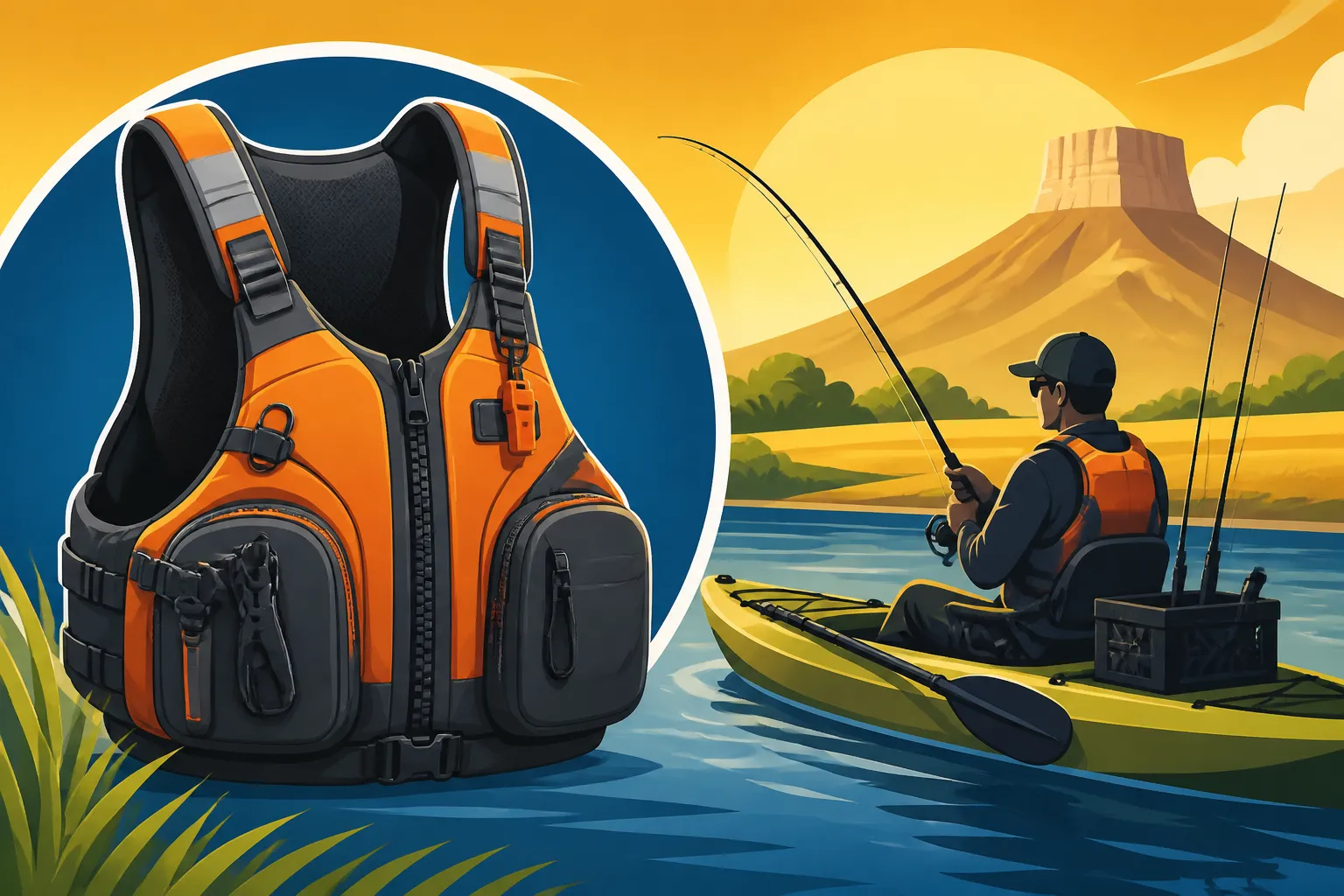
Kayak anglers are all about maximizing efficiency and having their essential tools close at hand. This is where a fishing-specific PFD truly shines. Many models come equipped with a surprising array of pockets, attachment points, and loops that can make a huge difference in your organization on the water. Imagine having a designated spot for your pliers, line cutters, and a small tackle box without having to rummage through your crates or bags.
Look for large, zippered pockets that can hold items like your phone (in a waterproof case, of course), a small first-aid kit, or extra soft plastics. Some PFDs even feature tool pockets with drainage, D-rings for attaching a whistle or a leash for your fishing net, and even specific loops for holding a small pair of scissors or forceps. These features turn your PFD into a wearable tackle management system, keeping your most-used items within easy reach, which is invaluable when you're trying to land a feisty walleye on a Kansas reservoir. Many quality PFDs designed for anglers, available from retailers like Bass Pro Shops or online through Amazon, feature these thoughtful storage solutions.
Visibility and Safety Features
While not always top of mind, visibility is a critical safety feature, especially if you're fishing on larger, busier bodies of water or during low-light conditions. Brighter colors like neon green, orange, or yellow make you much easier to spot by other boaters, or by search and rescue if an emergency occurs. Some PFDs incorporate reflective piping or panels, which are incredibly effective at catching light from boat headlights or searchlights after dark.
Beyond color, consider other safety integrations. A whistle, often attached to a lanyard, is a simple but highly effective way to signal for help. Some high-end PFDs might include attachment points for a strobe light or a small personal locator beacon (PLB). While we all hope to never need these features, having them can provide immense peace of mind. Knowing that you've got these layers of safety integrated into your gear allows you to focus more on the fishing itself, whether you're targeting Kansas Channel Catfish Daily Limit or chasing Kansas Walleye Minimum Length Limit of 21 Inches.
Types of PFDs Best Suited for Kayak Fishing
Not all PFDs are created equal, and understanding the different types can help you narrow down your choices to find the perfect match for your kayak fishing adventures in Kansas. Generally, PFDs are categorized by their buoyancy level and how they're designed to be worn. For kayak fishing, we primarily focus on Type III (inherently buoyant) and inflatable PFDs.
Inherently Buoyant Vests (Type III)
These are your traditional, foam-filled life vests, and they are by far the most common type used by kayak anglers. Type III PFDs are designed for general recreational activities and offer excellent mobility, comfort, and quick assistance in calm water situations. They are always ready to go – no inflation required – and often come packed with those angler-specific features like pockets and tool attachment points that we discussed earlier.
Pros:
- Always Buoyant: They provide immediate flotation the moment you hit the water, without any action required on your part. This is a huge advantage if you're knocked unconscious or simply too disoriented to inflate a PFD.
- Low Maintenance: There are no CO2 cartridges to check or replace, making them very straightforward to use and maintain. Just rinse, dry, and store.
- Feature-Rich: Angler-specific models offer numerous pockets, gear loops, and attachment points for all your fishing essentials. This can significantly enhance your on-water organization.
- Affordable: Generally, inherently buoyant PFDs are more budget-friendly than their inflatable counterparts.
- Durability: Made from robust fabrics, they can withstand the rigors of regular use and exposure to the elements.
Cons:
- Bulkier: Even the most streamlined models will feel a bit bulkier than an inflatable PFD, potentially affecting ventilation on hot days or feeling slightly restrictive to some anglers.
- Less Ventilated: The foam construction can lead to warmer wearing in the Kansas summer heat compared to some inflatable options.
When considering an inherently buoyant vest, pay close attention to the cut and fit for kayak use. Brands like NRS, Kokatat, and even some dedicated fishing brands found at Bass Pro Shops or Amazon offer excellent kayak-specific PFDs with high-back designs and ample pocket space.
Inflatable PFDs (Type V with Type III Performance)
Inflatable PFDs are a game-changer for many anglers because of their minimal profile and incredible freedom of movement. They come in two main styles: manual inflation (where you pull a cord) and automatic inflation (which deploys upon immersion in water). These are generally classified as Type V PFDs, but they offer the same performance level as a Type III when inflated.
Pros:
- Maximum Mobility: Their slim design means very little restriction on your casting or paddling motion, making them feel almost invisible while worn.
- Excellent Ventilation: With less material covering your body, they are much cooler to wear, which is a major plus during the hot Kansas summer fishing days.
- Comfort: Many anglers find them more comfortable for extended periods of wear, especially if they dislike the feeling of a bulky vest.
Cons:
- Requires Action (Manual): If you choose a manual inflatable PFD, you must be conscious and able to pull the inflation cord. In a sudden, unexpected capsize or if you hit your head, this could be a critical failure point.
- Maintenance: Inflatables require more maintenance. You need to periodically check the CO2 cartridge and ensure the inflation mechanism is ready. If deployed, the cartridge must be replaced, which adds to the ongoing cost.
- Not for Everyone: They are generally not recommended for non-swimmers, children under a certain weight, or for high-impact watersports where immediate buoyancy is essential without user input.
- Cost: Inflatable PFDs are typically more expensive upfront and have recurring costs for replacement CO2 cartridges.
For kayak fishing, if you opt for an inflatable, the auto-inflating models offer an added layer of security, deploying instantly if you fall in. However, they also come with a slightly higher price tag and the potential for accidental deployment if they get wet from rain or splash. Regardless of which type you choose, remember that the best PFD is always the one you actually wear.
Finding Your Perfect Fit: Sizing and Adjustments
You can have the most expensive, feature-packed PFD on the market, but if it doesn't fit properly, it's not going to do its job when you need it most. A PFD that's too large will ride up around your ears in the water, offering little effective flotation. One that's too small will be uncomfortably tight and restrict your movement, making you less likely to wear it. The key to safety and comfort lies in getting the right size and knowing how to adjust it.
Understanding PFD Sizing
PFD sizing is primarily based on chest circumference, not weight, for adults. Weight is a factor for children's PFDs. Before you buy, take a soft tape measure and wrap it around the widest part of your chest. This measurement will correspond to the sizing charts provided by PFD manufacturers. Keep in mind that sizing can vary slightly between brands, so always check the specific chart for the model you're interested in. Don't guess – an accurate measurement is crucial.
Children's PFDs are sized by weight and sometimes chest size. It's critical that a child's PFD fits snugly and does not ride up over their chin or ears when lifted by the shoulder straps. Children often need a PFD specifically designed for their size range.
The Try-On and Adjustment Process
Once you have a PFD in hand, it's time to try it on and adjust it for a snug, secure fit. This isn't just a quick zip-up and go; it's a process that ensures optimal safety and comfort.
- Loosen All Straps: Start by loosening all the adjustment straps – shoulders, sides, and waist.
- Put It On: Zip or buckle the front closure.
- Tighten from the Bottom Up: Begin tightening the waist strap first, then the side straps, and finally the shoulder straps. You want a snug fit that feels secure but doesn't restrict your breathing or movement. You should be able to comfortably take a deep breath.
- Perform the "Lift Test": With all straps tightened, have someone gently pull up on the shoulders of your PFD. If the PFD rides up past your nose or ears, it's too loose or too big. You need to either tighten the straps further or try a smaller size. For self-testing, try reaching your arms straight up and seeing if it slides too far up your torso.
- Simulate Kayak Movement: Once you feel like you have a good fit, sit down in a chair (or ideally, your kayak) and mimic paddling and casting motions. Does it rub? Does it ride up? Does it restrict your movement in any way? This "real-world" test is essential for ensuring comfort during actual fishing. If you're going to be Kayak Fishing Techniques in Kansas, you need a PFD that works with you.
Remember, a PFD that fits correctly will be comfortable enough to wear all day, every day you're on the water. This is the ultimate goal, as an unworn PFD is completely ineffective.
| Feature | Inherently Buoyant Vest (Type III) | Inflatable PFD (Type V w/ Type III Performance) |
|---|---|---|
| Buoyancy | Instant, always ready | Requires manual pull or water immersion |
| Comfort/Mobility | Good, but can be bulky | Excellent, minimal restriction |
| Ventilation | Moderate | Superior, much cooler |
| Maintenance | Low | High (CO2 checks, cartridge replacement) |
| Pockets/Storage | Abundant on fishing-specific models | Minimal to none |
| Cost | Generally lower | Generally higher (plus replacement cartridges) |
| Best For | All anglers, non-swimmers, kids | Experienced swimmers, hot weather, maximum mobility |
Kansas Regulations Regarding PFDs for Kayak Anglers
Understanding and adhering to the local regulations is not just about avoiding fines; it's a fundamental part of responsible boating and ensuring your safety. In Kansas, the rules regarding PFDs are generally clear and apply to all vessels, including kayaks. Ignoring these can lead to penalties and, more importantly, put you at unnecessary risk.
General PFD Requirements
For any vessel on Kansas waters, including kayaks, canoes, and paddleboards, you must have at least one U.S. Coast Guard-approved wearable PFD for each person on board. This is a baseline requirement. However, merely having it in your kayak isn't always enough. Many boating safety experts and even law enforcement strongly recommend wearing your PFD at all times, especially in smaller vessels like kayaks where capsizing is more likely and self-rescue can be challenging.
While Kansas law permits adult paddlers in certain circumstances to simply have the PFD on board rather than worn, common sense and safety dictate otherwise for kayak fishing. The moment a PFD is needed, there's rarely time to retrieve it from under a bungee cord or a tackle crate and put it on. For ultimate safety, wear it.
Special Rules for Children
Here's where the "wear it" rule becomes mandatory: all children 12 years of age and younger are required to wear a U.S. Coast Guard-approved PFD at all times while on board any vessel on Kansas waters. This regulation is non-negotiable and strictly enforced. As a parent or guardian, ensuring your child is properly fitted in a worn PFD is one of the most important things you can do to protect them on the water. There are many excellent youth PFDs designed for comfort and security, available at most sporting goods stores or through online retailers. Make sure you understand the Fishing License Age Requirements in Kansas for young anglers, too, as that often goes hand-in-hand with safety considerations.
What Constitutes a USCG-Approved PFD?
When purchasing a PFD, always look for the U.S. Coast Guard approval label. This label indicates that the PFD meets specific safety and performance standards. It will typically be found on the inside of the PFD and will specify the PFD type (e.g., Type III, Type V) and the conditions for which it is approved. If a PFD does not have this label, it is not considered legal or safe for use on Kansas waters.
Beyond the PFD: Additional Kayak Safety Tips
While a PFD is your primary piece of safety equipment, a holistic approach to kayak fishing safety involves a few other considerations. These additional tips can further enhance your peace of mind and preparedness when you're out chasing fish in Kansas.
Filing a Float Plan
Before you head out on the water, especially if you're venturing to a larger lake like Clinton Lake or Tuttle Creek Lake, consider telling someone where you're going, when you expect to return, and who is with you. This is known as filing a float plan. It's a simple step, but it can be life-saving. If you don't return by your designated time, your contact knows where to direct help. This doesn't need to be formal; a quick text message or phone call to a friend or family member will suffice.
Essential Safety Gear to Carry
Beyond your PFD, a few other items can prove invaluable:
- Whistle: A sound-producing device is required by law on most vessels, and a simple plastic whistle attached to your PFD is perfect. It's far more effective than yelling if you need to attract attention.
- Paddle Leash: An unexpected capsize can send your paddle floating away. A paddle leash keeps it attached to your kayak, ensuring you don't lose your primary means of propulsion.
- Bailer/Sponge: If you take on water from a wave or rain, a small bailer or large sponge can help you quickly remove water from your kayak.
- First-Aid Kit: A small, waterproof first-aid kit can handle minor cuts, scrapes, or hook punctures that inevitably happen when fishing.
- Sun Protection: Sunscreen, a wide-brimmed hat, and sunglasses are vital for protecting yourself from the harsh Kansas sun, preventing sunburn and heatstroke.
- Communication Device: A fully charged cell phone in a waterproof case or a marine-band VHF radio can be crucial for calling for help in an emergency. Buying a Kansas Fishing License on Your Phone also makes it easy to have digital proof of your license handy.
- Water and Snacks: Staying hydrated and fueled is important for maintaining energy and focus throughout your fishing trip.
By combining a properly fitting PFD with these additional safety measures, you'll be well-prepared for a safe and enjoyable kayak fishing experience across the beautiful waters of Kansas. Remember, safety should always be your top priority, allowing you to truly relax and enjoy the angling adventure.
Disclaimer
This article is for general informational purposes only and does not constitute professional advice. Laws, prices and regulations vary by location and change over time. Consult a qualified professional for guidance on your specific situation.