How to Identify Kansas Game Fish
There's nothing quite as exciting as feeling that tug on your line, reeling in a beautiful fish, and then… squinting at it, wondering, "Okay, what is this thing?" It's a common struggle for many anglers in Kansas, whether you're new to the sport or you've been casting lines for years. Confusing similar species can lead to misapplying regulations or simply missing out on knowing exactly what kind of magnificent creature you've just battled. This comprehensive guide is here to cut through that confusion, helping you confidently identify the most common and sought-after game fish in Kansas waters.
The Big Three Catfish: Channel, Blue, and Flathead
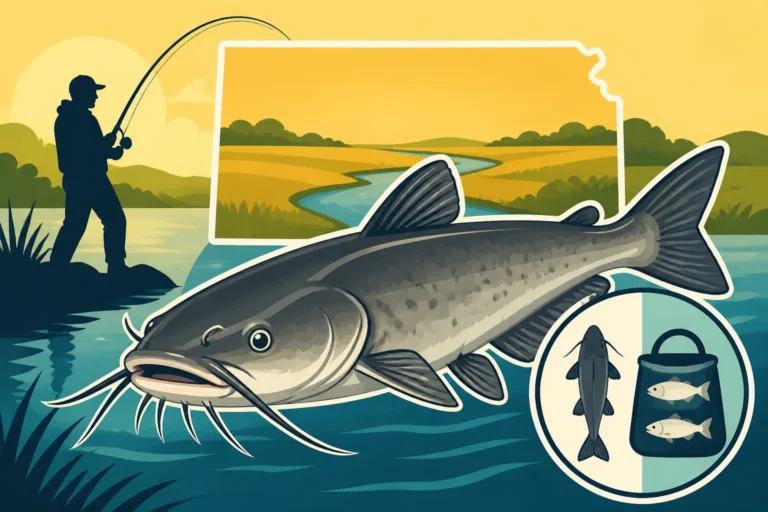
Kansas is a mecca for catfish lovers, with our lakes and rivers teeming with these whiskered warriors. But while they're all "catfish," the Channel, Blue, and Flathead are distinctly different species with unique characteristics that are crucial for identification, especially when you consider varying Kansas Catfish Daily Limits. Knowing which one you've hooked can often determine if you're holding a new personal best or just another evening meal.
Channel Catfish Identification
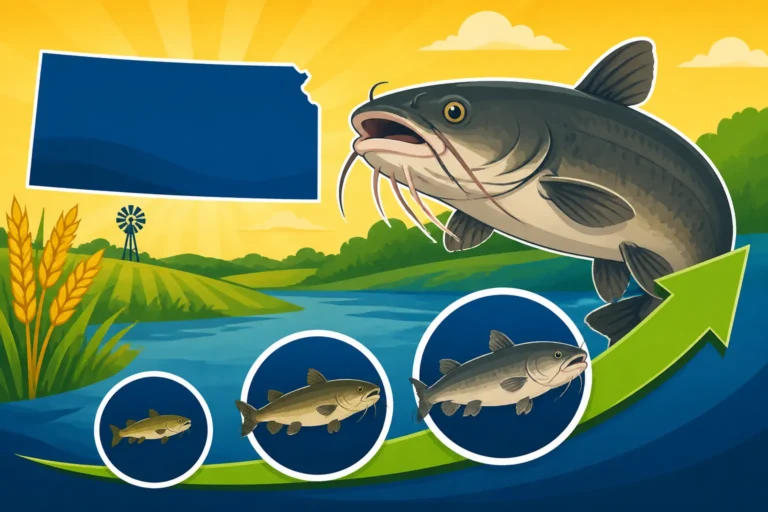
Channel cats are, without a doubt, the most widespread and frequently caught catfish in Kansas. They're often the first catfish a new angler learns to identify, and for good reason—they're incredibly abundant. When you pull one in, pay close attention to its body. Channel cats typically have a forked tail, much like a salmon or trout, which is a key differentiator from their flathead cousins.
Their coloration can vary quite a bit depending on the water clarity and diet, ranging from olive green to grayish-blue on their backs, with silvery-white bellies. Younger Channel cats, and those from clear water, often display dark spots along their sides, which tend to fade as they age. They have a relatively sleek, somewhat slender body shape compared to the stockier blue cat. Their anal fin is rounded and has 24-29 rays. Remember, if it's got spots (especially when younger) and a deeply forked tail, you've likely got a Channel cat. You can learn more about Kansas Channel Catfish Facts and Limits in our other articles.
Blue Catfish Identification
Blue catfish are the giants of the Kansas catfishing world, known for their immense size and incredible fighting power. While they share some similarities with Channel cats, there are crucial distinctions to make. The most obvious one is their tail – it’s also deeply forked, just like a Channel cat's, but that's where the visual similarities largely end. Blue cats, as their name suggests, typically have a bluish-gray color on their backs and sides, fading to a white belly, usually without any spots, even when young.
Their body shape is generally stockier and more robust than a Channel cat, hinting at their potential for enormous growth. A definitive characteristic is their anal fin, which has a straight edge and a higher ray count, usually between 30-36 rays. This straight-edged anal fin is the most reliable way to tell a Blue cat from a Channel cat when the spot patterns might be ambiguous or faded. If you’re targeting a trophy, knowing the difference is essential. Dive deeper into Kansas Blue Catfish Facts and Limits to understand more about these leviathans.
Flathead Catfish Identification
Flathead catfish are truly unique among the Kansas catfish species, both in appearance and behavior. Unlike the Channel and Blue cats, Flatheads prefer live bait and often inhabit areas with heavy cover like submerged timber or rocky crevices. Their appearance reflects their ambush predator lifestyle. The first thing you'll notice is their namesake: a distinctly flat, broad head.
Their lower jaw protrudes beyond the upper jaw, giving them a perpetually grumpy look, and their eyes are relatively small. Their tail is square or only very slightly notched, not deeply forked. This is perhaps the easiest way to tell them apart from Channel and Blue cats. Coloration varies from mottled brown and yellow to olive, often with dark splotches, providing excellent camouflage in their snag-laden habitats. Their dorsal fin is small, and their anal fin is short and rounded, typically having 14-17 rays. These fish are true river monsters, and understanding Kansas Flathead Catfish Facts and Limits is key for any serious angler.
Walleye, Sauger, and Saugeye: The Elusive Look-Alikes
Here's where things can get really tricky for Kansas anglers. Walleye, sauger, and saugeye are all members of the perch family and share many physical traits, making positive identification a true skill. But with distinct length and bag limits for some, knowing which one you've caught is more than just academic—it's regulatory.
Walleye Identification
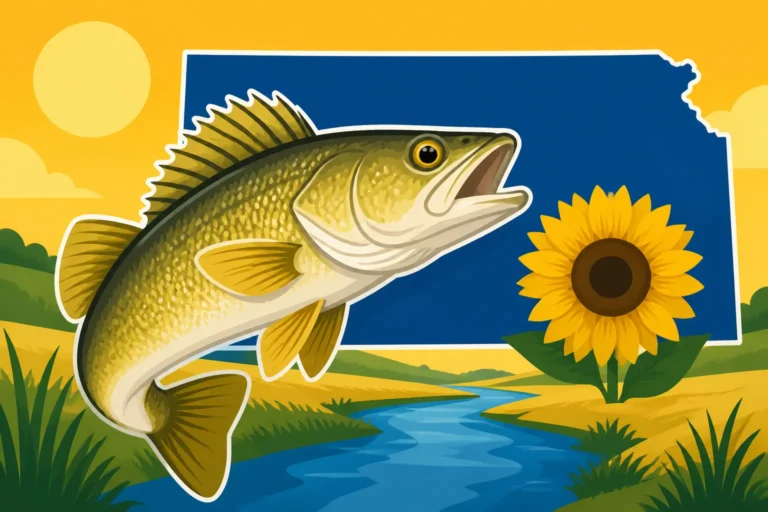
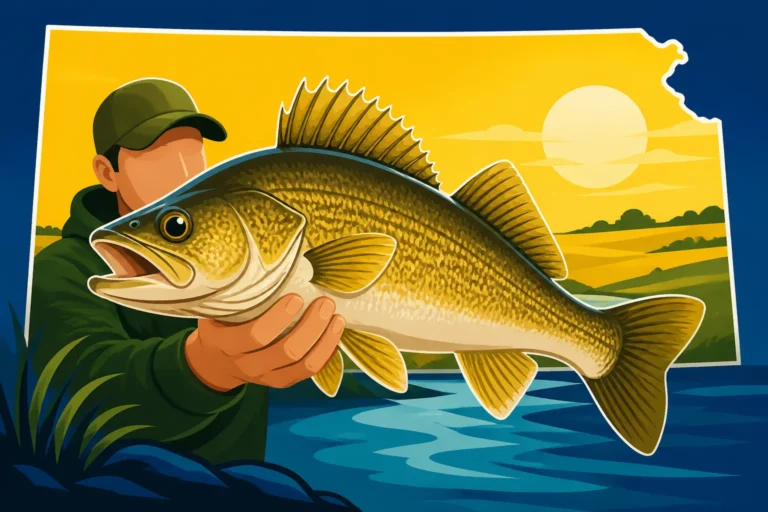
Walleye are one of the most sought-after game fish in Kansas, prized for their delicious, flaky white meat and challenging fight. They have a long, slender body, golden-olive to brown in color, with a white belly. Their most distinguishing feature is a large, glassy eye, which helps them see in low light conditions – perfect for their nocturnal feeding habits.
Look closely at the dorsal fins. Walleye have two distinct dorsal fins: the first is spiny, and the second is soft-rayed. The key identification mark is a large, distinct dark spot on the lower lobe of their caudal (tail) fin. This spot is almost always present and is a dead giveaway. Additionally, the first dorsal fin often has a darker, blotchy appearance with some streaking but generally lacks the distinct rows of spots found on a sauger. When trying to identify, check for that tail spot! Walleye also often have a more pointed snout compared to a sauger. Remember, for trophy potential, size matters, and Kansas Walleye Minimum Length Limit of 21 Inches is a regulation many anglers keep in mind.
Sauger Identification
Sauger are less common in many Kansas waters compared to walleye, often preferring riverine environments or the turbid parts of reservoirs. They share the same long, slender body shape and sharp teeth as their walleye cousins, making them easy to confuse at a glance. However, there are a few tell-tale signs to look for.
The most reliable way to identify a sauger is by looking at its first dorsal fin. Unlike the walleye's somewhat blotchy dorsal fin, the sauger's first dorsal fin will have distinct dark spots arranged in neat rows. This "spotted sail" is a characteristic almost always present. Furthermore, sauger lack the large, dark spot on the lower caudal fin lobe that walleye possess. They also tend to have a more brassy or brownish coloration with distinct dark blotches or saddle markings along their sides, rather than the more uniform golden hue of a walleye.
Saugeye Identification
Saugeye are a hybrid species, a cross between a female walleye and a male sauger, and they often exhibit a mix of characteristics from both parents. This is where identification gets really challenging! Saugeye were specifically created to thrive in waters where pure walleye or sauger might struggle, offering the best of both worlds in terms of growth rate and hardiness.
When identifying a saugeye, look for a blend of features. They might have some faint spots on their first dorsal fin, but these usually won't be as distinct or in as clear rows as a pure sauger. The critical differentiator is usually the caudal fin: saugeye will often have a dark spot on the lower lobe, much like a walleye, but it will be much less pronounced, often appearing as a dusky smudge rather than a crisp, clear spot. Their body coloration is also often a blend, perhaps more golden than a sauger but with some of the lateral blotchiness. Sometimes, the only way to be absolutely certain is to look at the cheek scales – saugeye tend to have scales on their cheeks, while walleye are mostly scale-less there.
Here's a quick comparison table to help differentiate these tricky species:
| Feature | Walleye | Sauger | Saugeye (Hybrid) |
|---|---|---|---|
| First Dorsal Fin | Dark blotches, no distinct rows of spots | Distinct dark spots in rows | Variable; faint spots, not as distinct as sauger |
| Caudal (Tail) Fin | Distinct dark spot on lower lobe | No distinct dark spot | Dusky, less distinct spot on lower lobe |
| Body Coloration | Golden-olive to brown, generally uniform | Brassy/brownish, distinct dark saddle marks | Blend; often golden with some lateral blotches |
| Cheek Scales | Mostly scale-less | Fully scaled | Variable; often partially scaled |
| Snout | More pointed | Blunter | Intermediate |
Crappie Conundrum: Black vs. White
Crappie fishing is a Kansas tradition, a rite of passage for many anglers. Both Black and White Crappie are abundant and fantastic table fare, but they have subtle differences in appearance and often in the habitats they prefer. While regulations for both are often similar, understanding their distinctions is great for identifying Kansas White Crappie Identification versus Kansas Black Crappie Identification patterns and knowing what you're catching.
White Crappie Identification
White crappie are often found in larger, more turbid waters, preferring areas with brush piles, submerged timber, and other structure. When you land a White crappie, the first thing to look for is their body shape. They tend to be more elongated and slender compared to the rounder Black crappie.
Their coloration is typically silvery-white with 6-9 distinct, dark vertical bars running down their sides. These bars are usually quite prominent. Count the dorsal spines! White crappie will almost always have 5 or 6 dorsal spines. This is a very reliable characteristic. Their mouth is also generally larger and extends further back on the head. They are a prolific species, and catching a limit of Kansas Crappie Daily Limit of 50 Fish is a common and rewarding experience.
Black Crappie Identification
Black crappie, while similar in many ways, often prefer clearer water with more vegetation. They tend to be a bit more robust and rounder in body shape than White crappie, giving them a "slab" like appearance. This difference in body shape, though subtle, is often noticeable once you've seen a few of both.
The most definitive characteristic for a Black crappie is their dorsal spines. They will have 7 or 8 dorsal spines, a clear distinction from the White crappie's 5 or 6. Their coloration is generally darker, ranging from silvery-gray to dark olive green, with an irregular pattern of dark spots and blotches over their sides, rather than the distinct vertical bars of the White crappie. These spots often give them a speckled appearance. Their mouth is usually smaller and extends less far back on the head compared to a White crappie.
Bass Breakdown: Largemouth, Smallmouth, and Spotted
Kansas offers fantastic bass fishing, whether you're chasing trophy bucketmouths or feisty smallmouths. Each species offers a unique challenge, and recognizing them correctly is key for understanding their preferred habitats and sometimes for adhering to specific regulations. The differences, especially between spotted bass and their cousins, can be subtle but important.
Largemouth Bass Identification
The Largemouth bass is arguably the most popular freshwater game fish in North America, and it certainly holds that title in Kansas. These fish are characterized by their deep green to olive-green coloration on the back, fading to lighter green sides and a white belly. They possess a prominent dark, irregular lateral line running horizontally along their sides, which can sometimes appear as a series of blotches rather than a solid line.
The most definitive identifier for a Largemouth bass is its jaw. When its mouth is closed, the upper jaw extends noticeably beyond the rear edge of its eye. Their dorsal fins are almost completely separated by a deep notch. Largemouths love dense cover, like lily pads, submerged trees, and weed beds, and are commonly found in reservoirs, ponds, and slower river sections. If you're looking to compare, check out Largemouth vs Smallmouth Bass Identification.
Smallmouth Bass Identification
Smallmouth bass are known for their incredible fighting spirit, often making acrobatic leaps and powerful runs. They are less common than Largemouths in Kansas but can be found in clearer, cooler waters with rocky bottoms, often in rivers or the rocky areas of large reservoirs like Wilson Lake. Their coloration is typically bronze to brownish-green, with subtle dark vertical bars or blotches along their sides, rather than a distinct horizontal line.
The key to identifying a Smallmouth bass lies, predictably, in its mouth. When its mouth is closed, the upper jaw does not extend beyond the rear edge of its eye. Their dorsal fins are also notched but usually not as deeply separated as the Largemouth's. Smallmouths have red eyes, which can also be a helpful clue. They are built for current and structure, using their powerful tails to navigate rocky runs and hide among boulders.
Spotted Bass Identification
Spotted bass are the often-overlooked middle child of the Kansas bass family, frequently mistaken for either a Largemouth or a Smallmouth. They are found in many of the same waters as Largemouth bass but can sometimes tolerate slightly clearer, more current-prone areas than their bucketmouth relatives. Their body shape is generally more streamlined than a Largemouth but not as stout as a Smallmouth.
To identify a Spotted bass, look for a combination of traits. Their upper jaw, when closed, will typically align with or slightly extend past the rear edge of the eye, putting it between the Largemouth and Smallmouth in terms of jaw length. The most reliable characteristic is their lateral line: Spotted bass have a distinct, often broken lateral line, and below it, they have rows of small, dark spots (hence the name "spotted" bass) that form a series of longitudinal rows on their lower sides. Another key identifier is a patch of teeth on their tongue, which neither Largemouth nor Smallmouth typically possess. This patch can be felt by rubbing a finger across the tongue.
White Bass and Wipers: Speedsters of the Reservoirs
Kansas is famous for its white bass runs, an exciting time for anglers. But sometimes, in the midst of the action, you might hook into something that looks similar but packs an even bigger punch: the wiper. Knowing how to tell these two apart is important for understanding their behavior and for applying the correct Kansas Fishing Regulations Explained.
White Bass Identification
White bass are energetic, schooling fish that are incredibly popular with Kansas anglers, especially during their famous spring spawning runs up rivers and creeks. They have a sleek, silvery body with several dark, unbroken horizontal stripes running along their sides. These stripes are typically quite prominent and distinct.
Their body shape is deeper and more compressed than a wiper, giving them a more "panfish-like" profile in comparison. The first dorsal fin is typically high and spiny. The key is those unbroken stripes. If all the stripes extend from gill plate to tail, you're almost certainly holding a White bass. They are smaller than wipers on average, but what they lack in size, they make up for in sheer numbers and aggressive feeding. During a Kansas White Bass Run Timing, it's not uncommon to catch dozens of these feisty fighters.
Wiper (Hybrid Striped Bass) Identification
Wipers, also known as Hybrid Striped Bass, are a cross between a White bass and a Striped bass. They were created to provide a larger, harder-fighting game fish that thrives in the reservoir environments of Kansas. These fish combine the best traits of both parents, growing much larger than a White bass and fighting with incredible power.
The primary identifier for a wiper is their stripes. While they also have horizontal stripes, many of them will be broken or interrupted, particularly towards the rear of the fish. You'll often see distinct breaks and jogs in the lines, especially below the lateral line. Wipers also have a more elongated, torpedo-shaped body compared to the deeper-bodied White bass, giving them a more muscular appearance. Their head is also more conical. Check for those broken stripes, and you’ll know you’ve landed a true powerhouse! To learn more about these powerful fish, check out our guide on Kansas Hybrid Striped Bass Identification.
Panfish and Trout: The Smaller but Mighty Fighters
While the big game fish often steal the spotlight, Kansas also offers fantastic opportunities for catching smaller, yet incredibly fun-to-catch panfish and the feisty trout that are stocked seasonally. Identifying these species is usually a bit easier, but knowing their specific characteristics helps appreciate the diversity in our waters.
Bluegill Identification
Bluegill are the quintessential panfish, often the first fish a child ever catches. They are found in virtually every pond, lake, and reservoir across Kansas. They have a distinctive, deep, and compressed body shape, almost circular, giving them a very "pan-like" appearance.
Their coloration is typically olive-green to dark blue on the back, fading to lighter sides with a yellowish or orange belly, especially on males during spawning season. The most prominent identifier is the dark, often black, "ear flap" (operculum) with no colored trim. They also have a dark spot at the base of their dorsal fin. Bluegill are characterized by their small, terminal mouth. They are prolific breeders and provide endless hours of fun for anglers of all ages. Many of Kansas's Kansas Community Fishing Lake Rules are tailored around these easily accessible species.
Redear Sunfish Identification
Redear sunfish, often called "shellcrackers" due to their habit of eating snails and mussels, are another popular panfish in Kansas, though not as widespread as bluegill. They are sought after for their larger size compared to bluegill and their delicious taste. They share a similar deep, compressed body shape with bluegill.
The key to identifying a Redear is the distinctive red or orange margin around the black operculum (ear flap). This bright trim is almost always present, even if faded on some fish. Their body coloration is usually olive-green to golden, often with faint vertical bars or speckles. They have a slightly more pointed snout than a bluegill, and their pectoral fins are longer and more pointed. If you find a bluegill-like fish with that tell-tale red ear, you've got a Redear. Find out more about Kansas Redear Sunfish Identification.
Rainbow and Golden Rainbow Trout Identification
Kansas may not be known for its trout streams, but thanks to the Kansas Department of Wildlife, Parks, and Tourism (KDWPT) stocking programs, anglers can enjoy fantastic trout fishing during the cooler months. We primarily stock two types: Rainbow Trout and Golden Rainbow Trout.
Rainbow Trout: These are the most common stocked trout. They have a sleek, torpedo-shaped body that is typically olive-green to dark blue on the back, with silvery sides and a white belly. Their most distinctive feature is a prominent pink or reddish stripe running horizontally along their sides, often giving them their "rainbow" namesake. Their body is covered in small black spots, particularly on the back and caudal fin. Their tail is square or slightly forked. You'll often find these stocked in various community lakes and urban ponds during the winter Kansas Winter Trout Fishing Guide.
Golden Rainbow Trout: These are a unique, selectively bred variant of the Rainbow Trout, specifically raised for their striking golden-yellow to orange coloration. They stand out immediately from other fish in the water. They retain the same body shape as a regular Rainbow Trout but lack the typical pink stripe and heavy black spotting. Instead, they are often a vibrant, uniform golden color, sometimes with faint orange fins. These are stocked alongside regular Rainbows in some special trout waters and are a real treat to catch due to their rarity and beauty. Look for the distinct gold color to identify these special fish. Understanding Kansas Golden Rainbow Trout Facts can make your trout fishing experience even more exciting.
Understanding the Importance of Accurate Identification
Beyond the satisfaction of knowing exactly what you've caught, accurate fish identification is incredibly important for several practical reasons. Firstly, Kansas has specific length and bag limits for different species. Mistaking a Walleye for a Sauger, or a Blue Catfish for a Channel Catfish, could inadvertently lead to violating regulations, which nobody wants. Regulations are put in place to manage fish populations and ensure healthy fisheries for generations to come, and adhering to them is part of being a responsible angler.
Secondly, knowing the species helps you refine your techniques. Different fish prefer different baits, lures, and habitats. If you consistently catch certain species, you can adapt your approach to target them more effectively. For example, knowing if you're in a spot with Largemouth or Smallmouth bass will dictate whether you're throwing a jig into heavy cover or working a crankbait over rocky ledges. Similarly, understanding the nuances between crappie species can tell you whether to focus on dense brush (White Crappie) or open water near vegetation (Black Crappie). Good identification skills truly make you a better, more successful angler.
Finally, accurate identification contributes to valuable data collection. When you share your catches with local bait shops, fishing guides, or even online forums, knowing the precise species helps paint a clearer picture of fish populations and health for everyone. Many anglers find identification guides and waterproof fish ID cards helpful, which you can often find on platforms like Amazon, alongside other essential fishing gear. It’s all part of the continuous learning and enjoyment that makes Kansas fishing such a rewarding hobby!
Disclaimer
This article is for general informational purposes only and does not constitute professional advice. Laws, prices and regulations vary by location and change over time. Consult a qualified professional for guidance on your specific situation.