How to Fish a Jig for Walleye at Night
There's nothing quite like the thrill of chasing walleye, but for many anglers, these cunning fish seem to vanish with the setting sun. If you've ever felt that frustration of the bite dying as daylight fades, you're not alone. The truth is, walleye are often more active and less wary under the cover of darkness, and learning how to fish a jig for walleye at night in Kansas can unlock an entirely new level of success. This guide will walk you through everything you need to know to turn those tough night fishing trips into memorable hauls.
The Allure of Night Jigging for Kansas Walleye
Night fishing for walleye might seem intimidating at first, but it offers some incredible advantages over daytime angling, especially in clear Kansas waters. Once you understand why walleye become more active at night, you'll be much better equipped to target them effectively.
Why Walleye Go Nocturnal
Walleye are largely visual predators, but they are also very sensitive to light. During the bright daylight hours, especially in clear lakes like Wilson Lake or Cheney Reservoir, walleye tend to retreat to deeper, darker waters or hide in heavy cover. This is a survival instinct, as they are less exposed to predators themselves and their eyes are simply not as well-suited for intense sunlight compared to other game fish.
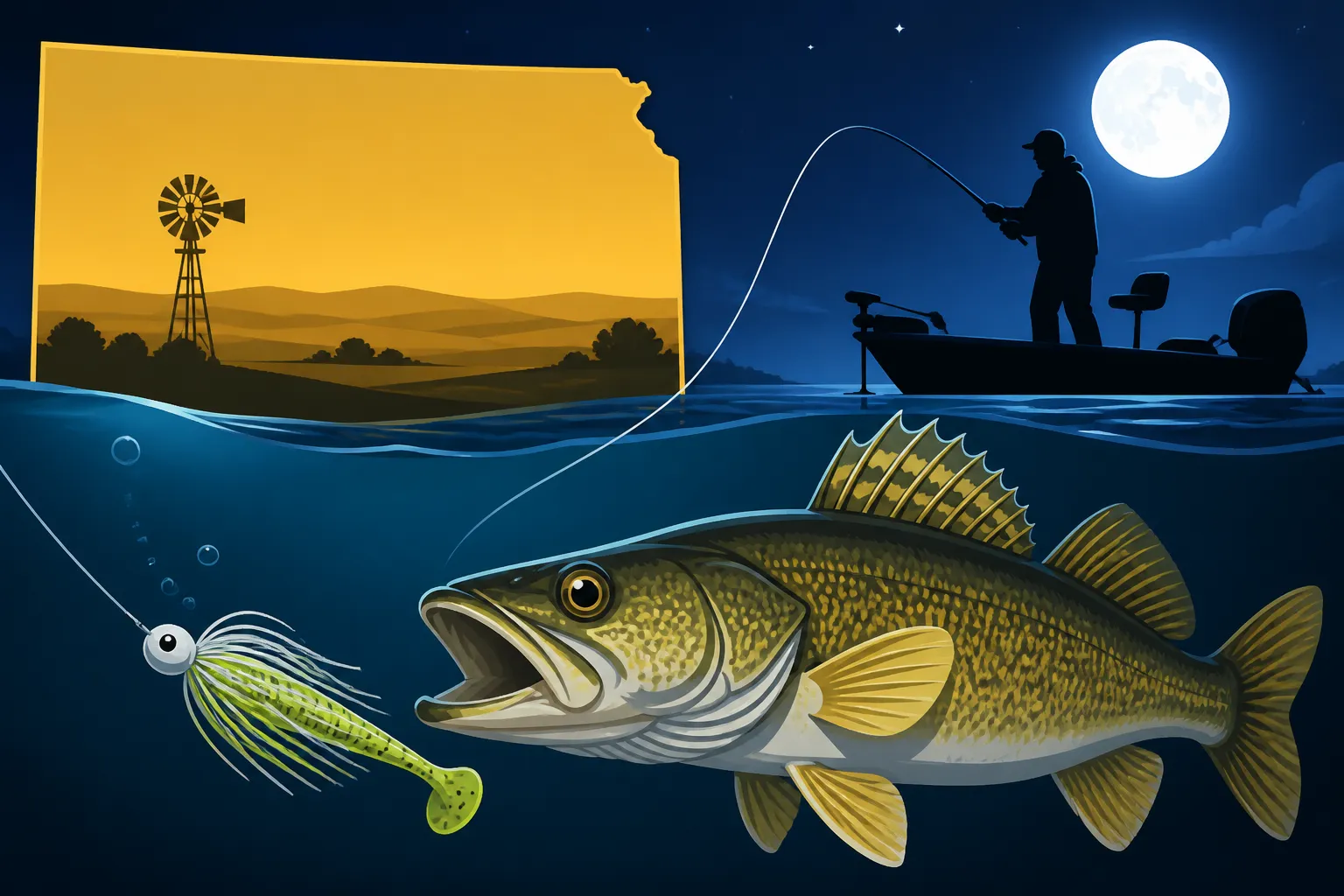
When night falls, the tables turn. The diminished light gives walleye a distinct advantage. Their large, reflective eyes are perfectly designed to gather what little light is available, allowing them to see baitfish and other prey much more effectively than during the day. This shift often brings them out of their deep-water sanctuaries and closer to shallower feeding grounds, points, and even shorelines. It's during these prime nocturnal hours that you can often intercept large, aggressive walleye that were nearly impossible to tempt just a few hours earlier. Think of it as their secret weapon; they're essentially vampires of the lake, coming alive when the sun goes down.
Overcoming the Challenges of Darkness
Fishing in the dark certainly presents its own set of hurdles. Visibility is obviously the biggest challenge, making everything from tying knots to landing fish more difficult. You can't just rely on your eyes to spot subtle rod tip movements or see where your lure lands. This means developing a heightened sense of touch and sound, learning to interpret vibrations through your rod, and paying close attention to your surroundings.
Safety is another major consideration. Navigating in the dark, especially on unfamiliar water, requires extreme caution. Cold temperatures can also creep in quickly after sundown, even on what was a warm day. But with the right preparation and gear, these challenges are easily managed. Many anglers find the peace and quiet of night fishing to be incredibly rewarding – it's a completely different experience from the bustling daytime bite, offering a solitude that allows you to truly focus on the feel of the water and the subtle movements of your line. Plus, there's just something inherently exciting about waiting for that jarring strike when you can barely see a thing!
Essential Gear for Your Night Walleye Jigging Adventure
Success in night walleye jigging hinges on having the right equipment. You don't need to break the bank, but investing in a few key items will make your experience safer, more comfortable, and significantly more productive.
Rods, Reels, and Line: Your Connection to the Fish
When you're jigging for walleye at night, especially when targeting those subtle bites, your rod, reel, and line become your most crucial sensory tools. You won't have the luxury of visual cues, so feeling every tap and tick is paramount.
For rods, aim for a medium-light to medium power rod, typically 6'6" to 7'6" in length, with a fast or extra-fast action. This combination provides enough backbone to set the hook firmly while maintaining a sensitive tip that telegraphs even the lightest bites. A graphite rod is generally preferred over fiberglass due to its superior sensitivity. Many anglers find a good quality spinning rod, perhaps an Ugly Stik Elite or a St. Croix Eyecon, offers the perfect balance.
Matching your rod with a reliable spinning reel in the 2000-3000 series is ideal. Look for a smooth drag system, which is vital when fighting a thrashing walleye in the dark, and a good retrieve ratio. Brands like Shimano and Daiwa offer excellent options that won't let you down. As for line, this is where personal preference and water clarity often dictate choice, but for jigging, many Kansas anglers swear by braid or fluorocarbon. Braided line, like PowerPro or Berkley X9, offers incredible sensitivity and no stretch, allowing you to feel every subtle contact with your jig or a walleye's inhale. However, its low visibility in clear water might require a fluorocarbon leader (6-10 lb test) for stealth. Fluorocarbon mainline (6-10 lb test) offers a good compromise, providing excellent sensitivity and invisibility in the water. Monofilament (8-10 lb test) can also work, especially if you're fishing in murkier conditions, but its stretch can hinder bite detection. You can find a wide selection of these lines and more on platforms like Amazon.
Jigs and Baits: Lure Selection for Low Light
The right jig can make all the difference when walleye are feeding aggressively after dark. While walleye are visual, they also rely heavily on their lateral line to detect vibrations. This means color, profile, and vibration all play a role.
Jig Types and Sizes:
A common choice for night walleye jigging is a simple lead head jig. Weights typically range from 1/8 oz to 3/8 oz, depending on depth, current, and wind. In shallower areas or slack water, lighter jigs are preferred for a slower, more natural fall. Deeper water or current will necessitate heavier jigs to maintain bottom contact. Popular jig head designs include round heads, stand-up jigs, and mushroom heads.
Jigging Table:
| Jig Weight | Typical Depth Range | Conditions | Common Presentations |
|---|---|---|---|
| 1/8 oz | 5-15 feet | Calm, no current | Slow lift-fall, light twitch |
| 1/4 oz | 10-25 feet | Light wind/current | Standard lift-fall, short hops |
| 3/8 oz | 20-40+ feet | Moderate wind/current | Aggressive jigging, vertical drops |
Colors:
While many anglers might instinctively reach for dark colors at night, brightly colored jigs can actually be highly effective because they create a stronger silhouette against the ambient light from the moon or nearby city glow, and they reflect UV light which walleye can detect. Chartreuse, orange, white, and glow-in-the-dark are excellent choices. Don't underestimate black or purple either, as these can also create strong silhouettes that walleye key in on.
Bait Options:
Tipping your jig is almost always a good idea, as it adds scent and additional attraction. Live bait like shiners, minnows, or nightcrawlers are perennial favorites for their natural scent and action. Hook them through the head or lightly through the back to allow for maximum movement. For artificial options, soft plastics like Berkley Gulp! Minnows, grub tails, or paddle tails in 2-4 inch sizes work wonders. The scented varieties of soft plastics are particularly effective at night, compensating for the reduced visibility. The thumping action of a paddle tail can also be very enticing in low light conditions.
Lighting and Safety: See and Be Seen
Fishing in the dark requires careful planning for both visibility and safety. You need to see what you're doing, and more importantly, other boaters need to see you.
Personal Lighting:
A good headlamp is non-negotiable. Look for one with adjustable brightness settings, red-light mode (to preserve night vision), and a comfortable, secure fit. This keeps your hands free for tying knots, unhooking fish, and rigging bait. Keep an extra set of batteries or a portable charger handy. Consider a small, waterproof lantern for your boat or shore setup if you need more ambient light, but be mindful of how much light you're casting onto the water, as too much can spook sensitive walleye.
Boating Safety:
If you're fishing from a boat, ensure all your navigation lights are fully functional and turned on. Carry a powerful spotlight or handheld marine-grade flashlight for scanning the water for obstacles or other boats. A sound-producing device (horn or whistle) and throwable personal flotation devices (PFDs) are legally required, and it's always wise to wear your PFD, especially when moving or in unfamiliar territory. Even on a quiet night, sudden noises or unexpected movements can occur. Always let someone know where you're going and when you expect to return. For shore anglers, wear reflective clothing and consider a small personal strobe light for added visibility if you're near a road or path. You can find reliable safety gear and lights from trusted retailers like Amazon.
Mastering Night Jigging Techniques on Kansas Waters
Once you have your gear sorted, it's time to talk technique. Night jigging isn't just about dropping a lure in the water; it's about understanding how walleye behave in the dark and adapting your presentation accordingly. This might differ from your daytime strategies for Kansas Walleye Fishing Guide.
The Art of Presentation and Retrieve
The key to successful night jigging is often a slower, more methodical approach. Walleye can be aggressive at night, but they still need time to locate and commit to your offering in the reduced visibility.
Vertical Jigging: This is a fantastic technique when you've located walleye on your fish finder or are targeting specific structure like submerged humps, rock piles, or old roadbeds. Drop your jig directly below your boat, letting it hit the bottom. Then, lift your rod tip a foot or two, allowing the jig to rise, and then let it fall back down on a semi-slack line. The bite often occurs on the fall, so watch your line intently for any unnatural twitch or pause. You can vary the cadence and height of your lifts, from short, subtle hops to more aggressive snaps. Sometimes a simple, almost dead-stick presentation with just the natural current moving your jig can be incredibly effective.
Casting and Retrieving: If you're covering wider flats, points, or shallower areas from shore or a drifting boat, casting and retrieving is the way to go. Cast your jig out and let it sink to the bottom. Once it hits, use a slow, steady retrieve with occasional pauses, lifts, and drops. Imagine your jig mimicking a bewildered baitfish. Focus on maintaining bottom contact as much as possible, as walleye often cruise just above the lakebed. A retrieve where you lift the rod tip, reel down to take up slack, then lift again (the "lift and drop" method) is a classic for a reason.
Current Seams and Eddies: On rivers like the Kansas River or below reservoir dams, walleye will often stack up in current seams and eddies at night, waiting for unsuspecting baitfish to be swept past. Position your boat or cast your jig upstream of these areas, allowing the current to carry your jig naturally into the strike zone. Use enough weight to maintain bottom contact but not so much that it kills the natural drift. A slower, more deliberate jigging motion can be deadly here.
Reading the Bite in the Dark
This is arguably the most challenging aspect of night jigging. Without clear visual cues, you have to rely entirely on feel. Walleye bites can range from a jarring strike that nearly rips the rod from your hand, to a subtle "mushy" feeling, or even just a slight weightlessness as the fish inhales your jig on the fall.
Here’s what to look for:
- The Tap: A distinct, often light, "tap-tap" feeling. This is a classic walleye bite.
- The Weight: Your jig suddenly feels heavier, or you feel solid resistance when you try to lift it. This usually means a walleye has sucked it in.
- The Slack Line: Your line might go slack prematurely on the fall, or appear to move horizontally. This indicates a walleye has picked up the jig before it hit bottom. Set the hook immediately!
- The Mushy Feel: A subtle, uncharacteristic resistance, like your lure is dragging through mud. This is often a walleye mouthing the bait.
The moment you feel anything out of the ordinary, set the hook with a swift, firm upward sweep. Don't hesitate. Practice makes perfect here. The more you fish at night, the better you'll become at distinguishing a fish bite from a snag or bottom contact.
Common Mistakes to Avoid
Even seasoned anglers can make mistakes when switching to night fishing. Being aware of these common pitfalls can save you a lot of frustration.
- Too Fast a Retrieve: This is perhaps the most common mistake. Walleye are less likely to chase down a fast-moving bait at night. Slow down your retrieve significantly, giving them ample time to react. Remember, you're not just triggering a reaction strike; you're allowing them to find your lure.
- Insufficient Lighting: While you don't want to over-illuminate the water, trying to fish with inadequate personal lighting is a recipe for tangled lines, lost baits, and frustration. Invest in a good headlamp and use it.
- Lack of Bottom Contact: Walleye are often oriented to the bottom at night. If your jig isn't periodically hitting the lakebed, you're likely fishing above the active fish. Adjust your jig weight or retrieve to ensure you're ticking the bottom.
- Ignoring Subtle Bites: As discussed, night walleye bites can be incredibly soft. Many anglers miss fish because they're waiting for a classic, aggressive tug. Pay attention to every little anomaly transmitted through your rod.
- Overlooking Scent: While visual, scent is a huge factor in low light. Not tipping your jig with live bait or a scented soft plastic can drastically reduce your strike opportunities. Walleye's sense of smell is strong, and it can help them pinpoint your offering.
- Forgetting Safety Precautions: Getting caught unprepared in the dark can quickly turn dangerous. Always have your safety gear, lights, and communication devices ready. Remember, conditions can change rapidly on the water, even at night.
Finding Walleye Hotspots After Sundown in Kansas
Knowing where to find walleye at night is half the battle. While they might move shallower, they still relate to structure and prey. The right location combined with proper jigging techniques will yield results. This builds on our general Kansas Fishing Techniques for Beginners advice.
Targeting Structure and Depth
At night, walleye often migrate from their deeper daytime haunts to shallower feeding areas. These can include points, humps, shallow reefs, rip-rap shorelines, and even sandy beaches. They use these structures as ambush points to corral and feed on baitfish that also move shallower under the cover of darkness.
- Points and Humps: These are classic walleye magnets. At night, walleye will often cruise the tops and breaks of these structures. Start by jigging the shallower edges (5-15 feet) and gradually work your way deeper if you're not getting bites. Pay close attention to transition areas where different bottom compositions meet (e.g., rock to sand).
- Rip-Rap and Rocky Shorelines: The rocks along dam faces, causeways, or bridge abutments absorb heat during the day and can hold baitfish at night. Walleye will patrol these areas looking for an easy meal. Cast parallel to the bank, letting your jig fall into the rocks, or position your boat close and vertically jig along the face. Be prepared for snags, but the rewards can be worth it.
- Weed Edges and Submerged Timber: If your chosen lake has good weed lines or flooded timber, walleye will often use the edges as cover. Jig along the outside edges, being careful not to get hung up. Walleye might dart out of these covers to ambush prey.
- River Channels and Breaks: In reservoirs with old river channels, walleye will often hold on the edges of these breaks. Drift or slowly motor along these contours, jigging as you go, particularly where the channel swings close to a point or submerged island.
- Inflow Areas: After a good rain, or where smaller creeks feed into a reservoir, the inflowing water can attract baitfish and, consequently, walleye. The slightly stained water can also make walleye less wary.
Best Kansas Lakes for Night Walleye Jigging
Kansas is blessed with several fantastic walleye fisheries, many of which offer superb night fishing opportunities. Knowing which ones consistently produce after dark can save you a lot of exploratory time. For more general information, check out our Best Walleye Lakes in Kansas guide.
- Milford Lake: As the largest lake in Kansas, Milford Lake is a premier walleye destination. The lake has extensive rocky points, submerged humps, and a well-defined river channel, all of which become prime night jigging spots. The areas near the dam, like School Creek, and various points in the lower lake often produce well after dark. Anglers specifically targeting Milford Lake Walleye Fishing will find the bite picks up when the sun goes down.
- Cheney Reservoir: Located west of Wichita, Cheney is known for its clear water and excellent walleye population. The lake has numerous rock piles, jetties, and distinct drop-offs that attract walleye at night. Pay particular attention to the north end and the main lake points. Cheney Reservoir Walleye Fishing can be fantastic, especially during spring and fall evenings when walleye move into shallower structure.
- Wilson Lake: Often dubbed "the clearest lake in Kansas," Wilson Lake's walleye are notoriously light-sensitive. This makes night fishing incredibly productive. The abundant rocky points, submerged timber, and deep structure around the reservoir provide ample hiding and feeding grounds after dark. Areas around the Lucas Park boat ramp and Hell Creek often see good night activity.
- Glen Elder Reservoir: Another strong walleye lake in north-central Kansas, Glen Elder offers a mix of rocky and sandy bottom, with several prominent points and flats that can hold walleye at night. Its relatively clear water makes night jigging a viable strategy here as well.
- Perry Lake: Closer to Topeka, Perry Lake, while known for its crappie and catfish, also has a respectable walleye population that can be targeted effectively at night. Focus on the main lake points and humps.
Remember to always consult the current Kansas Fishing Regulations Explained before heading out, as creel and length limits can vary by lake and species. Knowing the Kansas Walleye Length Limits is especially important to ensure you're fishing legally and sustainably.
Putting It All Together: A Night Walleye Jigging Plan
Now that you've got the lowdown on the gear, techniques, and spots, let's talk about putting it into action. A well-thought-out plan can make all the difference for a successful and safe night fishing trip.
- Scout During Daylight: If possible, visit your chosen spot during the day. Identify potential structures, boat ramps, and any hazards. This familiarity will be invaluable when fishing in the dark. Use your fish finder in daylight to mark waypoints on submerged humps, channel edges, or rock piles.
- Prepare Your Gear: Before heading out, rig your rods, tie your leaders, and have your jigs and baits easily accessible. Organize your tackle box so you're not fumbling for items in the dark. Charge your headlamp and backup lights. Pack extra layers of clothing, even on warm days, as temperatures can drop significantly after dark. A thermos with hot coffee or tea can be a lifesaver!
- Time Your Arrival: Aim to arrive at your fishing spot an hour or two before sunset. This gives you time to set up, get oriented, and maybe even catch the last vestiges of the evening bite before the full night bite kicks in. This also lets you observe any Best Time of Day to Catch Walleye patterns that might transition into night.
- Start Slow and Shallow: As darkness descends, walleye often move shallower first. Begin by targeting depths of 5-15 feet, then gradually work your way deeper if you're not getting bites. Use lighter jigs for a slower, more enticing fall.
- Focus on Feel: Engage all your senses. Listen to the subtle sounds of the water, feel for every bump and tap on your line, and pay attention to how your jig is moving. Your rod tip is your eyes in the dark.
- Stay Mobile (if safe): Don't be afraid to move if a spot isn't producing. Walleye can be in specific pockets, and a slight change in position or depth can make a huge difference. If boating, move slowly and cautiously, constantly scanning your surroundings.
- Fish the Right Seasons: While you can catch walleye at night throughout the warmer months, spring and fall are often prime times. During the spring, walleye are post-spawn and hungry, often moving shallower to feed. In the fall, they are bulking up for winter. Consult the Kansas Fishing Seasons Guide for broader seasonal insights.
- Know Your Limits: Always be aware of the daily creel limits and size restrictions for walleye in Kansas. It's easy to lose track of fish numbers in the dark, so keep a mental tally or use a clicker.
Night jigging for walleye in Kansas is a truly unique and rewarding experience. It demands patience, attention to detail, and a willingness to embrace the darkness, but the rewards—often including bigger, bolder walleye—are well worth the effort. Tight lines, and may your nights be filled with the thump of a big walleye!
Disclaimer
The information provided in this guide is for general informational purposes only. Fishing regulations, conditions, and fish behavior can change. Always consult the official Kansas Department of Wildlife, Parks and Tourism (KDWPT) website or their current regulations pamphlet before any fishing trip to ensure compliance with all applicable laws and safety guidelines. Fishing inherently carries risks; always prioritize safety on the water.