How to Fish a Jerkbait in Cold Water
When the chill sets in across Kansas and the water temperatures plummet, many anglers pack away their rods, assuming the bite has completely died. But for those of us who brave the cold, there's a secret weapon that can turn a seemingly dead winter day into an incredible fishing adventure: the jerkbait. Learning how to properly fish a jerkbait in cold water is less about brute force and more about finesse and understanding, and this guide will walk you through exactly how to coax those sluggish fish into biting when everything else fails.
Understanding Cold Water Fish Behavior
Cold water fishing presents a unique challenge because fish aren't nearly as active as they are during warmer months. Their metabolism slows down significantly, making them less willing to chase fast-moving baits. However, they still need to eat, and that's where the art of the cold water jerkbait comes in. You're essentially presenting a tempting, easy meal that requires minimal effort from the fish.
Why Fish Slow Down in Winter
Imagine trying to run a marathon in freezing temperatures – it's tough, right? Fish experience something similar. Their cold-blooded nature means their body temperature matches the water around them. As the water cools, their biological processes slow down dramatically. This isn't just about movement; it affects their digestion, their need for oxygen, and their overall activity levels. They're conserving energy, so they're not going to expend a lot of it chasing down prey. This is a key principle to remember when you're on the water, because it dictates your approach entirely. You can't just rip a bait through the water and expect a strike; you need to present something tantalizingly close that screams "easy meal." This is often why a technique like How to Fish in Cold Water in Kansas requires a completely different mindset.
Where Fish Hold in Winter
During the colder months, fish tend to congregate in specific areas that offer stability and slightly warmer, or at least more consistent, water temperatures. Often, this means deeper water, especially near structure like submerged timber, rock piles, or channel swings. These areas provide refuge from harsh winds and rapid temperature fluctuations, and also act as ambush points for lethargic prey. You'll find bass, walleye, and even crappie holding tight to these features, sometimes in dense schools. Knowing where to look is half the battle; the other half is presenting your bait effectively in those exact spots. For example, understanding Depth Kansas Walleye Hold in Summer will differ greatly from their winter patterns.
Jerkbait Selection for Cold Water
Not all jerkbaits are created equal, especially when it comes to cold water applications. The market is flooded with options, and picking the right one can feel overwhelming. However, focusing on a few key characteristics will drastically improve your success. We're looking for baits that suspend perfectly, have a subtle action, and come in colors that mimic natural forage.
Choosing the Right Size and Profile
When targeting fish in cold water, subtlety is often your best friend. Larger baits might look impressive, but a more compact, realistic profile often triggers more bites. Think about the baitfish that Kansas lakes support during the winter – they're often smaller and less active. A jerkbait in the 3.5 to 4.5-inch range is usually a good starting point. This size mimics common baitfish like shad or small panfish, which are staple prey items for many game fish.
The profile itself should be slender, allowing for natural darting movements with minimal effort. You don't want a wide, erratic bait that displaces a lot of water; instead, you want something that glides and shimmers like a wounded minnow. Companies like Rapala and Lucky Craft make excellent suspending jerkbaits that fit this bill perfectly. When browsing online, perhaps on Amazon, look for models specifically labeled "suspending" or "slow-sinking" in this size range.
The Power of Subtle Colors
In clear, cold water, fish often become more visually acute, and unnatural colors can spook them. This is why a more subdued color palette tends to outperform vibrant, flashy options. Natural shad patterns (silver, gray, light blue back with a white belly), translucent greens, or browns that mimic sunfish are usually excellent choices. Even a ghost minnow or perch pattern can be incredibly effective.
Sometimes, a touch of orange or red on the belly can simulate a bleeding baitfish, which can be an irresistible trigger for a predator. However, avoid anything overly bright or heavily metallic unless the water is heavily stained, which is less common in many Kansas reservoirs during winter. The goal is to imitate nature, not to shock the fish with an alien object.
Suspending vs. Floating/Sinking Jerkbaits
This is arguably the most critical aspect of cold water jerkbait selection. For almost all cold water applications, you want a suspending jerkbait. Floating jerkbaits rise too quickly during pauses, pulling the bait away from the strike zone where lethargic fish are holding. Sinking jerkbaits can be useful for getting down to extreme depths, but they also require constant retrieve to stay in the target zone, which goes against the "pause" philosophy of cold water jerkbaiting.
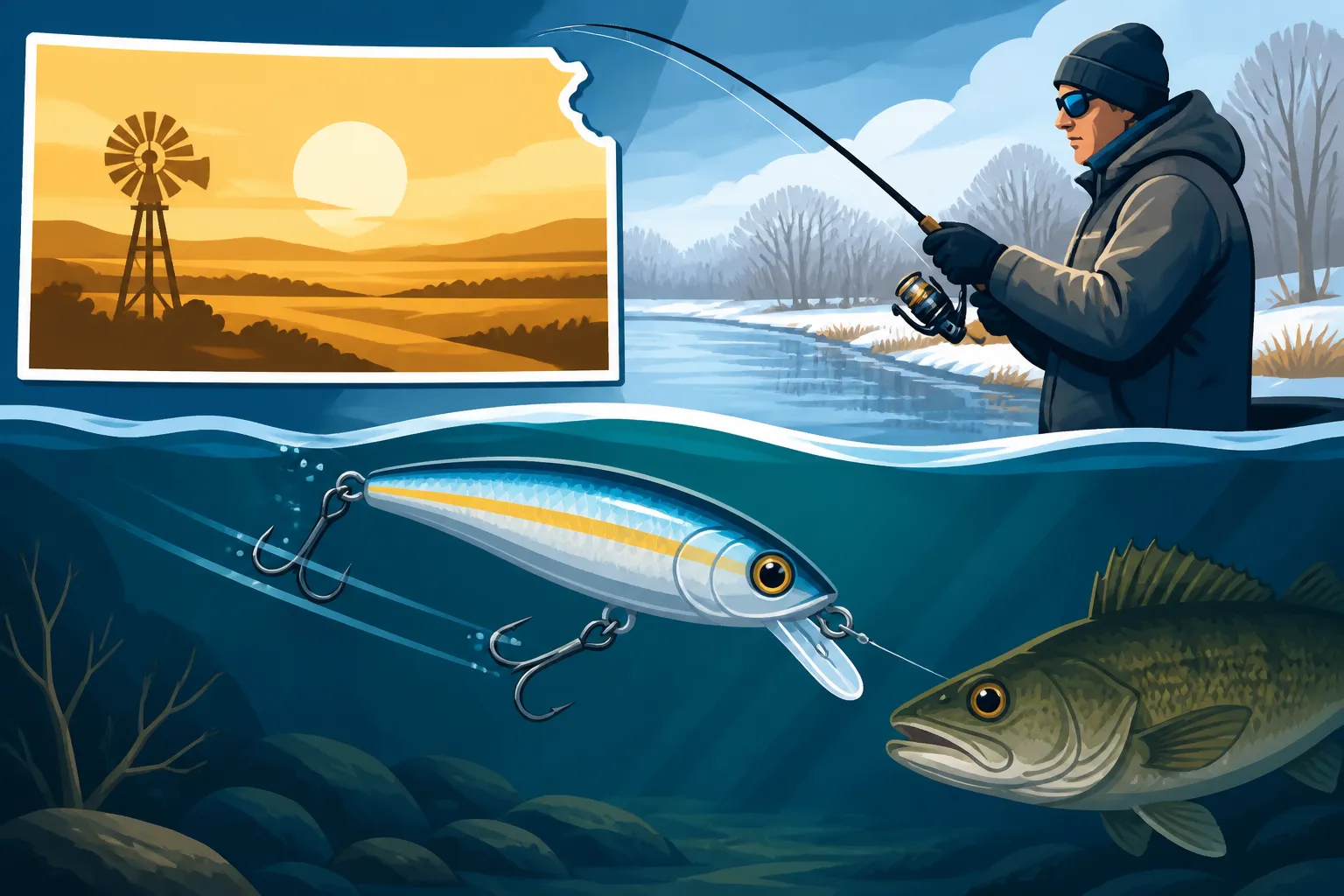
A suspending jerkbait, as its name implies, stays at a relatively consistent depth when you pause your retrieve. This means you can get the bait down to the desired depth, give it a few jerks, and then let it hang motionless in the fish's face for an extended period. This extended pause, sometimes as long as 10-30 seconds, is often what triggers the bite from a hesitant fish. They scrutinize the bait, decide it's an easy meal, and then commit. You can find excellent suspending jerkbaits from brands like Daiwa and Megabass, often available through retailers like Amazon, that are specifically designed for this purpose.
Mastering the Jerkbait Retrieve
The retrieve is where the magic truly happens with a cold water jerkbait. It’s not about speed or aggressive movements; it's about subtle twitches, long pauses, and feeling for that delicate "thump" that signals a bite. Patience is your greatest ally here.
The Jerk-Jerk-Pause Cadence
Forget the aggressive, fast retrieves you might use in warmer water. In cold water, the cadence is everything. A common and highly effective retrieve involves a "jerk-jerk-pause" pattern. You give the rod tip two sharp, downward jerks, just enough to make the bait dart side-to-side, then immediately let your line go slack and allow the bait to suspend. The slack line is crucial; it allows the bait to achieve its full, natural darting action and prevents you from moving it too much during the pause.
The key is the pause. This isn't a quick two-second break; it can be excruciatingly long. Start with a 5-second pause, then experiment with 10, 15, or even 30-second pauses. Seriously, count it out. Sometimes, the fish only hit on the absolute longest pauses. This can feel unnatural at first, almost like you're doing nothing, but remember that fish are conserving energy. That motionless, tantalizing bait hanging right in front of them is often too much to resist. This technique works wonders for species like walleye and smallmouth bass.
Varying Pause Duration and Rod Work
While the jerk-jerk-pause is a great starting point, never be afraid to experiment. Sometimes, a single, softer twitch followed by a long pause is all it takes. Other times, three quick jerks might be the ticket. The fish will tell you what they prefer on any given day. Pay close attention to when and how the bites occur. If all your bites come after a 15-second pause, stick with it. If they happen on the first twitch after a longer pause, adjust accordingly.
Your rod work should also be subtle. Instead of sweeping the rod, use short, sharp snaps of the wrist, pointing your rod tip downwards towards the water. This provides the crisp action without pulling the bait too far forward. After each twitch, return your rod tip to the starting position quickly to create that critical slack in the line for the bait to perform. Your rod and reel selection also plays a role; a sensitive medium-light or medium action rod with a fast tip will give you the control and feel needed to detect those subtle cold water strikes. For more on appropriate gear, check out Best Rod and Reel Combo for Walleye or Best Rod and Reel Combo for Crappie.
Depth Control and Line Choice
Getting your jerkbait to the correct depth and keeping it there is paramount. Most suspending jerkbaits have a specific dive depth listed, but your line choice and retrieve will also influence this. Using a lighter fluorocarbon line, like 8 to 10-pound test, is generally recommended. Fluorocarbon is nearly invisible in the water, has minimal stretch for better feel, and, most importantly, sinks, which helps pull your suspending jerkbait down a bit deeper than monofilament.
Avoid heavy braided line directly to your bait in clear, cold water, as it can be too visible and may reduce the natural suspension of your bait. If you prefer braid for casting distance, tie on a long fluorocarbon leader (6-10 feet) to give your bait the best presentation. Pay attention to how your bait is running. If it's hitting bottom or getting hung up, you might be too deep; if you're not getting bites but seeing fish on your electronics, you might need to try a slightly heavier line or a jerkbait with a deeper dive curve.
Prime Cold Water Spots in Kansas
Kansas has a wealth of fantastic fishing opportunities, even in the dead of winter. Knowing where to focus your efforts with a jerkbait can drastically increase your chances of success. It's all about finding those areas where fish naturally congregate to survive and feed.
Deep Water Structure
This is often the go-to for cold water anglers. Look for deep points, humps, ledges, and channel swings, especially in larger reservoirs like Milford Lake, Cheney Reservoir, or Wilson Lake. These features provide cover, consistent depth, and often hold schools of baitfish. Fish will sit tight to the structure, sometimes barely off the bottom, conserving energy. Your job is to get that jerkbait right into their faces.
Using your electronics is key here. Look for schools of baitfish and the tell-tale arches of game fish nearby. Once you identify a productive area, make multiple casts, working your bait slowly and methodically through the entire water column. Remember that fish might be extremely lethargic, so even if you see them on the sonar, it might take several passes and an incredibly long pause to get them to react. This is a common strategy for Kansas Walleye Fishing Techniques in winter.
Secondary Points and Humps
While main lake points and deep channels are excellent, don't overlook secondary points and humps that are adjacent to deeper water. These can be transitional areas where fish might move up to feed briefly during warmer parts of the day, or simply hold as a staging area before moving into deeper wintering grounds. A secondary point might rise from 30 feet to 15 feet, offering a perfect depth change for fish to relate to.
Target these areas by making long casts, allowing your jerkbait to reach its maximum depth. Fan-cast around the entire structure, paying close attention to any subtle changes in depth or bottom composition. Often, the side of a point that is exposed to current or wind will hold fewer fish than the more sheltered side in cold conditions. This is where understanding How to Read Kansas Reservoir Structure becomes invaluable.
River Backwaters and Slack Water
For those who prefer river fishing, especially in places like the Kansas River or Republican River, backwaters and areas of reduced current are prime cold water jerkbait spots. Rivers often get extremely cold, and fish will seek out any refuge from the main current, which saps their energy. These slack water areas might be oxbows, deep pockets behind wing dams, or calm eddies behind larger structures.
The water in these protected areas can be slightly warmer and often holds trapped baitfish. Cast your jerkbait into these calmer sections, allowing it to suspend and drift naturally with any subtle current. The key is to keep it in the strike zone for as long as possible. These areas are also excellent for Kansas Catfish Fishing Techniques during colder periods, though you'd likely use different baits.
Here’s a quick overview of jerkbait characteristics for cold water:
| Characteristic | Ideal Cold Water Trait | Why It Matters |
|---|---|---|
| Type | Suspending (or slow-sinking) | Stays in the strike zone during long pauses. |
| Size | 3.5 – 4.5 inches | Mimics smaller, natural winter baitfish profiles. |
| Color | Natural (shad, perch, ghost) | Less likely to spook fish in clear, cold water. |
| Action | Subtle darting, minimal roll | Imparts a wounded, easy-to-catch presentation. |
| Depth | Target current fish depth | Crucial for presenting bait directly to inactive fish. |
| Line | 8-10 lb Fluorocarbon | Invisible, sinks, provides good feel. |
Conclusion: Embrace the Cold and the Jerkbait
Fishing with a jerkbait in cold water is a truly rewarding experience once you dial it in. It demands patience, precision, and a deep understanding of how fish behave when their world slows down. While it might not offer the fast-paced action of a summer day, the strikes you get on a cold-water jerkbait are often from quality fish, and they feel incredibly earned. So, don't let the dropping temperatures keep you indoors. Bundle up, grab your suspending jerkbaits, and head out to those Kansas waters. With a little practice and the techniques outlined here, you might just find that winter fishing becomes your new favorite season.
Disclaimer
This article is for general informational purposes only and does not constitute professional advice. Laws, prices and regulations vary by location and change over time. Consult a qualified professional for guidance on your specific situation.