Best Paddle Length for Kayak Fishing
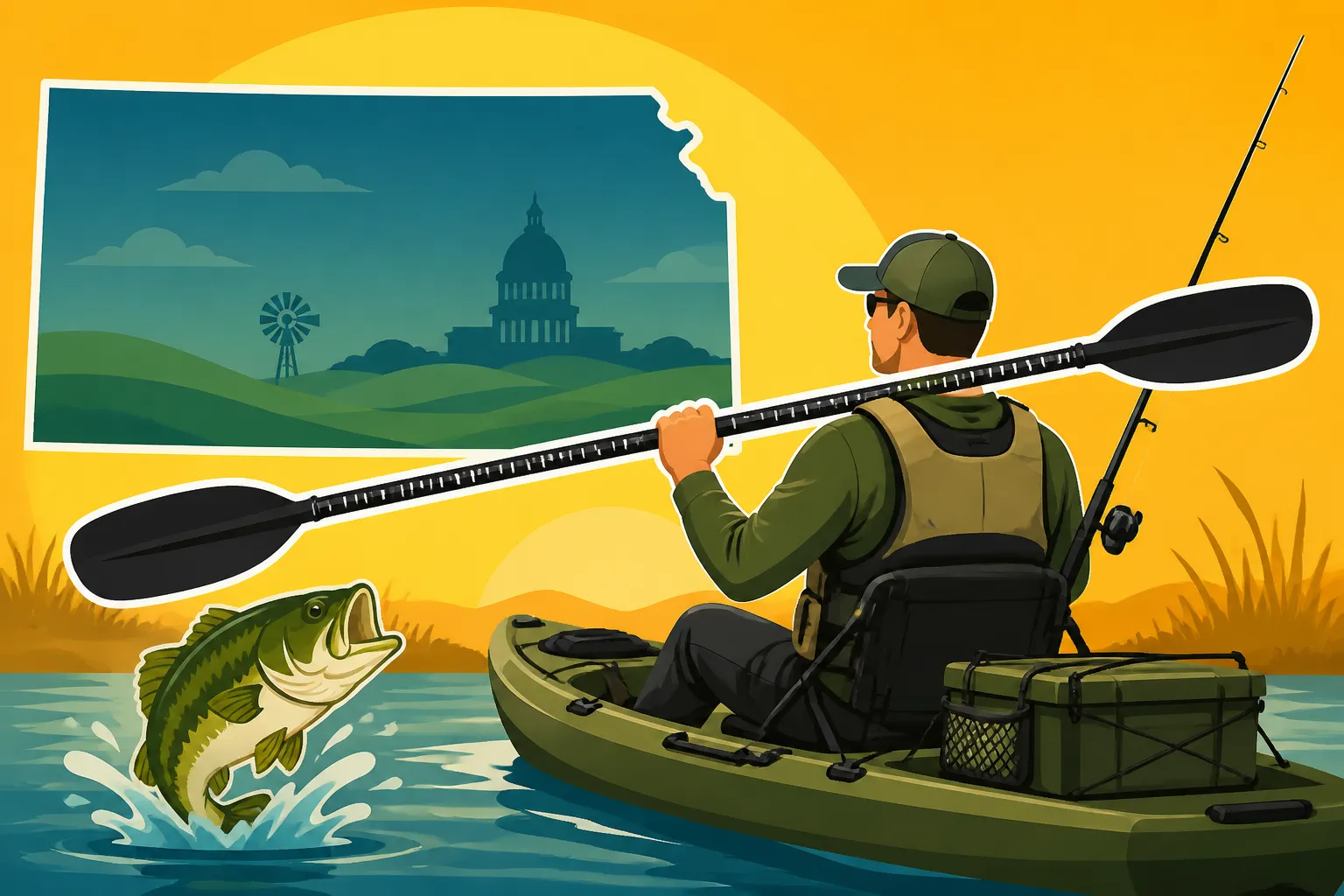
There's nothing quite like the freedom and intimacy of fishing from a kayak in the tranquil waters of a Kansas reservoir or a winding river. However, many anglers find themselves exhausted after just a few hours, battling not only the fish but also a nagging shoulder ache or persistent back discomfort. Often, the culprit isn't your casting arm or your paddling endurance; it's simply using a paddle that's the wrong length for you and your boat. This guide is here to untangle the confusion and help you determine the best paddle length for your kayak fishing adventures, ensuring comfort, efficiency, and more energy to actually enjoy catching fish.
Why Your Paddle Length Truly Matters for Kayak Fishing
When you're out on the water, especially for a full day of fishing, your paddle becomes an extension of yourself. It's not just a tool for propulsion; it's integral to your balance, your ability to maneuver into prime fishing spots, and even how much energy you conserve for the actual act of fishing. Getting the length wrong can turn a peaceful outing into a frustrating physical challenge.
Comfort and Fatigue Management
Imagine trying to chop wood with an axe that's either too short or too long. It would feel awkward, inefficient, and quickly lead to strain. The same principle applies to kayak paddles. If your paddle is too short, you'll find yourself leaning excessively to reach the water, putting undue stress on your lower back and shoulders. This hunched posture isn't sustainable, and before you know it, what should be an enjoyable day becomes a test of endurance against muscle fatigue. On the flip side, a paddle that's too long will force your hands too far apart and too high above the water, creating an unnatural, wide stroke that's also incredibly inefficient and tiring. You'll be lifting more weight than necessary with each stroke, leading to tired arms and shoulders long before the fish even start biting. The right length allows for a natural, comfortable stroke that maximizes your power while minimizing strain, letting you focus on the fish, not your aching muscles.
Efficiency and Precise Kayak Control
An optimally sized paddle translates directly into more efficient paddling and better control over your kayak. With the correct length, your paddle blades enter and exit the water at the ideal angle, allowing you to generate maximum forward thrust with each stroke. This means less effort to cover more distance, which is invaluable when you're traversing a large body of water like Milford Lake or trying to get to a distant cove.
Beyond just moving forward, proper paddle length is crucial for precise control. Fishing often requires subtle adjustments to your position, whether you're holding steady against a light breeze, navigating around submerged structure, or performing a quick pivot to cast at a rising fish. A paddle that's too short might make it difficult to get enough leverage for these quick, precise movements, especially if your kayak is wider. Too long, and it can feel cumbersome and unwieldy, making fine-tuned steering a challenge. The ideal length helps you maintain a consistent cadence, track straighter, and react quickly to changing conditions, giving you a distinct advantage when targeting species like walleye that often require stealthy approaches.
Key Factors Influencing Your Ideal Paddle Length
Determining the "best" paddle length isn't a one-size-fits-all situation. Several critical factors come into play, and understanding how each one impacts your paddling experience is essential for making an informed choice. You wouldn't use the same rod for crappie as you would for flathead catfish, and the same thinking applies to your paddle.
Kayak Width and Design
This is perhaps the most significant factor in paddle length selection. Fishing kayaks are, by their very nature, often wider and more stable than their recreational counterparts. This increased width provides the stability needed for standing to cast, storing gear, and fighting larger fish. However, it also means that you need a longer paddle to comfortably reach the water without constantly hitting the sides of your boat or having to over-reach.
Consider the difference between a sleek, narrow touring kayak and a wide, stable sit-on-top fishing kayak. A touring kayak might only be 24-28 inches wide, allowing for a shorter, high-angle paddle. A dedicated fishing kayak, however, could easily be 32-38 inches wide, especially popular models designed for stability and capacity. This extra width means you'll need an additional 20-40 centimeters (8-16 inches) of paddle length just to get your blade into the water cleanly and effectively. If you're pondering what type of boat works best for you, our guide on Best Kayak for Kansas Reservoir Fishing offers more insights into different kayak designs and their implications.
Paddler Height and Torso Length
While kayak width is paramount, your own physical dimensions also play a crucial role. Taller paddlers generally require longer paddles. It's not just about your overall height, but more specifically, your torso length. A person who is 6 feet tall with long legs and a shorter torso might need a slightly shorter paddle than a 6-foot-tall person with a longer torso, assuming all other factors are equal. The goal is to ensure your hands are positioned comfortably on the paddle shaft, allowing your elbows to maintain a slight bend when the paddle is vertical in front of you, without having to reach excessively high or low.
Think about how you sit in your kayak. If you have a longer torso, your shoulders might naturally be higher off the water, requiring a bit more reach. Conversely, if you're shorter, a paddle that's too long will feel unwieldy and force your hands too far apart, leading to an inefficient stroke.
Seat Height and Raised Seating Systems
Modern fishing kayaks often feature elevated seating systems, providing a more comfortable, chair-like position that's higher off the deck than traditional kayaks. This raised seating is fantastic for visibility and making it easier to stand up to cast, but it significantly impacts your required paddle length. When you sit higher, your center of gravity changes, and your effective "reach" to the water surface increases.
A kayak with a low, molded-in seat might call for a paddle in the 220-230 cm range for an average-sized paddler, while the exact same paddler in a kayak with a high-position framed seat could comfortably use a 240-250 cm paddle, or even longer for wider boats. Always consider the height of your seat in its most commonly used position (high or low) when selecting your paddle. This factor is often overlooked but is absolutely critical for comfort and efficient paddling, especially during those long days spent targeting Kansas Walleye Length Limits or waiting for a bite from Kansas Blue Catfish Facts and Limits.
Paddling Style and Water Conditions
Your preferred paddling style and the typical conditions you face on Kansas waters also influence paddle length. There are generally two paddling styles:
- High-Angle Paddling: This involves a more vertical paddle shaft, with blades entering the water closer to the kayak and a higher stroke rate. It's more powerful and efficient for covering distance or powering through wind and current. High-angle paddlers often prefer slightly shorter paddles with wider blades.
- Low-Angle Paddling: This involves a more horizontal paddle shaft, with blades entering the water further from the kayak and a more relaxed stroke. It's less fatiguing over long distances and common for recreational paddlers. Low-angle paddlers typically benefit from longer paddles with narrower blades.
For kayak fishing, many anglers default to a low-angle style for cruising, but might switch to a more high-angle stroke for short bursts of speed or precise maneuvering. Also, if you frequently fish large, open reservoirs like Cheney Reservoir where wind can be a constant factor, a slightly longer paddle might give you the leverage you need to combat chop and strong gusts. Conversely, if you spend more time in sheltered coves or smaller rivers, a moderately sized paddle might offer better maneuverability without being cumbersome. Understanding Weather Patterns and Kansas Fishing Success can also help you anticipate conditions and how your paddle choice might perform.
How to Measure and Select the Perfect Paddle Length
Now that we've covered the critical factors, let's get down to the practical steps of figuring out what length you actually need. There are a few methods and considerations that can help you dial in your perfect paddle.
The "Sitting Test" Method
This is a fantastic, hands-on way to get a real-world feel for paddle length, especially if you can try out different kayaks or paddles at a local outfitter or during a demo day.
Here's how it works:
- Sit in Your Kayak: Position yourself in your kayak as you would when you're actually fishing. If your kayak has an adjustable seat, set it to your preferred fishing height (usually the higher position for raised seats).
- Hold the Paddle Vertically: Take a paddle and stand it vertically next to you, with one blade tip touching the ground (or the bottom of your kayak, if it's not in the water yet).
- Reach for the Top Handle: Reach up and wrap your hand around the top of the paddle shaft. Your fingers should comfortably curl over the top edge of the blade or the handle.
- Observe Your Arm Angle:
- Ideal: If your arm forms a comfortable 90-degree angle at the elbow, and your fingers just wrap over the top, that's likely a very good length for you.
- Too Short: If your arm is significantly bent, or you can comfortably grab well over the top with a bent elbow, the paddle is probably too short.
- Too Long: If you have to reach uncomfortably high, fully extend your arm, or even stand up slightly to get a good grip, the paddle is too long.
This method gives you an intuitive sense of "fit" that numbers alone sometimes can't capture. It accounts for your torso length, arm reach, and the specific seating height of your kayak, all in one simple test.
Using Sizing Charts as a Starting Point
While the sitting test is invaluable, sizing charts provide a great initial guideline, especially when you're shopping online or don't have immediate access to a variety of paddles and kayaks. These charts typically take into account your height and the width of your kayak. Remember, these are general recommendations, and personal preference might lead you to slightly adjust these figures.
Here’s a general guideline to get you started:
| Kayak Width (inches) | Paddler Height (feet/inches) | Recommended Paddle Length (cm) |
|---|---|---|
| 28-30 inches | 5'0" – 5'6" | 220 – 230 cm |
| 5'7" – 6'0" | 230 – 240 cm | |
| 6'1"+ | 240 – 250 cm | |
| 31-34 inches | 5'0" – 5'6" | 230 – 240 cm |
| 5'7" – 6'0" | 240 – 250 cm | |
| 6'1"+ | 250 – 260 cm | |
| 35+ inches | 5'0" – 5'6" | 240 – 250 cm |
| 5'7" – 6'0" | 250 – 260 cm | |
| 6'1"+ | 260 – 270 cm |
(Note: If your kayak has a very high-riding framed seat, you might need to add an additional 10-20 cm to these recommendations, especially for wider kayaks.)
You can find many paddles with these dimensions from retailers like Bass Pro Shops or online through Amazon. Don't be afraid to read reviews from other kayak anglers to see what lengths they prefer for similar setups.
Considering Adjustable Paddles
For many kayak anglers, an adjustable length paddle can be a game-changer. These paddles allow you to extend or shorten the shaft by several centimeters (usually 10-20 cm) using a simple locking mechanism.
Pros of Adjustable Paddles:
- Versatility: If you own multiple kayaks of different widths or if you occasionally switch between a high and low seat position, an adjustable paddle lets you fine-tune the length for each scenario.
- Experimentation: For new kayak anglers, an adjustable paddle allows you to experiment with different lengths on the water to truly discover what feels most comfortable and efficient for your personal paddling style and the conditions you encounter. This is especially helpful if you're just learning Kansas Fishing Techniques for Beginners from a kayak.
- Accommodates Different Paddlers: If you share your kayak with family or friends who are different heights, an adjustable paddle means everyone can find their sweet spot without needing multiple paddles.
Cons of Adjustable Paddles:
- Weight: Sometimes, the locking mechanism can add a little extra weight compared to a fixed-length paddle of the same material.
- Potential for Play: Over time, some adjustable mechanisms might develop a small amount of "play" or wobble, though reputable brands generally make very sturdy systems.
- Cost: They might be slightly more expensive than fixed-length paddles.
If you're unsure or looking for maximum flexibility, an adjustable paddle can be an excellent investment. Just make sure the adjustment range covers the lengths you anticipate needing based on the sizing charts and sitting test. Look for quality options from brands you trust, whether you're browsing at Bass Pro Shops or comparing models on Amazon.
Common Mistakes and Fine-Tuning Your Paddle Choice
Even with all the guidelines, it's easy to make a few common missteps when choosing a paddle. Learning to identify these pitfalls and knowing how to fine-tune your choice will save you a lot of headache and fatigue on the water.
The Pitfalls of Too Short or Too Long
Let's dive a bit deeper into what really happens when your paddle isn't the right fit.
Paddle is Too Short:
- Constant Banging: You'll find yourself constantly bumping the sides of your kayak, especially a wide fishing model. This isn't just annoying; it can spook fish and create unnecessary noise.
- Over-Reaching and Back Strain: To compensate for the lack of length, you'll naturally lean over more with each stroke. This puts tremendous strain on your lower back and obliques, leading to aches that can quickly cut your fishing trip short.
- Inefficient Strokes: The paddle blade won't enter the water cleanly or fully, resulting in a weak, splashy stroke that generates less propulsion. You'll work harder to go slower.
- Poor Tracking: A short paddle often makes it harder to maintain a straight course, especially in crosswinds or currents. You'll spend more energy correcting your direction.
Paddle is Too Long:
- Hands Too High/Wide: Your hands will be forced into an uncomfortable, wide grip, and you'll be lifting the paddle much higher than needed with each stroke. This leads to shoulder and arm fatigue.
- Catching Water: The blades might enter the water too far from the kayak, causing you to "catch" too much water with each stroke. This can slow you down, make turning difficult, and feel awkward.
- Blade Drag: When one blade is pulling, the other end (the "recovery" blade) might be too high, catching wind or even touching the water on the other side, creating drag.
- Less Control: A long paddle can feel cumbersome, especially in tight spots or when you need to make quick, precise maneuvers to hold position over a brush pile.
Both scenarios significantly detract from your fishing experience. The goal is a comfortable, powerful stroke that doesn't exhaust you before you even hook into a fish.
Renting Before Buying: A Smart Strategy
Before you invest in a new paddle, especially a higher-end model, consider renting a kayak and trying out a few different paddle lengths. Many outfitters or kayak shops, particularly around popular Kansas fishing spots like Clinton Lake or Tuttle Creek Lake, offer rentals and might even let you swap out paddles to see what feels best. This is an excellent way to apply the "sitting test" directly on the water and experience the difference various lengths make under actual paddling conditions.
If you're still exploring different types of kayaks, renting also allows you to test how different boat designs influence your paddle needs. For example, a stable yet wider recreational kayak might demand a longer paddle than a more streamlined, narrow fishing-specific model. This kind of real-world testing is invaluable and can prevent buyer's remorse.
Materials and Blade Shape: Beyond Just Length
While paddle length is our primary focus, it's worth briefly mentioning that materials and blade shape also play a role in your overall paddling experience. They interact with length to define efficiency and comfort.
- Materials: Paddles come in various materials, each with pros and cons:
- Aluminum: Affordable and durable, but heavier and can feel cold in winter or hot in summer.
- Fiberglass: Lighter than aluminum, good balance of performance and price.
- Carbon Fiber: Lightest and stiffest, offering maximum efficiency, but also the most expensive. Reduces fatigue significantly over long distances.
Choosing a lighter material, like carbon fiber, can help offset the fatigue of a longer paddle, especially for all-day Kansas Summer Fishing Guide trips.
- Blade Shape:
- Narrower Blades: Often preferred for low-angle paddling, as they offer less resistance and are less fatiguing over long distances.
- Wider, Shorter Blades: Better for high-angle paddling, providing more powerful, immediate thrust.
For most kayak fishing, a mid-sized, asymmetrical blade that allows for both low-angle cruising and occasional high-angle power strokes is a good compromise. The right blade shape, combined with the correct length, will enhance your ability to How to Catch Fish From a Kayak in Kansas and stay on the water longer. You can explore a wide range of paddle materials and blade shapes at stores like Bass Pro Shops or online retailers such as Amazon, where detailed product descriptions can help you compare options. Don't forget to consider a good Best PFD for Kayak Fishing in Kansas to complete your setup for safety on the water.
Disclaimer
This article is for general informational purposes only and does not constitute professional advice. Laws, prices and regulations vary by location and change over time. Consult a qualified professional for guidance on your specific situation.