Best Kayak Fishing Crate Setup
There’s nothing quite like the peace and solitude of kayak fishing on a quiet Kansas lake or river. But let's be real, that tranquility can quickly evaporate when your favorite crankbait is buried under your spare paddle, your pliers are nowhere to be found, and your extra fishing rod is precariously balanced, ready to take an unexpected swim. A well-organized kayak fishing crate setup is the ultimate solution to this common angler's dilemma, transforming your small craft into a highly efficient and enjoyable fishing machine.
Why a Kayak Fishing Crate is a Game-Changer
When you're out on the water, whether you're targeting big walleyes on Milford Lake Fishing Guide or chasing slab crappie in a brush pile, every moment counts. Fumbling for gear, dealing with tangled lines, or worrying about losing expensive tackle can seriously detract from your fishing experience. This is where a dedicated kayak fishing crate truly shines.
The Struggle of Disorganized Kayak Fishing
I've been there, trust me. You launch your kayak, eager for a productive day, only to realize within minutes that your essential tools are scattered, your bait is getting stepped on, and your precious electronics are sliding around. It’s a frustrating dance of reaching, stretching, and sometimes nearly capsizing just to grab a different lure or a pair of scissors. Imagine trying to quickly re-rig after a bite, only to find your spool of leader line is wrapped around your anchor rope. Or, even worse, hooking into a nice channel cat only to discover your net is pinned under your seat, out of reach. These little annoyances add up, making what should be a relaxing outing feel like a chaotic scavenger hunt.
This disorganization doesn't just impact efficiency; it impacts safety. A cluttered deck can create tripping hazards, and having items unsecured means they're prone to falling overboard, especially if you hit a wake or an unexpected chop. Plus, who wants to spend half their fishing time trying to keep things from sinking to the bottom of the lake?
The Benefits of a Dedicated Crate System
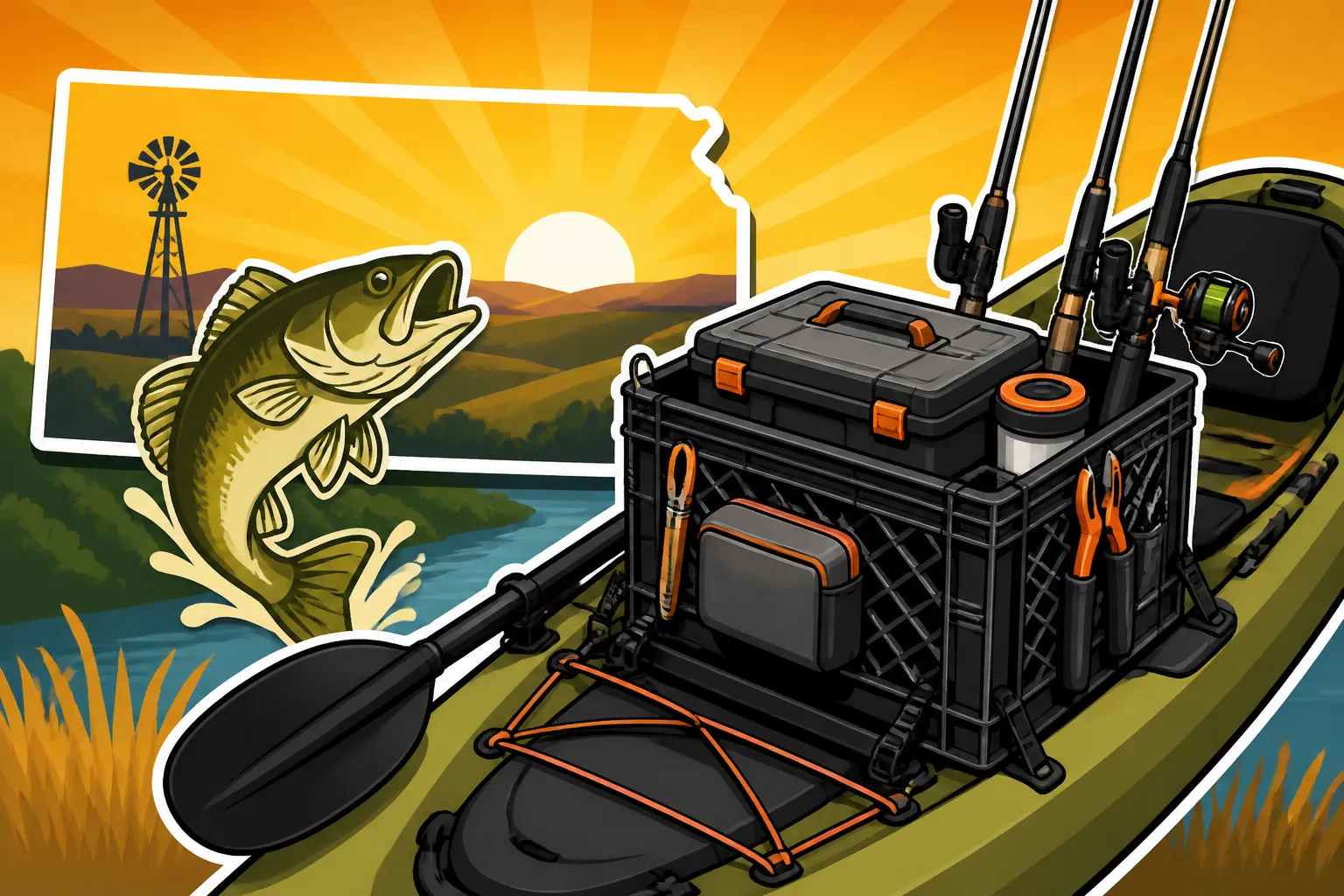
A kayak fishing crate is much more than just a box; it's a command center. By consolidating your most-used gear into one easily accessible and secure location, you streamline your entire fishing process. Think of it as having your tackle shop organized and right behind your seat, ready for action.
The primary benefit is organization. Everything has a place. Rods are secured upright, tackle boxes are stacked neatly, and tools are clipped or hung where you can grab them without taking your eyes off your line. This means less fumbling and more focused fishing. Accessibility is another huge plus. With your crate positioned behind you, a simple turn allows you to reach for a new lure, a measuring board, or a pair of pliers without leaning precariously or disturbing your balance. Finally, customization is key. Standard crates can be adapted with a myriad of accessories, turning a simple storage bin into a multi-functional hub tailored precisely to your fishing style and the species you're pursuing in Kansas.
Essential Components of a Kayak Fishing Crate Setup
Building the perfect kayak fishing crate involves selecting the right base and then adding components that serve your specific needs. It's about creating a system that works for you, not against you.
Choosing the Right Base Crate
The foundation of your setup is, naturally, the crate itself. Most anglers start with a standard milk crate – they're sturdy, inexpensive, and have plenty of holes for customization. However, dedicated kayak fishing crates are also available, often featuring built-in compartments, stronger construction, and even integrated rod holders.
When choosing, consider the dimensions of your kayak's tankwell or storage area. You want a snug fit that won't slide around too much, but also leaves enough room for securing straps. Material is also important; UV-resistant plastic will hold up best under the Kansas sun. Some crates offer molded handles for easy transport, which is a small but valuable feature when you're hauling your gear from the truck to the water. You can often find a good selection of specialized crates and accessories at outdoor retailers like Bass Pro Shops, or a wide variety of basic crates and DIY components through online stores like Amazon.
Rod Holders: Secure and Accessible Storage
One of the most crucial additions to any fishing crate is adequate rod storage. While a kayak often has flush-mounted rod holders, having upright holders on your crate keeps your rods easily accessible for quick changes and prevents them from getting tangled or damaged when paddling.
You have several options:
- PVC Pipe Holders: A classic DIY solution. Sections of PVC pipe can be cut to length and secured to the crate with zip ties, screws, or bolts. This allows you to customize the angle and number of holders.
- Rail-Mounted Holders: Some fishing crates come with rails or you can add them. These allow you to attach various rod holders, often adjustable for angle, providing more flexibility.
- Integrated Holders: Dedicated fishing crates often have pre-molded or pre-drilled spots for rod holders, making installation simple.
Consider how many rods you typically carry and how you like them positioned. If you're Trolling for Walleye on Kansas Reservoirs, you might want them angled out, whereas if you're jigging for crappie, you'll want them upright and ready to grab quickly.
Tackle Management Solutions
Keeping your lures, hooks, weights, and soft plastics organized within the crate is paramount. This prevents a jumbled mess and ensures you can find what you need in a hurry.
- Utility Boxes: These clear, plastic boxes with adjustable dividers are a kayak angler's best friend. They come in various sizes and allow you to categorize your tackle by species, lure type, or depth. Many crates are designed to perfectly fit a stack of these boxes.
- Soft-Sided Tackle Bags: If you prefer a more portable solution, a smaller soft-sided tackle bag can fit inside your crate. These often have specialized compartments and pockets. Just make sure it's durable and water-resistant.
- Custom Dividers and Trays: For DIY enthusiasts, creating custom wooden or plastic dividers within your crate can further enhance organization, allowing dedicated spots for larger items or smaller tackle trays.
Think about the specific gear you need for your chosen target. A crappie angler might need quick access to Best Bait for Kansas Crappie and various jig heads, while a catfisherman would prioritize different Best Bait for Kansas Catfish and heavy sinkers.
Adding Essential Accessories
Beyond rods and tackle, there are a host of other accessories that can be cleverly integrated into your crate setup to maximize efficiency and safety.
- Pliers and Cutters: A designated spot for these essential tools, whether clipped to the side or in a small pouch, means no more fumbling when you need to unhook a fish or snip line.
- Measuring Board/Tape: Quickly measure your catch against Kansas Daily Creel Limits by Species rules by attaching a retractable tape or a small measuring board to the side of your crate.
- Anchor Management: A small cleat or bungee system on the side of your crate can provide a neat way to store and deploy your anchor, keeping it from rolling around the kayak deck.
- Safety Gear: Consider attaching a small dry box with your phone, first aid kit, or a whistle. A small, bright LED light can also be a good addition for low-light conditions or if you find yourself fishing past dusk, perhaps during Kansas Night Fishing Guide.
- Drink Holders: Hydration is key! A simple cup holder attachment can make a big difference on a hot day.
- Electronics Mounts: Some anglers even mount fish finder displays or GPS units to their crates, keeping them accessible but protected. Remember to ensure your transducer is properly installed on the kayak itself.
Customizing Your Crate for Kansas Waters
One of the greatest strengths of a kayak fishing crate is its adaptability. You can tailor it to specific fishing styles, target species, and even changing weather conditions, making it perfectly suited for the diverse fishing opportunities across Kansas.
Species-Specific Crate Setups
Different fish call for different gear, and your crate can reflect that.
- Walleye Angler's Crate: If you're chasing walleye on a big reservoir like Wilson Lake Fishing Guide, your crate might be geared towards trolling or jigging. You'd likely have multiple utility boxes loaded with crankbaits, jigging spoons, and maybe some live bait containers for shiners or nightcrawlers. Rod holders would be set for quick access to casting rods, alongside a heavier setup for trolling. A pair of pliers for removing hooks from toothy walleye would be essential, along with a measuring device to ensure your catch meets Kansas Walleye Length Limits.
- Catfish Enthusiast's Crate: For the dedicated catfisherman, especially those targeting big blue cats in the Kansas River, your crate might hold larger hooks, heavier weights, and various forms of cut bait or stink bait. You'd want a robust set of pliers, perhaps a heavier-duty landing net clipped to the side, and a secure spot for your fish grips. If you're doing some Trotline Fishing Techniques in Kansas or Jug Fishing Techniques in Kansas, your crate might even hold some of the necessary rigging.
- Crappie Chaser's Crate: When crappie fishing, especially during the spawn, you'll want lots of jigs, small soft plastics, and possibly minnow buckets. Your crate would likely have smaller utility boxes for these items, maybe even a magnetic strip to hold small hooks. Multiple rod holders for light action rods would be common, as crappie anglers often fish with several setups simultaneously. Knowing When Does Crappie Spawn Start? can help you tailor your gear for that specific bite.
Weather and Water Condition Considerations
Kansas weather can be unpredictable, and your crate setup should be ready for anything from a sunny, calm morning to a sudden downpour or windy conditions.
- Rain Protection: Consider a crate cover or a small tarp that can be quickly deployed over your crate to protect your tackle and electronics from rain. Waterproof utility boxes are also a smart investment.
- Sun Protection: For hot, sunny days, a small cooler integrated into or strapped next to your crate for drinks and snacks is invaluable. Having a designated spot for sunscreen and a wide-brimmed hat will also keep you comfortable.
- Windy Conditions: High winds on large reservoirs can make things shift. Ensure everything in your crate is securely stowed or strapped down. Lids on tackle boxes are crucial, and bungees can hold down larger items.
- Cold Weather: If you're braving the chill for Kansas Winter Trout Fishing Guide, your crate might hold gloves, hand warmers, and a thermos. Keeping spare batteries for electronics warm is also a good idea.
DIY vs. Pre-Built Crate Systems
You've got options when it comes to getting your crate setup.
- DIY Approach: This route is often more budget-friendly and allows for maximum customization. Starting with a basic milk crate and adding PVC rod holders, plastic containers, and clever attachments from a hardware store can be incredibly satisfying. Many DIYers share their ingenious solutions online. You can source many of these components from general retailers or online platforms like Amazon.
- Pre-Built Systems: Several manufacturers offer purpose-built kayak fishing crates. These often come with integrated rod holders, tackle box slots, and sometimes even built-in cutting boards or electronic mounts. While typically more expensive, they offer convenience and a polished look. Brands found at places like Bass Pro Shops often carry these specialized options. They might be a good choice if you prefer a ready-to-go solution.
Rigging and Securing Your Kayak Crate
Having the perfect crate setup is only half the battle; it needs to be securely rigged to your kayak. A loose crate can be a huge liability, especially in rough water or during a sudden stop.
Proper Placement and Orientation
Most kayak anglers place their crate in the "tankwell" behind the seat. This location keeps gear accessible with a simple turn, maintains balance, and keeps the main deck clear for paddling and casting. Experiment with the orientation of your crate – do you want the rod holders facing directly back, or slightly angled for easier access? Consider how it impacts your paddling stroke and your ability to reach specific items. Make sure it doesn't interfere with your rudder system, if your kayak has one.
Securing the Crate to Your Kayak
This is non-negotiable. Your crate must be securely fastened.
- Bungee Cords: Most kayaks come with bungee cords in the tankwell for this purpose. Thread these through the crate's holes or around its frame and hook them back onto the kayak's deck loops. Ensure they are taut.
- Webbing Straps with Buckles: For a more robust and adjustable hold, use cam buckle straps or quick-release buckles. These provide a very secure fit and are great for larger or heavier crates.
- Deck Loops and Carabiners: Adding extra deck loops to your kayak (if needed) can provide more attachment points for securing the crate. Carabiners can be used to quickly clip the crate to these loops.
- Non-Slip Mats: Placing a non-slip mat (like a yoga mat cut to size) under your crate can prevent it from sliding around, even before the straps are tightened. This is particularly helpful on slick plastic surfaces.
Always double-check your rigging before launching. A few extra seconds of securing can save you from a major headache (and possibly lost gear) later on.
Maintaining and Troubleshooting Your Setup
A good kayak fishing crate setup will last for years with a little care.
- Regular Cleaning: Saltwater, mud, and fish slime can accumulate. Rinse your crate and all its components thoroughly after each trip, especially if you're fishing saltwater (though Kansas is freshwater, it's a good habit!).
- Check for Wear and Tear: Periodically inspect bungee cords, straps, and attachments for signs of fraying, cracking, or weakness. Replace worn components before they fail.
- Lubricate Zippers/Moving Parts: If you have soft-sided components or anything with zippers, a little lubricant can keep them running smoothly.
- Winter Storage: During the off-season, store your crate in a cool, dry place away from direct sunlight to prevent plastic degradation. This is especially important if you plan on doing some Ice Fishing Rules on Kansas Lakes in the colder months and might not use your kayak.
Kayak Fishing Crate Component Comparison
Here's a quick look at some common components and their benefits:
| Component Category | Description | Common Materials/Types | Key Benefits | Considerations |
|---|---|---|---|---|
| Base Crate | Main storage container | Milk crate, dedicated fishing crate | Affordable, customizable, robust | Size/fit for kayak, drainage |
| Rod Holders | Secures fishing rods upright | PVC pipe, rail-mount, integrated | Easy rod access, prevents tangles | Number of rods, angle adjustment |
| Tackle Storage | Organizes lures, hooks, weights | Utility boxes, soft-sided bags | Quick tackle changes, prevents loss | Waterproofing, size for crate |
| Tool Holders | Keeps pliers, cutters handy | Magnetic strips, bungee loops, pouches | Immediate tool access, prevents loss | Corrosion resistance, security |
| Safety Gear | First aid, lights, whistle | Small dry box, attachable lights | Essential for emergencies, visibility | Waterproof, easily accessible |
| Securing Straps | Fastens crate to kayak | Bungee cords, cam buckle straps | Prevents shifting and loss | Durability, adjustability |
Taking the time to set up your kayak fishing crate thoughtfully will pay dividends on the water. It’s an investment in your fishing enjoyment, allowing you to focus on the bite instead of battling disorganization. Happy paddling and tight lines, Kansas anglers!
Disclaimer
This article is for general informational purposes only and does not constitute professional advice. Laws, prices and regulations vary by location and change over time. Consult a qualified professional for guidance on your specific situation.