Is Trotline Fishing Legal?
It's incredibly frustrating trying to figure out all the specific rules and regulations when you just want to get out and fish, especially when it comes to methods that feel a bit old-school or niche, like trotline fishing. Many anglers wonder if setting a trotline is even allowed in Kansas, or if it's one of those practices that has fallen by the wayside with modern sportfishing. You might have heard whispers that they're illegal, or that you need some special, hard-to-get permit. Well, you're in the right place, because we're going to clear up all that confusion and lay out exactly what you need to know about trotline fishing in Kansas, so you can fish confidently and legally.
Understanding Trotline Legality in Kansas
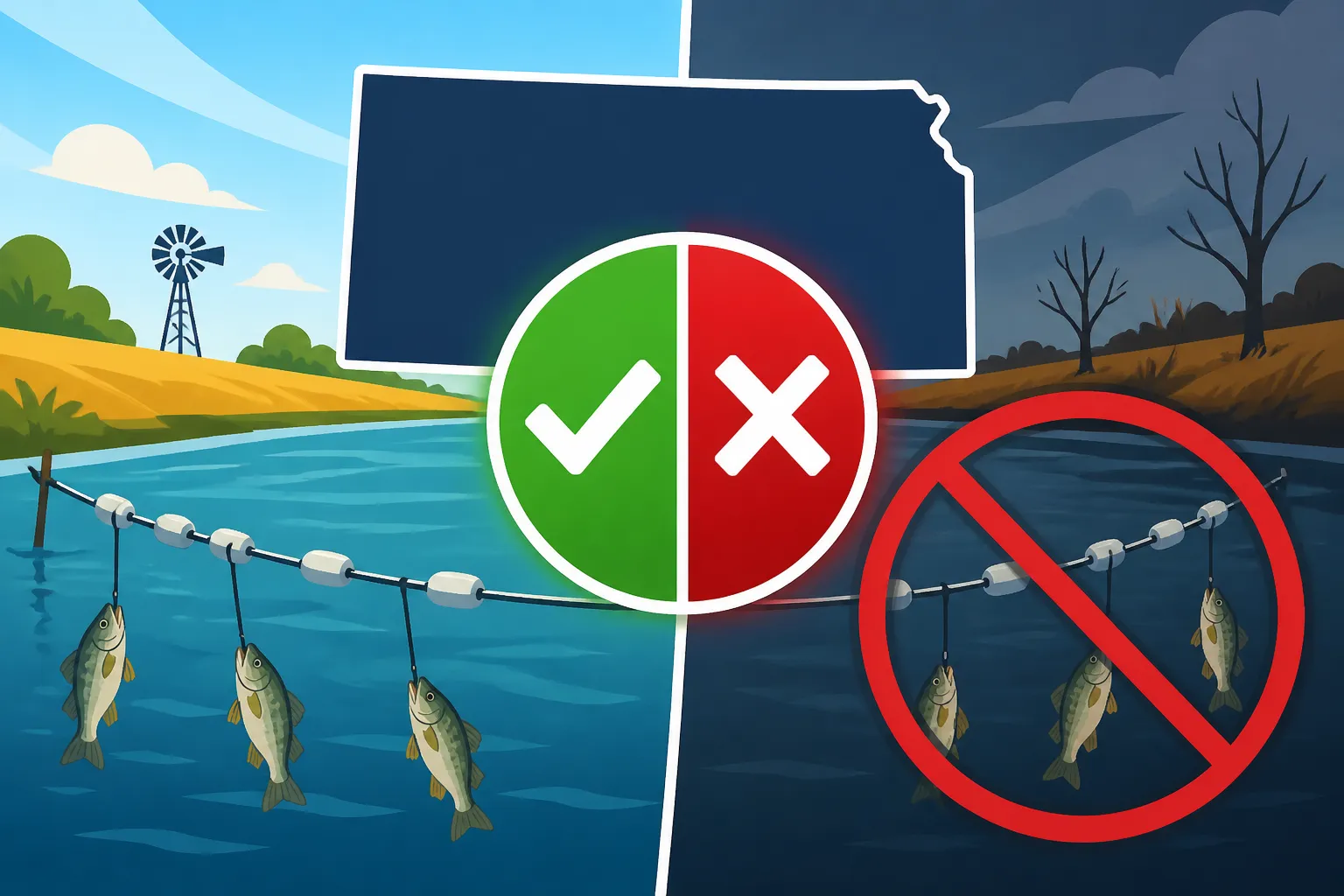
Let's get right to it: yes, trotline fishing is legal in Kansas. But and it's a pretty big "but" there are some very specific and strict regulations you absolutely need to follow to ensure you're fishing within the law. The Kansas Department of Wildlife and Parks (KDWP) understands that trotlines are a time-honored tradition for many anglers, particularly those targeting catfish, but they also have a responsibility to manage fish populations and ensure fair chase and safety on our waterways. This means that while the method itself isn't banned, there are clear guidelines on how, when, and where you can deploy these lines. Without a clear understanding of these rules, you could unknowingly find yourself in violation, which nobody wants when they're just trying to enjoy a day (or night!) on the water.
Why Regulations Exist for Trotlines
You might wonder why trotlines, in particular, have so many rules attached to them. It really boils down to a few key reasons. First, trotlines are typically set and left unattended for periods, meaning they continue to fish without direct supervision. This can lead to overharvest if not properly managed, and it also raises concerns about non-target species being caught and injured, or game fish being left to die if lines aren't checked frequently enough. Imagine a trotline left for days, catching fish that simply go to waste. That's a scenario the KDWP aims to prevent, ensuring a sustainable fishery for everyone.
Secondly, there's a safety aspect. Improperly set or unmarked trotlines can be a hazard to other boaters, swimmers, or even other anglers casting nearby. Imagine hitting an unmarked line with your prop or getting tangled in it while wading. It’s a real danger. The regulations are designed to make sure that everyone can enjoy Kansas waters safely, and that your fishing practices don't negatively impact someone else's experience. Plus, having clearly marked lines helps KDWP enforcement easily identify legal, properly managed gear from illegal setups, which is crucial for their work in protecting our natural resources.
The Basic "Yes, But" Breakdown
So, when we say "yes, but," what are the core points to remember? At its heart, legal trotline fishing in Kansas requires a valid Kansas Fishing License Guide, proper identification on your lines, adherence to limits on the number of hooks and lines, and regular checking of your equipment. It's not a free-for-all, and it shouldn't be. These regulations help maintain a balance between allowing traditional fishing methods and protecting the long-term health of our fish populations, particularly the robust catfish species that are so popular in Kansas. It's about being a responsible angler, and that's something we can all get behind.
Detailed Kansas Trotline Regulations
Now that we know trotlines are legal, let's dive deep into the nitty-gritty of the specific rules you absolutely must follow. These aren't just suggestions; they are legally binding requirements. Ignoring them, even unintentionally, can lead to fines and other penalties, which is a sure way to ruin a fishing trip. The KDWP regulations are designed to be clear, so let’s break them down piece by piece.
Licensing Requirements
First things first, before you even think about setting a trotline, you need a current and valid Kansas fishing license. There isn't a separate, special "trotline permit" needed on top of your standard fishing license, but that base license is absolutely non-negotiable. Whether you're a resident or a nonresident, adult anglers must possess a valid license. You can purchase these easily online through the KDWP website or from numerous vendors across the state. Think of it as your entry ticket to enjoy all the fantastic fishing opportunities Kansas has to offer, including trotlining. Make sure you understand the rules for a Kansas Nonresident Fishing License Guide if you're visiting from out of state, or if you're a resident, check out the Kansas Resident Annual Fishing License Costs $25 for current pricing.
Equipment Specifications and Limits
This is where many anglers get tripped up. Kansas has very specific rules about how many trotlines you can use, how many hooks can be on each line, and even the type of line itself.
- Number of Trotlines: An individual angler is generally allowed a maximum of 2 trotlines at any given time. This isn't per body of water or per day; it's a hard limit on the number of active trotlines you can have out there. This rule helps prevent excessive harvest by one individual and keeps the playing field fair for all anglers.
- Number of Hooks: Each trotline you deploy can have no more than 25 hooks. This might seem like a lot, but for serious catfish anglers, it's a reasonable number that allows for good coverage without becoming overly efficient to the point of depleting local populations. The KDWP periodically reviews these numbers to ensure they align with their conservation goals.
- Hook Spacing: While the KDWP regulations don't specify a minimum distance between hooks, common courtesy and practical considerations suggest adequate spacing to prevent tangling and allow fish to bite without immediately interfering with the next hook.
- Line Material: Trotlines must be made of non-metallic material. This typically means heavy-duty nylon, polypropylene, or similar synthetic ropes. Metal lines are prohibited, largely for safety reasons, as they can pose an electrical hazard and are harder to cut free if snagged or if they become a hazard to boat traffic.
It's important to remember that these limits are cumulative. If you're fishing with a buddy, each of you can have two trotlines with 25 hooks, provided both of you have valid licenses and are actively participating. However, one person cannot claim four lines simply because they have two licenses.
Tagging and Identification
This is another absolutely critical regulation for trotlines. Any trotline you set must be clearly tagged with your name and address or KDWP customer identification number. This tag needs to be durable and legible, able to withstand being submerged in water.
- Why Tagging is Crucial: Tagging serves several vital purposes. First, it identifies who owns the line, which is essential for KDWP wardens to enforce regulations. If an unattended line is found violating regulations, the warden knows who to contact. Second, it helps prevent conflicts between anglers. If another angler accidentally moves or tangles with your line, they know whose it is. Think of it as a license plate for your fishing gear. You can find durable tags online on platforms like Amazon or at local sporting goods stores. Make sure your tag is securely attached to an end of the line, clearly visible.
Attending and Checking Requirements
Leaving a trotline unattended indefinitely is a major violation. Kansas law mandates that all trotlines must be attended and checked at least once every 24 hours. This means you need to physically visit your trotline, remove any fish, re-bait hooks as needed, and ensure it's still properly deployed and marked.
- Environmental Responsibility: This 24-hour rule is primarily about humane treatment of caught fish and minimizing waste. Fish caught on a trotline can succumb to stress or depredation if left for too long. Checking regularly ensures you're harvesting your catch ethically and that any non-target species can be released quickly.
- Practicality: Regular checks also help you monitor your gear. Has a log drifted into your line? Is an anchor coming loose? Are predators (like otters or turtles) messing with your catch? Staying on top of your lines is just good angling practice. It's a commitment, but it's part of responsible trotline fishing.
Prohibited Areas and Exceptions
While trotlines are generally legal statewide, there are specific areas where their use is either restricted or completely prohibited.
- State Fishing Lakes and Community Fishing Lakes: Generally, trotlines are prohibited in all Kansas State Fishing Lakes and Community Fishing Lakes. These smaller, often intensively managed impoundments are usually designated for more active fishing methods like rod and reel. The confined nature of these waters also makes trotlines more likely to interfere with other recreational users. Always check specific lake regulations if you're unsure. For rules relating to Kansas Community Fishing Lake Rules, it's usually safer to assume trotlines are not allowed unless explicitly stated otherwise.
- Federal Reservoirs: On large federal reservoirs like Milford Lake, Cheney Reservoir, or Wilson Lake, trotlines are generally allowed, but you still must follow all statewide regulations. Always double-check with the local lake office or KDWP website for any site-specific rules that might apply. For instance, some areas near marinas, swimming beaches, or high-traffic zones might have restrictions.
- Navigable Waters: You cannot deploy a trotline in a manner that obstructs navigation. This means keeping lines clear of common boat channels, launch ramps, and heavily trafficked areas. Safety for all water users is paramount.
- Private Ponds: If you're fishing on private property in a pond or lake where you are the landowner, or have explicit permission from the landowner, the statewide licensing requirements still apply. However, some specific methods, like using unlimited poles and lines, might be allowed, but always verify with KDWP. For Fishing Rules for Private Ponds in Kansas, it's still best practice to tag your lines and check them regularly, even if enforcement might be less frequent.
Summary Table of Key Kansas Trotline Regulations
To make things easy to digest, here's a quick rundown of the essential regulations for trotline fishing in Kansas:
| Regulation Category | Rule | Key Point |
|---|---|---|
| Fishing License | Required for all adult anglers. | No special trotline permit needed, just a standard Kansas fishing license. |
| Number of Trotlines | Maximum of 2 trotlines per licensed angler. | Strict limit to prevent overharvest. |
| Number of Hooks | Maximum of 25 hooks per trotline. | Ensures effective fishing without becoming excessive. |
| Line Material | Must be non-metallic. | Typically heavy-duty nylon or synthetic rope. |
| Tagging | Each trotline must be tagged with angler's name & address or KDWP customer ID number. | Essential for identification, enforcement, and safety. Tag must be legible and durable. |
| Checking Frequency | Must be attended and checked at least once every 24 hours. | Humane treatment of fish and responsible resource management. |
| Prohibited Areas | Generally prohibited in State Fishing Lakes and Community Fishing Lakes. Cannot obstruct navigation. | Always verify site-specific regulations for federal reservoirs and other public waters. |
| Target Species & Limits | Primarily for catfish. Standard Kansas Catfish Daily Limits and length limits apply. | Trotlines are effective for various catfish species; other species caught must adhere to their specific limits. |
Gear and Best Practices for Trotline Anglers
Alright, you've got your license, you understand the rules, now let's talk about getting set up for success! Trotline fishing isn't just about throwing a line in the water; it's a technique that benefits from proper gear, strategic placement, and a respectful approach to the environment. Choosing the right equipment and understanding how to use it effectively will not only increase your chances of a good catch but also ensure you're doing so safely and legally.
Essential Trotline Gear
You don't need a massive amount of specialized gear, but what you do use should be robust and reliable.
- Trotline Mainline: This is the backbone of your setup. You'll want a strong, non-metallic line. Heavy-duty braided nylon or polypropylene rope, typically 1/8 to 1/4 inch in diameter, is ideal. It needs to withstand the pull of strong catfish and resist abrasion from submerged structures. You can find quality trotline rope on Amazon or at local tackle shops like Scheels or Cabela's.
- Staging/Drop Lines: These are the shorter lines that attach your hooks to the mainline. Monofilament or braided line, often 50-80 lb test, works well. Make sure they are slightly lighter than your mainline so if you get snagged, you might only lose a drop line, not the entire trotline.
- Hooks: Circle hooks are often preferred by many trotline anglers because they are designed to hook fish in the corner of the mouth, leading to fewer gut-hooked fish and higher survival rates for released non-target species. Sizes can vary from 5/0 to 10/0, depending on the size of catfish you're targeting.
- Weights/Anchors: You'll need sturdy anchors to keep your trotline in place. Bricks, heavy rocks, concrete blocks, or specialized trotline weights work well. Make sure they are heavy enough to counteract current and the pull of a large fish.
- Floats: Crucial for marking your trotline. Brightly colored jugs or buoys are common. These need to be buoyant enough to keep your mainline off the bottom and clearly visible. They also serve as the attachment point for your identification tag. For night fishing, consider adding reflective tape or even small, battery-operated LED lights to your floats for extra visibility.
- Bait: This is perhaps the most debated topic among trotline anglers! For catfish, cut bait (shad, carp, or even chicken liver), worms, or various stink baits are popular choices. Make sure your bait is legal and that you're not using anything that could introduce invasive species. Fresh cut bait from species found in the same water body is often a top performer. You can learn more about Best Bait for Kansas Catfish in our other guides.
- Gloves: Handling bait, hooks, and potentially slimy fish on a trotline can be tough on your hands. A good pair of durable, waterproof gloves is a must-have.
- Pliers/Hook Remover: Essential for safely removing hooks from fish, especially if you're releasing them. A long-nosed pair of pliers or a dedicated hook remover is incredibly useful.
Deploying Your Trotline Effectively
Strategic placement is key to trotline success. You're not just casting; you're setting a passive fishing system.
- Location, Location, Location: Catfish often patrol along channel edges, underwater humps, drop-offs, and around submerged timber or brush piles. Look for areas with current breaks or deeper water adjacent to shallower feeding flats. Using a fish finder or even a simple depth sounder can help you identify these hotspots. On large reservoirs like Clinton Lake, these features can be found by studying contour maps.
- Anchoring: Securely anchor both ends of your trotline. If fishing in current, setting anchors upstream and downstream will help keep your line taut and prevent it from drifting into undesirable areas. Ensure your anchors are heavy enough that a strong fish or current won't pull them loose.
- Mainline Depth: You'll want to deploy your mainline at a depth where catfish are actively feeding. This often means running it along the bottom or slightly suspended off the bottom, depending on the time of year and water temperature. Using your floats and anchor lines, you can adjust the depth.
- Setting Your Hooks: Space your drop lines and hooks evenly along the mainline. This allows you to cover a wider area and reduces the chance of fish tangling with adjacent hooks. Ensure your bait is securely attached and appealing to your target species.
- Visibility: Always ensure your floats are highly visible, especially during daylight hours. This is not just a regulatory requirement for identification but also a safety measure for other boaters and water users. If you're night fishing, adding reflective tape or lights to your floats, as mentioned earlier, is a smart move.
Respectful Angling Practices
Beyond legal compliance, good sportsmanship and environmental respect are paramount for trotline anglers.
- Handle Fish Responsibly: When checking your lines, handle fish with care, especially if you plan to release them. Understand Kansas Crappie Length and Bag Limits and Kansas Walleye Length Limits if you happen to catch these species, and release them carefully if they are undersized or not your target. Have a plan for keeping your catch fresh, whether it's an ice-filled cooler or a livewell.
- Minimize Bycatch: While trotlines are effective for catfish, other species can sometimes be caught. If you hook a non-target fish, release it quickly and gently. Using circle hooks can help reduce harm to released fish.
- Keep Your Area Clean: Never leave trash, discarded bait, or old fishing line behind. Pack out everything you pack in. Lost trotlines are a hazard; ensure your setup is secure to prevent it from becoming derelict gear.
- Be Mindful of Others: If you're fishing in a popular area, be courteous to other anglers and boaters. Don't set your trotline in a way that blocks access to a prime fishing spot or creates a hazard. We're all out there to enjoy the water.
Common Misconceptions and Penalties
Even with clear regulations, myths and misunderstandings persist about trotline fishing. It's crucial to separate fact from fiction to avoid common pitfalls that can lead to unpleasant encounters with law enforcement. Understanding the potential consequences of non-compliance should reinforce the importance of following the rules.
Debunking Common Trotline Myths
Let's tackle some of the frequent misconceptions that float around the fishing community regarding trotlines in Kansas:
- "Trotlines are Illegal Everywhere in Kansas": This is perhaps the biggest and most pervasive myth. As we've extensively discussed, trotlines are legal in many Kansas waters, provided you adhere to the specific KDWP regulations. The confusion often stems from the fact that they are prohibited in specific areas, like State Fishing Lakes and Community Fishing Lakes, or that some anglers mistake regulations for a blanket ban. Always verify the rules for the specific body of water you intend to fish. Our guide on Kansas Fishing Regulations Explained can help clarify broader rules.
- "You Don't Need a License for Trotlines": Absolutely false. Every adult angler using a trotline in Kansas must possess a valid Kansas fishing license. The method of fishing doesn't exempt you from the basic requirement of a license. Fishing without a license, regardless of method, is a violation.
- "You Can Leave Trotlines for Days": This is another dangerous misconception. The 24-hour check rule is one of the most important regulations. Leaving trotlines unchecked for extended periods is not only illegal but also inhumane and can lead to wasted fish. Wildlife and Parks game wardens are vigilant about enforcing this.
- "Tagging isn't Really Necessary": While it might seem like a small detail, proper tagging is a non-negotiable legal requirement. An untagged trotline is essentially an illegal trotline in the eyes of the law. Wardens will confiscate untagged lines.
- "KDWP Doesn't Patrol Remote Areas": This is a risky assumption. KDWP game wardens patrol all public waters, including remote areas of large reservoirs and rivers. They often use boats, ATVs, and even plain clothes to ensure compliance. Just because you don't see them doesn't mean they aren't around.
Understanding Penalties for Violations
Ignoring the rules, whether intentionally or out of ignorance, can lead to serious consequences. KDWP takes its role in managing Kansas's natural resources very seriously, and violations of fishing regulations carry real penalties.
- Fines: The most common penalty for fishing violations, including those related to trotlines, is a monetary fine. The amount can vary depending on the severity of the offense. For instance, an untagged line, over the hook limit, or failure to check lines within 24 hours can all result in a fine. These aren't just minor tickets; they can add up quickly. Our article on Fishing Without a License Penalties in Kansas gives a good overview of typical fines.
- Confiscation of Gear: KDWP game wardens have the authority to confiscate illegal fishing equipment. If your trotline is untagged, exceeds the hook limit, or is found in a prohibited area, expect it to be seized. This means not only a fine but also the loss of your investment in your trotline, hooks, and anchors.
- Loss of Fishing Privileges: Repeat offenders, or those committing more serious violations, could face the suspension or revocation of their fishing license. This means you could be legally prohibited from fishing in Kansas waters for a specified period, which is a harsh penalty for any avid angler.
- Criminal Charges: In extreme cases, such as multiple repeat offenses, egregious overharvesting, or commercial poaching masquerading as recreational fishing, violations could even escalate to criminal charges, leading to more severe legal repercussions.
It's clear that the KDWP is committed to ensuring that fishing in Kansas is both enjoyable and sustainable. The regulations for trotlines, like all fishing laws, are in place to protect the resource for current and future generations of anglers. By understanding and adhering to these rules, you not only avoid penalties but also contribute to the health and vitality of Kansas's amazing fisheries. So, grab your gear, check your license, and enjoy the unique experience of trotline fishing, knowing you're doing it the right way.
Disclaimer
Please remember that fishing regulations can change. While every effort has been made to provide accurate and up-to-date information, it is always your responsibility to consult the official Kansas Department of Wildlife and Parks (KDWP) regulations and statutes before engaging in any fishing activities. This guide is for informational purposes only and should not be considered legal advice.