How to Catch Largemouth Bass in Muddy Water
There's nothing quite as frustrating as showing up to your favorite Kansas bass spot only to find the water churned up, brown, and seemingly devoid of fish. That beautiful clear water you scouted is now a muddy mess, and you're left wondering if it's even worth casting a line. But don't despair! Muddy water doesn't mean the bass have vanished; it just means you need to adjust your approach. This guide will walk you through proven strategies to effectively catch largemouth bass, even when the visibility is practically zero.
Understanding Why Muddy Water Challenges Bass Fishing
We've all been there: a heavy rainstorm rolls through, the creeks blow out, and suddenly that pristine lake or pond looks like chocolate milk. It's easy to get discouraged, but understanding why muddy water is challenging is the first step to overcoming it. It's not just about visibility; it fundamentally alters the bass's world.
The Impact of Turbidity on Bass Behavior
Imagine trying to hunt in a pitch-black room. That's essentially what a largemouth bass faces in heavily turbid, muddy water. Bass are primarily sight predators, relying heavily on their vision to detect prey. When visibility drops to mere inches, their primary hunting sense is severely hindered. This forces them to rely more on their lateral line system (which detects vibrations) and their sense of smell and hearing.
This shift in sensory reliance means bass often become less aggressive, unwilling to chase fast-moving baits they can't clearly see. They tend to hunker down closer to cover, ambushing prey rather than actively pursuing it. Their feeding windows might become shorter, and their strike zones drastically shrink. It's not that they stop eating, but they become much more cautious and precise about when and where they expend energy. You might find them positioned differently, too, often higher in the water column or tighter to structure, trying to gain any advantage in the low-light conditions.
Common Causes of Muddy Water in Kansas Lakes and Rivers
In Kansas, muddy water is a regular occurrence, especially during spring and summer rains. Knowing the source can sometimes help predict where the water might clear up faster or where the muddiest conditions will persist.
The most common culprit is heavy rainfall. When torrential rains hit, especially after a dry spell, they wash loose soil and sediment from agricultural fields, riverbanks, and construction sites directly into streams, rivers, and ultimately, our reservoirs and ponds. This is particularly noticeable in areas with high clay content in the soil, which is prevalent across much of Kansas. A prime example is after a big thunderstorm in the Flint Hills, where the runoff carries a significant amount of rich, dark soil into the tributaries of lakes like Milford or Tuttle Creek.
Wind is another major contributor. Strong winds can churn up shallow areas of lakes and reservoirs, suspending bottom sediments and creating localized muddy conditions, even if there hasn't been recent rain. This is especially true on large, open lakes like Cheney Reservoir, where a sustained strong southerly wind can turn vast sections of the lake opaque in a matter of hours.
Finally, human activity, such as dredging, construction near shorelines, or even heavy boat traffic in shallow areas, can stir up the bottom and create muddy patches. While less widespread than rain or wind, it's something to be aware of in certain community fishing lakes or river stretches near development.
Essential Strategies for Catching Largemouth Bass in Murky Conditions
When the water turns murky, your typical clear-water tactics simply won't cut it. You need to switch gears and think like a bass whose vision is severely impaired. The goal is to make your lure impossible to ignore, even if it can't be seen.
Focusing on Sound and Vibration
Since a bass's lateral line is its primary tool for detecting prey in muddy water, anything that displaces a lot of water or creates distinct noises is going to be your best friend. Forget finesse baits that subtly glide through the water; this is the time to get noisy.
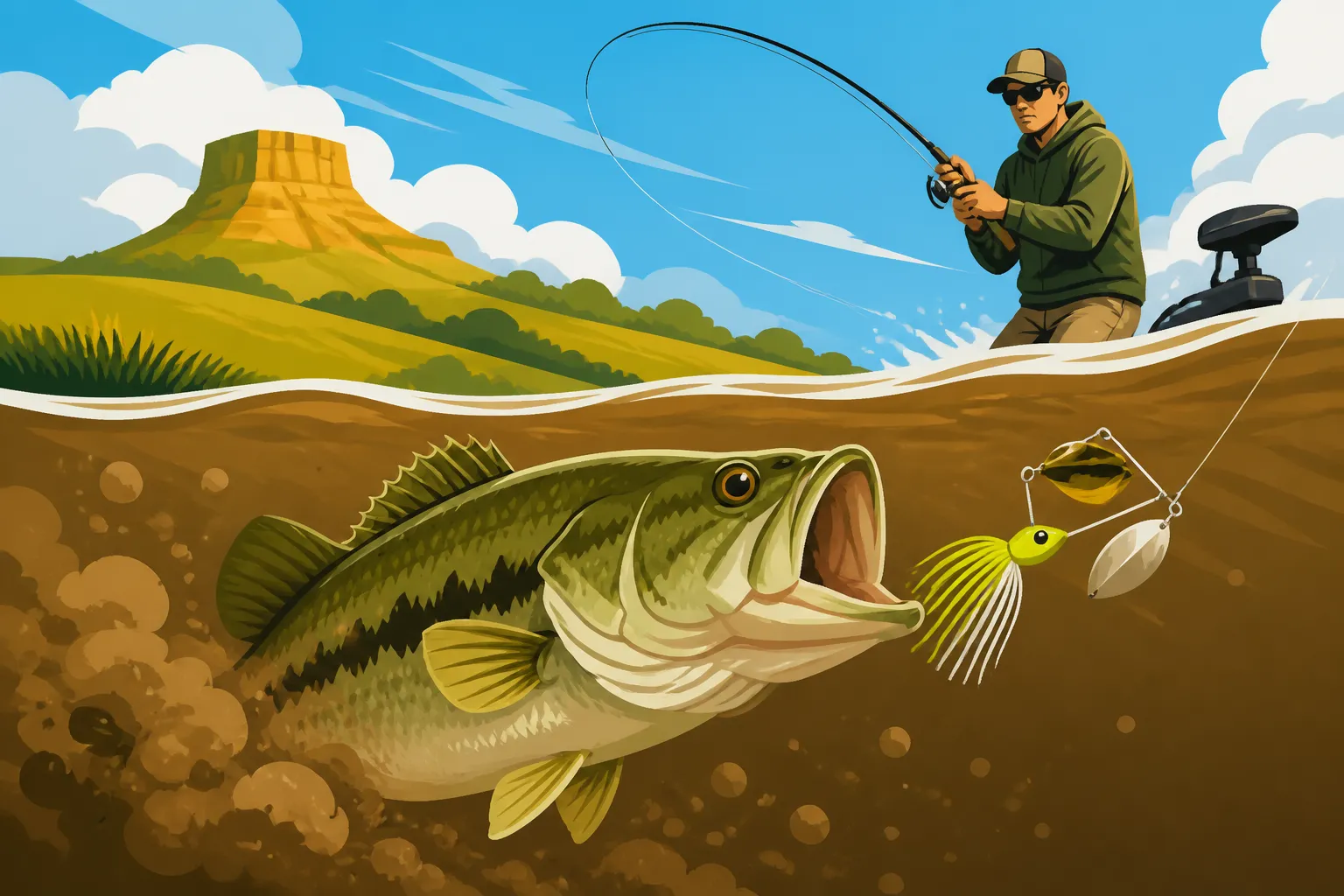
Lures with large profiles and aggressive actions like lipless crankbaits, ChatterBaits, and spinnerbaits are fantastic choices. A lipless crankbait, for instance, vibrates aggressively as it's retrieved, sending out strong sonic waves that bass can home in on. Try varying your retrieve speed; sometimes a slow, steady wobble is key, while other times, a stop-and-go retrieve with sharp rips will trigger a reaction strike. The "thump" of a spinnerbait's blade or the frantic vibration of a ChatterBait are precisely what you want to emulate.
You can also enhance soft plastics. Adding rattles to Texas-rigged worms, creature baits, or jigs can make a huge difference. Think about the sound of a crawfish scuttling on the bottom or a bluegill flicking its tail – those distinct clicks and thumps are what you're trying to mimic. Don't be afraid to experiment with different rattle sizes and materials. The more commotion you can create, the better your chances of a curious bass investigating. For a wide variety of these specialized lures and add-ons, checking out options on Amazon can be quite useful, as they often have unique models not found in every local tackle shop.
Exploiting Contrast and Profile
Even in heavily muddied water, there's usually some light penetration. Bass can still perceive shapes and dark silhouettes against a lighter background (like the surface). This is where high-contrast colors and large, distinct profiles come into play.
Instead of natural baitfish patterns, reach for colors that really "pop." Chartreuse, bright orange, red, and black are often incredibly effective. A black and blue jig, for example, creates a strong silhouette that's easy for a bass to distinguish against a cloudy sky or lighter bottom. Chartreuse, with its intense yellow-green hue, stands out like a beacon. Sometimes, a combination of these colors, like a black and blue jig with a chartreuse trailer, provides the ultimate contrast and visibility.
The profile of your lure is also crucial. A bulky jig with a large creature bait trailer, or a wide-bodied crankbait, displaces more water and presents a bigger target. This makes it easier for the bass to locate and engulf the lure. Remember, they're not getting a clear visual, so a larger target means a better chance of them connecting with it. This is not the time for tiny, subtle baits. You want something that screams "here I am!" without being too overwhelming.
Slowing Down Your Presentation and Fishing Close
When bass can't see well, they're not going to chase a lure from far away. Their strike zone shrinks dramatically, often to just a foot or two around them. This means you need to get your lure right in their face and give them plenty of time to react.
Slowing down your retrieve is paramount. A fast-moving bait will likely be missed or ignored. Try a retrieve that's just fast enough to get your lure to work its action. For a spinnerbait, this might mean reeling just fast enough to get the blades to turn. For a jig, it's often a slow drag or a series of short hops along the bottom, mimicking a foraging crawfish. The goal is to keep the lure in the strike zone longer, giving the bass more opportunity to detect it with its lateral line and make a decision to strike. This technique is also vital for understanding when and where you might find fish, which aligns with knowing the general Kansas Fishing Seasons Guide.
Furthermore, you often need to target specific pieces of cover with extreme precision. Cast right into the densest brush pile, along the log, or tight to the riprap. In muddy water, bass are almost always holding very tight to cover, using it for ambush points and a sense of security. You'll likely need multiple casts to the same piece of structure from different angles to ensure you present the lure to any bass hunkered down there. This methodical approach might feel slow, but it's often the key to success when visibility is low.
Selecting the Right Gear for Muddy Water Bass
Having the right tackle can make a huge difference in your success rate when battling the murk. It's not just about the lure; your entire setup needs to be optimized for these challenging conditions.
Lure Choices: Bright Colors and Big Profiles
We've touched on this, but let's dive a bit deeper into specific lure types that truly shine in muddy water.
- Spinnerbaits: These are arguably the most versatile muddy water lures. The flashing blades (often Colorado or Indiana blades for maximum vibration) and pulsating skirt create an irresistible combination of visual and sonic appeal. Chartreuse, white, black, or combinations like chartreuse-white are excellent choices. Consider adding a soft plastic trailer to bulk up the profile even further. Learning How to Fish a Spinnerbait for Bass is a foundational skill for muddy water success.
- ChatterBaits (Bladed Jigs): These hybrid lures offer the flash of a spinnerbait with the erratic action of a crankbait. The hex-blade on the front creates an intense vibration that bass can feel from a distance. Again, chartreuse, black and blue, or dark green pumpkin are solid color choices.
- Jigs: Whether pitching jigs into cover or slowly dragging them on the bottom, a heavy jig (3/8 oz to 3/4 oz) with a bulky soft plastic trailer (like a craw or creature bait) is a bass magnet. The thumping action of the jig hitting cover, combined with the large profile, is very effective. Black and blue, junebug, or even straight black are top performers.
- Crankbaits: Lipless crankbaits, especially in chrome/blue, firetiger, or chartreuse, are great for covering water and eliciting reaction strikes. Square bill crankbaits in dark patterns or bright colors are excellent for bouncing off shallow cover. For these and other essential baits, you'll find a wide selection and good prices for Best Lures for Kansas Walleye (which can often cross over for bass) and bass specific lures on Amazon.
- Soft Plastics: While finesse soft plastics are out, Texas-rigged worms (10-12 inches), creature baits, and bulkier swimbaits are still in play. Rig them with heavy weights (1/2 oz or more) to ensure they get down through the murk and present a clear thumping profile. Dark colors like black, blue, or junebug, possibly with a little chartreuse dye on the tail, work well.
Here's a quick table to summarize common muddy water lure choices and their strengths:
| Lure Type | Key Feature for Muddy Water | Recommended Colors | Best Retrieve |
|---|---|---|---|
| Spinnerbait | Flash, Vibration, Bulk | Chartreuse, White, Black, Chartreuse/White | Slow roll, stop-and-go, bump cover |
| ChatterBait | Intense Vibration, Erratic Action | Black/Blue, Chartreuse, Dark Green Pumpkin | Slow and steady, slight pauses |
| Jig (Pitching/Flipping) | Bulk, Thump, Scent (optional) | Black/Blue, Junebug, Black | Pitch into cover, short hops, slow drag |
| Lipless Crankbait | High Vibration, Sound | Firetiger, Chrome/Blue, Chartreuse | Rip-and-fall, slow and steady |
| Squarebill Crankbait | Deflection, Vibration, Buoyancy | Dark patterns, Chartreuse, Red | Bump off cover, medium retrieve |
| Heavy Texas Rig | Weedless, Heavy Vibration (with rattle) | Black, Junebug, Dark Blue, Green Pumpkin | Slow drag, subtle hops, penetrate cover |
Line and Rod Considerations
Your line and rod choices are critical to maintaining control and feeling those subtle bites in low visibility.
- Heavy Line: In muddy water, bass aren't line shy. They can't see your line, so don't be afraid to go heavier. 15-20 lb fluorocarbon or monofilament is common, with some anglers even opting for 50-65 lb braided line, especially when fishing heavy cover. Braided line offers superior sensitivity and strength for muscling bass out of thick brush or timber. The choice between fluorocarbon, mono, or braid often comes down to your personal preference and specific technique. For example, some anglers prefer fluorocarbon for jigs because it sinks faster and offers good abrasion resistance. For spinnerbaits and crankbaits, monofilament's stretch can be an advantage.
- Sensitive Rod: Even though you're using more aggressive baits, a sensitive rod is still crucial. Bites in muddy water can be very subtle – sometimes just a slight "thump" or the feeling of your line going slack. A medium-heavy to heavy power rod with a fast action tip will give you the backbone to cast heavy lures and pull fish out of cover, while still allowing you to detect those light bites. When looking for new setups, consider checking out options tailored for specific species, such as the Best Rod and Reel Combo for Catfish or Best Rod and Reel Combo for Walleye, as many qualities (like backbone and sensitivity) overlap for bass fishing.
Important Tackle Box Additions
Beyond the lures themselves, a few other items can significantly boost your muddy water game.
- Scent Attractants: This is often overlooked but can be a game-changer. Adding a strong scent to your soft plastics, jigs, or even spinnerbait skirts gives bass another reason to bite and hold on longer. Brands like smelly jelly, procure, or garlic spray can make a big difference. They can follow the scent trail in the murky water directly to your lure, even if they can't see it immediately. You can find a vast array of these products on Amazon to experiment with.
- Heavy Weights: Don't skimp on your weights for Texas rigs or jigs. You need to penetrate thick cover quickly and efficiently. Keep a good selection of tungsten weights from 1/2 ounce up to 1 ounce in your Kansas Fishing Gear Guide tackle box.
- Fluorescent Line: While bass aren't line-shy, you might be eye-shy! If you're using fluorocarbon or monofilament, a high-visibility, fluorescent line (like yellow or green) can help you detect subtle line movement that indicates a bite. You'll still want a clear or dark leader, but the main line helps tremendously.
Where to Locate Bass When the Water is Muddy
Finding bass in muddy water requires a different mindset. They're not going to be cruising the open water or chasing baitfish in the middle of a cove. They're seeking refuge, ambush points, and anything that offers them a slight advantage.
Targeting Shallow Cover and Structure
When visibility is low, bass move shallow. Often, they'll be in water as shallow as 1-3 feet, especially if there's good cover. They use the cover as a hiding spot and an ambush point. Think about dense laydowns, thick brush piles, docks, flooded vegetation, or riprap banks. These areas offer both protection and opportunities for unsuspecting prey to wander by.
Focus your efforts on pitching and flipping jigs or heavy Texas rigs into the thickest parts of this cover. Remember, you need to get your lure right in their face. Don't just cast near it; try to put your bait into the cover as much as possible. If you're fishing a long stretch of riprap, make casts that allow your lure to bang off the rocks, creating noise and deflection that can trigger a strike. Learning Structure Fishing for Kansas Bass is incredibly important, especially in these conditions.
Consider how the mud might settle in these areas too. Sometimes the very shallowest pockets or those protected from the main body of water might have slightly less turbidity, making them more attractive.
Finding Warmer, Cleaner Pockets
Muddy water often retains less heat or cools down slower, but the primary draw for bass to "cleaner" water is simply improved visibility. After a heavy rain, feeder creeks can dump vast amounts of sediment, but sometimes, certain areas of a lake might remain relatively clear.
Look for areas where runoff hasn't directly impacted or where springs might be flowing in. Often, the main lake body might be a chocolate mess, but smaller pockets, coves, or the backs of arms that are somewhat protected could offer slightly better clarity. Sometimes, even a slight increase in visibility from 6 inches to 1 foot can make a huge difference in bass activity. This is also where understanding factors like Weather Patterns and Kansas Fishing Success comes into play; a prolonged period of calm, sunny weather after a storm can allow sediment to settle in protected areas.
Another thing to consider is warmer water. Muddy water tends to warm faster in the sun. Bass are cold-blooded, and slightly warmer water, especially in cooler conditions, can make them more active. Seek out north-facing banks that get direct sunlight for longer periods or shallow flats that absorb heat quickly. A thermometer can be a useful tool here.
Keying in on Current Breaks and Inflow Areas
Rivers, and even some creek arms of lakes, can have significant current, which only exacerbates muddy conditions. However, current also creates natural ambush points that bass love, especially in murky water.
Look for current breaks – any feature that disrupts the flow of water and creates an eddy or a slack water pocket. This could be a large rock, a log, a bridge pilings, a dock, or a sharp bend in the river. Bass will sit just out of the main current, conserving energy, and waiting for food to be swept by. Your goal is to cast upstream of these breaks and allow your lure to drift naturally into the slack water where the bass are hiding. This is particularly effective in river systems and the upper ends of reservoirs fed by large creeks, where the Kansas River Fishing Guide techniques can be applied.
Inflow areas, where creeks or streams enter a larger body of water, can be a mixed bag. They're often the source of the mud, but they also bring in fresh food and oxygen. After the initial rush of dirty water, these areas can sometimes settle down enough to become productive. Bass will hold on the edges of the mudline, or just inside the slightly cleaner water, waiting for baitfish and other prey to emerge from the turbulent, muddy flow. Concentrate your efforts on the edges of these inflows, paying close attention to any structure that offers a break from the current.
Disclaimer
Fishing conditions can change rapidly, and while this guide offers proven strategies for catching largemouth bass in muddy water, success is never guaranteed. Always consult the latest Kansas Department of Wildlife, Parks and Tourism regulations before heading out, and prioritize safety on the water. Be aware of your surroundings, especially after heavy rains which can cause dangerous currents and floating debris.