How to Fish a Spinnerbait for Bass
Trying to find a truly versatile bass lure that can cut through various conditions in Kansas can be a real headache. You want something that works whether the water's clear or muddy, shallow or deep, and when bass are aggressive or a bit finicky. This guide is all about demystifying the spinnerbait, showing you exactly how to fish it effectively for bass across Kansas's diverse waterways, and helping you put more fish in the boat.
Why Spinnerbaits Are a Kansas Bass Angler's Secret Weapon
Let's be real, sometimes you feel like you need a whole tackle shop to match every situation on a Kansas lake. But if there's one lure that consistently pulls its weight and earns its spot in nearly every bass angler's box, it's the spinnerbait. It’s not just a pretty piece of hardware; it’s a master of vibration, flash, and deception, making it incredibly effective for tempting those Kansas largemouth and smallmouth bass.
The Anatomy of a Spinnerbait and Why It Works
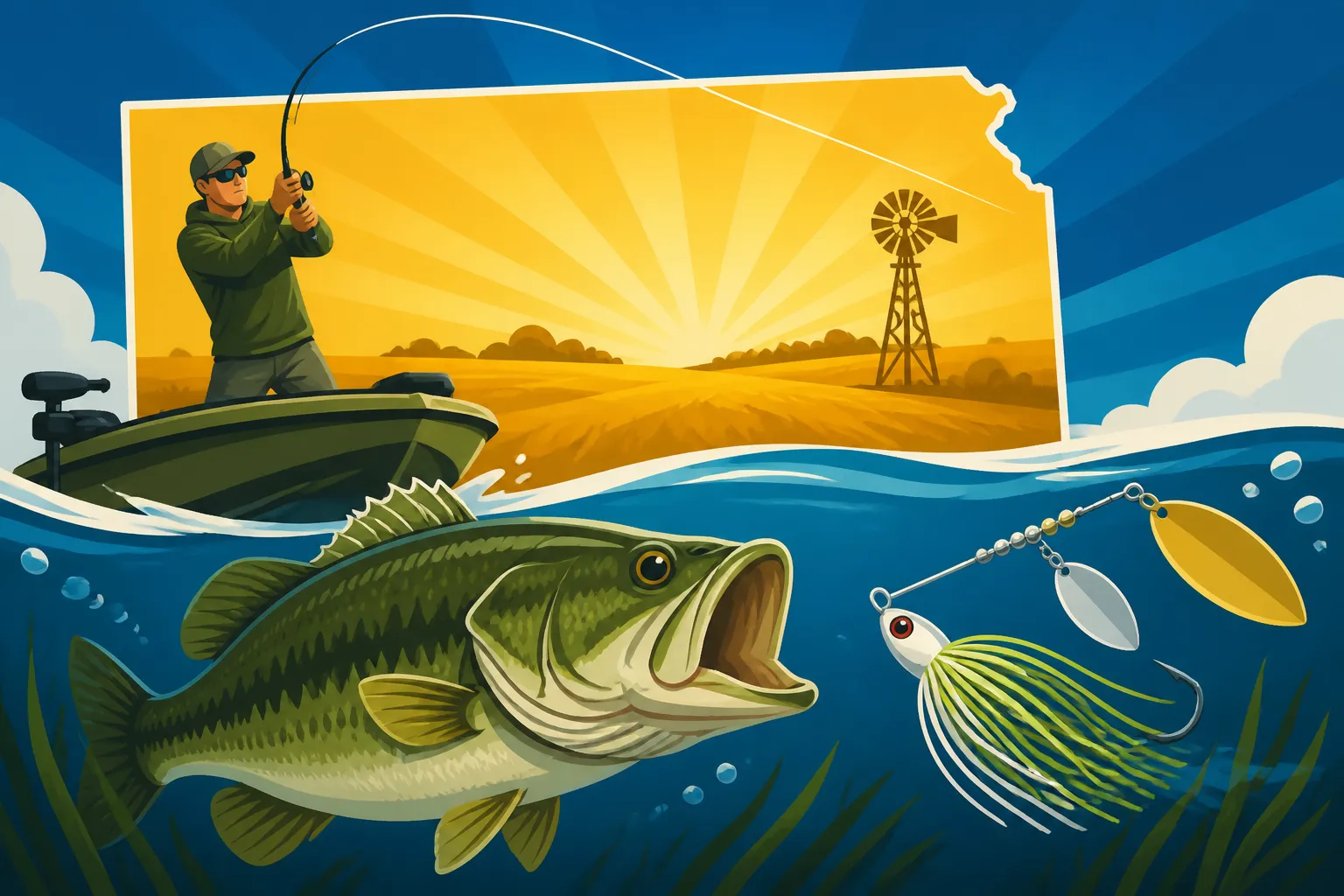
A spinnerbait looks a bit like an underwater chandelier, and that's precisely part of its charm. It's built around a sturdy wire frame, typically in an L-shape. On one arm, you have a weighted head and a vibrant silicone skirt, often with a single or tandem hook peeking out. On the other, the arm extends upwards, culminating in one or more rotating blades. This unique design allows it to create a huge commotion underwater. The blades spin, throwing off dazzling flashes of light and creating pulsating vibrations that mimic fleeing baitfish or crawfish. The skirt provides a lifelike profile, often breathing and undulating with movement, further enticing strikes. It's truly a multi-sensory experience for any hungry bass. This makes it a fantastic tool to have in your arsenal, especially when you're looking for an all-around performer, as highlighted in any good Kansas Bass Fishing Guide.
Spinnerbait Versatility in Kansas Waters
One of the biggest frustrations for anglers is having a lure that only works in very specific scenarios. Not so with the spinnerbait. Whether you're targeting chunky largemouth bass tucked away in a submerged brush pile at Clinton Lake or searching for feisty smallmouth bass along the rocky points of Wilson Lake, a spinnerbait can adapt. Its weedless design, thanks to the upturned hook, allows it to glide through thick vegetation, skip off wood, and deflect off rocks without constantly snagging. This means you can throw it into places other lures fear to tread, opening up a whole new world of productive fishing spots. This adaptability is key to understanding Kansas Largemouth Bass Facts and Kansas Smallmouth Bass Facts, as these fish often inhabit different types of cover.
Mastering the Retrieve: Techniques for Spinnerbait Success
So you've got your spinnerbait tied on – now what? The magic of a spinnerbait isn't just in its design; it's in how you work it. Different retrieves can unlock different reactions from bass, making it crucial to know when to slow it down, speed it up, or add a little twitch.
Slow Rolling and Bottom Bouncing
When the water cools down, or bass are holding deeper or just feeling a bit sluggish, a slow roll is often the ticket. This technique involves casting your spinnerbait out and retrieving it just fast enough for the blades to turn, keeping it near the bottom. You want to feel those blades thumping, but not see them breaking the surface. It mimics a slow-moving, vulnerable baitfish or a crawfish scuttling along the bottom. Try to tick the tops of submerged grass, brush, or rock piles. Occasionally, let it settle briefly on the bottom before beginning your retrieve again – this "bottom bouncing" can trigger reactive strikes from bass guarding their territory or simply ambushing prey. This is particularly effective during the cooler months, as part of your overall Kansas Fishing Seasons Guide.
Burning and Bulging for Aggressive Bass
Conversely, when bass are actively feeding and aggressive, especially in warmer water or during a strong bite, burning and bulging retrieves can be absolutely deadly. "Burning" involves a fast, steady retrieve, keeping the spinnerbait just below the surface, creating a noticeable wake or "bulge" as the blades churn. This often elicits reaction strikes from bass that don't want to let a fast-moving meal get away. It's especially effective over shallow grass beds, around submerged timber, or when white bass are schooling up and hitting the surface. Think of it as triggering their predatory instinct; they see it, they hit it. This is a great high-energy technique for those prime fishing hours, maybe even during the Best Time of Day to Fish in Kansas.
Stop-and-Go and Jigging for Erratic Action
Sometimes, bass need a little more convincing. This is where stop-and-go retrieves and subtle jigging come into play. After casting, reel for a few seconds, then pause, allowing the spinnerbait to flutter and fall. This erratic motion often mimics a struggling baitfish, making it an easy target. During the pause, the blades continue to spin for a moment before settling, giving off one last flash. You can also incorporate a gentle jigging motion with your rod tip during the retrieve, adding an extra dimension of movement. This technique is fantastic around isolated cover like stumps or rock piles, giving the bass more time to see the lure and react. It's about providing an unpredictable target, much like an injured minnow.
Choosing the Right Spinnerbait for Kansas Conditions
Walking into a tackle shop or browsing online for spinnerbaits can be overwhelming. So many colors, so many blade shapes! But understanding the nuances of blade combinations, colors, and weights can dramatically improve your success in Kansas. You can find a huge variety of options on platforms like Amazon, offering different configurations for every situation.
Blade Combinations and Their Impact
The blades are the heart of a spinnerbait's appeal. Each shape creates a different amount of flash and vibration, impacting how the bass perceive it.
- Colorado Blades: These are round, creating the most vibration and "thump" in the water. They also spin at slower retrieve speeds and displace a lot of water, making them excellent for murky water, deep presentations, or low-light conditions. Their high vibration helps bass locate the lure by their lateral line, even if visibility is poor.
- Willowleaf Blades: Long and slender, these blades create less vibration but emit maximum flash. They're great for clear water, faster retrieves, and when you need the bait to cut through the water with less resistance, such as when burning it over shallow grass.
- Indiana Blades: A hybrid between Colorado and Willowleaf, these offer a good balance of flash and vibration. They're a versatile "go-to" blade for many situations when you're not sure which way to lean.
Many spinnerbaits come with tandem blades – often a larger Colorado leading a smaller Willowleaf, or vice-versa. This combination maximizes both vibration and flash, giving you the best of both worlds. Consider what type of "thump" and "flash" you want to generate, and let that guide your blade choice, as these are critical components of any Best Lures for Kansas White Bass or bass tackle box.
| Blade Type | Primary Characteristic | Ideal Conditions | Retrieve Speed |
|---|---|---|---|
| Colorado | High Vibration, Less Flash | Murky Water, Deep Water, Low Light, Slow Roll | Slow to Medium |
| Willowleaf | High Flash, Less Vibration | Clear Water, Shallow Water, Bright Sun, Fast Burn | Medium to Fast |
| Indiana | Balanced Vibration & Flash | Versatile, All-Around Performer | Slow to Medium-Fast |
| Tandem (Mixed) | Max Vibration & Flash | Most Conditions, Seeking a Hybrid Approach | Variable (depends on combo) |
Color Choices for Water Clarity
The general rule of thumb for spinnerbait colors is "bright day, dark lure; dark day, bright lure," but it's a bit more nuanced than that.
- Clear Water: In Kansas's clearer lakes like Wilson Lake, natural colors tend to excel. Think white, silver, grey, or light greens that mimic shad or minnows. Transparent skirts with a hint of flake can also be very effective. You want to present something that looks as natural as possible to wary bass.
- Murky or Stained Water: When the water is dirty, perhaps after heavy rains, or in naturally murkier rivers like parts of the Kansas River, you need colors that stand out. Chartreuse, white, bright orange, and dark blues or blacks create a stronger silhouette and are more easily seen. The added flash from silver or gold blades also helps. Sometimes, a pure white spinnerbait with gold blades can be absolutely deadly in dingy conditions, mimicking a distressed baitfish. Fishing in How to Fish Muddy Water After Rain specifically calls for these louder color choices.
It’s often beneficial to have a variety of colors in your tackle box, allowing you to adapt to changing water conditions throughout the day or across different fishing spots. Consider picking up a multi-pack from Amazon to ensure you're covered for various scenarios.
Weight and Trailer Considerations
Spinnerbait weight is crucial for matching depth and casting distance. Lighter spinnerbaits (1/4 to 3/8 oz) are great for shallow water, burning over grass, or skipping under docks. Heavier spinnerbaits (1/2 to 1 oz+) are better for deeper water, windy conditions, or situations where you need to make long casts.
Adding a trailer can also make a huge difference. A soft plastic trailer, such as a grub, a small swimbait, or a chunk, can:
- Add Bulk: Making the spinnerbait appear larger and more enticing to bigger bass.
- Enhance Action: A curly tail grub or a paddle tail swimbait adds extra movement and vibration.
- Provide Color Contrast: A different colored trailer can offer a pop of color to the skirt, drawing more attention.
- Increase Profile: For example, when bass are feeding on bigger baitfish, a bulkier trailer can better mimic their prey.
Choosing the right weight and adding a complementary trailer can significantly impact your presentation and appeal to the bass. For example, when selecting your Best Tackle for Kansas Game Fish, think about how different trailers will affect the action and profile of your spinnerbaits.
Where and When to Throw a Spinnerbait in Kansas
Knowing how to work a spinnerbait and which one to pick is great, but knowing where and when to cast it in Kansas is the final piece of the puzzle. Spinnerbaits are incredibly versatile, but they shine brightest in specific situations.
Prime Habitats for Spinnerbaits
Think "cover" when it comes to spinnerbaits. These lures are designed to come through heavy stuff, so don't be afraid to put them there.
- Weed Lines and Grass Beds: This is spinnerbait heaven. Whether it's submerged hydrilla, coontail, or emergent cattails, bass love to ambush prey from within or along the edges of vegetation. A spinnerbait, particularly with willowleaf blades, can be retrieved just above the grass or allowed to tick the tops of it. When you feel it snag on a weed, snap your rod tip to rip it free – that sudden change in direction often triggers a strike. This is a common scenario in many Kansas State Fishing Lakes Guide.
- Laydowns and Submerged Timber: Fallen trees and brush piles are classic bass haunts. Cast your spinnerbait past the cover and retrieve it so it bumps off the wood. The deflection can be key. A lighter spinnerbait can be carefully skipped under overhanging branches, getting into those hard-to-reach spots where big bass often hide.
- Rocky Points and Riprap: Especially in Kansas reservoirs, rocky points and riprap along dams or bridges are magnets for baitfish and, consequently, bass. A slow-rolled Colorado blade spinnerbait worked parallel to these structures can be incredibly effective, mimicking crawfish or baitfish foraging along the rocks.
- Creek Channels and Inflow Areas: During periods of rain or higher water, creek channels and areas where water flows into a lake or river can be hotspots. The current often positions baitfish, and a spinnerbait is excellent for covering water and finding active bass in these situations. For beginners, understanding these spots is a fundamental part of Kansas Fishing Techniques for Beginners.
Seasonal Strategies for Kansas Bass
Just like us, bass change their habits with the seasons. Your spinnerbait approach should too.
- Spring: As water temperatures rise, bass move shallower for the spawn. This is prime time for spinnerbaits! Target shallow spawning flats, points, and coves. Both slow-rolling and moderate retrieves can be effective. Look for areas with new growth vegetation or emerging cover.
- Summer: When the scorching Kansas summer hits, bass can go deep, but they also feed aggressively in low-light conditions or around strong cover. Early mornings, late evenings, and even night fishing can be great for spinnerbaits. Focus on deeper weed lines, shaded areas, and offshore humps. Burning a spinnerbait over shallow grass early in the morning can also be productive.
- Fall: As water cools, bass often feed heavily in preparation for winter. This "fall feeding frenzy" makes spinnerbaits a top choice. Bass will often chase baitfish into the backs of creeks or onto shallow flats. Vary your retrieve speed until you find what triggers bites, but a steady, moderate retrieve is often a great starting point.
Weather and Water Conditions
Weather isn't just about comfort; it dictates how fish behave.
- Cloudy Days and Low Light: These are ideal spinnerbait conditions! The reduced light allows the flash of the blades to be more visible without being overpowering. Bass often feel more comfortable moving out of heavy cover and actively feeding. Use blades with more flash and vibration to help bass locate your lure.
- Sunny Days: On bright, clear days, bass might retreat to deeper or denser cover. You might need to slow your retrieve and bump the spinnerbait directly into cover to entice a strike. Natural colors and less overpowering flash (like willowleaf blades) can be more effective.
- Windy Conditions: Wind can be your friend! It breaks up the surface, making it harder for bass to distinguish your lure from natural prey. The chop also oxygenates the water, often making bass more active. Cast with the wind to maximize casting distance and retrieve your spinnerbait along windy banks or points where baitfish are often pushed. A heavier spinnerbait will help you maintain contact in windy conditions.
Understanding these conditions will help you choose the right spinnerbait and technique, ensuring you have the best chance of success when targeting Kansas bass.
Disclaimer
This article is for general informational purposes only and does not constitute professional advice. Laws, prices and regulations vary by location and change over time. Consult a qualified professional for guidance on your specific situation.