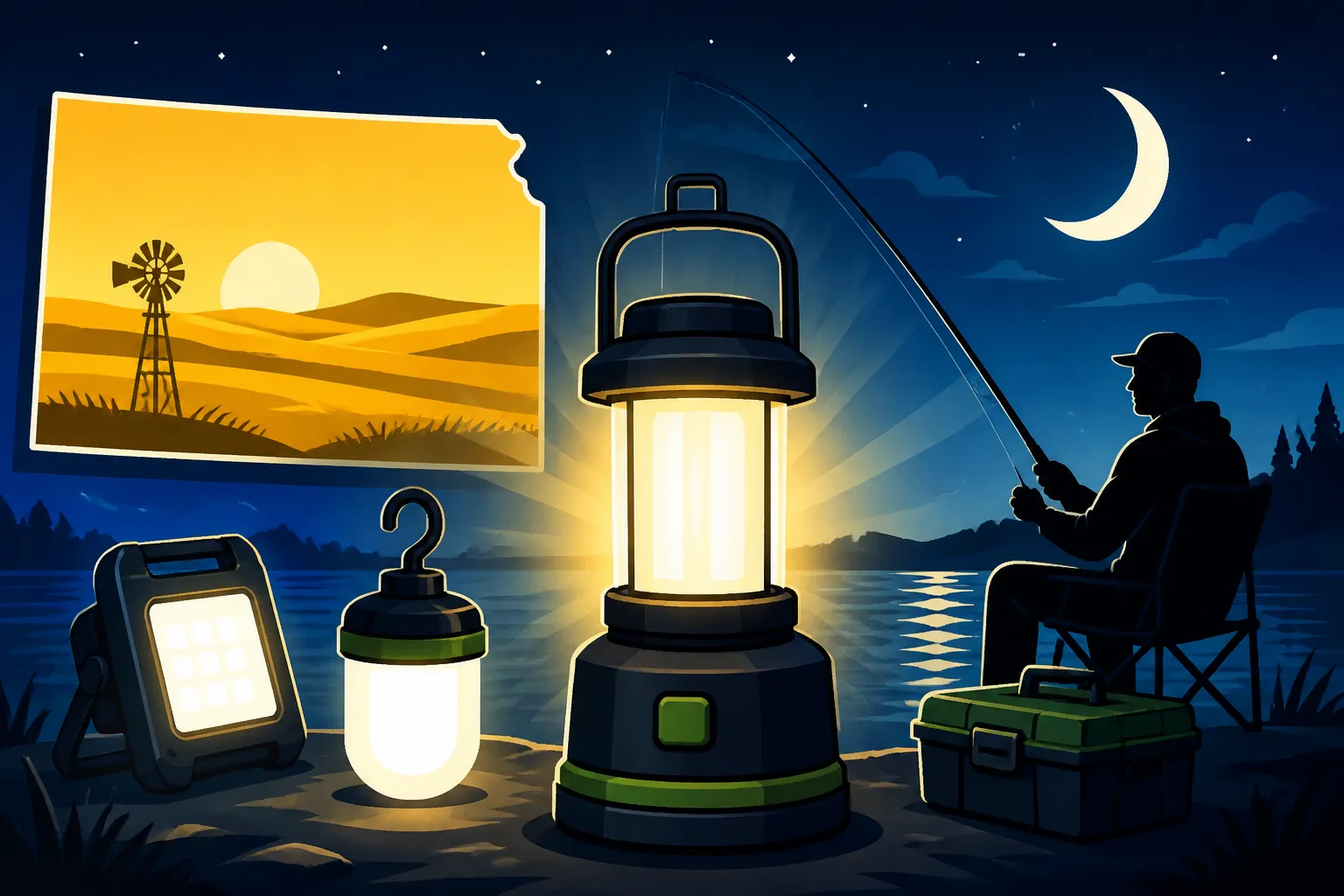
Best Lantern Setup for Night Fishing
There’s a unique thrill that comes with night fishing in Kansas, isn't there? The stillness of the water, the cool air, and the anticipation of a big bite under the stars. But let's be honest, trying to tie a knot or unhook a catfish when you can barely see your hand in front of your face can quickly turn that peaceful experience into a frustrating fumbling session. This guide is all about shedding light on that challenge (pun intended!), helping you put together the absolute best lantern setup so you can fish safely, effectively, and comfortably long after the sun dips below the horizon.
Why Lighting Matters for Night Fishing in Kansas
Night fishing isn't just about throwing a line out after dark; it's a whole different ballgame that requires careful preparation, and good lighting is at the very top of that list. Beyond just being able to see what you're doing, strategic lighting plays several crucial roles in making your nocturnal angling adventures safe and successful on Kansas waters.
Enhancing Safety and Visibility
When you’re out on the bank of Milford Lake or navigating your boat on Cheney Reservoir after sunset, darkness can quickly become a serious hazard. It's not just about seeing your bait; it's about seeing where you step, what's around you, and making sure others can see you.
Imagine trying to walk along a rocky shoreline, perhaps near Tuttle Creek Lake, with no light at all. You’re bound to trip over roots, stumble on uneven ground, or worse, get too close to the water’s edge without realizing it. A reliable main lantern illuminates your immediate surroundings, highlighting potential hazards like slippery mud, hidden obstacles, or unexpected drops. If you're fishing from a boat, proper navigation lights aren't just a recommendation; they’re often a legal requirement in Kansas and are absolutely critical for avoiding collisions with other vessels or submerged hazards. Even when anchored, a visible light source tells other boaters exactly where you are. This isn't just for your safety; it's for everyone else enjoying the water, too. Always consult the latest Kansas Boating Safety Equipment Requirements to ensure your vessel is properly outfitted.
Attracting Baitfish and Game Fish
One of the most exciting aspects of night fishing with a lantern, especially on our Kansas lakes and rivers, is its ability to actually attract fish. It's like turning on a dinner bell underwater! The light, particularly certain colors, draws in plankton and small insects. These tiny critters then become a magnet for baitfish like shad and minnows. And what follows the baitfish? You guessed it – the predatory game fish we're all after, such as crappie, walleye, and various catfish species.
This chain reaction is a fantastic natural advantage for anglers. A well-placed lantern can concentrate the food chain directly into your fishing zone, making your bait much more likely to be noticed. Green lights are particularly popular for this purpose, as they penetrate water more effectively and are thought to be especially attractive to baitfish without spooking the larger predators. This means you can often target specific species by strategically positioning your light to draw them in, enhancing your chances of a productive night. Consider adding a submersible light to your setup if attracting fish is a primary goal.
Practicality and Comfort
Let's face it, fishing can involve a lot of fiddly tasks, and trying to do them in pitch-black conditions is a surefire way to get frustrated. Imagine trying to thread a tiny hook, untangle a line, or even find that specific lure in your tackle box when all you have is the faint glow of the moon. It's a recipe for headaches and lost fishing time.
A good lighting setup makes all these practical aspects of fishing much more comfortable. You can easily bait your hook, measure your catch, take a quick photo, or handle a fish without having to fumble around or risk injury. It allows you to maintain your focus on the fishing itself, rather than struggling with basic tasks. Plus, a well-lit area just feels more secure and enjoyable. It transforms the intimidating darkness into a manageable, even cozy, environment where you can relax and truly savor the peace and quiet of a Kansas night on the water. For more general advice on fishing after sundown, you might want to read our comprehensive Kansas Night Fishing Guide.
Types of Lanterns and Their Best Uses for Kansas Night Fishing
When it comes to illuminating your night fishing adventure, you've got a few key players in the lantern world. Each type brings its own set of strengths and weaknesses, and understanding them is key to picking the perfect setup for your specific needs on Kansas waters.
Traditional Propane and Butane Lanterns
Ah, the classic camping lantern! Propane and butane lanterns have been a staple for outdoor enthusiasts for decades, and for good reason. They are incredibly bright, often casting a wide, strong beam of white light that can illuminate a large area, perfect for a bank fishing setup at El Dorado Lake or a spacious boat deck. The sheer brightness is hard to beat for general area lighting. Another often-overlooked benefit is the heat they generate. On a chilly Kansas night, that warmth can be a welcome bonus, and some anglers even claim the heat helps deter mosquitoes and other bugs. There's also a nostalgic charm to the hiss and glow of a mantle lantern – it just feels like a traditional outdoor experience.
However, these lanterns come with their drawbacks. They require fuel canisters, which means extra bulk to carry and the potential to run out if you don't bring spares. The mantles are fragile and can break easily during transport, leaving you in the dark. They can also be quite noisy with their constant hiss, potentially disturbing the quiet ambiance of a night out, and they emit exhaust fumes, making them unsuitable for enclosed spaces. Most importantly, they pose a fire risk due to open flames and heat, so extreme caution is necessary, especially around dry grasses or combustible materials. While they offer a powerful light, their practicality for active fishing tasks might be less than ideal.
Battery-Powered LED Lanterns
In recent years, battery-powered LED lanterns have surged in popularity, and for very good reasons, especially for anglers. Their biggest advantage is safety: no open flames, no hot surfaces, and no fuel fumes. This makes them ideal for use in boats, tents, or crowded bank spots. They are generally much quieter than their fuel-burning counterparts, preserving the tranquility of the night. Many LED lanterns are also incredibly durable, often designed to be water-resistant or even fully waterproof, a huge plus when you're near the water at places like Clinton Lake.
LED lanterns offer incredible versatility. You'll find models with adjustable brightness settings, multiple light modes (like high, low, strobe), and even different light colors. Red light, for instance, is fantastic for preserving your night vision while still providing enough illumination for close-up tasks like tying a knot. Green light, as mentioned, is great for attracting baitfish. Many newer models feature rechargeable batteries, often via USB, which means you can power them up from a portable power bank, extending their run time significantly. While the initial cost for a high-quality, feature-rich LED lantern can sometimes be a bit more than a basic propane model, the long-term savings on fuel and the sheer convenience often make them a superior choice. You can find a huge variety of options on Amazon, from compact personal lights to powerful area lanterns.
Specialized Fishing Lights (Submersible and Floating)
If your goal is to truly enhance your fish-attracting power, specialized fishing lights are worth considering. These are purpose-built to go directly into or float on the water, creating an illuminated column that attracts baitfish and, subsequently, game fish. The most common type uses green LED technology, which penetrates water exceptionally well and is highly visible to aquatic life. Imagine dropping one of these off your boat or from a pier at Wilson Lake – you're creating a fishing hotspot directly under your feet.
Submersible lights sink into the water, usually tethered to a boat or dock, broadcasting light downwards and outwards. Floating lights rest on the surface, illuminating the water column from above. Both types minimize light pollution for the angler, allowing you to maintain better night vision while still drawing fish to your spot. Their primary drawback is that they require a power source, typically a 12-volt battery, which adds to your gear list and needs to be managed for charge. They also serve a very specific purpose – attracting fish – rather than providing general area illumination for your campsite or boat deck. If you're serious about drawing in crappie for an evening bite, or perhaps some catfish, these lights can be a game-changer. For more tips on targeting specific species, check out our Kansas Crappie Fishing Techniques or Kansas Catfish Fishing Techniques guides.
Crafting Your Ideal Night Fishing Lighting Setup
Putting together the perfect lighting setup isn't about buying the brightest thing you can find; it's about creating a balanced system that addresses all your needs, from illuminating your immediate workspace to attracting fish. Think of it as building layers of light.
Prioritizing Your Main Light Source
Your main light source is the anchor of your night fishing setup. This is the lantern that will provide the primary illumination for your general fishing area, whether that's a section of the bank or the deck of your boat. When choosing, consider the scope of your operations. Are you fishing solo from a small, quiet cove at Pomona Lake, or are you on a larger vessel with multiple anglers on a big reservoir like Milford?
For expansive areas or if you prioritize maximum brightness, a traditional propane lantern can still be a contender, but remember its limitations regarding safety and noise. However, for most Kansas night anglers, a powerful battery-powered LED lantern often takes the cake. Look for models with high lumen output and a wide beam angle to cover your workspace effectively. Many modern LED lanterns offer features like dimmable settings, which are crucial for adjusting to varying conditions and avoiding spooking fish or blinding your companions. Consider how long you plan to be out; longer trips demand better battery life or the ability to easily swap batteries or recharge on the go.
Here's a quick comparison to help you prioritize:
| Feature | Propane Lantern | Battery-Powered LED Lantern | Specialized Fishing Light (Green) |
|---|---|---|---|
| Primary Use | Wide, bright area illumination, some heat | Versatile area/task lighting, safety, quiet | Attracting baitfish/game fish directly |
| Brightness | Very high | Moderate to very high (model dependent) | Focuses light underwater, appears bright |
| Safety | Fire risk, hot surfaces, fumes | Very safe, cool to touch, no fumes | Safe, minimal light pollution for angler |
| Power Source | Propane/butane canisters | Rechargeable or disposable batteries, USB | 12V battery |
| Durability | Fragile mantles, susceptible to drops | Often rugged, water-resistant/waterproof | Designed for aquatic environments |
| Versatility | Single light type, limited settings | Multiple modes (white/red/green), dimmable, USB | Single purpose (fish attraction) |
| Noise | Hissing sound | Silent | Silent |
| Cost | Lower initial, ongoing fuel | Higher initial for quality, lower long-term fuel | Varies, requires separate power source |
Adding Auxiliary and Task Lighting
While your main lantern handles the broad strokes, auxiliary and task lighting are your precision tools. This is where hands-free convenience really shines. A high-quality headlamp is non-negotiable for night fishing. It directs light exactly where your eyes are looking, freeing up both hands for critical tasks like baiting a hook, tying on a new lure, or carefully unhooking a fish. Look for headlamps with multiple brightness settings and, crucially, a red light option. Red light helps preserve your natural night vision, making it easier to transition between illuminated tasks and scanning the dark water without your eyes needing to readjust completely.
Beyond headlamps, consider smaller clip-on lights that can attach to your hat brim, a jacket zipper, or even the edge of your tackle box. These are invaluable for quick, focused light when you don't need to fire up your main lantern. For boat anglers, proper navigation lights are paramount for safety and compliance, particularly on larger bodies of water like Melvern Lake. These are distinct from your fishing lights and must meet regulatory standards. Having dedicated lights for your livewell or bait bucket can also make a world of difference when you're fumbling for a minnow in the dark.
Power Management and Durability Considerations
Nothing ruins a night fishing trip faster than your lights dying on you halfway through. Planning your power management is essential. For battery-powered LED lanterns and headlamps, always carry spare batteries or a fully charged portable power bank. Many modern LED lanterns offer USB charging, making a power bank an incredibly useful accessory. If you're using propane lanterns, make sure you have enough spare fuel canisters for the duration of your trip, plus a little extra for good measure. A great tip is to estimate your burn time and then double it, just to be safe.
Durability is another key factor. Fishing environments are often wet, muddy, and unpredictable. Look for lanterns and headlamps that are rated as water-resistant (IPX4 or higher) or, even better, waterproof (IPX7 or higher). This means they can withstand splashes, rain, or even a brief dunk without failing. Materials matter too; sturdy plastics and metals will hold up better to accidental drops or impacts than flimsy alternatives. When shopping, particularly on a platform like Amazon, pay attention to reviews that discuss real-world durability and battery life. Investing in robust gear upfront will save you headaches and money in the long run. If you're curious about all the gear needed for a successful trip, our Kansas Fishing Gear Guide covers a broader range of essentials.
Tips for Maximizing Your Night Fishing Lantern Setup in Kansas
Having the right gear is one thing, but knowing how to use it effectively is what truly makes a difference. Strategic deployment of your lighting can elevate your night fishing experience from simply "seeing" to "successfully catching."
Strategic Placement for Optimal Results
Where you place your lights can dramatically impact your success and comfort. First and foremost, avoid blinding yourself or your fishing partners. Positioning your main lantern slightly behind you or to the side, rather than directly in front, prevents glare and allows your eyes to adjust better to the surrounding darkness. If you're on a boat, consider hanging the lantern from a high point, like a Bimini top or a rod holder, to cast a wider, more even light without creating harsh shadows on your fishing lines.
For specialized underwater or floating fishing lights, placement is even more critical. If you're targeting crappie or white bass, position the light in an area where baitfish are likely to congregate, such as near a drop-off, a submerged brush pile, or along a current seam. In Kansas, places like the mouths of creeks feeding into reservoirs can be prime locations. The goal is to create a "baitfish zone" that acts as a natural attractant. You want enough light to draw them in, but not so much that it spooks the larger predators by making them feel exposed. Experiment with different depths and distances from your fishing lines to find what works best for the species you're pursuing. Many anglers find success by placing the fish-attracting light a short distance away from where they are actively casting, drawing the baitfish and game fish into a more general area rather than directly under their boat.
Light Discipline and Stealth
Night fishing often rewards stealth and subtlety. While a good lantern setup is essential, knowing when not to use intense light is equally important. Fish, especially larger, more wary game fish, can be highly sensitive to sudden changes in light. Blasting a bright light directly onto the water when you're trying to sneak up on a spot can send them scattering.
Practice "light discipline." Use your powerful main lantern only when you absolutely need it for rigging, baiting, or handling a catch. For everything else, rely on your headlamp set to a low brightness, or preferably, a red light mode. Red light provides enough illumination for close-up tasks without compromising your night vision or alarming fish as much as bright white light. When approaching a new fishing spot in the dark, whether by boat or on foot, keep all lights off until you're settled. Let your eyes adjust and move slowly and quietly. Only activate minimal lighting once you're in position and ready to cast. This subtle approach can make a huge difference, particularly when targeting finicky species like walleye. If you're looking for more general pointers, our guide to Kansas Fishing Techniques for Beginners also touches on these elements.
Safety First: Beyond Just Seeing
Beyond simply seeing your way around, your lantern setup is a crucial component of your overall safety plan for night fishing. Always have a dedicated emergency light source that isn't reliant on the same power source as your primary fishing lights. This could be a small, robust flashlight or a second headlamp with fresh batteries, stored in an easily accessible, waterproof bag. This backup is invaluable if your main lights fail or you encounter an unexpected situation.
If you're using fuel-powered lanterns, remember the fire safety basics: keep them away from any flammable materials, ensure they are stable on a flat surface, and never leave them unattended. Always store spare fuel in a well-ventilated area, away from the lantern itself. Knowing your surroundings and having a mental map of your exit routes is also crucial. Even with good lighting, navigating unfamiliar terrain in the dark can be disorienting. Consider marking your path if you're hiking into a secluded spot on the bank. Furthermore, ensure your Kansas Life Jacket and Boating Safety Guide requirements are met; personal flotation devices are essential, and knowing where they are in the dark is critical in an emergency. Being able to quickly locate your first-aid kit or other emergency gear is another reason to have reliable, readily available lighting. After all, a successful night of fishing is first and foremost a safe one.
Disclaimer
This article is for general informational purposes only and does not constitute professional advice. Laws, prices and regulations vary by location and change over time. Consult a qualified professional for guidance on your specific situation.