Best Technique for Suspended Crappie
There's nothing quite as frustrating as showing up to your favorite Kansas crappie spot, seeing fish on your sonar, but they're suspended way off the bottom, totally ignoring your usual tactics. It feels like they're just floating there, taunting you in the middle of the water column, neither shallow nor deep. This guide is going to peel back the mystery of suspended crappie and arm you with the best techniques to turn those phantom sonar blobs into a full livewell.
Understanding Suspended Crappie Behavior
Crappie are notoriously finicky, and understanding why they suspend is the first step to figuring out how to catch them. It's not just random; there's usually a very good reason they're hanging out away from the obvious cover.
Why Crappie Suspend
Imagine you're a crappie. What drives your daily decisions? Primarily, it's food, comfort, and safety. When crappie suspend, they're often doing it for one of these key reasons. First and foremost, they follow their food source. If the baitfish, like shad, are suspended in open water at a certain depth, you can bet the crappie won't be far behind. They're opportunistic predators, and if dinner is cruising 15 feet down over 30 feet of water, that's where they'll be.
Secondly, comfort plays a huge role, especially in the dog days of summer or the biting cold of winter. Water temperature and oxygen levels can stratify in lakes, creating thermoclines. Crappie will often find the "sweet spot" – a depth with the ideal temperature and sufficient oxygen – and simply hold there. This is particularly true in larger Kansas reservoirs, where deep water allows for distinct temperature layers. Finally, sometimes it's about pressure. Heavy boat traffic or intense fishing pressure can push crappie away from traditional shallow cover, causing them to seek refuge in the less disturbed open water.
Where to Look for Suspended Slabs
Knowing why they suspend helps you figure out where to start looking. Suspended crappie are often found around subtle structure or over open water that has specific characteristics. Think about main lake channels that wind through a reservoir; crappie will often suspend along the edges or over the channel itself, especially if baitfish are present. Humps, subtle points, and underwater roadbeds can also be hotspots, with crappie holding just off the bottom over these features, or even higher in the water column if bait is above them.
Another prime location is around large, submerged timber or brush piles that rise significantly off the bottom. Instead of being in the brush, they might be suspended just above it or to the sides, using it as an ambush point or a reference in the open water. Even bridge pilings and deep docks can hold suspended crappie, especially if they provide shade or a current break. Your electronics are your best friend here, helping you scan vast expanses of water to pinpoint those elusive schools. Always remember to check contour lines and subtle changes in depth, as these often reveal transition zones where baitfish and crappie like to congregate.
Key Techniques for Targeting Suspended Crappie
Once you've located these suspended schools, the next challenge is getting them to bite. It's not always as simple as dropping a minnow down; presentation is everything. Different situations call for different approaches, and having a few tricks up your sleeve will significantly increase your success.
Spider Rigging for Broad Coverage
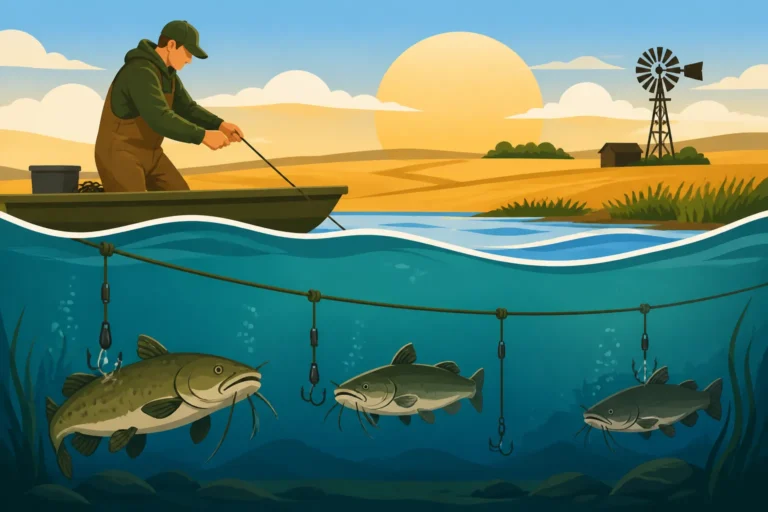
Spider rigging is a fantastic technique for covering a lot of water and presenting multiple baits at different depths simultaneously, making it incredibly effective for suspended crappie. This method involves using several long rods (often 10-16 feet or more) deployed from the front or sides of the boat, resembling a spider's legs. Each rod typically has a different bait or jig rigged at a specific depth, allowing you to quickly identify the crappie's preferred feeding zone.
You'll slowly troll (or drift, depending on the wind) across areas where you suspect crappie are holding, such as major creek channels or vast flats. The slow movement allows your baits to remain vertical and enticing, presenting a buffet to any crappie you pass over. This technique is particularly popular on large Kansas reservoirs like Milford Lake or Cheney Reservoir, where crappie can spread out across immense areas. The key is constant speed control and paying close attention to your rod tips for even the slightest tap. You can often find specialized rod holders and long, sensitive rods perfect for spider rigging on platforms like Amazon.
Vertical Jigging for Precision
When crappie are tightly schooled or holding near distinct pieces of cover, vertical jigging becomes your go-to method. This technique is all about precision: dropping your bait directly onto the fish you see on your sonar. It's a more active and engaging way to fish, requiring a keen eye on your fish finder and precise boat control. Once you mark a school, position your boat directly over them, and slowly lower your jig or minnow. The goal is to keep your bait hovering at or just above the depth of the suspended crappie.
Small, lightweight jigs (often 1/16 to 1/8 ounce) are perfect for this, allowing for a slow, controlled fall. You can impart action with subtle rod tip movements – a gentle lift and fall, a slight tremble, or even just holding it still. Sometimes, a completely static presentation is what it takes to tempt a finicky crappie. This method is incredibly effective when you’ve found a "sweet spot" of suspended crappie, allowing you to repeatedly drop down to the same fish. Learning various Jigging Techniques for Kansas Crappie will give you an edge in these situations.
Casting and Retrieving with a Purpose
Don't underestimate the power of casting and retrieving, even for suspended crappie. This approach is particularly useful for actively feeding crappie that might be scattered or moving quickly, or when you're targeting the edges of suspended schools. Using a small jig, a tiny crankbait, or even a soft plastic swimbait under a slip bobber allows you to cover water horizontally and present a lure with a natural swimming action.
A slip bobber rig is excellent for maintaining your bait at a consistent depth while casting. You can adjust the bobber stop to set your bait just above the suspended crappie's depth, then cast it out and slowly reel it in, allowing the bait to drift or swim tantalizingly through the strike zone. Small crankbaits or swimbaits can also be incredibly effective, especially if crappie are chasing baitfish. Experiment with retrieve speeds and pauses, letting the lure "hang" in front of the fish. This technique can be surprisingly effective for active crappie and is a great way to explore around submerged cover without spooking fish by getting too close.
Essential Gear for Suspended Crappie
Having the right tackle can make all the difference when you're trying to coax a bite from finicky suspended crappie. Sensitivity, light tackle, and reliable electronics are your best friends in this pursuit.
Rods, Reels, and Line Choices
When tackling suspended crappie, sensitivity is paramount. You need to feel those incredibly subtle bites that often manifest as just a slight "thump" or even simply a slackening of your line. A light action rod, often in the 6 to 7.5-foot range, with a fast or extra-fast tip, is ideal. This combination provides enough backbone to fight a good-sized slab while offering the sensitivity to detect the most delicate takes. Many anglers prefer ultralight spinning reels, matched with the rod, for their smooth drag and ability to handle light lines. You can check out our guide on the Best Rod and Reel Combo for Crappie for more specific recommendations.
For line, fluorocarbon or braided line with a fluorocarbon leader are excellent choices. Fluorocarbon's low stretch offers superior sensitivity and its near-invisibility underwater can be a huge advantage in clear Kansas waters. Braided line, with zero stretch, transmits every bump and nibble directly to your rod tip, though a fluorocarbon leader is often critical to combat its visibility. Generally, 4 to 6-pound test monofilament or fluorocarbon, or 8 to 10-pound test braid with a 4 to 6-pound fluorocarbon leader, is a good starting point. Lighter line allows your baits to fall more naturally and provides less resistance to biting fish.
Baits, Jigs, and Lure Selection
The world of crappie baits is vast, but for suspended crappie, precision and subtle action are key. Small jigs, typically ranging from 1/32 to 1/8 ounce, are the workhorses. Paired with soft plastic bodies like curly tail grubs, tube jigs, or small minnow imitators, they offer incredible versatility. The color choice can vary wildly based on water clarity and light conditions – chartreuse, white, black, and natural shad patterns are perennial favorites. You might want to consult our comprehensive guide on the Best Bait for Kansas Crappie for more detailed insights.
Live minnows remain an undisputed crappie catcher, especially when suspended. Rigging a small minnow on a light jig head or a plain hook under a small split shot is often irresistible. When using live bait, focus on keeping it lively and presenting it naturally. For more active crappie, small crankbaits or blade baits can be effective, especially when cast and retrieved through a school. Don't be afraid to experiment with different sizes, colors, and actions until you find what the crappie are keying in on that day. Sometimes, a subtle change in jig color or tail design can make all the difference, which is why a well-stocked Best Lures for a Kansas Tackle Box is crucial.
The Role of Electronics
In the realm of suspended crappie fishing, your marine electronics are not just helpful; they're absolutely indispensable. A good fish finder, especially one with down imaging and side imaging capabilities, allows you to literally see the crappie suspended in the water column, as well as the baitfish they are chasing. This capability drastically reduces the amount of guesswork involved, transforming your fishing from a blind search to a targeted operation. If you're looking to upgrade, our Best Fish Finder for Kansas Reservoirs guide has some excellent suggestions.
Modern sonar units can show you individual fish arches or distinct blobs of crappie, along with the depth at which they are holding. With side imaging, you can scan wide areas to either side of your boat, pinpointing brush piles or schools of crappie that might be off to the side, allowing you to position your boat perfectly for a precise cast or vertical drop. Knowing exactly where the fish are means you can present your bait at precisely the right depth, rather than blindly probing. Invest time in learning how to interpret your sonar screen – understanding fish arches, bait balls, and structure will pay dividends in your crappie catch rates. Many excellent fish finders are readily available from retailers like Amazon.
Adapting to Conditions
Crappie behavior is highly influenced by environmental factors. To consistently catch suspended crappie, you need to be a chameleon, ready to adapt your approach to the ever-changing conditions of Kansas waters.
Seasonal Adjustments
The seasons dictate much of a crappie's behavior, including when and why they suspend. In spring, as waters warm, crappie often move shallow for the spawn. However, early spring or during cold fronts, they might suspend in staging areas, waiting for stable conditions. Our Kansas Spring Crappie Fishing Tips can help you navigate these tricky transitional periods. As summer progresses and water temperatures rise, crappie frequently move deeper and suspend more often, seeking cooler, oxygen-rich water over deep channels or around thermoclines. This is when spider rigging and vertical jigging really shine in places like El Dorado Lake.
Fall brings cooler temperatures, and crappie can be found suspended over baitfish schools that are fattening up for winter. They might be higher in the water column during low light or overcast days, dropping deeper during bright sunshine. Check out our guide on How to Find Crappie in the Fall for more detailed strategies. In winter, crappie will often suspend near deep structure, bridge pilings, or channel breaks, holding tight to a specific depth where conditions are stable. Ice fishing for crappie often involves targeting suspended schools under the ice, requiring careful depth control. Knowing How Deep to Fish for Crappie in Winter is critical during these colder months.
Weather's Influence
Weather patterns can dramatically impact how and where crappie suspend. Stable, overcast days often see crappie suspend higher in the water column and be more active. They'll venture further from cover, chasing baitfish with less fear of predation from above. Conversely, bright, sunny days can push crappie deeper or cause them to tuck tighter to structure, suspending just above brush piles for shade and cover.
Wind is another major factor. A light chop can actually improve crappie fishing by breaking up the surface, making anglers less visible and stirring up the baitfish. However, strong winds can make boat control incredibly challenging, making precision vertical jigging or spider rigging nearly impossible. In these conditions, focusing on protected coves or leeward sides of points where the water is calmer might be more productive, even if it means targeting shallower fish. Pay attention to sudden changes in barometric pressure too; a rapidly falling barometer before a storm can trigger a feeding frenzy, while a rising barometer after a cold front often puts the fish in a more finicky mood.
Reading the Water and Structure
Beyond simply seeing fish on your sonar, truly successful crappie anglers learn to "read" the water and understand the hidden underwater landscape. This means not just identifying a brush pile, but understanding why crappie might be holding 5 feet above it. It's about knowing where the main lake channels run, where old creek beds snake through a reservoir, and where humps rise dramatically from the bottom.
Thermal stratification, or thermoclines, are particularly important for suspended crappie in deeper lakes. A thermocline is a distinct layer in the water where the temperature changes rapidly. Crappie will often suspend just above or within this layer, as it typically marks the boundary of oxygen-rich water. Your fish finder can often show you this layer. Also, pay attention to current. Even subtle current in reservoirs, often caused by wind or dam operations, can position crappie in specific ways, typically on the current side of structure where baitfish are swept past them. Understanding these nuances, combined with precise boat control and presentation, is what truly elevates your suspended crappie game.
| Technique | Ideal Conditions | Best for Crappie Activity | Gear Focus | Angler Effort/Boat Control |
|---|---|---|---|---|
| Spider Rigging | Open water, scattered fish, large areas | Moderate to Active | Multiple long rods, sensitive tips | Slow troll, controlled drift |
| Vertical Jigging | Tightly schooled fish, precise structure | Finicky to Active | Single sensitive rod, light jigging | Precise boat positioning, steady hand |
| Casting/Retrieving | Scattered active fish, edges of schools | Active | Spinning rod, slip bobber or crankbait | Casting accuracy, varied retrieves |
Disclaimer
This article is for general informational purposes only and does not constitute professional advice. Laws, prices and regulations vary by location and change over time. Consult a qualified professional for guidance on your specific situation.