How to Catch Fish Under the Ice in Kansas
For many Kansas anglers, the end of fall means packing up the boat and dreaming of spring. But for a dedicated few, it's just the prelude to another exciting season: ice fishing! Facing the chilly winds and braving the frozen surfaces of our state's lakes can seem daunting, or even a little crazy, but there's a unique thrill to catching fish through a hole in the ice. This guide will walk you through everything you need to know to safely and successfully land fish from beneath the frozen plains of Kansas.
Understanding Kansas Ice Fishing Conditions
Ice fishing in Kansas isn't quite the same as fishing in Minnesota or Canada, where consistent, thick ice is almost a given. Our winters can be a bit more unpredictable, swinging from bitter cold to surprising thaws, which makes understanding the ice and weather conditions paramount for safety and success.
Ice Formation and Thickness: The Foundation of Safety
The first, and most crucial, thing to grasp about ice fishing is that safety begins with the ice itself. Unlike open water, where a quick glance can tell you if a spot is fishable, ice requires a more cautious approach. It doesn't form uniformly, and its thickness can vary dramatically even within a short distance. Factors like snow cover (which insulates the ice, slowing its growth), currents, underwater springs, and even schools of fish can impact how solid the ice truly is. Always assume the ice is unsafe until you've personally verified its thickness. This means drilling test holes as you venture out and carrying a spud bar to test the ice ahead of you. It's a fundamental rule that simply cannot be skipped.
Weather's Impact on Ice Fishing: More Than Just Comfort
The weather does more than just determine if you need an extra layer; it profoundly affects ice conditions and fish behavior. A prolonged stretch of sub-freezing temperatures is what we truly need for safe, fishable ice. However, a sudden warm spell, even if it doesn't melt the ice entirely, can weaken it considerably, especially around shorelines, points, and inlets. Snowfall, while beautiful, can be a double-edged sword. Fresh snow insulates the ice, preventing it from thickening further, and also makes it harder to see cracks or open water. Bright, sunny days can sometimes make fish more active, while overcast conditions might lead to a more consistent bite throughout the day. Paying attention to historical weather patterns and current forecasts is vital for planning a successful and safe trip. Remember, fish also react to pressure changes, so a dropping barometer might mean a slower bite, regardless of the ice conditions.
Finding the Right Spots: Structure is Key, Even Under Ice
Just like open water fishing, fish don't just hang out anywhere under the ice. They're still looking for food, cover, and comfortable water temperatures. Structure remains the key. Look for underwater humps, points extending into deeper water, old creek channels, and areas where weeds or timber remain standing beneath the ice. These are natural fish magnets. Often, the transition areas where shallow water drops off into deeper water are prime spots, as fish can move up to feed or retreat to deeper comfort zones quickly. Using a good topographical map of the lake and a reliable fish finder or flasher once you drill a hole can drastically improve your chances. Don't be afraid to drill multiple holes and move frequently until you locate an active school. This "run and gun" approach is often far more effective than sticking to one spot. For more insights on where to find fish, check out our How to Read Kansas Reservoir Structure guide.
Essential Gear for Kansas Ice Fishing
Successfully catching fish under the ice requires a specialized set of tools and equipment. While some items might overlap with your open water gear, many are unique to the demands of ice fishing. Investing in the right gear not only makes your trip more comfortable but also significantly improves your chances of success and, most importantly, keeps you safe.
Rods, Reels, and Line: Built for the Chill
Ice fishing rods are typically much shorter than their open water counterparts, ranging from 24 to 36 inches in length. This shorter length gives you better control over your lure in a small hole and makes them easier to manage inside a fishing shelter. They come in various actions, from ultra-light for panfish to medium-heavy for walleye or catfish. Pairing these with small spinning reels designed for cold weather is crucial, as standard reels can freeze up. For line, many ice anglers opt for a low-stretch monofilament or fluorocarbon. These lines are less prone to freezing, have minimal memory, and are less visible to weary winter fish. Braided line can be used, especially for heavier fish, but it tends to absorb water and freeze up in the guides, making it less ideal for finesse presentations. When choosing your setup, consider the size of the fish you're targeting. For instance, a lighter rod is perfect for tiny jigs when you're going after crappie. If you're looking for recommendations, our guide on the Best Ice Fishing Rod for Panfish has some great tips.
Augers and Shelters: Making Your Space on the Ice
To get to the fish, you'll need an auger to drill holes through the ice. Manual augers are a great, affordable option for thinner ice (under 10-12 inches) and offer a good workout. However, for thicker ice or for drilling many holes, a power auger (gas, propane, or electric) becomes a game-changer. These make quick work of even two feet of ice, allowing you to move and explore more efficiently. You can find a wide selection of augers, including electric models perfect for Kansas's more moderate ice, on platforms like Amazon. Once your holes are drilled, a good ice fishing shelter can make a world of difference in comfort. Portable shanties, often called flip-overs or pop-ups, provide protection from the wind, snow, and extreme cold, allowing you to fish for longer periods. Many even come with built-in seating and are insulated. A quality shelter is an investment that truly extends your season and enjoyment. Thinking about getting one? Our Best Ice Shelter for Windy Days article might help you decide.
Electronics and Safety Gear: Your Eyes Beneath the Ice
Modern ice fishing has been revolutionized by electronics. A flasher or a portable fish finder allows you to see your lure, the fish, and the bottom contour in real-time, giving you an immense advantage. These devices are invaluable for identifying active fish and adjusting your presentation. Many anglers purchase their electronics through online retailers like Amazon due to the wide selection and competitive pricing. Beyond finding fish, safety gear is non-negotiable. Ice picks, worn around your neck, are critical for self-rescue if you break through the ice. A throw rope or throwable flotation device is essential for helping others. Always carry a fully charged phone in a waterproof case, and let someone know where you're going and when you expect to return. Consider carrying a small first-aid kit, a change of clothes in a dry bag, and plenty of warm liquids. For a deeper dive into staying safe, consult our Kansas Ice Fishing Safety Tips guide.
Targeting Common Kansas Ice Fish Species
While Kansas might not be famous for its ice fishing, our state's lakes and reservoirs offer fantastic opportunities to catch a variety of popular game fish through the ice. Understanding what species are active in winter and how to target them can make your efforts much more rewarding.
Crappie and Panfish: Winter's Delicious Delights
Crappie, bluegill, and other panfish are perhaps the most popular targets for Kansas ice anglers. These species tend to school up in predictable locations during winter, making them easier to locate once you find a congregation. Look for them holding tight to submerged brush piles, standing timber, or the edges of old creek channels. They often suspend in the water column, rather than hugging the bottom, so a sensitive flasher is your best friend. For baits, small jigs tipped with a wax worm, a tiny plastic grub, or a minnow are incredibly effective. Presentations should be subtle: small twitches, pauses, and slow lifts. The key is often patience and a light touch. Many anglers use a tactic called "tight-lining," where they watch their line intently for any movement, or use a small bobber that indicates even the most delicate bites. For panfish, you'll often find them at specific depths, so understanding How Deep to Fish for Crappie in Winter can be a game-changer.
Walleye and Saugeye: The Elusive Winter Bite
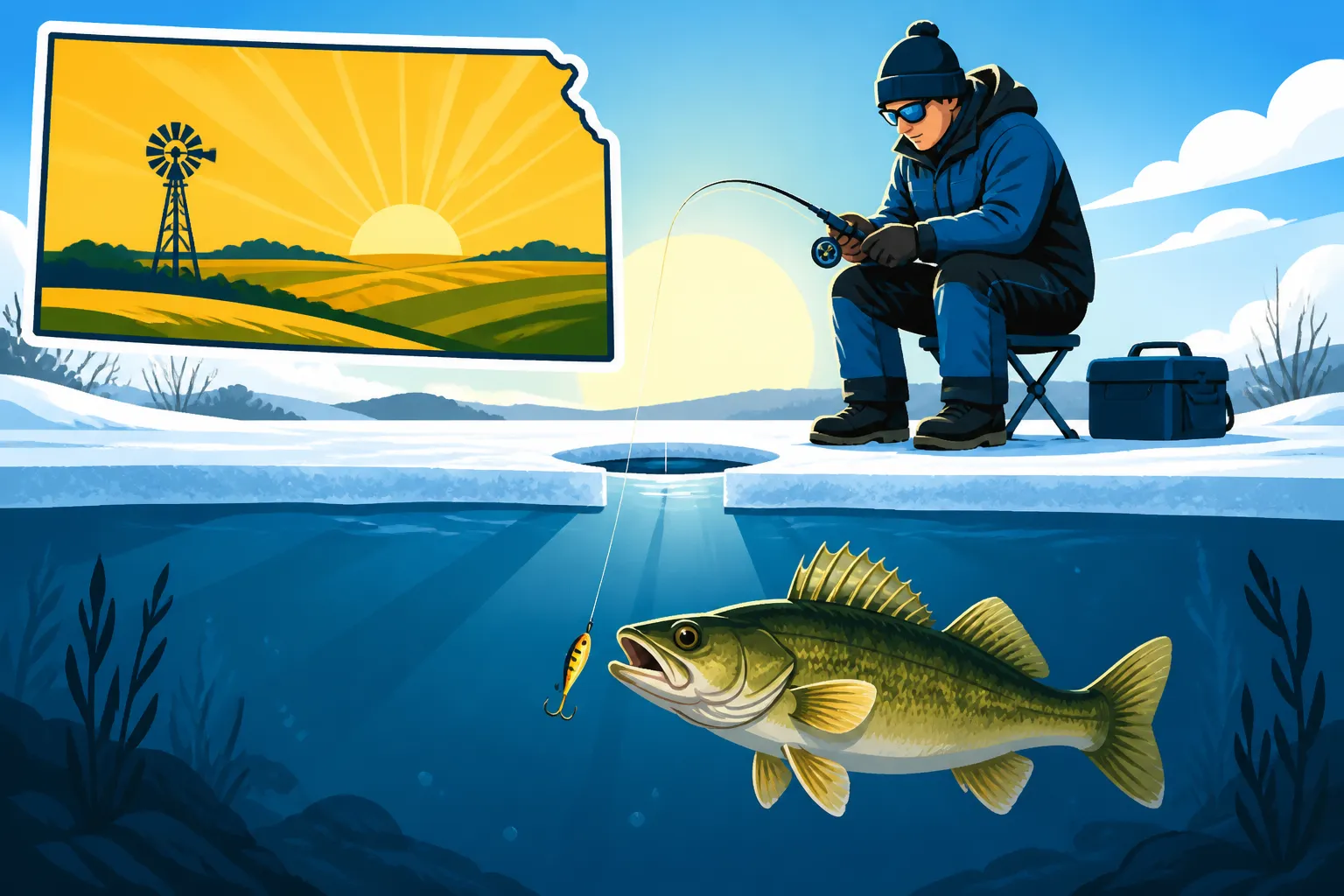
Walleye and saugeye are highly prized fish, and catching them through the ice is a special challenge that many Kansas anglers relish. These fish often feed actively under the ice, particularly during low-light conditions like dawn, dusk, or even at night. They tend to relate to structure, just like in open water, but might be found deeper or in different areas than during summer. Focus on main lake points, humps, and the transitions where hard bottom meets soft bottom. Baits include jigging spoons, lipless crankbaits, and blade baits, often tipped with a minnow head or a full minnow. Deadsticking (leaving a baited rod in a holder with a lively minnow) can also be very effective alongside an active jigging rod. Patience is key, as walleye can be finicky, but the reward of a fresh walleye fillet is well worth the effort. Learn more about the specific fish you can expect to encounter by reading Fish You Can Catch Ice Fishing in Kansas.
Catfish and Other Species: Unexpected Winter Surprises
While not typically associated with ice fishing, channel catfish and even flatheads can be caught through the ice in Kansas. Channel cats, especially, will often hit baits in deeper holes or creek channels. Large spoons, jigging Rapalas, or even just a substantial piece of cut bait on a bottom rig can entice them. While they might not be as active as during summer, they still need to feed. Other species you might encounter include white bass, particularly during early ice, and even an occasional largemouth or smallmouth bass around shallow cover. The beauty of ice fishing in Kansas is that you never quite know what might come up the hole! Just ensure your tackle is robust enough to handle any unexpected heavyweights. Don't forget that if you want to explore more ice fishing techniques and strategies, our comprehensive Kansas Ice Fishing Guide is packed with information.
Safety First: Staying Safe on Kansas Ice
Ice fishing, while incredibly rewarding, carries inherent risks. Our Kansas winters can be fickle, leading to ice conditions that change rapidly. Prioritizing safety is not just a recommendation; it's a non-negotiable requirement for anyone venturing onto the frozen water.
Ice Thickness Guidelines: Knowing When It's Safe
The single most important safety measure is understanding and respecting ice thickness. There are general guidelines for safe ice, but these are minimums and assume clear, solid "blue" or "black" ice, which is the strongest. White or "snow ice" is only about half as strong. Always add a margin of safety, especially if you're unfamiliar with the specific body of water.
Here’s a general guideline for minimum clear, solid ice thickness:
| Activity | Minimum Ice Thickness (Inches) |
|---|---|
| Foot Travel | 4 |
| Ice Fishing (single) | 5 |
| Snowmobile/ATV | 6-8 |
| Small Car | 8-12 |
| Medium Truck | 12-15 |
Even with these guidelines, never assume. Always drill test holes as you walk out, especially at the beginning of the season or after a warm spell. Be particularly wary around inlets, outlets, bridges, aeration systems, and areas with underwater springs, where ice can be significantly thinner. A spud bar is your best friend for testing the ice ahead of you. It's truly a matter of life or death, so always err on the side of caution. For more details on what thickness is truly safe, review How Thick Does Ice Need to Be to Fish?.
Buddy System and Emergency Preparation: Never Go Alone
One of the oldest and most important rules of ice fishing is to never fish alone. If an accident were to occur, having a partner nearby can be the difference between a minor scare and a tragedy. Always use the buddy system, and make sure everyone in your group knows basic ice rescue techniques. Beyond having a partner, personal emergency preparedness is essential. Carry ice picks around your neck or in an easily accessible pocket—these are vital for pulling yourself out if you fall through. A throw rope in your gear bag can be used to rescue a friend. Always have a fully charged cell phone in a waterproof container, and consider carrying a portable battery pack. Dress in layers, wear waterproof outer clothing, and carry a dry change of clothes in a waterproof bag. High-energy snacks and plenty of warm drinks can help prevent hypothermia. Even if you're an experienced angler, a quick refresh on general safety never hurts; our Is Ice Fishing Safe on Lakes? article might be a good read.
Know the Lake: Understanding Currents and Hazards
Every lake has its own personality, and this holds true for its ice conditions. Familiarize yourself with the body of water you plan to fish. Are there known current areas, like river channels or dam outlets, where ice will always be thinner or weaker? Are there underwater springs that can create open pockets of water even in bitter cold? Many Kansas reservoirs have old creek beds or submerged timber, which can be fantastic for fish but also create areas of variable ice thickness. Local bait shops or seasoned ice anglers can often provide valuable, up-to-date information on current ice conditions. Before you go, study a detailed map of the lake to identify potential hazards and safe access points. Don't venture out onto areas marked as unsafe or where there are signs of recent open water. Ice fishing is a fantastic way to extend your angling season, but it demands respect for the environment and a commitment to safety above all else. Remember, the best time to enjoy this sport is when conditions are truly safe, so don't rush the season. For a deeper understanding of all the gear you might need for an ice adventure, check out our Kansas Ice Fishing Gear Guide.
Disclaimer
This article is for general informational purposes only and does not constitute professional advice. Laws, prices and regulations vary by location and change over time. Consult a qualified professional for guidance on your specific situation.