Wilson Lake Striped Bass Fishing
Trying to dial in on those powerful striped bass at Wilson Lake can sometimes feel like chasing a phantom, especially with its vast, clear waters and those notoriously finicky fish. It’s easy to feel overwhelmed by the sheer size of the lake or frustrated by a lack of consistent bites. But don’t worry, you’re in the right place! This guide is designed to cut through the confusion and provide you with actionable, in-depth strategies to locate, hook, and land more striped bass on one of Kansas's premier fishing destinations.
Understanding Wilson Lake and its Striped Bass Population
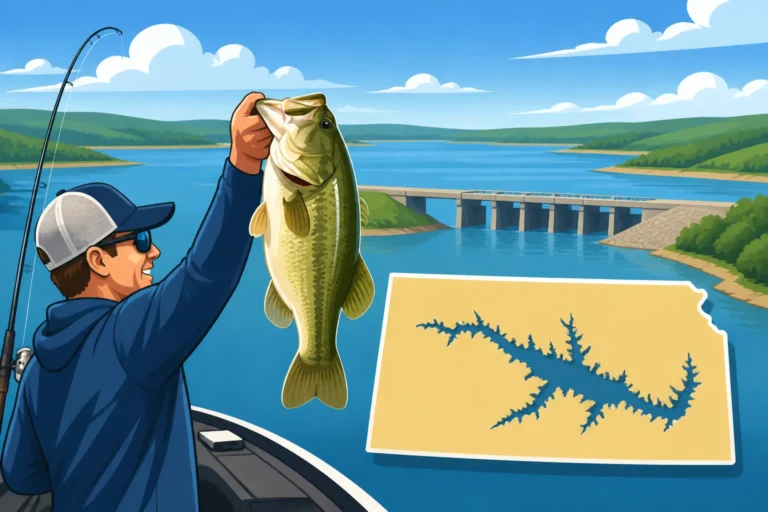
Wilson Lake, often hailed as the "Clearest Lake in Kansas," presents a unique challenge and a rewarding experience for striped bass anglers. Its deep, clear waters and rugged limestone shoreline create a distinct habitat, very different from many other Kansas reservoirs. Understanding these characteristics and the specific behaviors of Wilson Lake's stripers is your first step to consistent success.
Wilson Lake's Unique Characteristics
Wilson Lake is a truly impressive body of water, covering over 9,000 surface acres at normal pool, with depths plunging over 100 feet in some areas, particularly near the dam. The lake's clear, almost ocean-like water is a double-edged sword: it makes for stunning scenery and great visibility, but it also means striped bass can be exceptionally wary and prone to spooking. The lake is fed primarily by the Saline River, bringing in cooler, oxygen-rich water that stripers thrive in, especially during the warmer months.
The underwater topography of Wilson Lake is equally complex, featuring extensive rock ledges, submerged timber, old creek channels, and numerous points and humps. This diverse structure provides stripers with a wealth of ambush points and holding areas. Recognizing these features, whether through mapping on your fish finder or simply by observing the shoreline, is critical for locating schools of baitfish and, consequently, the predatory stripers that follow them. You'll find that understanding the nuances of the lake's structure is far more important here than on murkier bodies of water. For more details on the lake's physical attributes, check out our guide on Wilson Lake Acreage and Depth.
The Striped Bass in Kansas: A Brief History
Striped bass are not native to Kansas; they were introduced to several reservoirs, including Wilson Lake, to provide a unique trophy fishery and help manage forage fish populations. These powerful, ocean-going anadromous fish thrive in large, open waters and grow to impressive sizes, offering an unparalleled fight. While some may confuse them with hybrid striped bass (wipers), true stripers are a distinct species, known for their powerful runs and larger average size.
The Kansas Department of Wildlife, Parks, and Tourism (KDWP) actively manages the striped bass population in Wilson Lake through stocking programs. This ensures a healthy and sustainable fishery for anglers. The success of these stockings, combined with Wilson's ideal habitat, has made it one of the top destinations in the state for catching these formidable game fish. They provide an exhilarating challenge that keeps anglers coming back year after year.
Identifying Wilson Lake Stripers vs. Wipers
It’s surprisingly common for anglers to mix up true striped bass with their close cousins, hybrid striped bass, often called "wipers" in Kansas. While both offer a fantastic fight, knowing the difference can be important for understanding their behavior and, sometimes, for adhering to specific regulations. Wipers are a crossbreed of striped bass and white bass, and while they share many characteristics, there are key visual differences.
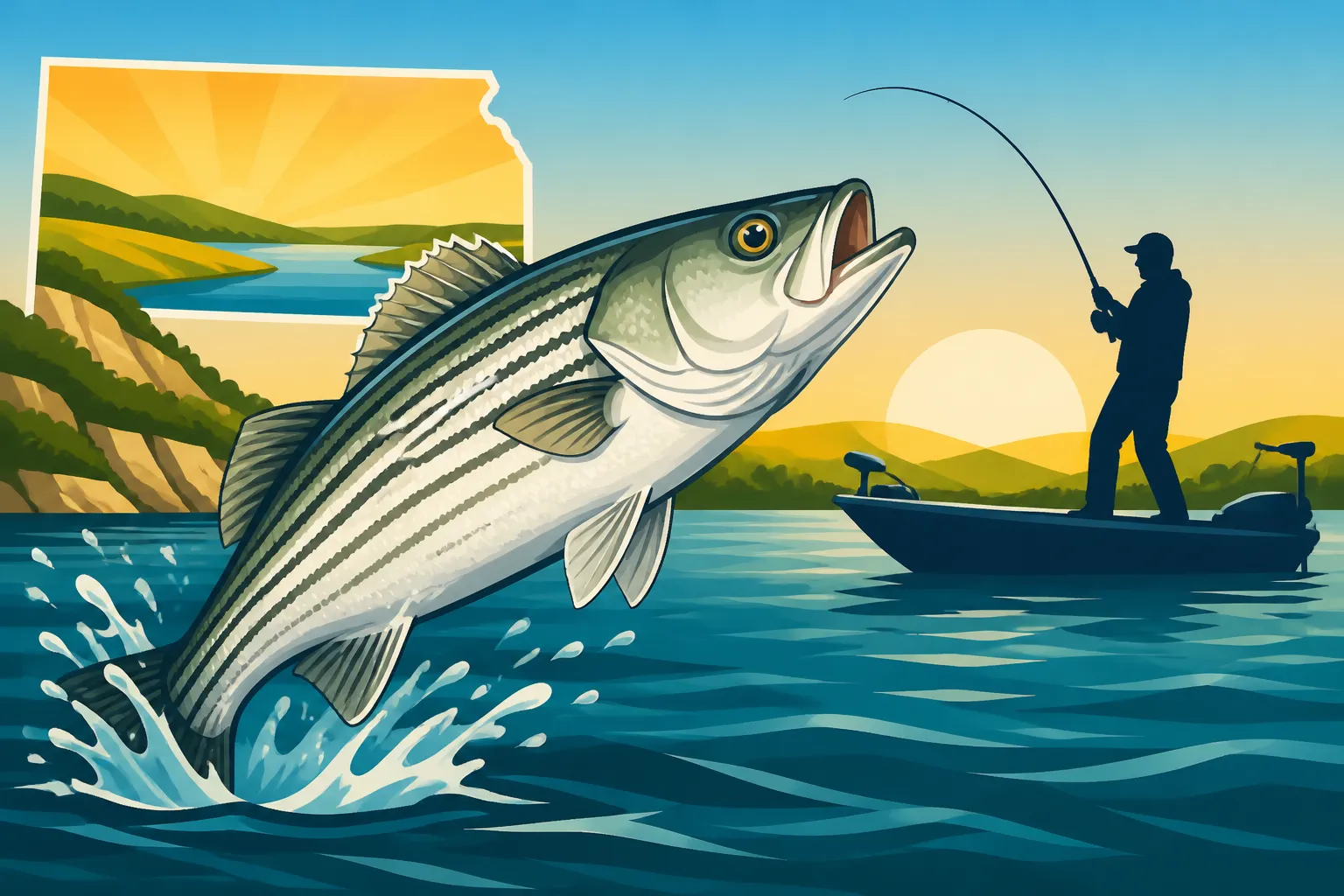
The most reliable way to tell them apart is by looking at their lateral lines. Striped bass have distinct, unbroken lateral lines running from gill plate to tail. These lines are usually very clear and continuous. Wipers, on the other hand, typically have broken or patchy lateral lines, especially towards their tail. Their bodies also tend to be a bit deeper or more "football-shaped" compared to the more elongated, torpedo-like profile of a true striper. Understanding these differences can help you identify your catch and appreciate the unique qualities of each species. Our Kansas Striped Bass and Wiper Guide offers even more identification tips.
Essential Gear and Tackle for Wilson Lake Stripers
Tackling Wilson Lake's striped bass requires gear that can withstand brutal fights and the demanding conditions of open water fishing. You'll need more than just your average bass setup; these fish are built for power and endurance, and your equipment needs to match. Investing in the right tools will make your experience more enjoyable and significantly increase your chances of landing that trophy striper.
Rod, Reel, and Line Selection
For striped bass on Wilson Lake, a medium-heavy to heavy action spinning or baitcasting rod, typically 7 to 8 feet long, is your best bet. This length provides the leverage needed for long casts and the backbone to turn a powerful fish. Pair it with a robust reel capable of holding a good amount of line, preferably a 4000-6000 series spinning reel or a sturdy baitcaster with a smooth drag system. Brands like Shimano, Daiwa, or Penn offer reliable options that can handle the abuse.
When it comes to line, braided line is a popular choice for its strength, sensitivity, and minimal stretch, which is crucial for feeling subtle bites in deep water and delivering powerful hooksets. Opt for 30 to 50 lb test braid. Always tie on a 15 to 30 lb fluorocarbon leader (3-6 feet long) to the end of your braid. The fluorocarbon is nearly invisible in the clear Wilson Lake waters and offers abrasion resistance against the lake's rocky structure and the striper's rough mouth.
Recommended Lures and Baits
Striped bass at Wilson Lake feed on a variety of forage, primarily shad and alewives, so your lure selection should mimic these baitfish. Top choices include large crankbaits, swimbaits (both soft plastic and hard-bodied), jerkbaits, and heavy spoons. For trolling, deep-diving crankbaits that can reach depths of 20-40 feet are essential. When the stripers are near the surface or busting bait, topwater plugs and poppers can create explosive strikes, particularly during low light conditions.
Live bait is often incredibly effective, especially when stripers are less active or holding tight to structure. Large shad (gizzard or threadfin) are king, either fished on a freeline, under a bobber, or on a slip-sinker rig. These can be tough to catch yourself, but sometimes local bait shops near the lake might have them. If you’re looking to find a guide who knows the best bait and tackle for Wilson Lake, a service like FishingBooker can connect you with experienced local charter captains. They often have access to fresh bait that can make all the difference.
Electronics and Boating Essentials
A quality fish finder with GPS capabilities is practically a non-negotiable for serious striper fishing on Wilson Lake. The lake's size and depth make it challenging to find fish without modern electronics. Look for units with clear side-imaging and down-imaging to help you identify bait balls, submerged structure, and suspended stripers. Garmin, Lowrance, and Humminbird offer excellent models that provide the detail needed to dissect Wilson’s underwater landscape. Our guide on How to Use a Fish Finder on a Kansas Lake offers helpful tips.
Beyond electronics, a reliable boat suited for large reservoirs is essential. A sturdy deep-V hull or a large multi-species boat will handle the occasional chop that Wilson Lake can kick up. Ensure your boat is equipped with all the necessary safety gear, including life jackets, a fire extinguisher, and sound-signaling devices, as outlined in the Kansas Boating Safety Equipment Requirements. A good trolling motor, especially a bow-mount electric one with GPS anchoring capabilities, can be invaluable for precise boat positioning when casting to schools or holding over structure. For more on boat selection, consult our article on the Best Boats for Kansas Reservoirs.
Top Techniques for Catching Striped Bass at Wilson Lake
Catching striped bass on Wilson Lake is less about luck and more about mastering specific techniques tailored to their habits and the lake's environment. These are powerful, intelligent predators, and approaching them with a well-thought-out strategy will dramatically improve your success rate.
Trolling Strategies
Trolling is arguably the most consistent method for covering water and locating active striped bass on Wilson Lake, especially when they are scattered or suspended in the water column. This technique involves dragging lures behind a moving boat, mimicking baitfish. Speed is crucial; typically, a trolling speed of 2.5 to 4.0 mph is effective, but always experiment to find what the fish prefer on any given day.
Deep-diving crankbaits are go-to lures for trolling, often paired with planer boards or downriggers to achieve precise depths and spread out your presentation. Pay close attention to your fish finder to identify baitfish schools or temperature breaks, then adjust your lure depth accordingly. Trolling over submerged points, humps, and along old creek channels, particularly in the lower end of the lake, can be highly productive. For more advanced tactics, dive into our Deep Water Trolling for Kansas Stripers guide.
Live Bait Fishing
When stripers are holding tight to structure, suspending deep, or just being finicky, live bait often outproduces artificials. Gizzard shad are the preferred choice, and having a good livewell to keep them frisky is essential. You can fish live shad in several ways: freeline them in open water if stripers are chasing bait on the surface, or use a slip-sinker rig to present them near the bottom or suspended at specific depths.
When using live bait, patience is key. Allow the fish to take the bait properly before setting the hook. Look for areas where stripers are known to congregate, such as deep humps, channel edges, or even near the dam. Anglers often drift with live bait, letting the boat's movement cover more water while keeping the bait in the strike zone. Sometimes, a subtle presentation with a lively shad is exactly what it takes to entice a wary striper. If you're struggling to locate bait or productive areas, consider hiring a local guide through FishingBooker, as they often have specialized knowledge and equipment for catching and keeping live bait.
Casting and Jigging Approaches
While trolling and live bait are staples, casting and jigging can be incredibly effective, especially when stripers are actively schooling or ambushing bait near visible structure. When you spot stripers breaking the surface, chasing bait (often called a "boil" or "bust"), quickly cast topwater plugs, lipless crankbaits, or large swimbaits into the frenzy. The excitement of a surface strike from a powerful striper is hard to beat!
Jigging is best when stripers are holding deeper, often near structure or suspended beneath bait balls. Heavy spoons, large bucktail jigs, or soft plastic swimbaits rigged on heavy jig heads can be dropped down to the fish. Use your fish finder to pinpoint their depth, then aggressively jig your lure with a lift-and-drop motion. Pay close attention for any tap or subtle change in line tension, as stripers can be surprisingly delicate biters even when feeding aggressively.
Seasonal Strategies for Striped Bass Fishing
The behavior of Wilson Lake's striped bass changes dramatically with the seasons, influenced by water temperature, baitfish movements, and spawning urges. Adapting your approach to the time of year is vital for consistent success, allowing you to intercept these magnificent fish throughout the year. For a broader overview of yearly fishing patterns, check out the Kansas Fishing Seasons Guide.
Springtime Striper Blitz
As the ice recedes and water temperatures begin to climb into the 50s and 60s Fahrenheit in spring, Wilson Lake's striped bass become highly active. This is often when they stage for their false spawn run up the Saline River arm. Look for stripers concentrating in the upper end of the lake, especially where the river channels enter the main body of water. They'll be aggressively feeding on baitfish preparing for the warmer months.
Trolling crankbaits and large swimbaits can be incredibly productive during this time, covering expansive flats and river bends. You might also find stripers pushing bait to the surface, offering exciting topwater action. As the water warms further, they'll spread out more, but the initial spring run-up is a prime time for big numbers and big fish. Don't forget that you'll need a valid Kansas Fishing License Guide before you head out.
Summer Deep Water Tactics
Summer fishing on Wilson Lake for stripers can be challenging but incredibly rewarding. As water temperatures soar, stripers retreat to the cooler, oxygen-rich depths. They'll often be found in the main lake basin, especially near the dam, deep humps, and main lake points where deeper water is accessible. Early mornings and late evenings might see them push shallower, but daytime fishing usually means going deep.
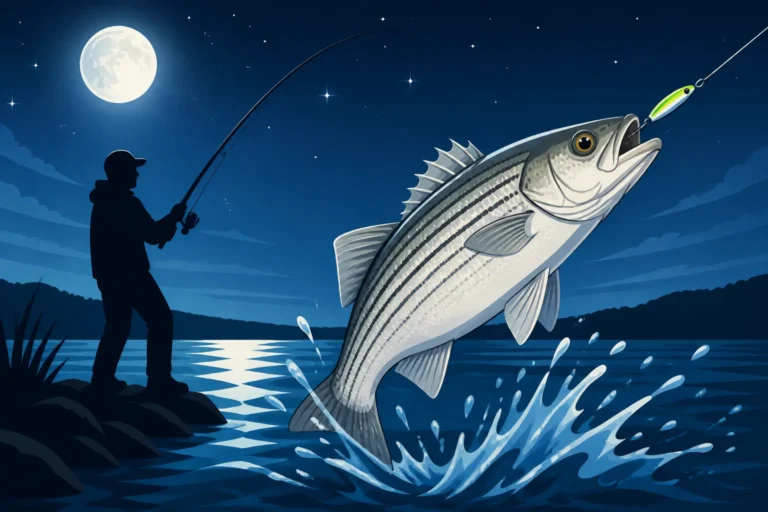
Trolling deep-diving crankbaits or presenting live bait on downriggers or heavy slip-sinker rigs are your go-to methods. Pay close attention to your fish finder for thermoclines and baitfish concentrations, as stripers will almost always be associated with these. Night fishing can also be highly effective in summer, as stripers move shallower under the cover of darkness, making them more accessible to casting techniques.
Fall Feeding Frenzy
Fall is a spectacular time for striped bass fishing on Wilson Lake. As water temperatures drop, stripers become incredibly active, putting on the feedbag in preparation for winter. Baitfish schools congregate, and stripers will aggressively chase them, often resulting in spectacular surface boils. This is when casting large topwater lures, jerkbaits, and big swimbaits can be incredibly productive.
Focus your efforts on main lake points, coves, and areas where baitfish are abundant. The upper and middle sections of the lake often hold large schools of stripers during the fall. Trolling also remains effective, but the active feeding behavior often provides more opportunities for casting and jigging. The fall "turnover" can briefly slow fishing, but once the lake stabilizes, the action can be furious.
Winter Opportunities
While many anglers pack away their gear for the winter, Wilson Lake can still offer opportunities for hardy striped bass anglers, especially during milder winters. Stripers will hold in deeper water, often near the dam or in the deepest parts of the main lake basin. Their metabolism slows, so they won't be as aggressive, but they still need to eat.
Slow trolling with deep-diving lures or vertical jigging with heavy spoons or large bucktails directly over marked fish can be effective. Live bait, presented very slowly and patiently, can also entice a strike. Ice fishing for stripers is not common on Wilson Lake due to its size and depth, but open water opportunities can arise on warmer winter days. Patience and precise boat control are paramount during the colder months.
Key Fishing Spots and Access Points on Wilson Lake
Navigating Wilson Lake effectively requires knowing where to focus your efforts. While stripers are nomadic and can be found almost anywhere, certain areas consistently hold fish or offer optimal conditions at different times of the year. Understanding these hotspots and how to access them is fundamental to successful striper fishing.
Popular Coves and Inlets
Wilson Lake is dotted with numerous coves and inlets that can provide excellent striper action, particularly during the spring and fall. These areas often offer shelter from the wind and concentrate baitfish. Good examples include the coves within Wilson State Park, such as Lucas Park and Otoe Park. In these areas, look for deep water access near points and submerged structure.
During the spring, the shallower backs of these coves can warm up faster, drawing in bait and, subsequently, hungry stripers. In the fall, they serve as ambush points as baitfish move into shallower waters. Casting swimbaits, jerkbaits, and crankbaits along the edges of these coves can be very productive. Always remember that many of these locations are within state park boundaries, so be mindful of Kansas State Park Fishing Permit Rules and any additional fees or regulations.
Dam Area and River Channels
The area near the Wilson Lake dam is a perennial hotspot for striped bass, especially during the summer and winter months when stripers seek out the deepest, coolest, and most oxygenated water. The steep drops, current breaks, and sheer rock walls near the dam provide ideal habitat. Trolling deep-diving crankbaits or vertical jigging heavy spoons and bucktails are excellent strategies here.
The old Saline River channel, which winds its way through the lake, acts as a major highway for stripers and baitfish. Identifying this channel on your fish finder and focusing on its bends, humps, and breaks can lead to consistent success. The upper reaches of the Saline River arm, where the river feeds into the lake, are particularly important in spring during the false spawning runs and in fall as baitfish migrate. These areas can often be found by studying lake maps or using modern sonar.
Public Access and Boat Ramps
Wilson Lake offers excellent public access for anglers, with multiple boat ramps and recreational areas maintained by the U.S. Army Corps of Engineers and Kansas State Parks. Popular boat ramps include those at Lucas Park, Hell Creek, and Sylvan Park. These facilities provide easy access to the main lake and its various fishing grounds. For those without a boat, some areas near the dam and in state park coves offer decent bank fishing opportunities, though stripers are more typically caught from a boat due to their open-water habits.
When planning your trip, consider the prevailing winds and water levels, as these can affect which ramps are most convenient or provide the best access to current hotspots. If you're traveling from out of state or looking for specific local insights, a platform like FishingBooker can help you find fishing charters that operate directly out of these access points, giving you a distinct advantage with local knowledge and equipment.
Safety and Regulations for Wilson Lake Striped Bass
Before you even think about dropping a line for Wilson Lake's formidable striped bass, it's absolutely crucial to be aware of and adhere to all Kansas fishing regulations and general boating safety guidelines. Not only does this keep you and others safe, but it also protects the fishery for future generations. Ignorance of the law is never an excuse, and penalties can be steep. Our comprehensive Kansas Fishing Regulations Explained guide is an excellent resource for all the specifics.
Boating Safety and Navigation
Wilson Lake is a large body of water, and conditions can change rapidly, especially with strong Kansas winds. Always check the weather forecast before heading out and be prepared for sudden storms or choppy waters. Ensure your boat is in good working order and carries all required safety equipment, including properly fitting life jackets for everyone on board, a fire extinguisher, a horn or whistle, and navigational lights if you plan to be out at dawn, dusk, or night. Remember, wearing your life jacket is always the safest option, especially when boating alone or in rough conditions.
Navigating Wilson Lake requires attention, particularly with its numerous submerged rock formations, points, and old creek channels. While the main body of the lake is generally clear, using a reliable GPS unit with detailed mapping is highly recommended to avoid hazards and efficiently find your fishing spots. Always maintain a safe speed and be aware of other boaters, especially in busy areas or during peak season.
Kansas Fishing Regulations Specifics
Like all game fish in Kansas, striped bass are subject to specific daily creel limits and length restrictions, which can vary by lake and change periodically. It is your responsibility as an angler to know these rules before you go fishing. Typically, there's a daily creel limit on striped bass, often combined with hybrid striped bass, and a minimum length limit to protect the population and ensure fish have a chance to mature and reproduce. Always consult the current Kansas Fishing Regulations Summary, available online from the KDWP or at any license vendor.
Keep an eye out for special regulations that might apply to Wilson Lake itself, which can sometimes have unique rules different from other statewide regulations. Also, remember that a valid Kansas fishing license is required for most anglers, with specific exemptions for age, disability, or special free fishing days. Understanding these details will help you enjoy your trip without any unnecessary complications. You can find more information in our guide about the Kansas Fishing License Guide.
Fish Handling and Conservation
Catching a large striped bass is an incredible experience, but it comes with the responsibility of proper fish handling. These powerful fish can be difficult to control, and improper handling can lead to injury for both the fish and the angler. If you plan to release a fish, handle it as little as possible. Use wet hands or a wet towel, support its belly, and avoid touching its gills or eyes. If you want a photo, get it quickly and release the fish gently back into the water, ensuring it swims away strongly.
For those targeting trophy fish, Kansas maintains a Kansas State Record Fish Guide and encourages catch-and-release of particularly large specimens to help maintain a healthy breeding population. If you decide to keep fish within the legal limits, dispatch them quickly and humanely, and keep them on ice to preserve meat quality. Conservation efforts ensure that Wilson Lake continues to be a premier destination for striped bass fishing for years to come.
Wilson Lake Striped Bass Seasonal Tactics Overview
| Season | Typical Water Temperature | Primary Locations | Recommended Techniques | Key Lures/Baits |
|---|---|---|---|---|
| Spring | 50s-60s F | Upper lake, river arm, main lake points | Trolling, Casting, Live Bait | Deep-diving crankbaits, Swimbaits, Topwater, Shad |
| Summer | 70s-80s F | Deep main lake basin, dam area, deep humps | Deep Trolling, Live Bait (Downriggers) | Heavy spoons, Jigs, Live Shad |
| Fall | 60s-70s F | Main lake points, coves, schooling baitfish areas | Casting, Trolling, Live Bait | Topwater, Jerkbaits, Swimbaits, Crankbaits, Shad |
| Winter | 30s-40s F | Deepest main lake basin, dam area | Vertical Jigging, Slow Trolling, Live Bait | Heavy spoons, Bucktail jigs, Live Shad |
Disclaimer
All information provided in this guide is for informational purposes only and should be independently verified. Fishing regulations and conditions are subject to change without notice. Always consult the latest official resources from the Kansas Department of Wildlife, Parks, and Tourism before planning your fishing trip.