Best Multi-Rod Rack for a Kansas Boat
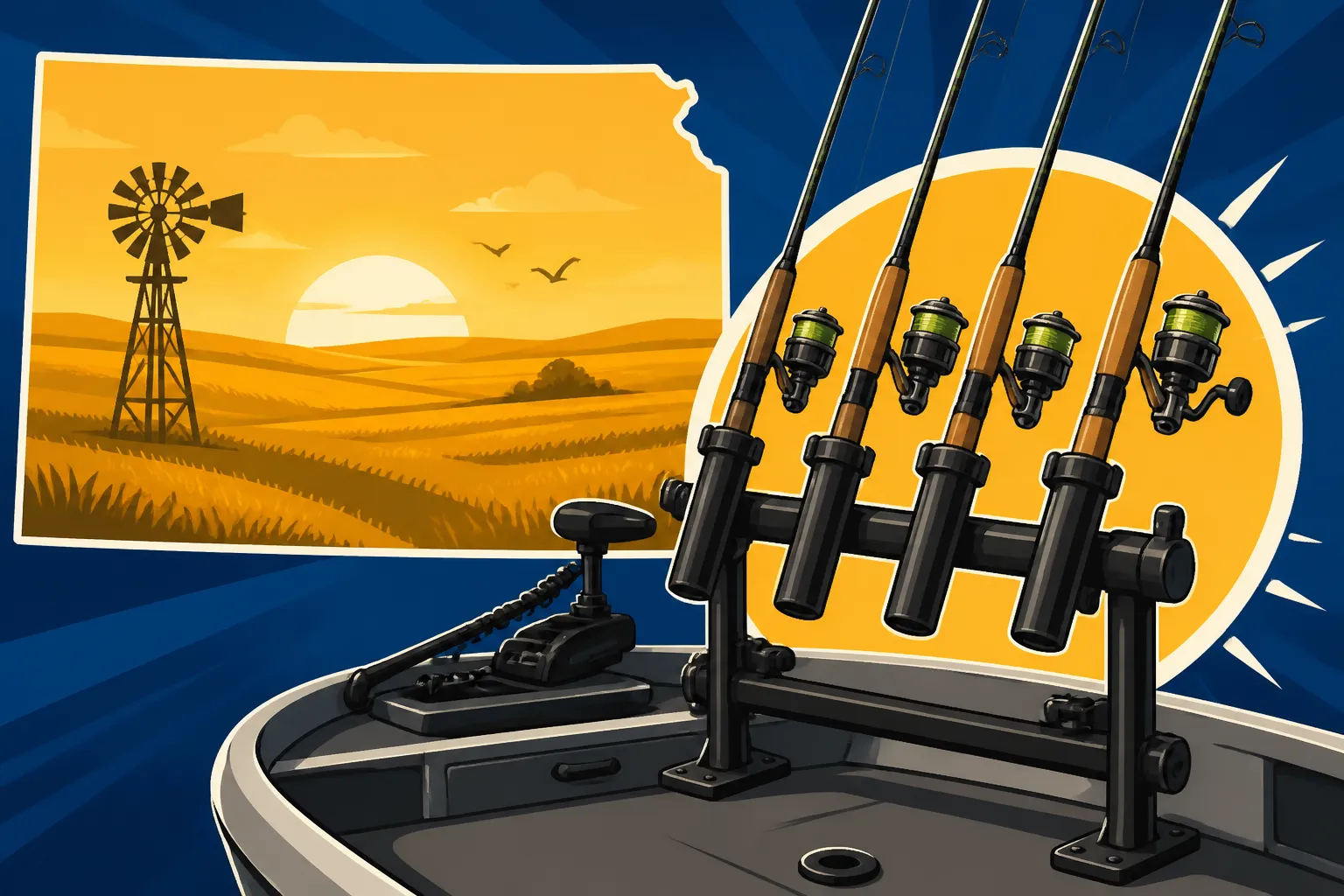
There's nothing quite like the feeling of hitting the water in your boat, ready for a day of chasing walleye on Milford Lake or battling catfish on the Kansas River. But that serene feeling can quickly turn to frustration when your boat deck is a tangled mess of rods, reels, and lines. This guide is all about helping you keep your fishing gear organized, safe, and easily accessible by exploring the best multi-rod rack options for your Kansas boat.
The Angler's Dilemma: Why Rod Organization Matters on Kansas Waters
Every Kansas angler with a boat has faced it: that moment when you need to switch rods quickly because the bite changed, or you accidentally step on your favorite rod that was precariously propped against the console. It's not just an inconvenience; it can be downright costly, leading to broken tips, scratched reels, or even a lost rod overboard. On the sprawling waters of reservoirs like Cheney or Wilson Lake, where you might be covering miles to find the fish, having your rods secured and ready makes a huge difference.
Protecting Your Valuable Gear
Let's be honest, fishing rods and reels are an investment. From your sensitive crappie rods for Kansas Crappie Fishing Techniques to your heavier setups for Kansas Catfish Fishing Techniques, each piece of gear deserves protection. A multi-rod rack ensures that your rods are held firmly in place, preventing them from bouncing around in rough water or getting stepped on. Think about those choppy days on Tuttle Creek Lake; without proper storage, your gear is taking a beating.
Maximizing Limited Boat Space
Even larger boats can feel cramped once you factor in coolers, tackle boxes, livewells, and multiple anglers. Smaller bass boats or aluminum jon boats, popular for navigating Kansas rivers, have even less real estate. A well-designed multi-rod rack utilizes vertical or out-of-the-way spaces, transforming clutter into organized efficiency. This is especially true when you're targeting multiple species, requiring different rod setups throughout the day. It helps clear walkways and keeps essential areas free for actual fishing or moving around the boat safely.
Improving Fishing Efficiency
Imagine this: a school of white bass erupts on the surface at Milford Lake, and you need to grab your casting rod now. Fumbling through a pile of rods costs you precious seconds and potentially a whole school of fish. With a multi-rod rack, each rod has its designated spot, easily grabbed and deployed. It's about reducing friction in your fishing process, making transitions smoother and keeping you focused on the fish, not the mess. This efficiency is critical, whether you're chasing the Kansas White Bass Run Timing or quickly switching baits for a finicky walleye.
Exploring Different Multi-Rod Rack Styles for Your Boat
Just like there are countless ways to fish, there are numerous types of multi-rod racks, each suited to different boat layouts and fishing styles. Understanding these differences will help you pick the perfect one for your Kansas fishing adventures.
Flush-Mount and Surface-Mount Rod Holders
These are often the most common type you'll see. Flush-mount holders are recessed into the gunwale or transom, offering a sleek, integrated look, while surface-mount holders attach directly to the top or side of the boat. They're typically designed for individual rods but can be grouped for a multi-rod setup.
When thinking about these, consider the number of rods you want to carry and where you want them positioned. For trolling for Kansas Walleye Fishing Techniques on massive reservoirs, you might want several flush-mount holders spread across the stern. They hold rods securely, ideal for when you're running at speed or fighting a big fish. The downside is that once installed, their position is fixed, so careful planning is key. You'll find a wide variety of these at places like Bass Pro Shops or through online retailers on Amazon.
Clamp-On and Rail-Mount Rod Racks
If you're not keen on drilling holes into your beloved boat, clamp-on or rail-mount options are fantastic. These racks attach to existing rails, stanchions, or even vertical supports. They're particularly popular on pontoon boats, jon boats, or any craft with readily available rails.
The beauty of these is their flexibility. You can often move them around until you find the perfect spot, or even remove them entirely when not in use. They come in various configurations, holding anywhere from two to six or more rods vertically or at an angle. For anglers who frequently change their boat setup or have a smaller vessel where permanent fixtures aren't ideal, these offer a great solution. Just ensure the clamps are robust enough to handle the stresses of wave action and rod jostling.
Vertical and Horizontal Wall-Mount Racks
For boats with cabin walls, console sides, or even inside storage compartments, vertical or horizontal wall-mount racks are excellent space savers. Vertical racks hold rods upright, tips usually pointing towards the ceiling, while horizontal racks keep them parallel to the floor or wall.
These are particularly useful for keeping spare rods out of the way but still within reach. If you have a deeper V-hull boat with ample freeboard or a console with unused side space, a vertical rack can neatly store several rods. Horizontal racks are great for stowing rods overhead in a cuddy cabin or along a gunwale if space permits. They free up deck space and keep rods secure when cruising, offering a clean, unobtrusive storage solution.
Ceiling-Mount and Overhead Racks
Often seen in larger boats with hardtops or enclosed cabins, ceiling-mount racks are the ultimate in space-saving. They hold rods overhead, completely out of the way of foot traffic and casting arcs.
While not suitable for every open-top Kansas fishing boat, if you have a bimini top with a strong frame, a small cuddy cabin, or a hardtop, an overhead rack can be a game-changer. These typically use straps or clips to secure rods horizontally against the ceiling. They're fantastic for long-term storage or for keeping extra rods completely clear of the deck during transport or when fishing a single primary setup.
Key Considerations When Choosing Your Multi-Rod Rack
Selecting the right multi-rod rack isn't just about picking one off the shelf. You need to consider your specific boat, fishing habits, and the types of water you'll be navigating across Kansas.
Mounting Options and Boat Compatibility
This is arguably the most critical factor. Does your boat have existing rails, a sturdy transom, or plenty of flat surface area for mounting? Are you willing to drill holes, or do you prefer a no-drill solution?
- Permanent Mounts (Drill Required): If you're confident in your layout and want maximum security, flush-mount or screw-in wall mounts are excellent. Just make sure you know what's behind the surface before drilling, avoiding fuel lines, wiring, or critical structural components. Consider using marine-grade fasteners and sealant for any new holes to prevent water intrusion, especially vital for boats that spend a lot of time on big water like Milford Lake Is the Largest Lake in Kansas.
- Temporary/Flexible Mounts (No Drill): Clamp-on or suction cup options (though suction cups might not be reliable for heavy-duty use) offer versatility. They're great for renters, borrowed boats, or for those who like to reconfigure their setup. Always test their stability thoroughly before trusting them with your expensive gear.
Rod Capacity and Style of Fishing
How many rods do you typically bring on a trip? Are they mostly spinning, baitcasting, or a mix? Do you need them all ready for immediate action, or are some for backup?
- Capacity: Racks come in capacities from two to twelve or more rods. Be realistic about your needs. A multi-rod rack holding six rods might be perfect for targeting walleye with several different trolling setups, while a two or three-rod holder might suffice for casual crappie fishing.
- Rod Style: Some racks are designed with wider openings for baitcasting reels, while others are snugger for spinning gear. Ensure the rack can comfortably hold your rod handles and reel seats without damaging them. If you carry a mix, look for a universal design or adjustable holders.
- Access vs. Storage: Do you need quick access for actively fishing, or is it more for safe transport and storage? Trolling rod holders prioritize quick deployment, while vertical racks along a console might be more for stowing backups.
Material Durability and Weather Resistance
Kansas weather can be unpredictable, from scorching summer sun to freezing winter days, not to mention the constant exposure to water. Your rod rack needs to stand up to the elements.
- Marine-Grade Materials: Look for materials like anodized aluminum, UV-stabilized marine polymer (plastic), or stainless steel. These resist corrosion, fading, and cracking. Avoid anything that feels flimsy or uses non-marine hardware.
- UV Protection: Sunlight can degrade plastics over time, making them brittle. A UV-stabilized material will last much longer, maintaining its integrity and appearance even after years of Kansas summers.
- Saltwater vs. Freshwater: While Kansas is freshwater, marine-grade materials are still superior for longevity. Saltwater-specific coatings and alloys offer even better protection but might be overkill for inland lakes unless you demand the absolute toughest gear.
Security and Protection Features
Beyond just holding rods, a good rack also protects them from bumps and scrapes.
- Rod Retention: Ensure the rack securely holds the rod, preventing it from jumping out in rough water or during high-speed runs. Many racks feature bungee cords, rubber straps, or spring-loaded clips for added security.
- Padding/Inserts: Rubber or foam inserts within the rod tube openings protect your rod blanks from chafing and vibration damage. This is especially important for graphite rods, which can be prone to wear at pressure points.
- Locking Options: While less common for multi-rod racks, some individual rod holders offer locking mechanisms, a nice feature if you ever leave your boat unattended with expensive rods aboard.
Here's a quick comparison of common multi-rod rack types:
| Rack Type | Mounting Method | Ideal Rod Capacity | Best For… | Considerations |
|---|---|---|---|---|
| Flush/Surface Mount | Drilled & Screwed | 1-4 (per unit) | Trolling, dedicated rod positions | Permanent, requires drilling, fixed position |
| Clamp-On/Rail Mount | Clamps onto existing rail | 2-6+ | Flexible positioning, pontoon boats, jon boats | Ensure strong clamping, can be removed |
| Vertical Wall Mount | Screwed to flat surface | 3-8+ | Console sides, inside cabins, efficient storage | Requires flat wall space, rods upright |
| Horizontal Wall Mount | Screwed to flat surface | 2-4+ | Under gunwales, overhead in smaller cabins | Keeps rods low profile, can be harder to access |
| Ceiling/Overhead Mount | Screwed/Strapped | 4-8+ | Larger boats with hardtops/cabins, long-term storage | Out of the way, may require reaching |
Installation and Maintenance Tips for Your Multi-Rod Rack
Once you've chosen the perfect multi-rod rack, proper installation and regular maintenance will ensure it serves you well for countless fishing trips on Kansas's diverse waters.
Step-by-Step Installation Advice
Even if you're not a seasoned DIYer, most rod rack installations are straightforward. The key is careful planning.
- Read the Instructions: Seriously, every rack is a bit different. Your specific product's instructions from the manufacturer are your best friend.
- Plan Your Placement: Before drilling a single hole or tightening a single clamp, hold the rack in various positions. Consider:
- Reachability: Can you easily access and remove rods without straining or bumping other gear?
- Clearance: Will rods interfere with casting, walking, or operating boat controls? Check that rod tips won't hit a hardtop or bimini when fully seated.
- Balance: Try to distribute the weight of the rods evenly if possible, especially on smaller boats.
- Obstructions: Are there wires, fuel lines, or structural components behind where you plan to drill? Use a stud finder or carefully inspect the area from both sides.
- Mark and Pilot Drill (for permanent mounts): Once you've finalized the position, mark your drill points precisely. Use a drill bit slightly smaller than your screw diameter for pilot holes to prevent splitting fiberglass or wood.
- Seal Everything: Apply a marine-grade sealant (like 3M 4200 or 5200) around the holes before inserting screws. This is crucial for preventing water intrusion into your boat's core, which can lead to rot or delamination.
- Secure Fasteners: Use stainless steel screws or bolts for marine applications. Don't overtighten, as this can strip threads or crack materials.
For clamp-on or rail-mount racks, ensure the clamps are tightened securely but not to the point of deforming your boat's rails. Use rubber shims if necessary to create a snug fit and prevent slipping. For more information on maintaining your boat, you might find Boat Maintenance Schedule for Kansas Anglers helpful.
Keeping Your Rod Rack in Top Shape
A little bit of care goes a long way in extending the life of your multi-rod rack.
- Regular Cleaning: After each trip, especially after fishing muddy rivers like the Kansas River or choppy days on a reservoir, rinse your rod rack with fresh water to remove dirt, mud, and any accumulated grime. Use a mild soap and soft brush for deeper cleaning if needed. This prevents buildup that can cause corrosion or wear.
- Check Fasteners: Periodically inspect all screws, bolts, and clamps. Vibrations from boat travel can loosen them over time. Tighten anything that feels wobbly to ensure your rods remain secure. This is particularly important for your Kansas Boat Registration Guide maintenance.
- Lubricate Moving Parts: If your rack has any pivoting or adjustable components, a light spray of marine-grade lubricant can keep them operating smoothly.
- Inspect for Wear and Tear: Look for cracks, frayed bungee cords, or worn-out rubber inserts. Replace any damaged parts promptly to maintain the rack's effectiveness and protect your rods. Many replacement parts can be found on Amazon or specialty boating stores.
- Winter Storage: If you winterize your boat, consider removing detachable rod racks and storing them indoors to protect them from extreme cold and prolonged exposure. For integrated racks, ensure they are thoroughly cleaned and dry before covering your boat for the off-season. You might want to check out How to Winterize a Boat in Kansas.
By investing a little time in choosing, installing, and maintaining your multi-rod rack, you'll spend less time untangling lines and more time enjoying the fantastic fishing opportunities Kansas has to offer.
Disclaimer
This article is for general informational purposes only and does not constitute professional advice. Laws, prices and regulations vary by location and change over time. Consult a qualified professional for guidance on your specific situation.