Kansas Rainbow Trout Facts
It's a common misconception among anglers that you have to travel to mountain streams or distant states to enjoy the thrill of trout fishing. Many Kansans feel like they're missing out, thinking our warm-water reservoirs and rivers aren't suitable for these cold-water beauties. But here in the Sunflower State, rainbow trout offer a unique and accessible winter fishing experience that many overlook. This guide is here to shed light on everything you need to know about rainbow trout in Kansas, from where they come from to how you can land one for your dinner table.
The Journey of Rainbow Trout to Kansas Waters
Rainbow trout, scientifically known as Oncorhynchus mykiss, are not native to Kansas. Their natural range is typically in colder, oxygen-rich waters of the Pacific Ocean drainages, stretching from Alaska down to Mexico, and across to parts of Asia. So, how did they become a beloved winter catch in a state known for its catfish and crappie? It's all thanks to dedicated stocking programs by the Kansas Department of Wildlife and Parks (KDWP).
Why Kansas Stocks Rainbow Trout
The decision to introduce rainbow trout into Kansas waters is a strategic one, aiming to provide diverse fishing opportunities during the colder months when many warm-water species become less active. Imagine those chilly winter days when the crappie bite has slowed to a crawl and the walleye are holding deep, seemingly uninterested in anything you throw their way. That's precisely when rainbow trout become the star of the show.
The KDWP recognizes that while our large reservoirs are fantastic for many species, they don't naturally support a year-round trout population due to our hot summers and fluctuating water temperatures. Trout need consistent cold water and high oxygen levels to thrive. By stocking them in specific, cooler waters, particularly during the winter, the department creates a "put-and-take" fishery. This means anglers can enjoy catching and keeping trout that wouldn't otherwise survive the summer heat, providing a fresh challenge and a delicious meal. It's a brilliant way to keep us anglers engaged and our lines wet even when the mercury drops.
Historical Stocking Efforts in Kansas
Kansas has a long history of managing its fisheries to benefit anglers, and trout stocking is a significant part of that legacy. These programs have evolved over the years, becoming more refined in terms of timing, locations, and the size of the fish stocked. Initially, it might have been more experimental, but now it's a well-oiled machine, ensuring that trout are available across the state for those willing to brave the winter chill.
The KDWP carefully selects waters that are capable of holding trout for a season, often focusing on community lakes, state fishing lakes, and specific river stretches or ponds that maintain cooler temperatures. These efforts not only provide recreational value but also help educate anglers about different species and conservation practices. It’s a testament to how creative fishery management can be, bringing a taste of mountain stream fishing right to the plains.
Identifying Kansas Rainbow Trout
Knowing what you're trying to catch is half the battle, right? While rainbow trout are pretty distinct, especially compared to many of our native Kansas species, it's still good to know their key characteristics. You certainly don't want to accidentally keep something you shouldn't, or miss out on identifying a trophy catch!
Distinctive Physical Features
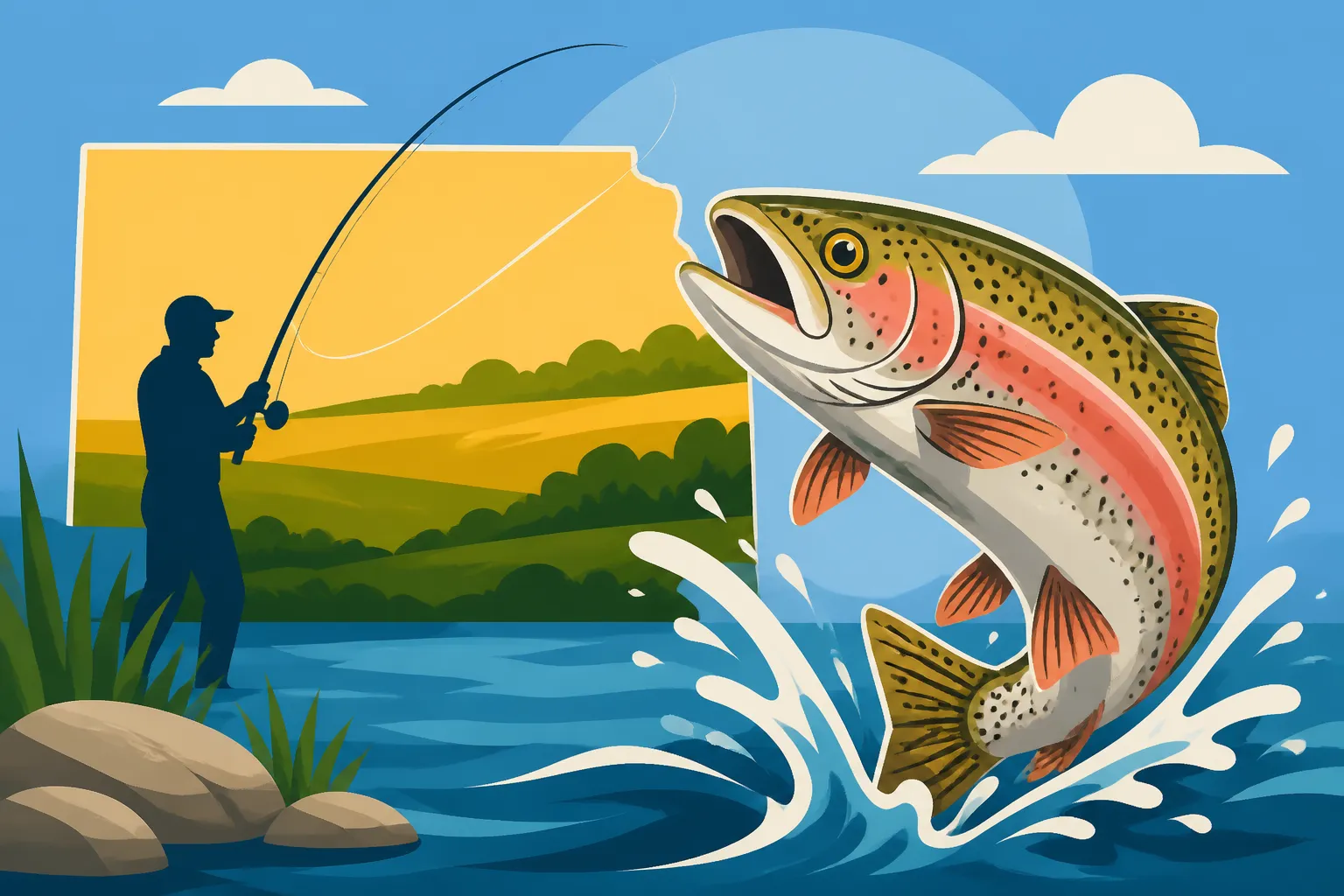
Rainbow trout are genuinely beautiful fish, often sporting vibrant colors that justify their name. Their most defining feature is, of course, the broad, pinkish or reddish stripe running horizontally along their sides, from their gill plate to their tail. This stripe can be quite prominent, almost glowing, or it might be more subtle depending on the individual fish, its diet, and the water it lives in. Their bodies are typically silver-green or blue-green on the back, fading to silvery sides and a white belly.
Another key identifier is the presence of small, dark spots scattered across their back, sides, and on their dorsal, adipose, and caudal (tail) fins. These spots are usually round and can be quite numerous. Their mouth is relatively small, extending back to about the middle of the eye. Unlike some other trout species, rainbow trout typically have a squared or slightly forked tail fin. When you compare them to, say, a catfish, there's no mistaking them, but knowing these details helps distinguish them from potential look-alikes if you're fishing in diverse waters.
Distinguishing Rainbow Trout from Other Trout Species
While rainbow trout are the primary species stocked for the Kansas winter trout program, you might occasionally hear whispers of golden rainbow trout. These aren't a separate species but rather a genetic variation of the rainbow trout, often selectively bred for their striking golden-yellow hue. They're like the fancy, flashy cousins of the standard rainbow, and the KDWP does occasionally stock them in certain locations as a special treat for anglers. If you catch one, you'll know it – they're unmistakably golden!
It's also worth noting that true Pacific salmon, which are related to trout, aren't found in Kansas waters. Occasionally, anglers new to trout fishing might confuse a robust rainbow for a salmon, but salmon typically have a more streamlined body and different fin structures. For all practical purposes in Kansas, if it looks like a trout and has that tell-tale pink stripe and spots, it's a rainbow (or a golden rainbow). Knowing these Kansas Golden Rainbow Trout Facts can make your fishing experience even more interesting.
Where to Find Rainbow Trout in Kansas
So, you're ready to chase some rainbows? Great! The first step is knowing where to go. The KDWP's winter trout program is designed to spread the love across the state, making it accessible to many anglers. These aren't wild, reproducing populations, so you need to target stocked waters.
KDWP Winter Trout Program Locations
The KDWP regularly stocks rainbow trout in various community lakes and state fishing lakes from early November through March. These locations are specifically chosen because they maintain suitable water temperatures during the colder months and offer good public access. Think smaller, managed impoundments rather than vast reservoirs, though some larger lakes might have specific trout areas.
Some popular spots that often receive trout stockings include:
- Marmaton River below the dam in Allen County
- Shawnee Mission Park Lake in Johnson County
- Gage Park Pond in Shawnee County (Topeka)
- C & C Lake in Coffey County
- Lake Henry at Clinton State Park
- Vic's Lake at Sedgwick County Park (Wichita)
This isn't an exhaustive list, and the exact stocking schedule and locations can vary from year to year. It's always a good idea to check the official KDWP website for the most current information. They typically release a Kansas Trout Stocking Schedule for December, Kansas Trout Stocking Schedule for January and February, and so on, outlining when and where the next batch of trout will be introduced. This way, you can plan your trip right after a stocking for the best chances of success.
Understanding Stocking Schedules and Seasons
The Kansas Trout Season Runs December 1 to March 31 is the general window you'll be looking at. This aligns with the cooler water temperatures that trout require. Stockings usually begin in early November and continue periodically through March. These aren't one-and-done events; the KDWP often conducts multiple stockings at a given location throughout the season to keep fresh fish available for anglers.
When a lake or pond is stocked, there's often a flurry of activity as anglers rush to take advantage of the fresh fish. You'll find that fishing pressure can be high immediately after a stocking. However, trout can quickly disperse and become acclimated, making for a fun challenge even a week or two later. It's truly a "put-and-take" fishery, meaning the fish are put in for you to take out. They're not expected to survive our hot Kansas summers, so don't feel bad about keeping your limit! Always make sure you understand the Kansas Fishing Seasons and Limits for trout before heading out.
| Location Type | Typical Stocking Period | Key Considerations |
|---|---|---|
| Community Fishing Lakes | November – March (multiple) | Easy access, family-friendly, high pressure after stock |
| State Fishing Lakes | November – March (multiple) | Good amenities, often less crowded than urban ponds |
| Specific River Sections | Primarily winter | Can be more challenging, requires different techniques |
| State Park Lakes | November – March | May require a State Park vehicle permit, good access |
Essential Gear and Techniques for Kansas Rainbow Trout
Catching rainbow trout in Kansas doesn't require a highly specialized arsenal, but having the right gear and knowing a few key techniques can significantly improve your success. Remember, these are often freshly stocked fish, so they might be a bit disoriented initially, but they quickly become wary.
Recommended Rods, Reels, and Lines
For rainbow trout, you generally want light tackle. A light to ultra-light spinning rod in the 5 to 7-foot range is perfect. This setup allows for delicate presentations, feels every subtle bite, and makes even a modest-sized trout feel like a feisty fight. Pair it with a small spinning reel (size 1000 or 2000) spooled with 4 to 6-pound monofilament or fluorocarbon line. Monofilament offers a bit of stretch, which can be forgiving with aggressive head shakes, while fluorocarbon is nearly invisible underwater and has less stretch for better sensitivity. You can find excellent budget-friendly rod and reel combos on platforms like Amazon that are perfectly suited for this type of fishing.
Many experienced trout anglers also prefer to use a light braided line (say, 8 to 10-pound test) as their main line, with a 4 to 6-foot leader of fluorocarbon tied to it. The braid offers incredible sensitivity and casting distance, while the fluorocarbon leader maintains stealth in clearer water. This is especially useful if you're fishing in waters that have seen some pressure, as trout can become quite line-shy.
Best Baits and Lures for Kansas Trout
Trout in Kansas are often accustomed to hatchery diets, so they're not always looking for natural insects immediately. This gives you a wide array of options for bait and lures.
Baits:
- PowerBait (Trout Dough Bait): This is a classic for a reason. These brightly colored, scented dough baits are extremely effective, especially for recently stocked fish. Form a small ball around a tiny treble hook or a single baitholder hook, and let it float just off the bottom with a small sinker. You can find various colors and scents; often, chartreuse, rainbow, and natural trout colors work well.
- Corn: Believe it or not, canned corn is a fantastic and inexpensive trout bait. A few kernels on a small hook can be irresistible.
- Worms (Mealworms, Wax Worms, or Nightcrawlers): Live bait is almost always a winner. Small pieces of nightcrawlers or entire mealworms/wax worms can entice even finicky trout.
- Marshmallows: Small pieces of miniature marshmallows float well and can be very effective, especially when paired with a kernel of corn for added attraction.
Lures:
- Inline Spinners: Brands like Rooster Tail, Mepps, and Panther Martin are absolute trout magnets. Their flashing blades and vibrating action mimic small baitfish. Sizes #0 to #2 are typically ideal. Cast them out and retrieve slowly.
- Small Spoons: Tiny Kastmaster or Little Cleo spoons, in silver, gold, or brass, are great for casting and retrieving. Their erratic wobble can trigger aggressive strikes.
- Jigs: Micro jigs, especially those tipped with a small plastic grub or worm imitation, can be deadly. Fish them under a bobber or by slowly jigging them along the bottom.
- Artificial Flies: If you're into fly fishing, small nymphs (like Pheasant Tail or Hare's Ear), midge patterns, or even tiny woolly buggers can be very effective. Fly Fishing Techniques for Kansas Trout are a whole different game, but incredibly rewarding.
When fishing, consider the water conditions. If the water is murky, brighter colors and stronger scents might be best. In clear water, more natural colors and smaller, less intrusive presentations are often more successful. You can grab a variety pack of inline spinners on Amazon to try out different options. Make sure to check out our guide on Kansas Trout Fishing Bait and Lures for more in-depth recommendations.
Effective Fishing Techniques
- Float Fishing: This is perhaps the most common and effective method for stocked trout. Use a small bobber, a few split shot weights, and a small hook with bait. Adjust your depth so the bait is suspended a foot or two off the bottom. Trout often cruise at this depth.
- Bottom Fishing: If trout are hugging the bottom, a slip-sinker rig with PowerBait or corn can be very productive. The slip sinker allows the trout to take the bait without feeling the weight, improving your hookups.
- Casting and Retrieving Lures: For more active fishing, cast those inline spinners or spoons and retrieve them steadily. Vary your retrieve speed until you find what the fish are reacting to. This is a great way to cover more water, especially if the fish are scattered.
- Still Fishing: Especially on very cold days, trout can be lethargic. Simply casting out a baited rig and letting it sit motionless can sometimes be the ticket. Just be patient and watch for the slightest twitch of your line or bobber.
Remember, trout are often found near structure, subtle depth changes, or where fresh water flows in (like a stream inlet), as these areas provide cover and potential food sources. In smaller community lakes, they might cruise along the edges.
Life Cycle and Habitat Needs of Rainbow Trout in Kansas
Understanding the biology of rainbow trout helps us appreciate why the KDWP's stocking program is so vital and how we, as anglers, can best interact with this species. While they thrive in their native cold-water streams, Kansas presents a unique challenge for them.
Water Temperature and Oxygen Requirements
Rainbow trout are cold-water fish, through and through. They prefer water temperatures in the range of 50-60°F (10-15°C). Once water temperatures climb consistently above 70°F (21°C), they become severely stressed and eventually perish. This is the primary reason why natural, reproducing populations of rainbow trout do not exist in most Kansas waters. Our scorching summer heat simply makes our lakes and ponds unsuitable for their survival outside of the cooler months.
Beyond temperature, trout also demand high levels of dissolved oxygen in the water. Fast-flowing, turbulent streams in their native habitats naturally oxygenate the water. In still waters like many Kansas ponds and lakes, oxygen levels can drop, especially in deeper, warmer areas. This further limits their ability to survive here long-term, reinforcing the "put-and-take" nature of our trout fishery. So, when you're fishing in the winter, you're targeting a species that is truly in its element, albeit temporarily.
Spawning and Reproduction (or lack thereof in Kansas)
In their native environments, rainbow trout are prolific spawners. They typically spawn in the spring, when water temperatures are just right, migrating upstream to gravel beds in clear, cold streams. The female digs a "redd" (a spawning nest) where she deposits her eggs, which are then fertilized by the male. After hatching, the fry (young trout) emerge and begin their lives in the stream.
However, in Kansas, natural reproduction of rainbow trout is virtually non-existent. The stocked fish are generally hatchery-reared and released at a catchable size, often 10-12 inches. Even if they were to try and spawn in a Kansas lake, the habitat conditions (lack of suitable gravel, fluctuating water levels, and eventually lethal summer temperatures) would make successful reproduction impossible. This is why the KDWP continuously stocks these fish each winter. There's no need to worry about disrupting a spawning cycle when you're fishing for rainbow trout in Kansas; you're simply participating in a managed recreational program. This stark difference in their reproductive cycle is crucial to understanding the Kansas Fishing Regulations Explained for these fish.
Regulations and Conservation for Kansas Rainbow Trout
As with any managed fishery, there are specific rules and regulations designed to ensure fair access and sustainable enjoyment of rainbow trout in Kansas. These rules are put in place by the KDWP, and adhering to them is part of being a responsible angler.
Kansas Trout Permit Requirements
Fishing for rainbow trout in Kansas isn't quite as simple as just having a general fishing license. If you're 16 years of age or older and intend to fish for or possess rainbow trout during the designated trout season (typically November 1st through March 31st), you must have a valid Kansas Trout Permit Guide in addition to your regular Kansas Fishing License Guide. This applies even if you are exempt from needing a general fishing license (like children under 16 or certain landowners, although children still need a permit if they are actively fishing for or possessing trout).
The trout permit helps fund the stocking program, ensuring that these fishing opportunities continue year after year. It's a small fee that goes directly back into creating these unique winter fisheries. The Kansas Adult Trout Permit Costs $14.50, and there's a reduced cost for youth. You can easily purchase one online through the KDWP website or at license vendors. If you're a nonresident, you'll also need a Kansas Nonresident Trout Permit Cost in addition to your nonresident fishing license.
Daily Creel and Length Limits
Specific regulations are in place for rainbow trout concerning how many you can keep and if there are any size restrictions. Generally, the daily creel limit for rainbow trout in Kansas is five fish. This means you can keep up to five trout per day. There typically isn't a length limit for stocked rainbow trout in Kansas, meaning any legal-sized trout you catch (that you intend to keep) counts toward your five-fish limit. However, always double-check the most current KDWP fishing regulations summary before you head out, as rules can occasionally change. You can usually find the summary online, or at most places where you buy a fishing license.
These limits are designed to spread the catch among anglers and allow everyone a fair chance to take home some tasty trout. Since these fish are a "put-and-take" resource, the goal isn't necessarily to protect them for future spawning, but to maximize recreational opportunity. Enjoy your catch, and perhaps share your bounty with friends and family!
Ethical Angling and Catch-and-Release Practices
While Kansas's rainbow trout program is primarily "put-and-take," ethical angling practices are still important. If you plan to release a trout, perhaps because it's too small or you've already filled your limit, handle it with care. Wet your hands before touching the fish to protect its slime coat, which is vital for disease resistance. Unhook the fish quickly and gently, using needle-nose pliers or a de-hooking tool if possible.
If the fish is deeply hooked, it's often best to cut the line as close to the hook as possible rather than trying to remove it, as this can cause more harm. If you're fishing with PowerBait or similar prepared baits, trout tend to swallow the hook more easily, so using artificial lures often leads to easier catch-and-release if that's your intention. Being mindful of these practices ensures that any released fish has the best chance of survival, even if their ultimate fate in Kansas waters is limited by temperature. For more general guidelines, you might want to review Kansas Fishing Law Enforcement and Penalties to ensure you're always fishing within the rules.
The Broader Impact of Kansas Rainbow Trout Fishing
The presence of rainbow trout in Kansas offers more than just a unique fishing experience; it brings a host of benefits, from boosting local economies to fostering community engagement around outdoor recreation.
Economic and Recreational Benefits
Think about it: when anglers head out to chase rainbows, they often stop at local bait shops for supplies, grab a bite to eat, or even purchase new gear from retailers or online stores like Amazon. These seemingly small transactions contribute to the local economy, supporting small businesses and jobs. Moreover, the stocking program itself creates jobs within the KDWP for fishery biologists, hatchery staff, and park rangers who maintain these fishing spots.
From a recreational standpoint, it provides a much-needed outlet during the slower winter months. For many families, it's a perfect activity to get outdoors when other sports or warm-weather pursuits are on hold. Imagine a crisp winter morning, a thermos of hot cocoa, and the excitement of a tug on the line – it's a wonderful way to create lasting memories. It also introduces many new anglers to the sport, particularly those who might be intimidated by fishing for larger, more elusive species. The relatively high catch rate for stocked trout makes it an encouraging experience for beginners and kids. If you're looking to introduce someone to fishing, trout season is an excellent time to do it!
Community Engagement and Educational Opportunities
The KDWP often hosts special events around trout stockings, especially for youth and families. These events are fantastic opportunities for communities to come together, learn about fishing, and connect with nature. Imagine a local community lake buzzing with excitement as kids catch their first fish, guided by experienced volunteers or KDWP staff. These events are not only fun but also crucial for passing on the tradition of fishing and teaching responsible outdoor ethics.
Furthermore, the trout program serves as an educational tool, highlighting the importance of fishery management and conservation. It demonstrates how careful planning can create diverse recreational opportunities even in environments that aren't naturally suited for certain species. It encourages anglers to understand the biological needs of different fish and the role of agencies like the KDWP in maintaining healthy ecosystems. Many learn about the specific needs of trout, which might spark an interest in broader environmental issues or even Kansas Fish Species Guide as a whole.
Disclaimer
This article is for general informational purposes only and does not constitute professional advice. Laws, prices and regulations vary by location and change over time. Consult a qualified professional for guidance on your specific situation.