How Deep Is Milford Lake?
Navigating a large reservoir like Milford Lake can feel like exploring a whole new world beneath the surface, and knowing its true depths is more than just a fun fact for anglers; it's absolutely crucial for finding fish. Without a clear understanding of the lake's topography, you're essentially fishing blind, which can lead to a lot of frustration and empty coolers. This comprehensive guide is designed to peel back the layers of Milford Lake, revealing its depths, its hidden structures, and how this knowledge can empower you to become a more successful and confident angler.
Unpacking the Depths of Milford Lake
Milford Lake holds the impressive title of the largest lake in Kansas, a vast expanse of water that covers over 15,700 acres at its normal conservation pool elevation. Its size alone suggests a diverse underwater landscape, and indeed, its depths vary significantly, offering a wide array of habitats for numerous fish species. Understanding these variations is the first step in unlocking the lake's fishing potential.
Average and Maximum Depths Explained
When you talk about the depth of a lake, it’s important to distinguish between its average depth and its maximum depth. The average depth gives you a general idea of the water column, but the maximum depth often indicates key areas where certain fish species will hold, especially during specific times of the year.
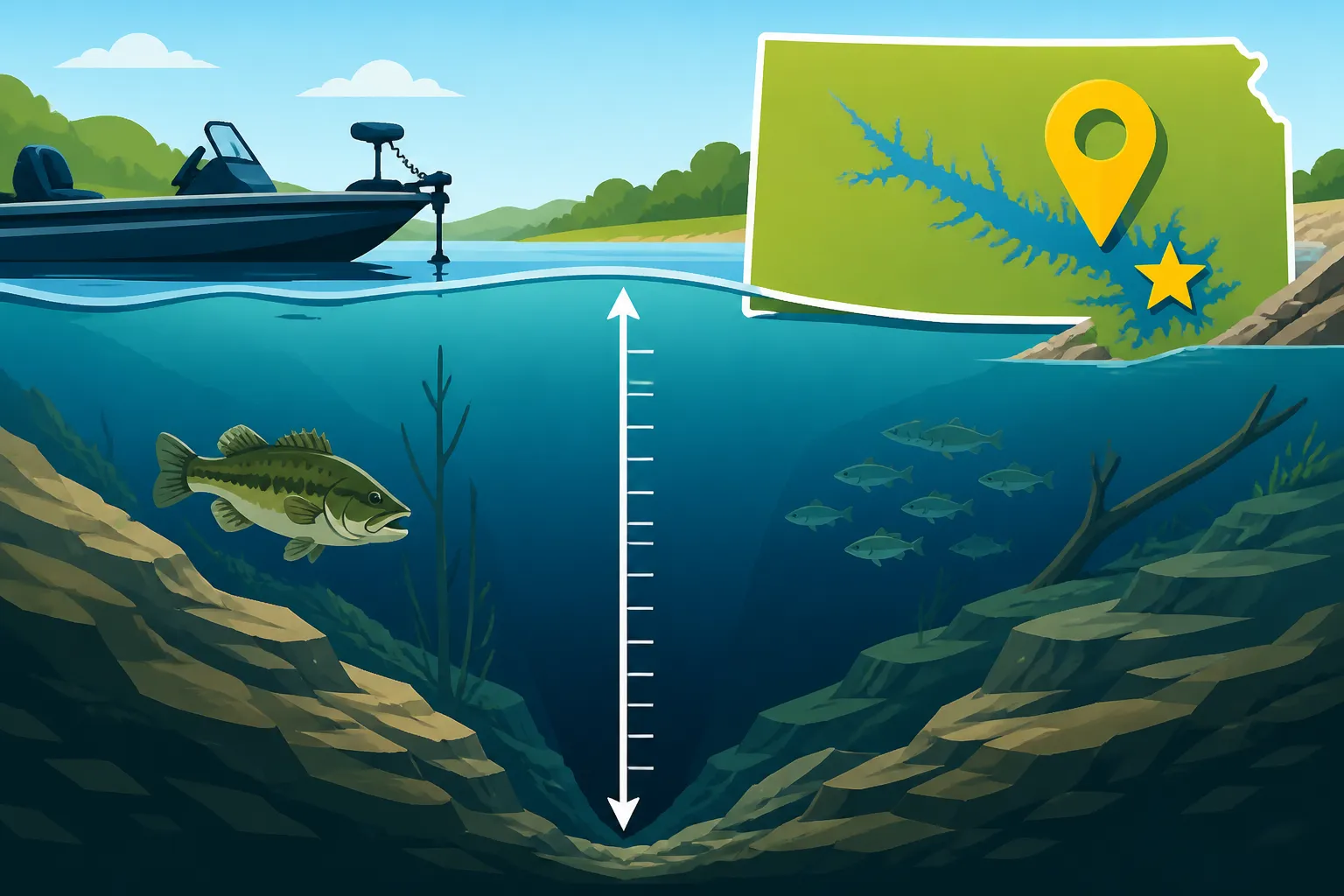
Milford Lake boasts a maximum depth that typically hovers around 65 to 70 feet. This deep pocket is consistently found near the dam, which makes perfect sense when you consider how these massive reservoirs are constructed. The old river channel, now submerged, funnels directly towards the dam, creating the deepest trench in the entire lake. However, don't let that impressive number mislead you into thinking the whole lake is that deep. The average depth of Milford Lake is closer to 25 to 30 feet, a figure that provides a more realistic picture of most of its fishable waters. It’s a truly vast body of water, and knowing that Milford Lake Is the Largest Lake in Kansas gives you a sense of the scale we're talking about here.
These depths are not static; they fluctuate with rainfall, drought conditions, and the U.S. Army Corps of Engineers' operational decisions for flood control and water supply. During periods of heavy rain, the lake might rise several feet, inundating shorelines and shallower structures, while prolonged dry spells can reveal old riverbeds and previously submerged features. Paying attention to current lake levels is a critical piece of the puzzle for any serious angler. A difference of even a few feet can dramatically change fish patterns and access points, making it feel like a different lake entirely from one season to the next.
How Milford's Depth Profiles Impact Fish Distribution
The varied underwater topography of Milford Lake is a magnet for fish, creating complex ecosystems where different species thrive at different depths. Beneath the surface, you'll find a mosaic of features: the original Republican River channel, countless submerged creek beds, extensive stands of flooded timber, subtle humps, dramatic drop-offs, and expansive flats. Each of these features, at varying depths, serves a distinct purpose for the fish population.
For instance, species like walleye often relate very closely to structure and specific depths. During colder months or in the heat of summer, they'll seek out the cooler, more stable temperatures found in deeper water, often holding tight to submerged humps or along the edges of the old river channel. Conversely, crappie, especially during their spring spawn, will migrate to much shallower depths, seeking out brush piles and flooded timber in just a few feet of water, though they will retreat to deeper brush piles and creek channels during other seasons. Catfish, particularly the impressive blue and flathead species, are often found patrolling the deepest parts of the main river channel during the day, where current provides oxygen and hides them from bright sunlight, moving onto shallower flats to feed under the cover of darkness. Understanding the typical depth preferences of your target species is paramount. When you combine this knowledge with a detailed contour map, you begin to see how the lake's depth profiles are literally signposts guiding you to where the fish are likely to be.
Strategizing Your Fishing Based on Depth
Once you grasp the fundamental depths of Milford Lake, the next step is to translate that knowledge into a tactical fishing strategy. This isn't just about dropping a line where it's deepest; it's about intelligently approaching the water, armed with an understanding of where and how fish relate to specific depths and structures.
Targeting Deep Water Fish Species
Certain species in Milford Lake are simply more inclined to hang out in deeper water, making depth knowledge non-negotiable for success.
-
Walleye: These highly sought-after game fish are notorious for relating to specific depths and structures. During the warmer months, as surface temperatures rise, walleye will often retreat to deeper, cooler waters, congregating along the breaks of submerged humps, rock piles, or the edges of the old river channel. This is where techniques like deep-water jigging with spoons or blade baits, or slow trolling with crankbaits that dive to precise depths, become incredibly effective. Finding walleye often means identifying those 20-40 foot depth ranges with nearby structure. If you’re serious about chasing these golden ghosts, check out a Milford Lake Fishing Guide for expert advice and consider sharpening your skills with dedicated Kansas Walleye Fishing Techniques. Many of the best walleye spots are located near the deepest sections of the lake. In fact, Milford Lake is widely considered one of the Best Walleye Lakes in Kansas.
-
Striped Bass and Wipers: These powerful, open-water predators are often found suspended in deeper parts of the lake, especially when they're chasing schools of shad. They're less structure-oriented than walleye, often roaming over vast expanses of deep water. Your fish finder becomes your best friend here, as you'll be looking for bait balls and the tell-tale arches of wipers or stripers lurking beneath them. Trolling large crankbaits or casting heavy spoons into schooling fish are common tactics. The areas where the main river channel passes through larger basins are often prime territory for these hard-fighting fish.
-
Catfish (Blue and Flathead): While channel catfish can be found in a variety of depths, the big blue and flathead catfish often prefer the deeper, more stable environments of the main river channel and its deepest holes during daylight hours. They're masters of ambush, using the current and depth for cover. Drifting cut bait or live bait along the bottom in 30-50 feet of water can be highly productive. At night, they might move shallower to feed, but during the day, those deep channels are their sanctuary. For those looking to wrestle with these giants, Kansas is known for them, making it one of the Best Catfish Lakes in Kansas. Learning specific Kansas Catfish Fishing Techniques will certainly increase your odds.
Utilizing Sonar and Mapping for Depth Advantage
In today's angling world, a good fish finder and detailed mapping are no longer luxuries; they are absolute necessities for effectively fishing a large, deep reservoir like Milford Lake. Guessing where the deep water structure is simply won't cut it.
A quality sonar unit allows you to visually interpret the underwater world. You can identify the sharp breaks of a drop-off, the subtle contours of a submerged hump, the dense clutter of a brush pile, and most importantly, the fish themselves. Learning to read your sonar – distinguishing baitfish from game fish, understanding bottom hardness, and identifying thermoclines (layers of water with different temperatures that fish often relate to) – will dramatically increase your efficiency. Modern units from brands like Garmin, Lowrance, and Humminbird offer CHIRP sonar, side imaging, and down imaging, providing crystal-clear views of structure and fish to the sides and directly beneath your boat.
Coupled with sonar, digital mapping software, such as Navionics or LakeMaster, provides invaluable topographic charts of the lake bottom. These maps display contour lines, much like a land map, revealing the hidden underwater hills, valleys, and channels. You can mark waypoints on these maps for productive spots, plan your drifts or trolling passes along specific depth contours, and even identify new potential fishing areas before you even get on the water. Many fishing guides, often booked through platforms like FishingBooker, rely heavily on these tools to consistently put their clients on fish, leveraging their deep understanding of the lake’s contours. By pre-planning your approach using these maps and then verifying with your sonar, you can eliminate guesswork and focus on fishing the most productive deep-water spots.
Key Deep-Water Fishing Locations on Milford Lake
Knowing Milford Lake's overall depth is one thing, but identifying specific spots where that depth creates prime fishing opportunities is where the real skill comes in. These areas often concentrate baitfish and predatory species, making them high-percentage targets.
The Dam Face and Spillway Area
Unsurprisingly, the area immediately surrounding the Milford Lake dam contains the deepest water in the entire reservoir. Here, the old river channel plunges to its maximum depth, offering a sanctuary for big fish that prefer cooler, deeper water, especially during the oppressive summer heat. This deep basin is a known hotspot for larger walleye, striped bass, and massive blue catfish.
However, fishing this area comes with its own set of challenges and safety considerations. The proximity to the dam often means strong currents, particularly when water is being released through the spillway. It’s crucial to be aware of your boat’s position and maintain control, as powerful undertows can be present. Additionally, certain areas near the dam, especially the immediate face and spillway, might be designated as restricted fishing zones by the Kansas Department of Wildlife and Parks. Always observe all posted signage and buoy markers, and review the Kansas Fishing Regulations Explained before heading out. Despite the challenges, the dam area’s deep, oxygenated water and abundant forage make it an irresistible draw for some of the lake's biggest fish. When targeting walleye, specifically, the area near the dam is often excellent, making it a prime spot for Milford Lake Walleye Fishing Near the Dam.
Submerged River Channels and Tributary Confluences
Before Milford Lake was impounded, the Republican River meandered through the landscape, joined by numerous creeks and smaller tributaries. Today, these ancient waterways lie submerged beneath the lake's surface, forming an intricate network of deep channels, bends, and confluences. These submerged riverbeds act as highways and holding areas for fish, providing essential structure, current breaks, and migration routes.
The main Republican River channel is the most prominent of these, carving a deep path through the lake. Anglers targeting catfish will often drift baits along its bottom contours, while walleye and crappie might stack up on the edges or in the bends where the channel meets a shallower flat. The junctions where smaller creek channels feed into the main river channel are particularly productive. These confluences often create subtle current variations and depth changes that concentrate baitfish, in turn attracting predators. Examples include the submerged channels of Curtis Creek or School Creek, which run deep into the main lake. Identifying these submerged channels on your sonar and mapping system is key to unlocking some of Milford's best deep-water fishing.
Mid-Lake Humps and Drop-Offs
Beyond the main river channel, Milford Lake is dotted with numerous underwater humps, ridges, and abrupt drop-offs that vary significantly in depth. These features are essentially underwater islands or cliffs that provide perfect ambush points and holding areas for fish. A hump rising from 40 feet to 20 feet, surrounded by deeper water, creates a natural refuge and feeding station. Similarly, a sharp drop-off from a flat into a deeper basin provides a quick escape route and a transition zone where fish can move between feeding and resting areas.
These humps and drop-offs are fantastic for targeting suspended walleye, crappie, and even white bass, depending on the time of year. Fish will often orient themselves along the specific depth contours of these structures, making them predictable targets once located. For instance, finding a school of crappie suspended around a brush pile on a deep-water hump in 30 feet of water can lead to consistent action. Many experienced anglers, including those you might find listed on FishingBooker, focus their efforts on these types of "hidden" structures, recognizing their potential to hold large numbers of quality fish away from heavily pressured shoreline spots.
Essential Gear and Safety for Deep Water
Fishing Milford Lake's deeper sections requires not just specialized knowledge, but also the right equipment and a strong commitment to safety. The challenges of deep water can be different from shallow-water angling, so being prepared is essential for an enjoyable and successful trip.
Recommended Gear for Deep-Water Angling
When you're fishing deep, your gear needs to be up to the task of reaching those depths, detecting subtle bites, and hauling up heavier fish.
-
Rods and Reels: For deep-water jigging or bottom-bouncing, you'll generally want medium-heavy to heavy power rods with fast to extra-fast actions. These rods provide the backbone to handle heavier weights and fight larger fish, while the fast action ensures you feel those light bites transmitted from far below. Matching them with robust spinning reels (size 3000-4000) or baitcasting reels with good line capacity and a strong drag system is crucial. For trolling, longer, more moderate action rods (e.g., 7-9 feet) designed for handling diving crankbaits or planer boards work best. If you're looking to upgrade your setup, check out a Kansas Fishing Gear Guide for some solid recommendations.
-
Line: Braided line is often the preferred choice for deep-water fishing due to its minimal stretch, which provides superior sensitivity for detecting bites and setting the hook in deep water. Its thinner diameter for a given strength also helps cut through the water, reducing bow in the line caused by current or wind. However, a fluorocarbon leader is often tied to the end of the braid for its invisibility and abrasion resistance. For targeting particularly large species like blue catfish in deep channels, heavier braid (50-80 lb test) is not uncommon.
-
Terminal Tackle: Deep-diving crankbaits are essential for trolling in deeper water, with models from companies like Rapala, Berkley, or Strike King designed to reach depths of 20 feet or more. For vertical jigging, heavy spoons, blade baits, or lead-head jigs tipped with plastics or live bait are effective. Bottom bouncers paired with snells and live bait (like nightcrawlers or minnows) are also excellent for covering ground along deep structure for walleye and other bottom dwellers. Don’t forget a good selection of heavy sinkers and appropriate hooks for the species you're after.
Navigating and Staying Safe in Deep Water
Safety on the water, especially on a large and often windy reservoir like Milford Lake, should always be your top priority. Deeper water can become rough quickly, and a fun day can turn dangerous if you're not prepared.
- Boat Maintenance and Operation: Ensure your boat and engine are in excellent working order before every trip. Carry all required safety equipment, including properly fitting life jackets for everyone on board. It’s not just a recommendation; it’s the law, and vital for your well-being. Knowing the specifics of the Kansas Life Jacket and Boating Safety Guide is non-negotiable. Familiarize yourself with the specifics of Kansas Boat Registration Guide as well.
- Weather Awareness: Always check the marine forecast before heading out. Milford Lake's large, open expanses are susceptible to strong winds, which can whip up significant waves in a short amount of time. Pay attention to sudden changes in weather, and be prepared to seek shelter or cut your trip short if conditions deteriorate. Knowing the best boat for the conditions is key; a stable, deep-V hull might be considered the Best Boat for Milford Lake Fishing, especially on windy days.
- Navigation and Chartplotters: Rely on your GPS chartplotter to navigate safely, especially when exploring unfamiliar areas or in low light conditions. Mark any hazards you encounter, such as shallow submerged timber or rock piles, to avoid them in the future. If you're new to fishing Milford's deep waters, consider hiring a local guide. Many professional guides, easily found on platforms like FishingBooker, offer half-day or full-day trips and can provide invaluable insights into the lake's deepest honey holes and teach you how to fish them safely and effectively.
| Feature Type | Typical Depth Range (feet) | Primary Species Targeted | Recommended Technique |
|---|---|---|---|
| Main River Channel | 30-70 | Blue Catfish, Flathead, Walleye | Drifting Bait, Deep Trolling |
| Submerged Creek Beds | 20-40 | Walleye, Crappie, Channel Catfish | Jigging, Bottom Bouncing |
| Mid-Lake Humps | 20-50 (top to surrounding) | Walleye, Striped Bass, Wipers | Trolling, Jigging Spoons |
| Dam Face/Basin | 50-70 | Walleye, Striped Bass, Blue Catfish | Vertical Jigging, Live Bait |
| Drop-Offs/Breaks | 15-45 | Walleye, Crappie, Bass | Crankbaits, Jigs, Live Bait |
Disclaimer
The information provided in this guide is for general informational purposes only and is not intended as professional advice. Fishing conditions, regulations, and lake depths can change frequently. Always consult the most current Kansas Department of Wildlife, Parks and Tourism regulations and local weather forecasts before planning any fishing trip. Safety should always be your top priority when on the water.