Hybrid Sunfish Explained
There’s nothing quite like pulling a feisty sunfish out of a Kansas pond or lake. They’re often the first fish we catch as kids, sparking a lifelong love affair with angling. But have you ever landed a sunfish that just looks… a little different? Not quite a bluegill, not quite a green sunfish, but something in between? You're likely dealing with a hybrid sunfish, a fantastic species that brings a lot of excitement to our waters, and often a bit of head-scratching. This guide is here to untangle the mystery, help you identify these unique panfish, and give you the best strategies for catching them across the Sunflower State.
The Unique Blend: What Makes a Hybrid Sunfish?
Hybrid sunfish are truly a marvel of the aquatic world, a natural crossbreed that also gets a little help from fisheries management. They combine some of the best traits of their parent species, resulting in a fish that's often bigger, bolder, and more willing to bite than either of its purebred ancestors. If you've ever wondered why that "bluegill" you just caught seemed unusually aggressive or had a surprisingly large mouth, chances are you've met a hybrid.
Bluegill and Green Sunfish: The Parent Species
To truly understand a hybrid sunfish, we first need to appreciate its parents: the bluegill (Lepomis macrochirus) and the green sunfish (Lepomis cyanellus). Both are native to Kansas and are incredibly common throughout the state, populating everything from farm ponds to large reservoirs.
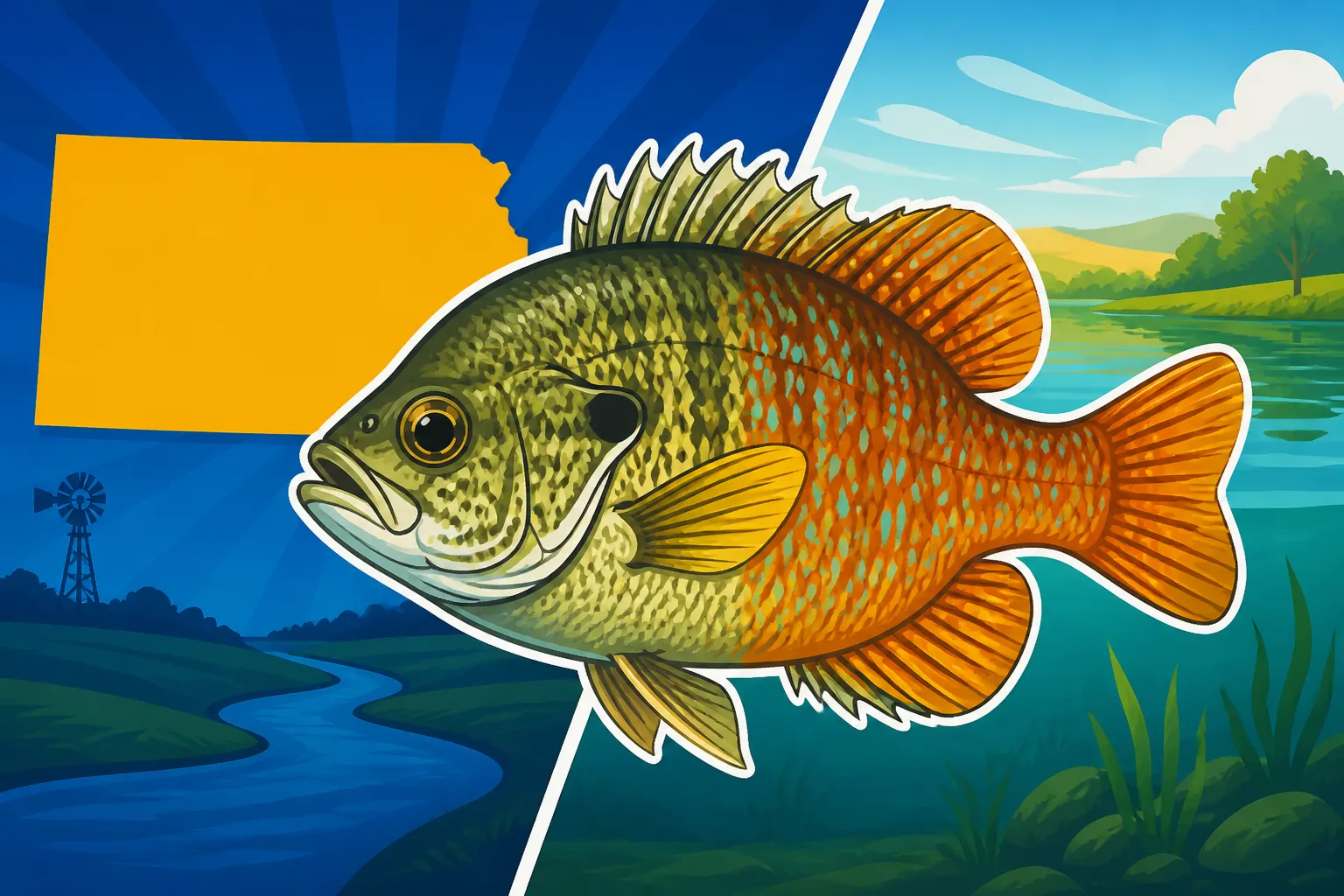
The bluegill is arguably the quintessential panfish. Known for its small mouth, deeply compressed body, and distinctive black spot on the posterior part of its dorsal fin and a dark gill flap (the "ear" tab), it’s a beautiful fish. Bluegill are typically found around structure, feeding on insects, larvae, and small crustaceans. They put up a good fight for their size and are fantastic eating.
Then we have the green sunfish. This species is often overlooked, but it's a tough, adaptable fish. Green sunfish have a larger mouth than bluegill, a more robust, elongated body, and often a yellowish-green iridescent sheen with irregular blue-green spots or streaks on their cheeks and gill covers. Their ear flap is typically black with a pale, often orange-red, margin. Green sunfish are notoriously aggressive, willing to strike at almost anything, and can thrive in less-than-ideal water conditions. They're like the brawlers of the sunfish world.
When a male green sunfish spawns with a female bluegill, or vice versa, their offspring are the hybrid sunfish we often encounter. This interbreeding isn't just a random occurrence; it's often facilitated by nature's proximity and sometimes intentionally encouraged in managed fisheries. The resulting hybrids inherit a blend of characteristics, which makes identification both fascinating and, at times, a bit challenging.
Why Kansas Stocks Hybrid Sunfish
Hybrid sunfish aren't just a happy accident; they're often a deliberate choice for fisheries managers, especially in smaller bodies of water like community fishing lakes and private ponds. There are several compelling reasons why these mixed-breed panfish are favored.
First and foremost, hybrids exhibit what's called "hybrid vigor" or heterosis. This means they often grow faster and attain larger sizes than either of their parent species. For an angler, this translates to bigger fish on the end of the line, which is always a welcome bonus! Instead of waiting years for a bluegill to reach respectable eating size, a hybrid can get there much quicker, providing more immediate angling satisfaction.
Secondly, hybrid sunfish are incredibly aggressive eaters. They tend to strike at baits and lures with more ferocity and less hesitation than purebred bluegill. This makes them exceptionally fun to catch, especially for beginners or children, as they provide consistent action. This aggression also means they are less finicky, often biting readily on a wider variety of offerings, making your fishing trips more productive.
Another key benefit for fisheries management is their reproductive tendency. Many hybrid sunfish, particularly the first generation cross, are predominantly male or have reduced reproductive capabilities. In a pond, this is a huge advantage. Pure bluegill populations can easily overpopulate a small pond, leading to stunted fish that never grow to a desirable size. By stocking hybrids, managers can introduce a fast-growing, aggressive panfish without the risk of an exploding population that outstrips the food supply, thus keeping the overall fish community healthier and more balanced. This selective stocking helps to maintain healthy fish populations without relying solely on larger predator fish to control panfish numbers. Many of our local community lakes are managed with this exact strategy in mind. You can often find them in Fish Stocked in Kansas Community Lakes.
How to Identify Hybrid Sunfish in Kansas Waters
Alright, so you’ve caught a sunfish, and it’s got you scratching your head. It looks like a bluegill, but it feels more robust, or maybe its mouth is just a bit too big for a classic bluegill. Identifying hybrid sunfish can be a bit like solving a puzzle, as they display traits from both their parent species. Don't worry, it gets easier with practice, and knowing what to look for makes all the difference.
Key Characteristics and Distinguishing Features
When you're trying to identify a hybrid sunfish, think of it as a blend. You're looking for a mix of the bluegill's classic panfish shape and the green sunfish's more robust, sometimes "meaner" features.
Here are the key characteristics to pay attention to:
- Mouth Size: This is often the most telling feature. A bluegill has a very small mouth, barely extending to the front of its eye. A green sunfish has a noticeably larger mouth, often extending past the middle of its eye. A hybrid sunfish will usually fall somewhere in between—larger than a bluegill, but typically not quite as massive as a pure green sunfish. If you can fit more than just your pinky finger easily into its mouth, it's probably not a pure bluegill.
- Ear Flap (Opercular Flap): Both parent species have distinct ear flaps. Bluegill have a solid black, flexible ear flap with no colored margin. Green sunfish have a black ear flap that is often rigid and fringed with a pale, sometimes orange or red, margin. Hybrid sunfish will often have a black ear flap that may have a very thin, pale, or slightly reddish margin, but it's usually less pronounced than a pure green sunfish. It's rarely a solid, unmargined black like a bluegill.
- Body Shape and Coloration: Bluegill tend to be very round and deeply compressed, almost disc-shaped. Green sunfish are more elongated and stockier. Hybrids often have a body shape that's more robust than a bluegill, but perhaps not quite as long as a green sunfish. Their coloration can vary wildly, often showing hints of the bluegill's vertical bars (though usually faded) and the green sunfish's iridescent blue-green spots on the head. You might see a little more yellow or orange on their belly than a pure bluegill, too.
- Dorsal Fin Spot: Bluegill typically have a distinct, dark spot at the base of the soft-rayed portion of their dorsal fin. Green sunfish usually lack this prominent spot. Hybrid sunfish can sometimes show a faint version of this spot, or it might be completely absent, making identification a bit trickier.
It's important to remember that nature doesn't always follow a strict rule book. The degree to which these traits are mixed can vary from fish to fish, making precise identification a fun challenge.
Comparing Hybrids to Their Cousins
To really nail down that identification, let's put hybrid sunfish side-by-side with their most common relatives you'll find in Kansas waters. While many anglers lump all sunfish into one category, understanding the nuances can enhance your fishing experience and appreciation for these diverse fish. Sometimes, it takes a keen eye to spot the differences, especially when you're looking at something that could be a Kansas Bluegill Identification or even a Kansas Redear Sunfish Identification.
Here’s a quick comparison table to help you spot the differences:
| Feature | Hybrid Sunfish | Bluegill (Pure) | Green Sunfish (Pure) |
|---|---|---|---|
| Mouth Size | Medium to Large (bigger than bluegill) | Small (doesn't extend past eye) | Large (extends past middle of eye) |
| Ear Flap | Black with thin pale/reddish margin | Solid black, flexible, no margin | Black, rigid, distinct pale/orange margin |
| Body Shape | Robust, slightly more elongated than BG | Deep-bodied, round, disc-shaped | More elongated, stocky, almost bass-like |
| Dorsal Fin Spot | Faint or absent | Prominent dark spot | Usually absent |
| Coloration | Variable, often mottled, faint bars | Olive green, sometimes dark vertical bars | Olive-green, iridescent blue streaks on face |
| Aggression | High | Moderate | Very High |
When you're on the water, take a moment to really look at your catch. Does it have the bluegill’s delicate lines but the green sunfish’s attitude? Does its mouth seem just a bit too big for a bluegill? These are your clues! Remember, distinguishing between Crappie vs Sunfish Differences is usually much easier, as crappie have a distinct profile, but differentiating sunfish within the Lepomis genus can truly test your observation skills.
Mastering the Catch: Fishing for Hybrid Sunfish
Catching hybrid sunfish is one of the true joys of Kansas fishing. They're typically eager biters, which makes them perfect targets for anglers of all skill levels, especially those just starting out. Their aggressive nature and willingness to strike almost anything means you can often have a very productive and exciting day on the water.
Favorite Baits and Lures for Aggressive Biters
When it comes to hybrid sunfish, aggression is the name of the game. They're not particularly picky, which is fantastic news for us anglers! You don't need a huge, specialized tackle box; often, simple and effective offerings are all it takes.
Live Bait:
- Worms: The undisputed champion for nearly all panfish, and hybrids are no exception. Redworms, nightcrawlers (cut into smaller pieces), or even pieces of earthworms are incredibly effective. Present them on a small hook (size 8-12 is usually perfect) under a bobber. The scent and natural movement are irresistible.
- Crabs and Grasshoppers: During the warmer months, if you can find them, these insects are natural food sources for sunfish and can provoke some explosive strikes.
- Small Minnows: While not as common for sunfish, very small minnows can attract larger hybrids, especially if they're feeding on baitfish.
Artificial Lures:
Hybrids love to hit small artificials, which adds an extra layer of fun to the fishing.
- Micro Jigs: Small lead-head jigs (1/32 to 1/16 ounce) tipped with tiny soft plastics (grubs, tubes, crappie magnets) are deadly. Experiment with colors—chartreuse, white, pink, and black are often good starting points. You can drift these or lightly twitch them near cover.
- Small Spinners: In-line spinners like those from Mepps or Rooster Tail, in sizes 0 or 1, can be incredibly effective. The flash and vibration mimic small baitfish or insects, triggering aggressive strikes. You can easily find a good selection of these small lures on online retailers like Amazon.
- Tiny Crankbaits: While less common for sunfish, micro-crankbaits designed for trout or ultralight fishing can sometimes entice larger hybrids, especially if they're actively chasing baitfish.
Regardless of your choice, a light action rod with light line (2-4 lb test monofilament or fluorocarbon) will make the fight much more enjoyable and allow for better lure presentation. For a good all-around starter kit, you can often find affordable combos on Amazon that are perfect for panfish. For more ideas on what to put in your tackle box, check out Best Lures for a Kansas Tackle Box.
Where to Find Hybrids in Ponds, Lakes, and Community Waters
Just like their bluegill and green sunfish parents, hybrids are structure-oriented. They love cover and anything that offers them a bit of ambush opportunity or protection from predators.
- Weed Beds and Lily Pads: These are prime locations. Hybrids will lurk at the edges or in pockets within dense vegetation, waiting for insects or small baitfish.
- Docks, Piers, and Overhanging Trees: Man-made structures and natural overhangs provide shade and cover. Fish directly under and around these spots. Many of our local Kansas Community Fishing Lake Rules encourage fishing from these very structures.
- Submerged Timber and Brush Piles: If you know where sunken trees or brush are, you've found a hybrid hotspot. They'll school up in these areas.
- Drop-offs and Ledges: Where shallow water transitions to deeper water, hybrids will often cruise, particularly during periods of changing light or temperature.
- Riprap and Rocky Shorelines: The rocks provide excellent cover for aquatic insects, which in turn attracts sunfish.
In ponds and smaller lakes, these areas are usually easy to spot from shore. For larger reservoirs, you might need a boat or kayak to reach the most productive spots, but bank fishing near accessible cover can still be incredibly productive. For a general guide on where to start looking for panfish, our Kansas Panfish Guide offers some great foundational knowledge.
Year-Round Strategies for Success
Hybrid sunfish are active throughout much of the year in Kansas, but your approach might need a slight tweak depending on the season. This is where understanding Kansas Fishing Techniques for Beginners really pays off.
- Spring: As water temperatures rise, hybrids become very active and move into shallower waters to spawn. This is arguably the easiest time to catch them. Look for them around shallow cover, often in colonies. Small jigs, worms, and even tiny topwater lures can be effective.
- Summer: During the heat of summer, hybrids will often move deeper during the day, seeking cooler water and more oxygen. Fish early mornings, late evenings, or even at night. They'll still be near structure but might be holding a bit deeper. Using a small split shot to get your bait down can be key. Don't forget, you might be able to find some specific summer deals on tackle for these conditions on Amazon.
- Fall: As waters cool, hybrids will go on a feeding binge to put on weight for winter. They can be found in a variety of depths, often near structure. This is a great time for both live bait and small lures.
- Winter (Ice Fishing): Yes, you can even catch hybrids through the ice in Kansas! They'll congregate in deeper basins or near submerged structures. Use tiny ice jigs tipped with a waxworm or a small piece of bait. A sensitive ice rod is crucial to detect their light bites. If you're new to the idea, check out our Best Time to Ice Fish article for more details.
No matter the season, remember that hybrids are opportunistic feeders. If you find one, chances are there are more nearby!
Enjoying Your Catch: Regulations and Culinary Tips
So, you've spent a fantastic day on the water, battling aggressive hybrid sunfish, and your cooler has a good number of them. Now what? Well, the great news is that these fish aren't just fun to catch—they're also absolutely delicious. But before you head straight to the frying pan, it's always good practice to double-check the local regulations.
Deliciousness on the Dinner Plate
Hybrid sunfish are, without a doubt, excellent table fare. Their meat is firm, flaky, and has a mild, sweet flavor that is highly appealing to even non-fish eaters. Because hybrids tend to grow larger than pure bluegill, they often yield a more substantial fillet, making them a more rewarding meal.
Cleaning them is straightforward. A sharp fillet knife is your best friend here. You can fillet them just like bluegill or crappie, removing the skin and bones to get two clean pieces of white meat per fish. A popular way to prepare them is to simply dredge the fillets in seasoned cornmeal or flour and pan-fry them until golden brown and crispy. They are also fantastic baked, broiled, or even grilled in foil packets with a little butter and lemon. Serving them up with some fresh garden vegetables or classic hushpuppies makes for a truly quintessential Kansas meal.
If you're looking for gear to help with cleaning, whether it's a good fillet knife or a cutting board, Amazon has a wide array of choices to make your post-fishing duties a breeze.
Understanding Kansas Sunfish Regulations
While hybrid sunfish are often abundant and have generous limits, it is absolutely crucial to always be aware of and follow current fishing regulations. The Kansas Department of Wildlife and Parks (KDWP) sets rules to ensure sustainable fish populations, and these rules can sometimes vary by water body.
Generally, sunfish species (including bluegill, green sunfish, and hybrids) have very liberal daily creel and possession limits in Kansas. In many public waters, there are no length limits on sunfish, and the daily creel limit is often quite high, sometimes even 50 fish or more. This is due to their prolific nature and the management strategy to keep populations healthy and prevent stunting.
However, there are exceptions. Some community lakes or specially managed ponds might have specific regulations, especially if they are part of a youth fishing program or a particular conservation effort. For example, some ponds might have a slot limit or a reduced daily creel limit on panfish to encourage larger fish.
Your best practice is always to:
- Check the current Kansas Fishing Regulations Summary: This document is updated annually and is your authoritative source for all rules. You can often find it online on the KDWP website.
- Look for posted signs at specific lakes or ponds: Especially at smaller public waters or community lakes, there will often be signs detailing any site-specific regulations.
- Confirm your fishing license is current: While this guide focuses on species, remember that you need a valid Kansas Fishing License Guide to fish in most public waters.
Following these simple steps ensures you're fishing legally and contributing to the health of Kansas's wonderful fisheries. Enjoy those hybrid sunfish, both the thrill of the catch and the deliciousness on your plate! For a broader understanding of statewide rules, dive into Kansas Fishing Regulations Explained.
Disclaimer
This article is for general informational purposes only and does not constitute professional advice. Laws, prices and regulations vary by location and change over time. Consult a qualified professional for guidance on your specific situation.