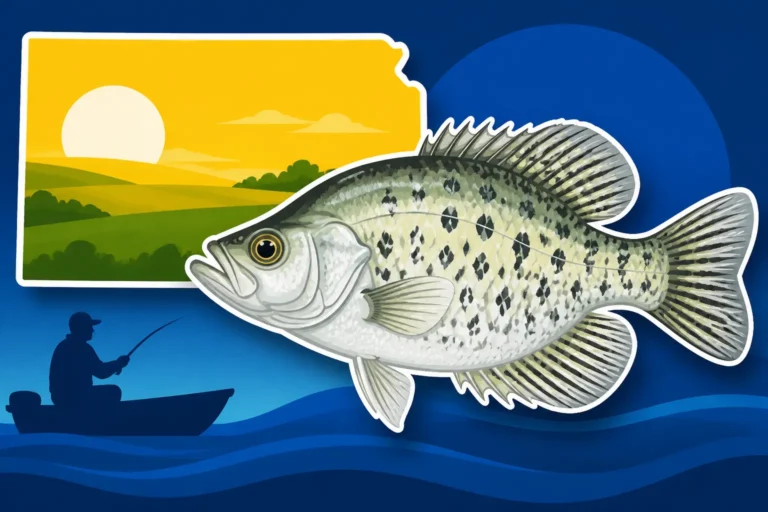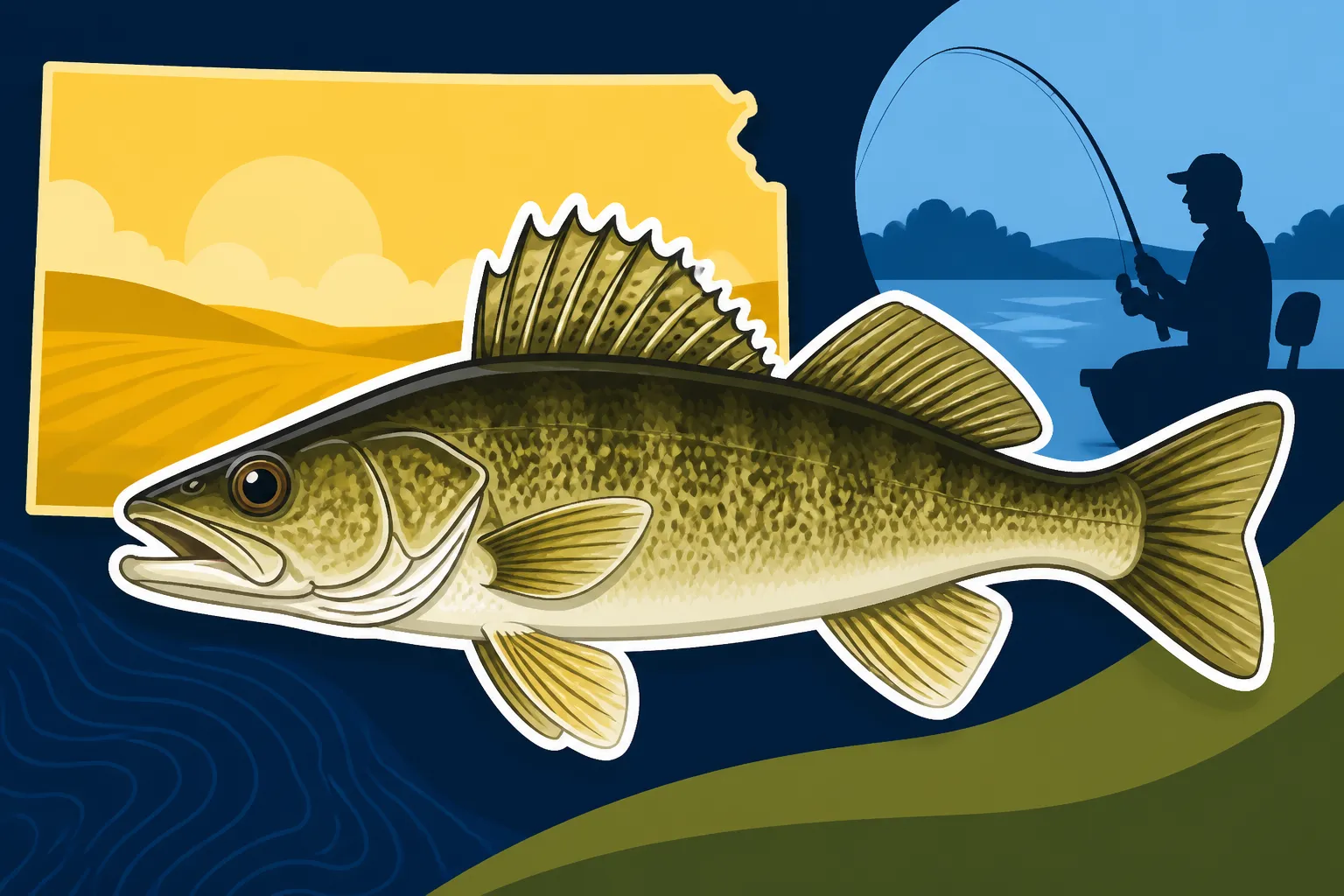
Kansas Sauger Identification
Have you ever been out on a Kansas river, hooked into what you thought was a walleye, only to look closer and wonder if it was something else entirely? Many anglers face this exact dilemma, especially when it comes to distinguishing between a sauger, a walleye, and their hybrid cousin, the saugeye. Proper identification isn't just about bragging rights; it's absolutely crucial for adhering to Kansas Fishing Regulations Explained and avoiding potential penalties, as size and creel limits can vary significantly between these similar-looking species. This guide is here to walk you through the distinct features of the Kansas sauger, helping you confidently identify your catch every time.
The Elusive Kansas Sauger: What Makes Them Unique?
The sauger (Sander canadensis) is a fantastic game fish, often overshadowed by its larger, more famous relative, the walleye. But don't let that fool you; sauger are incredible fighters and make for excellent table fare. They're a bit more particular about their habitat than walleye, preferring turbid, flowing waters, which is why you'll often find them in different parts of our Kansas waterways. Understanding their general characteristics is the first step in learning to identify them properly, especially since they're often found in the same waters as walleye and saugeye.
A North American Native: Habitat and General Characteristics
Sauger are native to many parts of North America, particularly the central and eastern regions, and Kansas is fortunate to have healthy populations. Unlike walleye, which often thrive in large, clear reservoirs, sauger tend to prefer riverine environments with a noticeable current and somewhat turbid water. They're built for life in these conditions, often having a more streamlined body shape that helps them navigate flowing water with ease. You might notice them congregating in areas with riprap, wing dams, or submerged timber, using these structures to break the current and ambush prey. Their typical size is smaller than a walleye, usually ranging from 12 to 18 inches, though larger specimens certainly exist and can be a real thrill to catch.
When we talk about their general appearance, sauger have a somewhat mottled, olive-brown to golden-brown coloration on their backs, fading to a lighter, often yellowish-white belly. This coloring provides excellent camouflage in the often murky waters they inhabit. Their bodies are covered in small, rough scales, and they possess a long, cylindrical body that tapers toward the tail. They are predatory fish, feasting on smaller baitfish like shad, shiners, and even insect larvae, which is why understanding their habitat preferences can also help you predict where to find them.
Why Sauger Identification Matters: Regulations and Conservation
Getting your sauger identification right is far more than an academic exercise; it's a critical component of responsible angling. Kansas, like many states, often has different daily creel limits and length restrictions for walleye, sauger, and saugeye. Imagine the frustration of catching a beautiful fish, taking it home, only to realize later that you've kept a sauger that was under the legal length limit for a walleye, or vice-versa. Penalties for violating fishing regulations can range from hefty fines to the loss of your fishing privileges. You can delve deeper into the specific numbers in guides like Kansas Walleye Length Limits or Kansas Daily Creel Limits by Species.
Beyond the legal aspect, accurate identification plays a vital role in conservation. Fisheries managers rely on angler reports and creel surveys to monitor fish populations and set appropriate regulations. If sauger are consistently misidentified as walleye, it can skew population data, potentially leading to overharvest of one species or under-management of another. By learning to correctly identify these fish, you're not just protecting yourself from a ticket; you're contributing to the health and sustainability of Kansas's precious aquatic resources for future generations. It's about respecting the fish and the regulations designed to protect them.
Spotting the Differences: Key Visual Cues for Sauger
When a fish comes over the rail of your boat or is pulled onto the bank, the first few seconds are crucial for identification. There are several key visual cues that, once you know them, make telling a sauger apart from a walleye or saugeye much easier. It's like having a secret checklist in your mind, helping you quickly confirm what you've caught.
Distinctive Dorsal Fin Patterns
This is often the number one giveaway for a sauger, and usually the first thing seasoned anglers check. Look at the spiny dorsal fin – the one closer to the head. A true sauger will have very distinct, dark, rounded spots evenly distributed across this fin, creating a clear, mottled pattern. It's almost like a leopard print on their fin. In contrast, a walleye's spiny dorsal fin is typically clear or has only very faint, diffuse streaks, and critically, a prominent dark blotch at the very rear base of the fin. The saugeye, being a hybrid, often has a mix: some faint spots like a sauger, but usually also that dark blotch at the rear like a walleye, though it might be less pronounced.
Imagine you're sorting through your tackle box, maybe looking for a specific lure on Amazon. You know the exact pattern you need, just like you'll learn to recognize the exact pattern on a sauger's fin. It’s that distinctive. This dorsal fin pattern is so reliable that if you only learn one thing from this guide, make it this. It's truly the easiest and most consistent marker to begin your identification process.
Body Shape and Coloration: More Than Just a Pretty Face
While the dorsal fin is the primary clue, the overall body shape and coloration also offer strong hints. As mentioned, sauger tend to be more slender and cylindrical compared to the walleye, which often has a deeper, more robust body. Think of a sauger as having a more "river-ready" physique, built for cutting through current. Their coloration, as we discussed, is typically a mottled olive to golden-brown with darker saddle-like markings along their back and sides. These markings are usually more pronounced and irregular than the subtle blotches you might find on a walleye.
Walleye, on the other hand, often have a more uniform olive-green or dark brown back, sometimes with brassy or golden flecks, but generally lacking the distinct saddle patterns. The saugeye, again, can fall somewhere in the middle, displaying some mottled patterns but perhaps not as intensely defined as a pure sauger. When you hold a sauger, you'll feel that sleekness and see that intricate camouflage pattern that really sets it apart from its cousins.
Scale and Cheek Markings
Another crucial detail, often overlooked by beginners, is the presence or absence of scales on the cheek plates. This is a tell-tale sign! Sauger will have scales covering their entire cheek plates. If you gently run your finger over the cheek area just behind the eye, you'll feel the texture of the scales. For a walleye, the lower half of the cheek plate is typically smooth and unscaled, or only sparsely scaled. This difference is consistent and provides a strong confirmation of your identification.
Beyond the cheeks, both walleye and sauger have a sharp opercular spine (gill cover spine), but the sauger's might feel a bit more pronounced due to its generally sleeker build. Pay close attention to these small, often forgotten details. They're like the fine print on a warranty – easy to miss, but critical for the full picture. Getting a good look at these scale patterns requires a quick but careful examination of the fish once it's in hand, so make sure you're ready to observe these features as soon as you land your catch.
Sauger vs. Walleye: Separating the Lookalikes
This is the most common point of confusion for anglers in Kansas. Walleye are incredibly popular, and sauger share so many similarities that it's easy to mistake one for the other. However, once you know what to look for, these two species become much easier to differentiate. It's all about those distinct features we've discussed, but now let's put them into a direct comparison to solidify your understanding.
Fin Analysis: The Easiest Way to Tell Them Apart
Let's reiterate, because this is the most important identifier. The spiny dorsal fin is your best friend.
- Sauger: Covered in very obvious, distinct, dark spots, like polka dots or blotches. There is no prominent dark blotch at the rear base of this fin.
- Walleye: The spiny dorsal fin is generally clear or only faintly streaked, and it will have a very distinct, dark blotch at the very rear base of the fin. This blotch is often quite prominent and serves as a reliable marker.
Think of it this way: if the fin looks spotted like a connect-the-dots puzzle, it's a sauger. If it's mostly clear with a big black dot near the tail, it's a walleye. Getting this down will save you a lot of guesswork and ensure you're compliant with regulations, whether you're targeting Kansas Walleye Fishing Guide or just enjoying a general day out.
Body Markings and Pigmentation
While the fins are the primary identifier, the body also holds clues.
- Sauger: Tend to have more pronounced, irregular dark blotches or saddle-like markings along their back and sides, offering excellent camouflage in turbid water. Their overall color can be more mottled and less uniformly olive-green.
- Walleye: Typically have a more uniform golden-olive or dark brown back, often with faint, diffuse blotches that aren't as distinctly saddle-shaped as those on a sauger. They may have a brassy sheen to their sides.
Consider the habitat: sauger live in often murky, flowing water where a broken, mottled pattern helps them blend in. Walleye, while found in rivers, are also common in clearer lake environments where a more uniform, streamlined color pattern might be advantageous. These subtle differences in pigmentation reflect their evolutionary adaptations to their preferred environments.
Habitat and Behavior Clues
Knowing where you caught the fish can also provide a strong hint, though it's not foolproof.
- Sauger: As we explored earlier, sauger show a strong preference for turbid, moving water. Think river channels, areas below dams, and deeper holes with current. If you're fishing the Kansas River Fishing Guide, chances are good you might encounter sauger. They tend to stick closer to the bottom and can be quite sensitive to light.
- Walleye: While walleye can certainly be found in rivers, they are also prolific in larger, clearer reservoirs and lakes. They might be found in shallower water during low light conditions or spawning, and they tolerate clearer water much better than sauger. You'll find them abundant in places like Milford Lake or Cheney Reservoir.
It's important to note that both species can coexist in the same water body, especially in river systems that flow into reservoirs. However, if you're pulling fish from a fast-flowing, slightly muddy river section, your odds of it being a sauger increase. Conversely, a fish caught from a clear, open water flat in a large lake is more likely to be a walleye. This ecological insight, combined with the visual cues, makes for a very robust identification process.
Here's a quick comparison table to help you keep things straight:
| Feature | Sauger | Walleye | Saugeye (Hybrid) |
|---|---|---|---|
| Spiny Dorsal Fin | Distinct dark spots; NO dark blotch | Clear or faintly streaked; prominent dark blotch at rear base | Often faint spots AND dark blotch at rear |
| Cheek Plates | Fully scaled | Lower half mostly unscaled or sparsely scaled | Partially scaled (can vary) |
| Body Markings | Distinct, dark saddle-like blotches | More uniform, less distinct blotches; often brassy sheen | Mix of both; can be mottled but less defined |
| Tail Fin (Caudal) | Often has a white lower tip | Typically no white tip, sometimes pale overall | Variable; may have a faint white tip |
| Overall Shape | More slender, cylindrical | Deeper-bodied, more robust | Intermediate |
| Preferred Habitat | Turbid, flowing rivers, deep holes | Clearer lakes, reservoirs, river sections | Adaptable to both |
Sauger vs. Saugeye: The Hybrid Conundrum
Just when you thought you had sauger and walleye figured out, along comes the saugeye! This is where things can get truly tricky, as the saugeye is a hybrid of a female walleye and a male sauger. They often exhibit a mix of characteristics from both parent species, making them a fascinating, yet challenging fish to identify. Fortunately, there are still some tell-tale signs to look for. For more detailed information on just these hybrids, you might want to read Kansas Saugeye Identification.
Understanding the Saugeye Hybrid
Saugeye are intentionally stocked in many Kansas waters because they combine desirable traits from both parents: they grow faster than sauger, tolerate turbidity better than walleye, and offer an excellent sport fishing experience. They’re often found in waters that might be too turbid for a pure walleye but still have characteristics that appeal to the walleye side of their lineage, such as larger open water areas. This adaptability makes them a popular target for anglers, and their presence complicates identification efforts.
The creation of a hybrid means you won't always see a clear-cut feature from one parent or the other. Instead, you'll observe a blend. This is why paying attention to all the identification points, rather than just one, becomes even more important. A saugeye is a testament to nature's (and fisheries management's) ability to blend and adapt, creating a truly unique and resilient fish for anglers to pursue.
Identifying Saugeye Features
When trying to identify a saugeye, you're looking for that mix of characteristics.
- Dorsal Fin: This is still your best bet, but it's where the blend becomes evident. A saugeye will typically have both the distinct spots of a sauger and the dark blotch at the rear base of the spiny dorsal fin, characteristic of a walleye. The spots might be fainter than on a pure sauger, and the blotch might not be as intensely black as on a pure walleye, but the presence of both is a strong indicator of a saugeye.
- Cheek Scales: Saugeye often have partially scaled cheeks, meaning some areas might be smooth like a walleye, while others have scales like a sauger. It's not usually fully scaled like a sauger, nor completely unscaled on the bottom half like a walleye.
- Body Pattern: Their body coloration can be quite variable, often showing some mottled patterns from the sauger parent, but with a more overall brassy or golden hue reminiscent of a walleye. The saddle markings might be present but less defined than on a pure sauger.
It's a visual puzzle, and saugeye are often the trickiest piece. You might pick up a book on fish identification, perhaps from Amazon, to help you visualize these subtle differences with detailed illustrations. The more saugeye you see and examine, the better you'll become at recognizing these hybrid traits.
Why Hybrids Can Be the Trickiest
The inherent variability in hybrid species is what makes them so challenging. Just like children can inherit different traits from different parents, saugeye can express various combinations of sauger and walleye characteristics. You might catch one saugeye that leans more heavily towards its walleye parent in appearance, and another that looks strikingly like a sauger. This phenotypic plasticity means there isn't one single, universally consistent "saugeye look."
This variability underscores the importance of examining multiple features rather than relying on just one. If the dorsal fin has both spots and a blotch, and the cheeks are partially scaled, you can be fairly confident it's a saugeye. When in doubt, it's always best to err on the side of caution and assume the stricter regulation applies, or take a picture and consult the Kansas Department of Wildlife, Parks and Tourism (KDWP) regulations for clarity. The last thing you want is to accidentally keep an illegal fish.
Where Kansas Sauger Call Home: Prime Locations and Habitats
Knowing what a sauger looks like is only half the battle; knowing where to find them is the other! While sauger aren't as widespread in Kansas as walleye, they definitely have their preferred haunts. Targeting these areas will greatly increase your chances of hooking into one of these riverine beauties.
River Systems: The Sauger's Preferred Domain
If you're looking for sauger in Kansas, river systems are your absolute best bet. Sauger thrive in moving water and prefer areas with some turbidity, making rivers like the Kansas River, Republican River, and sections of the Missouri River prime locations. They especially like deeper holes, current breaks, and areas with structure such as wing dikes, submerged logs, or riprap. Think about where the current slows down slightly but still offers a steady flow; these are often sauger holding spots.
These fish are masters of using current to their advantage, often positioning themselves just out of the main flow to conserve energy while waiting for prey to be swept by. They also appreciate a softer, muddier bottom over hard rock, though they'll certainly relate to rocky structures that break the current. When you're fishing these areas, pay attention to depth changes, eddies, and any underwater features that could provide a current break or ambush point. Exploring a good Kansas River Fishing Guide can point you towards specific honey holes.
Reservoirs and Impoundments: Where They Might Show Up
While rivers are their preferred home, sauger can also be found in certain reservoirs and impoundments, particularly those that feed directly off river systems or have significant riverine characteristics. Lakes with consistent inflow and outflow, or those that maintain a degree of turbidity, can support sauger populations. They will often congregate near the dam areas or in the upper reaches of the reservoir where the river still flows.
Even in reservoirs, sauger will seek out deeper channels, submerged riverbeds, and areas where there's a discernible current or structure that mimics their river habitat. Don't expect to find them suspended in open, clear water like you might some walleye. Instead, focus your efforts on the deeper, darker parts of the lake that still have that "river feel" to them. They are generally light-sensitive, so deeper water or low-light conditions are often best.
Seasonal Movements and Preferred Structure
Sauger, like most fish, exhibit seasonal movements tied to spawning, feeding, and temperature. In spring, they'll migrate upstream into shallower, moving water to spawn, often in gravelly areas. After spawning, they disperse but will still relate to deeper river channels and structures. During summer, they retreat to deeper, cooler water, often concentrating in river bends, scour holes, or below current breaks in larger rivers.
In the fall, as water temperatures begin to drop, sauger become more active feeders, often moving to shallower areas during low light and feeding aggressively. Winter can find them concentrated in deep holes, slack water areas, and below dams, where they remain active and can be targeted through ice fishing or vertical jigging. Understanding these patterns is key to consistently finding sauger throughout the year. Always check Kansas Fishing Seasons and Limits for specific timing related to different species and locations.
Fishing for Sauger in Kansas: A Quick Look at Techniques
Once you can confidently identify a sauger, the next step is to actually catch one! While this guide focuses on identification, a brief overview of how to target them can make your next outing more successful. Sauger often respond to techniques similar to walleye, but with a slight adjustment to their habitat preferences.
Bait and Lure Choices for Sauger
Sauger are predatory fish, and like walleye, they respond well to baits that imitate small baitfish or provide enticing vibrations.
- Jigs: Tipping jigs with minnows, shiners, or soft plastic grubs is incredibly effective. Bright colors like chartreuse, orange, or white often work well in turbid water, providing a visual cue. When shopping for these, you'll find a wide variety available on Amazon.
- Crankbaits: Deep-diving crankbaits that mimic shad or shiners can be very productive, especially when trolled slowly along river channels or current breaks. Make sure they dive deep enough to reach the bottom where sauger often hold.
- Live Bait: Minnows are a classic choice, fished on a simple rig like a slip sinker with a snell hook. Small shiners or even nightcrawlers can also entice a bite. Presenting them close to the bottom is usually key.
- Spinner Rigs: Combining a spinner blade with a worm or minnow can be deadly, especially when drifted or trolled slowly near the bottom. The flash and vibration can draw sauger in from a distance.
Remember that sauger have excellent eyesight in low light but can be sensitive to direct sunlight, so subtle presentations in deeper water or during cloudy conditions often outperform aggressive tactics.
Reading the Water for Sauger
Successful sauger fishing relies heavily on reading the water and understanding their preferred structure. Look for areas where the current breaks or slows down – seams, eddies behind wing dams, the downstream side of submerged logs, or deeper scour holes. Any feature that provides relief from the main current while still offering an ambush point for passing baitfish is a potential sauger hotspot.
Utilize your electronics if you have them. A good fish finder can help you locate those deeper channels, drop-offs, and even individual fish holding tight to the bottom. For beginners, even observing the surface currents and looking for boils or eddies can give clues about what's happening beneath. Knowing How to Use a Fish Finder on a Kansas Lake can be a game-changer for finding sauger.
Essential Gear for Sauger Anglers
While you don't need highly specialized gear, having the right setup can make a difference. A medium-light to medium power spinning rod, around 6'6" to 7' long, paired with a reliable spinning reel spooled with 6-10 lb test monofilament or fluorocarbon line is a versatile choice. This setup provides enough sensitivity to feel those subtle sauger bites, yet enough backbone to handle a good fight in current.
Don't forget the basics: a sturdy landing net, a pair of needle-nose pliers for hook removal (especially if you're practicing catch and release), and a tape measure to check those crucial length limits. If you're planning on a lot of river fishing, a good pair of waders might also be a smart investment. You can find many of these items in any well-stocked tackle shop or online, perhaps on Amazon, to round out your Kansas Fishing Gear Guide.
Disclaimer
This article is for general informational purposes only and does not constitute professional advice. Laws, prices and regulations vary by location and change over time. Consult a qualified professional for guidance on your specific situation.