Kansas Yellow Perch Facts
It's always a bit frustrating when you're out on the water, you've caught something, and you're just not entirely sure what it is. Or maybe you've heard whispers about a certain type of fish in Kansas, but you don't know if it's worth targeting. This guide is here to shed some light on the often-overlooked but incredibly fun-to-catch yellow perch in Kansas, detailing everything from their identifying features to where you might find them.
Identifying Yellow Perch in Kansas Waters
One of the most satisfying parts of fishing is being able to confidently identify your catch. Yellow perch are a distinct species, but sometimes new anglers or those unfamiliar with panfish can mistake them for other species, especially smaller walleye or sauger. Knowing the specific characteristics of yellow perch will make your time on the water more informed and enjoyable.
Distinctive Physical Characteristics
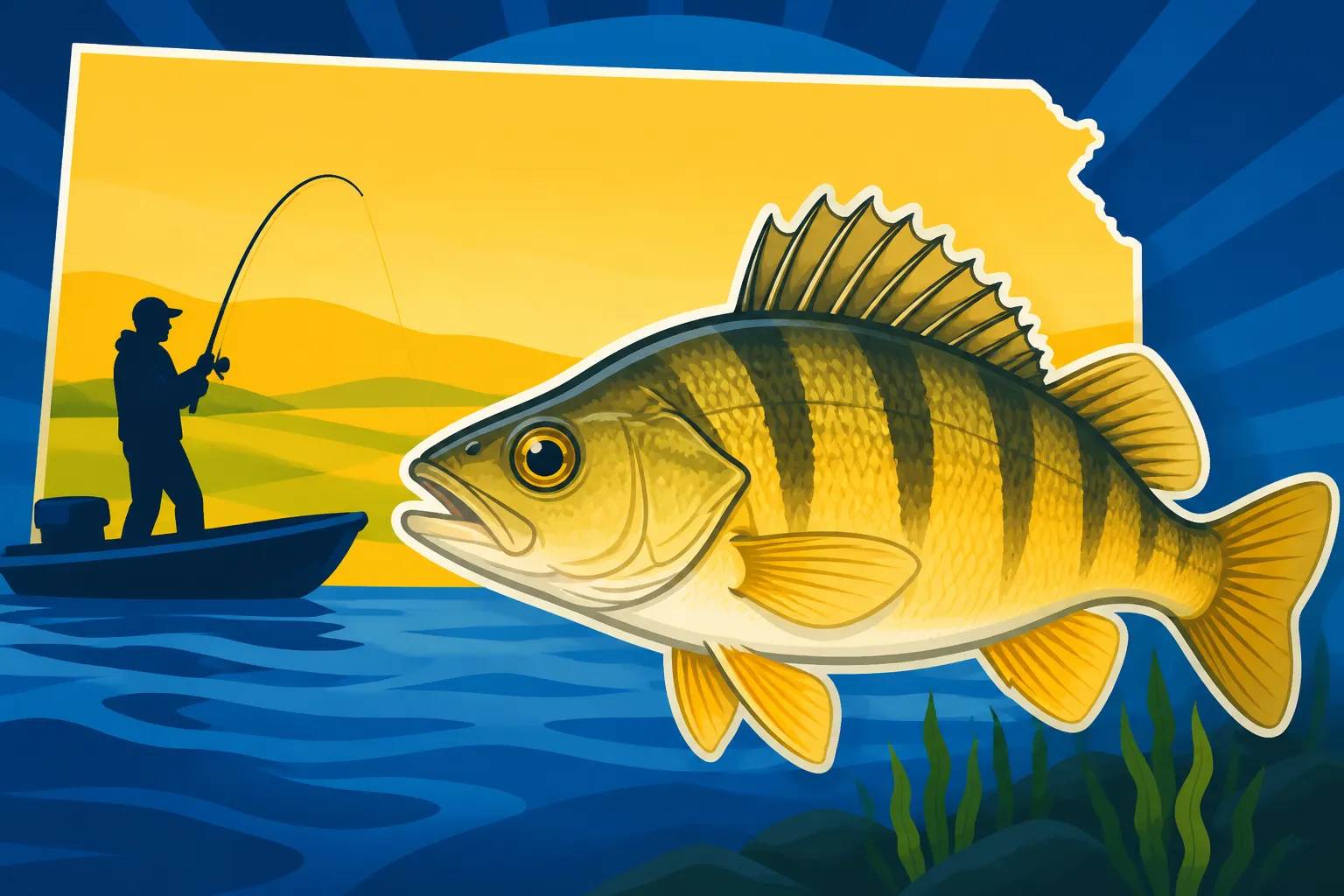
Yellow perch truly live up to their name. They typically have a vibrant golden-yellow to brassy green body color, often fading to a lighter, almost white belly. What really sets them apart are their prominent dark vertical bars, usually 6 to 8 of them, running down their sides. These bars are quite bold and can be seen clearly, even on smaller fish. Their body shape is somewhat elongated and compressed, not as stout as some sunfish, but not as torpedo-like as a walleye.
Look closely at their fins, too. The anterior dorsal fin, the one closer to the head, is spiny and generally dark with a distinct dark blotch at its rear base. The posterior dorsal fin, further back, is soft-rayed. Their caudal fin (tail) is typically forked, and their pelvic and anal fins often have a reddish-orange tint, especially during spawning season or in vibrant, healthy specimens. This coloration can be a dead giveaway, contrasting beautifully with their yellow body. Their mouths are relatively small compared to their body size, housing tiny teeth, unlike the more formidable dental work of a walleye or pike.
Distinguishing from Similar Species
In Kansas, the most common confusion for yellow perch often arises with juvenile walleye or sauger, which share some similarities. However, there are a few key differentiators. Walleye, for instance, typically have a much more elongated body, lack the distinct vertical bars of the perch, and have a prominent white tip on the lower lobe of their caudal fin, which perch lack. Walleye also have canine teeth that are much larger and more noticeable. Sauger also have a more slender body, and their dorsal fins are usually spotted, lacking the dark blotch found on the perch's spiny dorsal. Sauger vs Walleye Identification is a great resource if you're trying to tell those two apart.
Another fish sometimes confused with yellow perch, especially by anglers new to panfish, might be larger bluegill or other sunfish. However, sunfish tend to be much more circular or disc-shaped in profile, with a smaller mouth and different fin structures. Their coloring might be vibrant, but they won't have those distinct vertical bars that scream "yellow perch." With a little practice and a keen eye, you'll be able to spot a yellow perch from a lineup of common Kansas fish species every time.
Where Yellow Perch are Found in Kansas
While yellow perch aren't as widespread or abundant in Kansas as channel catfish or crappie, they do exist in certain water bodies and provide a unique and enjoyable fishing experience for those who seek them out. Understanding their preferred habitats is key to locating these tasty panfish.
Preferred Habitats and Water Conditions
Yellow perch are cool-water fish, and they generally prefer clear, cool lakes, ponds, and slow-moving rivers with moderate vegetation. They thrive in environments where they can find structure, such as submerged logs, weed beds, rock piles, or artificial fish attractors. These structures provide them with cover from predators and ambush points for their prey. You'll often find them congregating in schools, so where you catch one, there are likely more.
In Kansas, this often translates to deeper, cooler sections of certain reservoirs or well-managed private ponds and community lakes where water quality and habitat are ideal. They tend to avoid extremely turbid (muddy) waters, which are common in some Kansas rivers after heavy rains. They also appreciate a good amount of dissolved oxygen, which is usually higher in cooler, clearer waters. Keep an eye out for areas with emergent or submergent vegetation, as these are prime feeding and hiding spots for perch.
Specific Kansas Locations Known for Perch
While Kansas isn't typically celebrated as a "perch state" like some of our northern neighbors, there are definitely places where you can target them. Many of the state fishing lakes and some larger reservoirs occasionally report catches. For example, some of the smaller, clearer state fishing lakes, especially those managed for diverse panfish populations, can hold yellow perch. Don't be surprised if you stumble upon them in some of the deeper community lakes that have good structure and cooler water pockets.
It's always a good idea to check the latest stocking reports or local fishing forums for specific updates, as populations can fluctuate. Sometimes, anglers report good perch fishing in areas like Lake Perry or Clinton Lake, particularly in cooler months or deeper sections. Private ponds with good management can also be a hidden gem for perch. They aren't going to be in every ditch or farm pond, but if you do some research and find a clean, cool body of water with ample cover, you might just find a school of these striped beauties. You might also want to explore Kansas Community Fishing Lake Rules for insights into what to expect at these spots.
Yellow Perch Diet and Foraging Habits
Understanding what yellow perch eat and how they forage is crucial for any angler hoping to put a few in the cooler. These opportunistic feeders have a varied diet that changes as they grow and throughout the seasons.
What Perch Eat
Yellow perch are primarily carnivorous, feasting on a wide array of aquatic organisms. As juveniles, their diet mostly consists of zooplankton, tiny aquatic crustaceans, and insect larvae. They are active sight feeders, constantly patrolling for their next meal. As they mature and grow larger, their diet expands significantly. They'll readily consume larger insect larvae, nymphs, small minnows, the fry of other fish species, and even the eggs of other fish during spawning seasons.
Think about the tiny organisms found in weed beds and along drop-offs – that's often where perch are focusing their feeding efforts. Crayfish and small worms are also on their menu when available. This diverse diet is part of why they can be caught on such a variety of baits and lures, from tiny jigs to small minnows. Their schooling behavior also aids in foraging, as a group can more effectively herd and corner baitfish.
Seasonal Foraging Patterns
Just like most fish, yellow perch change their feeding habits with the seasons. In the spring, after the ice melts, they become very active, feeding heavily to regain energy after winter. They'll often be found in shallower, warming waters, sometimes even moving into very shallow areas to spawn. During this time, they are eager to hit baits.
As summer progresses and water temperatures rise, perch tend to move to deeper, cooler water. They'll still feed, but often during the cooler parts of the day, like early morning or late evening, or by staying deeper where temperatures are more comfortable. Look for them around deeper structures or thermoclines. In the fall, as waters cool down again, they'll often return to shallower to moderate depths, aggressively feeding to build up fat reserves for the winter. This can be one of the best times to target them.
Even in winter, under the ice, yellow perch remain active feeders. They'll school up and cruise submerged structures, often biting well throughout the day, especially on small jigs and live bait. Kansas Ice Fishing Guide offers excellent tips for targeting fish during those colder months, and many of those techniques apply beautifully to perch. Understanding these seasonal shifts helps you predict where to find them and what they'll be most interested in eating.
Fishing Techniques for Kansas Yellow Perch
While they might not be the biggest fish in the lake, yellow perch offer fantastic sport and make for delicious table fare. The good news is, you don't need super specialized gear to catch them. Simplicity and finesse are often the keys to success.
Recommended Baits and Lures
Yellow perch aren't typically finicky eaters, but they do have preferences. For live bait, small minnows are almost always a winner. Shiners or fathead minnows, especially when fished under a bobber or on a light jig head, are incredibly effective. Worms, particularly pieces of nightcrawlers or red wigglers, are also excellent choices. These natural baits appeal to their opportunistic feeding nature.
When it comes to artificial lures, think small and flashy. Tiny jigs, usually 1/32 to 1/8 ounce, tipped with a small plastic grub, a piece of a worm, or a wax worm, are incredibly effective. Colors like chartreuse, white, pink, or natural earth tones can all work well. Small spoons, like Kastmasters or Swedish Pimples, are also great, especially when jigged vertically in deeper water or through the ice. Micro crankbaits or spinnerbaits, no bigger than a couple of inches, can also entice aggressive perch. You can often find a wide variety of these smaller lures and baits on Amazon, making it easy to stock up for your next outing.
Best Fishing Methods
Light tackle is the name of the game for yellow perch. A light to ultra-light action spinning rod, perhaps 5 to 6 feet long, paired with a small spinning reel spooled with 4 to 6-pound test monofilament or fluorocarbon line, is perfect. This setup allows for sensitive feel, which is crucial for detecting their often subtle bites.
Jigging: This is arguably the most popular and effective method. Whether from a boat, shore, or through the ice, vertical jigging a small lure or bait near structure can produce consistent bites. Drop your offering to the bottom, reel up a foot or two, and impart a subtle jigging motion. Pay close attention to your line for any taps or slack.
Bobber Fishing: For shallower waters or when fishing with kids, a simple slip bobber rig is fantastic. Suspend a small hook (size 8-12) tipped with a minnow or worm a foot or two off the bottom, or just above weed beds. The bobber will signal even the lightest bites.
Trolling/Drifting: If you're covering a larger area from a boat, slow trolling or drifting small crankbaits or spinner rigs with live bait can also be effective, especially when trying to locate schools of perch along drop-offs or humps. Remember, where there's one, there are often many, so once you find them, anchor up and work that area thoroughly! Learning the basics of Kansas Fishing Techniques for Beginners will definitely give you a solid foundation for catching all sorts of panfish, including perch.
Yellow Perch as a Game Fish
While they may not get the same press as walleye or bass, yellow perch are an excellent game fish, offering a unique blend of challenge, accessibility, and delicious rewards. They provide a different kind of thrill for anglers of all skill levels.
Sporting Value
The sporting value of yellow perch, particularly on light tackle, is surprisingly high. When hooked, they put up a spirited fight for their size, often tugging and shaking their heads quite vigorously. Their schooling nature means that once you find a school, you can often enjoy fast and furious action, catching one after another. This makes them particularly popular for family fishing trips or for introducing new anglers to the sport. The excitement of consistent bites can be far more engaging than waiting hours for a single trophy fish.
For the more experienced angler, targeting larger perch or finding elusive schools in challenging conditions can also be a rewarding pursuit. They teach patience, observation, and the finesse required for panfish angling. Plus, the sheer joy of pulling up a brightly colored, barred fish from the depths is a simple pleasure that never gets old. Their availability in many community lakes also makes them an accessible target for those without boats, perfect for Best Bank Fishing Spots in Kansas.
Culinary Qualities and Preparation
If you've ever had freshwater fish and chips, chances are you've enjoyed yellow perch. They are widely regarded as one of the best-tasting freshwater fish, known for their firm, flaky, white meat with a mild, sweet flavor. Unlike some other fish, perch don't tend to have a strong "fishy" taste, making them appealing even to those who aren't usually big fans of seafood.
Preparing yellow perch is straightforward. Many anglers prefer to fillet them, which is easy once you get the hang of it, yielding boneless portions. They can be pan-fried, deep-fried, baked, or grilled. A simple pan-fry in butter with a light seasoning of salt, pepper, and perhaps some lemon, is all it takes to bring out their delicious flavor. For a classic fish fry, a light breading or batter and a quick dip in hot oil will give you crispy, golden fillets that are hard to beat. They are truly a treat from the water to the plate, and catching enough for a meal is often quite achievable!
Conservation and Management in Kansas
Even though yellow perch aren't a primary game fish species in Kansas, their presence contributes to the overall biodiversity and health of our aquatic ecosystems. Effective management ensures their populations remain stable and healthy for future generations of anglers.
Current Status of Perch Populations
In Kansas, yellow perch populations are generally stable in the water bodies where they are established, but they are not as widely distributed or as abundant as some other panfish species. They tend to thrive in specific, often cooler and clearer, environments. Many of these populations are sustained through natural reproduction, though some may benefit from occasional stocking efforts in managed waters, especially in community lakes or state fishing lakes designed for diverse angling opportunities.
Monitoring by the Kansas Department of Wildlife and Parks (KDWP) helps assess the health of these populations, looking at factors like age structure, growth rates, and overall abundance. While you won't typically see large, dedicated yellow perch stocking programs across the state, their presence is valued for creating varied fishing experiences. Understanding Kansas Fish Species Guide can give you a broader picture of how different fish are managed.
Role in the Ecosystem
Yellow perch play a vital role in the aquatic ecosystems where they reside. As juveniles, they are a significant food source for larger predatory fish, such as walleye, bass, and even larger catfish, contributing to the food web. As they grow, they become predators themselves, helping to control populations of aquatic insects, crustaceans, and smaller baitfish. This makes them an important link in the food chain, transferring energy from lower trophic levels to higher ones.
Their schooling behavior also influences the movement and feeding patterns of other species. For example, where you find a large school of perch, you might also find larger predators lurking nearby, capitalizing on the readily available food source. By maintaining healthy perch populations, Kansas fisheries managers contribute to balanced and robust aquatic environments, ensuring that both prey and predator species can thrive.
Table: Yellow Perch at a Glance
To give you a quick summary of what makes yellow perch special in Kansas, here's a handy table outlining some key facts.
| Feature | Description | Angler Implication |
|---|---|---|
| Coloration | Golden-yellow to brassy green, 6-8 distinct dark vertical bars. | Easy to identify; vibrant catch. |
| Fins | Spiny dorsal with dark blotch, reddish pelvic/anal fins often present. | Key identification feature, especially the dorsal blotch. |
| Size | Typically 6-10 inches, can reach up to 14 inches in ideal conditions. | Perfect panfish size; good for frying. |
| Preferred Habitat | Clear, cool lakes/ponds, slow rivers; moderate vegetation, structure. | Look for them in deeper sections, weed beds, or submerged timber. |
| Diet | Zooplankton (juveniles), insect larvae, minnows, fish eggs (adults). | Respond well to small live bait (minnows, worms) and small jigs/spoons. |
| Sporting Value | Excellent fight on light tackle; schooling behavior offers fast action. | Great for beginners, kids, and consistent catching enjoyment. |
| Culinary Quality | Firm, flaky, white meat; mild, sweet flavor; one of the best eating fish. | Highly sought after for delicious fillets, excellent for fish fries. |
| Kansas Presence | Found in specific clear, cool waters; not as widespread as other panfish. | Requires targeting specific lakes or ponds where populations are known. |
Knowing these facts will definitely help you on your next Kansas fishing adventure, especially if you're hoping to add some delicious yellow perch to your catch!
Disclaimer
This article is for general informational purposes only and does not constitute professional advice. Laws, prices and regulations vary by location and change over time. Consult a qualified professional for guidance on your specific situation.