Fish That Bite Best at Night in Kansas
Ever felt like the fish just shut down when the sun's high and the lake is buzzing with boats? It's a common frustration for many Kansas anglers, watching those prime daylight hours tick by with little to show for it. But what if I told you that some of the most exciting and productive fishing actually happens when most people are tucked in bed? This guide will dive deep into the fascinating world of night fishing in Kansas, revealing which fish species come alive after dark and how you can target them for an unforgettable angling adventure.
Why Night Fishing in Kansas is a Game Changer
There's a special kind of magic that settles over Kansas lakes and rivers as the sun dips below the horizon. The air cools, the sounds of daytime activity fade, and a whole new world of angling possibilities opens up. For many of us, the idea of fishing in the dark might seem a bit intimidating, but the rewards are often well worth embracing the nocturnal shift.
Escaping the Heat and Crowds
Let's be real, Kansas summers can be brutal. The scorching sun can make a full day on the water feel like an endurance test, and that's often when the fish are at their most sluggish. When you venture out at night, you trade the oppressive heat for cooler, more comfortable temperatures. This isn't just better for you; it's often better for the fish too, as many species become more active in cooler water. Plus, the crowds? They're practically nonexistent. You often get large stretches of water all to yourself, enjoying a tranquility that's rare during daylight hours. Imagine having your favorite cove on Clinton Lake all to yourself, just you, the stars, and the anticipation of a bite.
Another huge benefit is the reduction of boat traffic. During the day, particularly on popular spots like Milford Lake or Cheney Reservoir, you can feel like you're dodging ski boats and jet skis more than you're actually fishing. At night, that all changes. The water quiets down, boat wakes subside, and you can focus purely on your technique and the fish. It’s a completely different, often more peaceful, experience. This is one of the often-overlooked joys of a Kansas Night Fishing Guide.
Predator Advantage in the Dark
For many fish, darkness provides a crucial advantage. Just like certain terrestrial predators, many aquatic species use the cover of night to hunt more effectively. Low light conditions can make it harder for their prey to see them coming, turning the tables in favor of the predators. This means that larger, more wary fish that might be tucked away in deep cover during the day often move into shallower areas to feed under the cloak of night.
Think about it: the moon and stars, even on a cloudy night, don't penetrate the water with the same intensity as the midday sun. This reduced visibility can make fish feel more secure and less exposed to their own predators, giving them the confidence to roam and feed actively. This shift in behavior directly translates to better opportunities for anglers willing to adapt. It's not just about what you can see; it's about what the fish can't.
Top Kansas Fish Species That Excel at Night
While you might luck into almost any fish after dark, some species are truly night owls, becoming significantly more active and catchable once the sun sets. These are the fish that should be at the top of your list for a nocturnal angling adventure in Kansas.
Catfish: The Nighttime Dominators
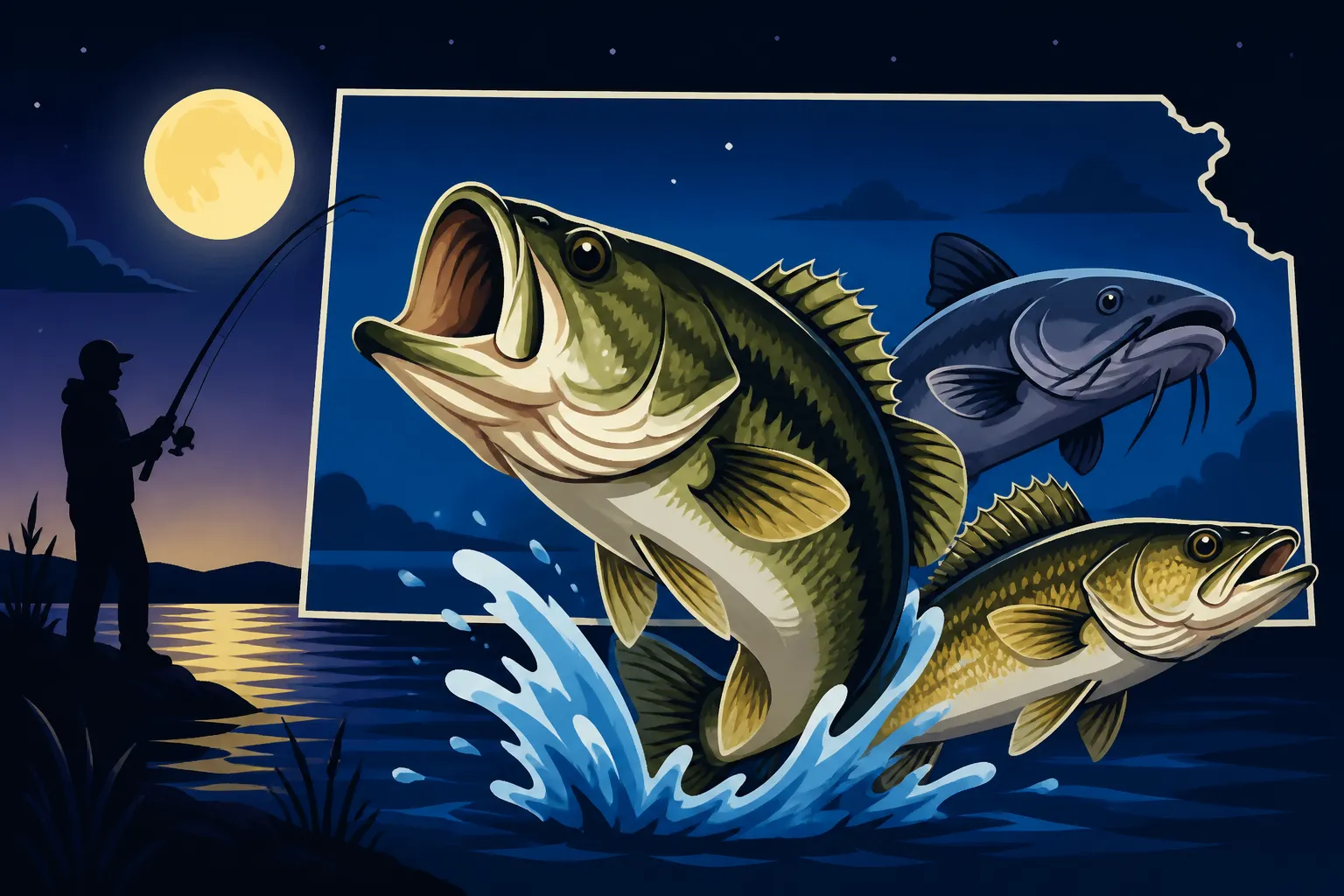
If there's one fish synonymous with night fishing in Kansas, it's the catfish. Channel catfish, blue catfish, and flathead catfish are all highly active after dark, using their incredibly sensitive barbels and keen sense of smell to locate food in low light conditions. They are scavengers and predators, and the night provides the perfect cover for them to patrol shallow flats, river bends, and submerged structure for an easy meal.
When you're targeting catfish at night, don't be afraid to go big with your bait. For channel cats, traditional stink baits, cut bait, or even a wad of nightcrawlers can be incredibly effective. For flatheads, live bait like bluegill or shad is often the ticket, as they prefer to ambush live prey. Blue cats are a bit of a mix, readily taking large chunks of cut bait. Remember to check the Kansas Catfish Daily Limits before you head out, as regulations can vary. Fishing the main river channels or deep holes in reservoirs like Tuttle Creek Lake are prime spots.
Walleye: Nocturnal Hunters of Structure
Walleye are notoriously light-sensitive, and while they can be caught during the day, they truly shine at night. These sharp-toothed predators often move from deeper, darker haunts into shallower feeding flats, rocky points, and submerged humps under the cover of darkness. Their large, light-gathering eyes give them a distinct advantage over their prey, making them incredibly efficient nocturnal hunters.
Targeting walleye at night often involves casting crankbaits, jerkbaits, or even jigs tipped with live minnows or plastic tails over shallow structure. Focus on areas where you know there's a good transition from deep to shallow water, or where rocky bottoms provide ambush points. The key is to present your lure slowly and methodically, allowing the walleye time to home in on it. Reservoirs like Wilson Lake and Glen Elder are classic Kansas walleye fisheries, and exploring their shallow rocky stretches after dark can lead to some incredible catches. Just be sure to be aware of the Kansas Walleye Minimum Length Limit of 21 Inches.
White Bass: Surface Splashing Under the Stars
White bass are energetic fighters, and while they can put on a spectacular show during their spring runs, they also offer exciting night fishing opportunities, especially in the warmer months. As the sun sets, schools of white bass often push baitfish to the surface, creating explosive feeding frenzies that can be heard long before they're seen. These surface activities are often a direct response to cooler water temperatures and the predatory advantage of low light.
Look for areas with good current or where baitfish congregate, such as below dams or in major creek arms on large reservoirs. Small crankbaits, spinnerbaits, or silver spoons retrieved quickly can mimic escaping baitfish and trigger aggressive strikes. Sometimes, simply finding a good drop-off or an underwater hump where they funnel baitfish can be the key. You'll often find them busting on the surface, making them easy to locate, even in the dark. Keep an eye on local reports for the Kansas White Bass Run Timing, but don't overlook their summer and fall night activity.
Crappie: Lured by Lights
Crappie, both white and black, are another species that can be incredibly active at night, especially when attracted by artificial lights. Anglers often use submersible or floating lights to draw in plankton, which in turn attracts baitfish, and then the crappie follow suit. It's a natural food chain that you can effectively set up in your favor. This method is popular in many Kansas lakes, providing consistent action when other techniques might be slow.
When setting up for night crappie, position your boat or find a dock where you can effectively deploy your lights. Wait patiently for the ecosystem to establish itself around your light. Small jigs, often tipped with a minnow or a soft plastic, fished vertically beneath the lights are highly effective. Pay attention to your depth, as crappie might suspend at various levels within the light column. Places like Hillsdale Lake or Melvern Lake offer excellent opportunities. Always be sure to check the Kansas Crappie Length and Bag Limits for the specific water body you are fishing.
Essential Gear and Techniques for Night Fishing Success
Night fishing isn't just daytime fishing after hours; it requires a slightly different approach and some specialized gear to ensure both safety and success. Being prepared for the dark will make your experience much more enjoyable and productive.
Lighting Your Way Safely
First and foremost, you need light for navigation, tying knots, and handling fish, but also for safety. A good headlamp is indispensable, allowing you to keep your hands free. Red light options on headlamps are excellent for preserving your night vision, which is crucial for seeing subtle line twitches or navigating without blinding yourself or your companions. For general area lighting on a boat or at a bank setup, a portable lantern can be incredibly helpful.
For attracting fish, as mentioned with crappie, submersible green LED lights are incredibly popular. These lights penetrate the water effectively, creating a glowing beacon that draws in the entire food chain. Always have backup light sources, whether it's extra batteries for your headlamp or a spare flashlight. Remember, the goal is to see what you're doing, but also to minimize light pollution that might spook fish or disrupt other anglers' experiences. You can find many great options on Amazon, and a Best Lantern Setup for Night Fishing can make a huge difference in comfort and visibility.
Baits and Lures for Night Owls
The baits and lures you choose for night fishing often reflect the enhanced senses of nocturnal predators. While some lures are effective day or night, certain characteristics make them stand out in the dark.
- Scented Baits: For catfish, scent is king. Think about using punch baits, dip baits, or fresh cut bait like shad or carp. These strong-smelling options create a scent trail that catfish can easily follow, even in pitch darkness. You can find a wide variety of excellent scented baits designed specifically for catfish on Amazon, ensuring you have the right aroma to attract those whisker fish. When targeting catfish, having the Best Bait for Kansas Catfish is often the difference maker.
- Vibrating and Rattling Lures: For walleye and white bass, lures that create vibration and sound can be highly effective. Crankbaits with internal rattles or spinnerbaits with thumping blades send out signals that fish can detect through their lateral lines. These auditory and tactile cues help fish pinpoint your lure even when visibility is minimal.
- Glow-in-the-Dark and UV Lures: Some anglers swear by glow-in-the-dark or UV-reactive lures for night fishing. While not always necessary, especially if you're fishing under an artificial light source, these can provide an extra visual attractant. Charging them with a strong light source before casting can give them a temporary glow that might entice a strike from a curious fish.
- Live Bait: For flathead catfish and sometimes walleye, live bait is often unparalleled. A lively bluegill or shad can't be beaten for attracting a predatory flathead. Ensure your live bait is healthy and active to be most effective.
Remember to keep your presentation slower at night. Fish often rely more on sound and smell, and a slower retrieve allows them more time to locate and commit to your bait.
Staying Safe and Prepared
Safety should always be your top priority when night fishing. Here are some key considerations:
- Know Your Location: Scout your fishing spot during the day to familiarize yourself with any hazards, like submerged rocks, drop-offs, or uneven terrain. If you're on a boat, have up-to-date charts or a reliable GPS unit.
- Life Jackets: If you're on a boat, everyone should wear a properly fitting life jacket. Even if you're a strong swimmer, an unexpected fall into dark water can be disorienting and dangerous.
- Communication: Let someone know where you're going and when you expect to return. Carry a fully charged cell phone.
- Weather Awareness: Check the forecast thoroughly before heading out. Night fishing in a thunderstorm or heavy wind is never a good idea.
- Insect Repellent: Kansas nights can bring out the mosquitoes and other biting insects. Don't forget bug spray!
- First Aid Kit: A basic first aid kit is essential for any fishing trip, but especially at night when medical help might be further away or harder to access quickly.
- Navigation Lights: If you're boating, ensure your boat's navigation lights are fully functional and properly displayed. Safety is paramount on the water, especially after dark.
Beyond these, simply using common sense, moving slowly and deliberately, and being aware of your surroundings will go a long way in ensuring a safe and enjoyable experience.
Best Locations for Kansas Night Fishing
Kansas boasts a fantastic array of water bodies, many of which offer exceptional night fishing opportunities. Knowing where to focus your efforts can significantly increase your chances of success.
Reservoirs and Large Lakes
Kansas's large reservoirs are prime territory for night fishing, especially for species like catfish, walleye, white bass, and crappie. These expansive waters provide the diverse habitat that these species seek after dark.
- Milford Lake: As the largest lake in Kansas, Milford offers vast opportunities. The Republican River arm and the many coves are excellent for catfish. Rocky points and humps on the main lake body are classic spots for walleye, especially near the dam. Check out our Milford Lake Fishing Guide for more specifics.
- Cheney Reservoir: Renowned for its walleye and wiper populations, Cheney can be fantastic at night. Target the extensive riprap areas and shallower flats for walleye. Wipers often follow baitfish into shallower areas.
- Wilson Lake: Known as one of Kansas's clearest lakes, Wilson offers incredible walleye and striped bass fishing. The clear water means fish are even more light-sensitive, making night fishing particularly productive. Focus on the many rocky bluffs and submerged timber.
- Tuttle Creek Lake: Famous for its robust catfish populations, Tuttle Creek is a nighttime haven for whisker fish. The river channels and flooded timber areas provide excellent structure for flatheads and blue cats.
- El Dorado Lake: With strong populations of bass, crappie, and catfish, El Dorado offers varied night fishing. Focus on submerged brush piles for crappie under lights, and the creek channels for catfish.
When fishing these reservoirs, pay attention to current regulations, as some areas may have specific rules regarding night access or boat operation. Also, be mindful of any Kansas State Park Fishing Permit Rules if you are accessing the lake through a state park.
River Systems
Kansas's major river systems, like the Kansas River, Republican River, and Arkansas River, are absolute goldmines for night-active species, particularly catfish. The constant flow and abundant food sources keep these fish on the prowl.
- Kansas River (Kaw River): This river is a national treasure for blue catfish and flatheads. Fishing deep holes, current seams, and around log jams at night can produce truly massive fish. The Kansas River Catfish Spots are numerous, especially near population centers like Lawrence and Manhattan.
- Republican River: During the white bass run, especially the White Bass River Run Timing in Kansas, night fishing can be phenomenal as these fish push upriver. Beyond the run, it's also a great catfish destination.
- Arkansas River: While fishing the Arkansas in Kansas can be more challenging due to varying water levels, when conditions are right, it offers excellent opportunities for channel and flathead catfish, particularly in the deeper scour holes and around snags.
When river fishing at night, extra caution is advised due to currents, hidden obstacles, and potentially slick banks. Always wear a life jacket and use proper lighting.
Community and State Fishing Lakes
Don't overlook the smaller community and state fishing lakes scattered across Kansas. These often provide easier access for bank anglers and can be incredibly productive for night crappie and catfish.
Many of these lakes are regularly stocked and often have accessible fishing piers, making them ideal for a relaxed night fishing outing. Deploying a submersible light off a pier can create an instant crappie hot spot. These lakes also tend to have good channel catfish populations that are very willing to bite after dark. They're often closer to home, meaning less travel time and more fishing time under the stars.
Embracing the night can open up a whole new dimension to your Kansas fishing experiences. With the right preparation, gear, and knowledge of which species thrive in the dark, you'll find that some of the best fishing action truly begins when the sun goes down.
Disclaimer
This article is for general informational purposes only and does not constitute professional advice. Laws, prices and regulations vary by location and change over time. Consult a qualified professional for guidance on your specific situation.