Depth Kansas Walleye Hold in Summer
Summer in Kansas can be a real joy for many, but for walleye anglers, it often brings a frustrating challenge: where did all the walleye go? After the spring spawn, as the scorching sun beats down and water temperatures soar, finding these elusive fish can feel like searching for a needle in a haystack. This guide is here to shed light on exactly that – the depths Kansas walleye hold in summer – and equip you with the knowledge to consistently put them in your boat or on the bank.
The Summer Struggle: Why Walleye Go Deep in Kansas
When summer arrives in Kansas, the lakes transform. What was once a shallow-water spring bite quickly shifts, and the walleye seem to vanish. But they haven't disappeared; they've simply adapted to the changing conditions, primarily by moving to deeper, more comfortable water. Understanding why they do this is the first step to finding them.
The Thermocline Effect: Water Temperatures and Oxygen
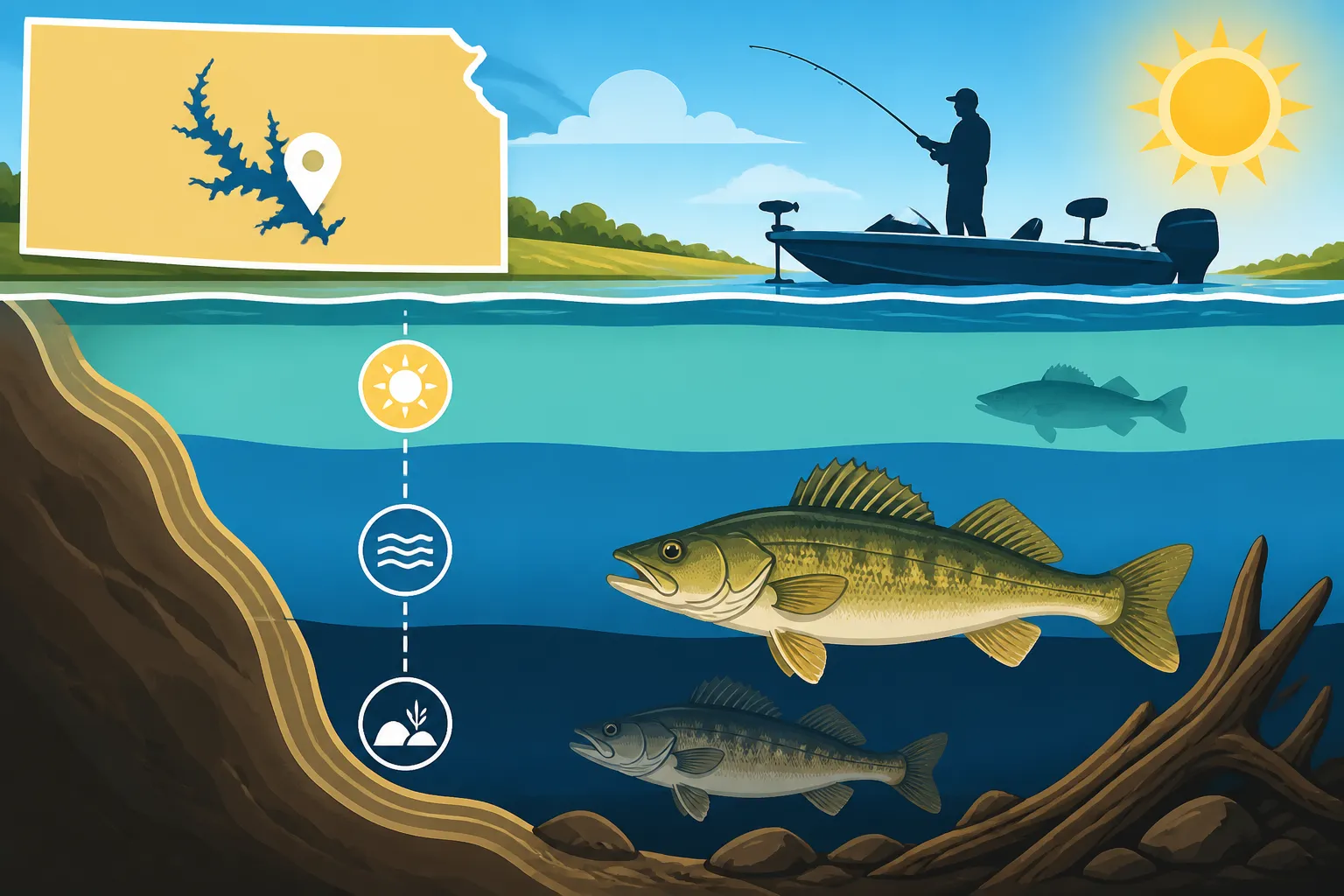
One of the most significant factors driving walleye deep in summer is thermal stratification. As the surface water heats up under the intense Kansas sun, it becomes less dense and stays on top, forming a warm layer. Beneath this, a distinct boundary develops called the thermocline, separating the warm surface water from the cooler, deeper water. Walleye, being a cool-water species, naturally seek out this more comfortable, cooler environment.
However, it's not just about temperature. The thermocline also plays a crucial role in oxygen distribution. Below this layer, especially in deeper lakes, oxygen levels can deplete significantly as organic matter decays and is not replenished by surface agitation. Walleye will seek the coolest water that still has sufficient oxygen to thrive. This often means they'll suspend right at or just above the thermocline, or in areas where cooler, oxygenated water is available, such as near river channels or deep springs. It's a delicate balance, and sometimes the "sweet spot" is surprisingly narrow.
Following the Food: Deep Forage Fish
Walleye are predators, and like any predator, they go where the food is. As surface waters warm, many of their primary forage species—like gizzard shad and various minnows—also seek refuge in deeper, cooler, and more oxygenated water. These baitfish will often congregate around the thermocline or over deep structure.
When you're trying to locate walleye, thinking like their prey is invaluable. If you can find schools of baitfish holding at a particular depth, especially near submerged humps, points, or creek channels, you've likely found a walleye buffet. These schools often appear as dense clouds on your fish finder, and where there's a cloud of bait, there's usually a predator or two nearby hoping for an easy meal. How to Locate Baitfish Schools in Kansas Lakes is a great resource if you want to dive deeper into this topic.
Light Sensitivity: Walleye's Natural Preference
Another key reason walleye descend into the depths during summer is their acute sensitivity to light. Walleye possess large eyes with a tapetum lucidum layer, which enhances their vision in low-light conditions. While this gives them a distinct advantage during dawn, dusk, and cloudy days, it also makes them highly uncomfortable in bright, direct sunlight.
During the peak hours of a sunny Kansas summer day, walleye will retreat to the darkest available cover. This could be deep water, thick submerged timber, the shadowy side of a steep drop-off, or even the underside of a boat dock. When the sun is high and bright, expect them to be at their deepest, or tucked tightly into heavy cover. Conversely, on heavily overcast days or during twilight hours, they might venture slightly shallower, but generally, summer walleye will still favor deeper, dimmer environments. Understanding this light sensitivity is crucial for determining not only depth but also the best time of day to target them. Best Time of Day to Catch Walleye can give you more specific insights here.
Pinpointing the Depths: Reading the Water and Your Electronics
Knowing why walleye go deep is one thing; actually finding them in the vastness of a Kansas reservoir is another. This is where a combination of understanding typical depth ranges, employing modern electronics, and recognizing key structural elements becomes paramount.
General Depth Ranges by Early vs. Late Summer
While walleye generally go deep in summer, their exact depth can fluctuate throughout the season. In early summer (think June), as the water is still stratifying and warming, you might find walleye holding in depths from about 15 to 25 feet. They're transitioning, perhaps still relating to some shallower breaks or points, but spending more time in the cooler zones. The bite can be aggressive as they feed heavily after the spawn.
As mid to late summer (July and August) settles in, with consistent high temperatures and stable stratification, walleye typically settle into their deeper summer patterns. You'll often find them in the 25 to 40-foot range, sometimes even deeper in very clear or very deep lakes. They might be suspended over open water at these depths, following baitfish, or hugging deep structure like humps and creek channels. It's worth noting that every lake is a little different; a shallower lake like Cheney Reservoir might have fish in the 15-30 foot range, while a deeper lake like Wilson Lake could see them comfortably sitting at 35-50 feet.
Decoding Your Fish Finder for Walleye Structure
Let's be honest, trying to find deep walleye without a quality fish finder is like trying to find a specific grain of sand on a beach with your eyes closed. It's nearly impossible. Your fish finder is your absolute best friend when chasing summer walleye. Look for arches that signify fish, but also pay close attention to bait balls—dense clusters of smaller fish that appear as clouds on your screen. Walleye will often be positioned just below or on the edges of these baitfish schools. If you're looking for a new one, you can find excellent options and deals on Amazon for models with great features.
Beyond fish and bait, your electronics are key for understanding the bottom. Look for defined drop-offs, submerged humps, creek channels, and rock piles. Many modern fish finders offer down imaging and side imaging, which provide photo-like views of the underwater world. These technologies are invaluable for pinpointing specific pieces of cover, like a lone timber pile or a subtle change in bottom composition, that walleye might be relating to. Taking the time to learn your unit and interpret what it's showing you will dramatically increase your success. For more help, check out Kansas Fish Finder Buying Guide.
Key Structural Elements Walleye Hold To
Walleye, even when deep, are almost always associated with some form of structure. They rarely just suspend aimlessly in the middle of nowhere. Here are the kinds of features you'll want to focus on:
- Drop-offs and Ledges: These are classic walleye magnets. As the bottom transitions from shallower to deeper water, walleye will often patrol these edges, ambushing baitfish moving between depths.
- Submerged Humps and Points: Any underwater hill or point that extends into deeper water provides an excellent ambush point and congregation area for walleye, especially if it has rock or gravel.
- Creek and River Channels: In many Kansas reservoirs, old creek or river channels run through the lakebed. These act as highways for fish, offering consistent depth and often attracting forage. Walleye will often be found along the edges of these channels.
- Rock Piles, Timber, and Brush Piles: These provide crucial cover and shade in deeper water. Walleye will tuck into these areas during bright conditions, emerging to feed when light levels are lower. Using your electronics to locate these hidden gems is critical.
- Subtle Current Areas: Even in reservoirs, there can be subtle currents, especially near dam faces, deeper river channels, or points that constrict water flow. Walleye love current breaks because they deliver food without requiring the fish to expend much energy. How to Fish a Drop-Off for Walleye dives deeper into how to tackle these essential structures.
Effective Techniques for Deep Kansas Walleye
Once you've located some promising deep water structure or suspended baitfish with your electronics, the next step is presenting your lure or bait effectively. Deep-water walleye fishing demands specific techniques to get your offering down to the strike zone and entice a bite.
Vertical Presentation: Jigging and Drop-Shotting
When walleye are concentrated in a specific spot, especially on a deep hump, rock pile, or suspended tightly over structure, vertical jigging and drop-shotting can be incredibly effective.
- Jigging: This involves using heavy jigging spoons or blade baits. You drop them straight down to the fish you see on your screen, then aggressively lift and drop, letting the bait flutter. The flash and vibration can trigger reaction strikes from even finicky walleye. Precision is key here; you want to be directly above the fish. This technique works best when you can hold your boat steady, either with a spot-lock trolling motor or by anchoring strategically.
- Drop-Shotting: For truly finicky or suspended walleye that are unwilling to chase, a drop-shot rig can be a game-changer. This rig places a small bait (live minnow, soft plastic minnow, or leech imitation) a foot or two above a weight on the bottom. It allows the bait to hover tantalizingly in the strike zone with minimal movement, perfect for convincing a hesitant walleye to bite. The key is using light line and feeling for those subtle taps.
Trolling for Deep-Diving Success
Trolling is an outstanding method for covering vast amounts of water and locating scattered walleye in deep Kansas reservoirs. It allows you to present baits at a consistent depth over long stretches of structure.
- Deep-Diving Crankbaits: There's a huge array of crankbaits designed to dive to specific depths. Knowing which lure dives to what depth at a given speed and line diameter is crucial. Experiment with different colors and patterns, and don't be afraid to try some of the brighter, more aggressive colors often found on Amazon that might trigger a bite in low light or stained water. Running several rods at different depths and with different lures can help you quickly ascertain the walleye's preference for that day.
- Bottom Bouncers and Crawler Harnesses: This classic walleye setup is incredibly effective. A bottom bouncer keeps your bait near the lakebed, while a spinner rig, often tipped with a live nightcrawler, provides attraction. You can adjust the weight of the bottom bouncer to match your trolling speed and depth. This rig excels when walleye are hugging the bottom along contour lines or subtle changes in depth.
- Planer Boards: If you're fishing clear water and want to spread your lines out, planer boards can be used with deep-diving crankbaits or bottom bouncers. This creates a wider trolling path, covering more water and often attracting fish that might be spooked by the boat. To master this technique, explore Trolling for Walleye on Kansas Reservoirs.
Live Bait Rigs for Suspended or Bottom-Hugging Walleye
Sometimes, nothing beats the natural appeal of live bait. For deep walleye, presenting live bait effectively can often turn a slow day into a successful one.
- Slip Bobber Rigs: While often associated with shallower fishing, a slip bobber can be used in deep water if you want to suspend a minnow or leech at a precise depth over a known piece of structure. The key is to use a heavy enough weight to get your bait down quickly and keep it there, and a bobber stop that allows you to easily adjust your fishing depth. This can be deadly when walleye are suspended over deeper brush or timber.
- Lindy Rigs (Live Bait Rigs): These rigs are designed to be slowly drifted or trolled, keeping a live minnow or nightcrawler just off the bottom. A long leader, small hook, and walking sinker allow the bait to move naturally. When a walleye takes the bait, you open the bail and let them run with it for a moment before setting the hook. This technique is fantastic for covering deep flats and main lake points where walleye might be cruising for a meal. For a deeper dive into bait options, check out Best Live Bait for Kansas Walleye.
Gearing Up for the Deep: Rods, Reels, and Electronics
Having the right gear makes a huge difference when you're targeting deep-water walleye. You need equipment that can handle heavier weights, detect subtle bites at depth, and help you find the fish in the first place.
Rod, Reel, and Line Selection
For deep-water trolling, a longer rod (7 to 8 feet) with a medium-heavy power and a moderate action is often preferred. The length helps with line management and spreading out multiple lines, while the moderate action absorbs the shock of strikes and helps keep fish pinned. For jigging or drop-shotting, a medium-light to medium power spinning rod, around 6'6" to 7 feet, with a fast action tip provides the sensitivity needed to feel light bites.
When it comes to reels, either a baitcasting reel (for trolling and heavier jigging) or a spinning reel (for lighter jigging and drop-shotting) will work, as long as it has a smooth drag system and sufficient line capacity.
Line choice is critical. Braided line, with its minimal stretch, offers superior sensitivity and strength for detecting those subtle bites in deep water. A good quality 10-20 lb test braid is common. However, because braid is highly visible, it's almost always paired with a 6-10 lb fluorocarbon leader. Fluorocarbon is nearly invisible underwater and provides a little stretch, acting as a shock absorber. For more detailed recommendations, refer to Best Rod and Reel Combo for Walleye.
The Indispensable Fish Finder
As mentioned, a high-quality fish finder is non-negotiable for deep summer walleye. Look for units that offer:
- High-Definition 2D Sonar: For clear arch identification.
- Down Imaging: Provides a picture-like view directly below your boat, great for seeing structure like timber or rock piles.
- Side Imaging: Scans areas to the left and right of your boat, incredibly useful for covering wide areas and finding hidden structure or suspended baitfish away from your immediate path.
- GPS and Mapping: Essential for marking waypoints where you find fish, recording successful troll paths, and navigating safely.
Brands available on Amazon offer a wide range of features to suit different budgets and fishing styles. Investing in a good unit and learning how to use it will be the best money you spend on deep-water walleye fishing. This investment pays dividends by eliminating guesswork and showing you exactly where the fish are holding. Kansas Fish Finder Buying Guide offers great advice on choosing the right unit.
Lure and Bait Arsenal for Deep Walleye
Your tackle box needs to be stocked for deep-water presentations. Don't show up with just shallow crankbaits and expect success.
- Deep-Diving Crankbaits: Carry a variety of brands and models that dive to different depths (20, 30, even 40+ feet). Colors should range from natural baitfish patterns (shad, perch) to brighter, more aggressive hues (firetiger, chartreuse) for stained water or low light.
- Jigging Spoons and Blade Baits: Have an assortment of weights (½ oz to 1 oz) and colors. Silver, gold, and white are always good starting points.
- Bottom Bouncers: Stock a range of weights from ¾ oz to 2 oz, allowing you to match the depth and current.
- Crawler Harnesses and Spinner Rigs: Pre-tied or components to tie your own, with various blade colors and sizes.
- Soft Plastics and Drop-Shot Baits: Small minnow or grub imitations, typically 2-4 inches, in natural colors.
- Live Bait: Always have a good supply of fresh nightcrawlers, and if possible, frisky minnows.
Having a diverse tackle selection, readily available from Amazon or local bait shops, allows you to adapt to the specific mood and location of the walleye on any given day. You'll want to review Best Lures for Kansas Walleye for more specific recommendations on baits to include.
Top Kansas Reservoirs for Deep Summer Walleye
Kansas boasts several incredible reservoirs that offer fantastic opportunities for targeting deep summer walleye. Each lake has its own nuances, but a common thread is deep water and abundant forage.
Milford Lake: A Walleye Haven
As the largest lake in Kansas, Milford Lake near Junction City is renowned for its excellent walleye fishery. During the summer months, walleye here often relocate to the main lake basin, especially around the dam face, significant main lake points, and the edges of the old Republican River channel. You'll typically find them holding anywhere from 20 to 40 feet deep, often suspended over the channel or relating to rocky humps and breaks.
Anglers often have success trolling deep-diving crankbaits or bottom bouncers along these contours. Vertical jigging can be effective near the dam or on specific humps you mark on your fish finder. Milford's expansive nature means you'll want to cover a lot of water to find active fish, but when you do, the rewards can be substantial. For more specifics on this excellent fishery, dive into Milford Lake Walleye Fishing.
Wilson Lake: Clear Water and Deep Walleye
Known as "Kansas's clearest lake," Wilson Lake, located near Russell, presents a unique challenge and reward for summer walleye anglers. The exceptionally clear water means walleye will often hold even deeper here to escape sunlight, frequently found in the 25 to 50+ foot range. They tend to relate to the abundant submerged timber, steep rock ledges, and deep humps that characterize this lake.
Trolling with deep-diving crankbaits that match the lake's abundant gizzard shad can be highly effective. Pay close attention to your electronics to pinpoint suspended fish over deep timber or bait balls. The clear water demands a stealthier approach and often a longer fluorocarbon leader. While challenging, Wilson can produce some truly impressive walleye, including potential trophy fish. If you're planning a trip, be sure to read Wilson Lake Fishing Guide.
Cheney Reservoir: Consistent Deep Bites
Cheney Reservoir, west of Wichita, is another excellent walleye destination. While not as deep as Milford or Wilson, its consistent productivity makes it a favorite. In summer, walleye on Cheney often move to offshore humps, old roadbeds, and the edges of the main river channel, which typically runs 15-30 feet deep. These subtle breaks can hold large numbers of fish.
Trolling is a very popular and successful method here, especially with bottom bouncers and spinner rigs or deep-diving crankbaits. The key is to find those subtle contours that walleye are using as feeding lanes. Because the water can sometimes be a bit more turbid than Wilson, brighter colored lures can sometimes shine. Don't overlook targeting suspended schools of baitfish, as walleye will often be nearby, ready to feed. Find more detailed strategies for this lake in Cheney Reservoir Walleye Fishing.
Summer Walleye Depth Insights Table
To summarize the general depth trends and techniques for finding Kansas walleye in the warmer months, here's a quick reference table. Keep in mind these are guidelines, and local conditions always play a role!
| Season Segment | Typical Depth Range (feet) | Key Structures | Effective Techniques | Primary Forage | Important Considerations |
|---|---|---|---|---|---|
| Early Summer | 15 – 25+ | Points, breaks, channel edges | Trolling crankbaits, bottom bouncers, vertical jigging | Shad, minnows, juvenile fish | Post-spawn aggression, transitioning deeper, less stratification |
| Mid-Late Summer | 25 – 40+ (some 50+) | Deep humps, channels, timber, ledges, dam faces | Deep trolling, vertical jigging, drop-shotting, live bait rigs | Shad, ciscoes, larger minnows | Thermocline is key, light sensitivity, oxygen levels below thermocline |
Conclusion
Finding walleye in the summer in Kansas might seem daunting when they vanish from their spring haunts, but it's a puzzle that's incredibly rewarding to solve. The key lies in understanding their deep-water migration – driven by temperature, light, and the presence of their forage. By diligently using your electronics to find those critical deep structures and bait concentrations, and then employing the right vertical or trolling techniques with appropriate gear, you can consistently put these delicious fish in your cooler. Embrace the challenge, learn the nuances of deep-water fishing, and you'll soon discover that Kansas summer walleye fishing offers some of the most exciting and productive angling opportunities of the year.
Disclaimer
This article is for general informational purposes only and does not constitute professional advice. Laws, prices and regulations vary by location and change over time. Consult a qualified professional for guidance on your specific situation.