Best Rods and Reels for Kansas Fishing
It's a common frustration, isn't it? You walk into a tackle shop or browse online, and you're immediately overwhelmed by the sheer number of fishing rods and reels out there. All the different lengths, actions, powers, gear ratios, and drag systems can make your head spin faster than a runaway spool of monofilament. But don't let that stop you from enjoying the incredible fishing opportunities here in Kansas! This comprehensive guide is designed to cut through the confusion and help you confidently choose the best rods and reels specifically suited for the diverse waters and beloved fish species across our great state.
Understanding the Basics of Rods and Reels
Before we dive into specific recommendations, let's untangle some of the fundamental concepts that define a rod and reel. Understanding these terms will empower you to make informed decisions, whether you're targeting a giant flathead catfish in the Kansas River or a feisty walleye at Milford Lake. It's about matching the tool to the task, and knowing your gear's basic characteristics is step one.
Rod Action and Power Explained
When you pick up a fishing rod, two of the most critical characteristics you'll encounter are its "action" and "power." These aren't just fancy marketing terms; they directly dictate how the rod performs when casting, fighting a fish, and even detecting a bite. Getting these right can be the difference between a successful outing and a day full of frustration.
Rod action refers to where on the blank the rod bends when pressure is applied. A "fast action" rod bends mainly in the tip section. This provides maximum sensitivity, allowing you to feel even the most subtle bites, and offers quick hook-sets, which is crucial for species like walleye or bass where a swift response can mean the difference. On the other hand, a "moderate action" rod bends through the top half or third of the blank. This offers more parabolic bend, which can be excellent for casting a wider variety of lures, absorbing the shock of a hard-fighting fish, and preventing hooks from tearing out. A "slow action" rod bends uniformly from tip to butt, often seen in older fiberglass rods or specialized fly-fishing applications, providing a very forgiving, almost whippy feel.
Rod power, sometimes called "weight," describes the lifting strength of the rod. This isn't about how much weight the rod holds before breaking, but rather how much force it takes to flex the entire blank. You'll typically see ratings like "ultra-light," "light," "medium," "medium-heavy," and "heavy." An ultra-light rod is designed for very small fish and light lines, offering maximum sport with panfish. A medium-heavy rod, conversely, is built to handle heavier lines, larger lures, and bigger, stronger fish. Matching the rod's power to the size of fish you expect to catch and the lures you'll be throwing is paramount to both performance and avoiding gear breakage. For example, trying to land a 30-pound blue catfish on an ultra-light crappie rod is a recipe for disaster and likely a broken rod!
Reel Types and Their Best Uses
Just as rods come in various forms, so do fishing reels, each with its own strengths and ideal applications. Understanding the differences between spinning, baitcasting, and spincast reels will help you pair the perfect complement to your chosen rod and fishing technique. Each type has a unique learning curve and specific advantages that make it suitable for particular scenarios on Kansas waters.
Spinning reels are arguably the most popular and versatile choice, especially for beginners. They're characterized by an open-faced spool that sits below the rod, and the line unwinds freely from the stationary spool during a cast. This design makes them very forgiving for casting lighter lures and baits, and they're less prone to backlashes compared to baitcasters. They excel in finesse situations, light tackle setups for crappie or trout, and can handle a wide range of species with varying sizes. Spinning reels are excellent for bank fishing, boat fishing, and are often the go-to for many Kansas anglers pursuing walleye, crappie, white bass, and even smaller channel catfish.
Baitcasting reels are typically mounted on top of the rod and feature a revolving spool that spins during the cast. These reels offer superior casting accuracy, power, and control, making them favored by experienced anglers targeting larger, harder-fighting fish like big bass, trophy walleye, or substantial catfish. They handle heavier lines and lures with ease and provide more direct contact with the fish, allowing for powerful hook-sets and more precise drag adjustments during a fight. However, baitcasters have a steeper learning curve due to the potential for "backlashes" (when the spool spins faster than the line peels off, creating a tangled mess). Once mastered, though, they are indispensable tools for certain techniques and species across Kansas.
Spincast reels are the most user-friendly option, often found on beginner setups. They feature a closed face with a cone-shaped cover, and the line is released by pressing a button and then casting. Their simplicity makes them excellent for children or those new to fishing, as they are very resistant to backlashes and require minimal technique to cast. While they lack the casting distance, accuracy, and power of spinning or baitcasting reels, they are perfectly adequate for casual fishing for panfish or small channel catfish in local ponds or community lakes. You'll often see these on starter kits from Bass Pro Shops or department stores.
The Importance of Balance and Comfort
It's easy to get caught up in the technical specs of rods and reels, but don't overlook something as fundamental as how the setup feels in your hands. A well-balanced and comfortable rod and reel combo isn't just about personal preference; it directly impacts your fishing performance, reduces fatigue, and enhances your overall enjoyment on the water. Think about how many casts you'll make and how long you'll hold that rod – comfort truly counts.
A perfectly balanced setup means that when you hold the rod just in front of the reel, it should sit level, or with a slight tip-heavy bias. If the rod feels too heavy in the tip, or too butt-heavy, it will constantly require conscious effort from your hand and wrist to keep it in position. This might not seem like a big deal for a few casts, but after hours of repetitive casting and retrieving, this imbalance leads to significant fatigue, muscle strain, and can even affect your casting accuracy and ability to detect subtle bites. Imagine jigging for crappie all day with a tip-heavy rod; your wrist will be screaming by lunchtime!
Beyond balance, consider the ergonomics of the reel seat, handle material, and overall weight. Does the reel seat fit comfortably in your hand, allowing you to grip the rod firmly without cramping? Are the cork or EVA foam grips appropriately sized for your hands and provide good traction even when wet? Lighter setups are generally preferred, especially for techniques that involve a lot of casting or holding the rod constantly, like finesse fishing for bass or feeling for walleye bites. When selecting gear, don't just look at the numbers; pick up the rod, attach a reel, and give it a few practice swings. Pay attention to how it feels, how it balances, and whether you can imagine holding it for hours on end. A comfortable setup allows you to focus on the fishing, not on your aching arm.
Best Rod and Reel Combos for Popular Kansas Species
Now that we've covered the basics, let's get down to the brass tacks: what gear do you actually need for the fish you'll encounter in Kansas? Our state boasts an incredible variety of angling opportunities, from panfish in farm ponds to trophy catfish in our large reservoirs. Each species often calls for a slightly different approach, and having the right rod and reel combo can significantly improve your success and enjoyment.
Walleye Rods and Reels
Walleye are a prized catch in Kansas, known for their elusive nature and delicious fillets. Anglers often spend countless hours chasing these finicky eaters, and having the right gear is absolutely essential for detecting their notoriously subtle bites and effectively landing them. A sensitive setup is paramount when targeting walleye, especially when they're feeding lightly.
For most walleye fishing in Kansas, a medium-light to medium power spinning rod with a fast action is the go-to choice. A length between 6'6" and 7' is very versatile, providing good casting distance while maintaining excellent control and sensitivity for jigging or trolling with lighter baits. The fast action allows you to feel those faint "thumps" or "ticks" that signify a walleye bite and ensures a quick, solid hook-set before they can spit the bait. Sensitivity is key; a graphite rod is usually preferred over fiberglass for its lighter weight and better feel. Pair this with a high-quality spinning reel in the 2500-3000 series size. This size offers a good balance of line capacity for 6-10 pound test monofilament or braided line, a smooth drag system to handle powerful runs, and a comfortable retrieve ratio. Whether you're vertical jigging blades or soft plastics over structure on Milford Lake or slow-trolling crankbaits on Cheney Reservoir, this setup provides the finesse and power needed. For more detailed strategies, check out our guide on Kansas Walleye Fishing Techniques.
When it comes to specific techniques, your rod choice might slightly vary. For casting crankbaits or snap-jigging heavier presentations, some anglers prefer a slightly longer (7'-7'6") medium-power, moderate-fast action rod. This extra length aids in casting distance and gives the bait more action on the retrieve. When trolling, especially with planer boards or heavier weights, dedicated trolling rods are often used. These are typically longer (8'-10'), have a more moderate action, and are designed to absorb shock from waves and fighting fish without losing the lure or breaking the line. These rods are often paired with baitcasting or line-counter reels to precisely manage line depth and distance, crucial for consistent trolling success.
Catfish Rods and Reels
Kansas is a mecca for catfish anglers, with abundant channel, blue, and flathead catfish populating our rivers and reservoirs. Catching these powerful fish often means dealing with heavy lines, bulky baits, and serious fighting power, so your gear needs to be robust and reliable. You're not typically looking for finesse here; you're looking for brute strength and durability.
For general channel catfish fishing, particularly from the bank or a boat, a medium-heavy power rod with a moderate-fast action, around 7 to 9 feet in length, is ideal. This combination offers enough backbone to cast heavy sinkers and baits, like cut bait or stink bait, across strong currents or into deep holes, while still having enough flex to absorb the thrashing head shakes of a powerful channel cat. A sturdy spinning reel in the 4000-6000 series is a good match, capable of holding 15-25 pound monofilament or braided line and providing a strong, smooth drag. This setup allows for long casts and the ability to control a decent-sized fish. You'll want to check out the Kansas Catfish Daily Limits before heading out.
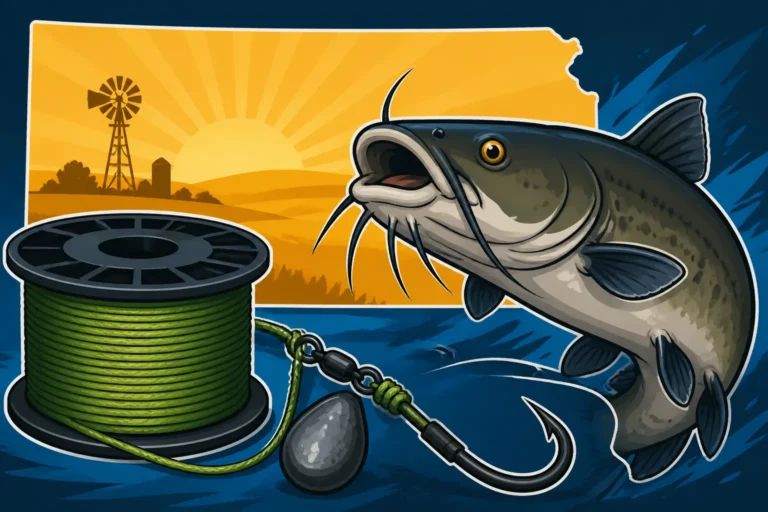
When you start targeting truly large blue catfish or flatheads—the kind that can weigh upwards of 50 pounds or more—you need to step up your gear considerably. For these giants, a heavy to extra-heavy power rod, often 8 to 10 feet long, is recommended. These rods are designed with immense lifting power to turn a big fish away from snags and structure. Paired with a robust baitcasting reel (often a conventional style reel) specifically designed for big game fishing, capable of holding 30-80 pound test braided line, you'll have the muscle needed. These reels feature exceptionally strong gears and drag systems, paramount for battling fish that can strip line off a lesser reel with ease. Whether you're setting out trotlines or jug fishing, or simply targeting monsters with heavy live bait, this heavy-duty gear is non-negotiable for serious trophy catfishing in Kansas. The specific needs for targeting species like the big flatheads are discussed in Kansas Flathead Catfish Daily Limit.
Crappie Rods and Reels
Crappie are a beloved panfish across Kansas, offering fast action and delicious table fare. Whether you're fishing for white crappie or black crappie, a sensitive, light setup is key to feeling their often delicate bites and enjoying the fight of these slab-sided beauties. Finesse is the name of the game when it comes to crappie.
For most crappie fishing applications, particularly when using jigs or minnows, a light to ultra-light power spinning rod with a fast action is perfect. Rods typically range from 5 to 7 feet, with longer rods (up to 9 or 10 feet) sometimes preferred for spider rigging or single-pole jigging from a boat, allowing anglers to reach further spots. The fast action tip is critical for detecting those subtle "taps" or "mushy" bites that crappie are famous for, and it allows for quick, precise hook-sets. Graphite rods are excellent for crappie due to their superior sensitivity and light weight. Kansas Crappie Fishing Techniques offers more depth on this.
Pair your crappie rod with a small spinning reel, typically in the 1000 to 2000 series size. These reels are lightweight and balance well with ultra-light rods. Spool them with 4-6 pound test monofilament or a very thin braided line with a fluorocarbon leader. A smooth drag is still important, even for smaller fish, to prevent tearing the hook out of their papery mouths. This light tackle combo provides maximum sensitivity and an incredibly sporting fight when you hook into a big Kansas crappie. For specialized techniques like dock shooting, shorter (4.5-5.5 foot) fast action rods are used to make quick, accurate casts into tight spaces. This type of precision gear ensures you can present your tiny jigs exactly where those crappie are hiding. If you’re looking for a great all-around starter, a good Best Rod and Reel Combo for Crappie will serve you well.
Bass Rods and Reels (Largemouth and Smallmouth)
Bass fishing is incredibly popular in Kansas, whether you're chasing largemouth in weed-choked ponds or smallmouth on rocky reservoir points. Bass are aggressive fighters, and their diverse habits demand a versatile array of rods and reels. You'll often find dedicated bass anglers carrying multiple setups, each tuned for a specific lure or technique.
For all-around largemouth bass fishing, a medium-heavy power rod with a fast action, typically 6'6" to 7'6" in length, is a workhorse. This rod can handle a wide range of lures, from spinnerbaits and Texas-rigged worms to jigs and topwater plugs. The fast action provides good sensitivity for detecting strikes and the power to drive hooks through a bass's tough mouth. Many anglers choose a baitcasting reel for this setup, as it offers the accuracy and control needed for pitching and flipping into cover, along with the torque to quickly pull a bass out of heavy vegetation. Spool it with 12-20 pound fluorocarbon or braided line. For deep-diving crankbaits or chatterbaits, some anglers prefer a moderate-fast action rod of similar power, as the more forgiving bend helps keep fish pinned on treble hooks. Our Kansas Largemouth Bass Facts delve deeper into these fish.
Smallmouth bass, often found in clearer, rocky reservoirs like Wilson Lake or Kanopolis Lake, tend to prefer slightly lighter tackle due to their often more open-water nature and smaller mouths. For general smallmouth fishing, a medium power, fast action spinning rod (6'6" to 7') paired with a 2500-3000 series spinning reel is excellent for casting finesse baits like tubes, grubs, or shaky heads. This setup offers the sensitivity to feel subtle bites on rock structure and the ability to cast lighter lures accurately. For throwing moving baits like small crankbaits or jerkbaits, a medium power, moderate-fast baitcasting setup might be preferred for casting distance and control. The key for smallmouth is often feeling the retrieve, so a sensitive graphite rod is always a good choice. Understanding Kansas Smallmouth Bass Facts will help you tailor your gear even further.
White Bass and Wiper Rods and Reels
White bass and wipers (hybrid striped bass) offer some of the most exciting, fast-paced action in Kansas, especially during their famous spring runs or summer schooling events. These fish are aggressive, hard-fighting, and can put a serious bend in your rod, demanding gear that can stand up to repeated battles.
For chasing schooling white bass, especially during the thrilling river runs, a medium power, fast action spinning rod in the 6'6" to 7' range is absolutely perfect. This setup offers ample casting distance to reach surfacing schools and the backbone needed to handle multiple hook-ups (which can happen with white bass!). The fast action allows for quick hook-sets and efficient jigging of spoons or small crankbaits, which are often irresistible to these active fish. Pair this rod with a reliable spinning reel in the 2500-3000 series, spooled with 8-12 pound monofilament or braided line. The larger arbor on these reels helps with longer casts, and a smooth, consistent drag is crucial for controlling their energetic runs. The Kansas White Bass Run Timing article gives you all the details on when and where to expect this incredible action.
Wipers, being a hybrid of white bass and striped bass, possess even more power and size, demanding slightly beefier tackle. For wipers, step up to a medium-heavy power, fast to moderate-fast action spinning or baitcasting rod, typically 7 to 7'6" long. This extra power allows you to cast heavier lures like large spoons, heavy jigs, or big crankbaits, and provides the leverage needed to turn a hard-charging wiper that's trying to get back into the open water. A 4000-5000 series spinning reel or a robust baitcasting reel is appropriate, capable of holding 15-25 pound braided line with a fluorocarbon leader. These fish hit hard and fight dirty, so your drag system needs to be flawless, and your rod needs to have the strength to absorb their head shakes and powerful surges. Having a quality Best Rod and Reel Combo for Walleye can often double as a good wiper setup if it's on the heavier side.
Specialty Gear for Specific Kansas Fishing Situations
While general-purpose rods and reels cover most angling scenarios, some unique Kansas fishing situations call for specialized equipment. These purpose-built tools are designed to optimize performance, enhance comfort, and increase your success rate in particular environments or for specific techniques. Don't feel pressured to buy them all at once, but as you grow as an angler, you might find these specialty items indispensable.
Ice Fishing Rods and Reels
When the Kansas lakes freeze over, a whole new world of angling opens up, requiring a distinct set of tools designed for the unique challenges of fishing through a hole in the ice. Traditional open-water rods and reels simply aren't suited for these conditions, so investing in dedicated ice fishing gear is essential if you plan to partake in the hard-water season.
Ice fishing rods are significantly shorter than open-water rods, typically ranging from 24 to 36 inches in length. This compact size is necessary for fishing in confined spaces, like inside an ice fishing shelter, and for maintaining control over your lure directly below you. Despite their short stature, ice rods come in various powers, from ultra-light for panfish (crappie, bluegill) to medium-heavy for walleye or northern pike. The action is usually fast or extra-fast in the tip, providing incredible sensitivity for detecting light bites in cold water, while still having enough backbone to fight a fish through a small hole. Many ice rods feature brightly colored tips to help visualize subtle strikes that might not be felt through heavy winter gloves. For a deeper dive into the cold-weather pursuit, check out our Kansas Ice Fishing Guide.
Pairing these specialized rods with small spinning reels (500-1000 series) is standard. These reels are designed to operate smoothly in freezing temperatures, often featuring larger reel handles and anti-reverse systems that function well even when ice starts to build up. Spool them with 2-6 pound test monofilament or specialized ice fishing braided line, which is designed to resist freezing. The drag system on an ice reel should be exceptionally smooth, as fighting a strong fish through a small hole requires careful line management to prevent breaking off. Having dedicated ice fishing gear not only makes the experience more comfortable but significantly increases your chances of success during the challenging winter months.
Kayak and Bank Fishing Setups
Kayak and bank fishing are two popular and accessible ways to enjoy Kansas waters, each presenting its own set of considerations when it comes to rod and reel selection. The environment you're fishing from profoundly impacts the optimal gear choice, prioritizing either maneuverability or casting distance and obstacle avoidance.
For kayak fishing, compactness and maneuverability are key. Longer rods can be cumbersome and difficult to manage in the tight confines of a kayak cockpit, especially when casting or fighting a fish. Therefore, shorter rods, typically 6' to 7' in length, are often preferred. These rods allow for easier casting without hitting the kayak, better control when paddling, and simpler storage within the boat. Medium-light to medium power spinning rods are highly versatile for kayak anglers, handling everything from crappie to bass and walleye. Kansas Kayak Fishing Gear Guide offers more specific advice. Durability is also a factor, as gear in a kayak is more prone to bumps and drops. A good quality, balanced spinning reel in the 2500-3000 size is a perfect match, offering a good balance of line capacity and smooth operation.
Bank fishing, on the other hand, often benefits from longer rods. When you're standing on shore, casting distance is frequently a critical factor, allowing you to reach deeper water, distant submerged structure, or passing schools of fish. Rods ranging from 7' to 10' (or even longer for specialized surf or catfishing applications) are common for bank anglers. These longer rods not only increase casting distance but also help keep your line above shoreline vegetation or obstacles, reducing snags. A medium to medium-heavy power spinning rod, paired with a 3000-5000 series reel, offers the versatility needed for various species and casting techniques from the bank. The larger reel provides ample line capacity and cranking power for retrieving fish from a distance. Investing in a Best Bank Fishing Gear Setup ensures you're prepared for whatever bites from the shore.
Trolling and Downrigging Gear
Trolling is a highly effective technique for covering large expanses of water and locating active fish, especially walleye, wipers, and sometimes even larger catfish in Kansas reservoirs. This method requires specialized rod and reel setups designed for the continuous drag of lures through the water and the powerful strikes that often occur at speed.
Trolling rods are typically longer and have a more moderate, parabolic action compared to casting rods. Lengths can range from 7 feet for smaller boats or specific presentations, up to 10 or 12 feet for covering wider spreads with multiple lines or using planer boards. The moderate action is crucial for several reasons: it helps the rod absorb the constant vibration of a lure running through the water, prevents hooks from tearing out of a fish's mouth during a hard strike at speed, and acts as a shock absorber when battling a heavy fish. The rod blank itself needs to be durable, often a blend of fiberglass and graphite, to withstand the stresses of constant trolling.
For reels, baitcasting reels are almost exclusively used for trolling, and often, line-counter models are preferred. Line-counter reels have a built-in mechanical counter that displays how much line you've let out, which is absolutely critical for replicating successful patterns and maintaining precise lure depths. A good quality line-counter reel should have a robust gear system and a smooth, powerful drag to handle the strong runs of fish like wipers or trophy walleye. These reels are spooled with appropriate pound-test monofilament or braided line, depending on the target species and trolling depth. Downrigging, a more advanced form of trolling using heavy weights to get lures to specific depths, requires even heavier-duty rods designed to handle the strain of the downrigger release clip and the intense fight of deep-water fish.
Choosing the Right Line and Terminal Tackle
Your rod and reel are the engine of your fishing system, but the line and terminal tackle are the critical links to the fish. Even the most expensive rod and reel combo will underperform if you're using the wrong line or improperly selected hooks, sinkers, and swivels. This part of your setup demands just as much attention as your primary gear, especially given the diverse fishing conditions in Kansas.
Understanding Fishing Line Types
Fishing line isn't just "string"; it's a finely engineered component with specific properties that affect everything from casting to bite detection and fighting power. There are three main types of fishing line, and understanding their pros and cons is essential for success on Kansas waters.
Monofilament (Mono) is the classic fishing line, made from a single strand of nylon. It's affordable, easy to tie knots with, and offers good stretch, which can act as a shock absorber, helping to prevent hooks from tearing out, especially with soft-mouthed fish like crappie. Its stretch can also be a disadvantage, as it reduces sensitivity and makes hook-sets less effective over long distances. Mono is fairly abrasion resistant and floats, making it suitable for topwater lures or when you want your bait to stay higher in the water column. It's a great all-around choice for many Kansas species, particularly for beginners or general panfishing.
Fluorocarbon (Fluoro) line is a newer option, known for its near-invisibility underwater due to its refractive index being similar to water. It has very low stretch, offering excellent sensitivity and strong hook-sets, similar to braided line. Fluoro is also highly abrasion resistant, making it a good choice for fishing around rocky structure or heavy cover. However, it's generally stiffer and more expensive than monofilament, and can be more challenging to tie certain knots. Because it sinks, fluorocarbon is often used as a leader material for braided line or as a main line when fishing jigs or plastics that need to get to the bottom quickly. It's a fantastic choice for wary walleye or finicky bass.
Braided line (Braid) is made by weaving multiple strands of synthetic fibers together, resulting in a line that is incredibly strong for its diameter, has virtually no stretch, and casts exceptionally far. Its zero-stretch characteristic provides unparalleled sensitivity, allowing you to feel every bump, bite, and change in bottom composition. However, braid is highly visible underwater, can be more expensive, and requires specific knot-tying techniques. Because of its visibility, it's almost always paired with a fluorocarbon or monofilament leader (often connected with a "double uni" or FG knot) to trick wary fish. Braid is a favorite among experienced Kansas anglers for catfish, bass, and wipers, where its strength and sensitivity are huge advantages.
Hooks, Sinkers, and Swivels
Once you've selected your line, the next critical components are your terminal tackle: hooks, sinkers, and swivels. These small, often overlooked items are the direct interface between your line and the fish, and choosing the right ones is just as important as your rod and reel. Mismatching these components can lead to lost fish, frustrating snags, or simply poor presentation.
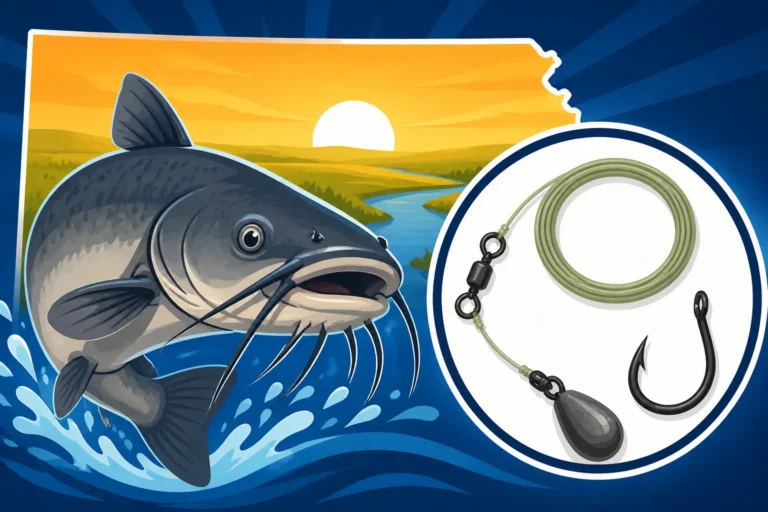
Hooks come in a bewildering array of shapes, sizes, and materials, each designed for a specific purpose. Hook size is typically inverse: a #1 hook is larger than a #8, but a 1/0 hook is smaller than a 3/0 (for larger hooks, the higher the number, the larger the hook). The size must match your bait and the mouth of the fish you're targeting. For example, tiny #8 or #10 hooks are perfect for minnows or small plastics for crappie, while massive 8/0 or 10/0 circle hooks are used for large cut bait targeting blue catfish. Types like J-hooks are versatile, while circle hooks are excellent for preventing gut-hooking, especially with catfish, as they are designed to set themselves in the corner of the fish's mouth. Treble hooks are common on many lures, increasing hook-up ratios but also potentially causing more damage to the fish. Always ensure your hooks are sharp; a dull hook is the quickest way to lose a fish.
Sinkers are used to add weight to your line, helping to cast further, get baits to the desired depth, or hold them in current. They come in many forms: split shot are small, pinch-on weights for light setups; bullet weights are sleek and designed to slide through weeds, often used with Texas rigs for bass; egg sinkers are ideal for slip-sinker rigs for catfish, allowing the line to run freely without the fish feeling the weight; and pyramid or disc sinkers are good for holding bottom in strong currents. The weight of the sinker should be matched to your rod's power and the current/depth you're fishing. Too light, and your bait won't get down; too heavy, and you'll lose sensitivity and potentially snag more often. Understanding your Kansas Fishing Regulations Explained will help ensure you're using legal weights and setups.
Swivels are small connectors used to prevent line twist, especially when using spinning lures or live baits that spin. Barrel swivels are simple and effective. Snap swivels include a clip that makes it easy to quickly change lures or leaders. When targeting toothy fish or using certain leaders, a ball-bearing swivel might be used, as they are exceptionally smooth and resistant to twisting. The size of the swivel should be as small as possible while still being strong enough for the fish you're targeting. Using too large a swivel can spook wary fish.
Lure and Bait Considerations
The choice of your lure or bait isn't just about what the fish will eat; it significantly influences the rod and reel setup you should use. The weight, size, and action of your chosen presentation dictate the characteristics your gear needs to possess for optimal performance. This synergy between lure and tackle is a hallmark of effective angling.
Heavier, bulkier lures, such as large crankbaits for walleye, big spinnerbaits for bass, or heavy spoons for wipers, require rods with more power (medium-heavy to heavy) and reels with strong gears (baitcasters or larger spinning reels). These setups provide the necessary backbone to cast the weight effectively, absorb the shock of a hard strike, and control the lure during retrieval. Trying to cast a heavy lure with an ultra-light crappie rod is not only inefficient but can easily break your rod. The line choice for these heavier lures is also typically stronger, often braided or heavier monofilament, to withstand the stresses of casting and fighting aggressive fish.
Conversely, light, finesse baits, such as tiny jigs for crappie, small tubes for smallmouth, or live minnows for walleye, demand a more sensitive and lighter setup. Ultra-light or light power rods with fast actions allow you to cast these delicate presentations without overpowering them and provide the sensitivity needed to detect the lightest of bites. Smaller spinning reels (1000-2500 series) with light monofilament or fluorocarbon line are perfectly matched for these applications. The finesse aspect of the gear ensures the lure acts naturally and that you can feel every subtle interaction with the fish. Even something as simple as a live worm for bluegill in a community pond benefits from a light, sensitive setup to make the experience more enjoyable and increase your hook-up ratio. A broad understanding of Kansas Fishing Gear Guide can help tie all these pieces together.
Maintenance and Care for Longevity
Your fishing rods and reels are investments, and like any valuable tool, they require regular care and maintenance to perform their best and last for years. Neglecting your gear can lead to premature wear, reduced performance, and ultimately, missed opportunities on the water. A little effort after each trip can go a long way in ensuring your tackle is always ready for your next Kansas adventure.
Cleaning and Lubricating Your Reels
Your fishing reel is a complex piece of machinery with many moving parts, all working in unison to cast, retrieve, and fight fish. Dirt, dust, sand, and even just prolonged use can cause wear and tear, reducing performance and potentially leading to failure. Regular cleaning and lubrication are paramount to keeping your reels running smoothly.
After each fishing trip, especially if you've been in dusty or muddy conditions (common around some Kansas lake shores), take a moment to wipe down your reel with a damp cloth to remove any external grime. Periodically, usually after several outings or at the end of a season, a more thorough cleaning is warranted. This involves carefully disassembling the reel (refer to your reel's manual or online tutorials if unsure), cleaning old grease and dirt from the gears, bearings, and drag washers, and then applying fresh, high-quality reel grease and oil. Pay particular attention to the drag system; keeping the drag washers clean and lightly greased (or specialized drag grease for carbon washers) ensures a smooth, consistent drag, which is vital for fighting powerful fish without snapping your line. A stiff or jerky drag can easily cost you a trophy fish.
The choice of lubricants is important. Always use products specifically designed for fishing reels; household oils and greases can damage components or attract more dirt. Apply a thin layer of grease to gears and other moving metal parts, and a small drop of oil to bearings and pivot points. Over-lubricating can be just as detrimental as under-lubricating, as it can attract debris. Proper lubrication not only extends the life of your reel but also maintains its buttery-smooth operation, making casting and retrieving a joy. If you're new to reel maintenance, consider watching some online videos or taking your reel to a reputable tackle shop for its first professional cleaning to learn the ropes.
Rod Inspection and Storage
While rods might seem less complex than reels, they are still susceptible to wear and tear and require proper inspection and storage to prevent damage and maintain their performance characteristics. A damaged rod can lead to broken lines, lost fish, or even shattered blanks.
Before and after each trip, take a few minutes to visually inspect your rod. Pay close attention to the guides – the small rings through which your line passes. Check for cracks, chips, or bends in the guide inserts (usually ceramic or stainless steel). A damaged guide can quickly fray or cut your fishing line, leading to unexpected break-offs. Also, check the guide wraps for any fraying or signs of loosening. Next, inspect the ferrules (the connection points on multi-piece rods) to ensure they fit snugly and aren't separating during casting. A loose ferrule can lead to a sloppy cast or even a snapped rod section. Finally, check the handle and reel seat for any cracks, looseness, or damage that might affect your grip or the security of your reel.
Proper storage is equally important. Never store your rods leaning against a wall in a way that puts continuous pressure on the blank, as this can cause warping over time. Store them in a cool, dry place, ideally in a rod rack or hanging vertically, to maintain their straightness. If your rod came with a rod sock or tube, use it for transport and storage to protect the guides and blank from accidental bumps and scrapes. When transporting rods in a vehicle, secure them to prevent them from bouncing around, which can easily damage guides or even snap the tips. Treat your rods with care, and they will reliably serve you for many seasons of Kansas fishing. For general legalities, it's always good to review Kansas Fishing Law Enforcement and Penalties to ensure you're aware of any rules regarding transport of fishing gear.
Troubleshooting Common Gear Issues
Even with the best care, fishing gear can encounter issues. Knowing how to troubleshoot common problems can save your day on the water and prevent minor annoyances from becoming major headaches. Being prepared for these small hiccups is part of being a well-rounded angler.
One of the most common and frustrating issues, especially for baitcasting reel users, is a backlash (also known as a "bird's nest"). This happens when the spool spins faster than the line is pulling off during a cast, creating a tangled mess. To prevent backlashes, ensure your reel's braking system and spool tension are properly adjusted for your lure weight and casting style. When one occurs, don't just yank! Gently pick at the loops with your thumb and pull line from the spool until the knot loosens. Patience is key here. For spinning reels, line twist can be an issue. If your line starts "coiling" excessively, it might be twisted. You can often fix this by letting out all your line behind a slow-moving boat (without a lure) to let it untwist, or by spooling your line correctly in the first place.
Sticky or inconsistent drag is another problem that can cost you a fish. If your drag feels jerky or grabs, the drag washers might be dirty, corroded, or damaged. A quick fix on the water might be to slightly loosen and re-tighten the drag knob to redistribute the washers. For a permanent solution, you'll need to disassemble the drag system, clean the washers, and apply fresh drag grease. Broken rod tips are unfortunately common, often due to accidental slamming in car doors or high-sticking a fish (lifting the rod too high, putting excessive pressure on the tip). While a full rod replacement might be needed, a broken tip can often be repaired by gluing on a new tip guide, making the rod slightly shorter but still functional. Having a small repair kit with spare tip guides and rod glue can be a lifesaver on an extended fishing trip.
Where to Buy Your Kansas Fishing Gear
So, you've got a good handle on what kind of rods and reels you need. The next question is, where do you actually go to get them? In Kansas, you have a variety of options, from local mom-and-pop bait shops to massive outdoor retailers and the vast world of online shopping. Each avenue offers unique advantages and disadvantages for anglers.
Local Tackle Shops vs. Big Box Retailers
When it comes to purchasing fishing gear, you generally have a choice between supporting your local tackle shop or heading to a larger big box retailer. Both have their merits, and your decision might depend on what you prioritize most: specialized advice, variety, or convenience.
Local tackle shops are often run by passionate, experienced anglers who live and breathe fishing in your specific area. They offer unparalleled expertise on local conditions, current hot spots, and the baits and techniques that are currently working on Kansas lakes and rivers. If you want to know what lure color is crushing walleye at Wilson Lake this week, or which specific creek is seeing a good white bass run, the folks at your local shop are your best resource. They often carry niche products tailored to regional fishing and can provide personalized recommendations that a general retailer might not. Plus, supporting local businesses strengthens your community and helps keep angling culture alive. The downside might be a smaller inventory and potentially slightly higher prices on some items due to lower purchasing power.
Big box retailers like those found in larger Kansas cities offer a massive selection of rods, reels, and tackle from virtually every major brand. Stores such as Bass Pro Shops can be an angler's paradise, allowing you to physically compare dozens of different models side-by-side, feel them in your hand, and often benefit from competitive pricing and frequent sales. They're convenient for one-stop shopping, allowing you to pick up everything from a new rod and reel to a cooler and camping supplies for your trip. While their staff might not always have the hyper-local expertise of a dedicated tackle shop, they often have knowledgeable associates who can help with general questions and product features. The sheer volume of options can sometimes be overwhelming, but the ability to see and handle a wide range of gear is a significant advantage.
Online Shopping Advantages and Disadvantages
In the age of digital commerce, buying fishing gear online has become incredibly popular, offering a different set of pros and cons compared to brick-and-mortar stores. For many Kansas anglers, online retailers are an indispensable part of their gear acquisition strategy.
The primary advantage of online shopping is the sheer convenience and almost limitless selection. From the comfort of your home, you can browse thousands of rods, reels, lines, and lures from countless brands, many of which might not be available at your local store. Websites like Amazon offer competitive pricing, often with free shipping options, and the ability to read customer reviews can provide valuable insights into a product's real-world performance. It's an excellent way to research gear, find specific models, or hunt for deals. This method is particularly useful for ordering specialty items or stocking up on common consumables like hooks and weights.
However, online shopping has its drawbacks. The biggest one for rods and reels is the inability to physically hold and feel the product before purchasing. As we discussed, balance, ergonomics, and how a rod and reel feel in your hand are incredibly important. It's difficult to assess the true action of a rod or the smoothness of a reel's retrieve without handling it. You also miss out on the immediate gratification of walking out with your new gear, and if you have questions, you're relying on online FAQs or customer service rather than a face-to-face conversation. Returns can also be a hassle. For high-value items like rods and reels, many anglers prefer to "try before they buy" at a physical store, even if they later purchase online.
Budgeting for Your Fishing Setup
Let's be real, fishing can get expensive, but it doesn't have to be. One of the biggest myths out there is that you need the most expensive, top-of-the-line gear to catch fish. That couldn't be further from the truth. Effective fishing is more about knowledge, skill, and persistence than about spending a fortune on tackle.
When budgeting for your fishing setup, think about what you actually need versus what would be nice to have. For beginners, a decent quality spinning combo (rod and reel matched together) in the medium-light to medium power range can be very versatile for a variety of Kansas species and often costs far less than buying components separately. Look for reputable brands that offer good value. You can find excellent performing entry-level and mid-range rods and reels that will serve you well for years. Don't fall into the trap of thinking that a higher price automatically means better performance; often, the law of diminishing returns applies after a certain price point.
Prioritize components that directly impact your fishing experience. A smooth, reliable drag system on your reel is crucial, as is a rod with decent sensitivity and backbone. You can often save money on less critical items or upgrade them later. For example, starting with a good quality monofilament line is more affordable than braided and can be perfectly effective. As you gain experience and identify specific types of fishing you enjoy most (e.g., dedicated walleye jigging or trophy catfishing), you can then invest in more specialized gear that precisely matches those techniques. Remember, the goal is to get out on the water and enjoy the experience, and you can absolutely do that with a well-chosen, budget-friendly setup. Consider the overall Total Cost of a Kansas Season of Licenses and Permits too, as that's also part of your fishing budget.
| Species | Rod Power | Rod Action | Rod Length (approx.) | Reel Type | Reel Size (Spinning) | Line Weight (lbs) | Key Feature |
|---|---|---|---|---|---|---|---|
| Walleye | Med-Light/Med | Fast | 6'6" – 7' | Spinning | 2500 – 3000 | 6-10 | Sensitivity, Light Bite |
| Catfish | Med-Heavy/Heavy | Mod-Fast | 7' – 9' (or longer) | Baitcasting/Spinning | 4000 – 6000+ | 15-40+ | Power, Durability, Line Cap. |
| Crappie | Light/Ultra-Light | Fast | 5' – 7' (or longer) | Spinning | 1000 – 2000 | 4-6 | Finesse, Bite Detection |
| Largemouth Bass | Med-Heavy | Fast | 6'6" – 7'6" | Baitcasting/Spinning | 3000 – 4000 | 10-20 | Versatility, Hook Set |
| Smallmouth Bass | Medium | Fast | 6'6" – 7' | Spinning/Baitcasting | 2500 – 3000 | 8-12 | Sensitivity, Casting |
| White Bass/Wiper | Medium/Med-Heavy | Fast | 6'6" – 7'6" | Spinning | 2500 – 4000 | 10-20 | Power, Fighting Action |
Choosing the right rod and reel for your Kansas fishing adventures doesn't have to be a bewildering experience. By understanding the fundamentals of rod action and power, the different types of reels, and how to match your gear to your target species and fishing style, you can assemble a tackle setup that instills confidence and maximizes your success on the water. Remember, good maintenance ensures your gear will serve you well for many seasons to come. So, equip yourself wisely, get out there, and enjoy the fantastic fishing opportunities our beautiful state has to offer!
Disclaimer
This article is for general informational purposes only and does not constitute professional advice. Laws, prices and regulations vary by location and change over time. Consult a qualified professional for guidance on your specific situation.