Best Slip Sinker Rig for Catfish
Ever found yourself sitting by the water, staring at a bobbing bobber or a still rod tip, wondering why those savvy Kansas catfish aren't taking your bait? It's a common frustration, especially when you know the fish are there but just aren't committing. Often, the issue isn't the bait itself, but the way it's presented. This comprehensive guide is dedicated to mastering the slip sinker rig, a time-tested technique that can dramatically increase your catfish hook-ups by offering a much more natural, undetectable presentation to even the wariest of whiskers across Kansas's diverse waters.
The Undeniable Advantage of the Slip Sinker Rig for Kansas Catfish
When you're chasing channel cats, blues, or flatheads in the Sunflower State, you quickly learn that these fish, especially the bigger, older ones, aren't always aggressive biters. They can be incredibly wary, inspecting bait before deciding to commit. This is where the slip sinker rig truly shines, offering an advantage that fixed weight setups simply can't match.
Why "Slip" Makes All the Difference
Imagine a wary blue catfish, cruising the bottom of the Kansas River near Topeka, detecting the scent of your fresh cut bait. It approaches cautiously, mouths the bait, and then, if it feels the resistance of a heavy, fixed sinker, it often drops the offering instantly. That's a lost bite, and it happens more often than most anglers realize.
The "slip" in a slip sinker rig means the line can freely pass through the sinker. When a catfish picks up your bait, it feels virtually no resistance from the weight of the sinker. The line simply slides through, giving the fish the illusion that it's picked up a natural, unweighted morsel. This allows the fish to fully ingest the bait and swim away a short distance before it ever feels the weight. This crucial delay gives you, the angler, precious extra seconds to set the hook firmly, transforming those subtle nibbles into solid hook-ups. This natural presentation is especially vital in clearer waters or highly pressured spots like urban community lakes where fish have become accustomed to artificial presentations.
Perfect for Kansas' Diverse Catfish Habitats
Kansas offers an incredible variety of catfish habitats, from the strong currents of major rivers like the Kansas River and its tributaries, to the vast open waters and subtle structures of reservoirs like Milford Lake and Tuttle Creek, and even the smaller, more intimate state fishing lakes and farm ponds. The beauty of the slip sinker rig is its adaptability to all these scenarios.
In a river current, a fixed sinker rig can get buffeted around, making your bait look unnatural or even snagging it prematurely. A slip sinker, however, allows the bait to drift more naturally with the current, mimicking food that's been dislodged and is floating downstream. The sinker holds bottom, but the bait itself moves, creating an irresistible target for catfish waiting in ambush. On the vast plains reservoirs, where catfish might be cruising subtle humps, drop-offs, or creek channels, the slip sinker allows you to cast to a specific spot, let your weight settle, and then permit your bait to lie naturally on the bottom, or even move slightly with any subtle underwater currents, without dragging the heavy sinker along. This versatility makes it a go-to rig for almost any catfish scenario you'll encounter in Kansas. Many of these techniques are also excellent ways to increase your success when learning Kansas Catfish Fishing Techniques.
Essential Components for Your Catfish Slip Sinker Rig
Building a reliable slip sinker rig for catfish isn't rocket science, but selecting the right components makes a world of difference. Each piece plays a critical role in the rig's effectiveness and your overall success.
Choosing the Right Sinker
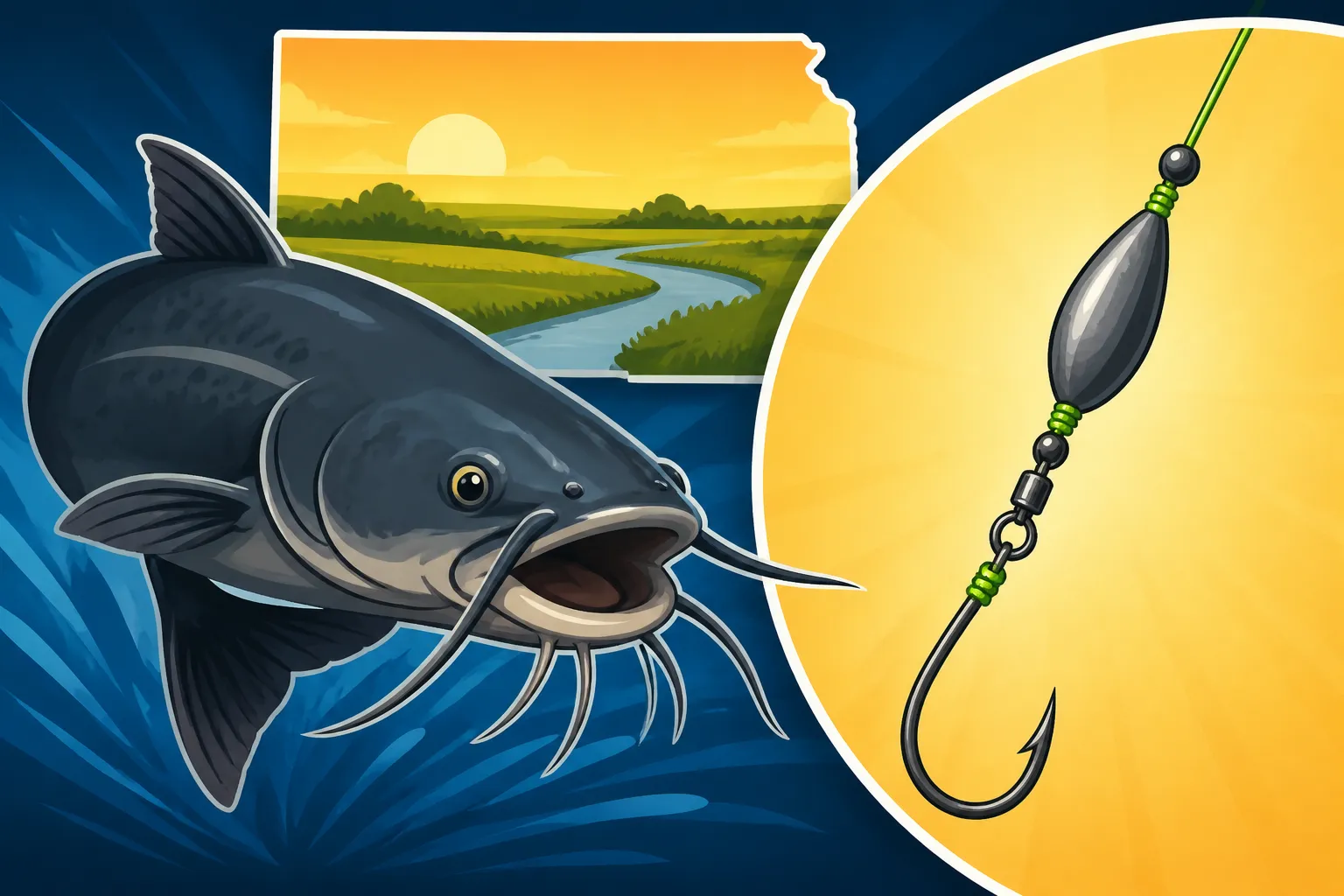
The sinker is the workhorse of your rig, responsible for getting your bait down to where the catfish are and keeping it there. The most common choice for a slip sinker rig is an egg sinker or a bullet sinker due to their smooth, rounded shapes that allow the line to slide through easily and minimize snags. However, there are other options depending on the conditions.
- Egg Sinkers: These are by far the most popular choice for slip rigs. Their rounded, sometimes slightly elongated shape, allows them to roll or slide over rocks and debris on the bottom, reducing hang-ups. They're excellent for both still water and moderate current. You can find a good selection of these at most reputable fishing tackle stores or online retailers like Bass Pro Shops or Amazon.
- Bullet Sinkers: Often associated with bass fishing, bullet sinkers can also be effective for catfish, particularly in lighter cover or when you need a more streamlined profile for casting distance. Their tapered shape cuts through water easily.
- No-Roll or Flat Sinkers: If you're fishing in strong current, like the main channel of the Kansas River or below a dam, an egg sinker might roll too much, moving your bait out of the strike zone. In these situations, a no-roll or flat-sided sinker is a better choice. While they don't "slip" quite as freely as an egg sinker, they'll stay put better, ensuring your bait remains in place. For these, you might use a larger bead to facilitate easier sliding if the sinker's eye isn't perfectly smooth.
- Weight: The weight of your sinker depends entirely on the current and depth. In calm ponds or shallow areas, a 1/2 oz to 1 oz sinker might be plenty. In strong river currents or deep reservoir channels, you might need 2 oz, 3 oz, or even heavier sinkers to hold bottom effectively. It's always a good idea to carry a variety of weights.
Selecting Your Hook and Leader
The hook is your direct connection to the fish, and the leader provides a bit of stealth and protection.
- Hooks: For catfish, circle hooks are highly recommended. When a fish takes the bait and swims away, the circle hook is designed to roll into the corner of its mouth, resulting in fewer gut-hooked fish and making catch-and-release much easier. Sizes typically range from 2/0 to 8/0, depending on the size of the bait and the target catfish species. For channel cats, 4/0 to 6/0 are common, while for big blue cats, 7/0 or 8/0 might be more appropriate. If you prefer a more traditional hook, a J-hook (kahle or octopus style) in similar sizes can work, but requires a more assertive hook set and carries a higher risk of gut-hooking. Knowing Best Hook Size for Channel Catfish is crucial for effective rigging.
- Leader Material: A leader is a separate piece of line tied to your main line via a swivel, with the hook at the other end. It offers several benefits:
- Stealth: You can use a lighter, less visible leader material (like fluorocarbon) than your main line.
- Abrasion Resistance: Catfish have rough mouths and often feed around structure. A heavier monofilament or fluorocarbon leader can withstand this abuse better than your main line.
- Breakaway Point: If you get snagged, often only the leader and hook will break off, saving your main line, sinker, and swivel.
- Length: Leaders typically range from 12 inches to 36 inches. Shorter leaders are good for keeping bait tight to the bottom in current; longer leaders allow for more natural bait movement in calm water.
- Leader Strength: Match your leader strength to your main line and target species. For general channel cat fishing, 15-30 lb test is common. For trophy blue or flathead cats, you might step up to 40-60 lb test.
The Critical Role of the Swivel and Bead
These two small components are often overlooked but are absolutely essential for the proper function of a slip sinker rig.
- Plastic Bead: This tiny but mighty component goes between your slip sinker and your barrel swivel. Its primary job is to protect the knot connecting your main line to the swivel from the constant banging and abrasion of the sinker. Without it, your knot would quickly weaken and fail, costing you a fish. Choose a durable plastic or glass bead that's large enough not to pass through the sinker's hole.
- Barrel Swivel: The swivel serves two vital purposes:
- Line Twist Prevention: It prevents line twist, especially important when using cut baits or fishing in current.
- Sinker Stop: It acts as a stop for your slip sinker, preventing it from sliding all the way down to your hook. This is what defines the "slip" action, allowing the fish to move off with the bait before feeling resistance. Choose a high-quality, strong barrel swivel appropriate for the strength of your line and the size of fish you're targeting.
Step-by-Step Assembly of Your Catfish Slip Sinker Rig
Assembling a slip sinker rig is straightforward once you know the steps. Doing it correctly ensures maximum effectiveness and durability. Let's walk through it.
Rigging Your Main Line
This is where it all begins. Your main line is the fishing line coming directly from your reel.
- Thread the Sinker: Take your main line and thread it through the hole in your chosen slip sinker (egg, bullet, or no-roll). Make sure it slides freely. You want the line to pass through without any friction or sticking.
- Add the Bead: After the sinker is on your line, slide a small plastic or glass bead onto the main line. This bead will sit between the sinker and the swivel, acting as a buffer and protecting your knot. It's a small detail, but a crucial one that prevents your sinker from pounding against and weakening the knot during casts and fights.
Attaching the Swivel and Leader
Now we connect the heart of the rig.
- Tie on the Swivel: Take the tag end of your main line (the end that has the sinker and bead on it) and tie it to one eye of your barrel swivel. A strong, reliable knot is essential here. The Palomar knot is an excellent choice for its strength and ease of tying. An improved clinch knot or uni knot are also good options if you're comfortable with them. Ensure the knot is tightened down securely and trim any excess tag line.
- Tie on the Leader: Now, take your pre-cut leader material (remember, 12-36 inches of monofilament or fluorocarbon). Tie one end of this leader to the other eye of the barrel swivel. Again, use a strong knot like the Palomar or improved clinch. It's often helpful to tie a knot that's slightly weaker than your main line knot, so if you do get snagged, you might only lose your hook and leader, not your whole rig.
Adding the Hook and Bait
The final step gets your bait ready for action.
- Attach the Hook: To the free end of your leader, tie on your chosen catfish hook. Once again, a strong, reliable knot is key. For circle hooks, ensure the knot allows the hook to pivot freely.
- Bait Up: This is where the magic happens! Properly baiting your hook is just as important as the rig itself.
- Cut Bait: If using fresh cut bait (like shad, sunfish, or carp), thread the hook through the meatier part of the bait. Ensure the hook point is exposed for good penetration. You can often make multiple passes to secure it well, especially with softer baits.
- Stink Bait/Prepared Baits: For dough baits or stink baits, use a treble hook or a special bait holder hook with a spring. You want to mold the bait around the hook so it stays on during the cast and in the water.
- Worms/Nightcrawlers: Thread multiple worms onto the hook, leaving some wiggling ends exposed to entice the fish.
- For more specific recommendations, check out our guide on Best Bait for Kansas Catfish.
Fishing Smarter with Your Slip Sinker Rig in Kansas
Now that your rig is perfectly assembled, it's time to put it to work. Fishing effectively with a slip sinker rig goes beyond just casting it out; it involves understanding presentation, detecting subtle bites, and selecting the right spots.
Optimal Locations and Presentation
Catfish are ambush predators and scavengers, so placing your bait in their feeding lanes or near their hiding spots is paramount.
- River Fishing: On the Kansas River or other flowing waterways, target current seams, eddies, deep holes, and the downstream side of logjams or wing dams. Cast your slip sinker rig upstream of your target area and let the current carry your bait naturally into the zone. The sinker will hold bottom, while your bait subtly drifts just above, appearing like an easy meal. This is particularly effective for Kansas River Catfish Spots. For example, below the Bowersock Dam near Lawrence, finding a current break and letting your bait sit can be incredibly productive for big blue cats.
- Reservoir Fishing: In large reservoirs like Clinton Lake or El Dorado Lake, focus on submerged structure. Look for old creek channels, humps, points, and sudden drop-offs. Use your fish finder to locate these areas. Cast your rig out, let the sinker settle to the bottom, then reel in any slack until your line is taut. The beauty here is that your bait will lie naturally on the bottom, or if you have a longer leader, it might waft slightly with subsurface currents, mimicking a piece of food that has settled.
- Pond and Lake Fishing: Even in smaller state fishing lakes or farm ponds, slip sinker rigs excel. Target deeper pockets, areas near submerged brush piles, or even around docks and bridge pilings. The rig allows you to present bait subtly without spooking fish in shallower or clearer water.
Detecting Those Subtle Catfish Bites
This is where many anglers lose fish. Because the slip sinker allows the fish to take the bait without immediate resistance, the bite can sometimes be very subtle at first.
- Rod Selection: Using a medium-heavy to heavy action rod with a sensitive tip is ideal. The stout backbone provides the power to fight big catfish, while the sensitive tip helps you detect those initial taps.
- Watching Your Rod Tip: With your rod in a sturdy holder (especially for bank fishing) and your line moderately tight, watch the rod tip carefully. A catfish bite might start as a series of gentle taps or wiggles as the fish mouths the bait. Don't set the hook on these initial nibbles. Wait for a more sustained pull, a steady bend in the rod, or the line starting to peel off your reel. This indicates the fish has fully committed to the bait and is swimming away.
- Patience is Key: It takes practice to distinguish between a fish just "testing" the bait and a genuine take. Resist the urge to yank the rod at the first twitch. Let the fish "eat" the bait. When you feel a strong, continuous pull, or the rod tip slams down, then it's time to set the hook with a strong, sweeping motion.
Pairing with the Right Bait
While the rig is important, the bait is what gets the fish interested. A slip sinker rig works wonderfully with almost any common catfish bait.
- Cut Bait: Fresh shad, carp, sunfish, or even skipjack herring are phenomenal choices for all three major Kansas catfish species. The scent trail they put out in the water is irresistible. Cut them into steaks or strips, ensuring the hook is well-exposed.
- Prepared Baits (Stink Baits/Dough Baits): These commercially available baits are highly effective, especially for channel catfish. They're designed to release a strong scent and often come in convenient tubs. Bass Pro Shops and Amazon offer a wide range of these.
- Live Bait: Though less common with slip sinker rigs, live sunfish or small perch can be devastating for flathead catfish. Rig them through the back or lips to keep them alive and struggling on the bottom.
- Worms: Nightcrawlers, redworms, or even chicken livers are fantastic for channel cats and smaller blue cats, especially in ponds or slower-moving waters. Pile them on the hook to create a tempting cluster. Remember, always check Kansas Fishing Regulations Explained for any bait restrictions in specific bodies of water.
A Quick Note on Line and Gear
For catfish, especially the bigger ones in Kansas reservoirs like Milford Lake or Tuttle Creek, you'll want a stout line. Best Line Weight for Kansas Catfish generally means 15-30 lb monofilament or fluorocarbon as a main line, or even braided line of similar strength. Braided line offers superior sensitivity and strength for its diameter, but its lack of stretch can make hook sets too aggressive for circle hooks if you're not careful. Many anglers will pair braided main line with a monofilament or fluorocarbon leader for a good balance of sensitivity and forgiveness. Also, don't forget your Kansas Fishing License Guide before heading out!
Comparing Sinker Types for Catfish Rigs
Understanding which sinker to use can significantly impact your success, especially when adapting to different conditions in Kansas waters.
| Sinker Type | Best Use Case | Advantages | Disadvantages | Common Weights (oz) |
|---|---|---|---|---|
| Egg Sinker | Still water, moderate current, rocky bottoms | Rolls over snags, less resistance for fish, versatile | Can roll too much in strong current | 0.5 – 4 (sometimes heavier) |
| Bullet Sinker | Light cover, casting distance, clear water | Streamlined, less visible, good casting distance | Can get hung in heavy cover, not ideal for strong current | 0.25 – 2 |
| No-Roll/Flat | Strong currents, river channels, holding bottom | Stays put, resists rolling in heavy current | Can snag more easily on rocky bottom, less "slip" | 1 – 8 (or even larger) |
| Bank Sinker | Very strong currents, deep holes (less common for slip rigs) | Excellent bottom-holding power | Prone to snagging due to sharp edges, often used for fixed rigs | 2 – 12+ |
Final Thoughts on Mastering the Catfish Slip Sinker Rig
The slip sinker rig is a simple yet incredibly effective tool in any Kansas angler's arsenal, especially when targeting catfish. Its ability to provide a natural presentation and allow fish to take the bait without feeling immediate resistance is a game-changer. By understanding the components, correctly assembling your rig, and fishing it strategically, you'll be well on your way to more consistent hook-ups and memorable battles with Kansas's whisker-slammers. So next time you're heading out to the lake or river, ditch the complicated setups and trust in the understated power of the slip sinker rig. You'll thank yourself when that rod tip finally slams down.
Disclaimer
This article is for general informational purposes only and does not constitute professional advice. Laws, prices and regulations vary by location and change over time. Consult a qualified professional for guidance on your specific situation.