Kansas Fishing Seasons Guide
For anglers in Kansas, few things are as frustrating as showing up at your favorite lake, fully geared up, only to find the fish just aren't biting. It often boils down to misunderstanding the subtle, yet critical, shifts in fish behavior that come with each change of season. This guide is designed to peel back the layers of Kansas' dynamic fishing calendar, helping you pinpoint exactly when and where to find your target species thriving throughout the year.
Understanding Kansas' Unique Fishing Calendar
Kansas might be known for its expansive plains, but beneath the surface of its numerous lakes, reservoirs, and rivers lies a vibrant aquatic ecosystem that dances to the rhythm of the seasons. Anglers who take the time to understand this rhythm are consistently rewarded with fuller stringers and more memorable days on the water. It’s not just about what bait you use; it's profoundly about when and where you present it.
The Four Seasons and Their Impact on Fish Behavior
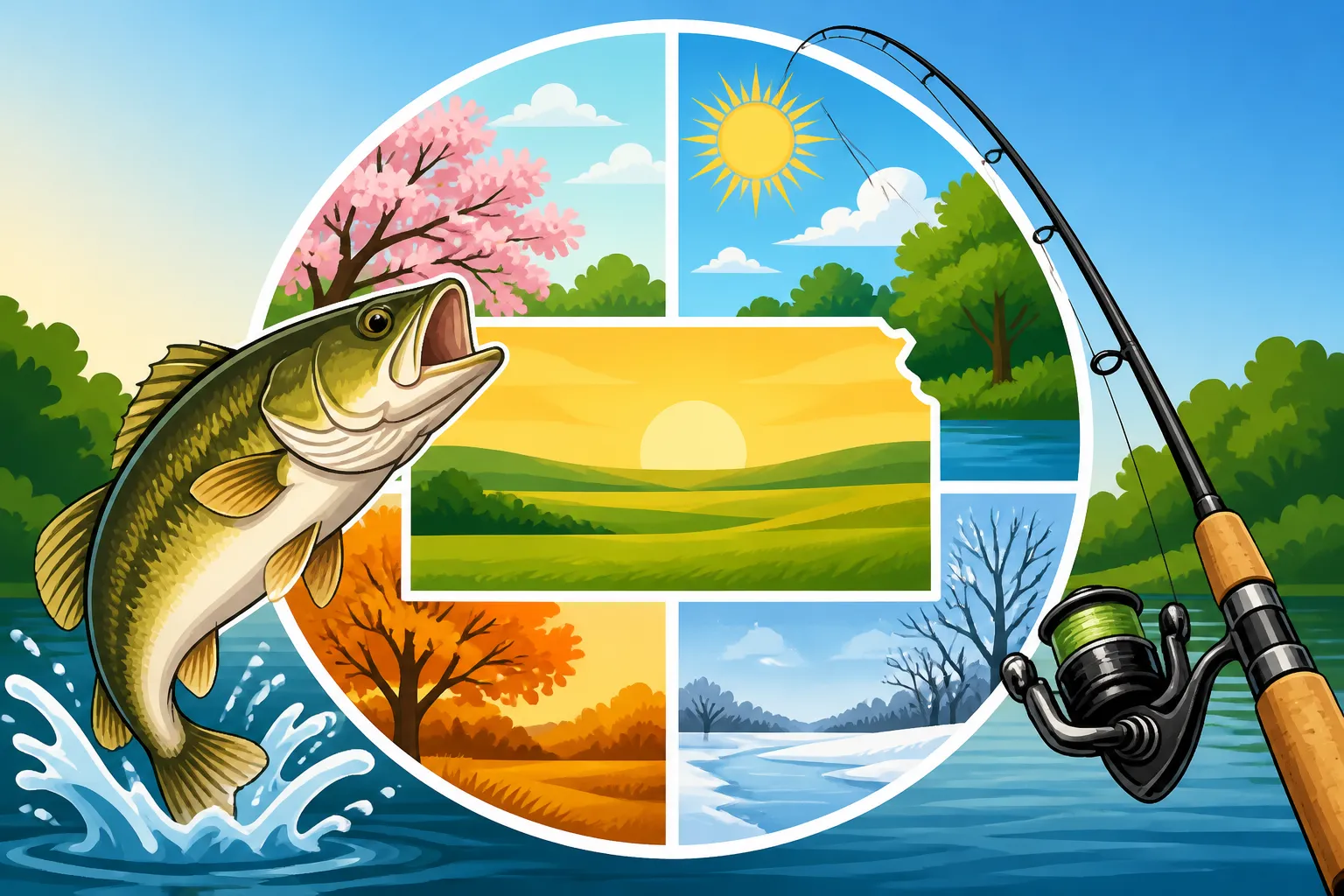
Every shift in temperature, every increase or decrease in daylight, and every drop of rain or snow profoundly influences how fish behave. In spring, warming waters signal spawning, drawing fish to shallow areas. Summer's heat often pushes them to deeper, cooler sanctuaries, making early mornings or late evenings the prime bite times. Fall brings a frenzied feeding period as fish gorge themselves in preparation for winter. And even in winter, under a blanket of ice or in cold, clear waters, specific species remain active and catchable for those with the right approach. Ignoring these natural cycles is like trying to navigate a bustling city without a map – you might get lucky, but it’s mostly guesswork.
General Regulations vs. Species-Specific Seasons
While the beautiful thing about Kansas is that its general fishing season is open year-round, meaning you can technically wet a line any day of the year, that doesn't mean every fish species is equally active or legally catchable at all times. This is where nuance truly comes into play. The Kansas Department of Wildlife and Parks (KDWP) sets forth comprehensive Kansas Fishing Regulations Explained that govern everything from length limits to daily creel limits, and these often fluctuate by species and even by specific body of water.
For instance, while you can chase channel catfish throughout the winter, the reality is their metabolism slows down considerably, making them less aggressive feeders. Conversely, the winter months, specifically from December through March, mark the designated Kansas Winter Trout Fishing Guide season in designated community lakes and streams, providing a unique cold-weather opportunity. Understanding these distinctions is paramount not only for success but also for staying on the right side of the law. Always consult the latest KDWP fishing regulations handbook or their website, as rules can change from year to year. It’s your ultimate playbook for ethical and effective angling in the Sunflower State.
Spring Awakening: The Pre-Spawn and Spawn Frenzy
When the chill of winter finally begins to recede and the days grow noticeably longer, a palpable excitement washes over the Kansas fishing community. Spring isn't just a season; it's a rebirth, a period of intense activity in the underwater world as fish prepare for and engage in their annual spawning rituals. This is often the most anticipated time of year for many anglers, offering some of the fastest action and biggest catches.
Crappie and Walleye Action
As water temperatures creep into the upper 40s and low 50s, typically from late March through May, crappie begin to stir from their deeper winter haunts. They move towards shallow coves, submerged brush piles, and fallen trees, staging for their spawn. This "pre-spawn" phase is fantastic, as they're actively feeding to build energy. A small jig or minnow fished close to cover can be deadly. When the water hits the mid-50s to low 60s, the spawn is on! Crappie will be right up in the stick-ups and woody cover, sometimes in water just a few feet deep. This is often when you can catch a limit quickly, though remember to respect the Kansas Crappie Length and Bag Limits to ensure healthy populations for years to come.
Walleye, those elusive and delicious fighters, also get very active in early spring. Their spawn typically happens when water temperatures are in the mid-40s to low 50s, often earlier than crappie, sometimes as early as late March or early April, especially on the rocky riprap of dams and windswept points. They'll move onto these shallow, rocky areas to lay eggs under the cover of darkness. Daytime fishing during the pre-spawn can be excellent, with many anglers trolling crankbaits or jigging spoons near submerged humps and old creek channels where the walleye are staging. Once they spawn, they tend to drop back to slightly deeper water, recovering from the arduous process but still feeding. Pay close attention to the Kansas Walleye Length Limits for these prized fish, as some lakes have protective slot limits.
White Bass Runs and Catfish Awakening
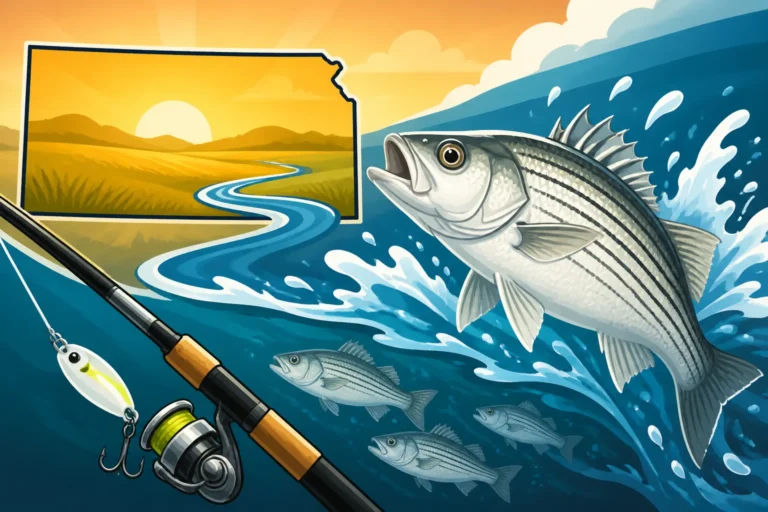
No discussion of Kansas spring fishing would be complete without the legendary white bass runs. When river temperatures warm, usually from mid-April through early June, large schools of white bass surge upstream from reservoirs into feeder rivers and creeks to spawn. The Republican River arm of Milford Lake, for example, becomes an absolute hotspot. You'll find anglers lining the banks, casting small jigs, spinnerbaits, or even simple rooster tails. The action can be non-stop, with multiple fish on every cast during peak times. It’s an exhilarating experience and a great opportunity to fill a cooler with some of the best eating fish Kansas has to offer. This is prime time for the Kansas White Bass Run Timing, and it's a spectacle not to be missed.
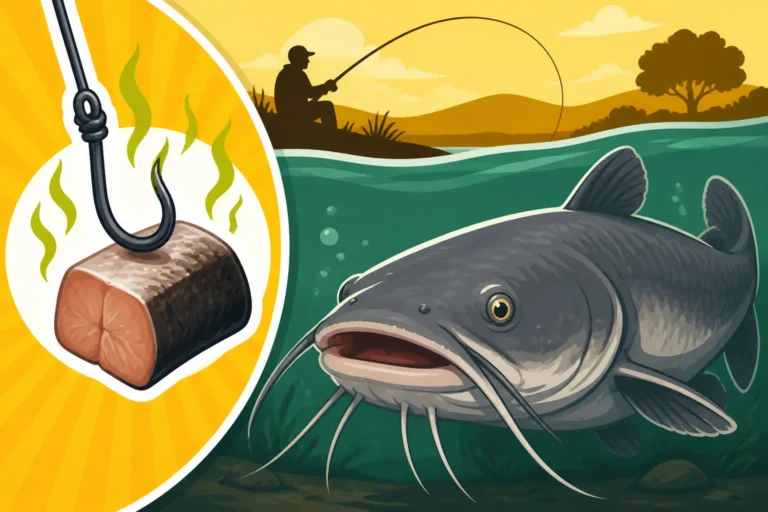
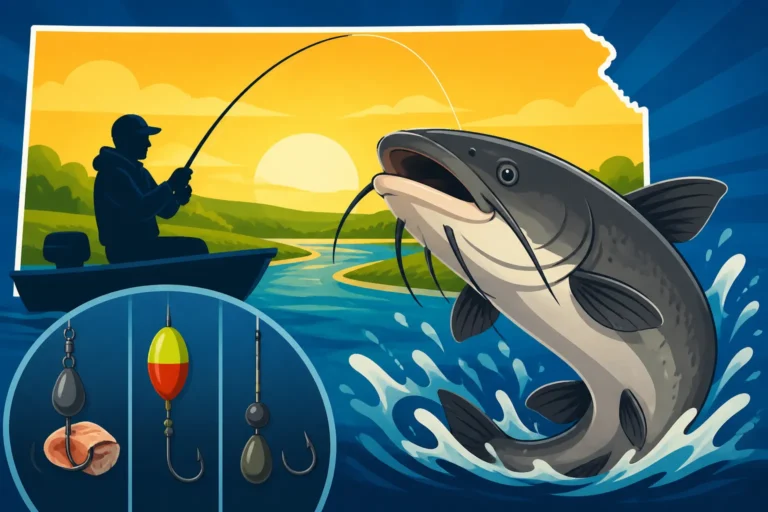
Meanwhile, as the water continues to warm, typically reaching the upper 50s and 60s, Kansas' abundant catfish species—channel, blue, and flathead—begin to shake off their winter lethargy. Channel catfish become increasingly active, moving into shallower areas to scavenge for food. Blue catfish, especially in larger systems like the Kansas River or Milford Lake, will also start to feed more aggressively. Flathead catfish, the ambush predators, will begin to move from deep holes to areas with heavy cover, seeking out live baitfish. While their major spawn is a bit later in early summer, the spring warm-up provides excellent opportunities for anglers targeting these powerful fish. A good cut bait or a fresh shad can often entice a bite. Remember to check the Kansas Catfish Daily Limits before heading out, as regulations can vary by species and location.
Summer Heat: Adapting to Warmer Waters
As spring transitions into the dog days of summer, the angling landscape in Kansas undergoes a significant transformation. The shallow, easily accessible waters that teemed with fish in spring now often become too warm for many species, particularly during the harsh midday sun. This shift necessitates a change in strategy, pushing savvy anglers to explore new techniques and different times of day to find success. It's a test of adaptability, but one that can lead to some truly fantastic catches if you know how to play by summer's rules.
Night Fishing for Catfish and White Bass
When the sun beats down relentlessly, driving surface temperatures into the 80s and beyond, many fish retreat to deeper, cooler water, becoming sluggish and uncooperative during daylight hours. However, as dusk settles and the air cools, the underwater world often comes alive. Night fishing becomes not just an option, but a primary tactic, especially for whiskered predators like catfish and schooling fish like white bass.
For channel catfish, the cooler night temperatures often trigger a feeding spree. They'll move out of their deeper daytime haunts and cruise shallower flats, humps, and even river channels in search of an easy meal. Stink baits, cut bait, or even a classic worm fished on the bottom can be incredibly effective. Consider setting up with multiple rods from the bank or anchoring your boat on a productive flat. A quality headlamp, easily found on Amazon, is absolutely essential for rigging lines and handling fish in the dark. Blue catfish also become very active at night, particularly in reservoirs like Milford or Cheney, where they'll patrol submerged river channels or deep points.
White bass, too, can offer explosive action under the stars. While their spring runs are legendary, they often school up and feed aggressively on baitfish near surface lights at night during the summer. Casting small jigs or spoons into the illuminated areas beneath boat dock lights or even around streetlights near water can produce furious strikes. The cool night air, the quiet of the lake, and the sudden jolt of a fighting fish make summer night fishing a truly unique and memorable experience in Kansas.
Deep Water Strategies for Walleye and Stripers
For species like walleye, wipers, and striped bass, the summer heat dictates a move to deeper, more thermally stable parts of the reservoir. They're seeking out the thermocline – a layer of water where temperature changes rapidly with depth – which often holds the highest concentration of oxygen and baitfish. This means anglers need to abandon their shallow spring tactics and embrace methods that target these deeper zones.
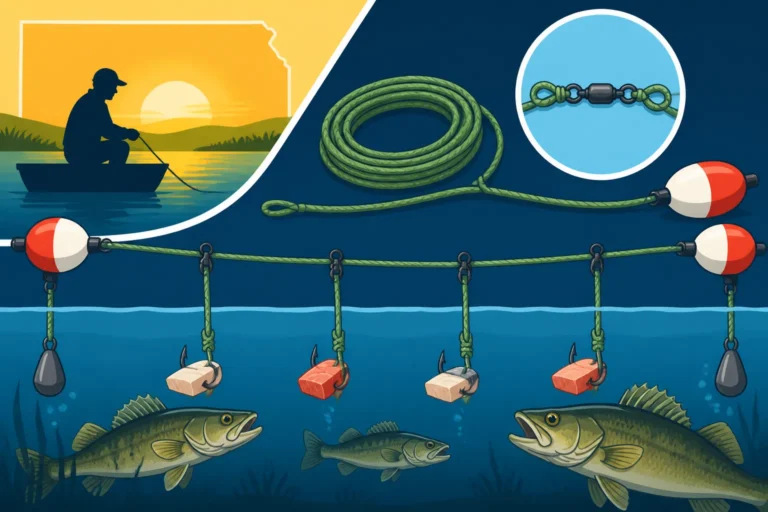
Trolling becomes a dominant strategy for walleye and wipers. Anglers will deploy crankbaits, spoons, or even bottom bouncers with worms or spinner rigs, meticulously tracing old creek channels, submerged humps, and reservoir points at depths ranging from 15 to 30 feet, or even deeper depending on the lake and conditions. Using a good fish finder is critical here, allowing you to identify structure and locate schools of baitfish and predators. Consider investing in a high-quality unit that you can purchase through Amazon for clarity and detail in deep water.
Striped bass, often found in major reservoirs like Wilson Lake or El Dorado Lake, are built for open water and will chase baitfish schools aggressively in the cooler, deeper sections. While live bait like gizzard shad can be irresistible, large spoons, swimbaits, or deep-diving crankbaits can also elicit powerful strikes. Early morning and late evening bites can still occur closer to the surface, but during the bright midday, they'll be down deep. Fishing these deeper haunts requires heavier tackle and a keen understanding of contour maps to find the underwater structure where these giants lurk. Mastering these deep-water tactics is key to unlocking some of Kansas' most formidable summer fishing challenges.
Fall Turnover: Feeding Frenzies Before Winter
As the scorching Kansas summer slowly gives way to the crisp, cooler days of autumn, a remarkable transformation occurs in our lakes and reservoirs: the fall turnover. This natural phenomenon, driven by cooling surface temperatures, causes the warmer surface water to sink and mix with the cooler, deeper water, essentially resetting the lake's thermal layers. For anglers, this signals a prime opportunity. The mixing water redistributes oxygen and nutrients, scattering baitfish and often triggering an aggressive feeding frenzy as game fish try to pack on calories before the lean winter months.
Aggressive Walleye and Crappie
Fall is a spectacular time to target walleye in Kansas. As water temperatures begin to drop into the 60s and 50s, these toothy predators become incredibly active, often more aggressive than any other time of year. They'll move out of their deep summer holding patterns and become more accessible, often cruising along main lake points, submerged humps, and old creek channels at shallower depths. This is a fantastic season for trolling crankbaits or jigging spoons and blade baits along these structures. The bite can be consistent throughout the day, not just during the low light periods of summer. Lakes like Cheney Reservoir and Wilson Lake are renowned for their fall walleye action. Anglers can capitalize on this feeding binge by focusing on areas where baitfish are congregating.
Crappie also undergo a significant transformation in the fall. After dispersing during the summer, they begin to regroup and school up, often relating to submerged brush piles, standing timber, and creek channels, much like they do in spring but often at slightly deeper depths. As the water cools further into the 50s, they form dense schools, making them easier to locate with a fish finder. Once you find a school, you can often catch multiple fish using vertical jigging techniques with small jigs or minnows. Fall crappie fishing can be incredibly productive, offering both quantity and quality as these fish beef up for winter. Remember, while the bite is hot, always be mindful of Kansas Crappie Length and Bag Limits to maintain healthy populations.
Bass and Wiper Opportunities
Largemouth and smallmouth bass, too, shake off their summer doldrums during the fall. As water temperatures become more comfortable, they become much more active and willing to chase down a meal. Largemouth bass will often be found shallower, around fallen trees, weed lines (if present), and other cover, eagerly hitting spinnerbaits, crankbaits, and even topwater lures during warmer fall days. The cooler water revitalizes them, and they become powerful fighters. Smallmouth bass, found in rockier reservoirs like Wilson Lake, will aggressively feed on crawdads and baitfish, often positioned on rocky points and drop-offs. Jerkbaits and tube jigs can be highly effective for these hard-fighting fish.
Wipers, the feisty hybrid striped bass, are another species that truly shines in the fall. These powerful fish are constantly on the hunt for baitfish, and as the baitfish schools become more concentrated and active in the cooling waters, the wipers follow suit. They often feed in open water, chasing schools of shad to the surface, creating explosive "boils" where they bust bait. This is a visual and adrenaline-pumping experience. Anglers can target them by casting spoons, swimbaits, or topwater plugs into these feeding frenzies. Lakes like El Dorado Lake and Cheney Reservoir are well-known for their fantastic fall wiper fishing. The fall offers some of the most exciting and consistent action for wipers, as they voraciously feed in anticipation of the colder months ahead. It's a great time to experiment with different lures and techniques, many of which are readily available on Amazon, to see what triggers these aggressive feeders.
Winter Chill: Ice Fishing and Trout Tactics
While many anglers might put their rods away when the mercury drops, Kansas still offers some truly unique and rewarding fishing opportunities during the colder months. Winter fishing, whether through a hole in the ice or targeting cold-water species, demands a different approach, a bit more resilience, but can yield some fantastic results for those willing to brave the chill. It's a serene, often solitary, pursuit that connects you to the stark beauty of the Kansas landscape.
The Thrill of Ice Fishing
When sustained cold temperatures transform Kansas lakes into solid sheets of ice, a new angling world opens up. Ice fishing is a tradition for many, and it's an incredible way to target species like crappie, bluegill, and even walleye that become concentrated under the ice. Safety is always paramount when ice fishing; never venture onto ice less than four inches thick for foot travel. It's a good idea to check local reports and always go with a buddy.
Once on the ice, the strategy shifts to small, delicate presentations. For crappie and bluegill, tiny jigs tipped with a wax worm, a piece of corn, or a small plastic grub are deadly. These panfish will often suspend in schools over deeper water or relate to submerged structure. A small, sensitive ice rod will help you detect those subtle bites. Walleye can also be caught through the ice, often preferring slightly larger jigging spoons or horizontal jigs tipped with a minnow head. Popular ice fishing lakes often include smaller community lakes and state fishing lakes, as they tend to freeze over more consistently and safely. Equipping yourself with a reliable auger, a comfortable ice shelter, and warm clothing, all available through retailers like Amazon, will make your experience much more enjoyable. For more in-depth information on safely navigating frozen waters, be sure to check out our Kansas Ice Fishing Guide.
Kansas Winter Trout Fishing Program
Perhaps the most unique winter fishing opportunity in Kansas is the annual Winter Trout Fishing Program. Unlike other game fish that slow down, rainbow trout thrive in cold water. From December 1st to March 31st, the KDWP stocks various community lakes and streams across the state with thousands of rainbow trout, providing an exciting cold-weather fishery. This program is a fantastic way for families and seasoned anglers alike to enjoy productive fishing during a time when other species might be less cooperative.
To participate in the Winter Trout Fishing Program, in addition to your general Kansas Fishing License Guide, all anglers aged 16 and older must purchase a Kansas Trout Permit Guide. This permit helps fund the stocking efforts, ensuring that these opportunities continue year after year. The stocked trout typically respond well to small inline spinners, spoons, or natural baits like powerbait, corn, or worms fished on light tackle. Some popular stocking locations include community lakes in Wichita, Topeka, and Kansas City, as well as several state fishing lakes. The KDWP provides a detailed stocking schedule, so you can plan your trips to coincide with fresh batches of fish. It's a unique chance to experience trout fishing in a state not typically known for it, and a perfect way to keep your angling skills sharp throughout the coldest months.
Key Species Seasons and Peak Times
Understanding the general seasonal shifts is a great starting point, but to truly elevate your Kansas fishing game, you need to dive into the specifics of when individual species are at their absolute peak. Every fish has its "sweet spot" in the calendar, driven by factors like spawning, feeding patterns, and water temperature preferences. Knowing these peak times can mean the difference between a frustrating day and a phenomenal one.
Annual Fishing Hotspots by Species
Let's break down the prime periods for some of Kansas' most sought-after fish:
- Walleye:
- Spring (Late March – May): Excellent pre-spawn and spawn bite on rocky areas, dam faces, and windswept points. Post-spawn, they'll drop slightly deeper but remain very active.
- Summer (June – Mid-July): Good early morning and late evening bite in deeper water (15-30+ feet) over humps and creek channels. Trolling deep-diving crankbaits or bottom bouncers is key.
- Fall (September – November): Arguably the best overall time. Walleye aggressively feed in preparation for winter, often moving shallower and spreading out, making them easier to target with various methods, including jigging and trolling. Lakes like Clinton and Milford are famous for this.
- Crappie:
- Spring (April – May): The highly anticipated spawn in shallow, brushy coves and standing timber. Fast and furious action on jigs and minnows.
- Summer (June – August): Transition to deeper brush piles, submerged trees, and creek channels, often suspending. Night fishing under lights can be productive.
- Fall (September – November): Schools regroup and feed aggressively in slightly deeper water than spring, often over channel breaks or deeper brush. Excellent for vertical jigging.
- Winter (December – March): Good ice fishing opportunities on smaller lakes, suspending in deep water or around structure.
- Catfish (Channel, Blue, Flathead):
- Spring (April – May): Channel and blue cats become very active as water warms, moving into shallower flats and river sections. Flatheads start to stir in deep holes with cover.
- Summer (June – August): Peak season. Catfish are highly active and will feed day and night. The spawn happens in early summer, and after, they feed aggressively. Night fishing is particularly good for all three species.
- Fall (September – October): Remain active, gorging on available forage. Excellent bank fishing opportunities in many rivers and reservoirs.
- Winter (November – March): Slower bite, but big blue cats can still be caught in deep holes in rivers and reservoirs.
- White Bass:
- Spring (April – Early June): Legendary river runs in tributaries like the Republican and Cottonwood rivers. Explosive, non-stop action.
- Summer (June – August): School up in open water, often chasing bait to the surface ("boils"). Night fishing under lights is also popular.
- Fall (September – October): Still actively chasing bait, sometimes forming boils in open water or near points.
- Wipers/Striped Bass:
- Spring (April – May): Good action in open water, often near dam faces or wind-blown points, chasing bait.
- Summer (June – August): Move to deeper, cooler water. Target with deep trolling or by finding feeding schools ("boils") in early mornings/evenings.
- Fall (September – November): Excellent action as they feed aggressively, often busting bait on the surface or near main lake points.
- Trout (Rainbow, Golden Rainbow):
- Winter (December 1 – March 31): Designated stocking season in community lakes and streams. Only available during this specific timeframe.
Here's a quick reference table for peak seasons:
| Fish Species | Spring (Mar-May) | Summer (Jun-Aug) | Fall (Sep-Nov) | Winter (Dec-Feb) |
|---|---|---|---|---|
| Walleye | Excellent | Good | Excellent | Slow |
| Crappie | Excellent | Good | Excellent | Good (Ice) |
| Channel Catfish | Good | Excellent | Excellent | Slow |
| Blue Catfish | Good | Excellent | Excellent | Good |
| Flathead Catfish | Good | Excellent | Good | Slow |
| White Bass | Excellent | Excellent | Good | Slow |
| Wipers/Stripers | Good | Good | Excellent | Slow |
| Rainbow Trout | N/A | N/A | N/A | Excellent |
Understanding Peak Activity Windows
Beyond the seasonal trends, daily and even hourly activity can be influenced by subtle environmental cues. Learning to read these can significantly improve your success.
- Water Temperature: This is perhaps the most critical factor. Each species has a preferred temperature range for feeding and spawning. For example, knowing that crappie prefer water in the mid-50s for spawning can help you pinpoint not just the month, but even the week they'll be most active in the shallows.
- Light Conditions: Many fish, especially walleye and catfish, are more active during low light periods – dawn, dusk, and even throughout the night. Bright, sunny days can drive them deeper or into heavy cover. Overcast days, however, can extend their active feeding windows.
- Weather Patterns: Approaching cold fronts can often trigger a strong bite just before the front hits, as fish sense the change and feed aggressively. Conversely, a strong cold front can shut down the bite for a day or two. Stable weather, even if it's hot or cold, often leads to more predictable fishing.
- Moon Phases: While debated by some, many experienced anglers swear by the influence of moon phases. Full and new moon periods are often cited as prime times for increased fish activity, especially around moonrise and moonset. This is anecdotal for some, but many fishing calendars integrate these predictions.
- Wind: A consistent, moderate wind can be your friend, especially for walleye. It creates current, pushes baitfish, and oxygenates the water. Walleye often stack up on the windy side of points or dam faces. However, too much wind can make boat control and fishing difficult.
By combining your knowledge of these peak windows with the overall seasonal guide, you'll be well on your way to becoming a highly effective Kansas angler, able to adapt to conditions and confidently pursue your target species year-round. Remember to check local fishing reports and consult the KDWP's latest information, as specific conditions can vary greatly from one lake to another.
Essential Seasonal Gear and Techniques
Just as your wardrobe changes with the seasons, so too should your fishing gear and approach. Trying to catch ice-fishing trout with a heavy catfish rig, or targeting deep-water walleye with a shallow crappie jig, simply won't yield the results you're hoping for. Adapting your tackle box and mastering diverse techniques for each season is crucial for consistent success on Kansas waters.
Adapting Your Tackle Box
Your tackle box isn't a static museum; it should be a dynamic collection that reflects the current season and your target species.
- Spring: This is prime time for lighter tackle. For crappie, think small jigs (1/32 to 1/16 oz) in various colors, tiny spinnerbaits, and plenty of live minnows. For walleye, crankbaits that dive 5-10 feet, jig heads with soft plastics or live minnows, and blade baits are excellent. White bass runs demand small inline spinners, Kastmasters, and Road Runners. You’ll want an assortment of lighter lines, perhaps 4-8 lb monofilament or fluorocarbon, for finesse presentations.
- Summer: As fish move deeper, your tackle needs to follow. For walleye and wipers, deep-diving crankbaits that can reach 15-30+ feet, heavier jigging spoons, and bottom bouncers with crawler harnesses are key. Catfish anglers will need heavier line (15-30 lb mono or braided), sturdy hooks (circle hooks are popular), and an ample supply of fresh cut bait or stink bait. For night fishing, consider glow-in-the-dark lures or jigs. Don't forget a good pair of pliers and a fish gripper, especially for those bigger catfish. Many of these specialized baits and tools can be conveniently ordered from Amazon.
- Fall: This season offers a wide range of options as fish feed aggressively. You'll likely use a mix of spring and summer tackle. Medium-diving crankbaits, spinnerbaits for bass, spoons for wipers, and both jigs and minnows for crappie will be in play. Pay attention to lure color – some days bright colors are best, other days natural baitfish patterns. Braided line can be advantageous for its sensitivity and strength, especially when feeling subtle bites in deeper water or around structure.
- Winter: If you're ice fishing, your gear becomes highly specialized. Tiny ice jigs (1/64 to 1/8 oz) for panfish and trout, jigging spoons for walleye, and ultra-light ice fishing rods are essential. Small live baits like wax worms, spikes, or minnows are critical. For open-water trout fishing, small inline spinners, PowerBait, and worms on light spinning gear are standard. Heavy, insulated clothing is a must, readily available from various brands on Amazon to keep you comfortable in the cold.
Seasonal Fishing Techniques
The "how" of fishing is just as important as the "what."
- Spring:
- Shallow Jigging/Casting: For crappie and bass, target visible cover like flooded timber, brush piles, or docks. Pitch small jigs or spinnerbaits directly to the structure.
- Trolling: For walleye in the pre-spawn, slow trolling crankbaits along main lake points and dam riprap can be very effective.
- River Runs: For white bass, cast small, flashy lures upstream and retrieve them with the current in river channels or below dam outflows. See our guide on Kansas Fishing Techniques for Beginners for more tips.
- Summer:
- Deep Trolling/Jigging: Use your fish finder to locate schools in deeper water. Troll deep-diving crankbaits or pull bottom bouncers slowly over submerged humps and channels. Vertical jigging spoons or heavy jigs can work directly over deep schools.
- Night Fishing (Bank/Boat): For catfish, rig multiple rods with bottom rigs (slip sinkers, swivel, hook) and cast out with your chosen bait. For white bass, cast jigs or spoons towards lights over the water.
- Early/Late Topwater: For bass, throw topwater lures around low-light hours in shallow coves before the sun gets too high.
- Fall:
- Power Fishing: Many fish are feeding aggressively, so covering water with crankbaits, spinnerbaits, and swimbaits can be highly productive for bass, walleye, and wipers.
- Vertical Jigging: For crappie and walleye, use your electronics to find schools and drop jigs or spoons directly into them.
- Chasing Boils: Keep an eye out for surfacing baitfish and actively feeding wipers or white bass. Be ready to cast quickly into the frenzy.
- Winter:
- Ice Jigging: For panfish and walleye, use small, subtle jigs and lures. Focus on areas where baitfish are concentrated or near structure. Light line and a sensitive rod are paramount for detecting soft bites.
- Still Fishing (Trout): For stocked trout, a simple slip-sinker rig with PowerBait or worms fished off the bottom is often deadly. You can also drift small spinners in designated trout streams. Our Kansas Winter Trout Fishing Guide has more details.
Mastering these seasonal transitions in both gear and technique will not only make you a more versatile angler but also significantly increase your chances of success, no matter what month you decide to hit the water. It’s about being prepared and understanding the behaviors of the fish you're targeting. And remember, the KDWP regulations, such as Kansas Fishing Seasons and Limits, are your ultimate resource for what's allowed.
Navigating Regulations and Resources
Even with a full understanding of Kansas' dynamic fishing seasons and the best gear to match, your success and enjoyment depend heavily on staying informed and compliant with the state's regulations. The Kansas Department of Wildlife and Parks (KDWP) works tirelessly to manage fish populations and ensure sustainable angling opportunities for everyone. Ignorance of the rules is never an excuse, and staying updated is part of being a responsible angler.
Staying Up-to-Date with KDWP
The KDWP is your absolute primary source for all things related to Kansas fishing. Their website and annual fishing regulations summary are indispensable tools. These resources detail specific length limits, daily creel limits, and special regulations for particular bodies of water, which can sometimes differ from general statewide rules. For instance, while there might be a general walleye limit, a specific lake might have a slot limit to protect larger trophy fish, or a different daily bag limit than usual. You can learn more about these specifics in our Kansas Fishing Regulations Explained.
It's also where you'll find information on purchasing your Kansas Fishing License Guide, which is a fundamental requirement for most anglers in the state. They also provide details on special permits like the Kansas Trout Permit Guide needed for winter trout fishing. The KDWP also announces stocking schedules, public access points, and any emergency closures or changes that might occur throughout the year. Checking their official channels before each outing, or at least seasonally, can save you from potential fines and ensure you're fishing legally and ethically. Their communication often comes through press releases, social media, and updates to their digital fishing guide.
Utilizing Local Resources and Reports
Beyond the official regulations, tapping into local resources and real-time fishing reports can give you an invaluable edge. Think of it as getting insider tips from those who are on the water constantly.
- Local Bait Shops: These are often goldmines of information. The folks running them live and breathe fishing, and they hear reports from anglers daily. They'll know what's biting, what baits are working best, and where the current hotspots are. Many bait shops are located conveniently near popular lakes and reservoirs, like those around Milford Lake or Cheney Reservoir, and they can offer specific, hyper-local advice that you won't find anywhere else.
- KDWP Weekly Fishing Reports: During peak seasons, the KDWP often compiles and publishes weekly fishing reports for various major lakes and reservoirs. These reports offer insights into water temperatures, clarity, current fishing conditions, and what species are most active, along with recommended baits and techniques. These are incredibly helpful for planning your next trip.
- Online Forums and Social Media Groups: A thriving community of Kansas anglers exists online. Joining local fishing forums or Facebook groups can connect you with fellow enthusiasts who are often happy to share tips, conditions, and even specific locations. Just remember to take some online advice with a grain of salt and always verify information with official KDWP sources regarding regulations.
- Fishing Guides: If you're serious about mastering a particular lake or species, hiring a licensed Fishing Guide License Requirements in Kansas for a day can be one of the best investments you make. They have intimate knowledge of the water, fish patterns, and seasonal changes, and they can teach you techniques that would take years to learn on your own. Many operate on the Best Fishing Lakes in Kansas and specialize in specific species.
By actively engaging with both official KDWP resources and the local fishing community, you'll ensure you're always fishing legally, safely, and with the most up-to-date information at your fingertips, making every trip to the water more enjoyable and productive.
Disclaimer
Please note that fishing regulations, seasons, and conditions can change rapidly. Always consult the official Kansas Department of Wildlife and Parks (KDWP) website or their latest printed regulations guide before heading out on any fishing trip. This guide is for informational purposes only and does not supersede state laws or official KDWP directives. Practice safe boating and fishing habits, and always prioritize personal safety.