When Does Crappie Spawn Start?
Waiting for crappie to start their annual spawn can feel like watching a pot that never boils, especially when you're itching to get out on the water in Kansas after a long winter. It's a question every angler asks: When exactly does that magic crappie spawn begin? There's no single "on" switch, but rather a gradual shift dictated by Mother Nature. This guide will dive deep into understanding the crappie spawn in Kansas, breaking down the environmental cues, typical timelines, and how you can pinpoint the prime time to fill your livewell.
The Great Crappie Countdown: Understanding the Spawn Timing in Kansas
Let's face it, we all wish we had a crystal ball to tell us the exact day crappie will hit the shallow water to do their thing. The reality is, crappie don't check a calendar; they respond to environmental triggers. For Kansas anglers, this means paying close attention to water temperature and daylight hours, rather than a fixed date. The crappie spawn is one of the most anticipated events in the Kansas Fishing Seasons Guide, signaling a time of intense activity and often, fantastic fishing.
It's All About Water Temperature, Not Always the Calendar
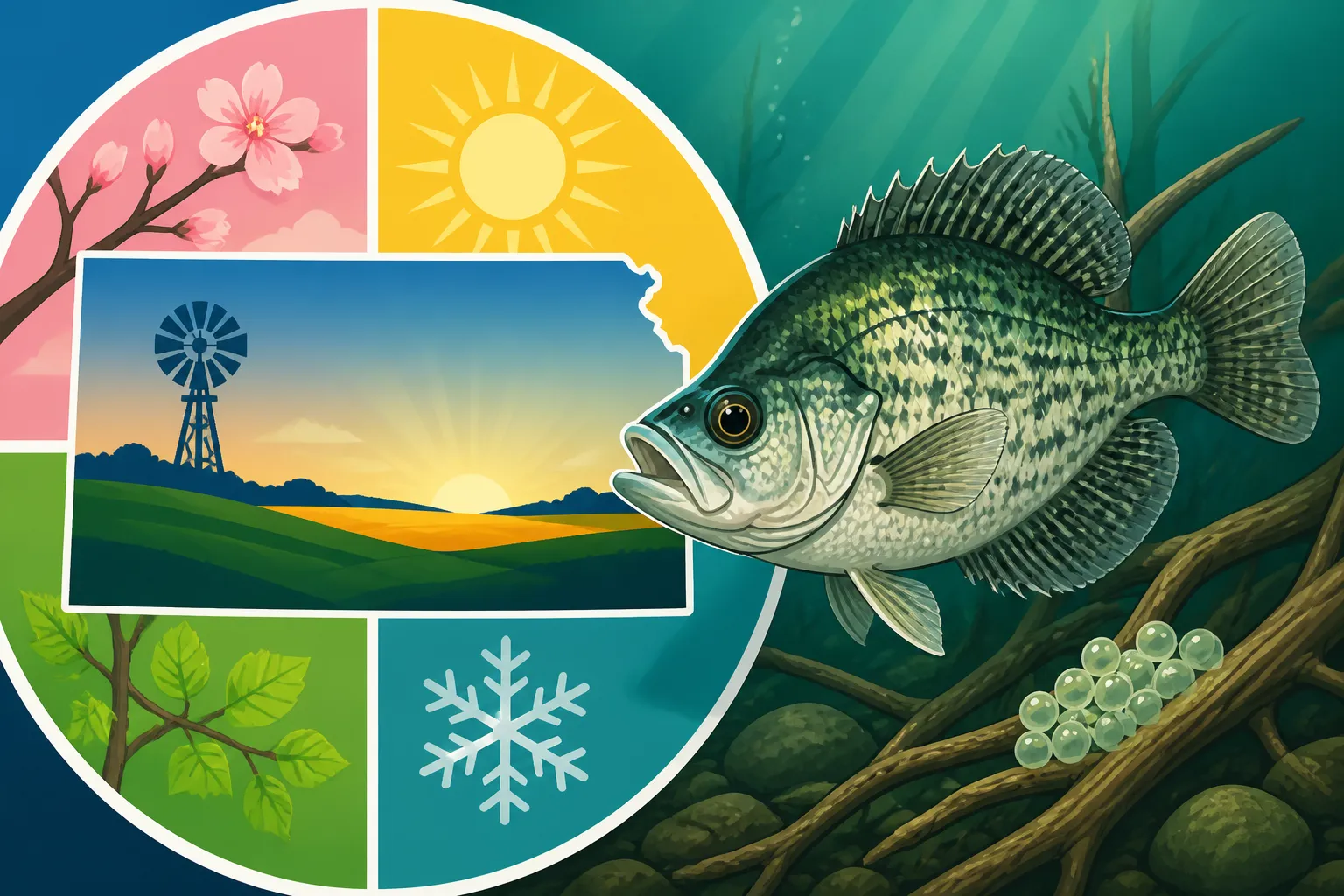
The single most critical factor for initiating the crappie spawn in Kansas is water temperature. While we often think of "spring" as the time, spring in Kansas can fluctuate wildly. One year, it's warm in March; the next, you're still scraping ice off your boat in April. Crappie, both white crappie and black crappie, generally begin their spawning rituals when water temperatures consistently reach between 55 to 65 degrees Fahrenheit (13 to 18 degrees Celsius).
Before this optimal range, in the lower 50s, crappie are usually in a pre-spawn phase, staging in deeper water adjacent to their eventual spawning grounds. As the water warms, they move shallower, becoming more active and feeding aggressively. Once that ideal temperature window hits and stabilizes for a few days, the male crappie will start fanning out nests, typically in water from one to four feet deep, depending on clarity and cover. This consistent warmth is key; a sudden cold snap can halt the spawn in its tracks, pushing fish back to deeper water until conditions stabilize again. A good quality fishing thermometer can be an angler's best friend, and you can find a wide range of reliable options on Amazon to help you monitor those crucial water temps.
The Role of Daylight and Photoperiod
While water temperature is king, daylight length, or photoperiod, also plays a subtle but significant role in preparing crappie for the spawn. As the days lengthen in late winter and early spring, this increasing light triggers hormonal changes in fish, signaling to their bodies that it's time to begin the reproductive cycle. This biological clock works in tandem with the warming water. So, even if you have a brief warm spell in February, the crappie won't full-on spawn because the daylight hours simply aren't long enough.
Think of it like this: the lengthening days set the stage, telling the crappie internally that spring is coming. Then, the warming water acts as the final cue, like the conductor raising their baton, initiating the full symphony of the spawn. This combination explains why the spawn is generally a late April to early May affair across much of Kansas, though it can certainly vary.
Pre-Spawn Buildup: What Happens Before the Big Event
The crappie spawn isn't just a sudden burst of activity. It's a progression, with distinct phases that anglers can learn to identify. Understanding the pre-spawn period is just as crucial as knowing the peak spawn, as it can offer some of the most exciting and productive fishing opportunities. Knowing When Crappie Move Shallow in Kansas is a key part of this equation.
Staging Areas and Increased Feeding
As late winter gives way to early spring, and water temperatures creep from the high 30s into the low 50s, crappie begin to transition. They'll start moving out of their deep winter haunts, like creek channels and main lake basins, and congregate in "staging areas." These are typically deeper water locations, such as points, humps, or channel bends, that are adjacent to shallower spawning flats or coves. They’re like waiting rooms, providing easy access to both deep sanctuary and shallow feeding grounds.
During this pre-spawn phase, crappie feed aggressively to build up energy reserves for the strenuous spawning process. This is when they can be found in larger schools, making them a fantastic target for anglers. They're often still quite deep, sometimes suspended over channels or hugging structure. If you're wondering How Deep to Fish for Crappie in Winter, these pre-spawn depths aren't too far off, but they'll be more active.
Identifying the Early Indicators of the Spawn
Beyond simply watching a thermometer, there are other tell-tale signs that the spawn is imminent. Keep an eye out for these subtle shifts in nature and fish behavior:
- Budding Trees and Emerging Greenery: Look at the trees around your favorite lake or pond. When the oak leaves are about the size of a squirrel's ear, or when other trees like cottonwoods and willows begin to bud out, it's a good general indicator that nature's processes are in full swing and water temperatures are likely reaching that magic crappie range.
- Other Fish Activity: Often, crappie aren't the first fish to get active. Watching for shallow-water activity from other panfish like bluegill or even early bass movements can give you a clue.
- Shallow Water Exploration: Take your boat or kayak into shallow coves and along protected shorelines. Use your electronics to scan for fish or simply look for signs of activity. If you start seeing crappie suspended just off shallow cover, even if they aren't actively biting, it's a sign they're exploring the area for potential nesting sites.
Peak Spawning Activity and Prime Locations
Once those optimal conditions align – consistent warm water and plenty of daylight – the crappie spawn kicks into high gear. This is when you'll find them at their most predictable, making it a fantastic time for both seasoned anglers and those just getting started with a Kansas Crappie Fishing Guide.
Where Crappie Build Their Nests in Kansas Waters
Crappie are structure-oriented fish, and this is especially true during the spawn. They seek out protected, shallow areas where males can fan out nests and females can deposit their eggs. The key characteristics of a prime crappie spawning ground in Kansas include:
- Shallow Water: Typically 1 to 4 feet deep, sometimes a bit deeper in clearer lakes or a bit shallower in stained water.
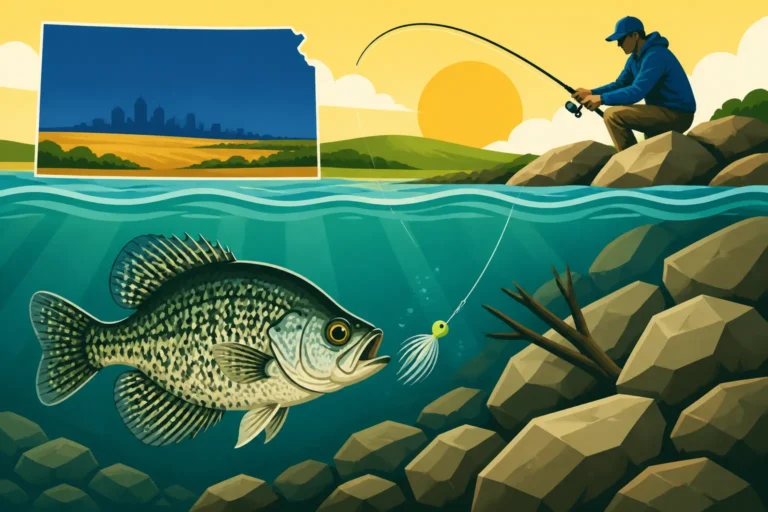
- Woody Cover: Submerged brush piles, fallen trees, stumps, root wads, and even old dock pilings provide excellent protection for nests and fry. Look for areas where wood has accumulated.
- Vegetation: Beds of submerged aquatic vegetation, cattails, or lily pads offer similar protective cover.
- Hard Bottom: While crappie can spawn on soft bottoms, they generally prefer a harder substrate like gravel, sand, or even clay. This helps keep the eggs clean and oxygenated.
- Protected Coves and Flats: These areas warm up faster and offer shelter from wind and waves, creating stable conditions for successful reproduction. On large reservoirs like Milford Lake or Cheney Reservoir, target the backs of coves that receive a lot of sunlight.
Typical Depths and Cover During the Peak Spawn
During the peak of the spawn, you'll find crappie tightly associated with this cover. The males will be actively guarding nests, and the females will move in and out to deposit eggs. The exact depth will depend on water clarity. In murkier water, they'll be shallower (even just inches deep), while in clear water, they might be in the 3-5 foot range to avoid predators.
You might even see them "ghosting" through the cover, their dark backs just visible in the shallows. This is a tell-tale sign that you're in a prime spawning zone. Don't be afraid to probe tight cover with your bait; sometimes the biggest crappie are buried deep within the brush. This intense shallow-water activity makes the spawn a fantastic time to use specific Jigging Techniques for Kansas Crappie.
| Water Temperature Range | Crappie Activity Phase | Typical Depths & Locations | Notes for Anglers |
|---|---|---|---|
| Below 45°F (7°C) | Winter Hold | Deep channels, main lake | Lethargic, deep |
| 45-50°F (7-10°C) | Pre-Spawn Staging | Deeper points, channel bends near flats | Start moving up, still deep |
| 55-65°F (13-18°C) | Peak Spawn | Shallow coves, woody cover, vegetation | Most active, nest guarding |
| 65-70°F (18-21°C) | Post-Spawn | Moving to deeper summer haunts, some still shallow | Dispersing, less aggressive |
Beyond the Initial Burst: Extended Spawning and Regional Differences
While there's a "peak" for the crappie spawn, it's not a single day. The spawn can extend for several weeks, and even longer when you consider the slight differences across Kansas.
The "Wave" Effect: Not All Crappie Spawn at Once
Even within a single lake, not all crappie spawn at precisely the same time. There's often a "wave" effect. The shallower, darker-bottomed coves that warm up first will see the earliest spawners. As the main lake body continues to warm, other crappie will move in to spawn in different areas. This staggered spawn means that if you miss the first wave, or if a cold front pushes fish back, you often have subsequent opportunities.
Furthermore, different year classes of crappie might spawn at slightly different times. Larger, older fish might spawn earlier or later than smaller, younger fish. This extended period is fantastic for anglers, as it means you have a longer window to target active crappie.
Regional Variations Across Kansas
Kansas is a big state, and water temperatures can vary significantly from south to north, and even east to west. Typically, the crappie spawn will begin earlier in southern Kansas lakes, such as those near the Oklahoma border, due to warmer temperatures arriving sooner. As spring progresses, the spawn moves northward.
- Southeast Kansas: Lakes like Big Hill Lake or Fall River Lake might see the crappie spawn kick off in mid-April.
- Central Kansas: Reservoirs like El Dorado Lake, Wilson Lake, or Kanopolis Lake typically experience their peak spawn in late April to early May.
- Northeast Kansas: Larger, deeper reservoirs like Milford Lake or Tuttle Creek Lake, or even community lakes closer to the Nebraska border, might see the spawn peaking in early to mid-May.
Always consult local fishing reports, Kansas Department of Wildlife and Parks and Tourism (KDWPT) stocking and fishing forecasts, or talk to local bait shop owners for the most up-to-date, hyper-local information on crappie movements in specific Best Fishing Lakes in Kansas. Many anglers swear by crappie jigs from brands like Bobby Garland or Mr. Crappie, readily available on Amazon, and local shops will often stock the colors that are hot for their specific bodies of water.
Finding and Catching Spawning Crappie
Knowing when and where the crappie spawn starts is one thing; actually catching them is another! While they are often aggressive during this time, they can still be finicky.
Best Baits and Techniques
For spawning crappie, simplicity often reigns supreme. Live minnows, especially smaller ones, rigged under a slip bobber or tight-lined, are incredibly effective. A small jig, typically 1/32 to 1/16 ounce, tipped with a soft plastic crappie tube, grub, or a hair jig, is also deadly. Colors like chartreuse, white, pink, and black-and-chartreuse combinations are perennial favorites. Don't forget to check out the Best Bait for Kansas Crappie for more specific recommendations.
When fishing tight to cover, vertical jigging or dipping a jig into openings in brush piles is very effective. Cast out only far enough to get to your target, and then retrieve slowly. If you're fishing open water pockets in submerged vegetation, a slow retrieve with a small spinnerbait or a tiny crankbait can also entice a strike.
Navigating Regulations and Ethical Angling
While the crappie spawn can lead to some incredible catches, it's vital to remember your Kansas Fishing Regulations Explained. Pay close attention to Kansas Crappie Length and Bag Limits for the specific body of water you're fishing. Some lakes may have special regulations or reduced limits to protect crappie populations. Always measure your fish carefully and release any that don't meet the legal requirements.
Remember, the goal is sustainable fishing. Take only what you need and consider practicing catch and release, especially for larger breeding females, to ensure healthy crappie populations for future generations of Kansas anglers. For those looking to expand their knowledge, there are countless books and guides on crappie fishing techniques available on platforms like Amazon, offering even more ways to refine your skills during the spawn. Ensuring you have a reliable fishing vest with plenty of pockets for those essential spawn-time jigs and minnows can make a world of difference. You'll find a huge selection on Amazon, from basic utility vests to more advanced, feature-rich options. And, of course, make sure you have your current Kansas Fishing License Guide before you even cast a line.
Disclaimer
Fishing conditions and regulations in Kansas can change frequently. Always consult the latest Kansas Department of Wildlife and Parks and Tourism (KDWPT) fishing regulations before heading out on the water. This guide is for informational purposes only and should not replace official sources.